I walked into the kitchen for my morning brew and stepped right into a cold puddle. It was a bad start to the day. My coffee maker had turned into a tiny fountain, leaving a mess on the counter. I just wanted caffeine, not a cleanup job.
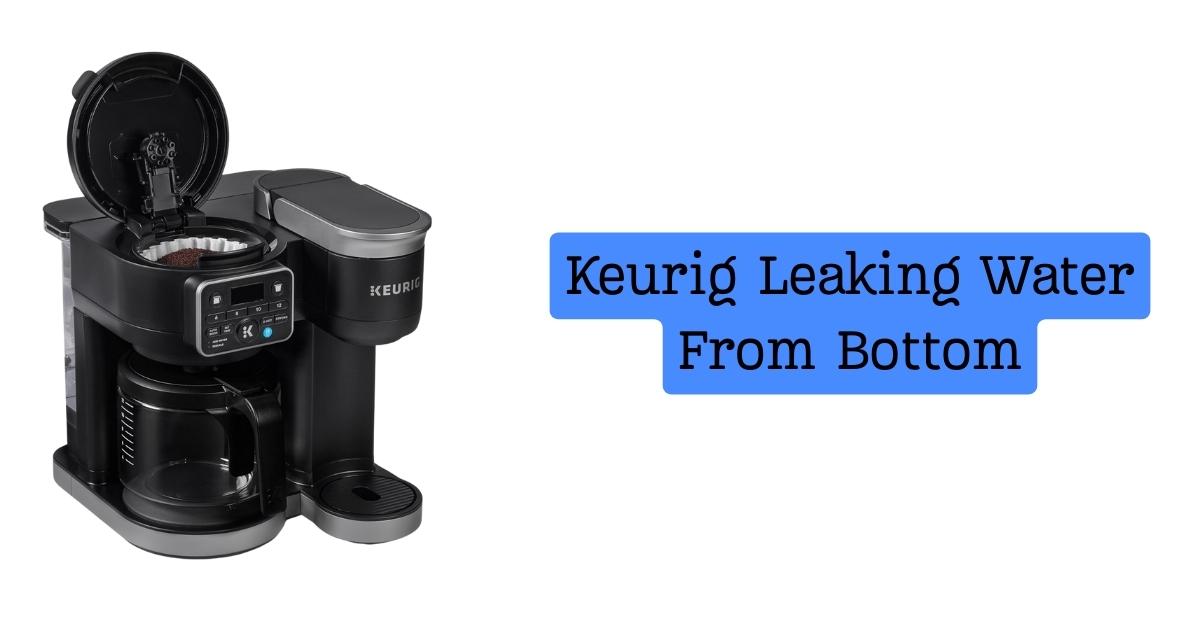
I saw my Keurig leaking water from bottom and felt a knot in my stomach. I thought my machine was trash. But I took a deep breath. I decided to look closer before spending money on a new one.
It turns out, the fix was actually quite easy. Most leaks are just loose parts or old seals, not a dead machine. I learned a lot from that mess. Let’s clean up that water and get your coffee flowing again.

What Does It Mean When a Keurig Is Leaking Water From the Bottom?
Think of your coffee maker like a tiny, simple plumbing system. It pulls water from the tank, heats it up, and pushes it through the coffee pod. It is usually a sealed loop. When you see a Keurig leaking water from bottom, that loop is broken.
Water is escaping before it hits your cup. This usually points to a loose tube or a worn-out seal inside. It is rarely a sign that the whole machine is dead.
We need to figure out if it is just a spill or a real break. A small puddle might just be an overflow. A constant stream usually means a part has failed. Don’t panic yet; let’s look at why this happens.
Common Causes of a Keurig Leaking Water From Bottom
1. Loose or Misaligned Water Reservoir
This is the most common issue I see. It is also the easiest to fix. If the tank does not sit right, water seeps out. It misses the intake hole completely.
I once spent an hour taking my machine apart. I felt silly when I realized the tank was just crooked. I had bumped it while cleaning the counter. If you see your Keurig leaking underneath the tank side, check this first. It is like a puzzle piece that isn’t snapped in all the way.
Signs to look for:
- Water pools directly under the tank.
- The tank wobbles when you touch it.
- You see bubbles rising from the base of the tank.
2. Cracked or Damaged Internal Hose
Inside the machine, plastic tubes carry the hot water. Over time, heat and pressure wear them down. They can get brittle and crack. This happens a lot with older machines.
It often happens suddenly. You brew a cup one day, and it is fine. The next day, you have a mess. It is just like an old garden hose that springs a leak after a long summer. The wear and tear eventually wins.
3. Faulty or Worn-Out O-Rings
O-rings are tiny rubber bands that seal the connections. They stop water from dripping where tubes meet the pump. When they dry out or crack, you get a Keurig leaking internally.
Hard water is tough on these seals. Minerals build up and eat away at the rubber. If your machine is a few years old, this is a likely culprit. It is a cheap part, but it causes a big mess.
Why this matters:
- A bad O-ring causes a slow, steady drip.
- It is a common Keurig water leak fix for DIY lovers.
- Replacing them extends the life of the brewer.
4. Overfilled or Improperly Seated Reservoir
We have all been there. You are half-asleep and just want coffee. You fill the tank to the brim and shove it back on.
If you add too much water, it has nowhere to go but out. It might spill over the top, or leak from the overflow vent. Gravity always wins. The water runs down the side and pools at the bottom. This looks like a leak, but it is just a spill.
5. Scale and Mineral Buildup Causing Pressure Leaks
This is the “silent killer” of coffee makers. If you don’t descale often, minerals clog the tubes. The pump pushes hard to move the water.
When the pressure gets too high, the water finds a weak spot. It bursts through a seal or hose connection. I noticed my coffee flow was slow before the leak started. That was my warning sign. Regular cleaning helps avoid these Keurig descaling problems.
Key takeaways:
- Clogs increase internal pressure.
- High pressure forces water out of sealed joints.
- Good Keurig maintenance tips save you from leaks.
How I Diagnosed My Keurig Leaking From the Bottom
I felt like a detective at a crime scene. The suspect was my coffee maker. The evidence was a puddle. I didn’t want to guess, so I tested it.
First, I moved the machine to a dry towel. This helped me see exactly where the water started. I filled the tank and just watched. I didn’t turn it on yet.
Nothing happened. The towel stayed dry.
Then, I turned it on and brewed a cup of plain hot water. That is when I saw it. A slow trickle started near the back. It wasn’t the tank; it was internal. By isolating the steps, I saved time. I knew I had to open it up or descale it.
How to Fix a Keurig That’s Leaking Water From the Bottom
Step 1: Unplug and Empty the Machine
Safety comes first. Water and electricity do not mix. Unplug the cord before you touch anything else.
Take the water tank off. Pour out any water left inside the machine if you can. You want a dry workspace. This stops the mess from getting worse while you work.
Step 2: Reseat and Inspect the Water Reservoir
This is the easiest Keurig water leak fix. Sometimes, the tank just sits wrong. Lift it off and look at the bottom valve.
Make sure no coffee grounds are stuck there. Put the tank back on. Push it down firmly. It should click or feel solid. If it wobbles, it will leak again.

Step 3: Clean and Descale the Keurig
Minerals act like plaque in arteries. They block the flow. When water can’t move, pressure builds up. Then, it leaks out the bottom.
Run a descaling cycle. Use white vinegar or a store-bought solution. I do this every three months. It often clears the “clog” and stops the leak. It is magic for older machines.
Step 4: Check for Visible Cracks or Hose Leaks
If it still leaks, grab a flashlight. Look closely at the bottom. Do not unscrew the case unless you are handy.
You might see a loose tube. If a hose has popped off, you can sometimes push it back on. If the plastic housing is cracked, that is bad news. Cracks are hard to seal.
Step 5: Decide Whether Repair or Replacement Makes Sense
Ask yourself a hard question. Is this machine worth saving?
If your Keurig is five years old, parts might be worn out. A new pump costs money and time. Sometimes, buying a new one is smarter. My rule is simple: if the repair costs half the price of a new one, I upgrade.
When a Leaking Keurig Is Not Worth Fixing
Sometimes, you have to let go. I had a friend, Mike, whose machine started smoking. That is a hard stop.
If water leaks onto the electrical cord, throw it out. It is a fire risk. Also, if the leak continues after you replace seals, the pump is likely dead. Don’t fight a losing battle. Your safety is worth more than a cup of coffee.
How to Prevent a Keurig From Leaking in the Future
I learned this the hard way. Prevention is easier than fixing.
- Descale on time: Set a reminder on your phone. Clean it every 90 days.
- Use filtered water: Hard water is the enemy. Filtered water has fewer minerals.
- Don’t overfill: Stop at the “Max” line. Give the water room to move.
- Empty the drip tray: It catches small spills. Keep it dry to spot big leaks early.
FAQs: Keurig Leaking Water From Bottom
Why is my Keurig leaking water from the bottom only when brewing? This usually means a hose or seal inside is broken. The pump creates pressure during brewing. This pressure pushes water out of weak spots.
Is it safe to use a Keurig that leaks from the bottom? No, it is risky. Water can reach the electrical wires. This can cause a short circuit or a shock. Unplug it until you fix it.
Can descaling fix a Keurig water leak? Yes, often. Scale buildup blocks the flow. This causes high pressure and leaks. Removing the scale lowers the pressure and stops the leak.
How long should a Keurig last before leaking problems start? Most last about 3 to 5 years. Seals dry out over time. Regular cleaning helps them last longer.
Does hard water cause Keurig leaks? Yes. Hard water leaves mineral deposits. These deposits clog tubes and eat away at rubber seals.
Final Thoughts: What I Tell Friends When Their Keurig Leaks From the Bottom
I tell them not to panic. A puddle doesn’t always mean the machine is dead.
My Keurig leaking water from bottom was just a wake-up call. I needed to clean it better. Most of the time, a good descaling or a tank adjustment fixes it.
Coffee makers are workhorses. They get tired. Give it a little care, and it will serve you for years. If you try these steps and it still leaks, treat yourself to a new one. You deserve a stress-free morning cup.