Start small: buy versatile basics, skip gimmicks, and match tools to recipes.
If you’re starting from scratch, this beginner kitchen shopping guide will help you build a smart, affordable setup that actually supports how you cook. I’ve equipped tiny apartments, busy family kitchens, and rental spaces, and I know what works day to day. Read on for clear picks, testing notes, and money-saving tips so you can shop once, cook well, and love your kitchen.
Set your cooking goals and budget
Before you buy, define what you will cook most. Eggs and pasta? Simple sheet-pan meals? Stir-fries and soups? Your answers shape your list. This beginner kitchen shopping guide keeps you focused on tools you’ll use every week.
Pick a budget range and stick to it. Buy fewer, better pieces. You can always add later. A small kit that works is better than a large set that gathers dust.
Group your needs:
- Daily cooking tools skillet, knife, spoon, cutting board.
- Meal builders saucepan, stockpot, sheet pan.
- Nice-to-haves blender, rice cooker, Dutch oven.
- Storage and safety containers, thermometer, mitts.
Core cookware essentials
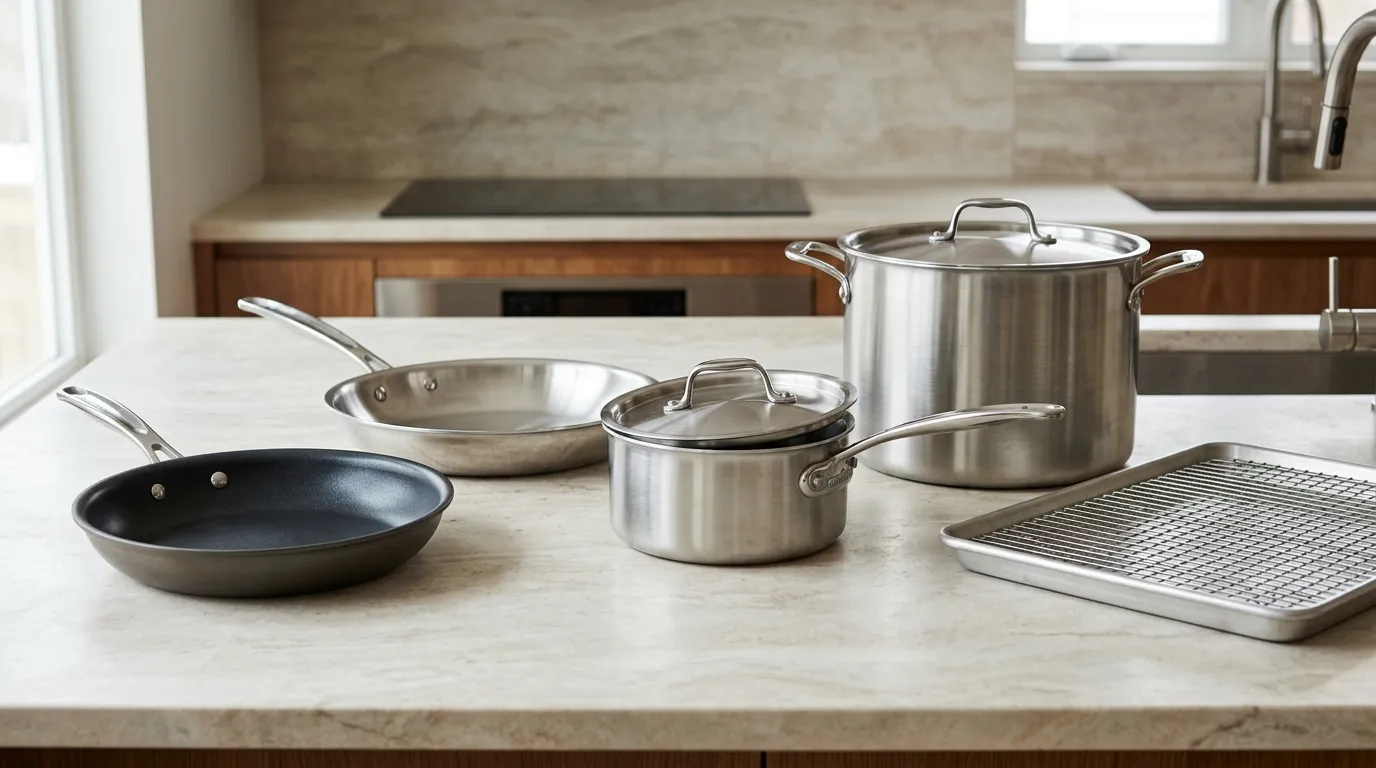
Start with versatile pans that cover 80% of meals. In my first studio kitchen, I used three things over and over a 10-inch nonstick skillet, a 3-quart saucepan, and a half-sheet pan. Everything else was extra. This beginner kitchen shopping guide sticks to proven workhorses.
What to buy first:
- 10-inch nonstick skillet for eggs, pancakes, quick sautés. Look for PFOA-free PTFE or quality ceramic nonstick. Use medium heat and silicone or wood tools.
- 12-inch stainless steel skillet for searing and pan sauces. Tri-ply or 5-ply helps heat evenly and avoids hotspots.
- 3-quart saucepan with lid for rice, pasta sauce, and reheating soup. Pick stainless with a thick base.
- 6- to 8-quart stockpot for pasta, stocks, and big batches. Stainless is easy to clean and durable.
- Half-sheet pan and cooling rack for roasting vegetables, chicken thighs, and cookies. Aluminum sheet pans brown well.
Material notes:
- Stainless steel 18/10 resists rust and holds shine. Great for browning.
- Cast iron holds heat and is perfect for steaks and cornbread. Heavier and needs seasoning.
- Carbon steel heats fast and can be a lighter cast-iron alternative.
- Nonstick is easy for eggs but wears out. Expect 2–5 years with care.
Nonstick or stainless for eggs? Nonstick wins for eggs and crepes. Stainless is better for searing and fond.
Knives and cutting tools
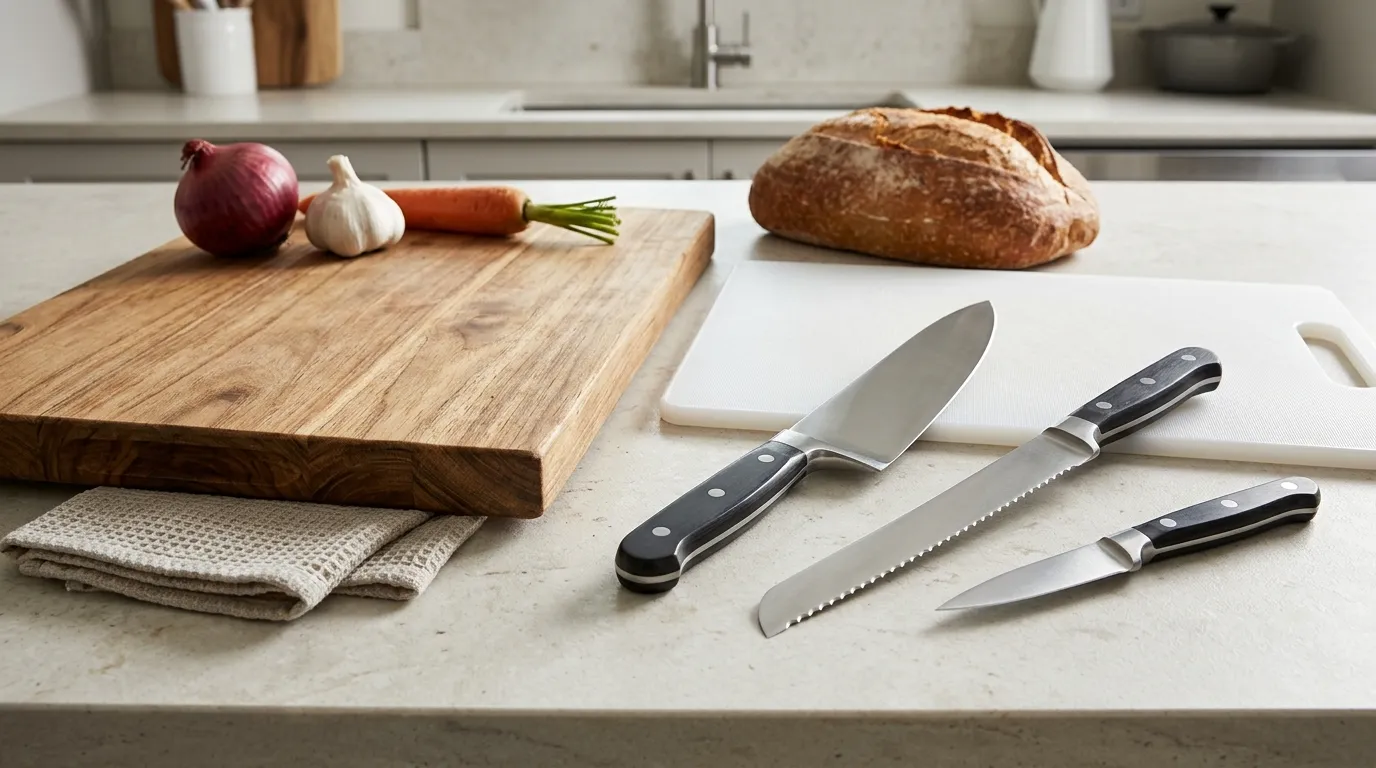
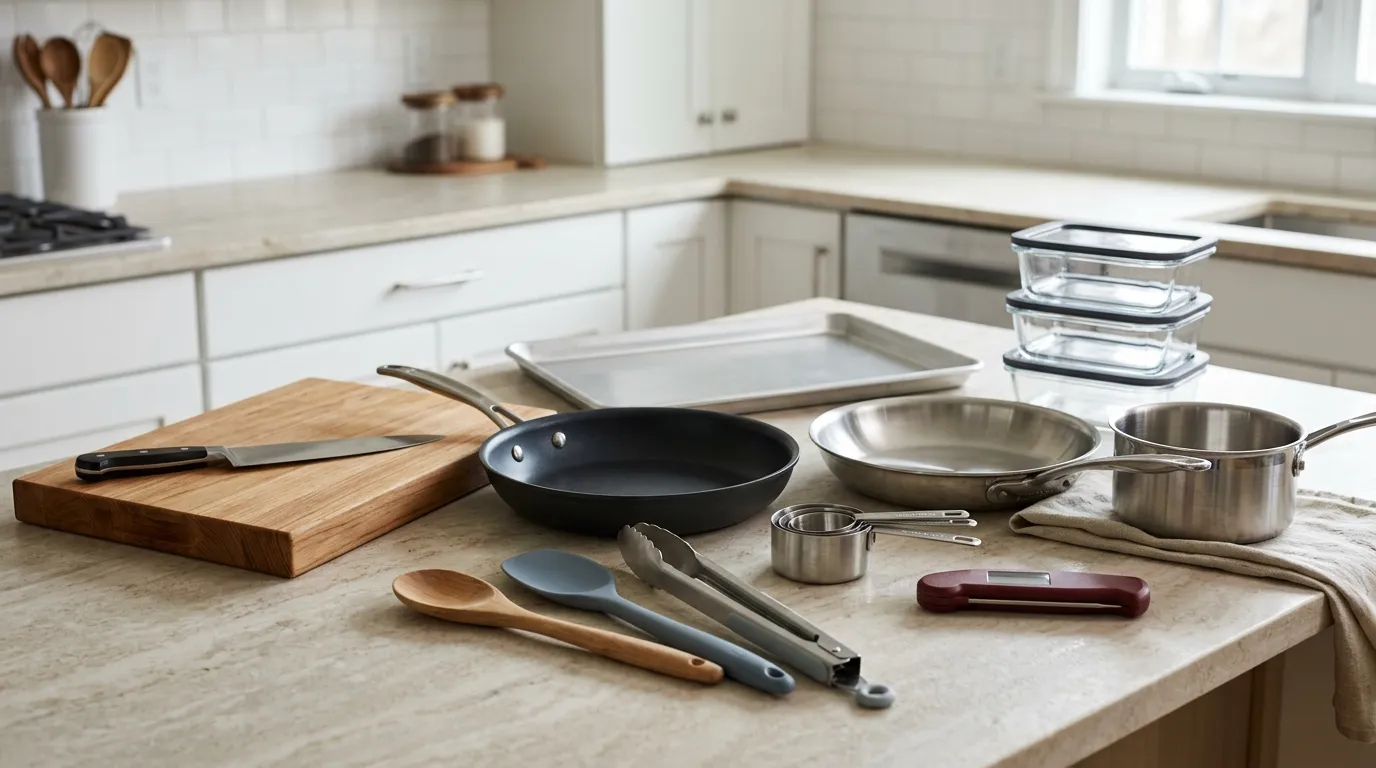
You only need three knives to start. A chef’s knife 8 inches, a paring knife 3–4 inches, and a serrated bread knife. This beginner kitchen shopping guide favors balance, safety, and sharpening ease over big “sets.”
Tips from my prep shifts:
- Hold the knife before you buy. It should feel secure and not tip forward.
- Learn to hone weekly. A honing rod realigns the edge. Sharpen on a stone or at a pro shop every few months, based on use.
- Use a stable board. Choose a wood or plastic board that is at least 12 by 18 inches. Place a damp towel under it to stop sliding.
Cutting board care:
- Wood end-grain boards are gentle on blades. Hand-wash and oil monthly.
- Plastic boards are dishwasher-safe. Use color-coding to prevent cross-contamination.
Tools, gadgets, and measuring
Skip single-use gadgets. Pick tools that multitask. This beginner kitchen shopping guide keeps the drawer light and useful.
Must-have tools:
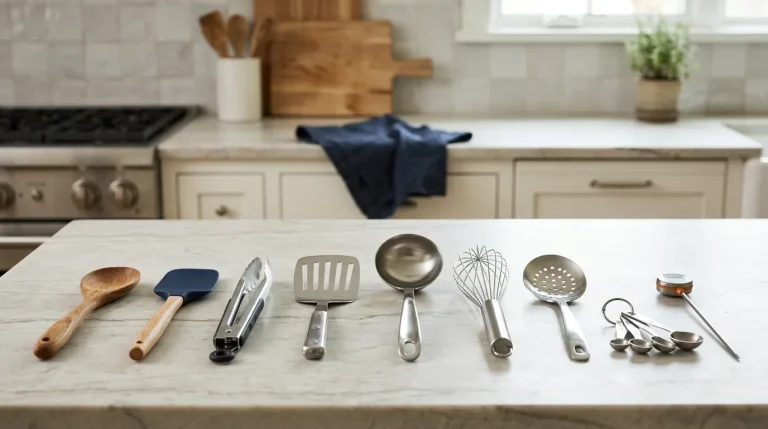
- Tongs with scalloped tips for turning and tossing.
- Fish spatula thin, flexible, great for everything from eggs to burgers.
- Heat-safe silicone spatula for scraping bowls and pans.
- Balloon whisk for sauces and batters.
- Peeler with a sharp, replaceable blade.
- Can opener that cuts cleanly.
- Measuring cups dry and liquid are different and measuring spoons.
- Digital instant-read thermometer for safe, juicy meat and baking.
Nice-to-have:
- Silicone baking mat for easy cleanup.
- Splatter screen if you fry or sear often.
Appliances that matter
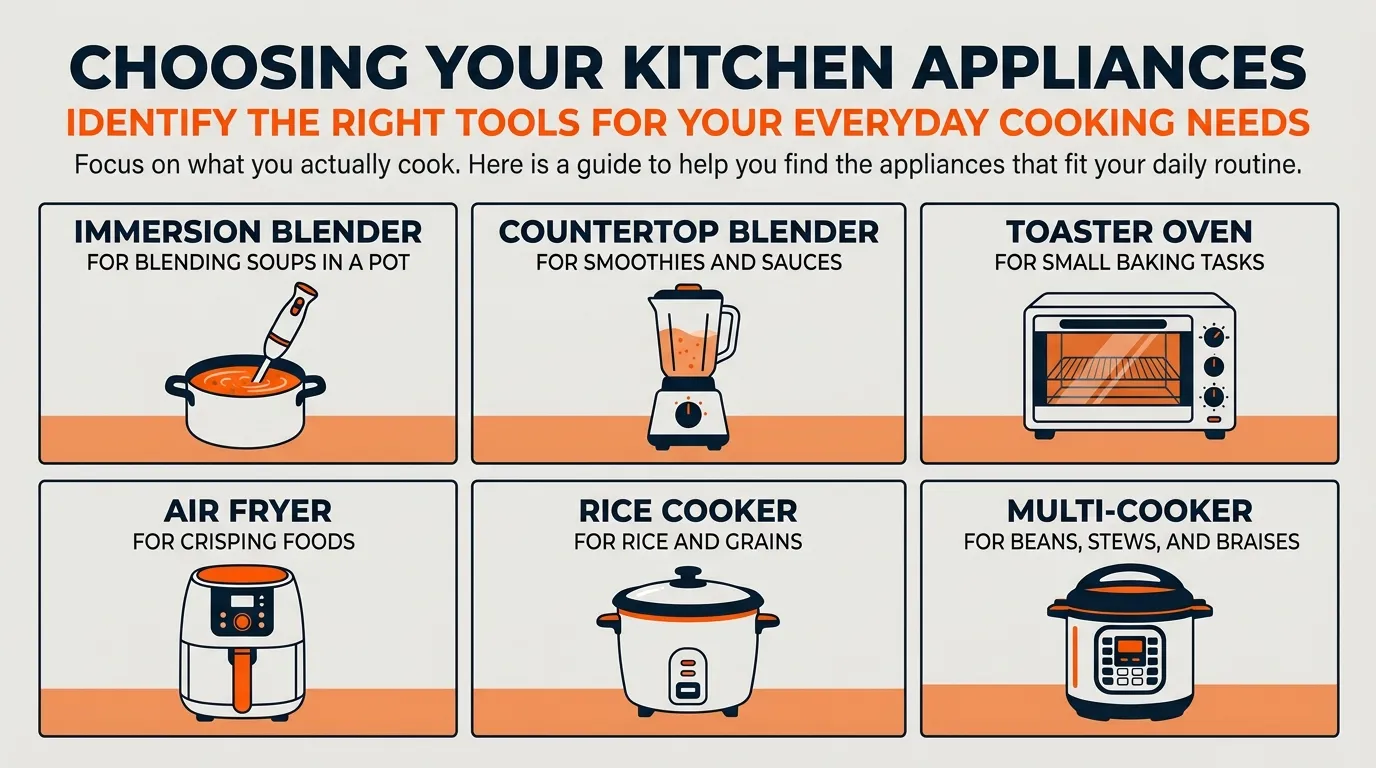
You do not need every countertop device. Start with one that solves your top task. This beginner kitchen shopping guide rates value over hype.
High-impact picks:
- Hand blender blends soups in the pot and makes smoothies. Easy to store.
- Counter blender for smoothies, sauces, and crushed ice. Choose based on power and jar ease of cleaning.
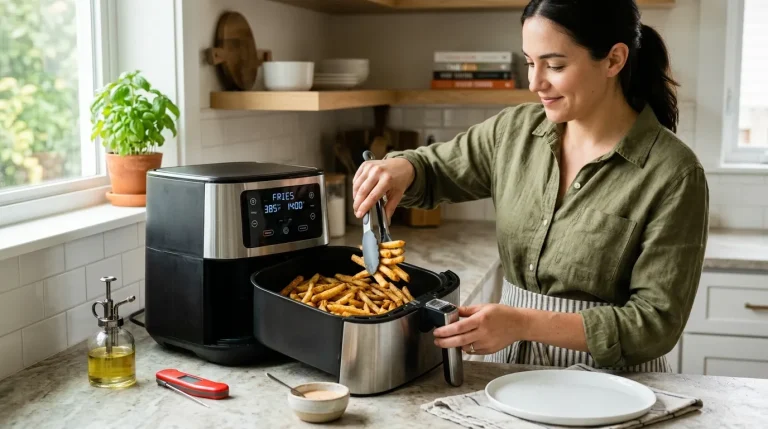
- Toaster oven or air fryer for small bakes and quick crisping. Saves energy over a big oven.
- Rice cooker for perfect rice and grains without watching. Some also steam and keep warm.
- Multi-cooker for hands-off beans, stews, and braises. Great if you batch cook.
Do I need an Instant Pot? If you cook beans, stews, or batch meals, yes. If you sauté and roast more, you may skip it.
Bakeware and storage
Even if you do not bake much, a few pieces help with casseroles and roasting. This beginner kitchen shopping guide keeps it minimal and sturdy.
Starter bakeware:
- Half-sheet pan and cooling rack already covered, you will use these every week.
- 9 by 13-inch metal pan for casseroles, brownies, and roasted vegetables.
- 8- or 9-inch round cake pan if you bake simple cakes or frittatas.
Storage that lasts:
- Glass containers with locking lids for leftovers. They go from fridge to oven.
- BPA-free deli containers for meal prep and freezing. Cheap, stackable, and clear.
- Reusable silicone bags for snacks and freezer portions. Label with a marker.
Safe food handling and cleaning
Good tools are only safe if you use and clean them well. This beginner kitchen shopping guide bakes in food safety so you can cook with confidence.
Food safety basics:
- Cook poultry to 165°F, ground beef to 160°F, fish to 145°F. Use a thermometer.
- Keep raw meat and ready-to-eat foods on separate boards and trays.
- Chill leftovers within two hours. Store in shallow containers for fast cooling.
- Avoid aerosol sprays on nonstick. They build residue. Use a little oil instead.
- Do not shock hot pans with cold water. Let them cool first.
- Hand-wash knives and dry at once. Dishwashers dull and pit blades.
- Re-season cast iron when it looks dry. Wipe with thin oil and heat.Smart shopping tips and money savers
You can build a great kitchen on a tight budget. This beginner kitchen shopping guide helps you spend where it counts and save where it does not.
What to do:
- Buy open-stock pieces instead of full sets. You pick only what you need.
- Hold knives and pans in person when you can. Comfort matters.
- Look for tri-ply stainless and riveted handles. They last longer.
- Check return windows and warranties. Good brands stand behind their gear.
- Shop outlets, restaurant supply stores, and seasonal sales. Commercial gear is tough and often cheaper.
What to skip:
- Multi-piece “everything” sets. You will use a few and store the rest.
- Single-use gadgets banana slicers and avocado tools. A knife does the job.
Sample starter kit by budget
Use this as a map, not a rule. Build in stages and upgrade what you use the most. This beginner kitchen shopping guide keeps options flexible.
Under 150 dollars:
- 10-inch nonstick skillet
- 3-quart saucepan with lid
- Half-sheet pan and rack
- Chef’s knife and plastic board
- Tongs, spatula, whisk, peeler
- Measuring tools and thermometer
Around 300 dollars:
- Add 12-inch stainless skillet
- 6- to 8-quart stockpot
- Glass storage set
- Hand blender or basic blender
- Wood cutting board
Around 600 dollars:
- Upgrade to tri-ply stainless pieces
- Add Dutch oven 5 to 6 quarts
- Toaster oven or air fryer
- Carbon steel skillet
- Knife sharpening setup
Common beginner mistakes and how to avoid them
Buying full sets too soon. You will not use half. Start with open stock and add as you learn.
Picking cheap knives. A mid-range sharp knife is safer than a dull bargain. Budget for honing and sharpening.
Skipping a thermometer. Guessing leads to dry or unsafe food. A simple instant-read fixes that.
Crowding pans. Food steams and will not brown. Use a bigger pan or cook in batches.
Ignoring care guides. Nonstick needs gentle heat and tools. Stainless needs preheating and patience. This beginner kitchen shopping guide includes care because it adds years to your gear.
Frequently Asked Questions of beginner kitchen shopping guide
How do I choose between nonstick and stainless steel?
Use nonstick for eggs and delicate foods. Use stainless for searing, browning, and pan sauces. Many kitchens use both.
What size pans should I buy first?
A 10-inch nonstick skillet, a 12-inch stainless skillet, and a 3-quart saucepan cover most meals. Add a stockpot for pasta and soups.
Do I need a Dutch oven if I have a stockpot?
A Dutch oven shines for braises, bread, and oven use. A stockpot is better for large boiling tasks. If budget is tight, start with a stockpot.
Which cutting board is safest for meat?
Plastic boards are great for raw meat because they can go in the dishwasher. Use wood for produce and bread to protect knife edges.
How many storage containers do I need to start?
Four to six medium containers and a few small ones work for most homes. Choose glass for reheating and deli containers for bulk storage.
Conclusion
You do not need a packed kitchen to cook well. With a sharp knife, two skillets, a saucepan, a solid sheet pan, and a few reliable tools, you can make fast, tasty meals. Use this beginner kitchen shopping guide to buy with purpose, care for what you own, and upgrade only the pieces you love.
Pick one area to finish this week, like knives or cookware. Then cook three simple meals to test your setup. Ready for more tips and sample meal plans? Subscribe, bookmark this guide, and share your questions in the comments.