Use zones, vertical storage, and compact tools to transform tiny kitchens fast.
I’ve spent years helping renters and homeowners turn cramped kitchens into calm, efficient spaces. This kitchen organization guide for small spaces distills what works in the real world. You’ll learn how to plan zones, use every inch, and set up simple habits you can keep for life. Stick with me, and you’ll cook more, waste less, and love your small kitchen.
Start With a Simple Plan: Zones, Flow, and Goals
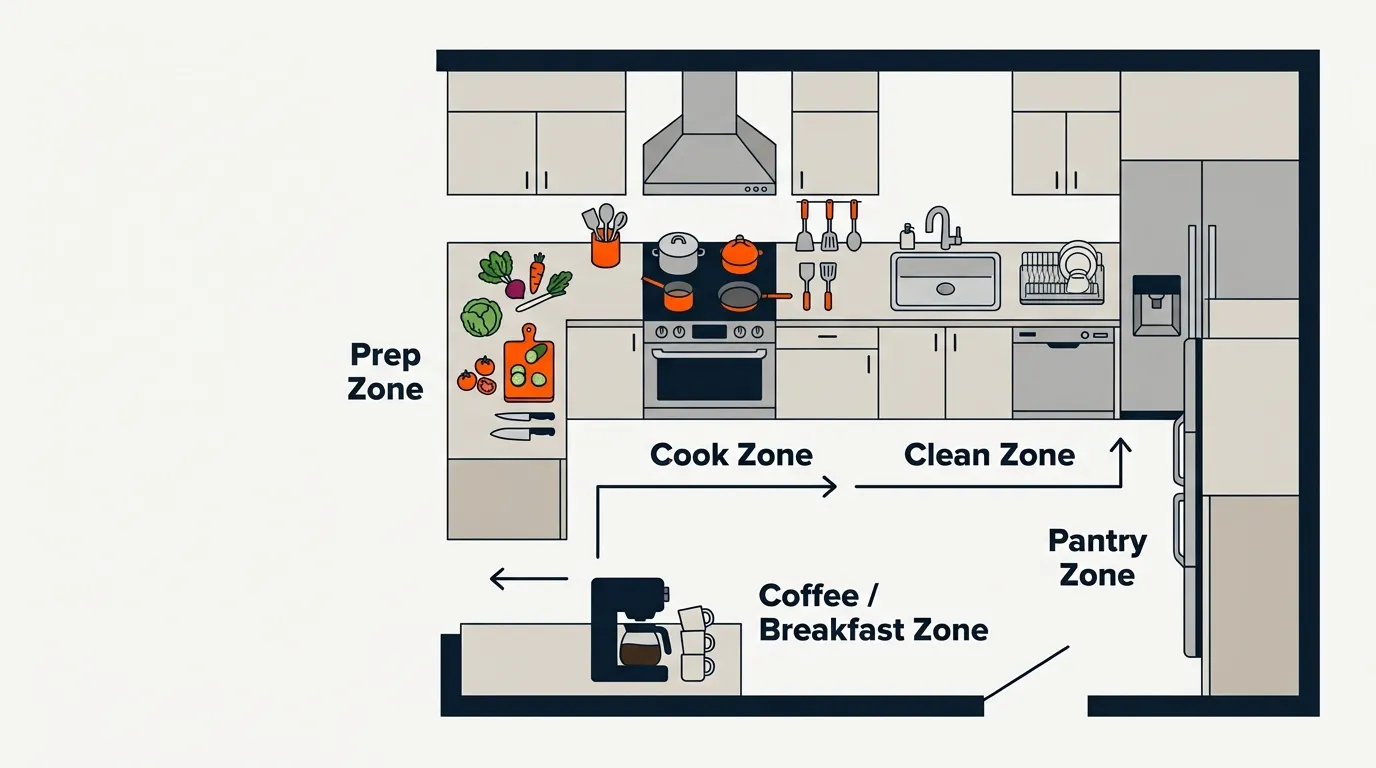
A strong plan is the backbone of any kitchen organization guide for small spaces. Start by measuring your room, cabinets, and drawers. Sketch your layout. Mark where you prep, cook, and clean.
Create clear zones:
- Prep zone near a clear counter with knives, boards, and mixing bowls close by.
- Cook zone at the stove with pans, oils, spices, and utensils within arm’s reach.
- Clean zone by the sink with soap, towels, trash, and compost nearby.
- Coffee or breakfast zone with mugs, kettle, and daily items grouped.
- Pantry zone, even if it is a shelf, cart, or cabinet.
Pro tip from the field: I ask clients to place a sticky note where each task starts. We then move tools to those note spots. This fast step reveals what belongs where and cuts steps right away.
Declutter First: Keep, Toss, or Rehome
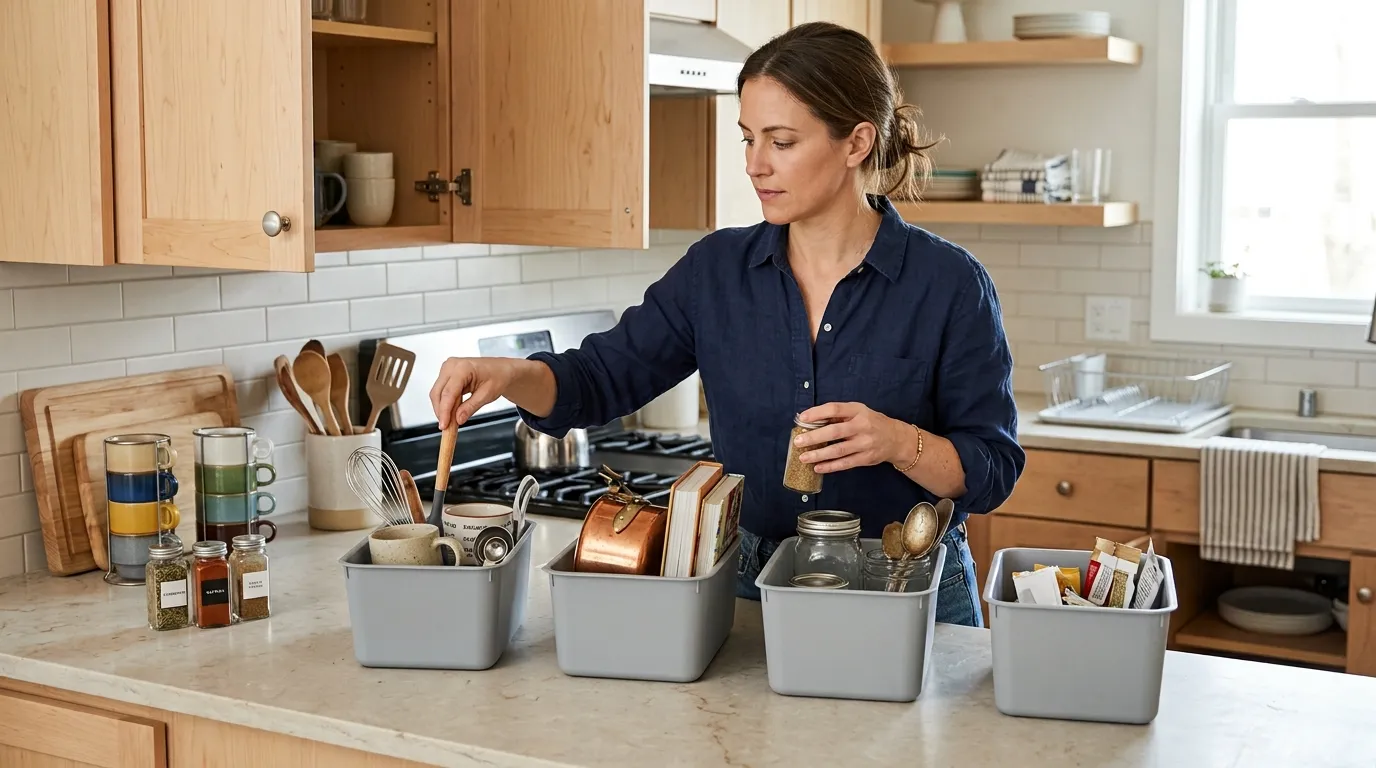
Clutter eats space. The best kitchen organization guide for small spaces starts with a clean slate. Work by category, not by cabinet. Pull out all mugs, all pans, or all spices at once.
Use a four-bin method:
- Keep for items used weekly or monthly.
- Relocate for seasonal or rarely used items.
- Donate for safe duplicates or extras.
- Toss for broken or expired goods.
Set a timer for 20 minutes. Decide fast. In my last studio kitchen project, we cut tools by 40% with no regrets. The cook gained a full drawer and ten minutes of prep time each night.
Maximize Vertical and Hidden Space
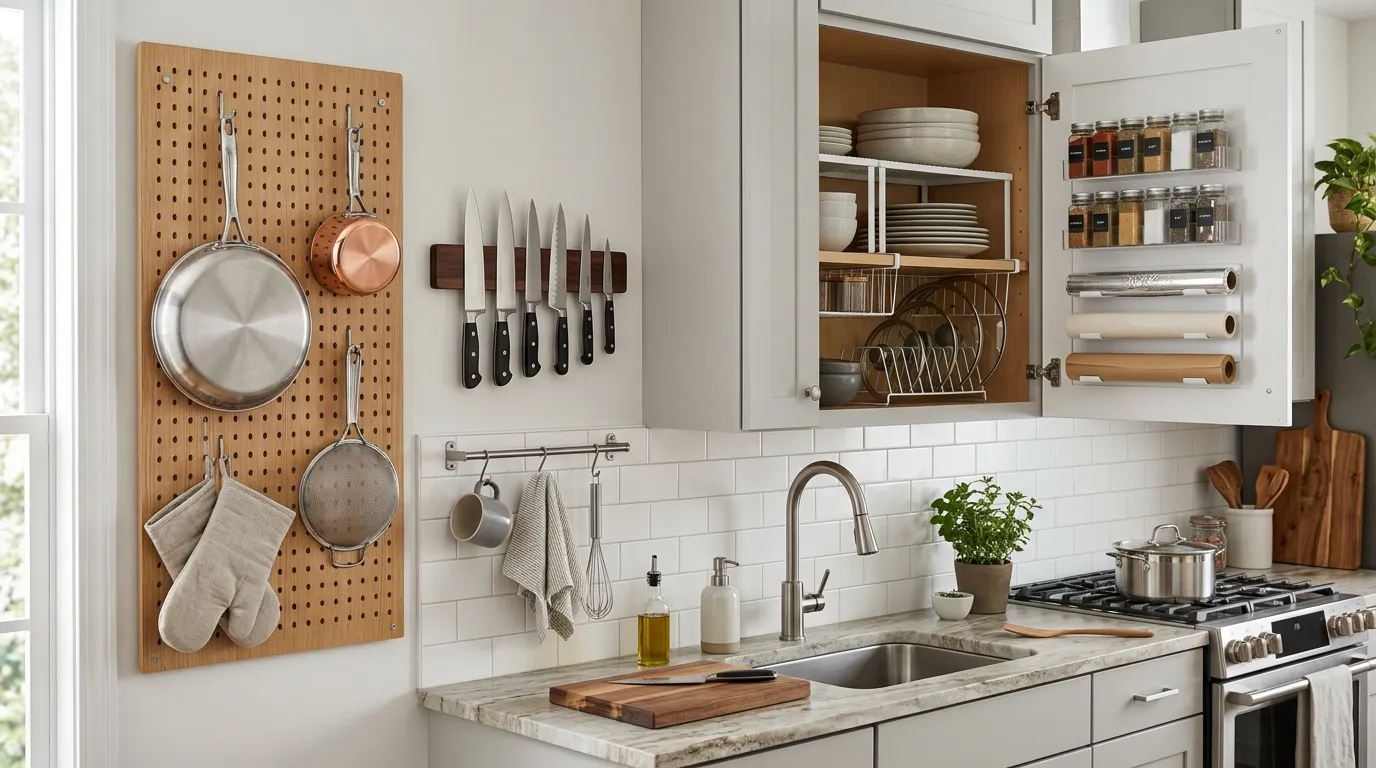
Walls, doors, and the air above shelves are your best friends in a kitchen organization guide for small spaces. Think up, not out.
Try these upgrades:
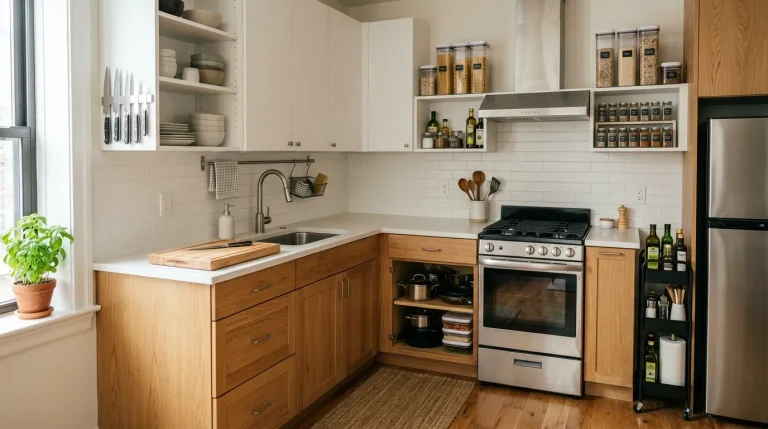
- Install a pegboard for pans, strainers, and mitts.
- Add magnetic strips for knives and spice tins.
- Hang rails with hooks for utensils and mugs.
- Use over-the-door racks for wraps or cleaning supplies.
- Slide in under-shelf baskets to catch plates or lids.
- Add shelf risers to double stack short items.
- Mount slim racks on the inside of cabinet doors for foil, lids, or spices.
- Fit toe-kick drawers for sheet pans if you own the space.
Mistake to avoid: filling every inch. Leave a little breathing room. Crowding slows you down and invites clutter back.
Smart Storage That Works Hard
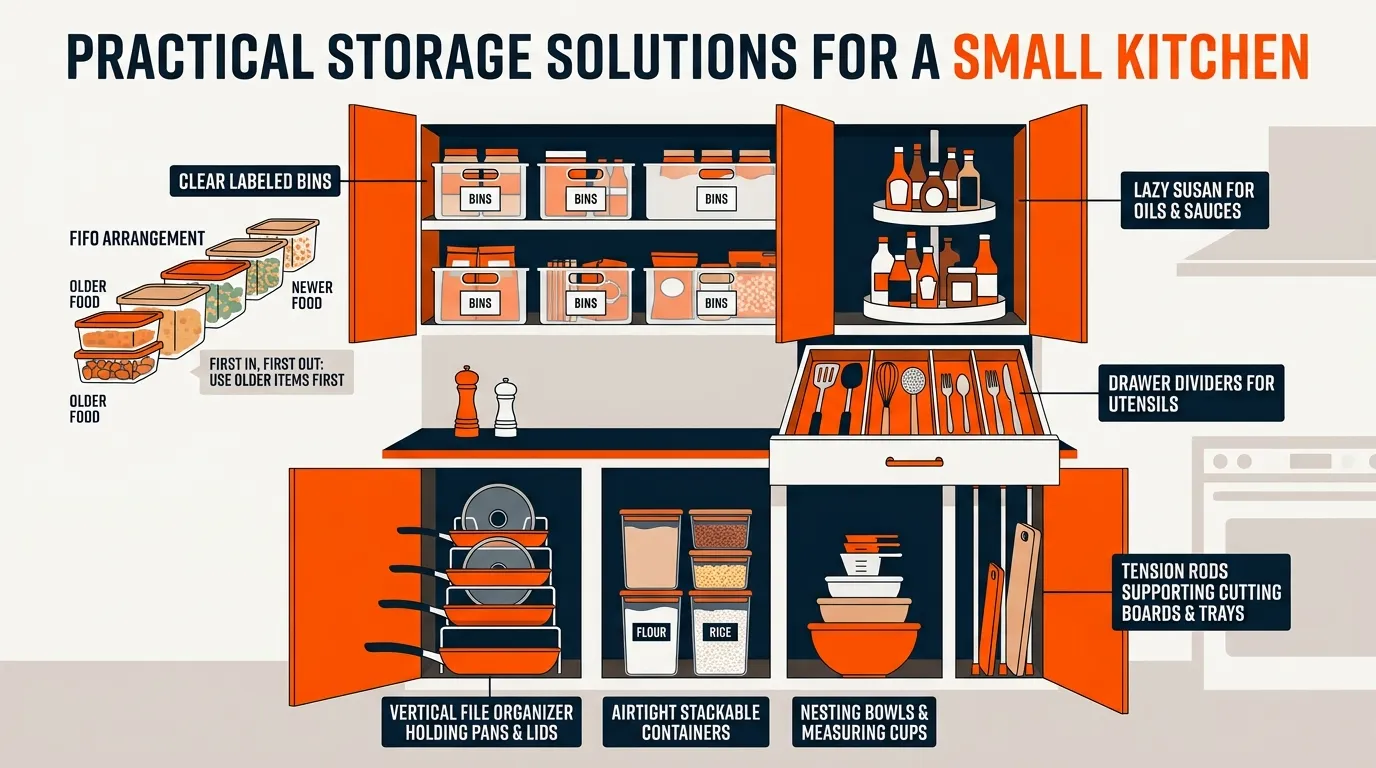
Make storage do the heavy lifting. In a kitchen organization guide for small spaces, the right tools multiply space without a remodel.
Top performers:
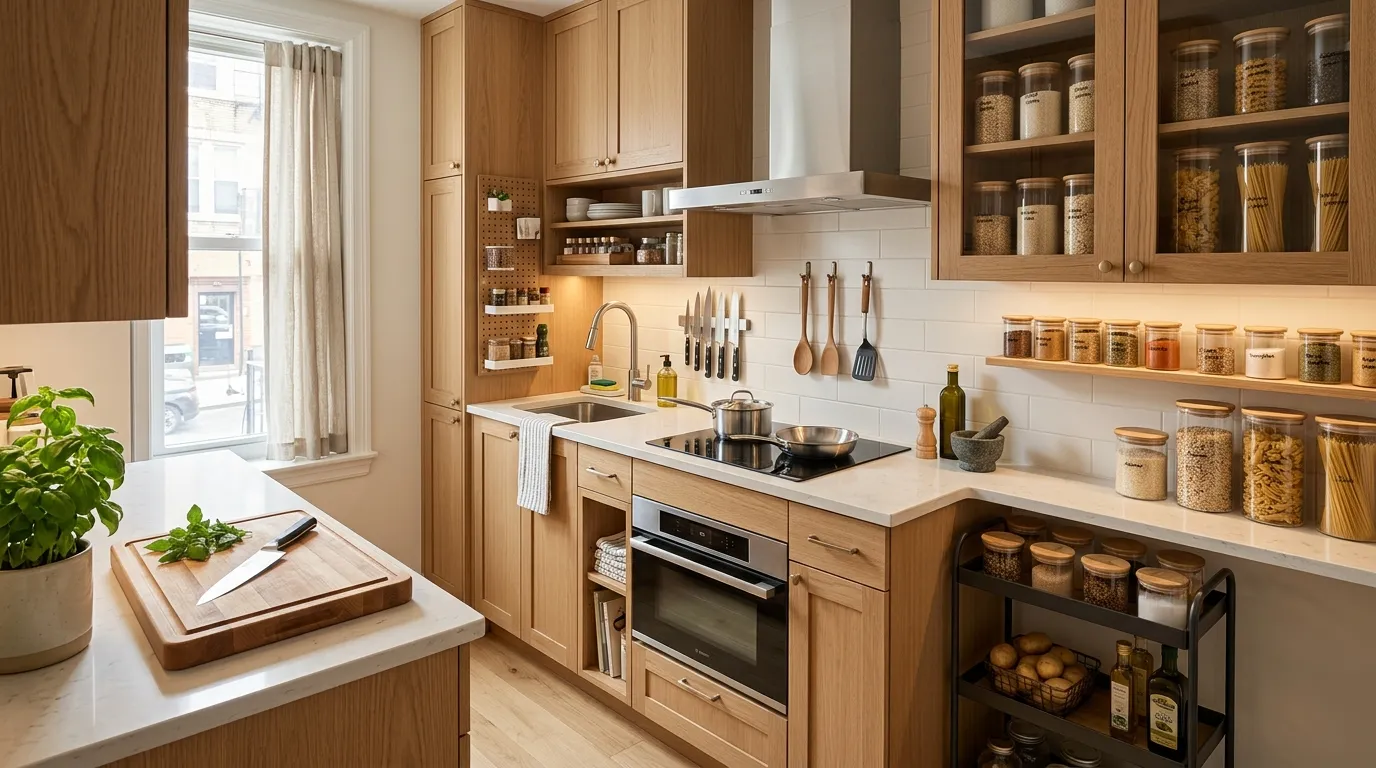
- Clear bins with labels for snacks, baking, or pasta.
- Lazy Susans for oils, sauces, or supplements.
- Drawer dividers for utensils, towels, and gadgets.
- File organizers turned vertical pan and lid holders.
- Airtight, stackable containers for flour, rice, and beans.
- Nesting bowls and measuring cups to save space.
- Tension rods to stand up cutting boards and trays.
Use the FIFO rule. Put new items behind old items. This reduces waste and keeps shelves neat.
Streamlined Tools and Small Appliances
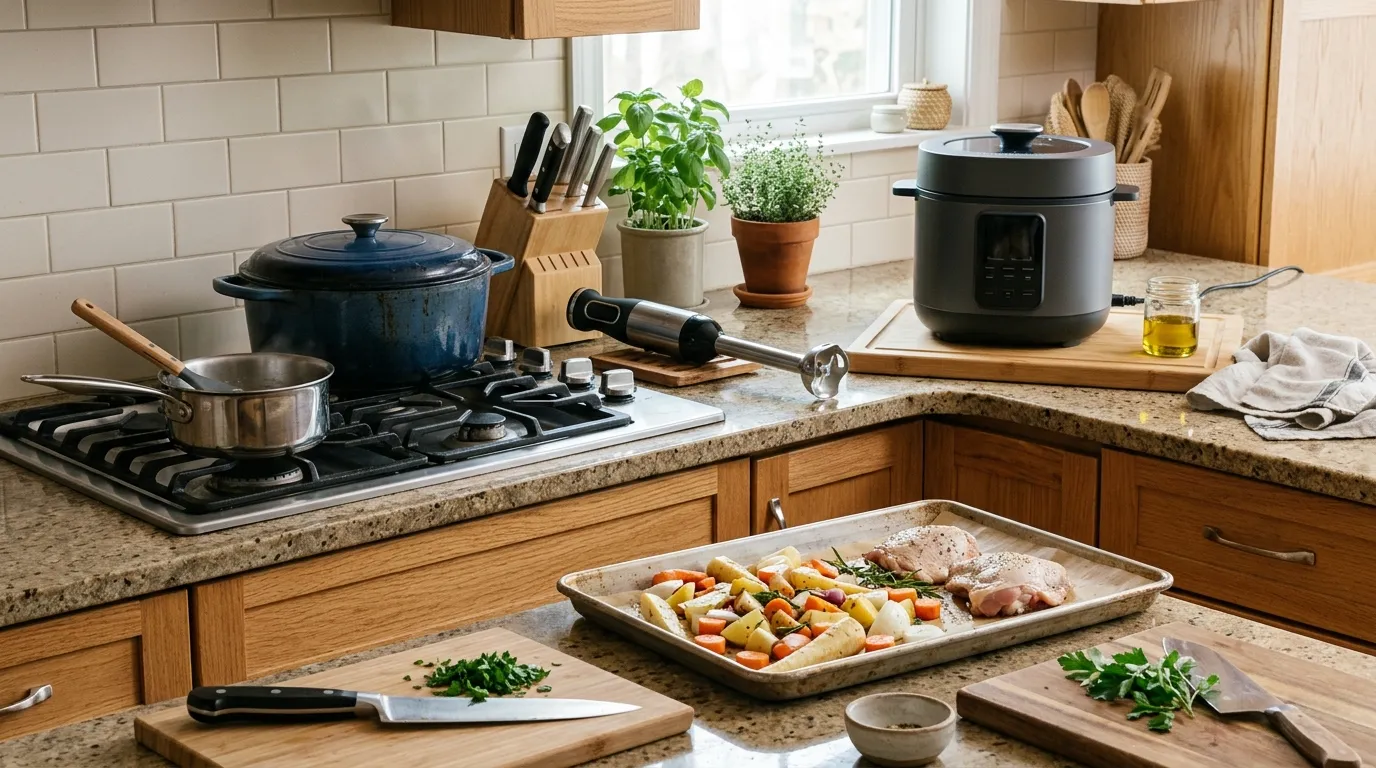
Fewer, better tools are key in any kitchen organization guide for small spaces. Ask two questions for each item. Do I use it weekly? Does it replace two other tools?
Smart swaps:
- A Dutch oven that bakes, braises, and fries.
- A stick blender for soups and sauces instead of a bulky blender.
- A compact multi-cooker if you slow cook and pressure cook often.
- A half-sheet pan that fits your oven but still roasts a full meal.
Keep one-goal gadgets out. Unitaskers clog drawers. I learned this the hard way with a spiralizer I used twice. Borrow rare tools from a friend or a library of things when needed.
Daily Habits That Keep Order
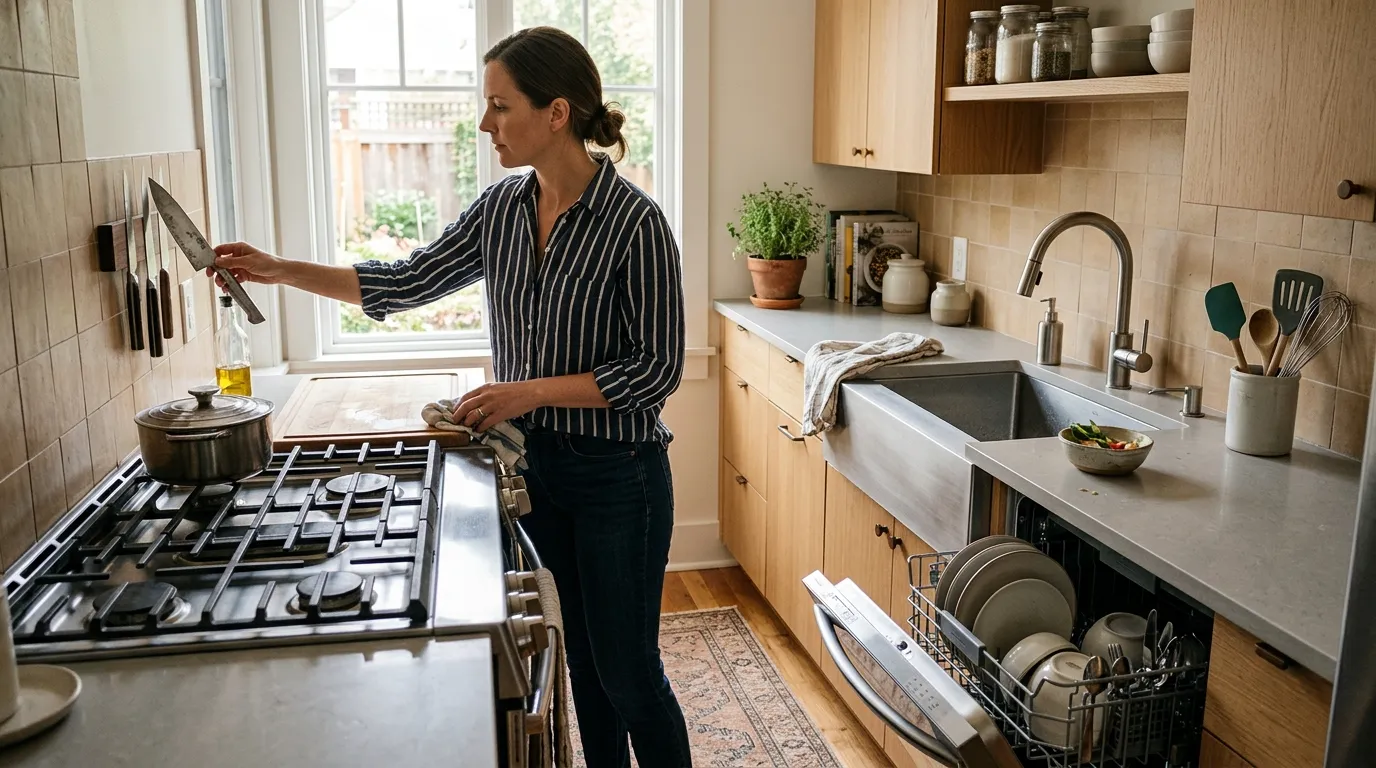
Habits protect your progress. Any kitchen organization guide for small spaces needs simple routines.
Try these:
- One-minute reset after each meal. Put tools back in their zone.
- Wipe counters and stove while pans rest or water boils.
- Do dishes right away or set a twice-a-day wash time.
- Use a weekly 15-minute shelf check for expired foods.
- Prep staples on one day. Wash greens. Cook a grain. Portion snacks.
These micro-habits stack up. Your kitchen stays ready, and cooking feels easy.
Design Tricks for a Bigger Feel
Design can make a tiny room feel open. Blend form and function in this kitchen organization guide for small spaces.
Simple wins:
- Light paint and doors with glass to bounce light.
- Under-cabinet lights to brighten the prep zone.
- A slim rolling cart for a movable pantry.
- A fold-down table or wall-mounted drop leaf for extra counter space.
- Matching clear containers to cut visual noise.
- Open shelves with strict rules. Keep them sparse and tidy.
A client in a 300-square-foot apartment gained visual calm with warm light and two open shelves. We staged daily mugs and bowls only. The rest lived behind closed doors.
Budget, Timeline, and Tiny Upgrades
You can start small. This kitchen organization guide for small spaces works on any budget.
Low-cost ideas:
- Use jars and shoe boxes as bins.
- Add adhesive hooks and labels.
- Try tension rods and shelf risers.
Mid-range moves:
- Install a pegboard wall.
- Upgrade to stackable pantry sets.
- Add a rolling island with storage.
Higher-impact changes:
- Build drawer organizers to fit your tools.
- Add toe-kick drawers or slim pull-outs.
- Swap a bulky microwave for a compact model.
Weekend plan:
- Saturday morning: declutter by category.
- Saturday afternoon: install vertical storage.
- Sunday: set up zones and label bins.
- Sunday night: do a test cook and adjust.
Maintenance Checklist and Quick Wins
Keep a short checklist. This anchors your kitchen organization guide for small spaces.
Weekly:
- Clear the counter hot spots.
- Check produce and leftovers. Use or freeze.
- Wipe shelves and the fridge door seals.
Monthly:
- Audit one drawer or shelf.
- Sharpen knives. Replace sponges and towels.
- Refill staples and update labels.
Seasonal:
- Deep clean the fridge and oven.
- Review gadgets. Donate what you did not use.
- Re-map zones if your routine changed.
Quick wins I love:
- Put a tray on the counter for oils, salt, and pepper. It looks neat and is easy to clean.
- Use a caddy for cleaning tools under the sink. Pull it out in one move.
- Keep a donation bin in the pantry. When it fills, drop it off.
Frequently Asked Questions of kitchen organization guide for small spaces
How do I start if my small kitchen feels overwhelming?
Begin with trash and recycling. Then pick one category, like mugs, and finish it before moving on. Small wins build momentum.
What should I store on the counter in a tiny kitchen?
Only daily heroes. Keep the kettle, a cutting board, and one utensil crock. Store everything else in zones to free space.
Are open shelves good for small spaces?
Yes, if you keep them light and tidy. Limit shelves to daily items and dust weekly. Use matching containers to calm the look.
How do I keep my pantry organized without a real pantry?
Use a cart, a single cabinet, or wall shelves as your pantry zone. Add clear bins and labels. Follow FIFO so food moves and waste drops.
What is the best way to store pots and lids?
Stand lids in a file organizer or on a door rack. Stack pots by size with protectors. Keep them near the stove for fast access.
How many gadgets should I keep in a small kitchen?
Keep what you use weekly. Anything rare goes in deep storage or gets borrowed. Fewer tools make the space easier to clean and use.
Can I make room for baking in a tiny kitchen?
Yes. Create a portable baking bin with flour, sugar, tools, and liners. Pull it out to a clear counter, then store it away.
How do I store spices when I have no drawer?
Use a magnetic strip, a slim door rack, or a shallow shelf. Group by cuisine or use. Label lids for quick grabs.
What is the fastest daily habit to stay organized?
Do a one-minute reset after each meal. Return tools to zones and wipe the main counter. It prevents clutter from piling up.
How often should I review my setup?
Check monthly and after life changes. If cooking more, add prep space. If meal prep drops, shrink bulk storage.
Conclusion
A small kitchen can work like a pro space with the right plan. Use zones, clear bins, and vertical storage. Edit tools. Lock in tiny habits that protect your progress. This kitchen organization guide for small spaces is your playbook to cook more and stress less.
Pick one zone to fix this week. Set a timer. Make the change and test it with one meal. Then build from there.
Want more tips like this? Subscribe for weekly ideas, or leave a comment with your toughest kitchen challenge.