Keep it dry, seasoned, and oiled; avoid soaking to prevent rust.
Cast iron rewards simple habits with lifetime performance. In this cast iron care guide, I’ll show you how to season, clean, and cook with confidence using plain words and proven steps. I’ve restored flea-market skillets, cooked weekly on them for years, and taught new cooks the tricks that keep pans slick and rust-free. If you want a friendly, expert cast iron care guide you can act on today, you’re in the right kitchen.
What Makes Cast Iron Special
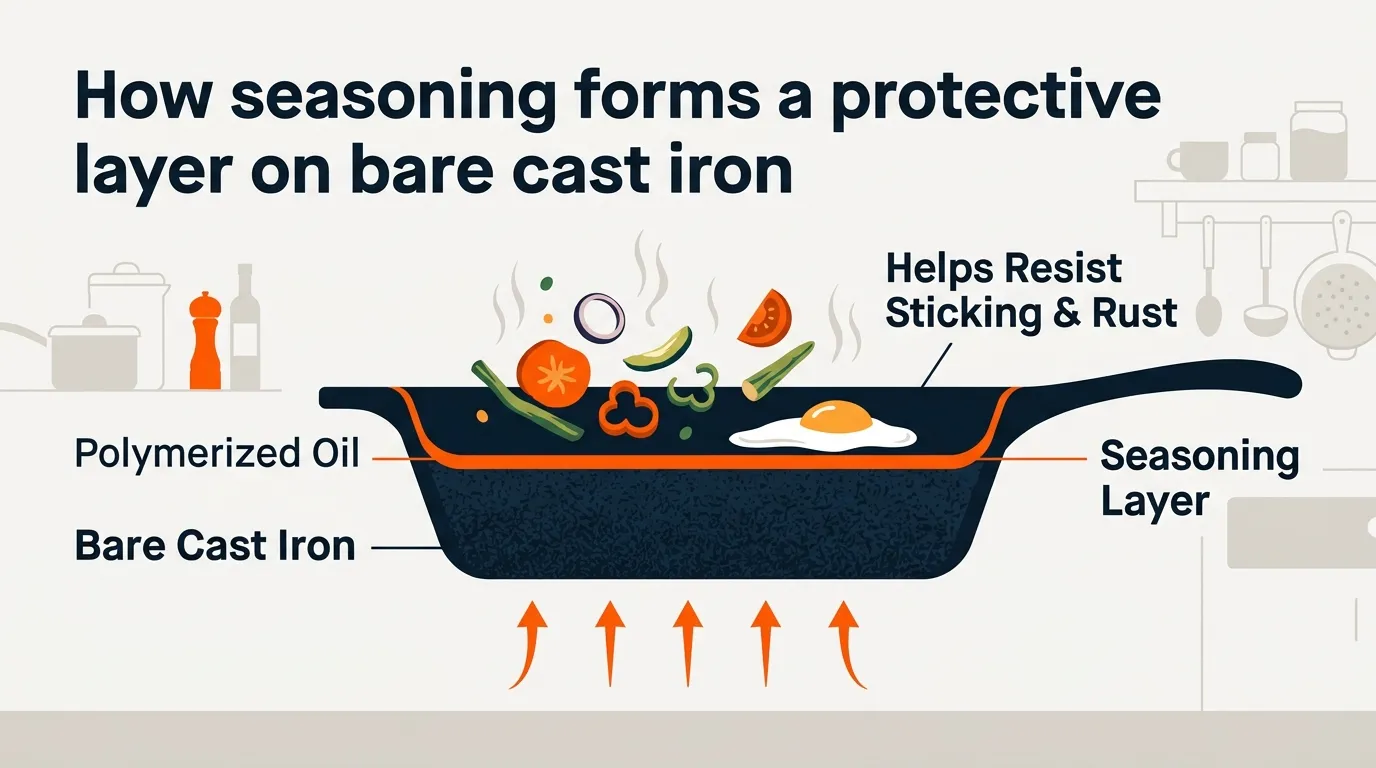
Cast iron is dense iron alloyed with carbon. It holds heat well and cooks food evenly. That is why it crushes searing and bakes with steady heat. Enameled cast iron has a coated surface. Bare cast iron needs seasoning to work its magic.
This cast iron care guide explains how oil bonds to the iron and forms a hard layer. That layer is called seasoning. It is not paint. It is polymerized oil, set by heat. It resists sticking and protects from rust. With the steps in this cast iron care guide, you can keep that layer strong for years.
Seasoning 101: Build the Nonstick Shield
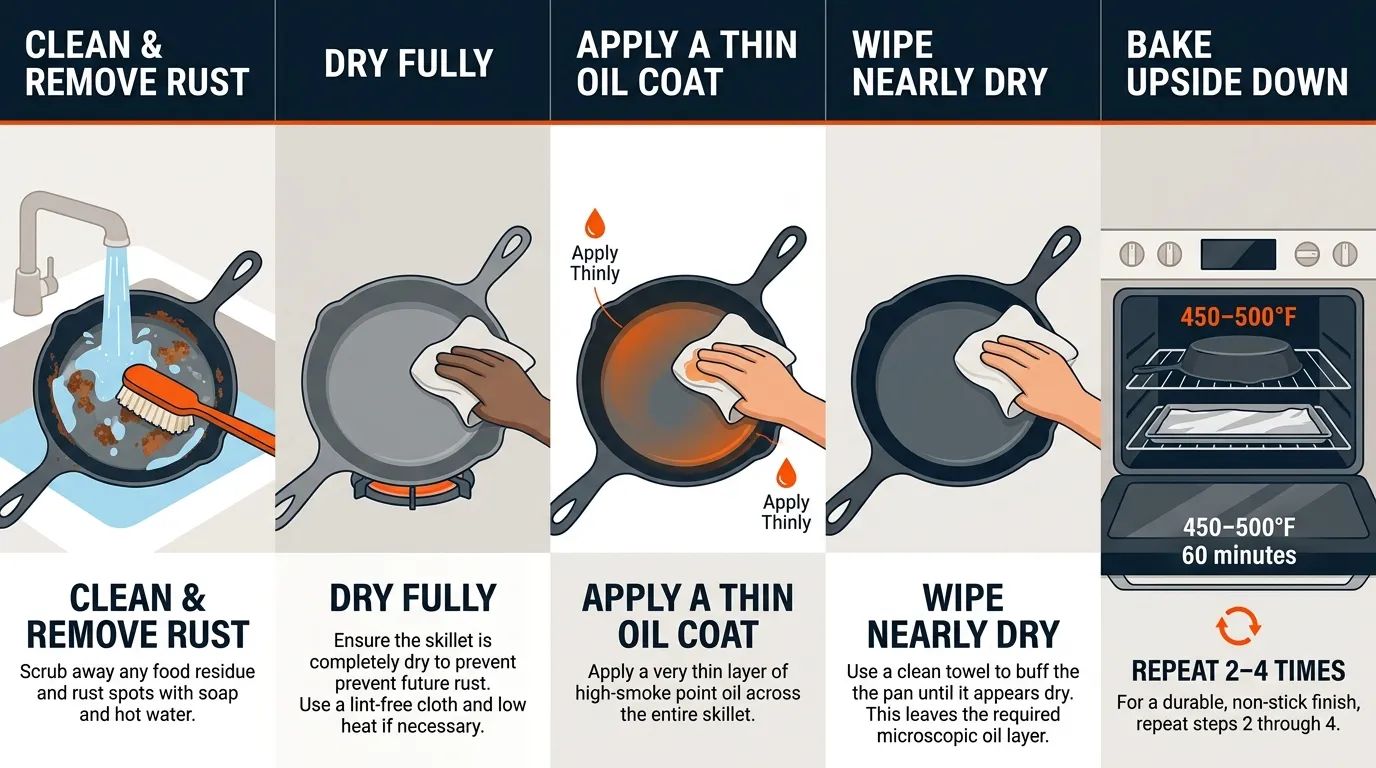
Seasoning is a thin, even coat of oil baked onto clean iron. Heat turns the oil into a tough, dry film. Done right, it feels smooth and slick, not gooey. This cast iron care guide keeps the process clear and repeatable.
How to season from scratch
- Clean the pan to bare metal. Remove rust and old gunk.
- Dry fully on a burner until no water remains.
- Rub a pea-sized amount of high-smoke-point oil over the pan, inside and out.
- Wipe it nearly dry with a clean towel until it looks just barely oiled.
- Bake upside down at 450–500°F for 60 minutes. Let cool in the oven.
- Repeat 2–4 times for a strong base.
Good oils for seasoning
- Grapeseed oil
- Canola oil
- Sunflower oil
- Refined avocado oil
- Neutral shortening or lard
Tip from my kitchen: The most common mistake is too much oil. If it looks wet, wipe again. Thin coats win. This cast iron care guide stresses thin, even layers for a hard, glassy finish.
Daily Cleaning: Simple, Fast, Effective
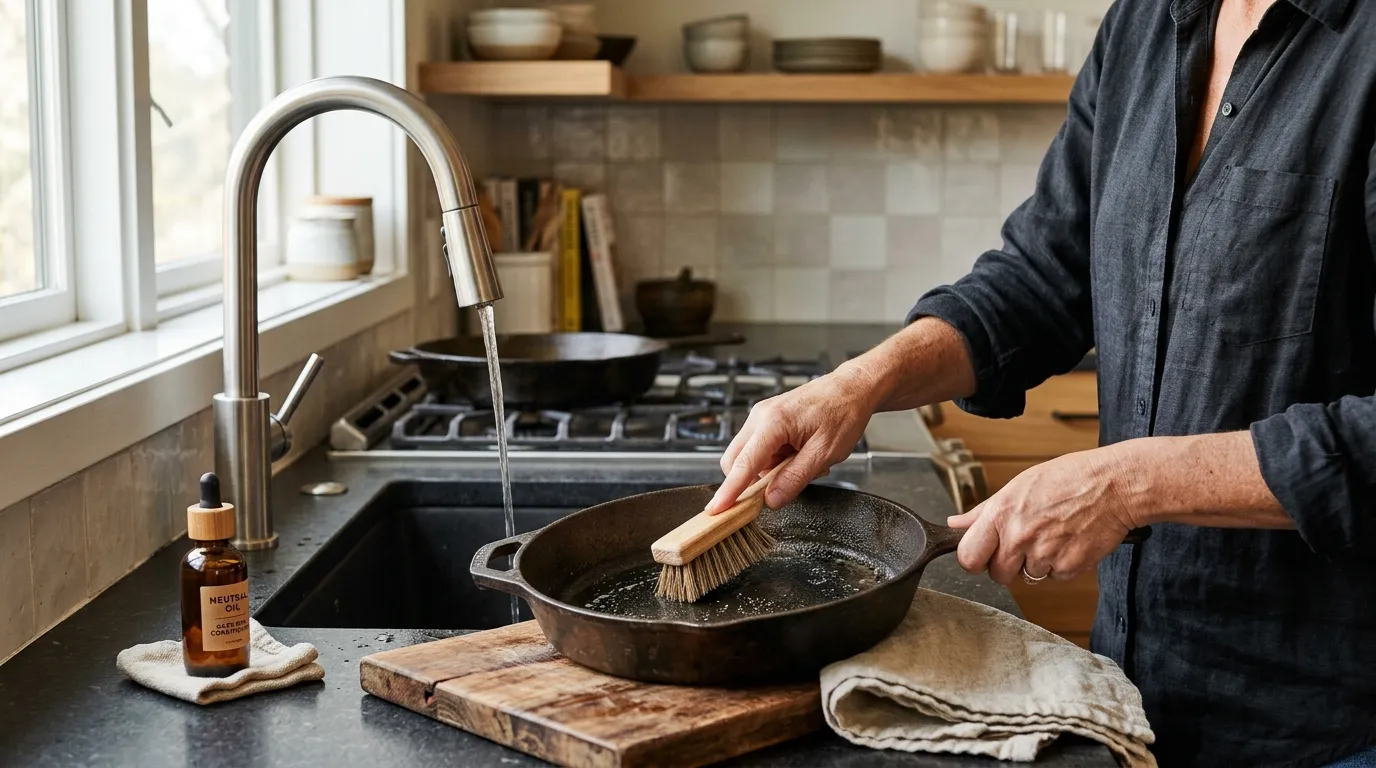
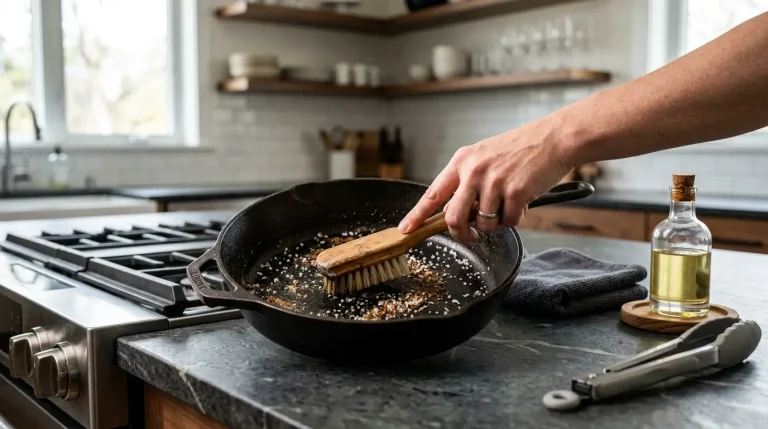
Clean while the pan is still warm. Warm pans release bits more easily. A gentle scrub and a quick dry is all it takes. This cast iron care guide favors easy, daily steps that fit real life.
My quick-clean routine
- Wipe out oil and crumbs with a paper towel.
- Add warm water. Scrub with a brush or chain mail if needed.
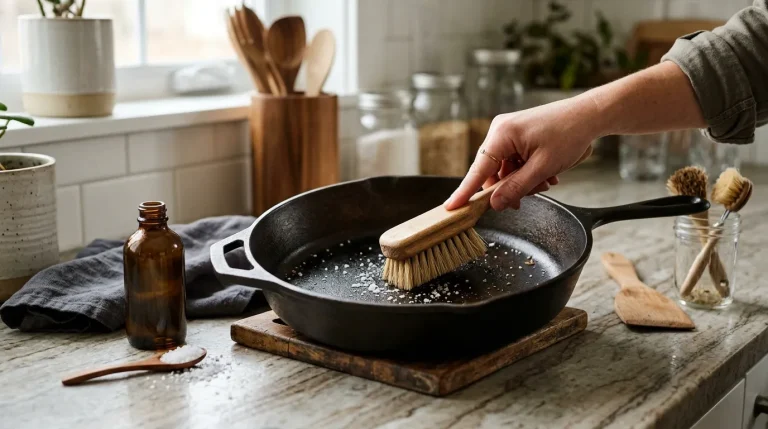
- Stubborn bits? Use coarse salt as a gentle scrub.
- Rinse and dry at once on the burner for a minute or two.
- Wipe a few drops of oil, then heat until it just shimmers. Let cool.
Soap note: A drop of mild dish soap is fine when needed. Modern soaps will not strip a well-baked seasoning. Avoid harsh soaks and the dishwasher.
Drying and Rust Prevention
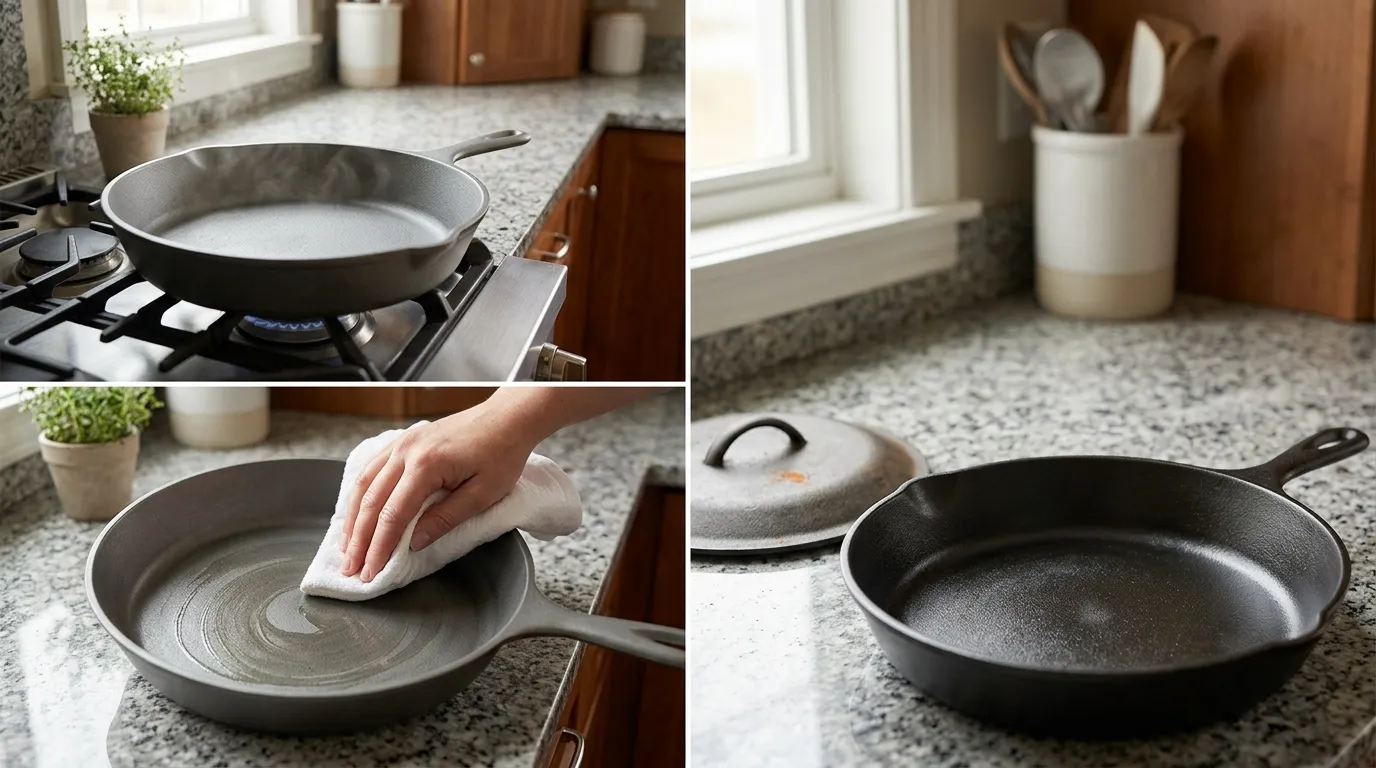
Water is the enemy. Rust starts fast on bare iron. Heat-dry after each wash. This cast iron care guide makes drying and oiling a habit you can do in one minute.
Best practices that work
- Place the wet pan on medium heat until fully dry.
- Add a few drops of oil. Wipe to a satin sheen.
- Heat 30–60 seconds to set the oil. Cool and store.
If you see faint orange specks, scrub them off at once and oil again. Small rust spots are easy to fix if you act fast.
Cooking Smart: Heat, Oils, and Food Choices
Cast iron likes preheat. Give it 3–5 minutes. Test with a drop of water. It should dance and vanish. Then add oil, then food. This cast iron care guide puts heat control front and center.
Practical cooking tips
- Use high-smoke-point oils for searing steak or chops.
- Start with proteins that add seasoning, like bacon or chicken thighs.
- Acidic foods can be cooked, but long simmer times in new pans may dull the finish.
- Avoid boiling water for long periods in bare cast iron. It can lift seasoning.
If food sticks, it is often a heat or moisture issue. Dry food well and preheat more. Let a crust form before you flip.
Repair and Re-Season: Fix Rust, Flaking, and Sticky Pans
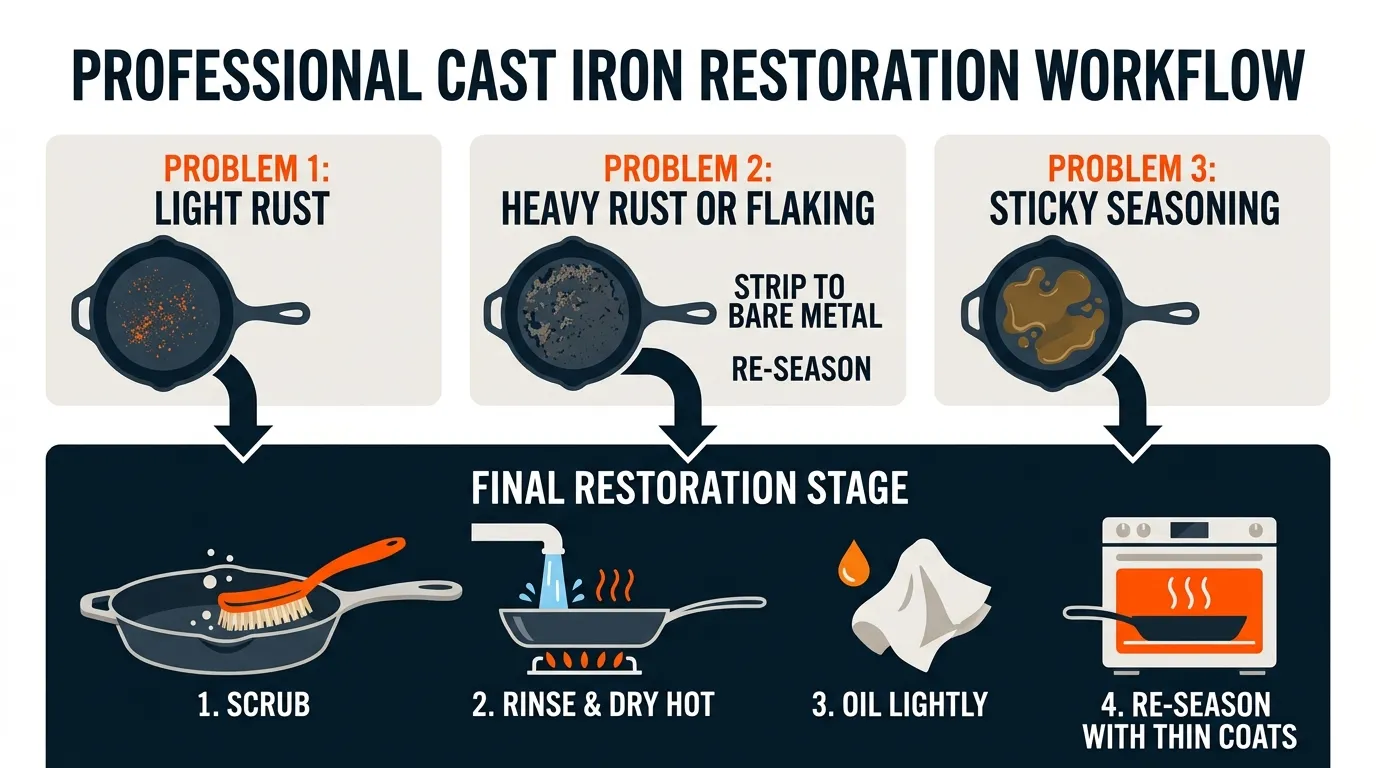
Even the best pans hit bumps. Maybe it sat wet, or you used too much oil and it turned gummy. This cast iron care guide shows quick rescue steps.
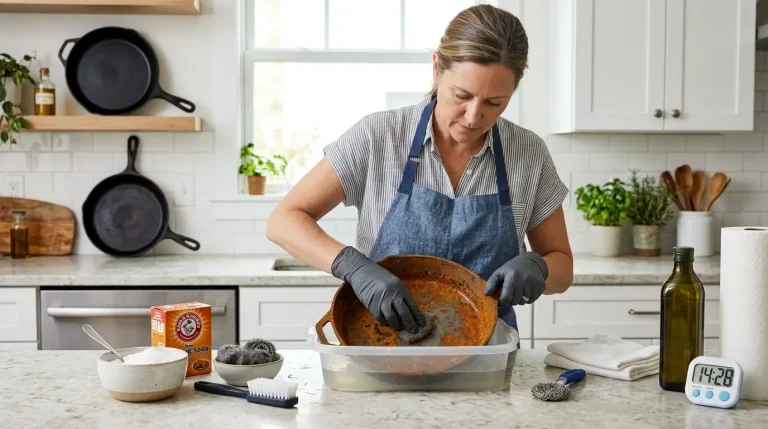
For light rust
- Scrub with chain mail or a Scotch-Brite pad.
- Rinse, dry hot, and oil lightly.
- Cook a few fatty meals to rebuild the sheen.
For heavy rust or flaking
- Strip to bare metal with oven cleaner, lye bath, or electrolysis if needed.
- Rinse well and neutralize if you used chemicals.
- Dry hot and re-season with thin coats, 3–5 bake cycles.
For sticky or streaky areas
- Bake one more thin seasoning coat.
- Cook bacon, burgers, or hash a few times. Use heat and fat to refine the surface.
Troubleshooting Myths and Mistakes
There are many myths. Let’s clear them up. This cast iron care guide sticks to what works in real kitchens.
Common myths
- You can never use soap. False. A little mild soap is okay on a well-seasoned pan.
- Metal tools ruin cast iron. Not true for bare iron. Use them with care.
- You must avoid tomatoes always. Not needed. Short sauces are fine. Long acid braises in new pans can dull seasoning.
Avoid these mistakes
- Thick oil coats during seasoning. They turn sticky.
- Storing with the lid on. Traps moisture and causes rust.
- Leaving it to soak. Water creeps into pores and starts rust.
Storage, Maintenance Schedule, and Long-Term Care
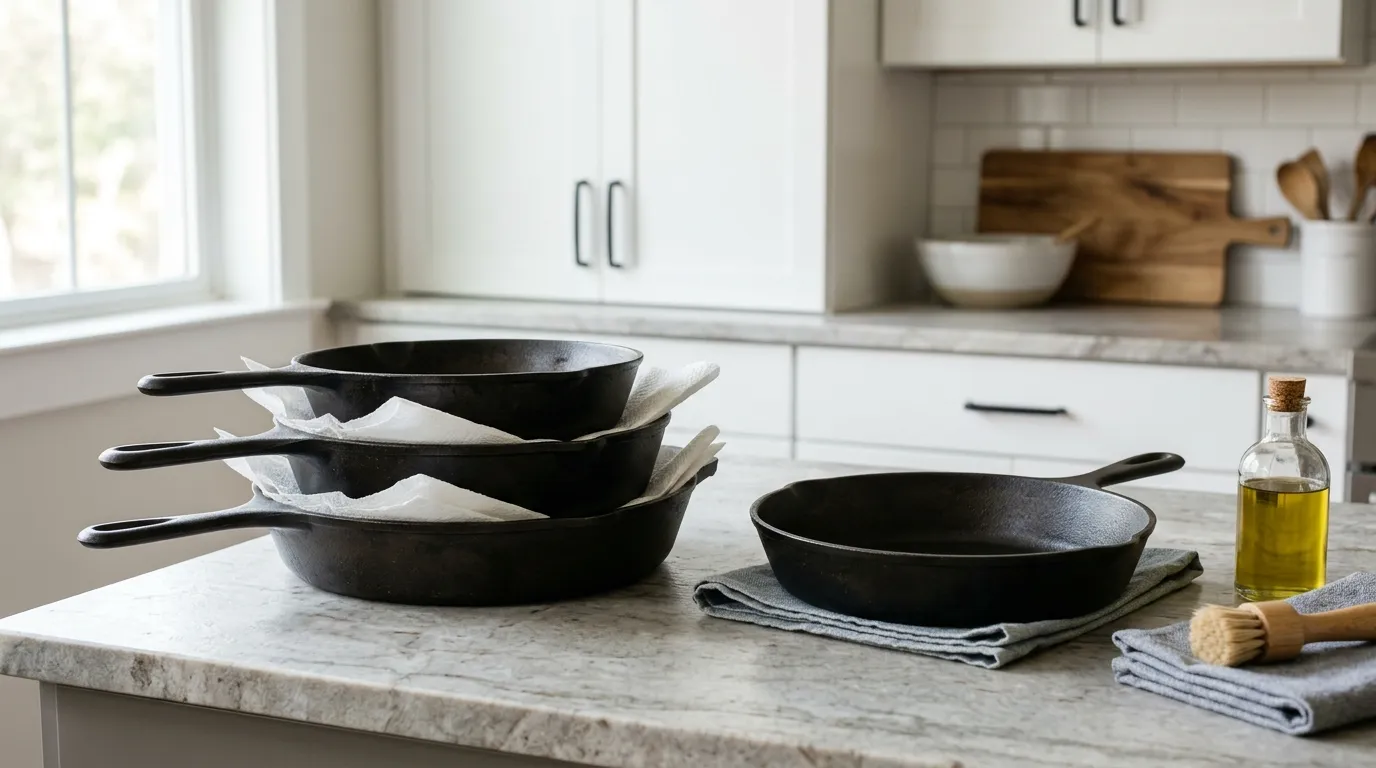
Store dry, oiled, and with airflow. Keep a paper towel between stacked pans. This cast iron care guide sets a simple rhythm you can follow all year.
A smart routine
- After each use: clean, dry hot, and wipe a drop of oil.
- Monthly: bake a light maintenance coat if the sheen fades.
- Yearly: deep clean and full re-season if needed, or after heavy rust.
Travel or camping? Oil well before packing. When you get home, heat and wipe again.
Tools and Products That Help
You do not need much. A few solid tools make care easy. This cast iron care guide keeps the kit lean.
Useful tools
- Stiff nylon brush or bamboo scraper for daily use
- Chain mail scrubber for stuck bits
- Lint-free towels for oiling
- Neutral high-smoke-point oil
- Silicone handle cover for safety
Avoid aerosol cooking sprays. They can leave sticky residue. Choose pump oils or pour bottles instead.
Enameled Cast Iron Care
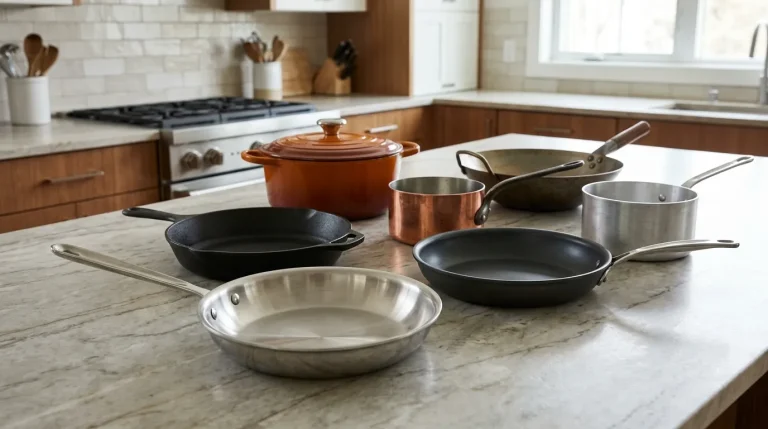
Enameled cast iron has a glassy coating. It does not need seasoning on the enamel. Clean it with soap and non-abrasive pads. This cast iron care guide separates bare and enameled rules so you do not mix them up.
Key tips
- Avoid metal scouring pads on enamel.
- Do not shock a hot pot with cold water.
- Stains? Use a warm baking soda paste or a soak with gentle cleaner.
- Chips can expose iron; dry and oil those spots to prevent rust.
Sustainability and Safety Notes
A well-kept pan can outlive you. That is the heart of this cast iron care guide. It reduces waste and saves money. Cast iron is also stable at high heat and free of PFAS.
Safety reminders
- Handles get very hot. Use a dry towel or sleeve.
- Lift with two hands for large pans.
- Ventilate when seasoning at high temps.
Frequently Asked Questions of cast iron care guide
How often should I season my pan?
If the surface looks dull or food starts to stick, add a light coat. Many home cooks do a quick maintenance bake once a month.
Can I use olive oil in cast iron?
Yes for cooking at medium heat. For high-heat searing and seasoning, use oils with higher smoke points like grapeseed or canola.
What should I do if my pan rusts?
Scrub off the rust, dry it hot, and apply a thin oil coat. For heavy rust, strip and re-season with several thin bakes.
Is dish soap safe for cast iron?
Yes in small amounts on a well-seasoned pan. Avoid soaking and always dry and oil after washing.
Why does food still stick to my skillet?
It is often due to low heat or wet food. Preheat longer, dry ingredients well, and wait for the sear before flipping.
Can I cook tomato sauce in cast iron?
Short cooks are fine, especially in a well-seasoned pan. For long acidic braises, use enameled cast iron to protect the finish.
What oil is best for seasoning?
Use a neutral, high-smoke-point oil like grapeseed, canola, or refined avocado. Thin coats baked hot give the hardest finish.
Conclusion
Cast iron shines with small, steady habits. Clean while warm, dry on heat, and oil thin and light. When problems pop up, this cast iron care guide gives you fast fixes that work.
Start today. Preheat, sear, and enjoy a smooth, rust-free pan for life. If this cast iron care guide helped, share it with a friend, subscribe for more kitchen guides, or drop your questions in the comments.