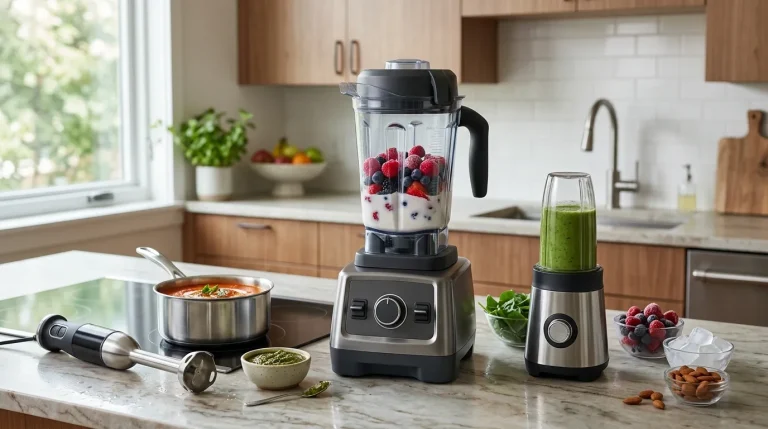

Blenders look simple. You toss in fruit, hit a button, and you get a smoothie, right? Not always. Many beginners end up with a chunky mess, jammed blades, or leaks on the counter. The good news: with a few easy habits and the right order of ingredients, you can get smooth, reliable results every time. In this beginner-friendly kitchen blender guide, I’ll walk you through how to use a blender step by step. You’ll learn what each button does, how to load the jar, when to use pulse, and simple blender safety tips. I’ll also share real-life lessons from my own kitchen, plus quick cleaning tricks to keep your blender fresh and ready for tomorrow’s smoothie. Let’s make blending stress-free.
What Is a Blender Used For?
A blender is a handy tool for daily cooking and drinks. It chops, mixes, and purees ingredients with sharp blades and fast speed. Here are common uses you’ll love:
- Smoothies and shakes: Blend fruit, milk, yogurt, and ice for breakfast or a snack.
- Soups: Puree cooked vegetables with stock for creamy soups.
- Sauces and dips: Make pesto, hummus, salsa, and dressings in minutes.
- Purees: Turn roasted veggies into smooth sides for bowls and plates.
- Frozen drinks: Crush ice for slushies, mocktails, and frozen coffee.
- Meal prep: Mix batter, grind oats into flour, or blend marinades and spice pastes.
If you’re a blender for beginners type of user, stick to simple combos first. Try a strawberry-banana smoothie or a basic tomato salsa. Once you feel the controls and speed, you can level up to nut butters, hot soups, and thicker blends.
Parts of a Blender You Should Know
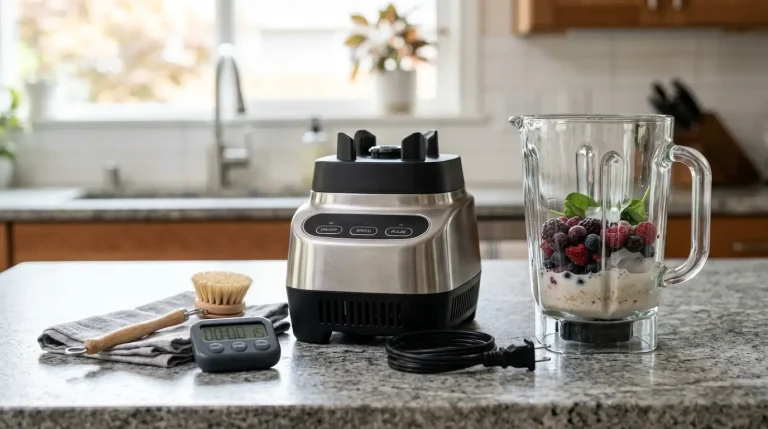
A little tour of your blender helps you use it well and avoid messes. Here are the key parts:
- Base or motor housing: This heavy unit holds the motor. It stays on the counter and powers the blades.
- Jar or pitcher: The container for your ingredients. It’s usually plastic, glass, or stainless steel. Most jars have measurement lines.
- Blades: A metal assembly at the bottom of the jar. It cuts and blends. Some jars have built-in blades; others have a removable blade base.
- Lid: The cover that prevents splashes. Always secure it before blending.
- Center cap (also called the fill cap): A small removable piece in the lid. You can open it to add ingredients while blending.
- Speed controls: A dial or buttons to set low, medium, or high speed. Many blenders label these settings as numbers.
- Pulse button: A button that spins the blades in short bursts. It’s great for control and for chopping.
Tip: Read your blender’s manual. Every model has a few quirks. Knowing how the jar locks and which speeds are best saves time and prevents spills.

How to Use a Blender Step by Step
If you’re new, take it slow. This sequence makes it safe and smooth. I’ll keep each step simple so you can follow along on a busy morning or while cooking dinner.
Step 1: Place the Blender on a Flat Surface
Set the base on a clean, dry, level counter. A steady base keeps the jar from wobbling. Keep the cord away from the stove and sink. If your counter is slick, place a rubber mat under the base for extra grip.
Step 2: Check That the Jar Is Locked Properly
Place the jar on the base and twist until it clicks or sits firm. If your model has a removable blade base, make sure it’s screwed on tight. A loose jar or blade base can leak, which is risky near the motor.
Step 3: Add Liquid First
Pour liquid into the jar before anything else. Water, milk, juice, or broth works. This step matters. Liquid pulls ingredients down into the blades. It prevents air pockets that stop blending. As a rule, start with at least 1/2 to 1 cup of liquid for most smoothies or soups.
Step 4: Add Soft Ingredients
Next, add yogurt, ripe bananas, nut butter, greens, or soft cooked vegetables. Soft items help cushion the blades and help them spin. If you’re making a smoothie, add yogurt and fresh fruit now.
Step 5: Add Hard or Frozen Ingredients Last
Put frozen fruit, ice, or hard vegetables on top. This order protects the blades and motor. It stops frozen chunks from getting stuck under the blades. If you’re using powders like protein or cocoa, you can add them before the frozen items so they mix better.
Step 6: Secure the Lid Tightly
Push the lid down until it’s snug. Make sure the center cap is in place. If you plan to add more liquid or oil while blending, remove the cap gently and pour through the hole. Keep your hand on the lid when you start, just in case.
Step 7: Start on Low Speed
Turn on the blender at the lowest speed. Low speed gets the blend moving without throwing chunks to the sides of the jar. It also protects the motor and reduces splashes. Think of low as “gather and start.”
Step 8: Increase Speed Slowly
Once you see a gentle whirlpool in the jar, turn the dial up bit by bit. Move to medium, then high as needed. This gradual increase gives you control. It also helps you reach a super smooth texture for smoothies, sauces, and purees.
Step 9: Use Pulse Mode When Needed
Pulse in short bursts when chopping or breaking up ice. Pulse is also great if ingredients get stuck on the sides. A few pulses can free them without over-blending. For salsas and chunky dips, pulse until you reach the texture you like.
Step 10: Stop, Check Texture, and Serve
Turn off the blender and wait until the blades stop. Remove the lid and check the blend. Too thick? Add a splash of liquid, replace the lid, and blend again. Too thin? Add a bit more solid ingredient and pulse. When it’s right, pour, serve, and enjoy.

Best Ingredient Order for Blending
The order you load the jar can make or break your results. Use this simple stacking method every time:
- Liquids first: Water, milk, plant milk, juice, or broth. This creates a smooth flow for the blades.
- Soft ingredients: Yogurt, fresh fruit, greens, nut butter, and cooked veggies. These mix fast and help form a vortex.
- Powders: Protein powder, cocoa, spices, or thickener. Adding powders in the middle helps them blend with fewer clumps.
- Fresh produce: Apples, cucumbers, celery, or carrots cut into chunks. These need more power than soft fruit but less than ice.
- Frozen fruit or ice last: Keep the heaviest items at the top so gravity feeds them into the blades slowly.
Why this works: Liquid helps everything move, soft foods blend fast, and hard or frozen items break down best when they drop into the spinning blades. This blending ingredients order leads to fewer stalls and smoother drinks.

Real-Life Experience: What I Learned Using a Blender at Home
When I first started, I’d dump frozen strawberries into the jar first, then add yogurt and a splash of milk on top. I’d slam the speed to high and hope for the best. The blender screamed, the jar shook, and I ended up with chunks at the top and a thick paste at the bottom. I’d add more milk, mix with a spoon, and start over. It took forever.
Then I changed two things: I poured the liquid in first, and I started at low speed. That alone fixed 80% of my problems. The blades caught the liquid and pulled down the fruit. The whirlpool formed fast. I only needed a few pulses at the end to clear the sides. I also learned not to pack the jar. Leaving space at the top made a big difference. Now my smoothies come out silky, not slushy, and I don’t stress the motor.
If you’ve had stalls or clumps, try this swap today: liquid first, then soft items, then frozen on top. Start low, climb slow. It’s the easiest blender for beginners fix I know.
Blender Speed Guide for Beginners
Most blenders have three basic speeds and a pulse button. Here’s a simple guide to help you pick the right one:
- Low speed: Best for starting the blend. Use it to mix soft foods, stir in liquids, or fold in delicate ingredients. Low helps you avoid splashes and keeps control when you’re not sure how thick the blend will get.
- Medium speed: Good for smoothies, sauces, and dressings. Use it when everything is moving well and you want a smoother texture. Medium is a safe default for most recipes.
- High speed: Use for silky purees, frozen drinks, nut butters, and crushing ice in a strong blender. High speed gives a fine texture but can overheat your motor if the jar is too thick or too dry.
- Pulse: Great for short bursts. Use pulse to chop veggies, make chunky salsa, break up clumps, or free stuck ingredients. Pulse is also a smart move right after you add more liquid or solids mid-blend.
Tip: If your blender has numbers (like 1–10), think 1–3 as low, 4–6 as medium, and 7–10 as high. Always start low. It’s the first step in smart blender speed settings.
Common Mistakes to Avoid When Using a Blender
Even experienced cooks make these blender slip-ups. Save time and stress by avoiding them:
- Overfilling the jar: Leave at least 1–2 inches of space at the top. Blends expand, and hot liquids can steam up fast.
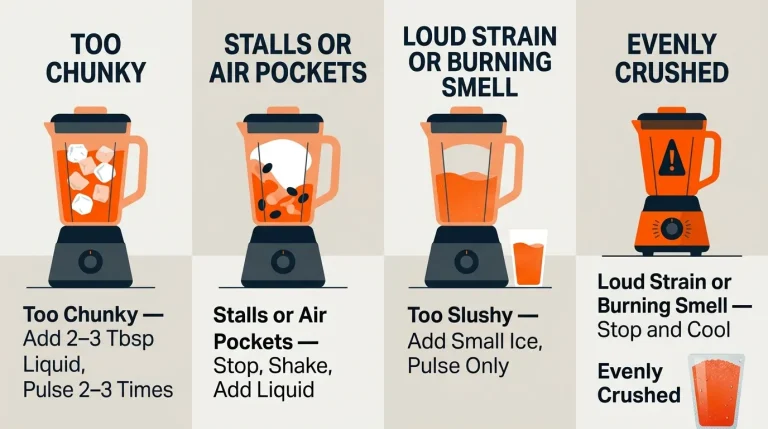
- Not adding enough liquid: Too thick means the blades can’t spin. Add more milk, water, or broth in small splashes. Listen for a smooth, even sound.
- Starting too fast: Jumping to high speed can push food to the sides and stall the blades. Start low, then go up.
- Blending hot liquids carelessly: Steam builds pressure. Don’t fill past halfway. Vent the lid’s center cap and cover the hole with a folded towel. Blend in small batches.
- Poor cleaning habits: Dried smoothie is hard to scrub. Rinse the jar right after pouring, even if you can’t wash it fully. This also avoids smells and stains.

Safety Tips Before Using a Blender
Blenders are safe when you respect the blades and heat. Keep these blender safety tips in mind:
- Unplug before touching blades: Always unplug the base before you remove or clean the blade assembly.
- Never put hands or utensils in the jar while blending: Stop and unplug first. Use a spatula only when the blades are still.
- Watch hot liquids: Fill the jar halfway at most. Vent the lid by lifting the center cap slightly or removing it and covering with a towel. Start on low.
- Secure the lid: Hold the lid for the first few seconds, especially with hot soups or larger chunks.
- Keep the base dry: Don’t splash water on the motor. Wipe it with a damp cloth only.
- Check for cracks: If the jar or lid is cracked, replace it. Leaks near the motor are dangerous.
- Use the right jar: Some jars aren’t meant for hot liquids. Check your manual.
- Don’t run the motor too long: If it smells hot or sounds strained, stop. Let it cool.
How to Clean a Blender After Use
A clean blender lasts longer and smells better. It also blends smoother the next day. Here’s how to clean a blender fast and deep, plus how to clean a blender safely around the blades.
Quick clean (right after use):
- Rinse: Empty the jar and give it a fast rinse with warm water.
- Soap blend: Fill halfway with warm water, add a drop of dish soap, and blend on low for 10–15 seconds. Pulse once or twice.
- Rinse again: Pour out the soapy water and rinse until clear.
- Dry: Place the jar upside down on a rack or towel.
Deep clean (once a week or after strong smells):
- Disassemble: Unplug the base. Remove the jar, lid, center cap, and blade assembly if it’s removable.
- Soak: Soak the jar and lid in warm soapy water for 10–15 minutes.
- Scrub: Use a soft brush or sponge. Avoid harsh pads that can scratch plastic.
- Deodorize: For smells, blend a mix of warm water and 1 tablespoon of baking soda. Rinse well.
- Blade safety: If you remove the blades, handle them by the base, not the edges. Dry blades well to prevent rust.
- Wipe the base: Use a damp cloth to clean splashes and dust. Dry right away.
Drying matters:
- Let parts air-dry fully before reassembling. Trapped water can smell or mold.
- Store with the lid off or upside down to keep the jar fresh.

Beginner Tips for Better Blending Results
These small habits lead to big wins. Use them for smoother texture and longer blender life.
- Cut items to even sizes: Small, uniform pieces blend faster and reduce strain on the motor.
- Keep a liquid handy: If the blend stalls, add 1–2 tablespoons of water, milk, or juice, then pulse.
- Layer smart: Liquid first, soft next, powders in the middle, fresh produce, then frozen or ice on top.
- Don’t walk away: Stay close while blending. Adjust speed or liquid as needed.
- Use pulse to finish: A few pulses at the end can clear the sides and even out texture.
- Chill your liquids: Cold milk or juice helps with frozen drinks and stops melting.
- Pre-soak hard items: Dates, sun-dried tomatoes, or dried chilies soften with a warm water soak.
- Rest the motor: For thick blends like nut butter, run in 20–30 second bursts. Let it cool between rounds.
- Taste and tweak: A pinch of salt or a squeeze of lemon can brighten a smoothie or sauce.
- Keep a cleaning routine: Quick clean right after use. Deep clean weekly.
You don’t need fancy gear to blend like a pro. You just need the right order, a smart speed plan, and a few safety habits. Start with liquid, add soft items, then frozen ones on top. Begin on low, go higher as needed, and use pulse for control. Give your blender a quick clean right after you pour. With these simple steps, you’ll master how to use a blender step by step and get smooth, tasty results. Practice once or twice this week, and you’ll feel the difference in your morning smoothie and your evening soup.
FAQs
Do you put liquid first in a blender?
Yes. Always add liquid first. It helps create a smooth flow so the blades can grab everything. If you’re learning how to use a blender step by step, this is the most important habit.
Can I put ice in any blender?
Not always. Many basic blenders can handle a few small ice cubes, but not large amounts. Check your manual. High-powered blenders crush ice better. If your model struggles, use smaller cubes or crushed ice, and add more liquid.
Why is my blender not blending smoothly?
Common reasons are not enough liquid, ingredients loaded in the wrong order, or starting too fast. Add a splash of liquid, scrape or shake the jar, then start on low and increase slowly. Cut ingredients into smaller pieces next time.
Can I blend hot soup in a blender?
Yes, but with care. Don’t fill the jar more than halfway. Vent the lid by removing the center cap and covering with a folded towel. Start on low and hold the lid gently. Work in small batches to prevent steam pressure from building.
How full should a blender be?
Leave 1–2 inches of space at the top. For hot liquids, fill only halfway. Overfilling can cause leaks, messes, and uneven blending.
What speed should I use first?
Start on low speed. Once the whirlpool forms, move to medium, then high if you need a silkier result. This protects the motor and keeps ingredients from sticking to the sides.
How do I clean blender blades safely?
Unplug the base first. If the blade assembly is removable, hold it by the base, not the sharp edges. For quick cleaning, blend warm water with a drop of dish soap, then rinse. For deep cleaning, disassemble and wash gently with a soft brush. Dry blades well to prevent rust.