Always unplug, secure the lid, blend small batches, and never blend steaming hot liquids.
If you want a calm, safe kitchen, learning how to use blender safely is a must. I’ve trained home cooks and new kitchen staff for years, and I’ve seen what works and what fails. In this guide, I’ll show you how to use blender safely with simple steps, clear tips, and real stories, so you can blend like a pro without fear or fuss.
Safety basics before you blend
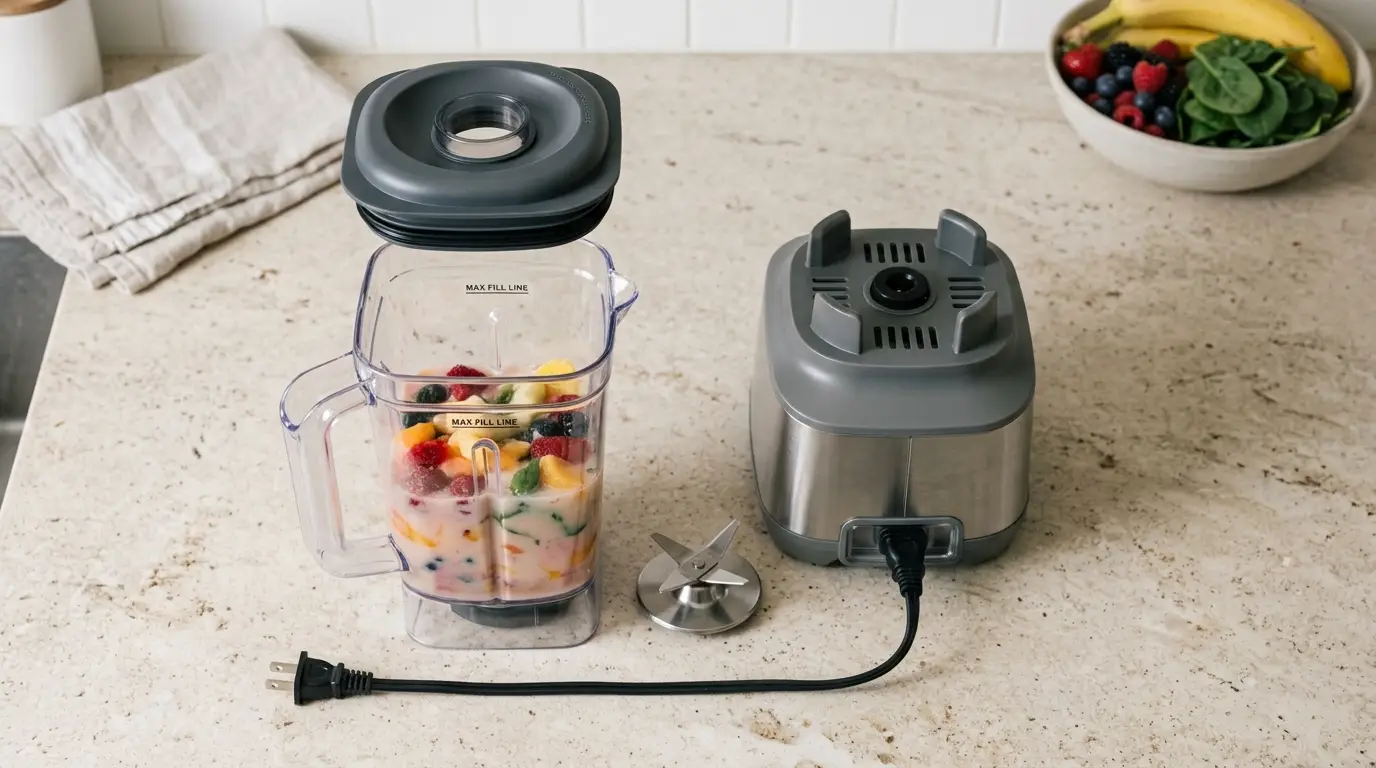
Knowing how to use blender safely starts before you hit the power button. A quick check can prevent spills, cuts, and motor damage.
What to check every time:
- Pitcher and lid. Inspect for cracks. Make sure the lid gasket is snug and not worn.
- Blade assembly. Ensure the blade base is tight and sits flat on the pitcher.
- Base and cord. Keep the base dry and stable. Unwind the cord fully and check for damage.
- Counter space. Place the blender on a flat surface with room to vent and move.
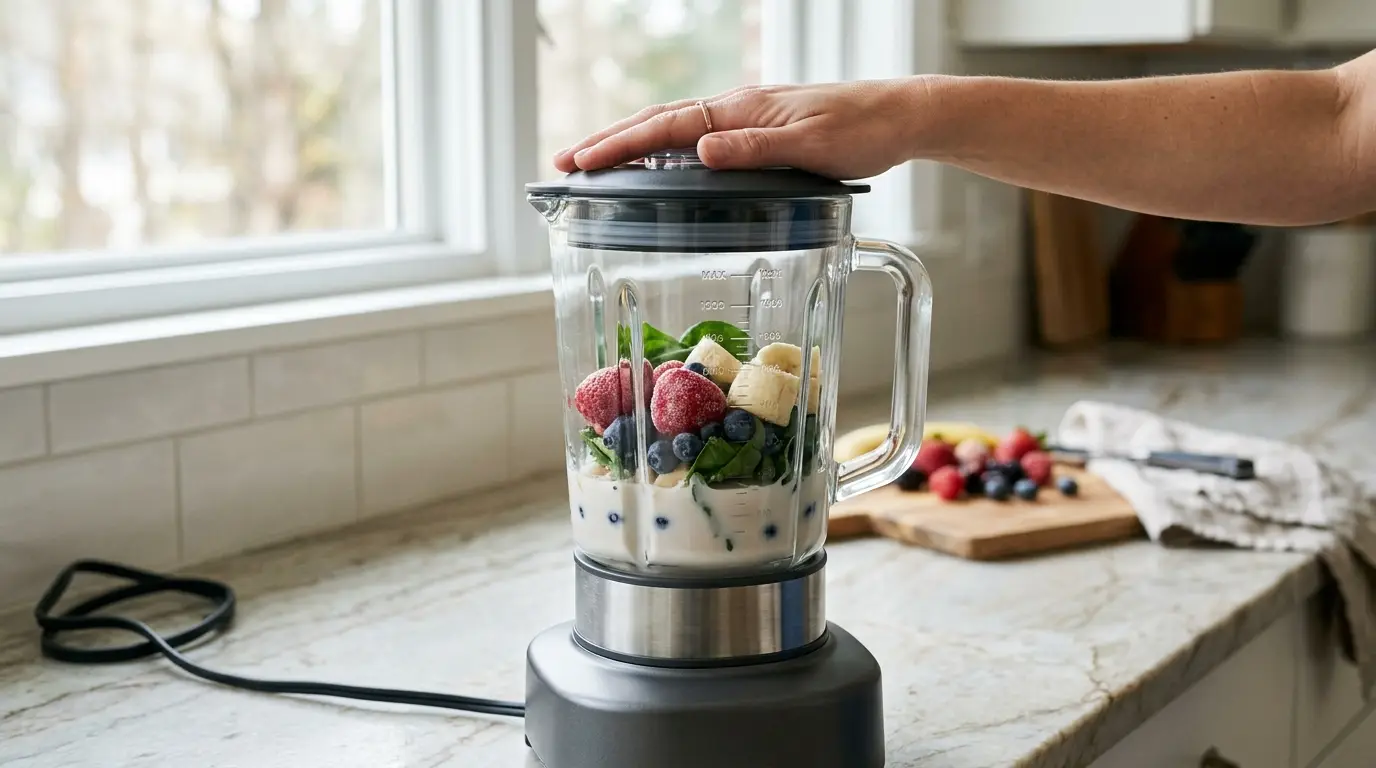
- Fill line. Never go past the max line. Leave room for expansion and foam.
Pro tip from the field: I once watched a new cook blend a warm soup in a glass pitcher filled to the top. The lid popped and soup sprayed. We now do a 10-second “lid and fill” check before every batch. It’s a small step that saves big mess.
Step-by-step: how to use blender safely every time
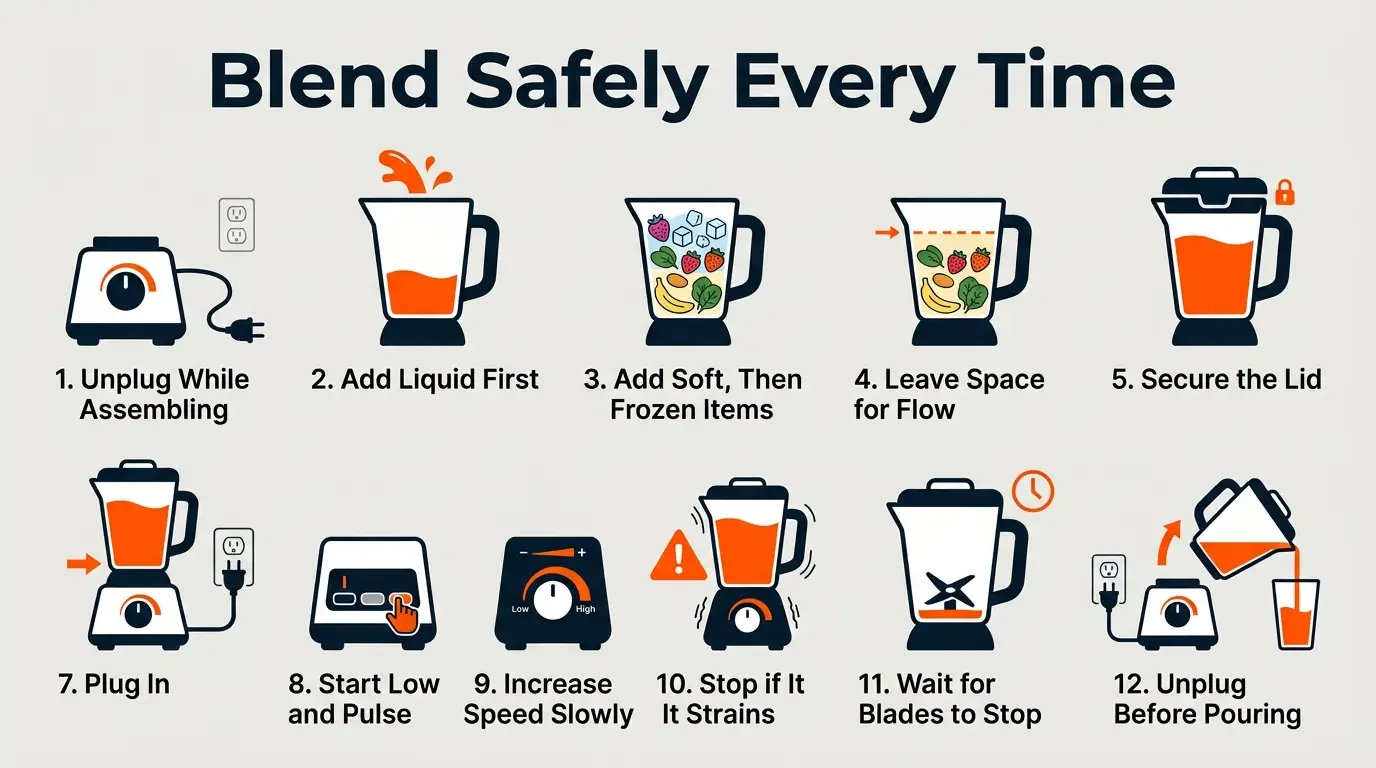
Follow this simple routine to build safe habits. Practice it until it feels natural. This is the clearest way to remember how to use blender safely in busy moments.
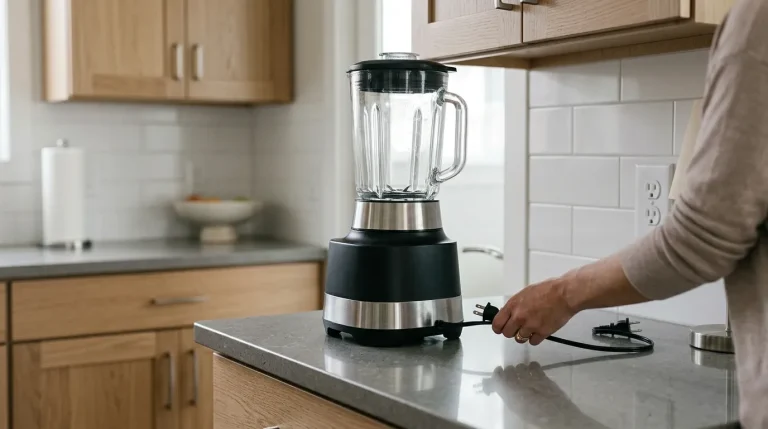
- Unplug the blender while assembling. Add your ingredients into the pitcher.
- Add liquids first, then soft items, then hard or frozen items on top.
- Do not pack ingredients under the blades. Leave a little space for flow.
- Secure the lid firmly. If your lid has a center cap, lock it in.
- Place the pitcher on the base. It should click or sit flat.
- Plug in the blender. Keep hands and utensils out of the pitcher.
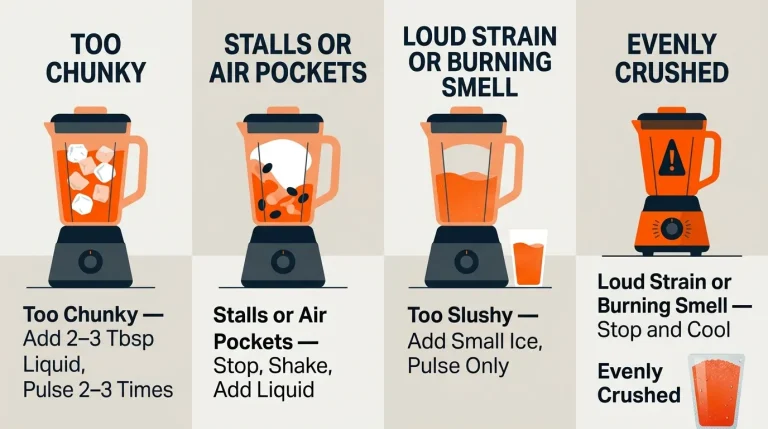
- Start low. Pulse a few times to break up air pockets.
- Increase speed slowly. Watch for leaks or wobble.
- Use the tamper only through the lid opening, never without the lid on.
- Stop if you hear strain or smell overheating. Let the motor rest.
- Power off. Wait for blades to stop before removing the lid.
- Unplug before pouring and cleaning.
Personal note: When I teach how to use blender safely to beginners, I ask them to narrate each step out loud. It slows you down and reduces mistakes.
Hot liquids, frozen chunks, and tough blends
Blending hot soup or thick nut butter needs extra care. This is where many accidents happen, so treat these like a new recipe every time.
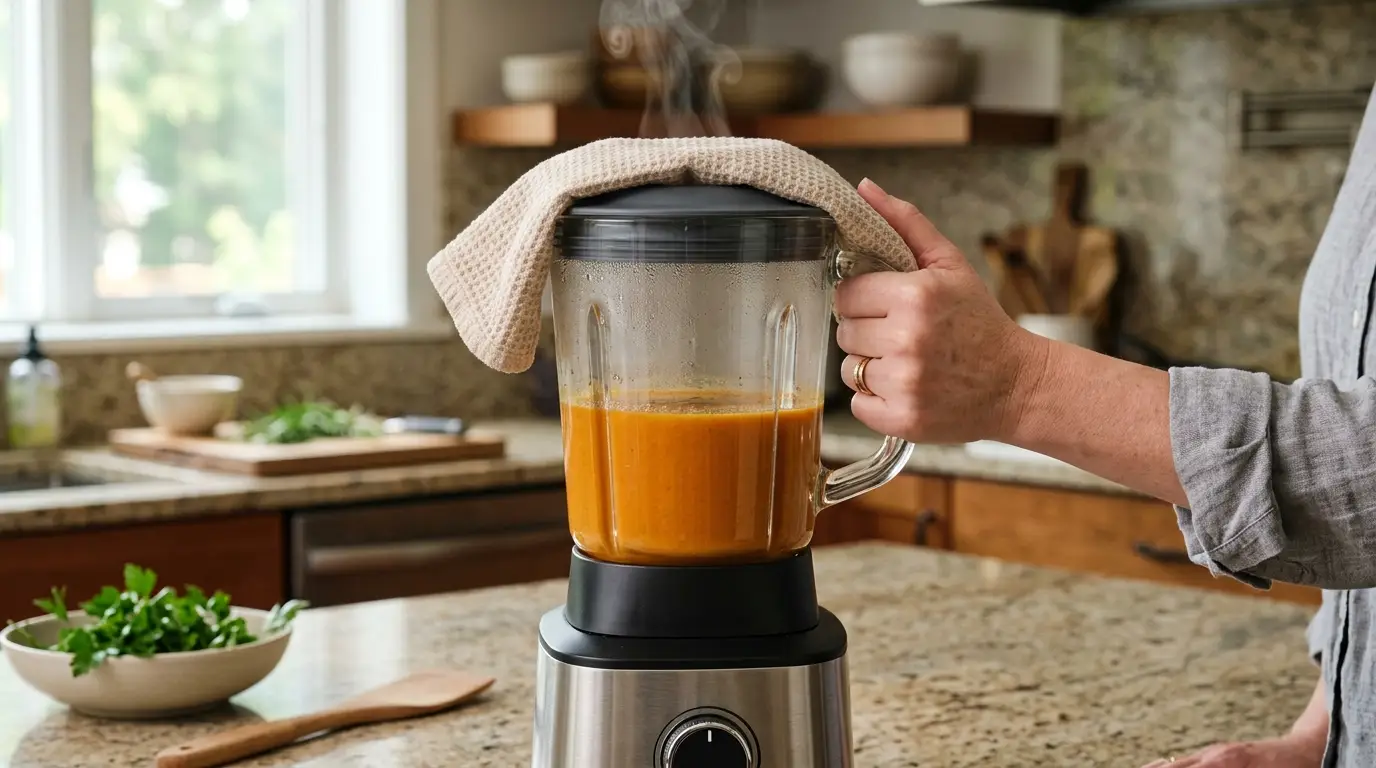
Hot liquids:
- Let liquids cool a few minutes first. Aim for warm, not boiling.
- Fill the pitcher halfway or less. Steam expands fast.
- Vent the lid if your model allows it. Drape a kitchen towel over the vent to catch splatter.
- Start on the lowest speed and increase slowly.
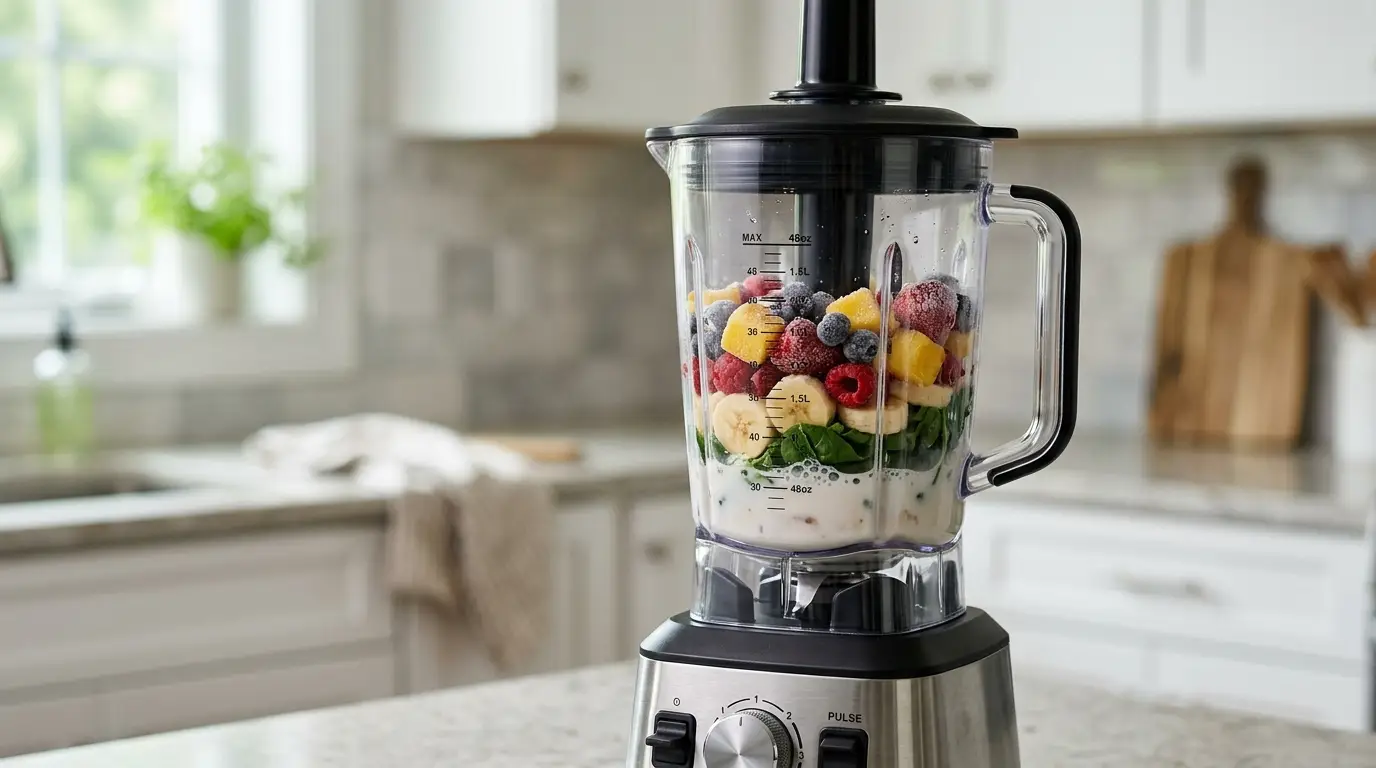
Frozen and tough blends:
- Add more liquid to help the vortex form.
- Cut large items into smaller chunks.
- Use pulse bursts to break ice before going high.
- If the blade spins but nothing moves, stop. Stir with a spatula only when unplugged.
Why this matters: Manufacturers warn against sealing steam in a closed container. Pressure can force the lid off. Knowing how to use blender safely with heat and ice will protect your hands and your blender.
Cleaning, maintenance, and storage for safe use
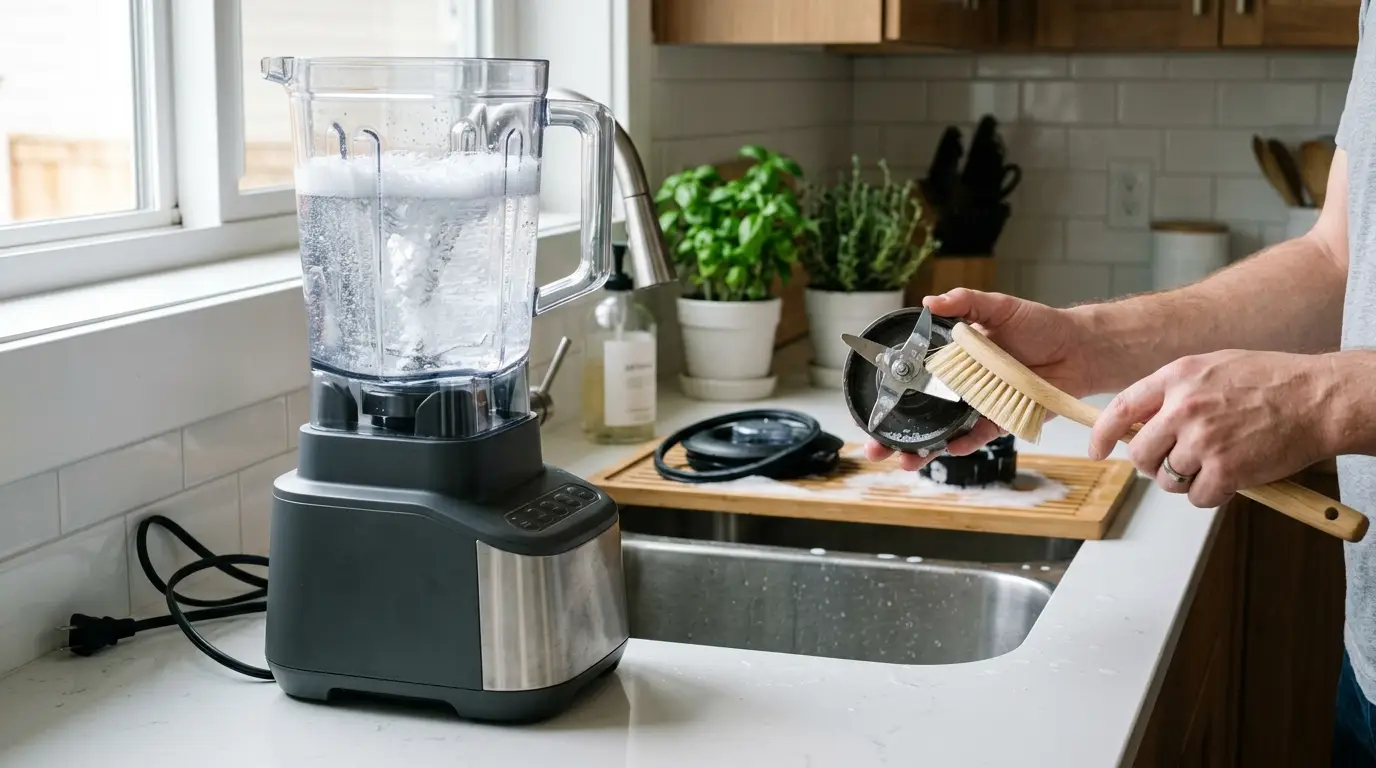
A clean, well-kept blender is safer and lasts longer. Good care is part of how to use blender safely day after day.
After each use:
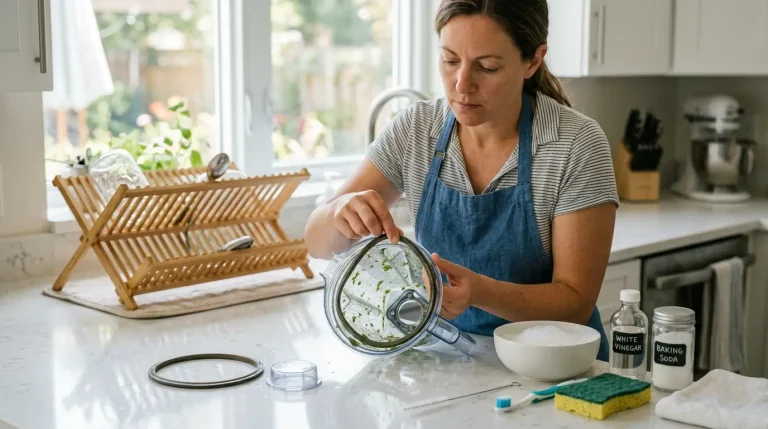
- Unplug first. Remove the pitcher from the base.
- Add warm water and a drop of dish soap. Run on low for 10–20 seconds.
- Rinse well. Keep the base dry; never submerge it.
- If your model allows, remove the blade base. Handle blades by the base, not the edges.
Weekly or as needed:
- Check the lid gasket for wear. Replace if loose or cracked.
- Inspect the pitcher for hairline cracks.
- Wipe the base vents so the motor can breathe.
- If dishwasher-safe, place parts on the top rack as the manual directs.
Storage:
- Keep blades covered or inside the pitcher.
- Wrap the cord loosely. Avoid tight bends.
- Store unplugged, out of reach of kids.
Common mistakes to avoid
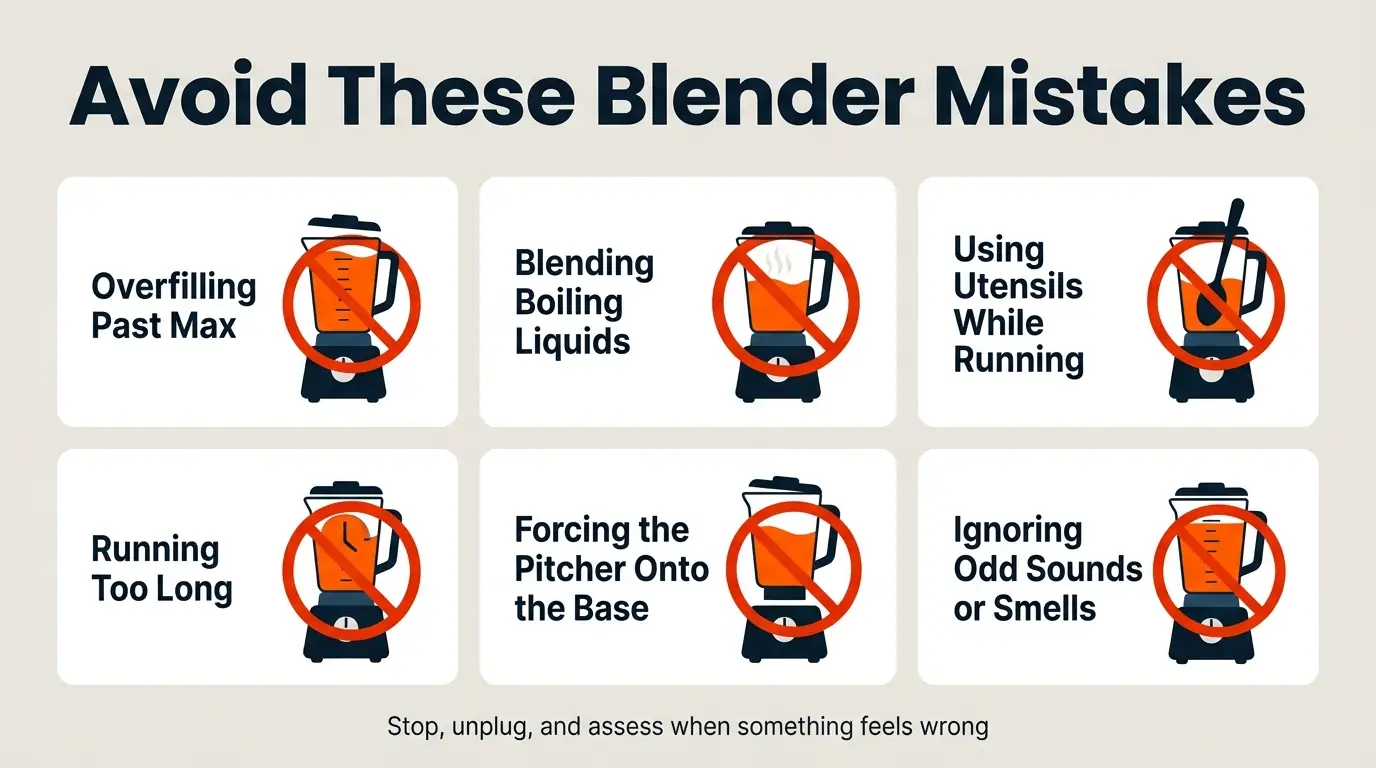
These pitfalls show up often when people ask how to use blender safely. Steer clear of them.
- Overfilling past the max line. Leads to leaks and pressure build-up.
- Blending boiling liquids. Causes lid blowouts and burns.
- Pushing ingredients with a spoon while running. Can break blades and injure hands.
- Running the motor too long. Overheats the unit; most blends need short bursts.
- Forcing the pitcher onto the base. Align gently to avoid cracks and mislocks.
- Ignoring odd sounds or smells. These are early warning signs.
Lesson learned: I once tried to “help” frozen fruit with a silicone spatula while blending. It nicked the blade and shredded the spatula. Since then, I stop, unplug, and stir. It takes 10 seconds and saves tools.
Troubleshooting and when to stop
Knowing when to pause is a core part of how to use blender safely. If something feels off, it usually is.
Stop and assess if:
- You smell burning or see smoke. Let the motor cool 15–30 minutes.
- The pitcher wobbles or leaks. Reseat the lid and check the gasket.
- The blade stalls. Unplug, loosen the mix with a spatula, add liquid, then try again.
- The base is hot to the touch. Give it a full cool-down.
- A safety interlock error shows. Reassemble until you hear a click.
If problems persist, do not bypass safety switches. Contact support. Appliance manuals and safety guidelines are clear on this point: forced fixes can void warranties and cause injury.
Frequently Asked Questions of how to use blender safely
Can I blend hot soup in a blender?
Yes, but let it cool a bit and never fill past halfway. Vent the lid, start low, and cover the vent with a towel to prevent splashes.
Is it safe to put utensils in while blending?
No. Keep all utensils and hands out while the blender runs. Use a tamper only through the lid port made for it.
How long can I run my blender without a break?
Most home blenders do best with short bursts of 30–60 seconds. If the motor warms up, stop and let it cool before the next round.
What should I do if the blender smells like it’s burning?
Stop at once and unplug it. Let it cool fully, reduce load next time, and make sure air vents are clear.
How do I clean blades without getting cut?
Unplug, remove the blade base if possible, and hold it by the plastic or metal hub. Use a brush, not your fingers, and rinse from the back side of the blades.
Can I crush ice without liquid?
You can pulse small amounts, but liquid helps form a vortex and reduces strain. For big batches, add water or juice and use short pulses.
What is the safest way to pour after blending?
Wait for the blades to stop fully, then unplug. Hold the lid on while pouring to control drips and prevent the lid from slipping.
Does pitcher material affect safety?
Glass resists stains but can shatter with thermal shock. Tritan or BPA-free plastic is lighter and less likely to crack but can scratch over time.
How often should I replace the lid gasket?
Check monthly and replace at the first sign of wear or looseness. A fresh gasket prevents leaks and improves performance.
Is an immersion blender safer for hot soups?
It can be safer because the pot is open and steam can escape. Keep the head fully submerged and move slowly to avoid splatter.
Conclusion
Safe blending is a simple habit: prep well, start low, watch the lid, and stop when something feels wrong. When you practice how to use blender safely, you protect your hands, your countertops, and your machine.
Try the step-by-step routine on your next smoothie or soup. Make safety your default, not a second thought. If this helped, share it with a friend, subscribe for more kitchen how-tos, or drop a question in the comments.