Choose an air fryer by matching capacity, power, features, and budget to your habits.
You came here to learn How to Choose Air Fryer with confidence, not guesswork. I test kitchen gear for a living, and I’ve owned everything from tiny 2-quart baskets to 26-quart oven-style units. In this guide, I’ll break down the real differences that matter, share hands-on tips, and help you pick the best model for your space, meals, and money.
A Simple Framework for How to Choose Air Fryer
Start with your food and space, then pick features that match.
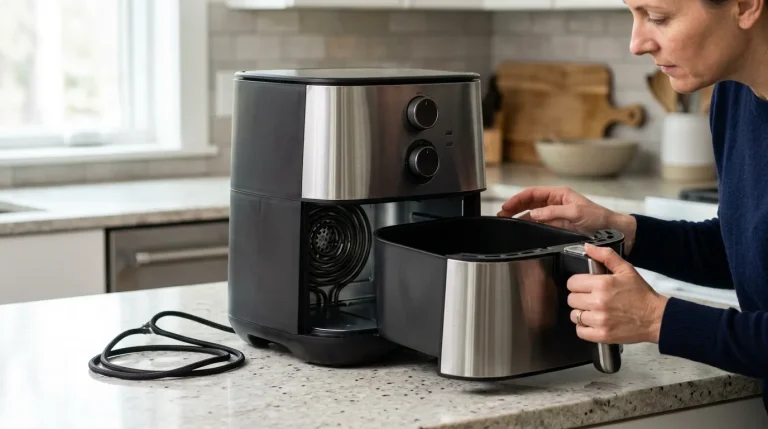
- Measure your counter and cabinet clearance. Leave room behind for vents.
- Pick a type: basket for crisp speed, oven-style for capacity and trays.
- Choose capacity by household size and the food you cook most.
- Check power and heat range for fast preheat and even browning.
- Decide on controls: simple dials, digital presets, or smart app.
- Assess build and coatings for durability and easy cleaning.
- Verify safety: auto shutoff, cool-touch, stable feet, and clear vents.
- Match price to use. Do not overpay for features you will not use.
If you follow this order, How to Choose Air Fryer becomes a clear, easy path rather than a guess.
Capacity: Right Size, Right Results
Capacity is the most important choice. It sets how much you can cook in one batch.
- 1–2 people: 2–4 quarts. Good for fries, wings, veggies, and snacks.
- 3–4 people: 5–6 quarts. A sweet spot for weeknights and meal prep.
- 5+ people or parties: 7 quarts and up, or oven-style models.
Shape matters too. Wide baskets give more surface area for crisp food. Tall, narrow baskets can crowd food and slow browning. In my kitchen, a 5.8-quart basket handles four chicken breasts in one go. A 2.75-quart unit is fine for a dorm or RV but needs more batches.
Tip: Buy for the biggest meal you cook often, not for rare holidays. This is a key move in How to Choose Air Fryer that keeps buyers happy long term.
Types: Basket, Oven-Style, and Multi-Cookers
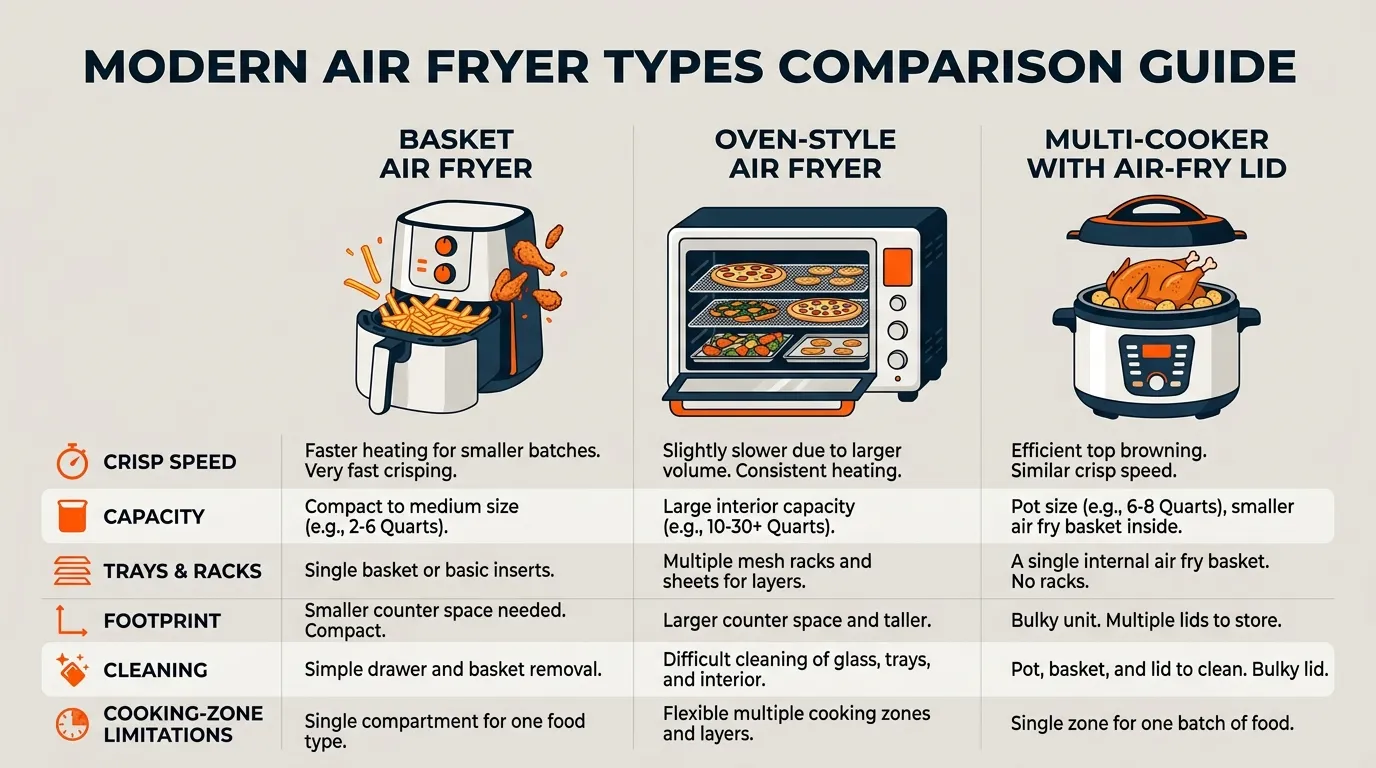
Different types fit different kitchens and habits.
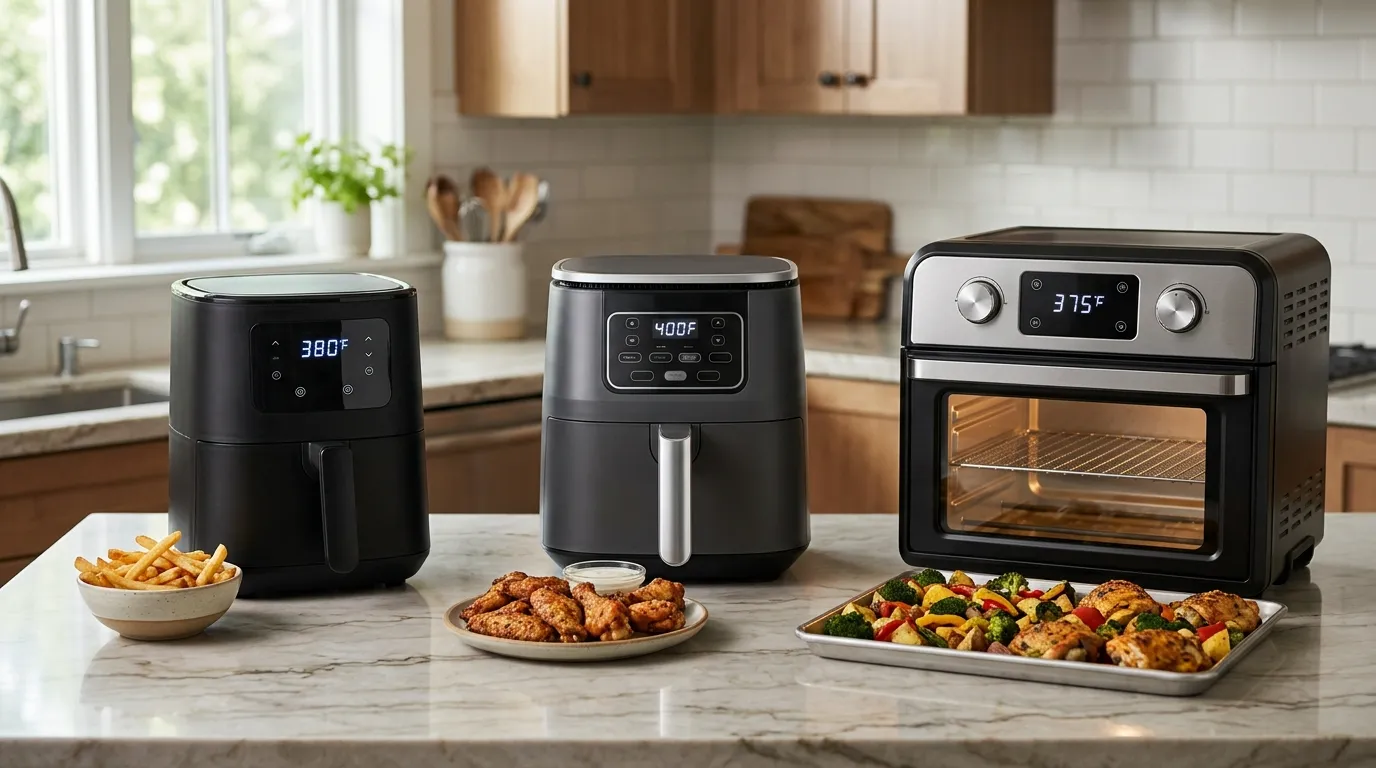
- Basket air fryers: Fast heat, strong airflow, great for crisp fries, wings, and nuggets. Easier to shake mid-cook. Smaller footprint. Downsides: limited height for tall foods, one cooking zone.
- Oven-style air fryers: Larger capacity, trays, sometimes rotisserie. Better for pizza, sheet-pan meals, and families. Downsides: slower preheat, more parts to clean, can be bulky.
- Multi-cookers with air-fry lids: Save space if you already pressure cook. Good for finishing a roast with crisp skin. Downsides: heavier lids, smaller crisping area compared to a wide basket.
If you make snacks and sides often, a basket shines. If you batch cook or bake, an oven-style model pays off. Knowing your type is a big step in How to Choose Air Fryer without regret.
Power, Heating, and Performance

Power affects speed and browning. Most units range from 1200 to 1800 watts. More watts mean faster preheat and better crisp, but also more noise and heat.
- Heat range: Look for 95–400°F or higher. 150–170°F lets you dehydrate. 425–450°F gives darker sears on steaks and pizza.
- Airflow: A strong top fan and coil help even cooking. Some units add dual heat zones for better results.
- Evenness: A good model needs fewer shakes. If edges burn while centers pale, airflow is uneven.
In testing, 1500–1700 watts with a 400°F top end cooked wings in about 22 minutes with one shake. If you want steakhouse-level sear, look for models that reach 450°F. This detail often decides How to Choose Air Fryer for serious home cooks.
Controls, Presets, and Smart Features
Pick controls that match how you cook.
- Analog dials: Simple and durable. Less precise. Great for basic use.
- Digital screens: Exact time and temp. Helpful presets. Easier to repeat results.
- Probes and smart: A food probe nails internal temp for pork, chicken, and steak. Apps add recipes, alerts, and voice control.
Presets are handy for speed, but you will still tweak time and temp. A probe is a real upgrade if you roast meat often. Remote start can be risky. Use it only when the basket is clear and safe.
Build, Coatings, and Safety
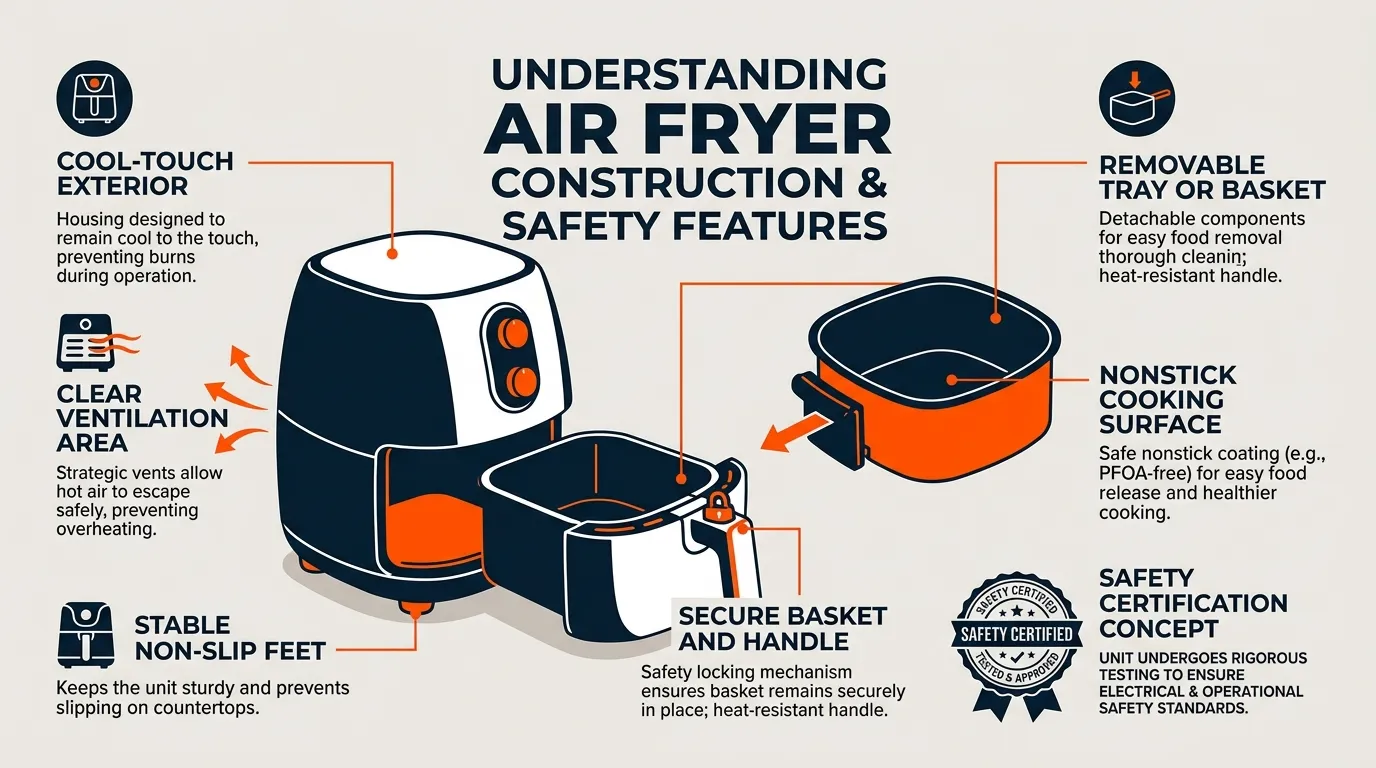
A sturdy build saves headaches.
- Coatings: Most baskets use PTFE nonstick. It cleans well and lasts if you avoid metal tools and high dry heat. Ceramic coatings are an option and can be more scratch resistant, but they vary by brand.
- Safety: Auto shutoff, cool-touch surfaces, and stable bases help. Look for UL or ETL certification.
- Parts: Removable trays and baskets make cleaning easy. Solid handles matter when the basket is full and hot.
Use parchment with holes only made for air fryers to avoid blocking airflow. Do not exceed the rated max temp for any coating. Smart care turns How to Choose Air Fryer into a long-term win.
Cleaning, Odors, and Day-2 Care

Easy cleaning keeps you using the machine.
- Dishwasher-safe baskets help, but handwashing often extends coating life.
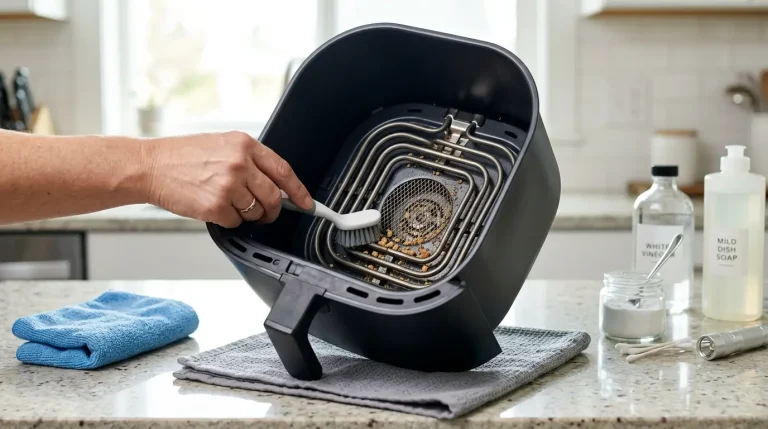
- For burnt-on grease, soak with warm water and a little baking soda. A soft brush lifts residue.
- To reduce smoke, trim excess fat and empty the drip tray mid-cook if needed.
Let the unit cool, then wipe the heating area. Keep vents clear. A clean air fryer cooks faster and smells better the next day.
Energy Use and Running Costs
Air fryers heat small spaces fast, so they can save energy.
- A 1500-watt unit running 20 minutes uses about 0.5 kWh. At $0.15 per kWh, that is about seven cents.
- Many ovens use 2–3 kWh for a long bake. The air fryer often beats that for small meals.
- Less preheat and shorter cook times help in hot weather too, since you add less heat to the room.
If you cook for one to four people often, this is a strong reason in How to Choose Air Fryer for weekday meals.
Budget and Value: What to Pay
Match your spend to your needs.
- Entry ($50–$90): 2–4 quarts, basic dials, fewer presets. Great for singles and small kitchens.
- Mid ($100–$150): 5–6 quarts, digital controls, better airflow, more even crisp.
- Premium ($150–$300+): 7 quarts and up, oven-style or dual-zone, probes, higher top temps, smart features.
Skip extras you will not use. I reach for a probe more than a smartphone app. Watch for seasonal sales to get a mid-tier model at an entry price. Value thinking is core to How to Choose Air Fryer like a pro.
Brand, Warranty, and Support
Good support matters when baskets chip or heaters fail.
- Look for a clear 1–2 year warranty and easy-to-order parts.
- Check if the brand has responsive support and active recipe communities.
- Certification marks like UL or ETL show tested safety.
A solid brand with parts on hand beats flashy screens. This is quiet but key advice in How to Choose Air Fryer that lasts.
Real-World Use Cases, Mistakes, and Pro Tips
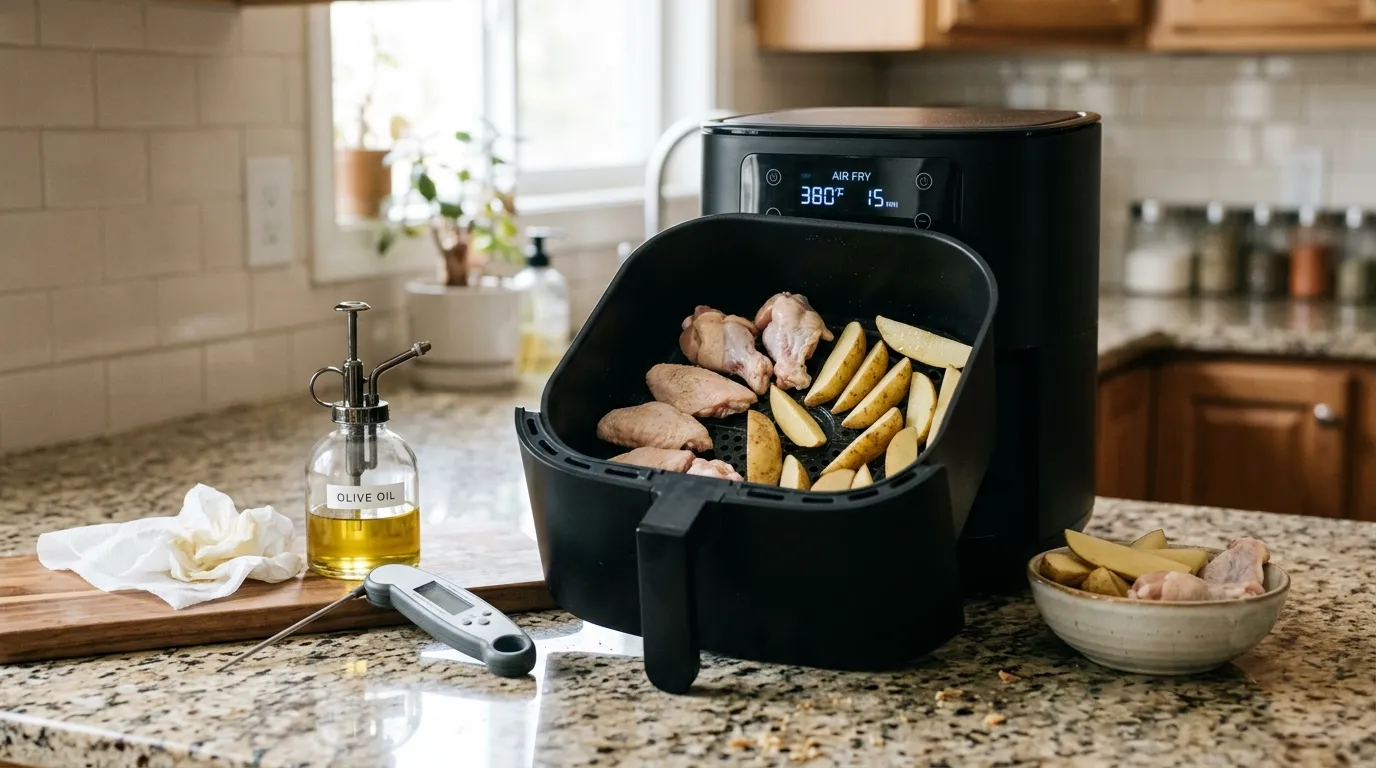
Lessons from many batches can save your dinner.
Common mistakes:
- Crowding the basket. Food steams instead of crisps. Cook in two batches.
- Skipping preheat. Preheating 2–3 minutes improves sear.
- Not drying food. Pat wings and potatoes dry for better crunch.
- Using aerosol oil sprays. They can damage coatings. Use a refillable mister.
Pro tips:
- Toss with 1–2 teaspoons of oil for 4 servings. Small oil, big crisp.
- Shake or flip halfway for even color.
- Use a thermometer. Chicken thighs are juicy at 175–185°F, wings at 185°F+.
- For fish, line with perforated parchment to prevent sticking.
After testing dozens of recipes, these small steps drive big wins. They also guide How to Choose Air Fryer features you will truly use.
A Quick Checklist for How to Choose Air Fryer
Use this list in the store or online.
- Meals you cook weekly and for how many people.
- Counter space and cabinet height, plus air gap for vents.
- Type you want: basket, oven-style, or multi-cooker.
- Capacity that fits your batch size.
- Wattage, heat range, and airflow design.
- Controls you prefer: analog, digital, or smart with a probe.
- Coating quality and ease of cleaning.
- Safety features and certification marks.
- Price, warranty, and parts availability.
Check all boxes and you will know exactly How to Choose Air Fryer that suits your life.
Frequently Asked Questions of How to Choose Air Fryer
What size air fryer do I need?
For 1–2 people, choose 2–4 quarts. For 3–4 people, pick 5–6 quarts, and for larger families, go 7 quarts or more.
Are basket air fryers better than oven-style models?
Basket units crisp faster and are great for snacks and sides. Oven-style models hold more food and handle pizzas, trays, and rotisserie.
How much wattage should I look for?
Aim for 1500–1700 watts for strong airflow and fast browning. Smaller units can use 1200–1400 watts but may cook slower.
Which nonstick coating is best?
PTFE nonstick cleans easily and lasts if you avoid metal tools and very high dry heat. Ceramic coatings can be tough but vary by brand, so check reviews.
Do I need smart features or an app?
They are nice-to-have for alerts and recipes, but not required. A digital screen with a good probe is more useful for everyday cooking.
Can an air fryer replace my oven?
For small meals and snacks, yes. For big roasts, sheet bakes, and holiday cooking, you will still want a full oven.
What safety features should I check?
Look for auto shutoff, cool-touch housing, stable feet, and UL or ETL certification. A secure basket lock and clear venting are also important.
Conclusion
Choosing the right air fryer is simple when you match size, type, and features to your real life. Focus on capacity, airflow, heat range, and cleaning ease. Let your weekly meals guide the rest.
Use this guide and checklist to act today. Save time, eat better, and cook with less stress. If this helped you master How to Choose Air Fryer, share it, subscribe for more tips, or drop your questions in the comments so I can help you pick the perfect model.