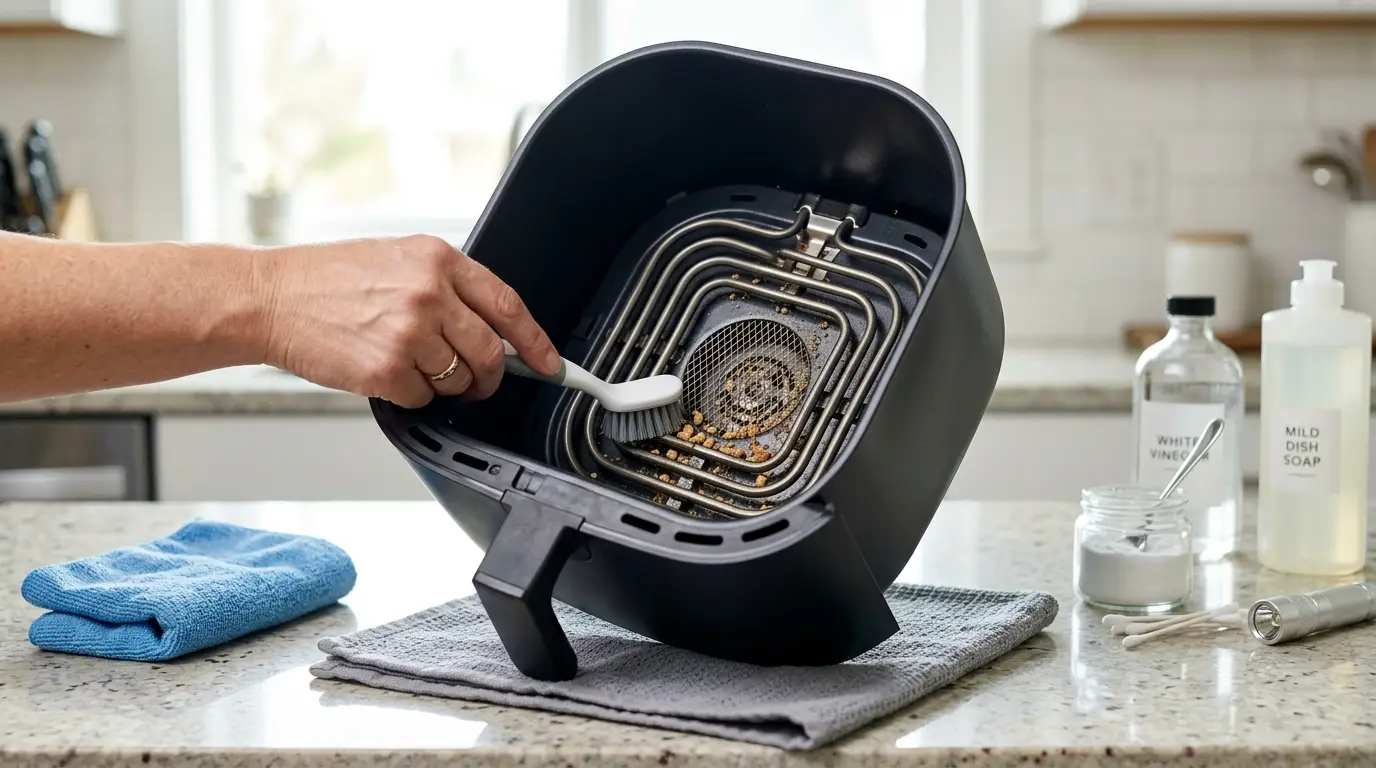
The clean air fryer element keeps heat steady, food crisp, and odors low.
A spotless heating coil is the heart of great air-fried food. In this guide, I’ll show you how to clean air fryer element parts the right way, with safe steps, tested tips, and simple tools. You will learn what causes buildup, how to fix smoke and smells, and how to make your unit last longer with less mess.
What the Heating Element Does and Why It Gets Dirty
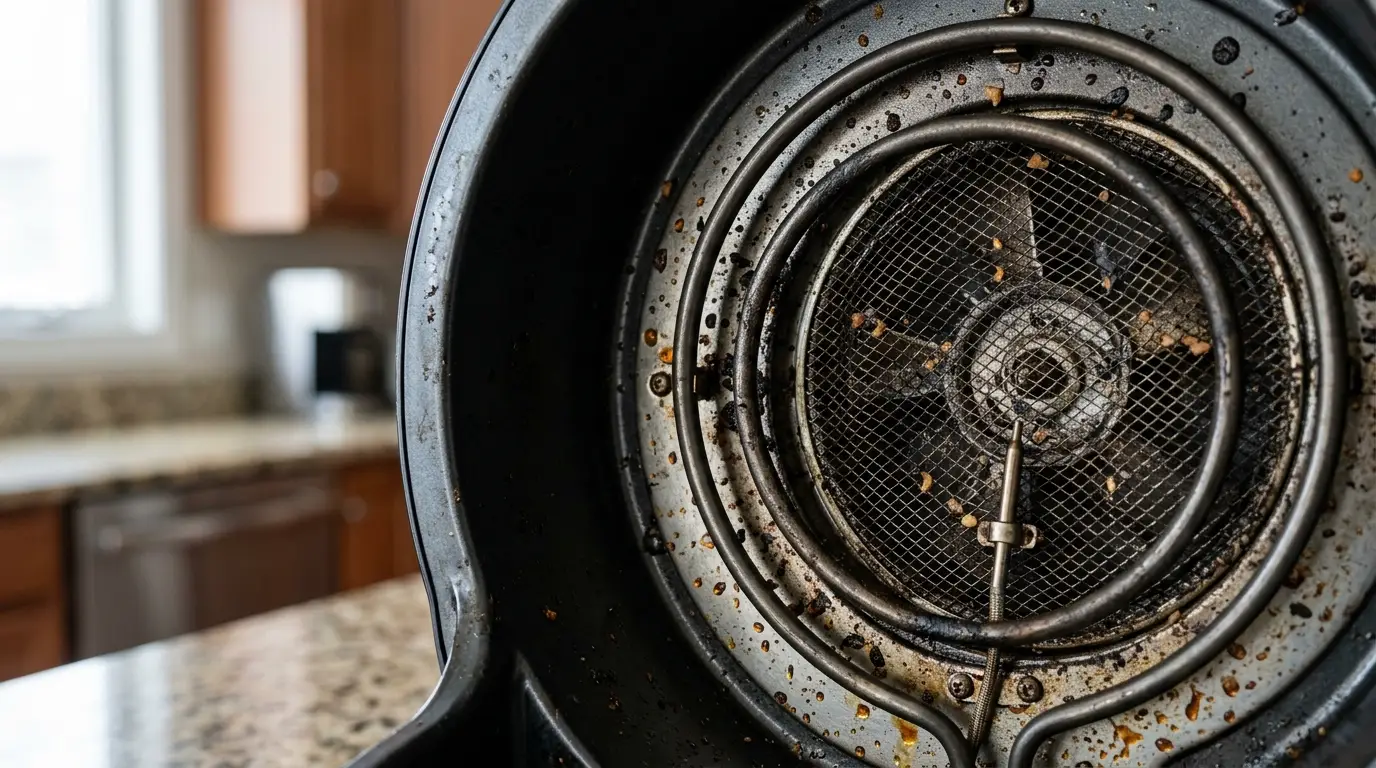
The heating element is the coil that makes heat. It sits near the fan and pushes hot air through the chamber. When oil, crumbs, and splatter reach it, they bake on and turn dark. That layer traps smells, makes smoke, and can slow heat.
When you clean air fryer element buildup, you restore even heat and crisp texture. In my kitchen tests with basket and oven models, a clean coil cut smoke and odd flavors right away. You also protect the fan and the temp sensor from sticky film.
You should clean air fryer element parts any time you see smoke at normal temps, smell old oil, or notice brown flakes over food. If you fry fatty cuts or wings, wipe the area more often. A fast wipe now saves a deep scrub later.
Safety First: Prep, Power, and What Not to Do
Do not rush this job. Heat and live power can hurt you or the unit. Always unplug before you clean air fryer element parts. Let the unit cool until it is safe to touch. I wait at least 30 minutes.
Move the fryer near a bright light. Place a towel under it. Remove the basket, tray, and crumb pan. Wash those as usual. Never spray liquid into vents or onto wires. Never immerse the body. Do not bend the coil or poke inside the fan.
Avoid harsh cleaners like oven spray, bleach, or ammonia. Skip steel wool and sharp scrapers. These can damage parts and may void a warranty. A little time and the right tools do the trick without risk.
Step-by-Step: How to Clean Air Fryer Element
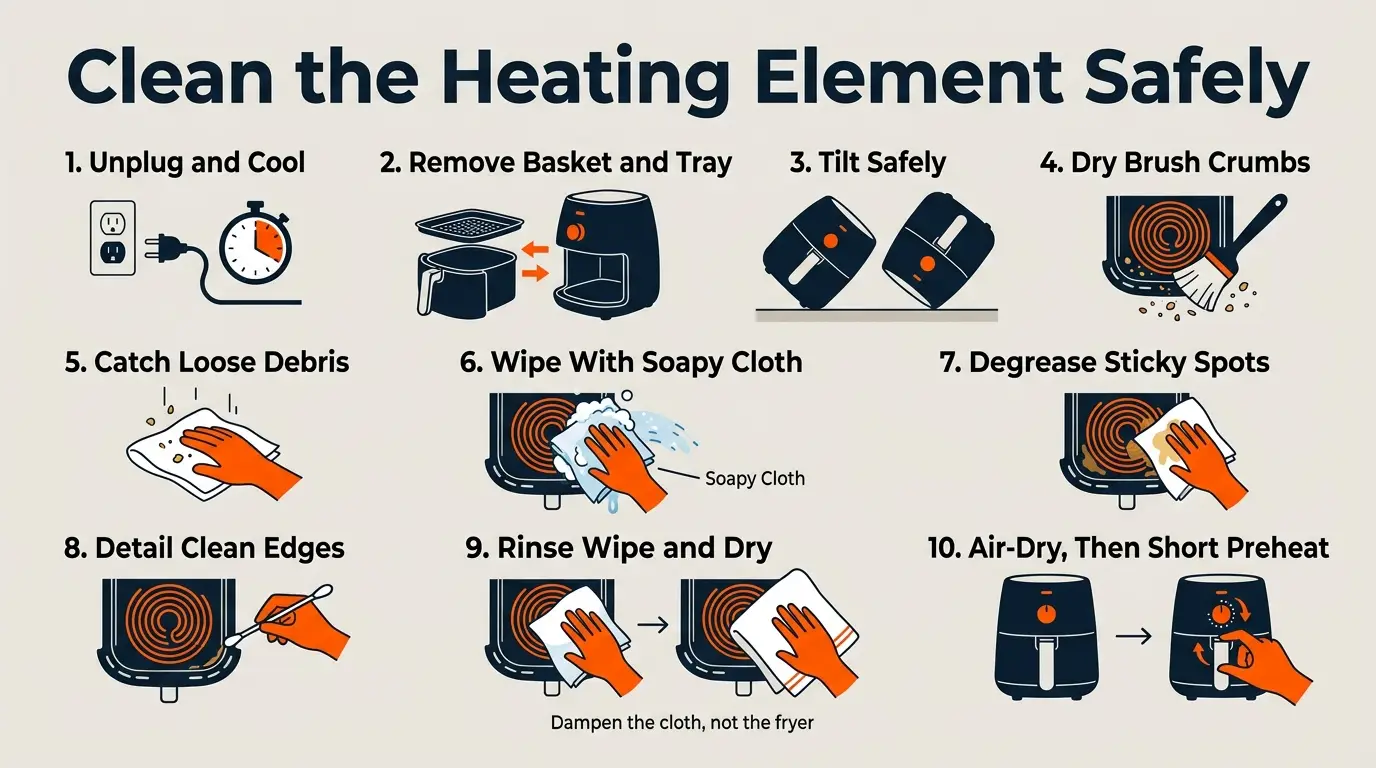
Follow these simple steps to clean air fryer element areas fast and safe. I use this method for most brands.
Tools you need:
- Microfiber cloths and paper towels
- A soft toothbrush or small nylon bottle brush
- Dish soap and warm water
- White vinegar
- Baking soda
- Cotton swabs
- A small flashlight
- A spray bottle for water or vinegar mix
Steps:
- Unplug and cool. Make sure the unit is cool and safe to handle.
- Remove parts. Take out the basket, tray, and any removable cover near the coil.
- Flip or tilt. If safe, tilt the fryer so you can see the element. Set it on a towel.
- Dry brush first.
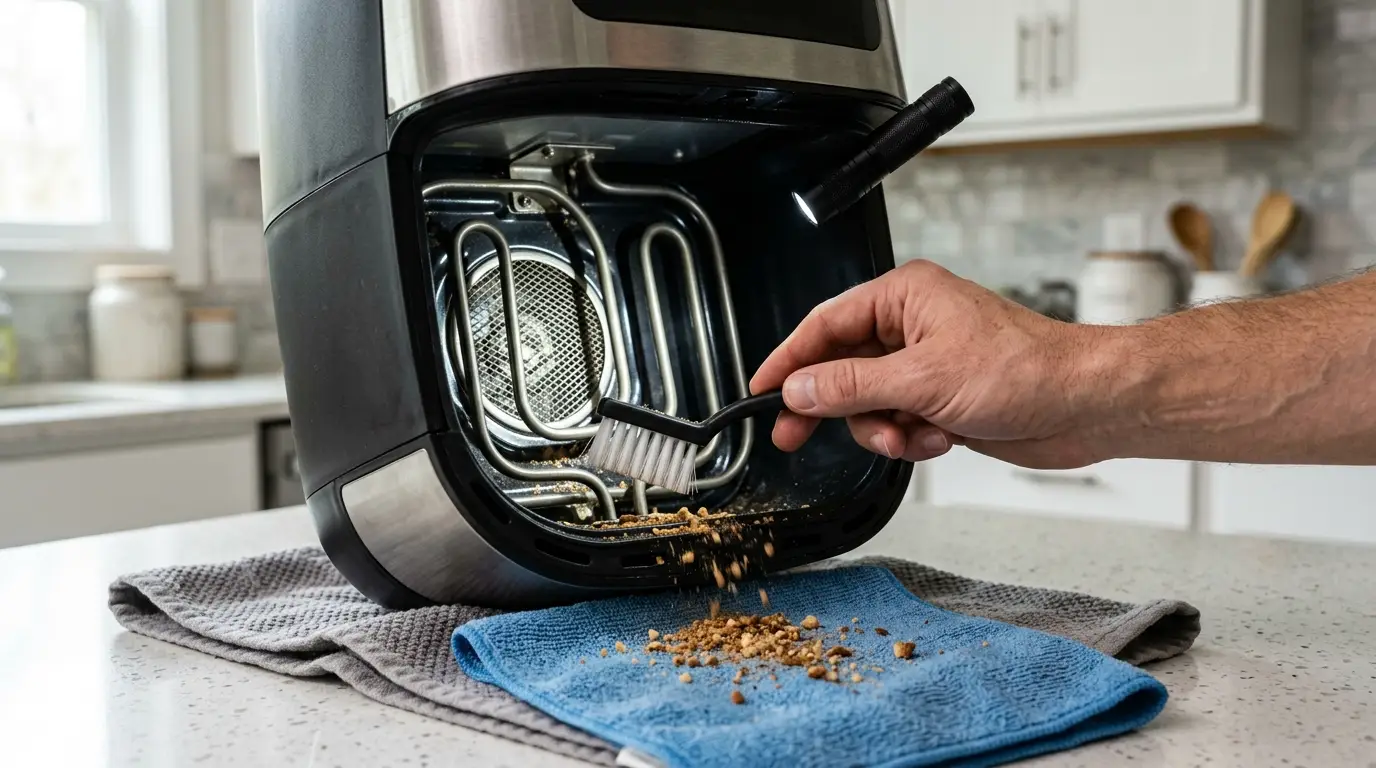
Use the soft brush to loosen dry crumbs on and around the coil. - Catch debris. Wipe crumbs with a dry cloth. Do not push debris into the fan.
- Soap wipe. Dampen a cloth with warm, soapy water. Wring it well. Wipe the coil guard and nearby surfaces. Do not drip water.
- Degrease. Mix equal parts vinegar and water. Lightly mist the cloth, not the fryer. Wipe sticky spots until they release.
- Detail clean. Use cotton swabs on tight edges and screws. Keep them only damp.
- Rinse wipe. Use a fresh damp cloth with plain water to remove any soap or vinegar film.
- Dry. Pat dry with a clean towel. Let air-dry for 20 minutes. Then do a quick 3–5 minute preheat to 350–375°F to burn off moisture.
If your unit has a shield over the coil, remove it if the manual allows. Wash it by hand with dish soap and a soft sponge. Dry it well before you clip it back.
Deep Clean for Burnt-On Grease and Smoke Stains
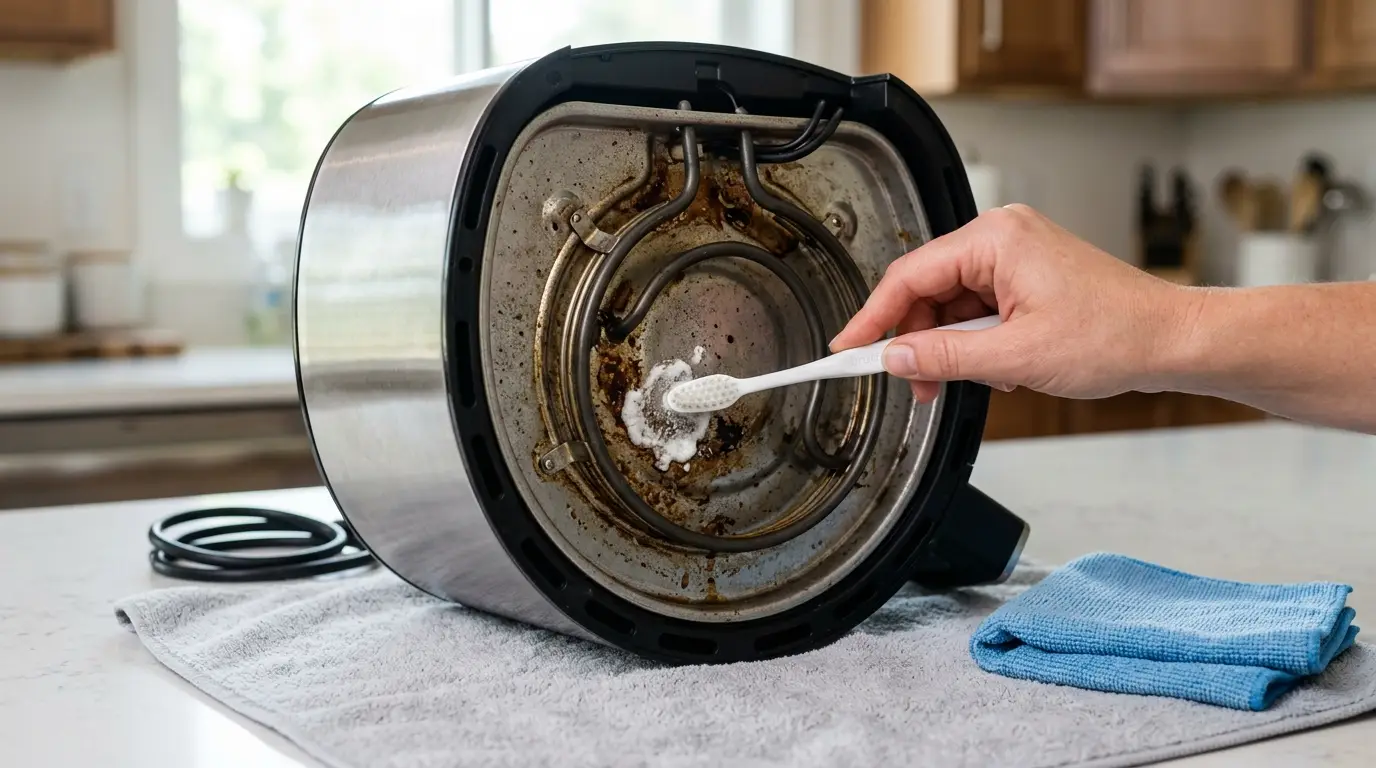
Sometimes, normal wipes are not enough. Sweet sauces and high-fat cooks can bake a tough crust. When this happens, do a deep clean air fryer element routine.
Try these methods:
- Baking soda paste. Mix three parts baking soda with one part water. Dab it on the worst spots with a soft brush. Let it sit for 10–15 minutes. Wipe with a damp cloth. Repeat on stubborn stains.
- Warm vinegar lift. Heat a vinegar and water mix to warm, not hot. Dampen a cloth and hold it against the stain for a minute. Wipe and follow with a clean water cloth.
- Careful repeat cycles. After wiping, run a short 350°F cycle for 3 minutes to dry. When cool, do one more gentle wipe to catch any loose residue.
Do not soak the coil or flood the chamber. Be patient. Two light passes beat one harsh scrub. This is the safest way to deep clean air fryer element buildup without damage
Quick Maintenance After Each Cook
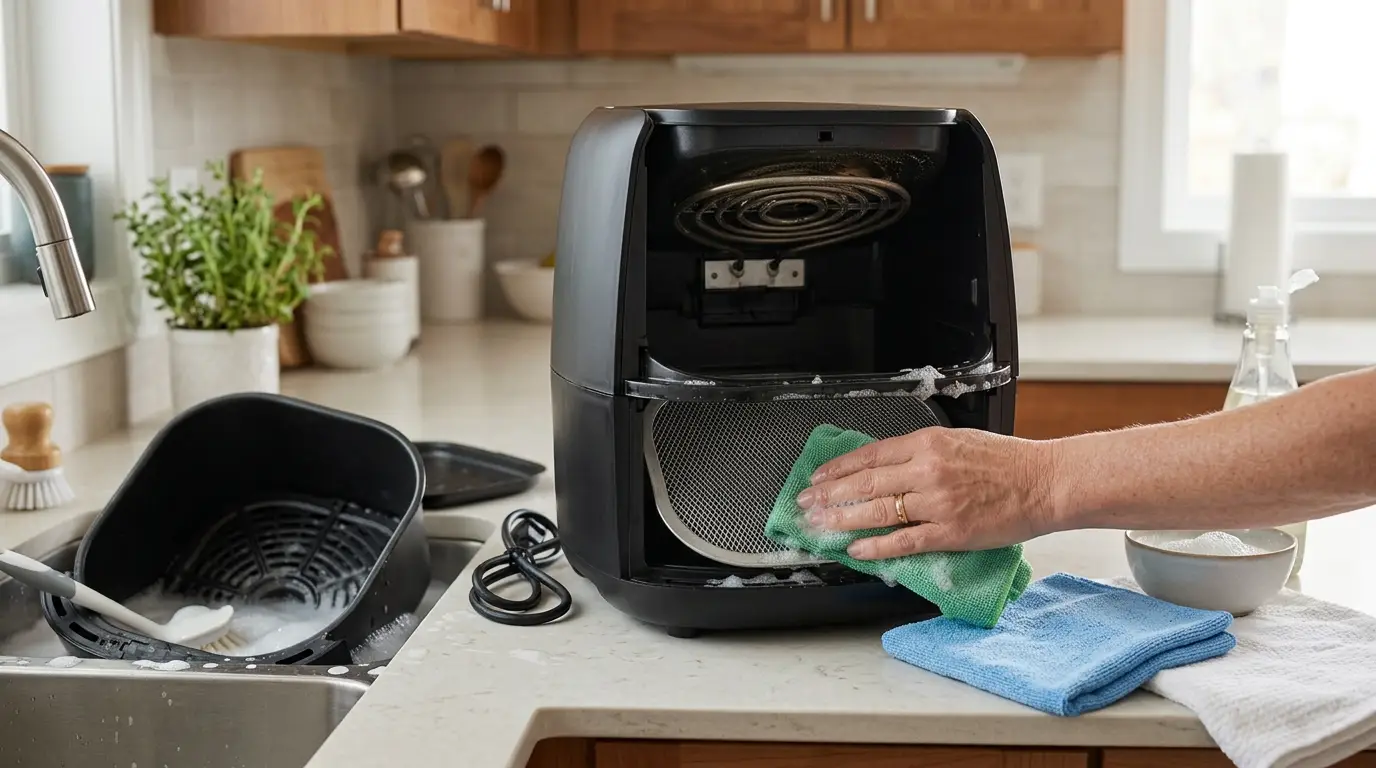
Small habits keep the coil clean and the air fresh. These take one minute but save you from a big job later.
Do this after greasy cooks:
- Let the unit cool a bit. Unplug it.
- Wipe the roof and the area near the coil with a damp, soapy cloth.
- Rinse with a damp water cloth. Then dry.
- Wash the tray and basket to remove splatter that can fly up next time.
Make it a habit to clean air fryer element areas lightly after hot, fatty, or sugary foods. Use parchment with holes in the basket to catch drips, but never cover vents. Choose oils with higher smoke points to reduce residue.
Troubleshooting Smells, Smoke, and Uneven Heat
If you still see smoke at normal temps, look up. Baked-on fat near the coil is the usual cause. Clean air fryer element surfaces again with the vinegar cloth and a dry wipe. Check the fan guard for sticky dust.
Food smells that linger often come from old oil on the coil or roof. Run an empty 375°F cycle for 5 minutes after a deep clean. Let fresh air in the room. For hot spots or slow heat, shine a light and clear any debris near the temp sensor. If you see a damaged coil, stop and contact support.
Safe Tools and Cleaners I Trust
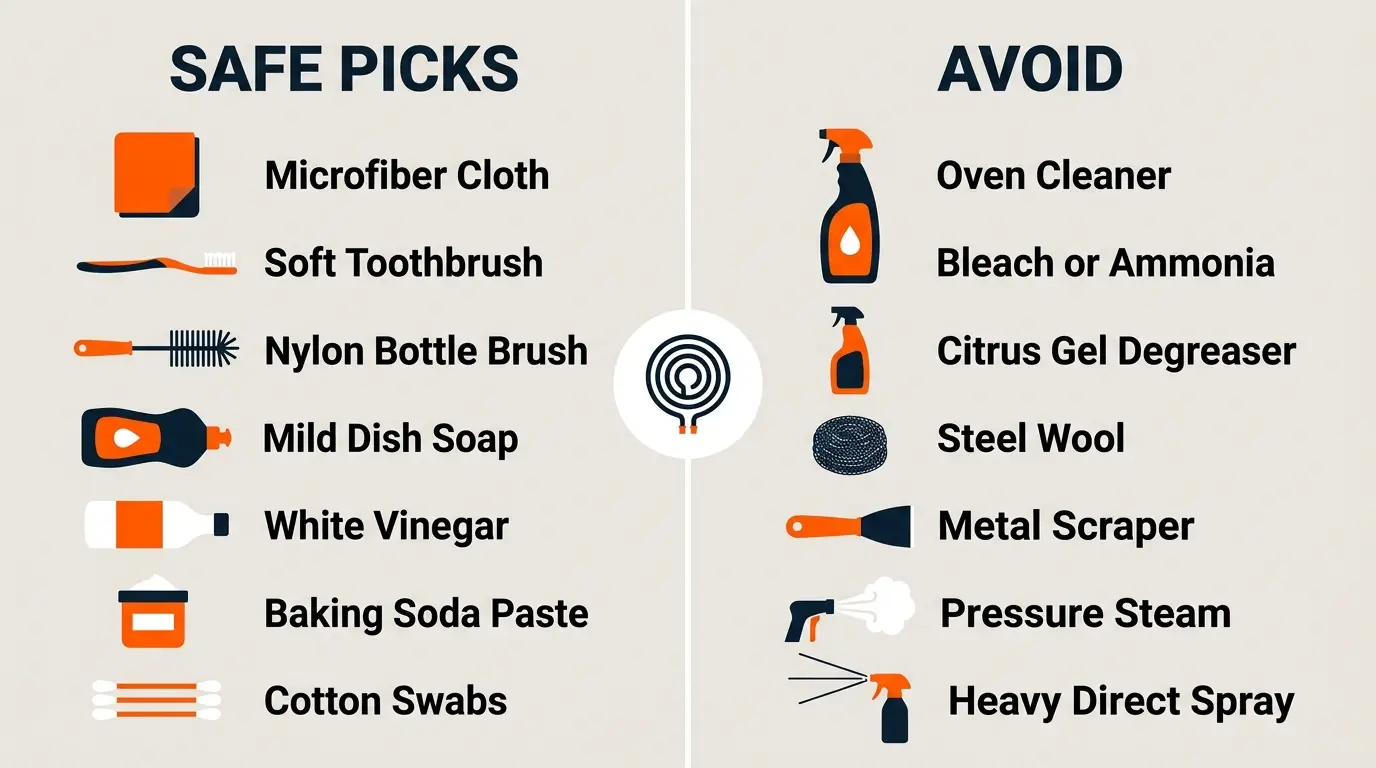
Over the years, I have tested many tools on different models. Simple, soft, and non-abrasive tools always win. You do not need fancy sprays to clean air fryer element parts.
Safe picks:
- Microfiber cloths for general wipe-downs
- Soft toothbrush or nylon bottle brush for edges
- Dish soap for grease
- White vinegar for light degreasing
- Baking soda paste for stuck-on spots
- Cotton swabs for tight corners
Use with care:
- Melamine foam on the roof only, not on the coil, and very light pressure
- A handheld vacuum with a brush to collect crumbs, used gently and never on live parts
Avoid:
- Oven cleaner, bleach, ammonia, and citrus gel degreasers on the coil
- Steel wool, metal scrapers, or hard abrasives
- Pressure steam or heavy sprays inside the chamber
Keep it simple. The best way to clean air fryer element parts is a soft cloth, warm soapy water, and patience.
Mistakes to Avoid and Warranty Tips
Do not clean a hot unit. Sudden cool water can crack parts and warp the coil. Do not spray liquid into vents. Do not bend the coil or the sensor probe. I have seen users push too hard and cause a short or trip a breaker.
Read your manual for your brand’s notes. Some units have a shield you can remove. Others do not. Strong chemicals and abrasives can void coverage. When in doubt, take photos before and after you clean air fryer element areas. If problems come up, you have proof of care.
Frequently Asked Questions of clean air fryer element
How often should I clean air fryer element parts?
Do a light wipe after greasy cooks and a deeper clean every 2–4 weeks. If you see smoke or smell old oil, clean it sooner.
Can I spray cleaner directly on the coil?
No. Do not spray the coil or vents. Spray the cloth, wring it well, then wipe the area.
What if my air fryer has a top heating shield?
If it is removable per the manual, take it off and wash it by hand. Dry it well before reassembly.
Is baking soda safe on the element?
Yes, if used as a mild paste and wiped off fully. Keep paste off open wiring and use light pressure.
Why does my air fryer still smell after cleaning?
Some smells linger in hidden grease. Run a 5-minute empty cycle at 375°F after a wipe, then clean once more.
Can I use a vacuum near the coil?
Yes, with a soft brush tool and a cool, unplugged unit. Do not press the hose on wires or the fan.
Will cleaning the element fix uneven cooking?
Often, yes. A clean coil and sensor restore steady heat. If issues stay, contact support.
What should I do if I see rust or flaking on the coil?
Light discoloration can be normal. Rust or flaking needs service. Stop use and reach out to the maker.
Can I use foil to protect the element?
Do not place foil near the coil or vents. It blocks airflow and can cause overheating.
How do I know I did a good job?
The roof and coil area should look clean, not sticky, with no burnt smell on preheat. Food will brown more evenly.
Conclusion
A clean air fryer element is the secret to crisp fries, juicy wings, and a fresh kitchen. Unplug, cool, and use soft tools with mild cleaners. Keep up quick wipes, and save deep work for stubborn buildup. This care boosts flavor, cuts smoke, and helps your fryer last.
Set a reminder to give your unit a fast roof-and-coil wipe this week. Your next batch will taste better for it. Want more kitchen care guides and tested tips? Subscribe and share your questions so I can help you cook smarter.