Most beginners oversalt, under-prep, and misuse heat and tools, often.
If you’re new to cooking, you are not alone. I teach home cooks and test recipes for a living, and I’ve seen the same kitchen mistakes beginners make over and over. In this guide, I’ll break down the kitchen mistakes beginners make, explain why they happen, and show you how to fix them fast. You’ll get clear steps, real examples, and pro tips you can trust.
The biggest kitchen mistakes beginners make
When we talk about kitchen mistakes beginners make, we usually see the same core issues. They are simple, but they affect taste, texture, time, and safety.
Here’s the short list I see the most:
- Not reading the recipe from start to finish before starting
- Skipping prep and chopping while the pan smokes
- Using a dull knife and the wrong cutting board
- Crowding the pan and steaming food instead of searing
- Guessing salt, time, and temperature
- Ignoring carryover cooking and resting time
- Storing food at unsafe temps or for too long
These are not moral fails. They are skill gaps. The good news is each one is easy to fix with small habits. By the end, you will avoid many kitchen mistakes beginners make and feel calm at the stove.
Knife skills and safety
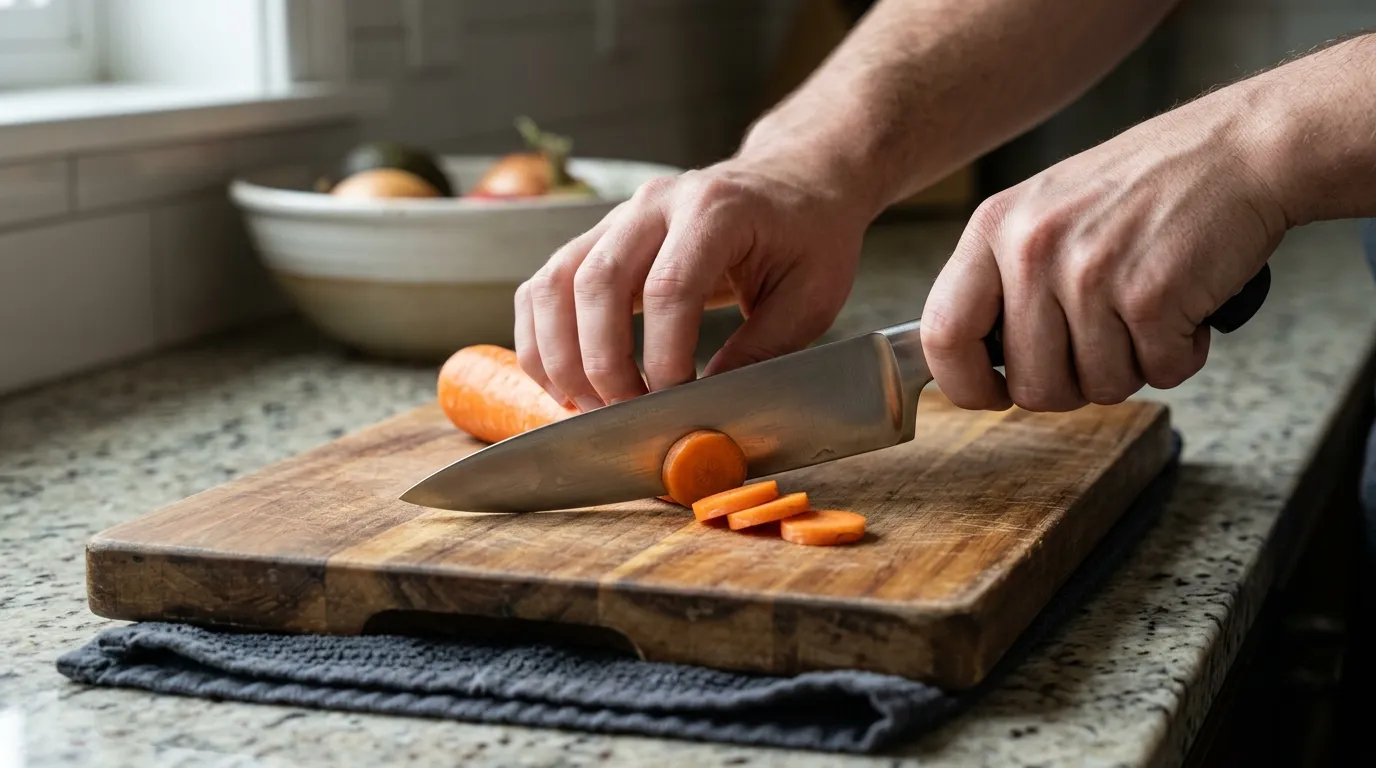
Many kitchen mistakes beginners make start with a knife. A dull knife slips, crushes food, and slows you down. A sharp knife is safer and cleaner.
- Learn a stable grip. Pinch the blade with your thumb and index finger. Wrap the rest around the handle.
- Use a stable board. A damp towel under the board stops slips.
- Keep knives sharp. Hone before each session. Sharpen every few months.
- Practice common cuts. Dice an onion, slice a carrot, mince garlic. Repetition builds speed.
Personal note: I once sliced tomatoes with a dull, serrated knife. They turned to mush. After I learned to hone a chef’s knife, tomato slices were clean and quick. That alone saved me time and waste. This is one of those kitchen mistakes beginners make that you can fix in minutes.
Safety basics:
- Tuck your fingers in (the claw).
- Never try to catch a falling knife.
- Clear the board often to keep focus.
Heat, pans, and cooking methods
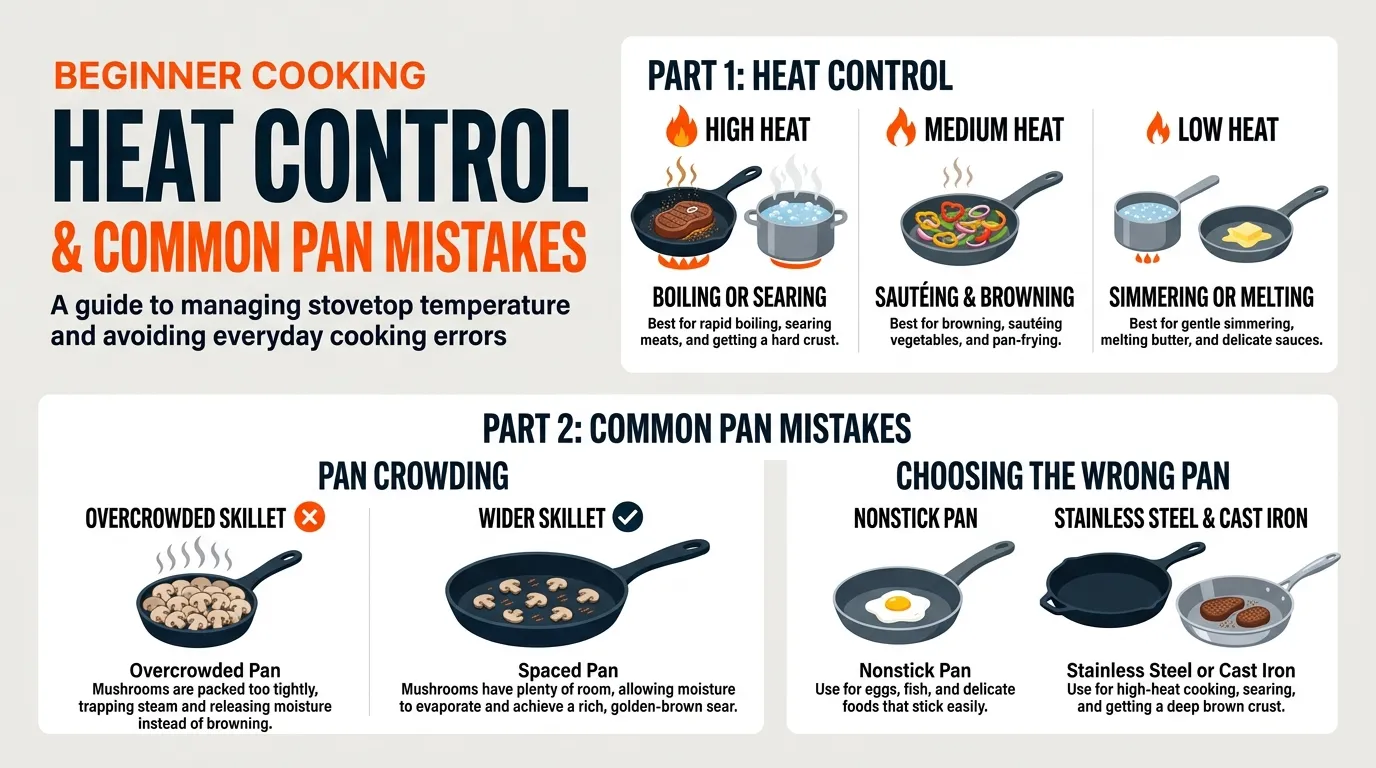
Heat control is where many kitchen mistakes beginners make show up. Food sticks, burns, or turns soggy.
Know your heat:
- High heat is for boiling water and searing dry food fast.
- Medium heat is for sautéing, frying, and most browning.
- Low heat is for simmering, melting, and gentle cooking.
Common pan errors:
- Cold pan, cold oil, cold food. Preheat the pan. Then add oil. Then add dry food.
- Overcrowding. Give space for steam to escape. Work in batches.
- Wrong pan type. Nonstick is great for eggs and delicate food. Stainless and cast iron are best for browning.
Practical steps:
- Dry protein with paper towels before searing. Water fights the sear.
- Test heat with a drop of water. It should sizzle, not sit.
- Let a crust form. Flip only when the food releases on its own.
Story from my kitchen: I used to toss a pound of mushrooms in a small pan. They steamed and leaked water. Now I use a wide pan and cook in two rounds. They brown, shrink, and taste meaty. That fix alone solved one of the top kitchen mistakes beginners make.
Seasoning, salting, and tasting

Poor seasoning is one of the biggest kitchen mistakes beginners make. Taste often. Adjust as you go. Do not wait until the end.
Tips that work:
- Salt in layers. A small pinch on veggies, a small pinch in the pan, a small pinch in the sauce. It builds depth.
- Use acid to brighten. A squeeze of lemon or a splash of vinegar wakes up dull food.
- Balance fat, salt, acid, and sweet. Rich stew? Add acid. Bitter greens? Add fat and a pinch of sugar.
How to taste like a pro:
- Taste broth before adding salt. Reduce first, then adjust.
- Rest and re-taste. Food tastes saltier as it cools a bit.
- Keep notes. Your hand will learn the right pinch over time.
Fixes for common issues:
- Oversalted soup. Add unsalted stock, a potato to simmer and remove, or a touch of cream.
- Bland pasta. Salt the water like the sea. The noodles should taste seasoned on their own.
One of the sneaky kitchen mistakes beginners make is trusting a teaspoon over your tongue. The spoon is a start. Your palate is the finish line.
Prep, timing, and mise en place

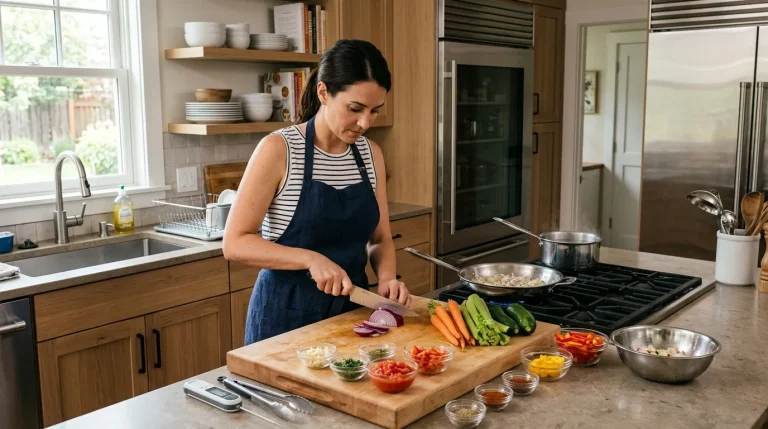
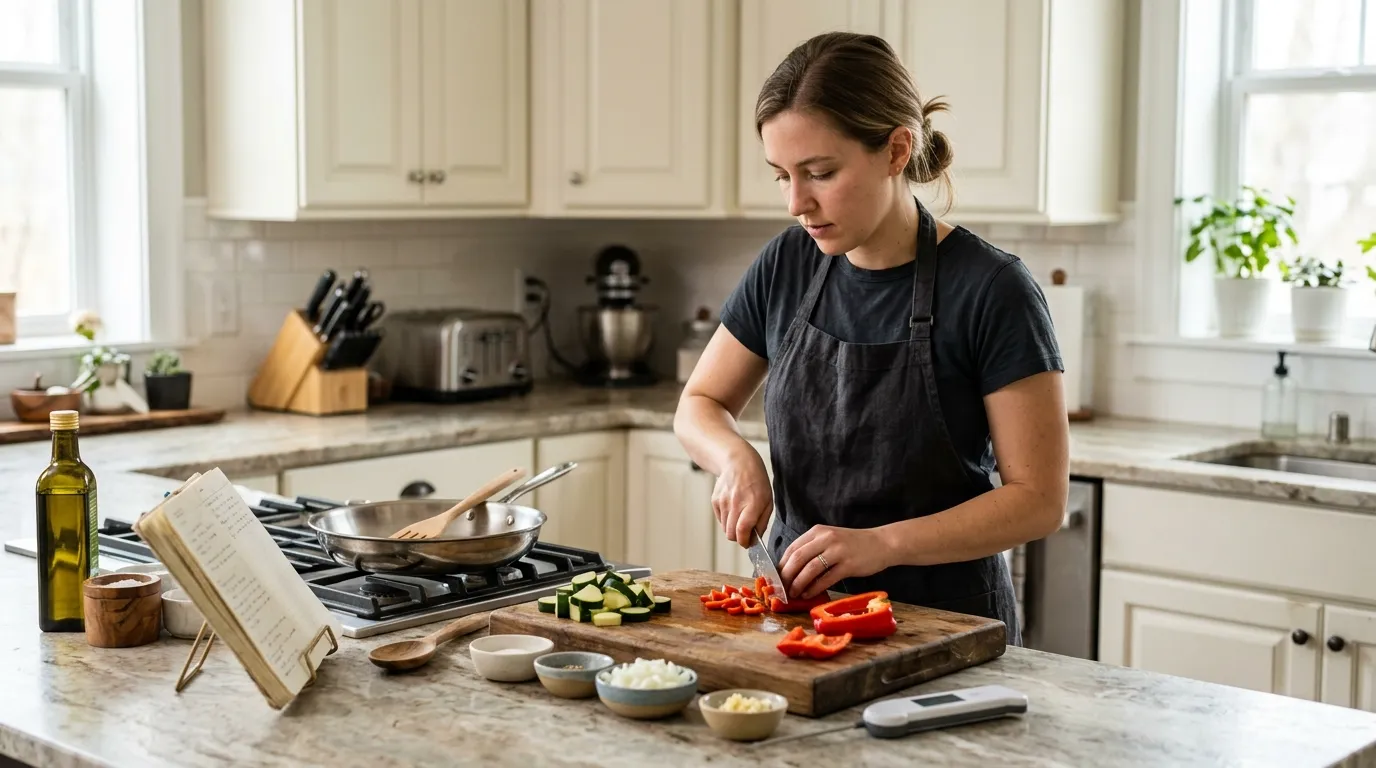
Mise en place means everything in its place. It is the cure for many kitchen mistakes beginners make.
Simple routine:
- Read the recipe. Twice. Note times, tools, and tricky steps.
- Chop and measure before heat. Put ingredients in small bowls or on a tray.
- Preheat early. Ovens and pans need time to get ready.
Timing tips:
- Start with the item that takes the longest. Often that is the oven task or the grain.
- Stagger tasks. Chop herbs while onions soften.
- Rest meat. Pull steaks at about 5°F below target. Let them rest so juices settle.
Personal lesson: I once burned garlic while digging for a can opener. Now the opener sits out before the pan gets hot. This tiny move killed one of the most common kitchen mistakes beginners make.
Food safety and storage
Food safety is not scary. It is simple math and clean hands. Many kitchen mistakes beginners make are about temps and cross-contact.
Clean and separate:
- Wash hands for 20 seconds before and after handling raw meat.
- Use separate boards for raw proteins and ready-to-eat items.
- Sanitize surfaces after raw chicken or eggs touch them.
Cook and cool:
- Use a thermometer. Poultry 165°F, ground meats 160°F, whole cuts of beef/pork 145°F plus rest, fish 145°F or until it flakes.
- Keep hot food hot (above 140°F) and cold food cold (below 40°F).
- Cool leftovers fast. Spread in shallow containers. Refrigerate within two hours.
Store smart:
- Label and date. Most cooked leftovers are best within 3–4 days.
- Reheat to 165°F. Stir and check several spots.
- Thaw in the fridge or under cold running water. Do not thaw on the counter.
Public health guidance shows that many home food illnesses come from unsafe temps and cross-contamination. A cheap digital thermometer solves many kitchen mistakes beginners make in one tool.
Recipes, tools, and budget tips
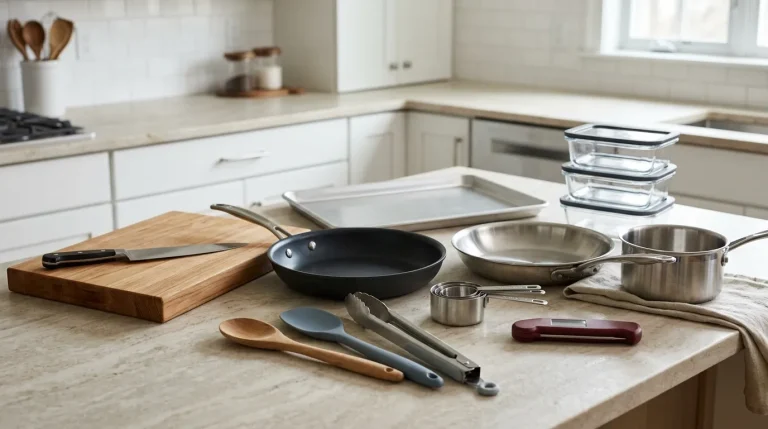
New cooks buy gadgets and skip basics. That’s one of the quiet kitchen mistakes beginners make. You need fewer tools than you think.
Core tools:
- 8–10 inch chef’s knife and a small paring knife
- Stable cutting board and a honing steel
- 10–12 inch skillet, medium saucepan, sheet pan
- Instant-read thermometer and measuring cups/spoons
Smart upgrades:
- Scale for baking and precise sauces
- Cast iron skillet for searing
- Blender or stick blender for soups and dressings
Recipe sense:
- Scan for red flags. If a “15-minute” recipe has 12 steps, plan for 30.
- Choose one new skill at a time. Sear today, pan sauce tomorrow.
- Build a pantry. Salt, pepper, olive oil, vinegar, soy sauce, mustard, garlic, onions, rice, pasta, beans, canned tomatoes, stock cubes.
Money savers:
- Buy whole veggies and cut them yourself.
- Repurpose scraps for stock.
- Cook once, eat twice. Plan for leftovers.
This cuts waste and removes friction, which are two kitchen mistakes beginners make without seeing them.
Cleanup, waste, and sustainability
A dirty station slows you down. Waste hurts your wallet. Both are common kitchen mistakes beginners make.
Clean as you go:
- Keep a trash bowl on the counter for scraps.
- Fill the sink with warm soapy water before you start.
- Rinse tools right after use to prevent stuck-on mess.
Reduce waste:
- Save bones and veggie trimmings for stock. Freeze until ready.
- Turn wilting greens into pesto or soup.
- Store herbs in a jar with water in the fridge, like flowers.
Plan for leftovers:
- Cook grains in bulk. Use them in bowls, salads, and fried rice.
- Roast extra veggies for easy lunches.
- Freeze in single portions for quick meals.
You will feel lighter when the sink is not a monster. That relief helps avoid many kitchen mistakes beginners make the next day.
Frequently Asked Questions of kitchen mistakes beginners make
What is the most common mistake beginners make in the kitchen?
Crowding the pan is very common. It stops browning and makes food soggy and pale.
How do I fix bland food without oversalting?
Add acid, like lemon juice or vinegar. A little fat or fresh herbs also helps.
Do I really need a meat thermometer?
Yes. It removes guesswork and prevents dry or unsafe food. It is cheap and fast.
Why does my chicken stick to the pan?
The pan was not hot, or the chicken was wet. Dry it well and preheat the pan.
How can I stop burning garlic?
Add garlic later in the cook, keep heat medium, and stir. You can also bloom it in oil off heat.
What is mise en place and why does it matter?
It means everything in its place. Prepping first stops chaos, burns, and missed steps.
How do I know how much salt to use?
Salt in small layers and taste often. Your palate, not the spoon, makes the final call.
Why are my vegetables mushy?
Heat was too low, or the pan was crowded. Use high heat, dry veggies, and cook in batches.
How long can leftovers stay safe in the fridge?
Most cooked leftovers are best within 3–4 days. Reheat to 165°F to be safe.
Are nonstick pans safe for high heat?
Use medium heat for nonstick. For high-heat searing, choose stainless steel or cast iron.
Conclusion
Kitchen skill is not magic. It is a bundle of small habits done in order. Read the recipe. Prep first. Use sharp knives. Control heat. Taste and adjust. Use a thermometer. Store food right. With these steps, you will dodge most kitchen mistakes beginners make and cook with calm, even on a busy night.
Start with one habit this week. Maybe it is salting pasta water, or preheating the pan. Measure the change. Share your wins or questions in the comments, and subscribe for more simple, tested tips you can use tonight.