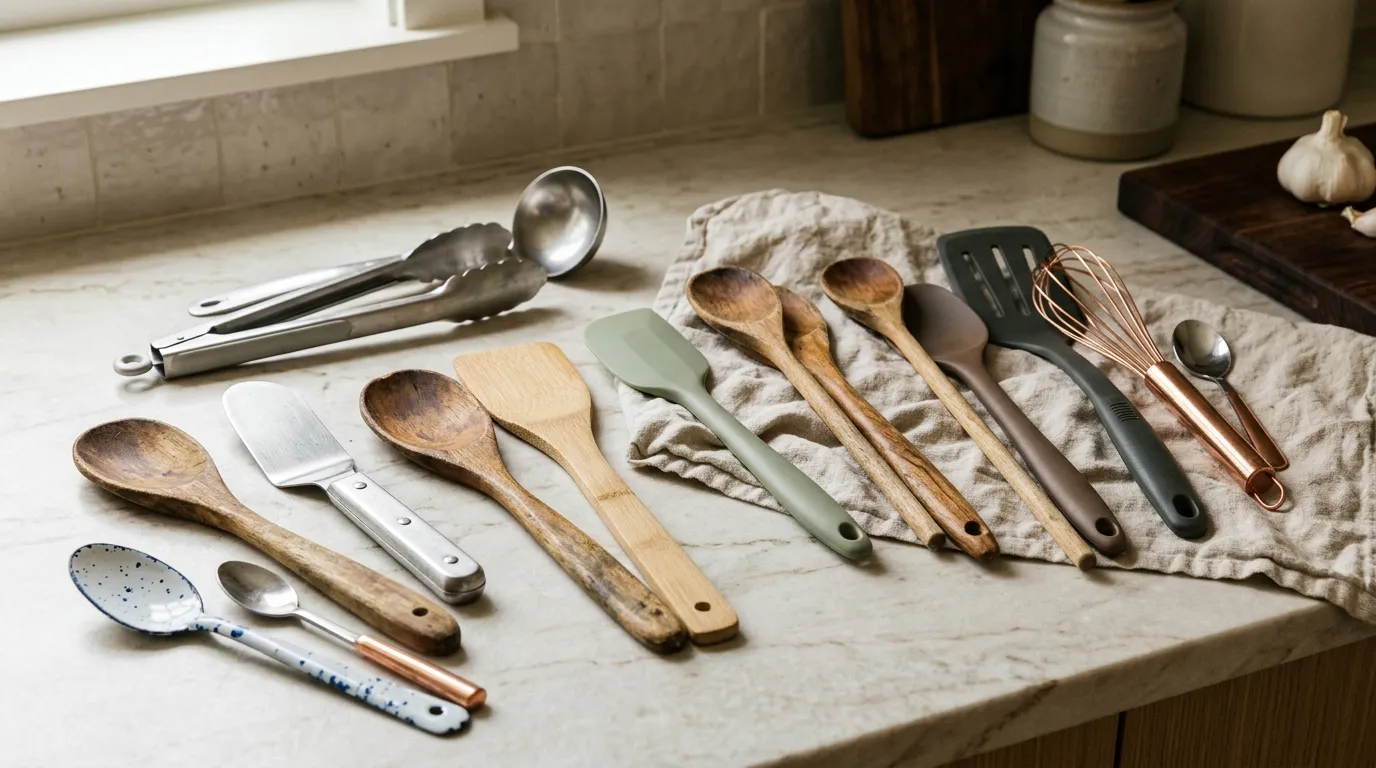
The right utensils depend on what you cook, how you cook, and how you clean.
If you want a utensil materials guide that is clear, hands-on, and built on real kitchen use, you are in the right place. I test cookware for a living and have stocked both home and pro kitchens. In this utensil materials guide, I explain what each material does best, what to avoid, and how to build a set that lasts for years without guesswork.
How to choose the right utensil material for the job

Start with your stove, cookware, and habits. Match the tool to the task.
- For nonstick pans, reach for silicone, wood, or nylon to protect the coating.
- For high heat searing, choose stainless steel or carbon steel tools.
- For acid foods like tomato sauce, avoid bare aluminum and bare cast iron.
- For baking and scraping bowls, silicone spatulas shine.
Here is the rule I use at work. Pick the softest tool that still does the job well. This utensil materials guide helps you do that with less trial and error.
Stainless steel
Stainless steel is the workhorse. It is strong, heat safe, and easy to clean. Look for 18/10 or 304 grades for spoons, ladles, and tongs. These have more nickel, which boosts rust resistance.
- Pros: Durable, dishwasher safe, safe at high heat, nonreactive with food.
- Cons: Can scratch delicate pans, handles get hot if they are not insulated.
- Best for: Searing, deglazing, stirring soups, serving.
Pro tip from my line cook days: a thin, flexible fish spatula in stainless steel is a true multi-tool. It flips, lifts, and scrapes stuck bits on steel pans with ease. Keep it off PTFE nonstick to avoid damage. This utensil materials guide ranks a fish spatula as a must-have in most kitchens.
Cast iron and carbon steel
Cast iron and carbon steel are pan materials, but they also show up in ladles, meat presses, and grill tools. They hold heat very well.
Cast iron
- Pros: Massive heat holding, near fire-proof, can last a lifetime.
- Cons: Heavy, reacts with acid, needs seasoning to stay nonstick.
- Best for: Grilling tools, presses, rustic ladles for camp cooking.
Carbon steel
- Pros: Lighter than cast iron, strong, takes seasoning well.
- Cons: Can rust if left wet, not great with acid.
- Best for: Woks, crepe tools, thin turners for steel pans.
If you cook tomato-heavy stews, keep cast iron tools out of the pot. Acid can strip seasoning and leave a metallic taste. In this utensil materials guide, we mark cast tools as niche, not daily use.
Aluminum and hard-anodized aluminum
Bare aluminum is light and cheap. It heats fast, but it can react with acid and salt. Hard-anodized aluminum has a sealed surface that is harder and more stable.
- Pros: Very light, great for large ladles and scoops, good heat spread.
- Cons: Bare aluminum can pit and discolor with acid or dishwasher use.
- Best for: Outdoor kits, budget sets, large service tools.
A quick check from this utensil materials guide: If the tool is anodized, it should be dark gray and smooth. That layer helps reduce reactivity and adds scratch resistance.
Copper
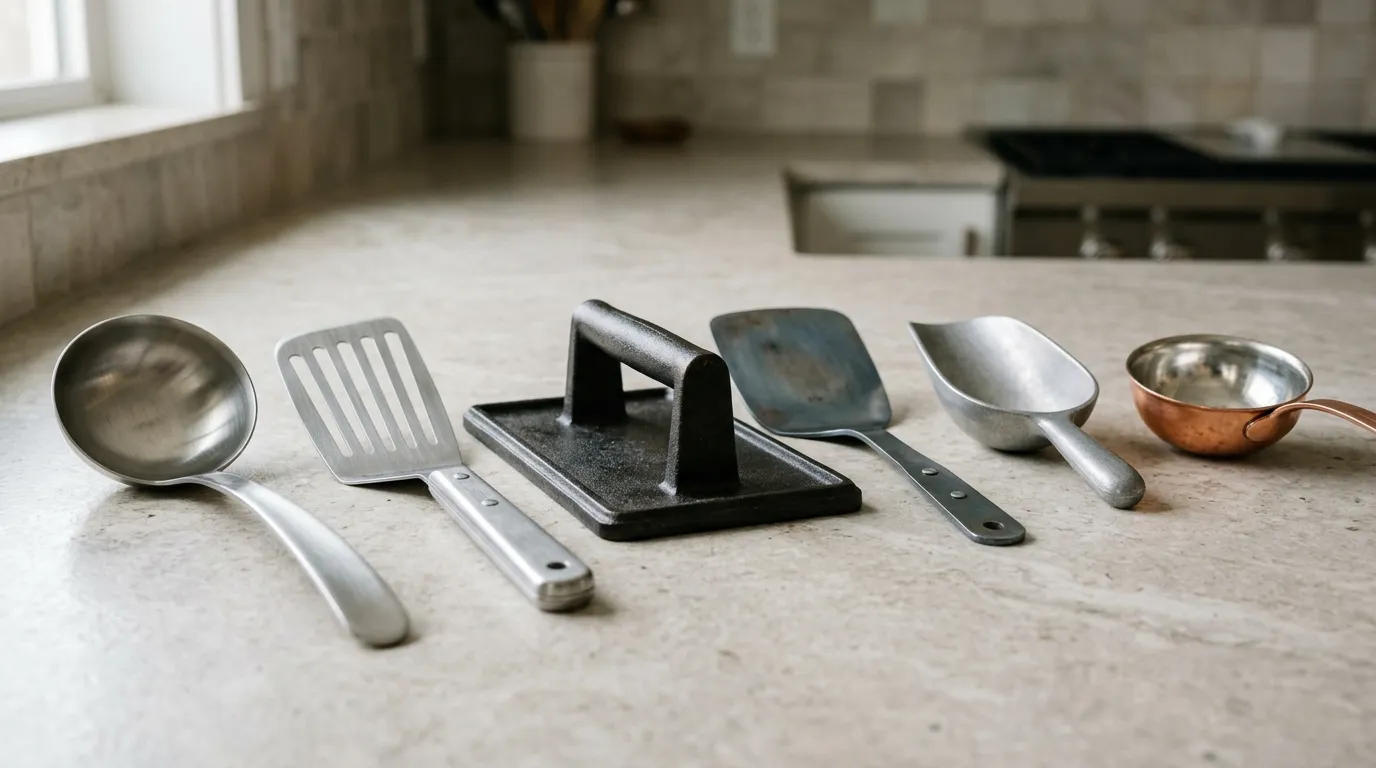
Copper is a showpiece and a pro tool. It is the best at moving heat, but it is reactive. Most copper cooking tools are lined with stainless steel or tin.
- Pros: Elite heat control, precise for candy work and sauce making.
- Cons: Pricey, needs polishing, lined versions cost more.
- Best for: Candy thermometers with copper bases, sauce ladles in copper-lined sets.
I love copper for temperature-sensitive tasks. But for daily stirring, stainless steel is easier. This utensil materials guide tags copper as specialist gear.
Nonstick surfaces: PTFE and ceramic
Nonstick coatings sit on pans, but some utensils also have nonstick heads. Common choices are PTFE-coated spatulas or ceramic-lined scrapers.
- PTFE (Teflon): Very slick. Keep below high heat on pans. Use wood or silicone on PTFE pans to avoid wear.
- Ceramic nonstick: Slick but more brittle. Avoid metal tools.
For safety, this utensil materials guide suggests wood, silicone, or nylon on any nonstick pan. Even “metal-safe” claims still wear faster with metal tools.
Silicone, nylon, and other plastics
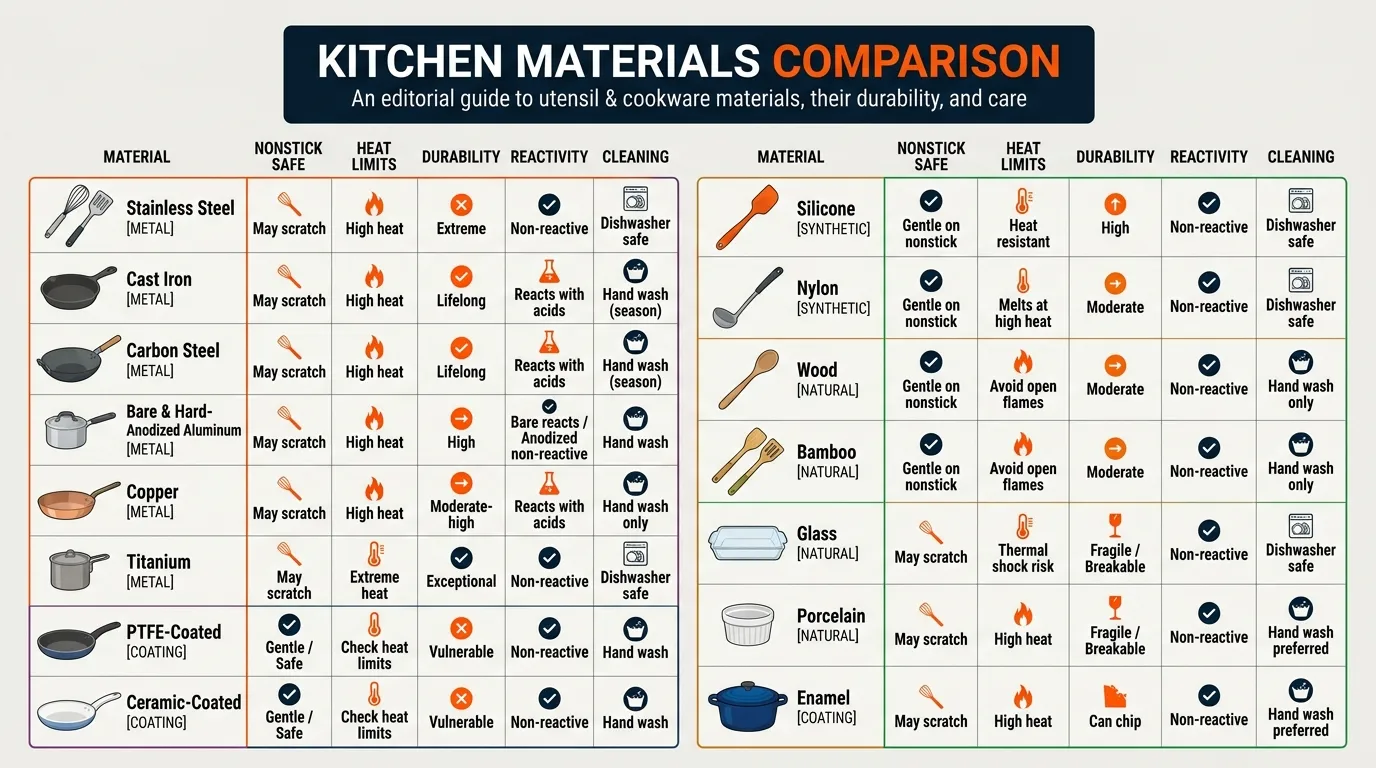
Food-grade silicone is a star in modern kitchens. It is flexible, heat resistant, and nonreactive. Nylon is firm and cheap but has a lower melt point.
- Silicone pros: Heat safe to about 428°F to 600°F, depending on grade. Gentle on nonstick. Great for baking.
- Silicone cons: Can hold odors, low-end versions may feel floppy.
- Nylon pros: Stiff, budget friendly, gentle on coatings.
- Nylon cons: Can soften near 400°F, may warp on hot pan edges.
I keep two silicone spatulas on the line: one firm for scraping pans and one soft for folding batters. This utensil materials guide ranks silicone as the safest bet for nonstick pans and pastry work.
Wood and bamboo
Wood feels warm in the hand and is kind to pans. Bamboo is light and stiff, made from fast-growing grass.
- Pros: Gentle on coatings, quiet on metal, does not melt.
- Cons: Needs hand washing and full drying. Can stain or split if soaked.
- Best for: Stirring risotto, sauces, and stews. Serving from nonstick or enamel.
A lesson I learned the hard way: do not leave a wood spoon in a pot. It will swell, crack, and can pick up odors. Oil wood now and then to keep it smooth. This utensil materials guide calls wood a top pick for daily stirring.
Glass, porcelain, and enamel
Glass and porcelain are fully inert. They do not react with food. Enamel is a glass layer fused to metal.
- Pros: Nonreactive, easy to clean, does not hold flavors.
- Cons: Can chip or shatter. Heavy when fused to steel or iron.
- Best for: Mixing spoons, ladles for acidic soups, serving tools.
If you cook a lot of chili or lemon-heavy sauces, enamel ladles are great. In our utensil materials guide, we rate enamel as safe and stable but a bit fragile.
Titanium and specialty alloys
Titanium tools are rare but useful. They are strong, light, and very resistant to corrosion.
- Pros: Feather light, tough, nonreactive.
- Cons: Expensive, not as common in local stores.
- Best for: Camping kits, travel sets, pro kitchens that need light tools.
This utensil materials guide notes titanium is overkill for most home cooks. But for backpackers, it is gold.
Health, safety, and migration concerns
Safety matters more than looks. Here is what to know.
- Stainless steel is stable. High-nickel grades resist corrosion best.
- Bare aluminum can leach small amounts with acid. Anodized aluminum reduces this.
- Copper must be lined for direct food contact.
- PTFE coatings can degrade at very high heat on pans. Keep pan temps moderate and use soft tools.
- Food-grade silicone should meet FDA or LFGB standards. Buy from known brands.
My rule from this utensil materials guide: choose inert where you can, and if in doubt, go with stainless steel or silicone.
Sustainability and eco choices
You can build a greener tool set without losing performance.
- Choose long-life materials like stainless steel and wood.
- Buy once, buy well. A tool that lasts 10 years beats five cheap ones.
- Pick bamboo from certified sources. It grows fast and uses less water.
- Avoid single-use plastics. Repair or replace parts like silicone heads when possible.
In this utensil materials guide, we rate durability as the top eco win.
Care, maintenance, and lifespan
Good care doubles the life of your tools.
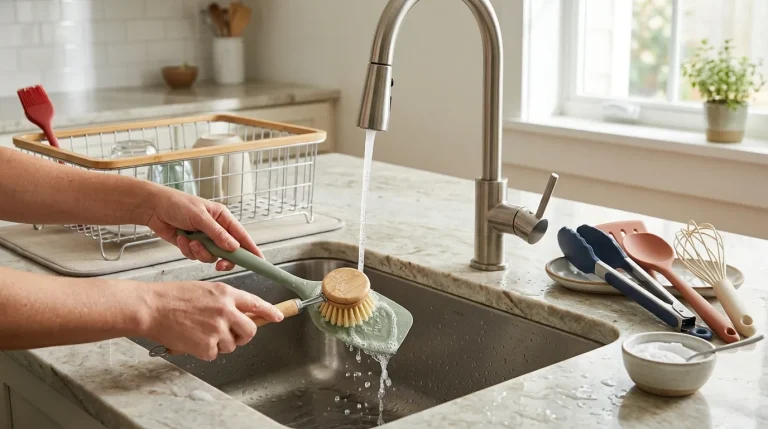
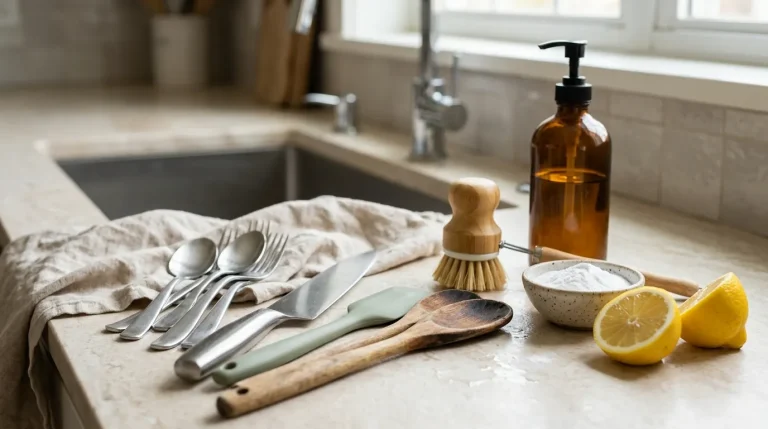
- Wash wood by hand, dry upright, and oil with food-safe oil.
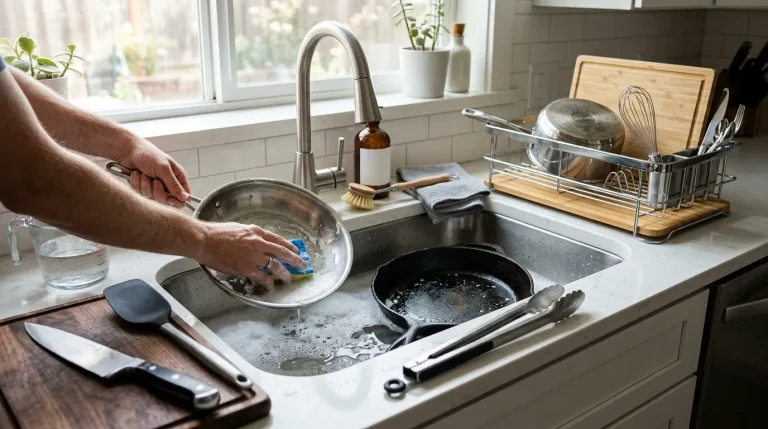
- For stainless steel, use non-abrasive scrubbers. Dry to prevent spots.
- Keep silicone away from open flames and very hot metal edges.
- Avoid harsh cleaners on anodized aluminum and enamel.
I label my station tools. If one starts to warp or chip, I retire it fast. This utensil materials guide favors safety over nostalgia.
Build a minimalist, high-impact set
You do not need a drawer full of gear. Start lean.
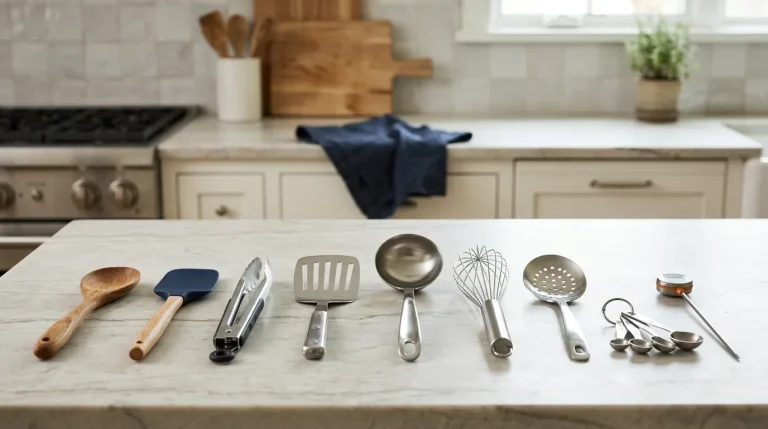
- One stainless steel fish spatula for steel or cast pans.
- One silicone turner and two silicone spatulas for nonstick and baking.
- One wood spoon and one wood or bamboo flat edge scraper.
- One stainless steel ladle and one slotted spoon.
- One pair of stainless steel tongs with scalloped ends.
With this set, you can cook 90 percent of dishes at home. Add niche tools only when your menu demands it. This utensil materials guide helps you fill gaps, not clutter drawers.
Frequently Asked Questions of utensil materials guide
Which utensil material is safest for nonstick pans?
Silicone and wood are safest because they will not scratch the coating. Nylon also works but avoid very high heat.
Is stainless steel safe with acidic foods like tomato sauce?
Yes. Stainless steel is nonreactive. It will not change the taste or color of acidic foods.
Do wooden utensils hold bacteria?
If you clean and dry them well, they are safe. Wood has natural properties that can limit growth when kept dry.
Are aluminum utensils bad for health?
Bare aluminum can react with acid, but overall exposure from utensils is low. Anodized aluminum reduces reactivity and stains.
Can I use metal tools on ceramic nonstick?
It is not a good idea. Ceramic coatings can chip, so use silicone or wood to extend pan life.
What grade of stainless steel should I look for?
18/10 or 304 grades are great for corrosion resistance. 18/0 is magnetic and cheaper but can spot more.
How hot can silicone utensils get?
Most food-grade silicone handles 428°F to 600°F. Check the maker’s label for the exact limit.
Conclusion
Pick tools the way a chef picks knives. You want the right edge for the right job. Use this utensil materials guide to match material to task, protect your pans, and cook with peace of mind.
Start with a core set of stainless steel, silicone, and wood. Add specialty pieces only when they solve a clear problem. If this utensil materials guide helped, subscribe for more deep dives, or leave a comment with your top three tools and why they made the cut.