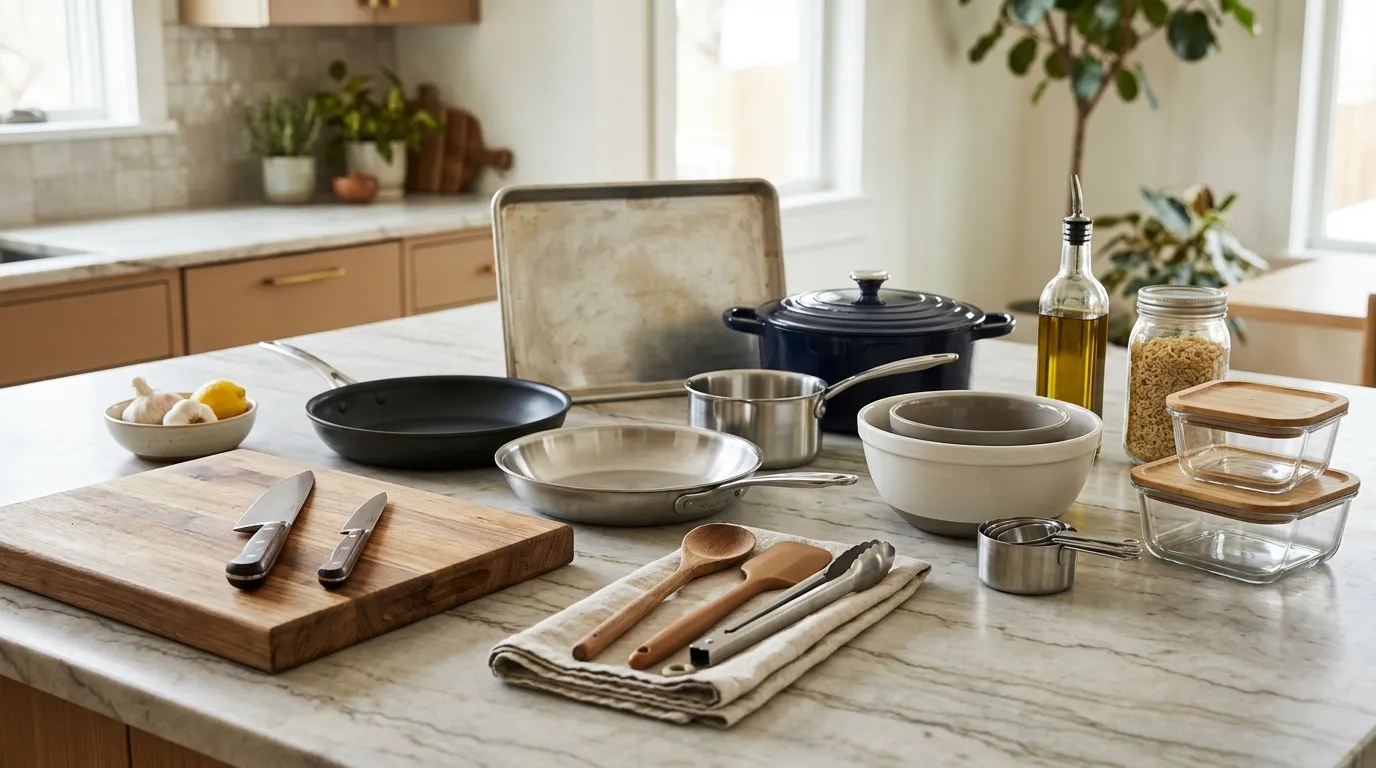
A must-have kitchen essentials list includes sharp knives, sturdy pans, and smart storage.
You want a kitchen that makes cooking calm, quick, and fun. I’ve set up dozens of home kitchens and tested gear in tiny apartments and busy family homes. This must-have kitchen essentials list gives you the tools that matter, why they work, and how to use them well. Stay with me, and you’ll leave with a confident plan that fits your budget, space, and style.
The backbone: core utensils you will use every day
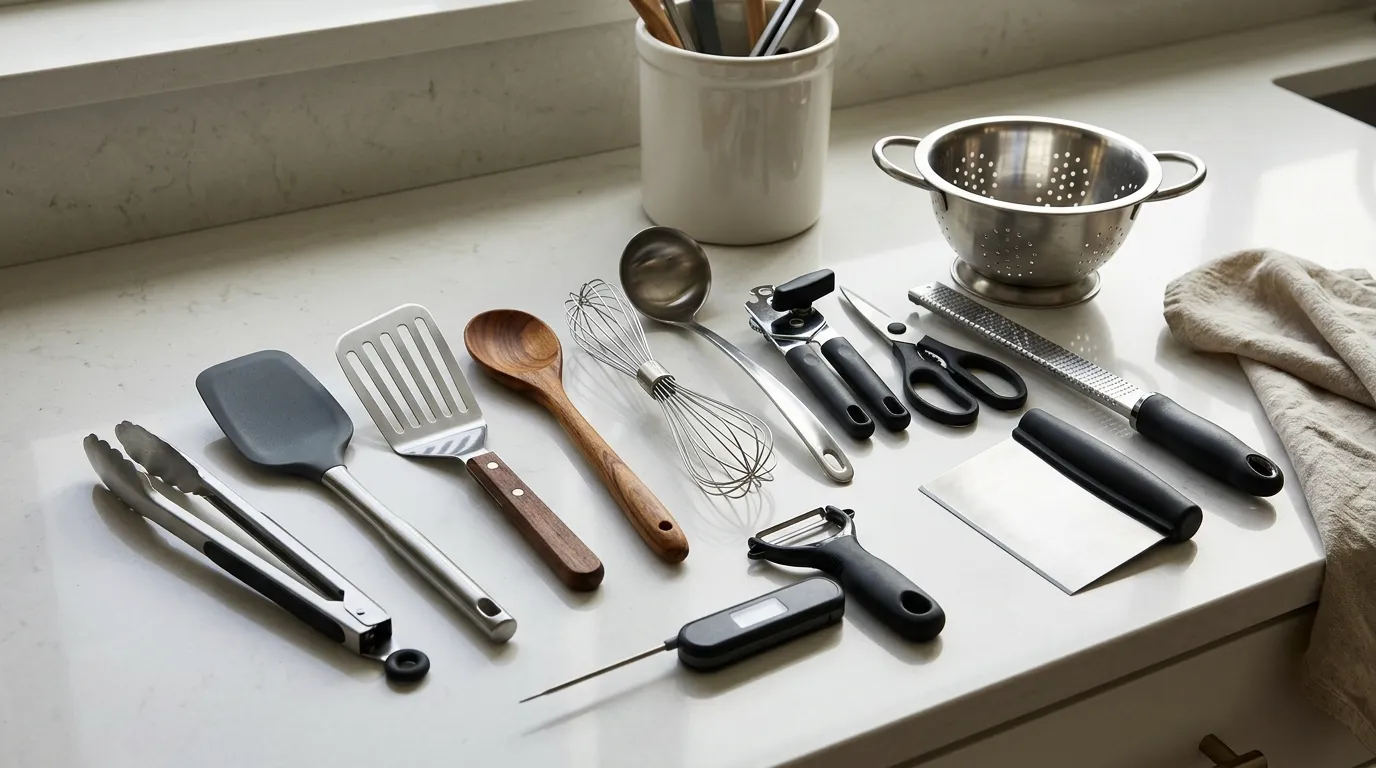
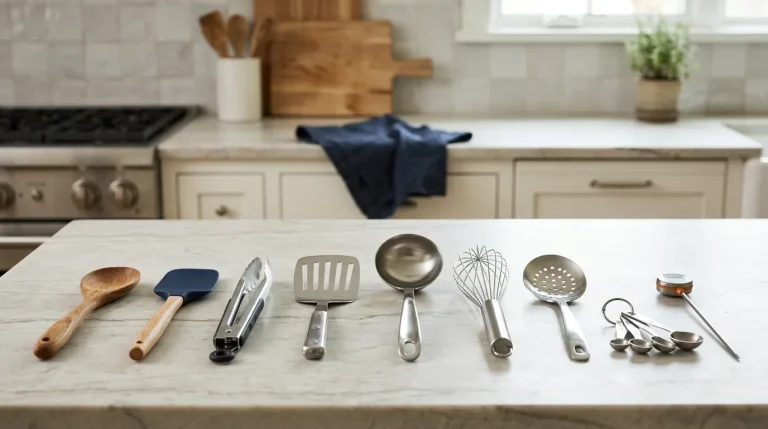
These tools form the daily core of any must-have kitchen essentials list. They are simple, tough, and ready for heat and heavy use. Pick pieces that feel solid in your hand and clean up fast.
- Tongs with a locking hinge for flipping, tossing, and serving
- Heat-safe silicone spatula for scraping bowls and pans
- Fish spatula for delicate lifting and crisp edges
- Wooden spoon for stirring soups and sauces
- Balloon whisk for smooth batters and dressings
- Ladle for portioning stews and stock
- Peeler for fast prep without waste
- Can opener that glides and does not leave sharp edges
- Kitchen shears for herbs, poultry, and packages
- Colander for draining pasta and washing produce
- Microplane for zest, garlic, and hard cheese
- Bench scraper for moving chopped food and cleaning boards
- Instant-read thermometer for safe, juicy meat and perfect bread
Pro tip from my own kitchen: store tongs and spatulas in a countertop crock. You will reach for them every few minutes. A thermometer is the best fix for dry chicken. Aim for safe temps rather than guesswork.
Cutting and prep: knives, boards, and measuring
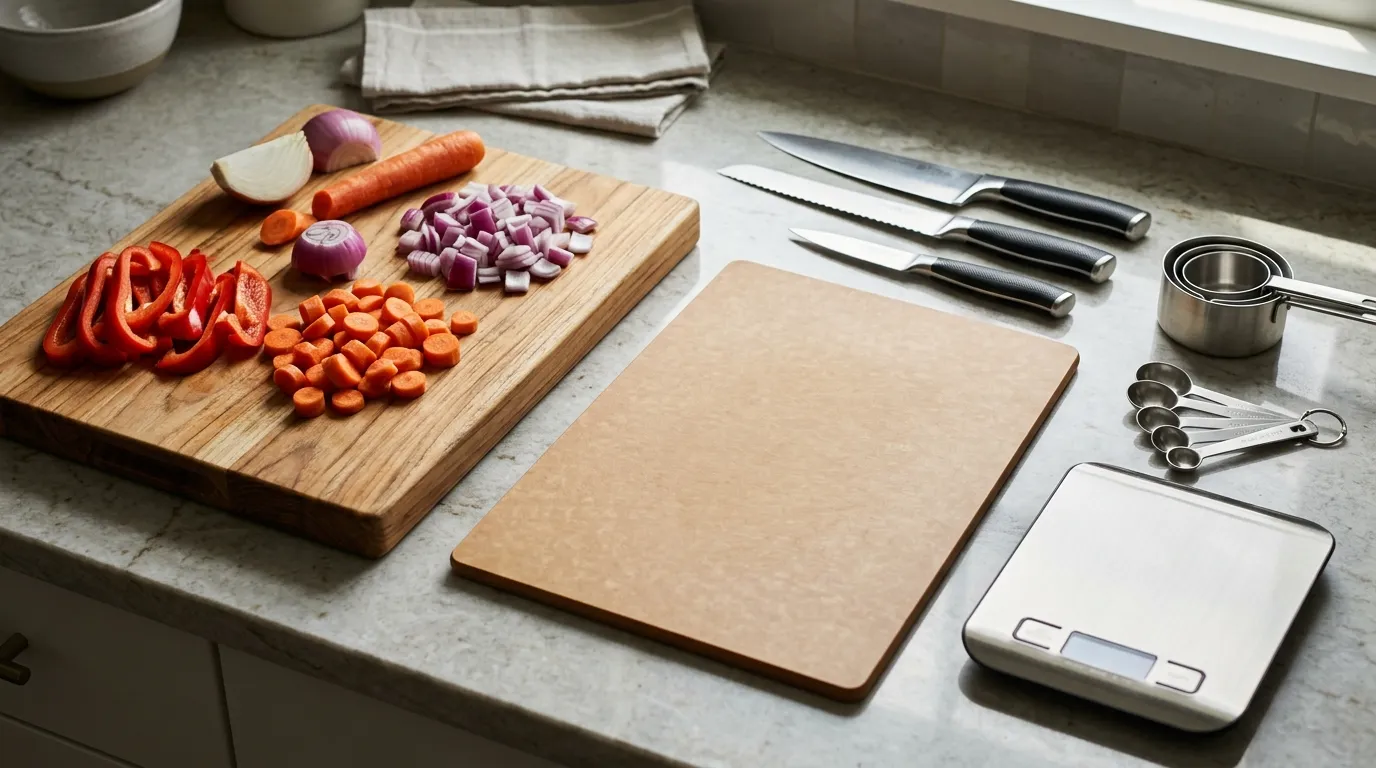
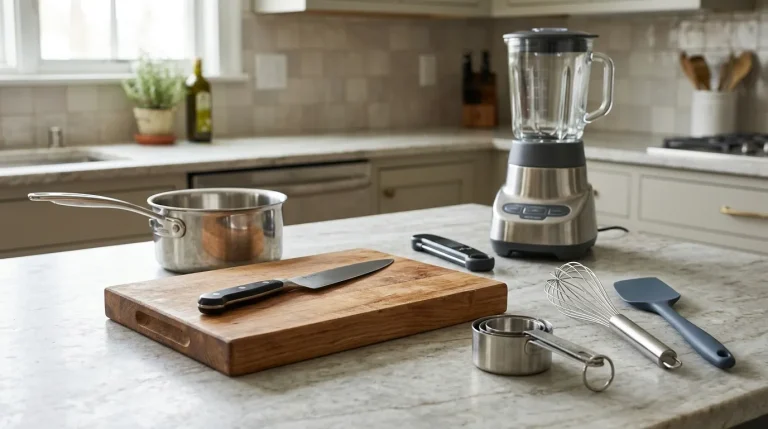
A sharp knife set and solid boards anchor a must-have kitchen essentials list. Add smart measuring tools for accuracy and speed.
- Chef’s knife for 90% of cutting jobs
- Paring knife for small, detailed work
- Serrated knife for bread and tomatoes
- Two cutting boards: one for produce, one for raw meat
- Measuring cups and spoons for dry and liquid
- Digital scale for baking and batch cooking
What I learned the hard way: buy one great chef’s knife and keep it sharp. It beats a big cheap set. Use color-coded boards to prevent cross-contamination. A scale removes guesswork and cuts dishwashing.
Cookware that works: pans, pots, and sheets
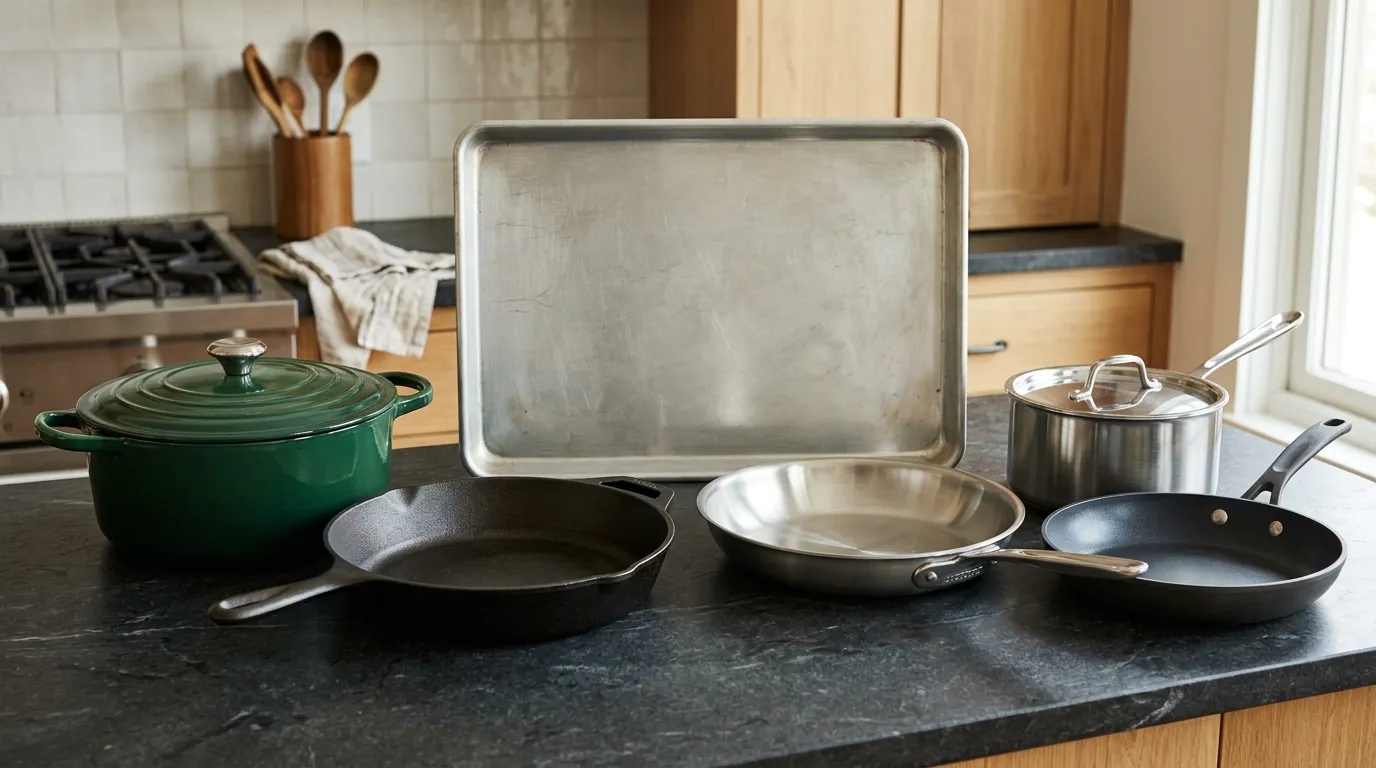
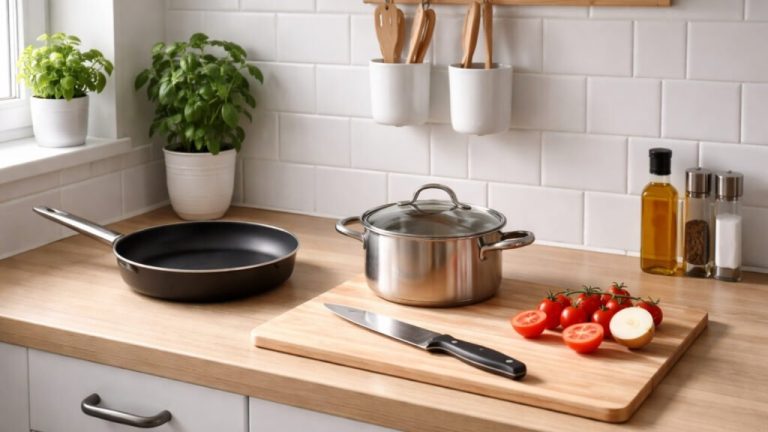
The right pans turn heat into flavor. This must-have kitchen essentials list keeps it lean but complete.
- 12-inch skillet, stainless or carbon steel, for searing and sautés
- Nonstick skillet for eggs and sticky foods
- 4–6 quart Dutch oven for soups, braises, bread
- 2–3 quart saucepan for grains, sauces, reheats
- Half-sheet pans for roasting and baking
- Cast-iron skillet for heat retention and grill-like sear
Choose heavy-bottom pans for even heat. Stainless handles oven use well. Nonstick has limits; avoid high heat and metal tools. A Dutch oven is the single best upgrade I ever made. It does stews, pasta, and “no-knead” bread like a pro.
Small appliances that save time
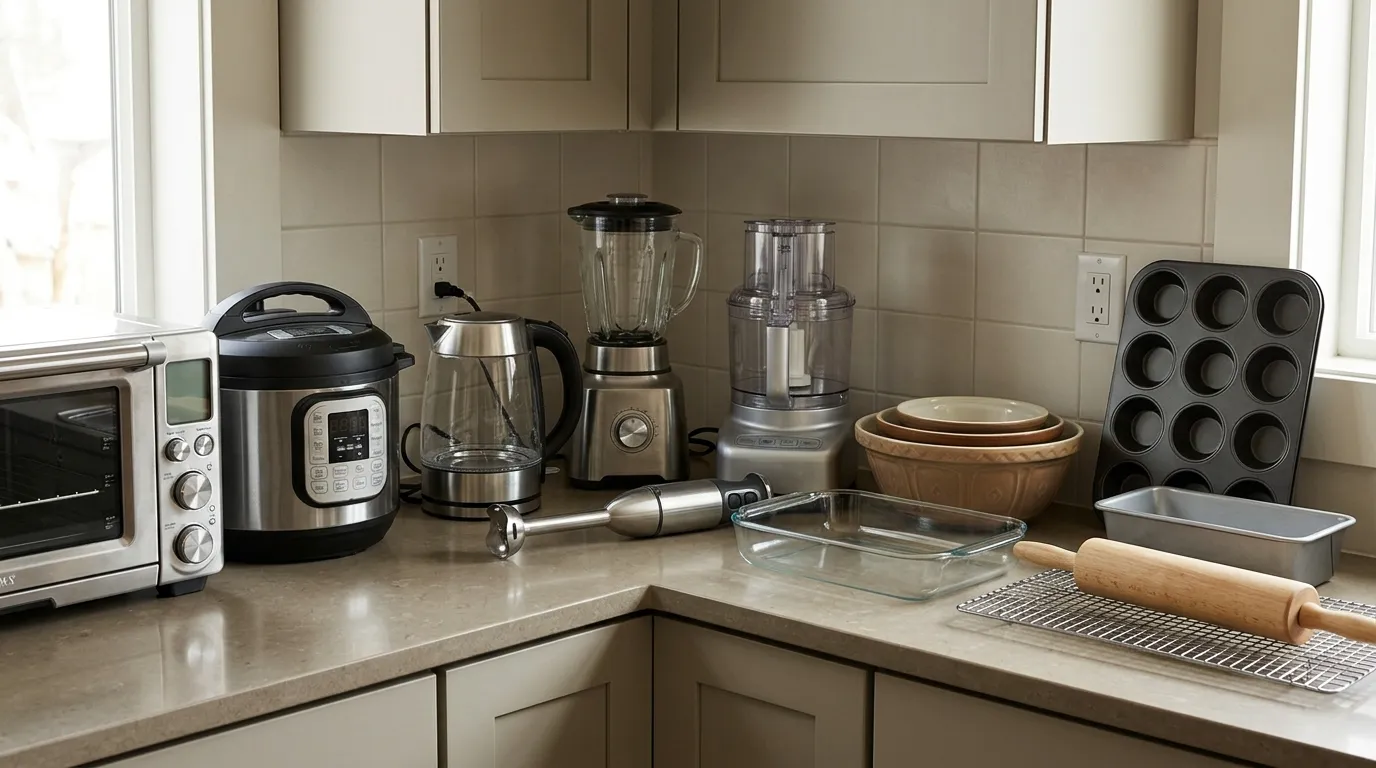
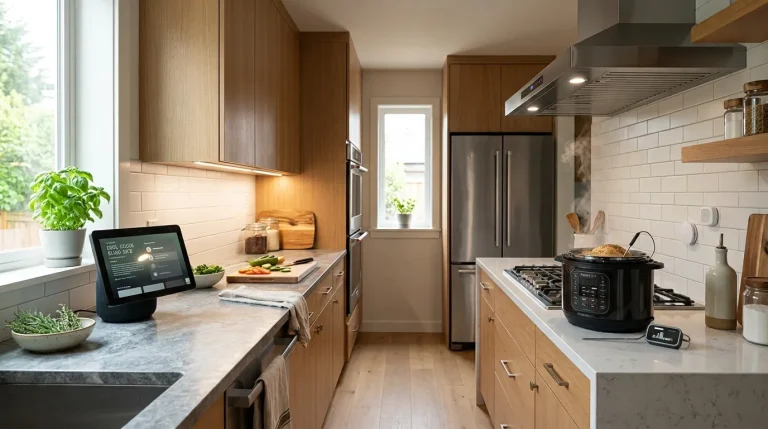
A smart set of small appliances adds power to your must-have kitchen essentials list. Match choices to how you cook most.
- Immersion blender for soups, sauces, and smoothies with easy cleanup
- Counter blender for frozen drinks and nut butters
- Food processor for doughs, dips, and shredding
- Rice cooker or multicooker for hands-off grains and stews
- Electric kettle for tea, pour-over, and fast pasta water
- Toaster oven or air fryer for quick, crisp reheats
If space is tight, pick one workhorse. For most homes, an immersion blender and a rice cooker cover many jobs. I batch-blend tomato soup right in the pot. Fewer dishes. Better texture.
Bakeware and mixing gear
Even if you do not bake much, a few pieces earn their keep. This part of the must-have kitchen essentials list helps with roasting, casseroles, and treats.
- Mixing bowls in three sizes with non-slip bases
- 9×13 baking dish for lasagna, brownies, and roasted veg
- Muffin tin for breakfast bites and portioned frittatas
- Loaf pan for quick breads and meatloaf
- Cooling rack to rest roasts and keep baked goods crisp
- Rolling pin for dough or crushing crumbs
Stainless or glass bowls clean fast and do not hold smells. A cooling rack over a sheet pan makes oven “fried” chicken much crisper.
Pantry and seasoning essentials
Flavor comes from a steady pantry. A must-have kitchen essentials list is not complete without shelf-stable staples.
- Oils: extra-virgin olive oil, neutral high-heat oil
- Vinegars: red wine, rice, apple cider
- Salts: kosher for cooking, flaky for finishing
- Spices: black pepper, chili flakes, cumin, paprika, garlic powder
- Umami boosters: soy sauce or tamari, fish sauce, miso
- Cans and jars: tomatoes, beans, coconut milk, broths
- Grains and carbs: rice, pasta, oats, quinoa
- Baking basics: flour, sugar, baking powder, baking soda, yeast
Rotate spices every 12–18 months for best flavor. Label and date jars. I keep a “weeknight box” with salt, pepper, chili flakes, and garlic powder by the stove. It speeds every dish
Food storage and organization
Good storage protects your work and cuts waste. It also keeps this must-have kitchen essentials list working day after day.
- Glass containers with tight lids for leftovers
- Deli containers in quart and pint sizes for meal prep
- Reusable silicone bags for freezer and snacks
- Mason jars for grains, seeds, and dressings
- Wraps: parchment, foil, and a silicone baking mat
- Labels and a marker to track dates
Clear bins help you see what you have. Store nuts and flour in airtight jars to keep them fresh. I stage a “prep shelf” in the fridge with ready veggies at eye level. We eat more greens when they are visible.
Cleaning, safety, and maintenance
A clean, safe space keeps you cooking longer. Build this into your must-have kitchen essentials list from day one.
- Dish soap, scrub brush, and non-scratch sponge
- Microfiber cloths for quick wipes and streak-free glass
- Food-safe sanitizer for boards and counters
- Baking soda and vinegar for eco cleaning
- Oven mitts that cover wrists
- Cut-resistant glove for mandolines and grating
- Small fire extinguisher rated for grease fires
- First-aid basics and bandages
Food safety guidance backs separate boards and instant-read thermometers. They lower illness risk and improve results. Keep knives sharp; dull blades slip and cause cuts.
Budget and upgrade roadmap
You can build a must-have kitchen essentials list in steps. Start lean. Upgrade what you use most.
Start set on a tight budget:
- Chef’s knife, paring knife, board set
- 12-inch skillet, 3-quart saucepan, half-sheet pan
- Tongs, spatula, wooden spoon, peeler, can opener
- Measuring tools, colander, mixing bowl, thermometer
Smart upgrades over time:
- Dutch oven for one-pot meals and bread
- Carbon steel skillet for light, fast searing
- Immersion blender for soups and sauces
- Glass storage set for meal prep
Buy once, cry once is true for knives and pans you touch daily. For gadgets, test cheap before you go premium.
Sample must-have kitchen essentials list by lifestyle
Match your must-have kitchen essentials list to how you live and cook.
Studio setup (12 items):
- Chef’s knife, board, tongs, spatula
- Nonstick skillet, 3-quart saucepan
- Half-sheet pan, mixing bowl
- Measuring tools, colander
- Immersion blender, thermometer
Family of four:
- Add Dutch oven, second sheet pan, larger mixing bowl
- Food processor for grating and dough
- Extra storage containers and lunch boxes
Plant-forward cooking:
- High-powered blender for smoothies and sauces
- Large salad spinner and big prep board
- Pressure cooker for beans and grains
These mixes keep counters clear yet cover daily needs. I often coach new cooks to master one pot and one pan meals first. Then layer in specialty tools.
Frequently Asked Questions of must-have kitchen essentials list
How many knives do I really need?
Two or three knives cover most tasks. A chef’s knife, a paring knife, and a serrated knife are enough for daily cooking.
Are nonstick pans safe for high heat?
Use nonstick on low to medium heat and avoid metal tools. For high heat searing, choose stainless, cast iron, or carbon steel.
Do I need a Dutch oven if I have a stockpot?
A Dutch oven holds heat better and works from stovetop to oven. It excels at braises, breads, and stews that need steady heat.
What size sheet pan should I buy first?
Choose a half-sheet pan. It fits most ovens, roasts a full meal, and stacks well for storage.
Is a digital scale worth it if I have measuring cups?
Yes, a scale is faster and more accurate. It reduces dishes and improves baking and batch cooking.
How often should I replace spices?
Most ground spices fade after 12–18 months. Whole spices last longer and taste better when ground fresh.
Glass or plastic for food storage?
Glass is durable, does not stain, and reheats well. Plastic is light and cheaper but can hold smells over time.
Conclusion
A clear must-have kitchen essentials list helps you cook more with less stress. Start with sharp knives, a few tough pans, a thermometer, and smart storage. Add appliances and upgrades that match how you actually cook.
Pick three meals you make often. Stock only what those meals need first. You will cook more, spend less, and waste less. If this guide helped, subscribe for more kitchen setups and weeknight plans, or share your own essentials in the comments.