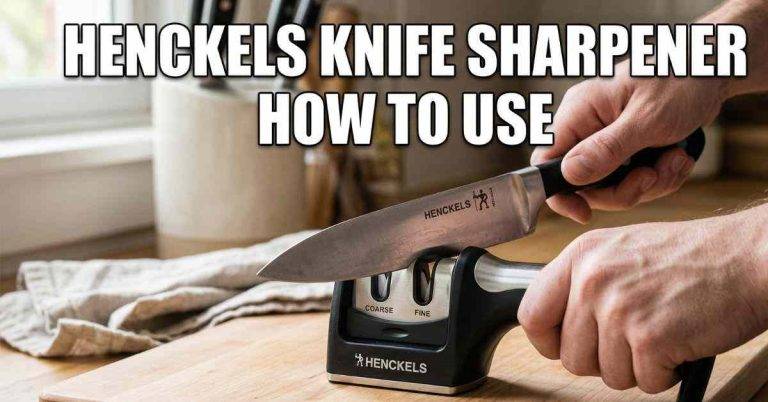
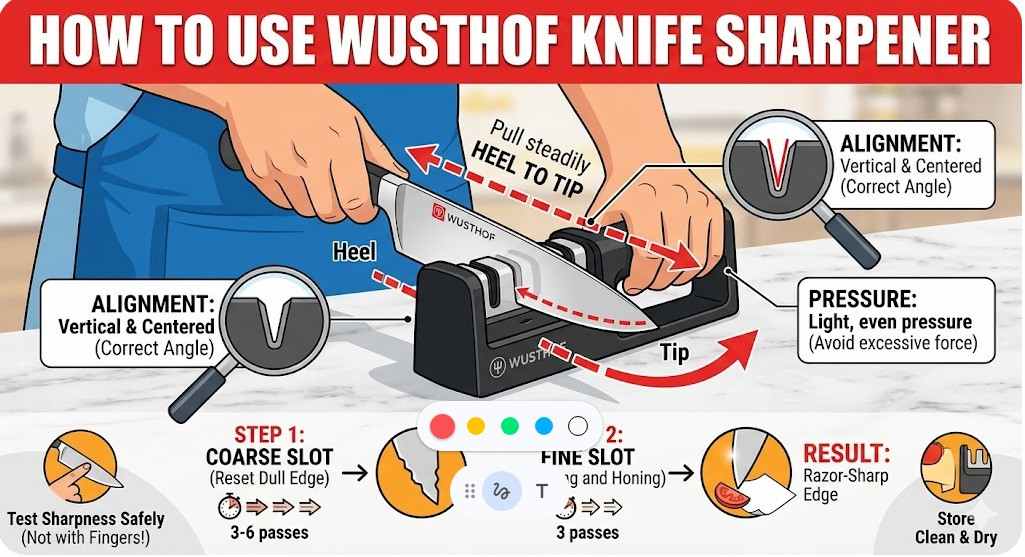
Place the blade in the correct slot and pull gently from heel to tip several times.
I’ve worked with kitchen knives and sharpeners for years and tested many tools, including the wusthof knife sharpener. This guide shows step-by-step how to use a wusthof knife sharpener safely and well. You’ll learn which model fits your needs, exact sharpening steps, care tips, and common mistakes to avoid. Read on to sharpen like a pro and keep your knives cutting smoothly.

Why use a wusthof knife sharpener?
A wusthof knife sharpener restores a blade’s edge quickly and with consistent angles. The tool is made to match common kitchen knife angles. Using one helps you cut safer and work faster.
I prefer a wusthof knife sharpener when I need a fast, reliable edge between professional sharpenings. The device is easy to use. It gives consistent results if you follow the steps and use light pressure.
- Benefits of using a wusthof knife sharpener
- It restores a dull blade fast without special skills.
- It keeps the edge angle consistent for repeatable results.
- It reduces the need for frequent professional sharpening.
Types of wusthof sharpeners and which to pick
Wusthof offers pull-through manual sharpeners, multi-stage bench systems, and angle guides for stones. Each fits a different need.
- Pull-through sharpener
- Simple to use and good for home cooks who want quick results.
- Multi-stage bench or electric systems
- Offer coarse to fine progression for a sharper finish and longer edge life.
- Honing steel and angle guides
- Help maintain the edge and teach proper sharpening angles on stones.
Pick a wusthof knife sharpener based on how much time you want to spend and how sharp you need the blade. For daily touch-ups a pull-through wusthof knife sharpener is fine. For seriously dull blades, use a multi-stage system or a sharpening stone with an angle guide.
Step-by-step: How to use a wusthof pull-through sharpener
This is the most common wusthof knife sharpener many people own. Follow these steps.
- Prepare your area
- Place the sharpener on a stable counter or surface. Ensure the base is secure.
- Clean the blade
- Wipe the knife with a damp cloth to remove food and debris. Dry the blade before sharpening.
- Choose the correct slot
- Use the coarse slot first for dull edges. Use the fine slot for polishing.
- Position the blade
- Insert the heel of the blade into the slot. Keep the blade vertical and aligned.
- Pull smoothly
- Pull the blade toward you from heel to tip in one steady motion. Use light, even pressure.
- Repeat the passes
- Use 3 to 6 passes in the coarse slot for a blunt knife. Follow with 3 passes in the fine slot to refine the edge.
- Test the edge
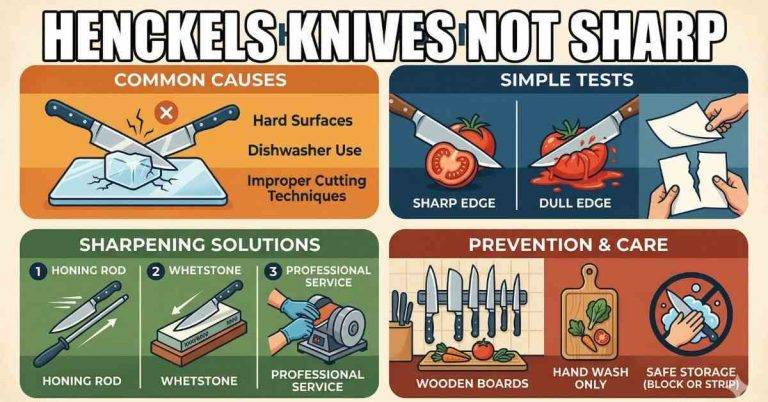
- Carefully test by slicing a sheet of paper or a tomato. If it cuts cleanly, you’re done.
- Clean and store
- Wipe the blade and the sharpener. Store both in a dry place.
I learned to use less pressure by testing. Too much force removes metal too fast. Light, steady pulls preserve the blade.

Using a wusthof multi-stage or electric system
A multi-stage wusthof knife sharpener gives a finer, longer-lasting edge. It usually has coarse, medium, and fine stages.
- Set the device on a flat surface.
- Start with the coarsest stage for very dull knives.
- Move to the medium stage to refine the bevel.
- Finish with the fine stage to polish the edge.
Follow the manufacturer’s recommended number of passes per stage. For most systems, 3 to 5 slow passes per stage work well. Keep the blade angle consistent and avoid forcing the blade. After finishing, rinse the knife and dry it carefully.
Maintaining your wusthof knife sharpener and knives
Good care extends the life of both the sharpener and the blade.
- Clean after use
- Remove metal particles from the sharpener surface and wipe the blade clean.
- Store dry
- Keep the sharpener and knives in a dry place to avoid rust.
- Regular honing
- Use a honing steel between sharpenings to realign the edge and reduce sharpening frequency.
- Professional sharpening
- Every 6 to 24 months, consider professional sharpening for deep re-profiles.
From my tests, a wusthof knife sharpener used correctly cuts down trips to a pro. Still, a factory-level regrind occasionally is the best fix for very worn edges.

Common mistakes and troubleshooting
Mistakes can damage an edge or give poor results. Avoid these common errors.
- Using too much pressure
- Pressing hard removes metal fast and shortens blade life. Use light pressure.
- Over-sharpening
- Excessive passes wear away steel. Stop when the edge is sharp.
- Sharpening serrated or specialty blades
- Most pull-through sharpeners are not for serrated or ceramic blades.
- Wrong slot or sequence
- Starting on fine grit for a dull blade wastes time. Use the coarse stage first.
If the edge feels uneven, check your technique. One side may have more passes than the other. Rebalance by giving the weaker side a few extra controlled passes.
Quick answers to common user questions
How often should I use a wusthof knife sharpener?
Use a wusthof knife sharpener as needed, typically every 2 to 12 months depending on use. Light honing every few uses will extend time between sharpenings.
Can I sharpen serrated knives with a wusthof knife sharpener?
Most wusthof knife sharpener models are not for serrated knives. Use a serrated-specific sharpener or a professional service.
Will repeated sharpening shorten knife life?
Sharpening removes metal, so frequent heavy sharpening shortens life. Use honing and light sharpening to minimize metal removal.
Is it safe to sharpen kitchen knives at home?
Yes, with care and the right technique a wusthof knife sharpener is safe to use at home. Keep fingers clear of the slots and pull steadily.
Can I sharpen ceramic knives with a wusthof knife sharpener?
Ceramic blades need diamond abrasives and often require special tools. Most standard wusthof knife sharpener models are not suitable for ceramic.

Personal tips and lessons learned
Here are tips from years of using a wusthof knife sharpener in my home kitchen.
- Start light
- Light pressure gives better control and keeps the edge even.
- Count your passes
- Keep track so each side gets equal attention.
- Test safely
- Use paper or a tomato, not your thumb, to test sharpness.
- Keep a log
- Note when you sharpen. This helps you learn how often your knives need work.
I once over-sharpened a chef’s knife by doing too many coarse passes. The edge looked good but the blade lost more steel than needed. Since then I use fewer passes and polish more. The knife now stays sharp longer.
PAA-style questions (short answers)
What angle does a wusthof knife sharpener use?
Most wusthof knife sharpener tools set a common kitchen angle around 20 degrees per side, which works for many European-style knives. This angle balances sharpness and edge strength.
How many pulls should I use on a dull knife?
Start with 3 to 6 pulls in the coarse slot, then 3 pulls in the fine slot to finish. Adjust based on how the blade performs on a simple test cut.
Can the wusthof knife sharpener fix chips?
Small chips may be smoothed with coarse stages, but large chips often need professional stone work or regrinding. A wusthof knife sharpener is best for routine edge restoration.
Frequently Asked Questions of how to use wusthof knife sharpener
How do I set up the wusthof knife sharpener before use?
Place the sharpener on a stable, flat surface. Ensure any suction base or rubber feet are secure, and wipe the blade clean before sharpening.
Do I need to sharpen both sides equally?
Yes. Make the same number of controlled passes on each side to keep the edge centered and even.
Can I use a wusthof knife sharpener on a stamped blade?
Yes. A wusthof knife sharpener works on stamped and forged kitchen knives. Just use fewer coarse passes if the blade is relatively new.
Is it necessary to wash the knife after sharpening?
It’s a good idea to wipe or wash the knife after sharpening to remove metal particles. Dry the blade thoroughly before storage.
How long does a sharpening session take with a wusthof knife sharpener?
Most sessions take one to three minutes for a single knife. Very dull blades may take longer if you need more coarse passes.
Conclusion
A wusthof knife sharpener is a practical tool for keeping kitchen knives sharp, safe, and ready to use. Follow the right sequence, use light pressure, and maintain both the sharpener and blades for the best results. Start with the coarse stage for dull edges, finish with fine polishing, and hone regularly to reduce metal loss. Try these tips on one knife and see the difference; then sharpen your whole set with confidence. If this guide helped, leave a comment, subscribe, or share your sharpening story.