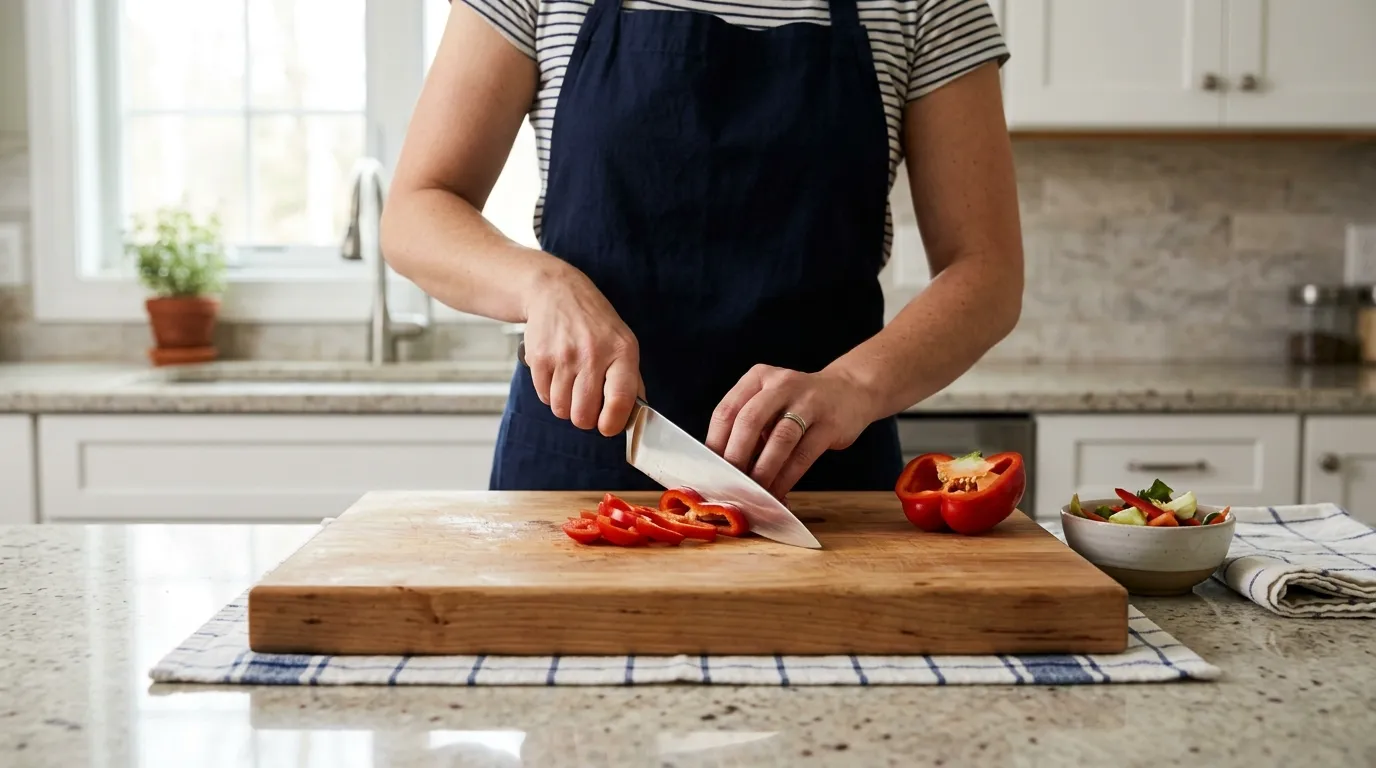
Use a sharp knife, steady board, claw grip, and cut away from you.
You came here to master how to use kitchen knives safely. Good call. I’ve trained home cooks and line cooks, and I’ve seen what works. This guide shows you how to use kitchen knives safely with simple steps, pro habits, and real fixes you can trust.
Knife Safety Basics You Can Trust
If you want to learn how to use kitchen knives safely, start with the basics. Small changes prevent big injuries.
Key rules I teach day one:
- Keep knives sharp. Dull blades slip and cut skin.
- Use a heavy, stable cutting board. Wood or rubber works best.
- Place a damp towel under the board. It stops movement.
- Keep your eyes on the blade. No scrolling or chatting mid-chop.
- Cut away from your body. Never toward your palm or fingers.
- Never try to catch a falling knife. Step back. Let it fall.
- Pass knives handle-first. Say “knife” when you walk behind someone.
Pro tip from many busy services: clear your board often. Food scraps on the board tilt the blade and break your flow. Clean space equals safe hands.
Set Up Your Station the Safe Way
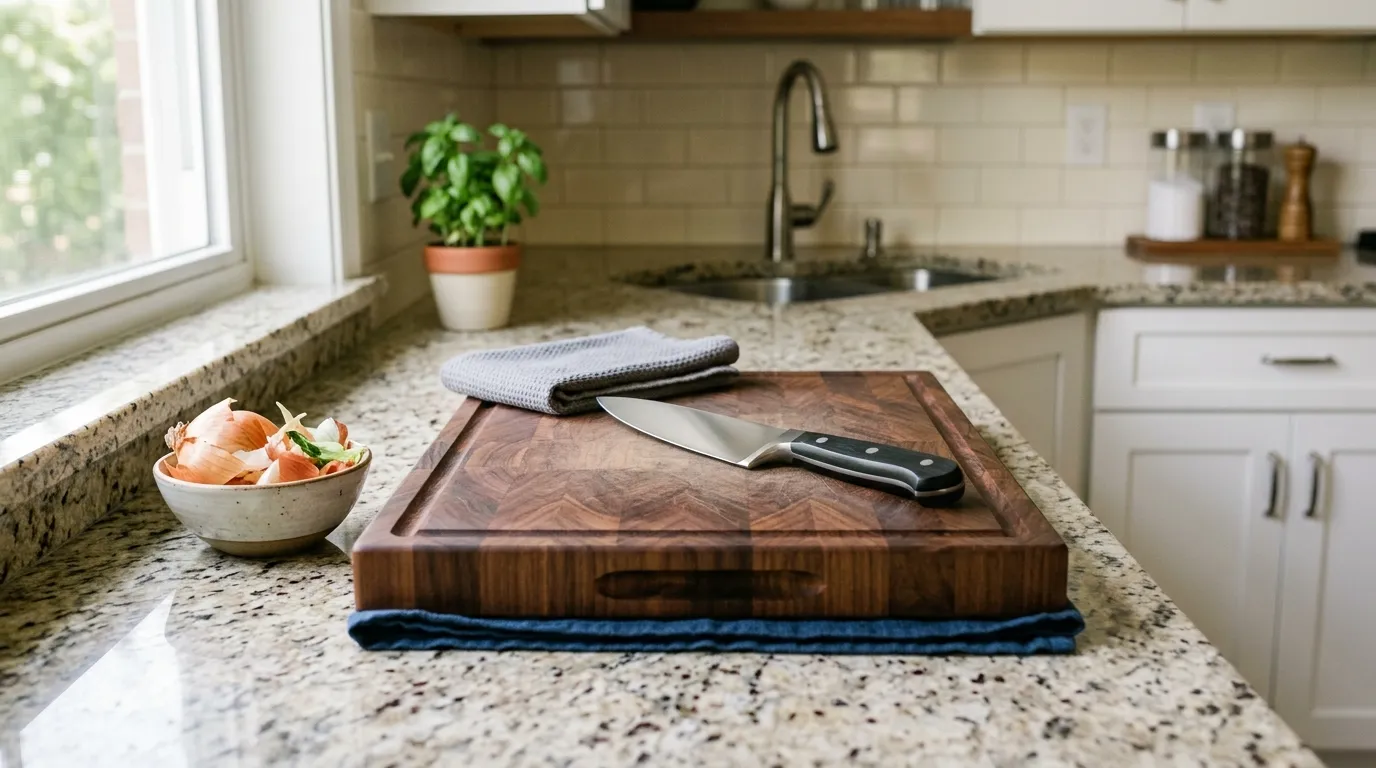
How to use kitchen knives safely begins before you cut. Your setup controls your risk.
Build a safe station:
- Board at mid-torso height. Your forearms should be level.
- Non-slip mat or damp towel under the board.
- A dry towel for your hands. Wet hands lose grip.
- A bin or bowl for scraps. Less clutter, more control.
- Good light. Shadows hide fingers.
Stand with feet hip-width apart. Shoulders loose. Keep the board close to your body. This reduces reach and strain. At home, I keep the tip of the chef’s knife facing away from the edge of the counter. That way I never bump it off the board.
Grips and Hand Positions That Prevent Cuts
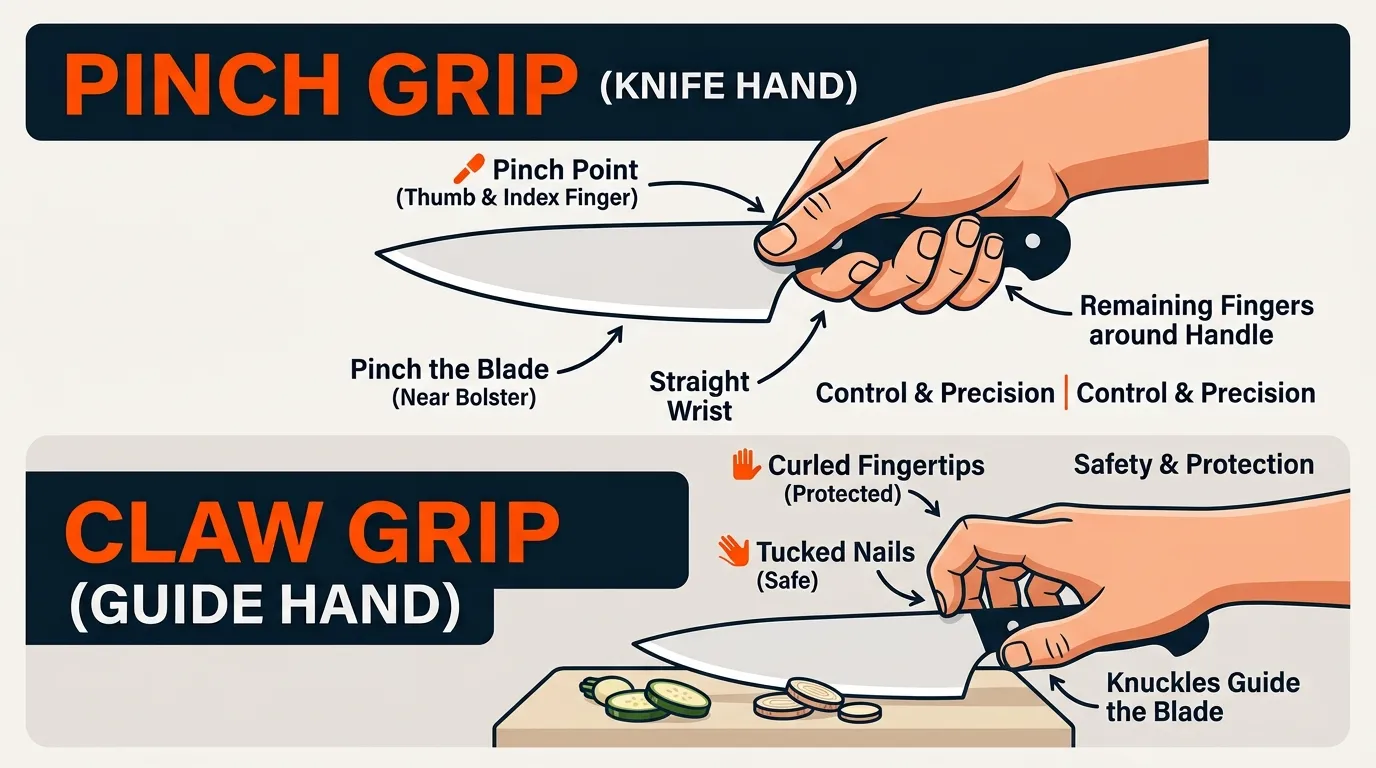
To master how to use kitchen knives safely, fix your grip first. It boosts control right away.
Knife hand:
- Pinch grip. Pinch the blade where it meets the handle (the bolster). Wrap the rest of your fingers around the handle.
- Keep your wrist straight. A straight line gives power and aim.
Guide hand:
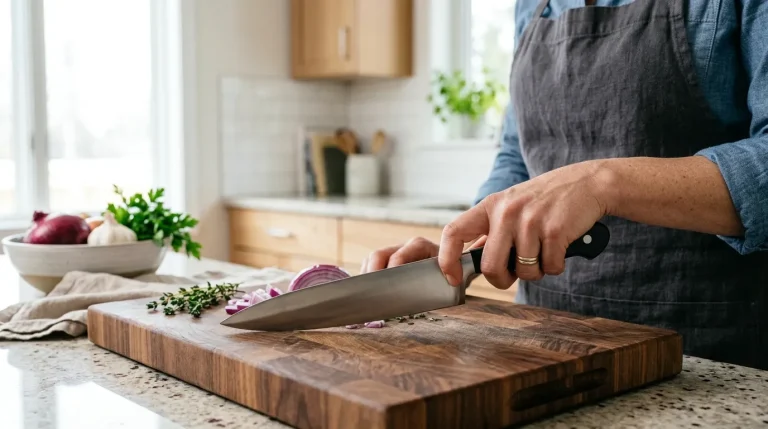
- Use the claw. Curl fingertips in. Tuck the thumb behind your knuckles.
- Glide your knuckles on the side of the blade. They act like a fence.
Practical cues:
- If you see fingernails, your claw is open. Curl more.
- If your wrist aches, ease your grip. Let the blade do the work.
Cut-resistant gloves help when you learn, especially for small round foods. Wear one on your guide hand. Look for ANSI A3–A5 ratings for home use.
Cutting Techniques for Control and Speed
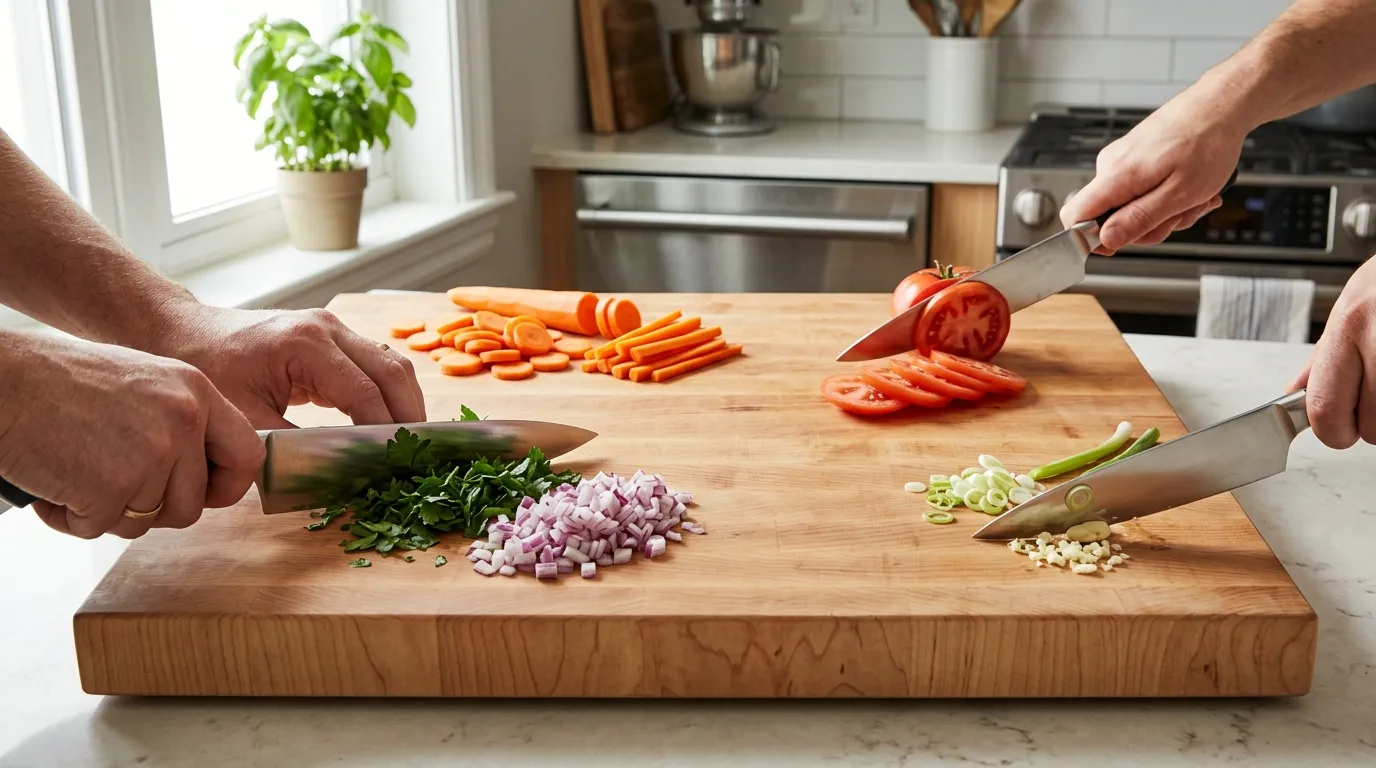
Knowing how to use kitchen knives safely means using the right motion. Let the blade path do the thinking.
Core moves:
- The rock chop. Tip stays near the board. Lift the heel. Rock forward and back for herbs and onions.
- The push cut. Lift the whole blade. Push forward as you slice down. Great for carrots and squash.
- The pull slice. Draw the blade toward you. Best for tomatoes, fish, and soft fruit.
- Tip work. Use the first third of the blade for fine cuts. Less force, more feel.
Simple drills I give new cooks:
- Practice on a potato. Cut it into flat planks. Stacks. Then sticks. Then dice. Keep every piece the same size.
- Slice a line of mushrooms. Use the pull slice. Try for even arcs.
Watch outs:
- Never chop with a dull knife. It bounces and skids.
- Don’t “saw” hard foods. Use a push cut and a sharp edge.
Pick the Right Knife for the Job
A big part of how to use kitchen knives safely is tool choice. The right knife fights less and slips less.
Common knives:
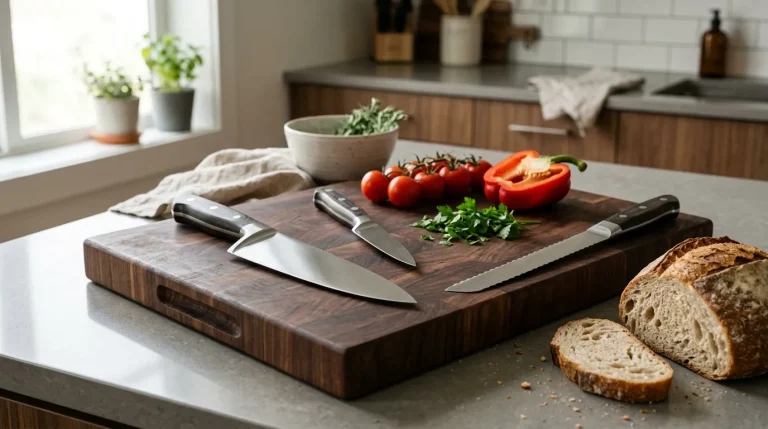
- Chef’s knife (8–10 inches). The all-rounder for most jobs.
- Santoku. Flatter belly. Good for push cuts and thin slices.
- Paring knife. Peeling and small detail work in the air.
- Serrated knife. Bread, tomatoes, citrus. Let the teeth do the cut.
- Boning or fillet knife. Meat, joints, fish. Flexible and precise.
Match knife to food:
- Dense roots like carrots: chef’s knife, push cut.
- Soft fruit: serrated or very sharp chef’s knife, pull slice.
- Small garnishes: paring knife on the board, not in the air if you are new.
I once tried to core apples with a chef’s knife in midair during a rush. Bad idea. Now I switch to a paring knife on the board. Fewer slips. Faster too.
Keep Blades Sharp, Clean, and Stored Right
If you care about how to use kitchen knives safely, sharpen and store them well. Sharp blades are safer.
Sharpening and honing:
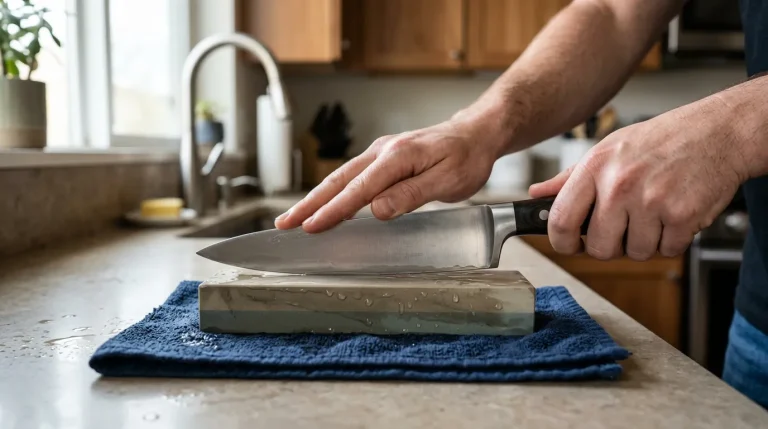
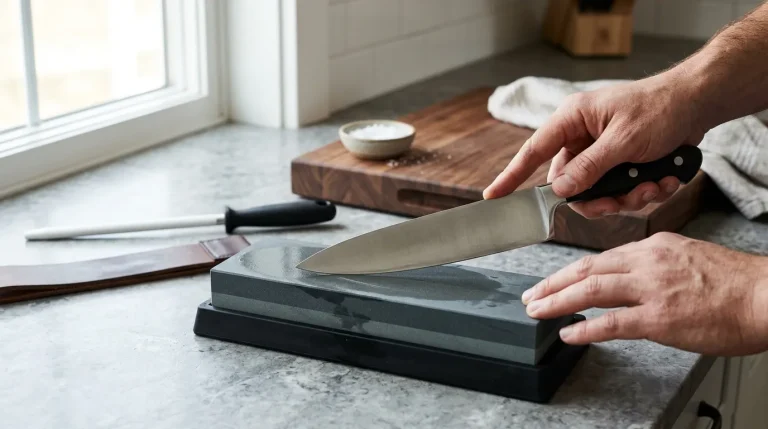
- Hone often. Use a steel at a 15–20 degree angle. A few light strokes per side keep the edge aligned.
- Sharpen when honing no longer helps. Use a whetstone, guided system, or a trusted pro.
- Test with paper. A sharp knife should slice clean with no tear.
Cleaning:
- Hand wash right away. Warm water. Mild soap. Dry at once.
- Never soak knives in a sink. Hidden blades cut hands.
- Wipe the blade away from the edge. Fingers on the spine, not the edge.
Storage:
- Use a knife block, magnetic strip, or blade guards. Loose drawers dull edges and cut fingers.
- On a magnetic strip, attach the spine first. Then roll the edge on.
Habits That Stop Accidents Before They Start
To lock in how to use kitchen knives safely, build habits. They run on autopilot when you get busy.
Daily habits:
- Say “behind, knife” when you pass by someone.
- Carry knives with the tip down, spine toward your leg, grip firm.
- Keep handles dry. Wipe if they feel slick.
- Cut flat sides. Make a stable base on round foods before slicing.
- Keep pets and kids out of your zone when you work.
Common mistakes I still see:
- Wiping the blade toward the edge. Always wipe from spine to edge.
- Using a tiny board. Size up. Big boards are safer.
- Cutting on glass or stone. These kill edges and cause slips. Use wood or rubber.
Reality check: emergency room data show knives cause many kitchen injuries each year. Simple rituals like a non-slip mat, a sharp blade, and the claw grip reduce that risk a lot.
First Aid and What To Do After a Cut
Even if you know how to use kitchen knives safely, small cuts can happen. Act fast and calm.
For minor cuts:
- Rinse under cool water. Clean the wound.
- Apply pressure with a clean towel for several minutes.
- Add antibiotic ointment. Cover with a snug bandage.
- Change the bandage daily. Keep it dry and clean.
Seek help fast if:
- Bleeding does not stop after 10 minutes of firm pressure.
- The cut is deep, gaping, or longer than half an inch.
- You feel numbness or cannot move a finger.
- You see muscle, fat, or bone.
- You were cut by a dirty blade and your tetanus shot is not current.
I keep finger cots in a drawer. If I nick a finger, I clean it, bandage it, and slip on a cot. Then I wear a glove. Food stays safe, and so do I.
Frequently Asked Questions of How to Use Kitchen Knives Safely
What is the safest way to hold a kitchen knife?
Use a pinch grip on the blade and handle, and keep your wrist straight. Your other hand should form a claw, with knuckles guiding the blade.
How often should I sharpen my knives?
Hone lightly every few uses. Sharpen on a stone or by a pro when honing no longer restores an easy cut, often every 3–6 months at home.
Is a dull knife really more dangerous?
Yes. Dull edges need more force and tend to slip, which raises the risk of cuts. Sharp knives bite and track where you aim.
What cutting board is safest?
Use wood or rubber boards. They are gentle on edges and stable, especially with a damp towel under them.
Should beginners use cut-resistant gloves?
They help while you learn or if you have reduced hand strength. Wear one on the guide hand for extra protection.
How do I carry a knife in a busy kitchen?
Hold it at your side, tip down, spine facing your leg, and say “knife” when moving past others. Never carry it pointing forward.
What is the best way to avoid cutting my fingers?
Curl your fingertips into a claw and let your knuckles guide the blade. Keep the blade vertical and use flat sides on round foods.
Conclusion
You now know how to use kitchen knives safely: set a stable station, use a pinch grip and claw, choose the right knife, and keep it sharp and clean. Build small habits. Avoid big risks like dull edges, shaky boards, and crowded spaces.
Practice one upgrade today. Hone your knife, lay a damp towel under your board, and dice a potato into even cubes. Share your progress, ask questions, or subscribe for more step-by-step kitchen skills.