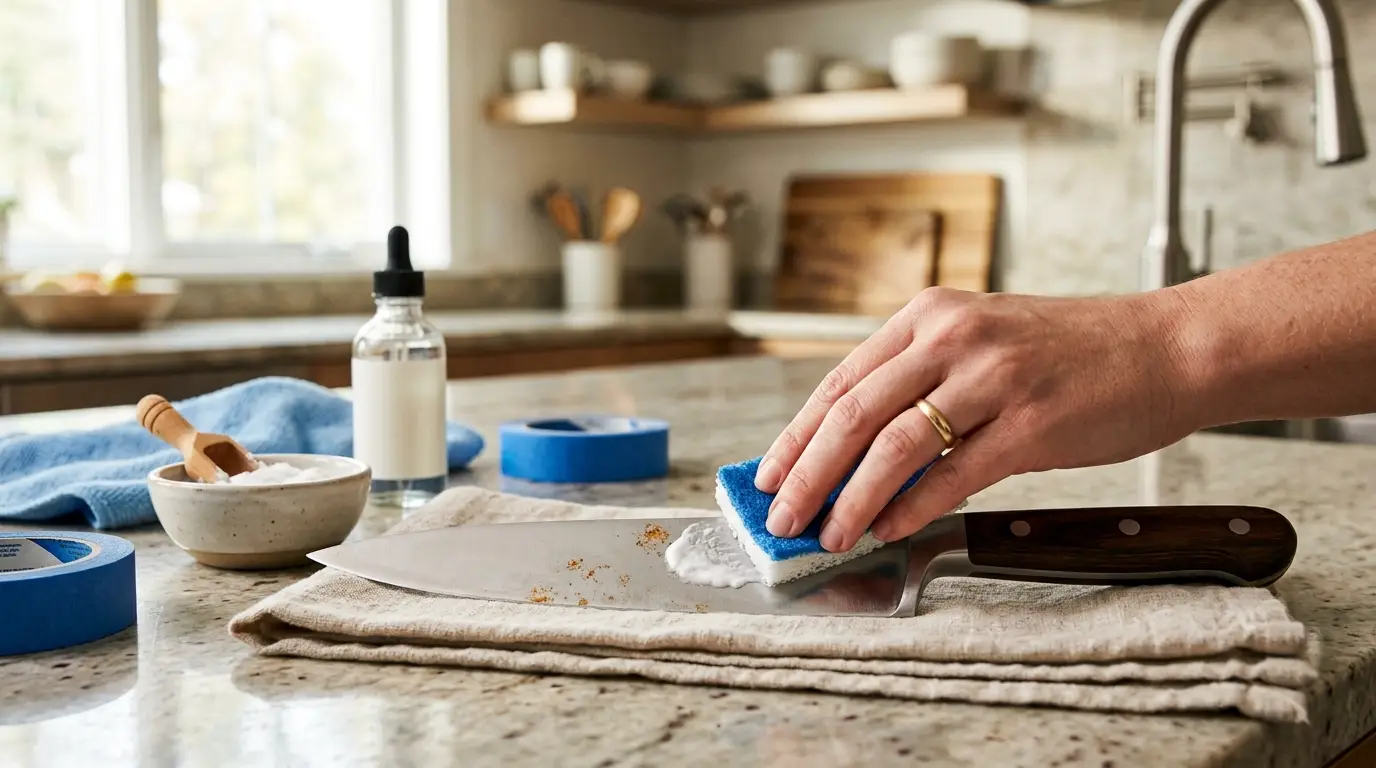
Remove knife rust with baking soda, vinegar, light abrasion, then dry and oil.
If orange spots just showed up on your favorite blade, you can fix it fast. I’ve restored dozens of kitchen and pocket knives, from carbon steel workhorses to stainless chef’s knives. In this guide, I break down knife rust removal step by step, explain why rust happens, and show you how to keep it from coming back. You will learn safe, food-grade methods and pro tips that work in real life.
What Causes Rust on Knives
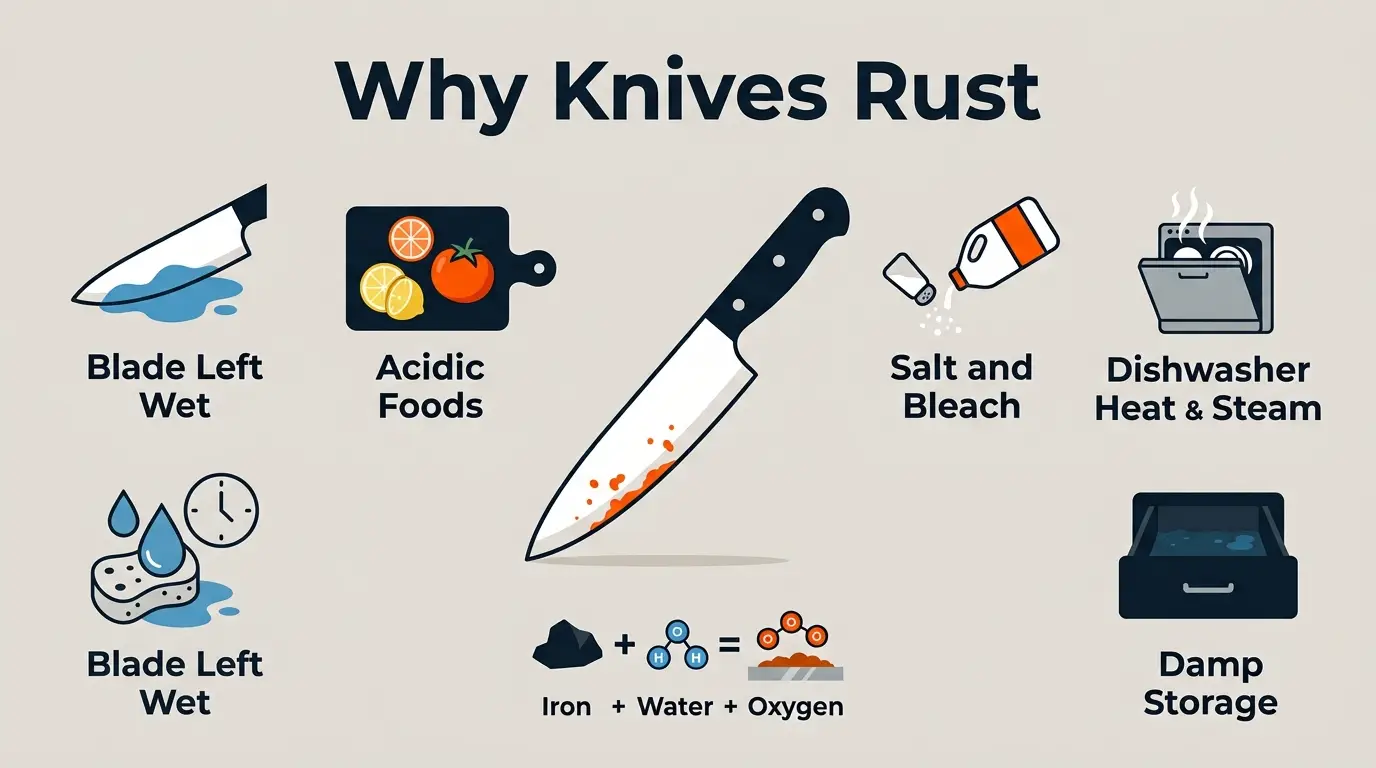
Rust is iron oxide. It forms when iron, water, and oxygen meet. Salt, acids, and bleach speed it up. That is why a blade can rust after slicing a lemon or sitting wet in a sink.
Stainless steel is not stain proof. It has a thin passive layer that blocks rust. Chloride ions from salt and dishwashers can break that layer. Carbon steel has no strong passive layer, so it stains and rusts faster.
Kitchen factors that drive rust:
- Moisture left on the blade after washing
- Acidic foods like tomatoes, citrus, and onions
- Salt and bleach cleaners
- Dishwasher heat, steam, and harsh soap
- Long storage in damp blocks or sheaths
Understanding this helps you pick the right knife rust removal method and stop future spots.
Safety And Food-Safe Notes
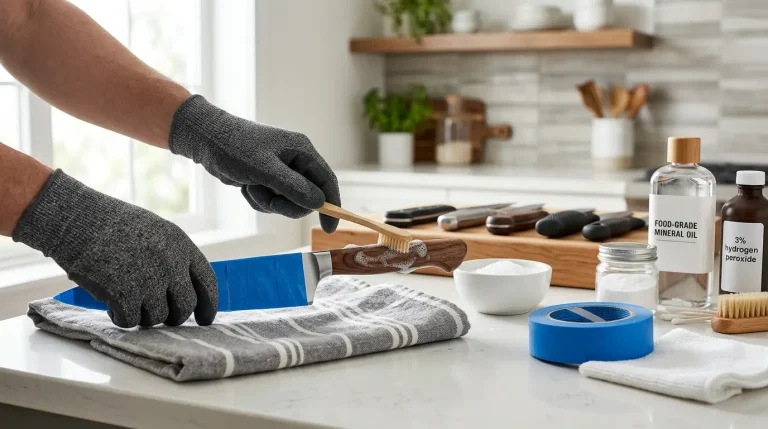
Work in good light. Wear thin gloves if you use chemicals or do sanding. Keep the edge away from your fingers. Tape the edge with painter’s tape if you are new to this.
Use food-safe products on kitchen knives. Baking soda, vinegar, lemon, and mild cleansers are fine when rinsed well. Avoid harsh acids or strong rust converters on tools you use for food. Never mix chemicals. Rinse and dry the blade after any knife rust removal step.
Tools And Materials You’ll Need For Knife Rust Removal
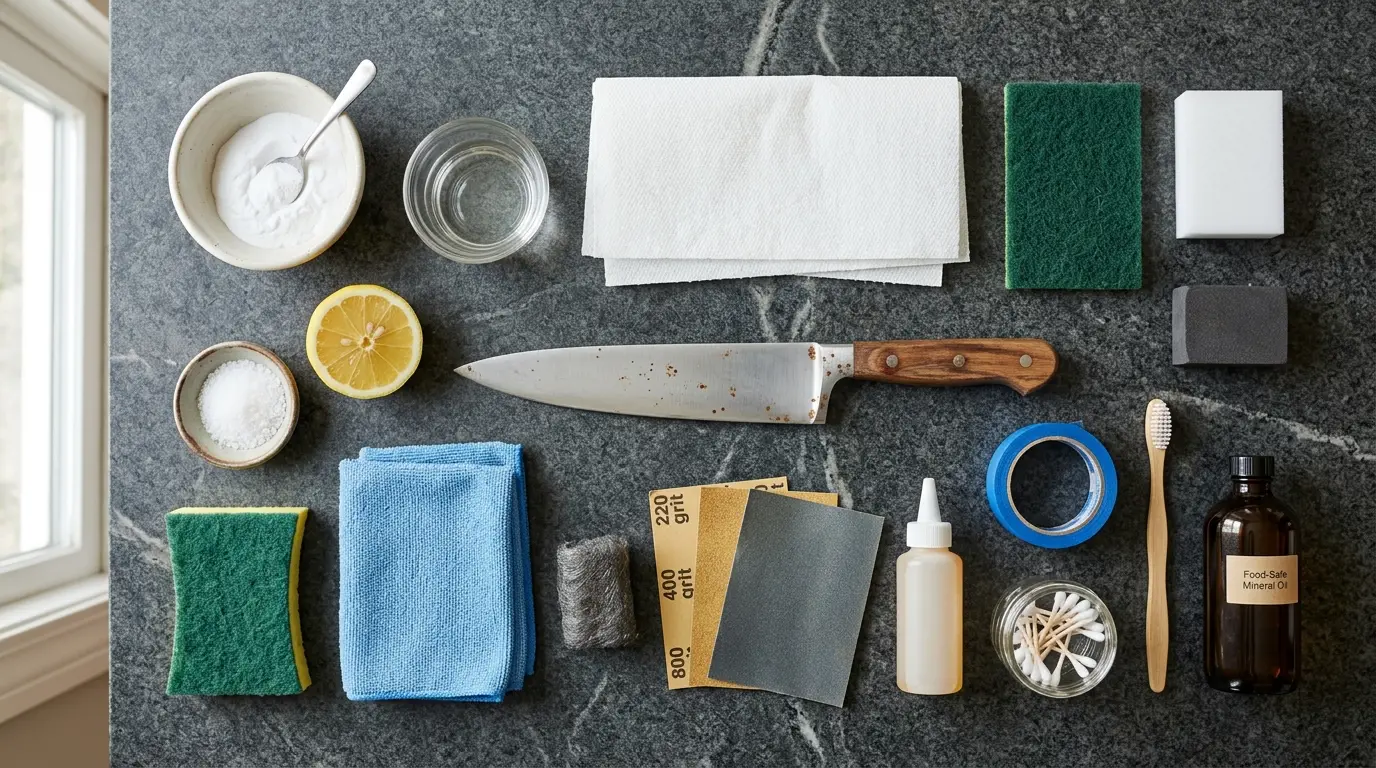
Pick the least aggressive tools first, then move up only if needed:
- Baking soda, white vinegar, lemon, and table salt
- Non-scratch sponge, soft cloths, paper towels
- Nylon scrub pad or melamine foam
- Rust eraser block or 0000 steel wool
- Wet/dry sandpaper: 400, 800, 1200, 2000 grit
- Mild abrasive cleaner with oxalic or citric acid
- Masking tape, cotton swabs, and a soft toothbrush
- Mineral oil, camellia oil, or board cream for finish
I keep all of this in a small caddy. That habit has sped up every knife rust removal job in my shop.
Step-By-Step Knife Rust Removal Methods
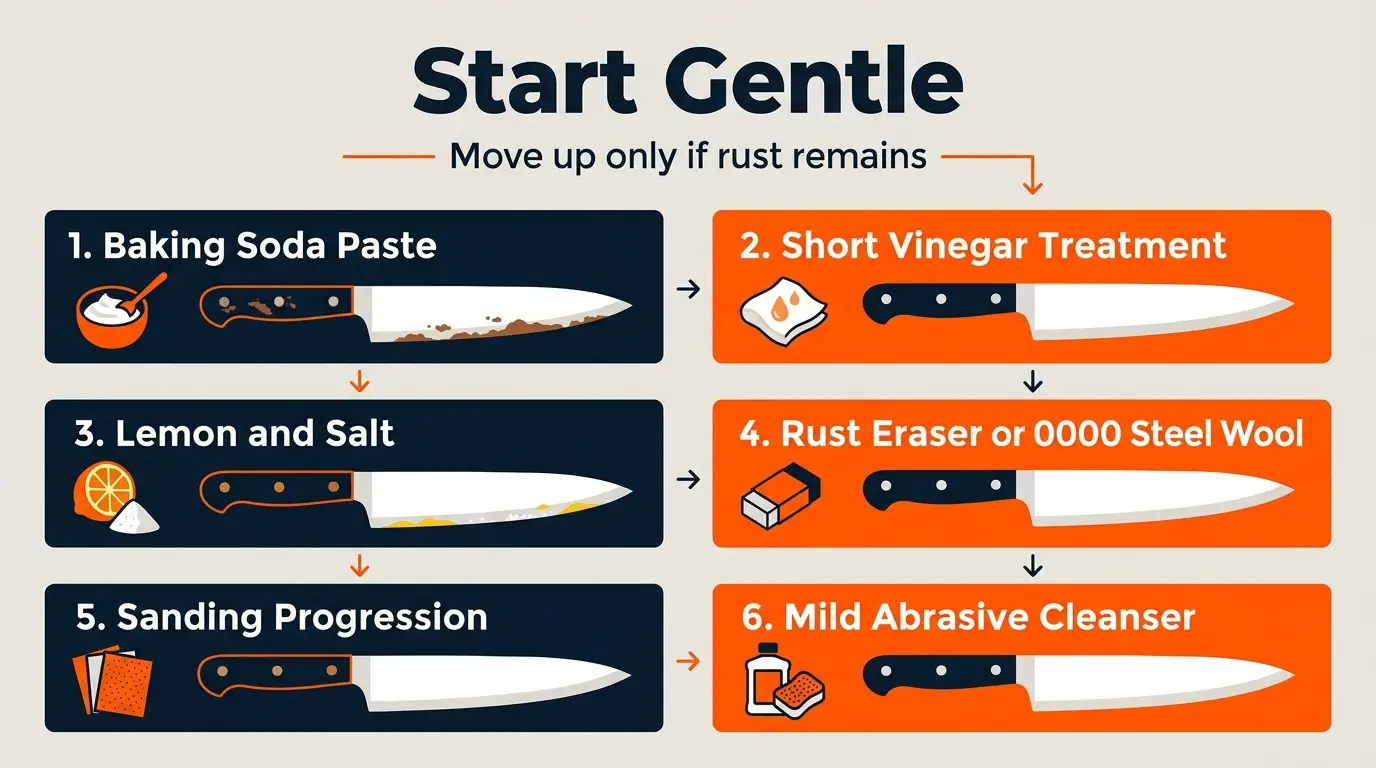
Start gentle. Test on a small area first. Move to the next method only if stains remain.
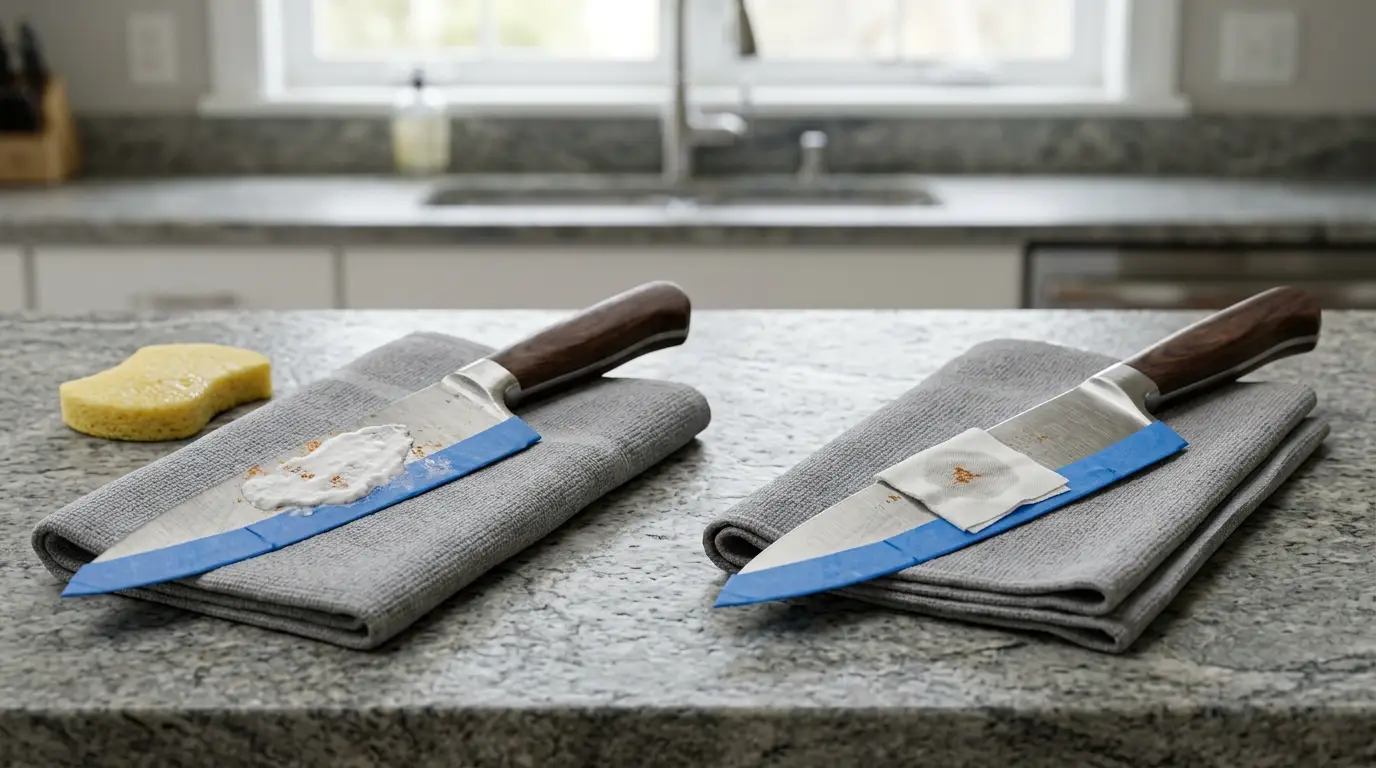
Method 1: Baking Soda Paste (Best for light orange film)
- Mix baking soda with a few drops of water to make a paste.
- Spread on rusty spots. Wait 5 minutes.
- Scrub with a soft sponge along the length of the blade.
- Rinse, dry well, and oil the blade.
Why it works: Baking soda is mild. It lifts rust without harsh scratches. I use this for quick touch-ups after cutting citrus.
Method 2: White Vinegar Soak (For stuck-on rust)
- Fill a cup with white vinegar. Do not submerge the handle if it is wood.
- Dip a cloth in vinegar and lay it on the rust for 5–10 minutes.
- Wipe, then scrub with a nylon pad. Repeat once if needed.
- Rinse very well, dry, and oil.
Tip: Do not soak for hours. Long acid soaks can etch steel and dull the edge.
Method 3: Lemon And Salt (Natural spot treatment)
- Sprinkle salt on the rust.
- Rub with half a lemon for 2–3 minutes.
- Rinse, dry, and oil.
This is great for small, fresh spots. The acid and mild grit team up well.
Method 4: Rust Eraser Or 0000 Steel Wool (Controlled abrasion)
- Wet the eraser or steel wool with a bit of water or oil.
- Rub in the direction of the factory finish. Use light pressure.
- Wipe clean, then oil.
Use this when pastes do not clear the stain. It keeps scratches fine and neat. In my shop, a rust eraser is my daily driver for knife rust removal on carbon steel.
Method 5: Sanding Progression For Heavy Rust Or Pitting
- Tape the edge for safety.
- Start with 400 grit wet/dry paper on a soft block. Sand with the grain.
- Move to 800, then 1200, then 2000 grit to refine the finish.
- Clean, dry, and oil.
Only use this if rust has eaten into the steel. Expect to remove some metal. Keep strokes even so you do not change the blade shape.
Method 6: Stainless Passivation With Mild Abrasive Cleanser
- Make a thin slurry with water and a mild cleanser with oxalic or citric acid.
- Rub along the blade with a soft sponge for 30–60 seconds.
- Rinse well, dry, and oil.
Research shows citric and oxalic acids help restore the passive layer on stainless. This reduces future surface rust after cleaning.
Key rule: In knife rust removal, less is more. Start mild, check often, and stop when the stain is gone.
Special Cases And Blade Types
Carbon Steel Vs. Stainless
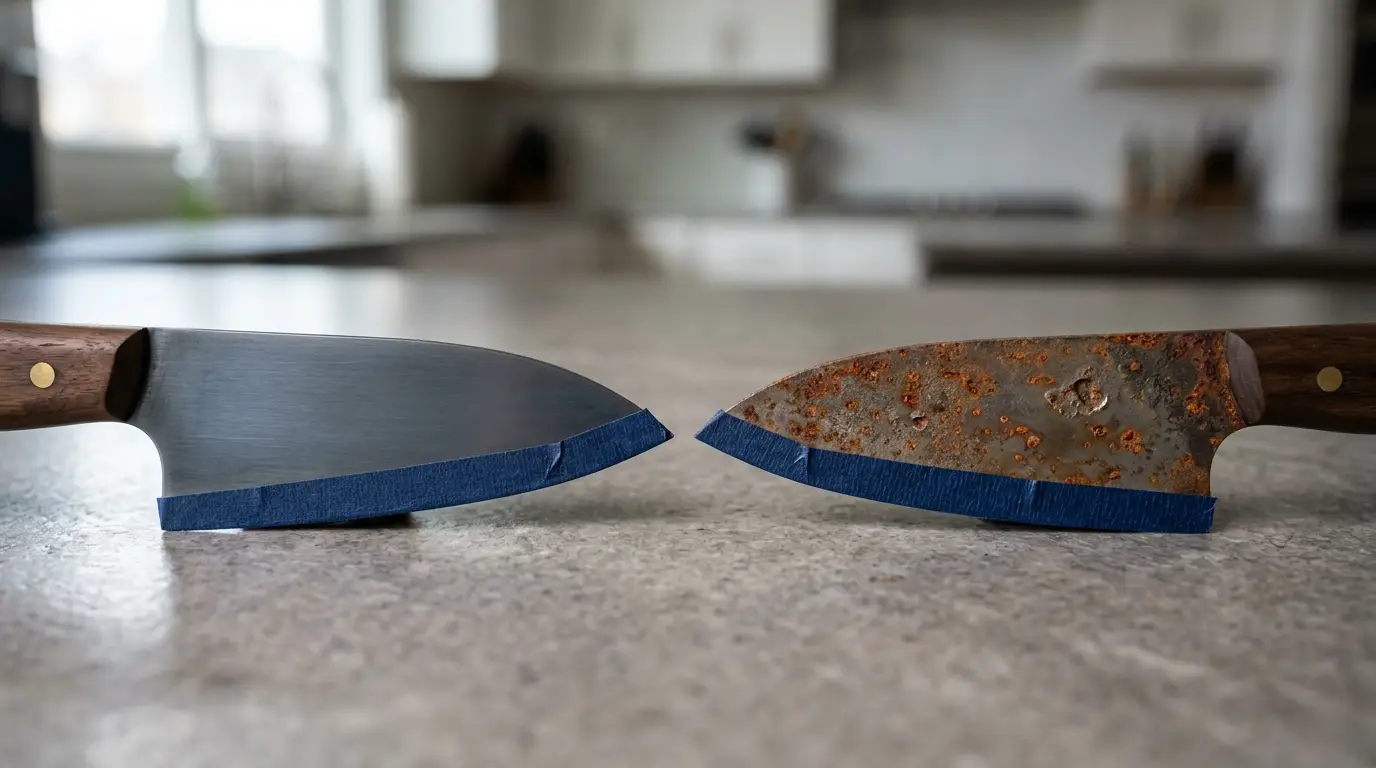
Carbon steel rusts fast but sharpens like a dream. A gray-blue patina is good. It protects the blade. Rust is flaky and orange. Keep the patina; remove only active rust.
Stainless is slower to rust. But it can spot in hours if left wet or salty. Fix spots early so they do not spread.
Patina Vs. Rust
Patina is thin, even, and dark. It does not flake. Rust is rough, orange or red, and may pit. If it catches a nail, it is rust, not patina.
Serrated Knives
Use a toothpick, a tapered rod, or a small rust eraser to clean each gullet. Do not flatten the points. Wipe, rinse, and oil.
Pocket And Folding Knives
Open the knife. Clean the pivot with a cotton swab and a drop of oil. Avoid long soaks. Water can hide in the pivot and cause more rust.
Cleavers And Thick Blades
They take sanding well. Keep strokes straight and flat to avoid low spots.
For all of these, the core idea stays the same: targeted knife rust removal with the least force that gets the job done.
Finish And Protect The Blade
Good finishing locks in your work and slows new rust:
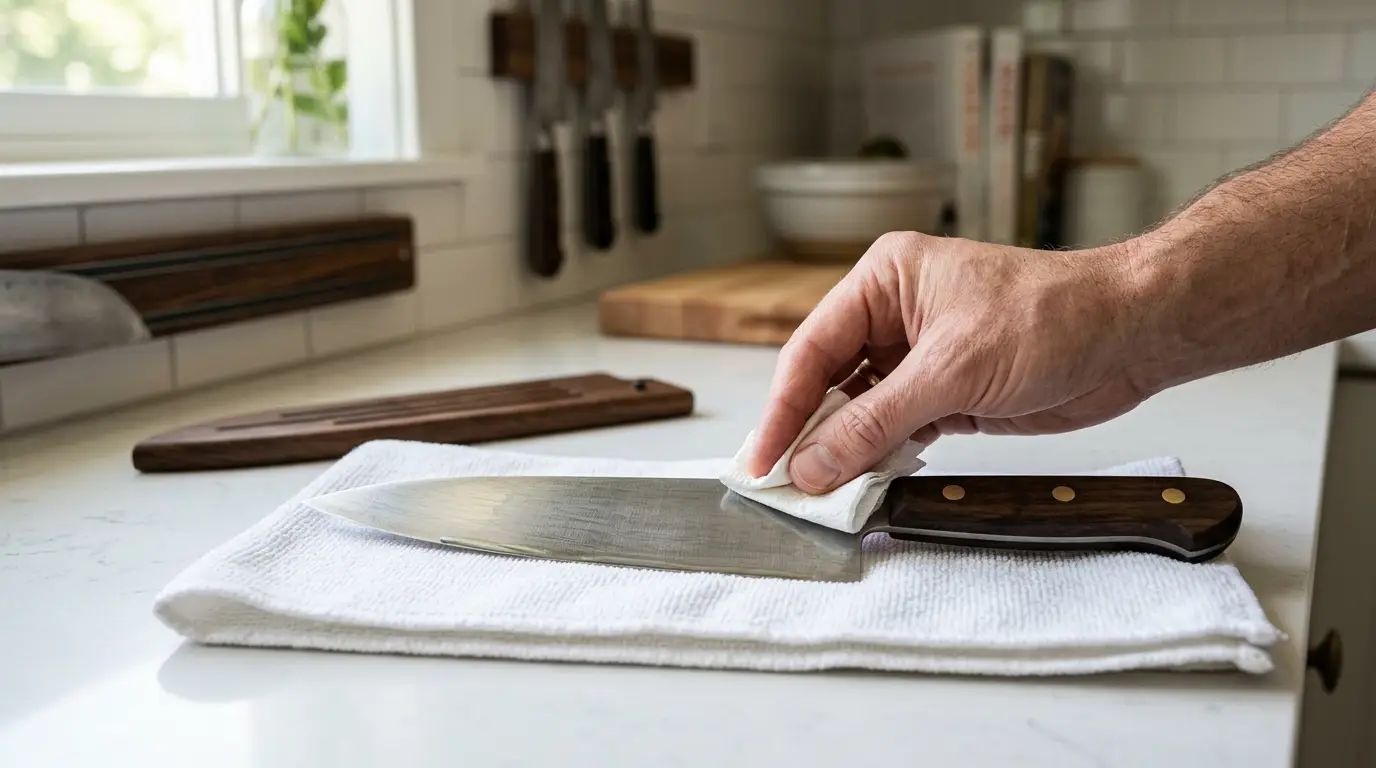
- Rinse and dry until bone dry. Use a warm towel if needed.
- Wipe a thin coat of food-safe mineral oil or camellia oil.
- For carbon steel, a light wax on the sides adds extra defense.
- Strop the edge on leather to remove any micro burrs from cleaning.
I like two drops of mineral oil on a paper towel. One pass per side is enough. This simple step after knife rust removal saves hours later.
Long-Term Prevention Tips And Storage
Rust prevention is easier than repair:
- Hand wash only. No dishwasher.
- Dry right away. Pay attention to the spine and heel.
- Wipe after cutting acidic or salty foods.
- Store on a dry magnetic strip or in a ventilated saya.
- Add silica gel packs to drawers or cases.
- Oil carbon steel blades once a week if used often.
If you live by the sea or cook with citrus often, boost care. A fast wipe and a drop of oil go a long way.
Mistakes To Avoid And Pro Tips
Avoid these common pitfalls:
- Using harsh acids or bleach. They can pit steel and ruin handles.
- Scrubbing across the grain. That leaves deep, ugly scratches.
- Long vinegar soaks. Etching can dull the edge and blur logos.
- Skipping the dry step. Trapped water starts rust again.
- Over-sanding. You can change the blade geometry.
Pro tips from the bench:
- Tape the edge. You will work faster and safer.
- Move the blade, not your wrist. Your scratches stay straight.
- Work under bright side light. Rust pops into view.
- Keep a “clean cloth” and a “dirty cloth.” You will not redeposit rust.
- Log your steps. Next time, you will know the fastest path for your knife.
These habits make knife rust removal smooth, repeatable, and fast.
Troubleshooting And When To Seek A Pro
If rust comes back within days, check storage. Add airflow and reduce moisture. If stains remain dark after two gentle rounds, try a rust eraser or 800 grit paper.
Deep pits near the edge can weaken a blade. A pro can grind past them and reset the bevel. Vintage blades with etched logos also need care. A pro can save the marking while doing careful knife rust removal.
If a wood handle swells or cracks, stop water work. Let it dry, then oil the handle. For loose rivets or warped blades, seek help.
Frequently Asked Questions Of Knife Rust Removal
What is the fastest way to remove rust from a knife?
Use a baking soda paste and a soft scrub pad. Rinse, dry, and oil right away.
Is vinegar safe for knife rust removal?
Yes, for short contact. Limit to 5–10 minutes, then rinse and dry well.
Can stainless steel knives rust?
Yes. Stainless resists rust but is not immune. Salt and acids can beat the passive layer.
Will rust ruin my knife’s edge?
If rust reaches the edge, it can chip and dull it. Clean the rust, then hone or strop.
What oil should I use after cleaning a knife?
Use food-safe mineral oil or camellia oil. Wipe a very thin coat and store dry.
How do I remove rust from a serrated knife?
Use a rust eraser tip or a tapered rod in each gullet. Go slow and keep the tooth shape.
Can I put a rusty knife in the dishwasher to clean it?
No. Dishwashers add heat, water, and harsh soap. That makes more rust and can harm handles.
Conclusion
Rust happens. With the right steps, you can clean it fast and keep it away. Start mild, work with the grain, rinse, dry, and oil. Build a small kit and make it a habit after each use.
You now have a full plan for knife rust removal and prevention. Try one method today on a small spot, then set up better storage. Want more hands-on tips? Subscribe for new guides, or drop a question in the comments so I can help with your exact knife.