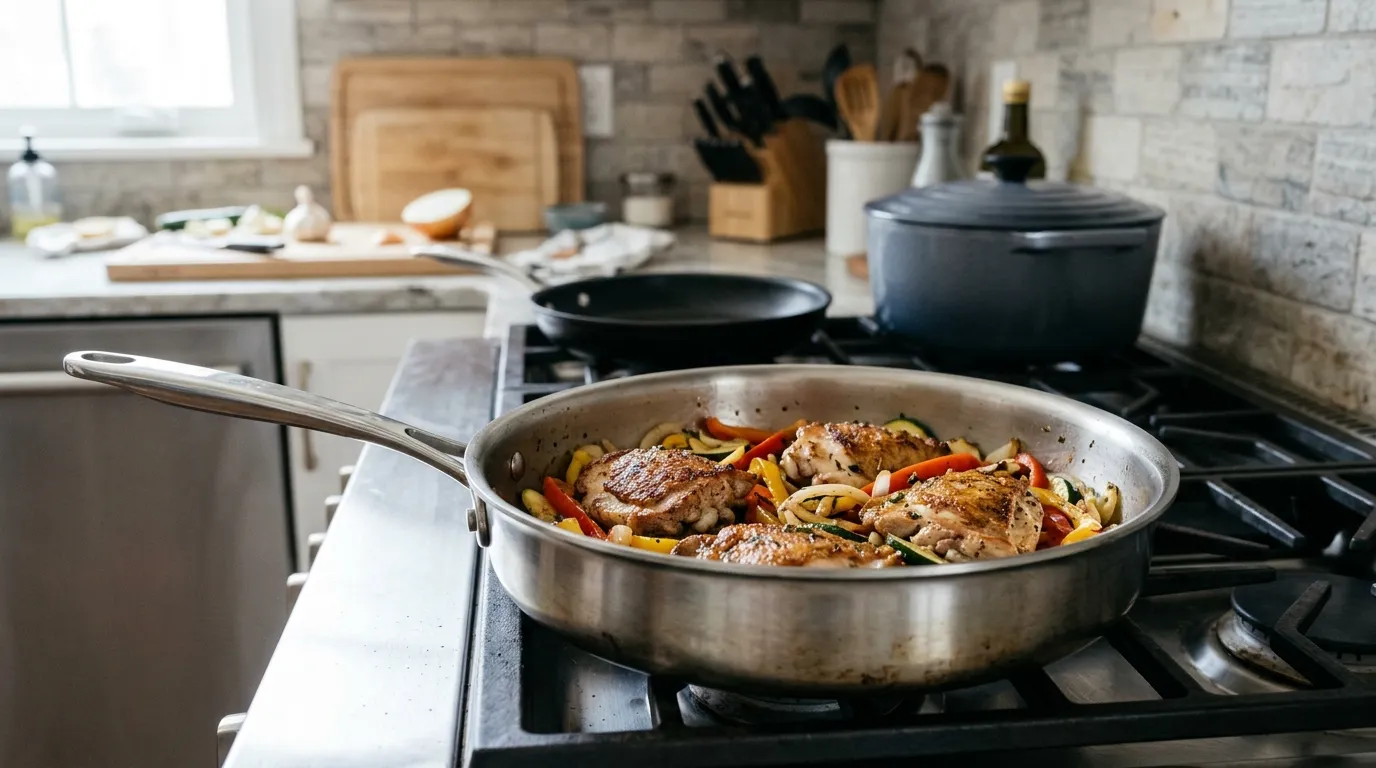
For most home cooks in the United States, the best pan for everyday cooking is a 10- to 12-inch stainless steel skillet with an aluminum or copper core. It works on gas, electric, and induction stoves, handles high heat, and can cook meat, vegetables, eggs, sauces, and one-pan meals.
A stainless steel skillet is not the easiest pan at first. Food can stick if the pan is cold or the heat is too high. Still, it offers the best balance of durability, cooking range, and low upkeep for many U.S. kitchens.
If easy cleanup matters most, choose a nonstick skillet. If you want strong heat storage, choose cast iron. If you cook many eggs or delicate foods, keep a small nonstick pan beside your main skillet.
Quick answer: Which pan is best for daily use?
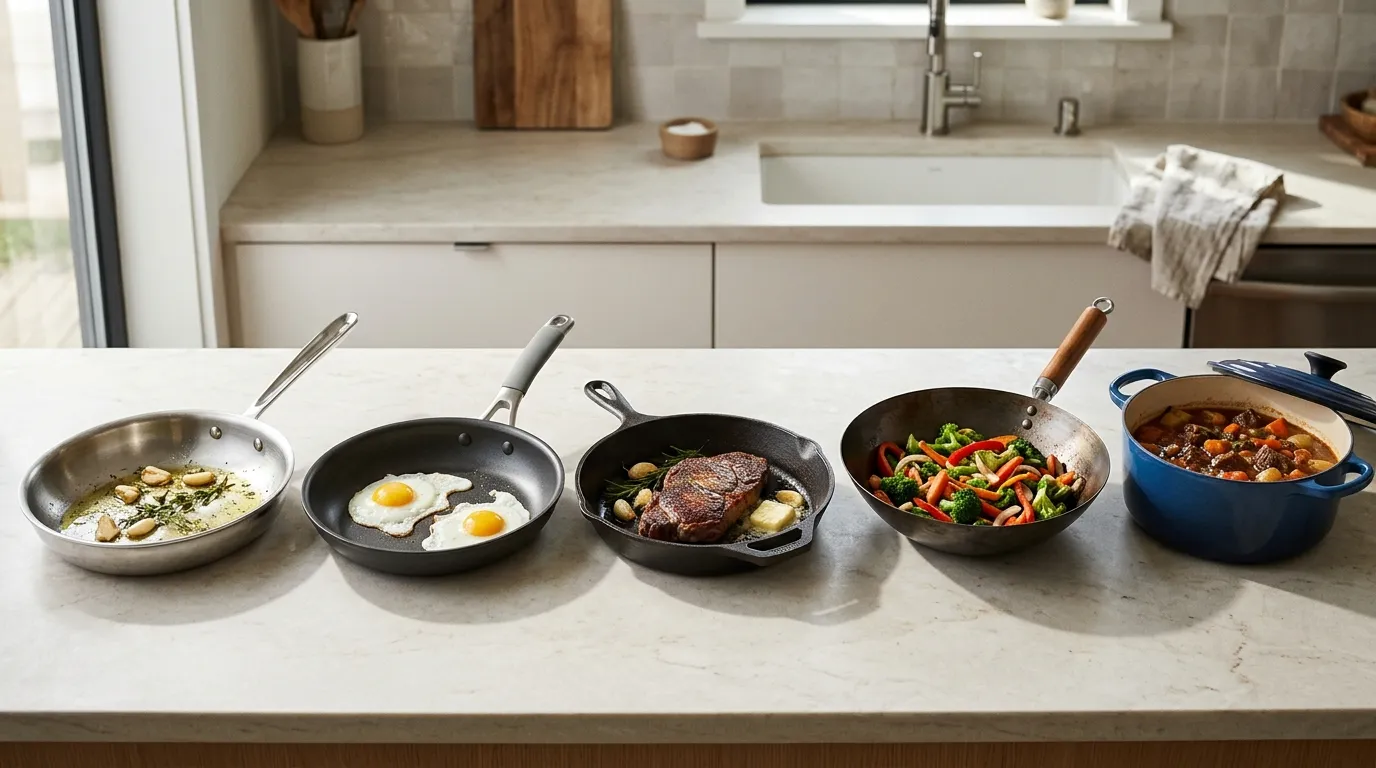
The best all-around choice is a 10- to 12-inch, three-ply stainless steel skillet with a heavy base and an oven-safe handle.
This size gives enough room to:
- Fry four eggs without crowding.
- Brown chicken breasts or pork chops.
- Sauté vegetables.
- Make a pan sauce.
- Cook a meal for two to four people.
- Move from the stovetop to the oven, if the pan allows it.
A stainless steel pan lasts for many years when cared for well. It also avoids the need to replace a worn coating. However, it needs correct preheating and enough cooking fat.
For many households, the best setup is not one pan. It is a small set:
- 10- to 12-inch stainless steel skillet for most meals.
- 8- to 10-inch nonstick skillet for eggs, pancakes, and fish.
- 5- to 7-quart Dutch oven or stockpot for soups, pasta, and braises.
Best pan by cooking need
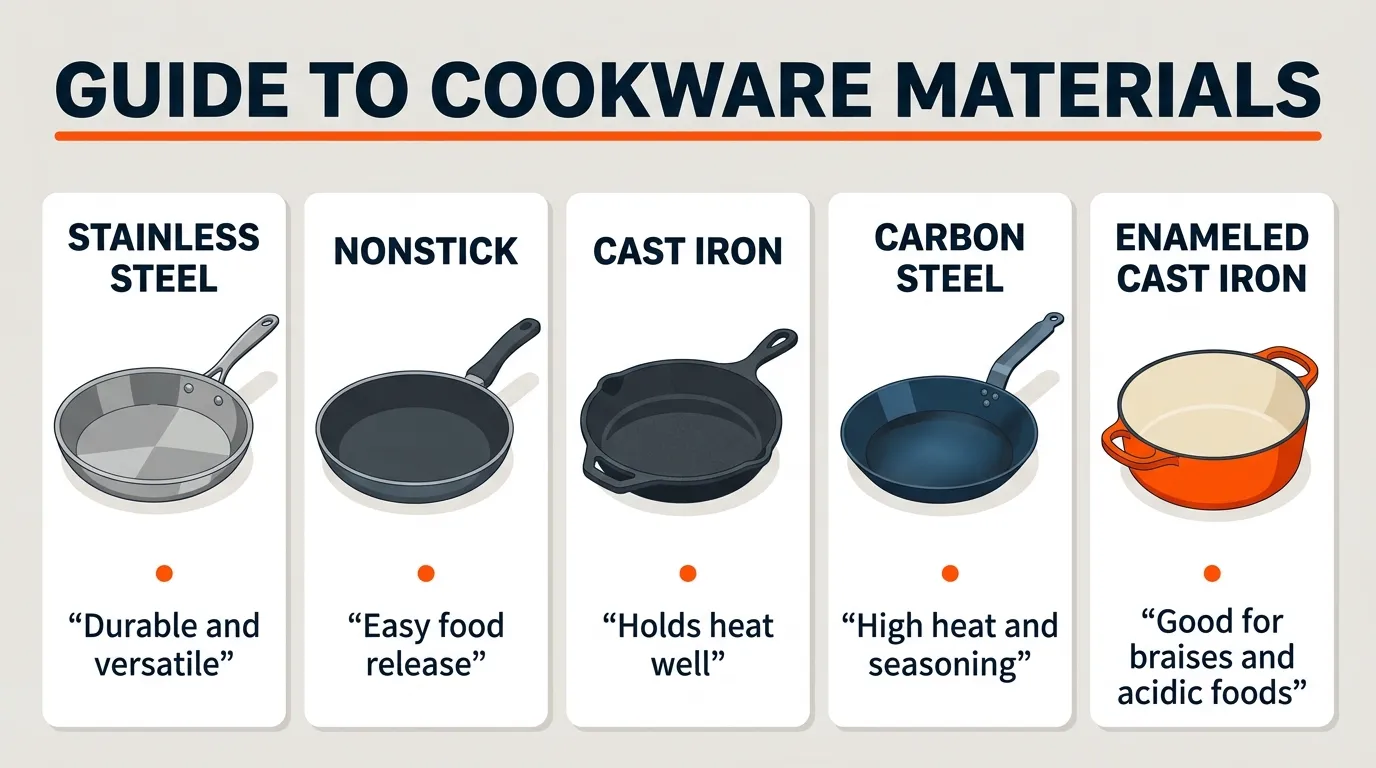
| Cooking need | Best pan type | Main reason | Main limit |
|---|---|---|---|
| One pan for most tasks | Stainless steel skillet | Durable and versatile | Food may stick |
| Eggs and pancakes | Nonstick skillet | Easy release | Coating can wear |
| Steaks and cornbread | Cast iron skillet | Holds heat well | Heavy and slower to heat |
| Stir-fry | Carbon steel wok or skillet | Fast response and high heat | Needs seasoning |
| Sauces and acidic food | Stainless steel | Does not react with tomatoes or wine | Less naturally nonstick |
| Long, slow meals | Enameled Dutch oven | Holds heat and resists acidic food | Heavy and costly |
| Induction cooking | Magnetic stainless steel or cast iron | Works with induction | Some bases may warp or scratch |
What makes a good everyday pan?
A good everyday pan should match your stove, cooking habits, household size, and cleaning style. material matters, but shape and construction matter too.
Material
The pan material controls how it heats and how food behaves.
- Stainless steel offers durability and strong browning.
- Aluminum heats quickly but may react with acidic food unless coated or clad.
- Cast iron stores heat for a long time.
- Carbon steel heats quickly and can develop a naturally slick surface.
- Nonstick coatings help food release with little oil.
No material wins at every task. The right choice depends on the food you cook most.
Size
A 10-inch skillet works well for one or two people. A 12-inch skillet gives more space for family meals and larger ingredients.
A pan that is too small can crowd food. Crowding traps steam and makes browning harder. A pan that is too large may feel heavy and may not heat evenly on a small burner.
For most U.S. households, a 12-inch skillet is the more useful single-pan size. Choose 10 inches if your stove is small or you mainly cook for one person.
Weight
A heavier pan often holds heat better. That helps with browning meat and cooking food in batches.
Yet very heavy cookware can be hard to lift, wash, and store. Cast iron may weigh much more than stainless steel or aluminum. If you have wrist, shoulder, or grip limits, choose a lighter pan that you can safely control.
Base and shape
Look for:
- A flat base that sits steady on the burner.
- A thick bottom that resists hot spots.
- Sloped sides for stirring and turning food.
- A wide cooking surface.
- A handle that stays secure.
- A helper handle on larger or heavier pans.
A lid is useful for steaming vegetables, finishing thick cuts of meat, and reducing splatter. A universal lid may fit several pans, but a close-fitting lid works better for heat and moisture control.
Stove compatibility
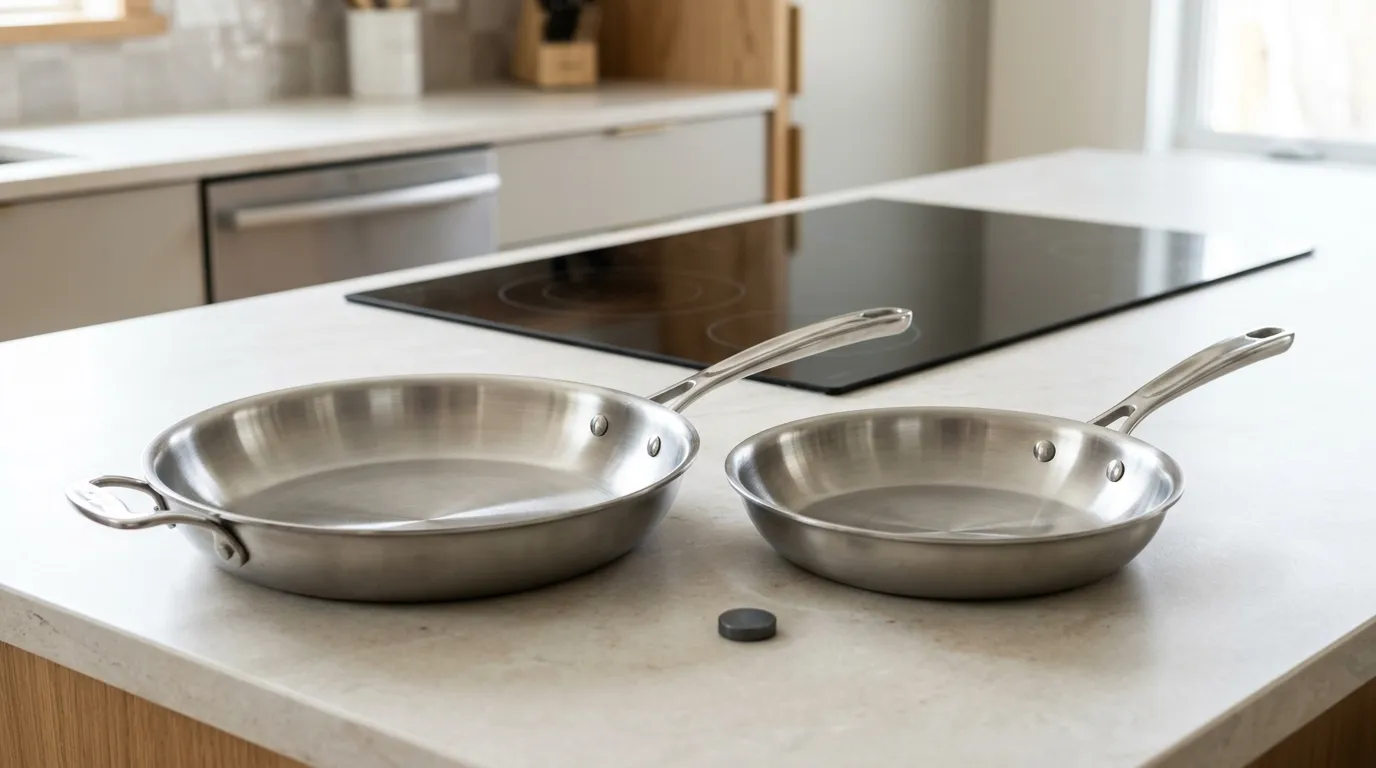
Check the pan before buying it for an induction stove. A magnet should stick firmly to the cooking base. Stainless steel alone does not always mean induction-ready.
Most pans work on gas and standard electric stoves. Glass-top electric ranges need a flat bottom. Do not drag rough cast iron across glass, because it may scratch the surface.
Best everyday pan materials compared
Stainless steel: best all-around choice
Stainless steel is the strongest general pick when you want one pan for many jobs.
A clad stainless steel pan uses layers of metal. Stainless steel forms the cooking surface. A core of aluminum or copper spreads heat more quickly and evenly than stainless steel alone.
Stainless steel works well for:
- Chicken and pork.
- Steak and burgers.
- Vegetables.
- Pasta sauces.
- Pan sauces.
- Tomatoes, citrus, and wine.
- Oven finishing, when the model is rated for it.
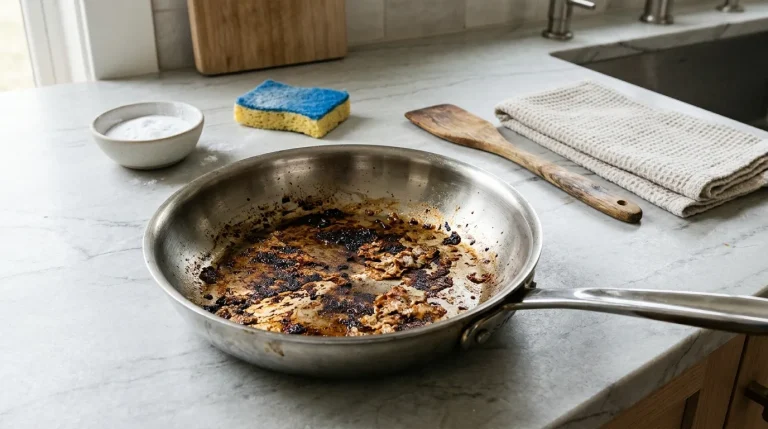
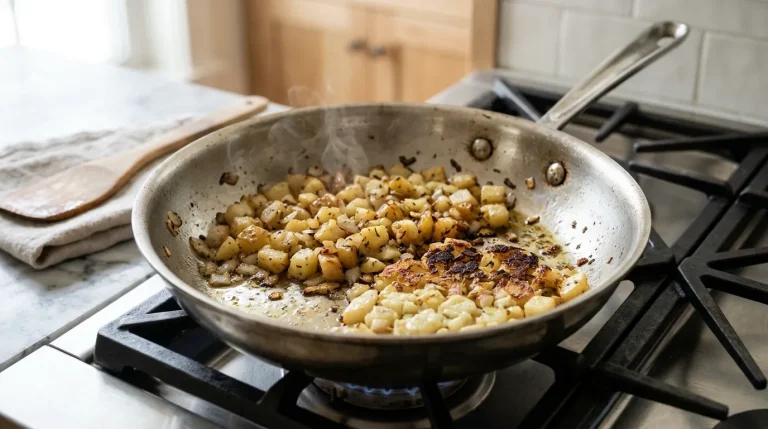
Its main weakness is sticking. Food sticks when the pan is not heated correctly, when the food is wet, or when the cook tries to turn food too soon.
A simple method helps:
- Dry the food.
- Preheat the pan over medium heat.
- Add oil after the pan is warm.
- Add the food.
- Leave it alone until it releases more easily.
A stainless pan may develop brown or blue heat marks. These marks are usually cosmetic. Follow the maker’s care instructions rather than using harsh tools that can scratch the surface.
Nonstick: best for easy release
A nonstick skillet is the easiest choice for eggs, crepes, pancakes, tofu, and delicate fish.
Most modern nonstick pans use a fluoropolymer coating, often called PTFE. The U.S. Food and Drug Administration evaluates food-contact substances under its regulatory system. The FDA explains its oversight of food-contact substances.
Use a coated pan as directed:
- Keep heat low to medium unless the maker gives different instructions.
- Do not preheat an empty pan for a long time.
- Use wood, silicone, or plastic tools approved for the surface.
- Replace the pan if the coating is badly peeling or damaged.
- Check the handle and oven limits before using it in the oven.
A nonstick pan is not the best choice for hard searing. High heat can shorten coating life, and a coated surface does not build the same browned crust as bare stainless steel or cast iron.
Cast iron: best for heat retention
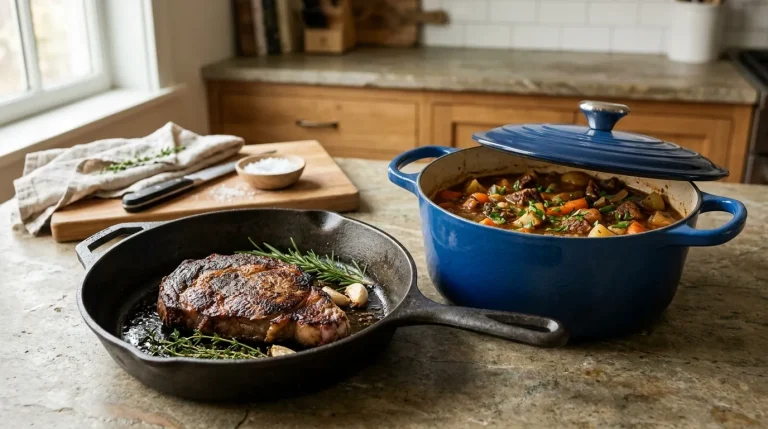
Cast iron is useful when you want a pan that stays hot. It works well for:
- Steaks.
- Burgers.
- Cornbread.
- Roasted vegetables.
- Skillet pizza.
- Deep frying.
- Oven cooking.
Cast iron needs more care than stainless steel. Dry it well after washing. A thin layer of cooking oil can help protect the surface. The Lodge care guide gives model-specific cleaning advice, but other brands may have different instructions.
Cast iron is reactive to some acidic foods, especially during long cooking. Brief contact with tomatoes may be fine in a well-seasoned pan, but stainless steel or enameled cast iron is a better choice for long tomato-based sauces.
The main drawbacks are weight, slow heating, and a handle that can become very hot.
Carbon steel: best for high heat and a lighter feel
Carbon steel shares traits with cast iron but is often thinner and lighter. It can develop a seasoned surface that releases food well.
It suits:
- Stir-frying.
- Searing.
- Fried rice.
- Burgers.
- Eggs after proper seasoning.
- High-heat cooking.
Carbon steel needs seasoning and drying. Acidic food can damage the seasoning or create a metallic taste. It may also warp if heated too fast or cooled suddenly.
Choose carbon steel if you enjoy maintaining cookware and want a lighter alternative to cast iron. It is not the simplest first pan for a person who wants carefree cleanup.
Ceramic-coated nonstick: useful, but check expectations
“Ceramic nonstick” usually refers to a sol-gel coating rather than a solid ceramic pan. It can offer easy release at first and is often sold as an alternative to traditional nonstick coatings.
Its release performance may decline with repeated high heat, abrasive cleaning, or cooking sprays. Treat it gently and follow the care instructions. Do not assume that every ceramic-coated pan has the same life span or heat limit.
Enameled cast iron: best for braises and large meals
Enameled cast iron combines strong heat storage with a glass-like enamel surface. It works well for:
- Chili.
- Stews.
- Braised meat.
- Tomato sauces.
- Bread.
- Large family meals.
The enamel does not need seasoning and is better suited to acidic food than bare cast iron. It is still heavy, and the enamel can chip if dropped or struck with metal tools.
How to choose the right everyday pan
Use these five questions before you buy.
1. What do you cook most often?
Choose the material that fits your most common meals.
- Eggs, pancakes, and fish: nonstick.
- Meat and pan sauces: stainless steel.
- Steaks and cornbread: cast iron.
- Stir-fry and fried rice: carbon steel.
- Soups and braises: enameled Dutch oven.
If your meals vary, stainless steel offers the widest range.
2. How many people do you feed?
For one person, an 8- or 10-inch skillet may be enough. For two to four people, choose 10 or 12 inches. Larger families may need a 12-inch skillet or a wider sauté pan.
Do not fill a pan to the rim. Food needs space for heat to circulate and moisture to escape.
3. Do you use an induction stove?
Choose magnetic stainless steel, cast iron, or carbon steel. Verify the exact model because some stainless pans contain too little magnetic material to work well with induction.
Cast iron works on induction but may scratch glass if moved roughly. Use care when placing it on the cooktop.
4. Do you want low maintenance?
A nonstick skillet requires the least effort during cooking. Stainless steel requires more technique but less concern about coating wear. Cast iron and carbon steel need drying and seasoning.
There is a trade-off:
- Less sticking now: nonstick.
- Long service life: stainless steel or cast iron.
- Fast heat response: aluminum-core stainless or carbon steel.
- Minimal upkeep: stainless steel, if you accept some sticking.
5. Can you lift and clean it safely?
A pan that stays in the cabinet because it is too heavy is not a good everyday pan. Hold the pan in the store if possible. Check whether you can lift it with food inside and pour safely.
How to use a stainless steel pan without sticking
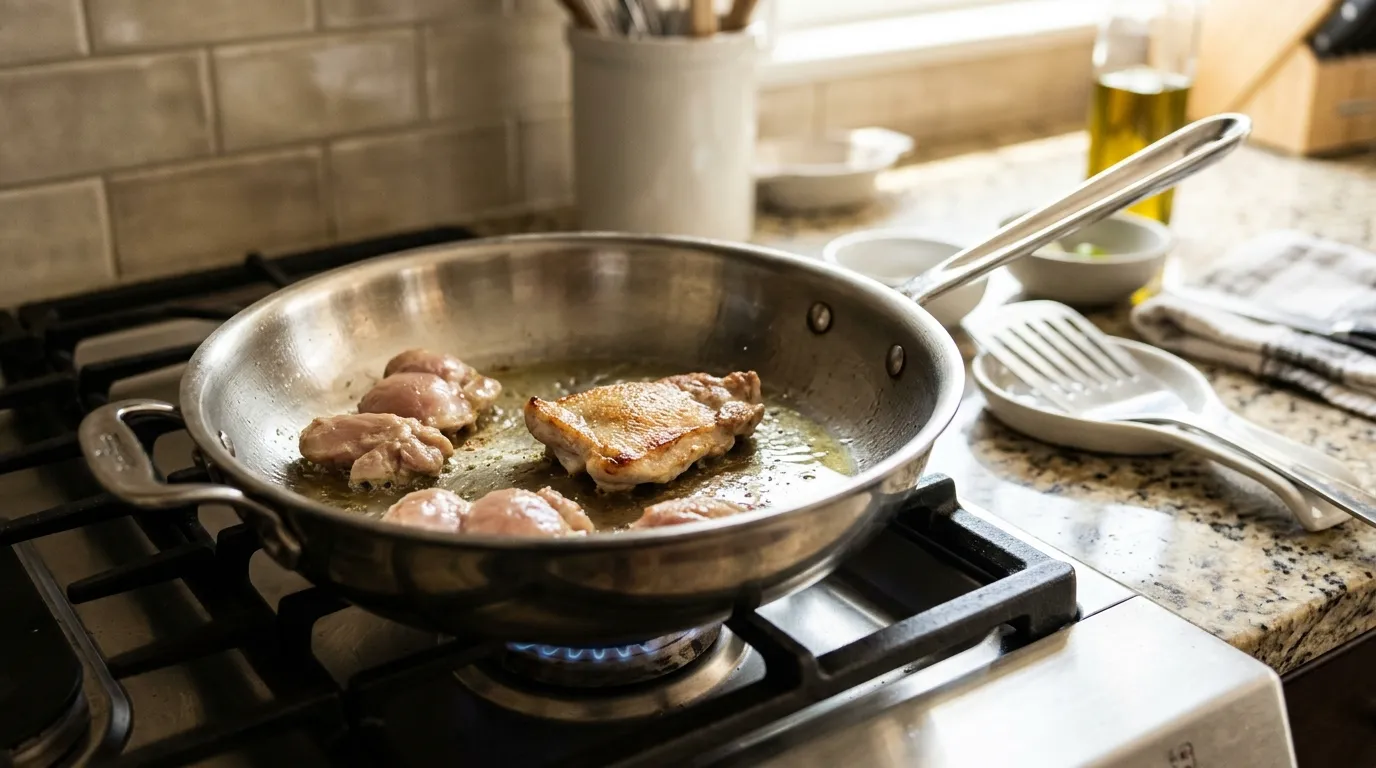
Sticking usually comes from heat, moisture, timing, or too little fat. It does not always mean the pan is poor quality.
Try this basic method:
- Dry the food. Pat meat, fish, or vegetables with a clean paper towel.
- Preheat over medium heat. Avoid full heat unless the recipe calls for it.
- Test the heat. A few drops of water should bead and move across the surface, then evaporate. Wipe away the water before adding oil.
- Add a small amount of oil. Use an oil suited to the cooking temperature.
- Add the food. It should sizzle gently.
- Wait before turning. Meat often releases after a crust forms.
- Lower the heat if the food burns. Add a small amount of water or stock to loosen browned bits if the recipe allows.
- Clean after the pan cools slightly. Do not pour cold water into a very hot pan, as a sharp temperature change may warp it.
The goal is not to make stainless steel behave exactly like nonstick. The goal is to control heat and timing so food forms a brown crust and releases.
Pan safety and care
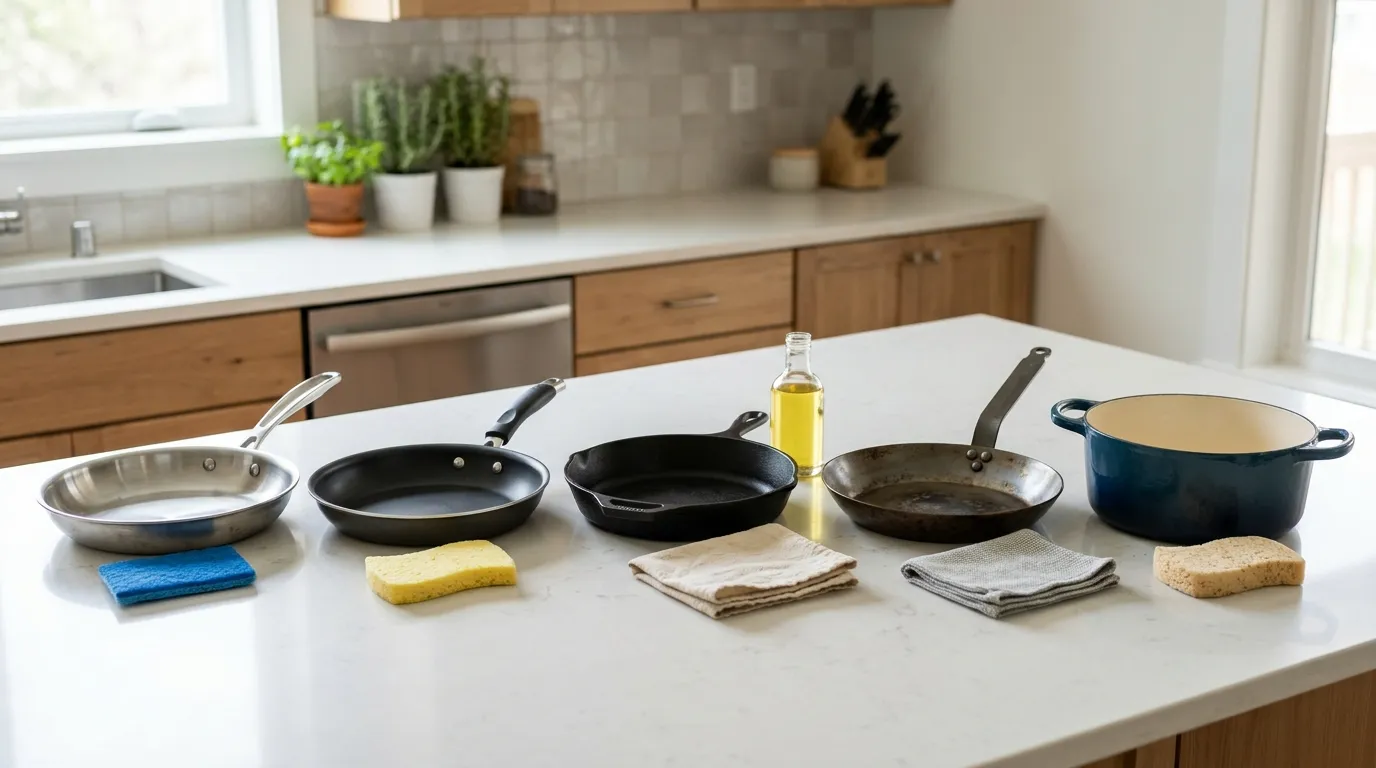
Safe use starts with the pan’s instructions. Heat limits, dishwasher guidance, lid rules, and oven ratings vary by model.
Watch the handle
Many handles become hot near the burner or in the oven. Use a dry oven mitt when needed. A wet towel can transfer heat quickly and cause burns.
Keep pan handles turned inward but not over another burner. This reduces the chance of bumping the handle or pulling the pan down.
Avoid sudden temperature changes
Do not place a very hot pan under cold water. Sudden changes can warp metal or damage enamel. Let the pan cool before washing.
Use the right tools
Metal tools are usually fine for uncoated stainless steel and bare cast iron. They can damage many nonstick coatings. Use silicone, wood, or other tools listed as safe by the manufacturer.
Clean according to the surface
- Stainless steel: Wash with dish soap and a soft scrubber. A paste of baking soda may help with stuck food.
- Nonstick: Use a soft sponge and mild soap. Avoid abrasive powders and steel wool.
- Cast iron: Remove food, dry fully, and apply a very thin oil layer if needed.
- Carbon steel: Wash, dry over heat, and oil lightly when the surface looks dry.
- Enameled cast iron: Use a soft sponge. Avoid dropping it or striking the enamel.
The USDA Food Safety and Inspection Service provides guidance on safe food handling. A pan does not make food safe by itself; cooking temperature, storage, and clean tools still matter.
Common mistakes when buying an everyday pan
Buying a full set before testing one pan
A large cookware set may include pieces you rarely use. Start with one skillet and add pieces as your meals require them.
Choosing a pan only by price
A low price may be useful, but check the base, handle, coating instructions, warranty, and stove compatibility. A higher price does not guarantee better cooking.
Buying a pan that is too small
A crowded pan steams food instead of browning it. If you often cook for a family, a 12-inch skillet may save time.
Ignoring oven limits
Some pans have oven-safe bodies but handles, lids, or coatings with lower limits. Check the full product instructions before moving the pan into a hot oven.
Using high heat for every meal
High heat is not always faster. It can burn oil, damage nonstick surfaces, warp thin cookware, and make food burn before it cooks through.
Treating “dishwasher safe” as a promise of long life
Dishwasher cleaning may be allowed but can still dull stainless steel or speed wear on some finishes. Follow the care directions for the exact pan.
The best simple cookware setup for a U.S. home
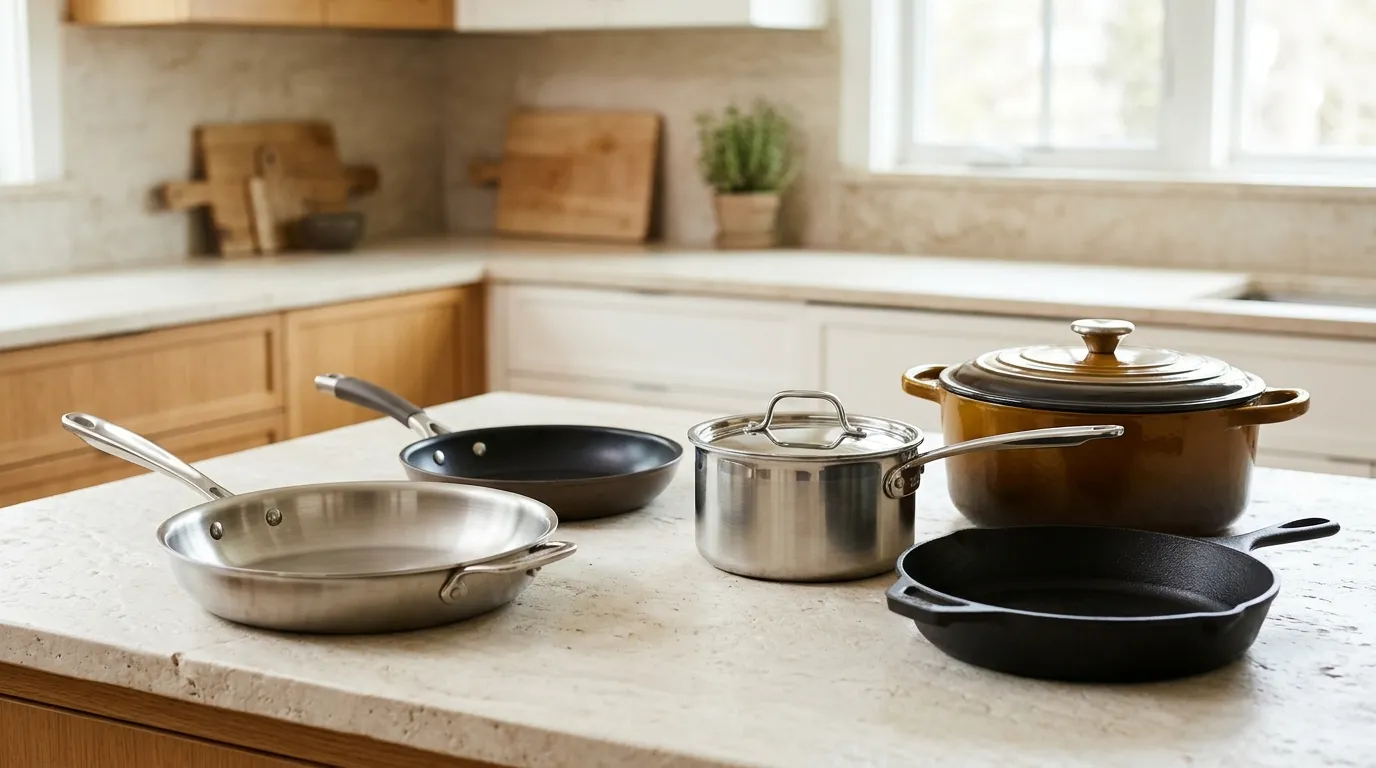
If you are replacing old cookware, build the set in this order:
- 10- or 12-inch stainless steel skillet
Use it for browning, sautéing, sauces, and most daily meals. - 8- or 10-inch nonstick skillet
Use it for eggs, pancakes, delicate fish, and quick breakfasts. - 3- to 4-quart saucepan
Use it for rice, oatmeal, grains, sauces, and reheating. - 5- to 7-quart Dutch oven or stockpot
Use it for soup, pasta, chili, and braised meals. - Cast iron or carbon steel skillet
Add one if you often sear, bake, or cook over high heat.
This approach avoids paying for pieces that do not match your cooking. It also gives each pan a clear role.
Frequently asked questions
Is stainless steel better than nonstick for everyday cooking?
Neither is best for every task. Stainless steel is more durable and better for browning and pan sauces. Nonstick is easier for eggs and delicate foods. Many cooks benefit from owning both.
What size frying pan should most people buy?
A 10-inch pan suits one or two people. A 12-inch pan gives more room for family meals. If you want one skillet for the widest range of cooking, choose 12 inches unless the pan feels too heavy for you.
Is cast iron safe for cooking?
Cast iron is widely used for cooking, but it can add iron to some foods. The amount can vary with the food, pan condition, cooking time, and acidity. People with iron-related health conditions should ask a qualified health professional for personal advice.
Can you cook tomatoes in cast iron?
Short cooking times may work, especially in a well-seasoned pan. Long cooking with tomatoes or other acidic foods is better in stainless steel or enameled cast iron. Acid can affect seasoning and may create a metallic taste.
How long should a nonstick pan last?
There is no single service life. It depends on heat, tools, cleaning, storage, and coating quality. Replace it when the surface is badly damaged, peeling, or no longer performs as intended.
Is a 12-inch pan too large for one person?
Not always. A 12-inch pan is useful for meal prep and larger ingredients. It may be awkward on a small burner or heavy when full. A 10-inch pan is easier for small portions.
Final recommendation
For one everyday pan, buy a 10- to 12-inch clad stainless steel skillet with a flat base, sturdy handle, and compatibility with your stove. Choose 12 inches for family cooking and 10 inches for smaller meals or limited storage.
Add a small nonstick skillet if you cook eggs, pancakes, or delicate fish often. Choose cast iron, carbon steel, or enameled cast iron only when their specific strengths match your cooking style.
The best pan is the one that fits your stove, your meals, your strength, and your cleaning habits. Start with one versatile skillet, learn how it responds to heat, and build from there.