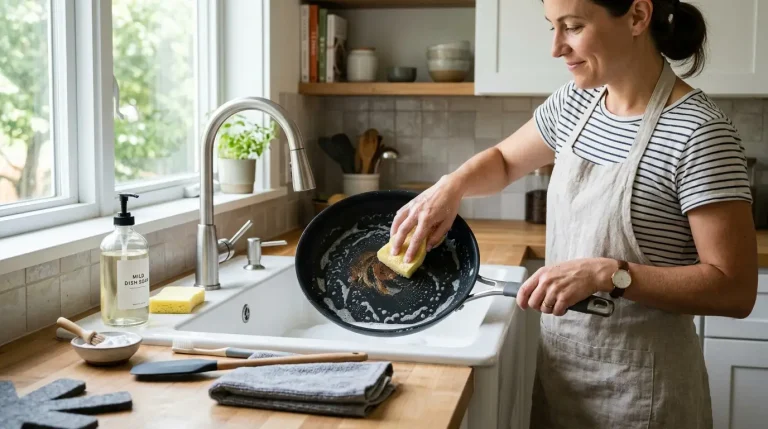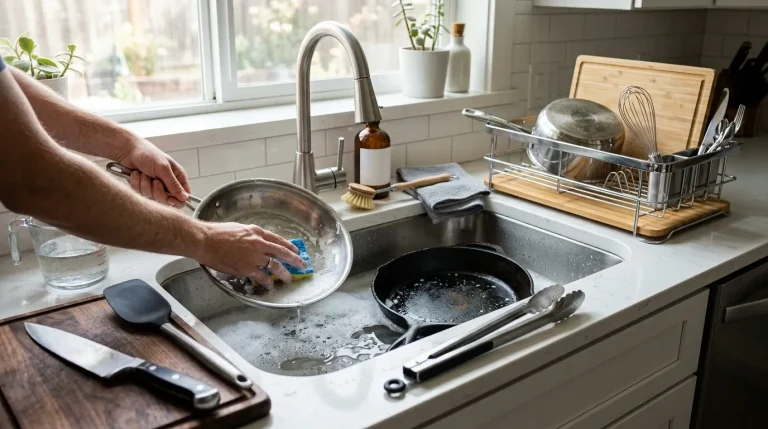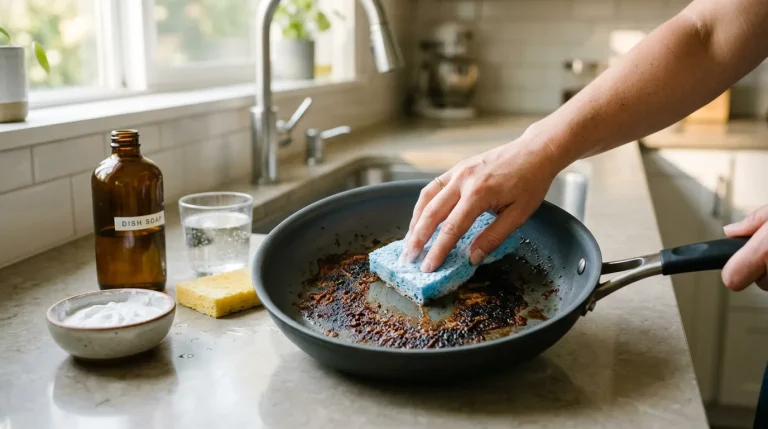
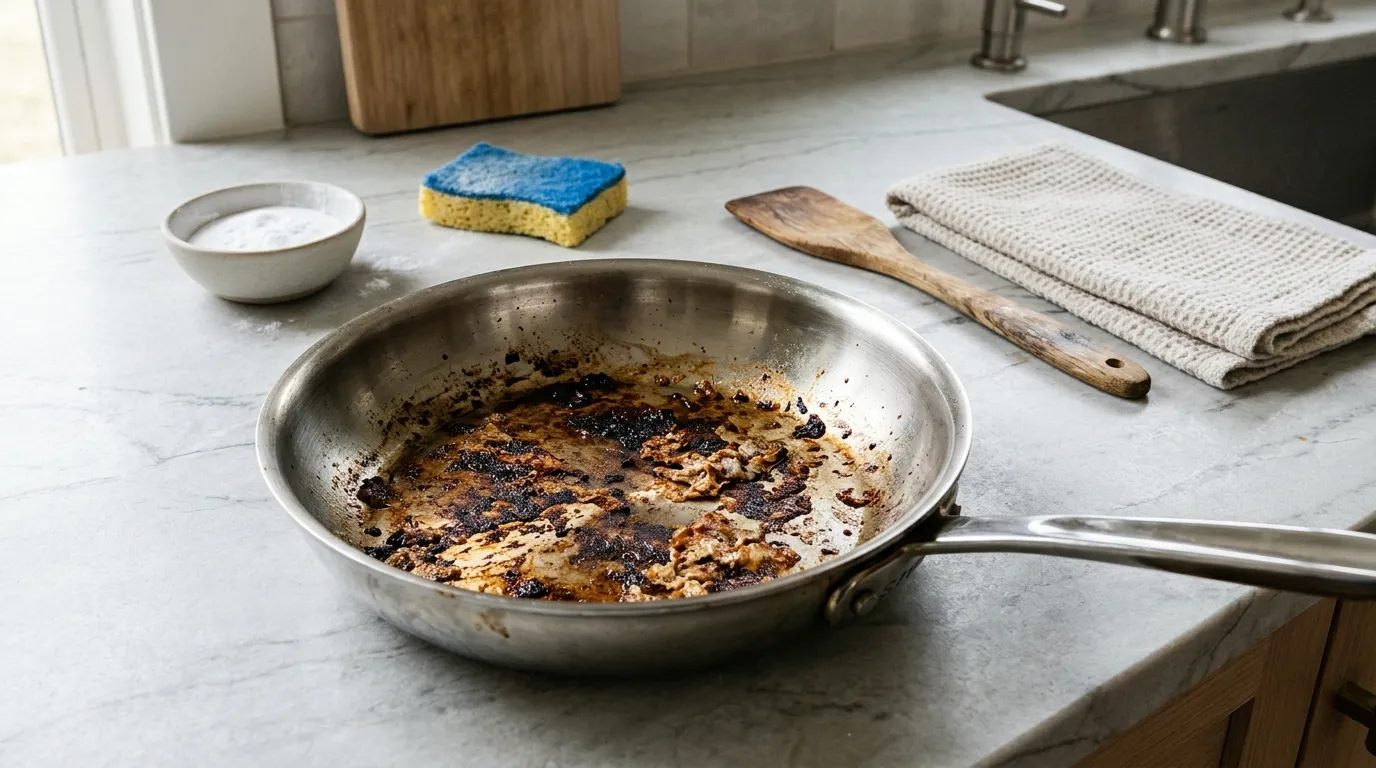
A burnt stainless steel pan can often be saved with items found in a U.S. kitchen. Start by soaking the cooled pan in hot water and dish soap. Then loosen the burnt food with baking soda, gentle heat, or a stainless-steel cleaner. Avoid bleach, harsh oven cleaner, and sudden temperature changes.
Why stainless steel pans burn
Stainless steel pans burn when food or oil stays on a very hot surface for too long. Sugar, starch, grease, and proteins can form a hard brown or black layer. This layer may look permanent, but it often softens with heat, water, and mild abrasives.
Stainless steel is strong, but it can still scratch or discolor. Use the least harsh method first. Move to a stronger method only when the lighter one fails.
This guide is for stainless steel cookware used on gas, electric, glass, or induction stoves in the United States. Do not use these steps on nonstick, ceramic-coated, enameled, copper, or aluminum pans unless the maker allows them.
What you need before cleaning
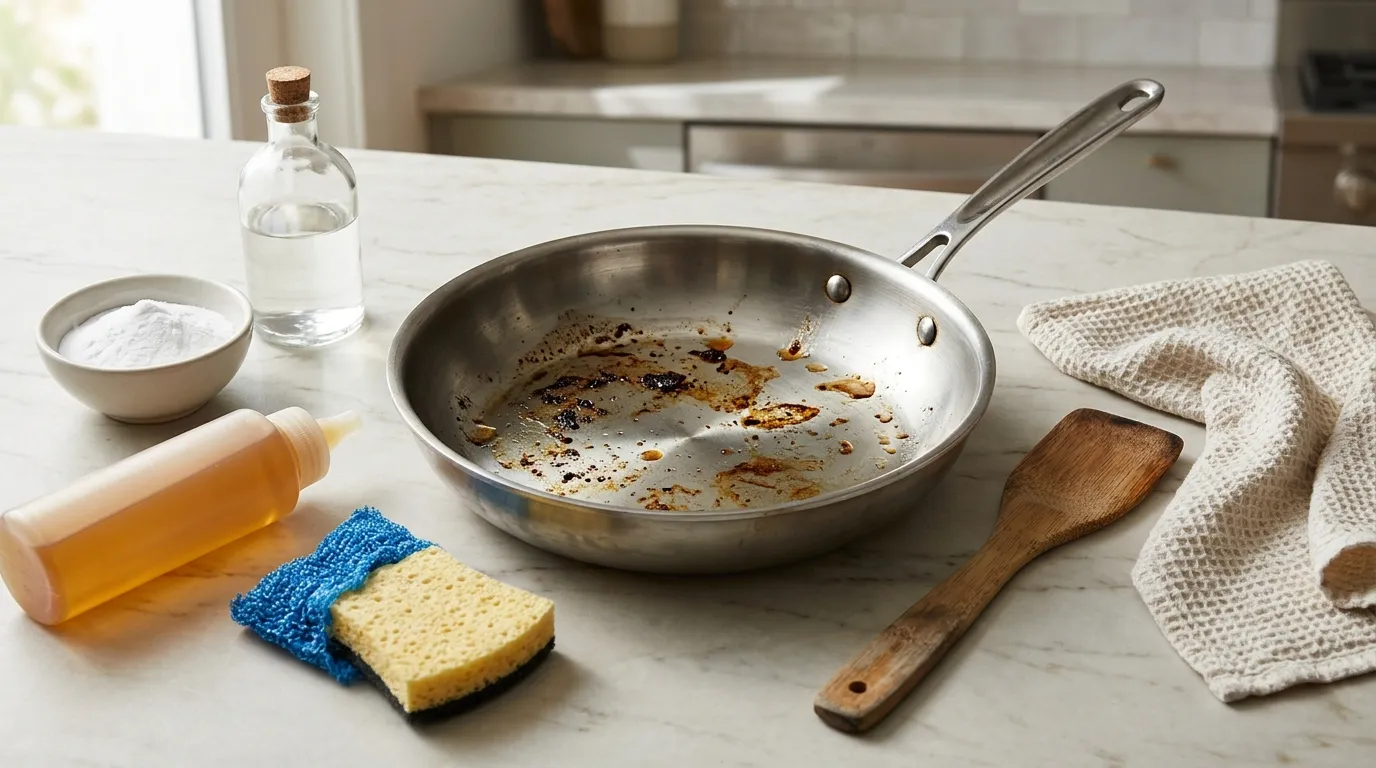
Gather these basic supplies:
- Dish soap
- Hot water
- Baking soda
- A soft sponge or nylon scrub pad
- A wooden, silicone, or plastic spatula
- White vinegar
- Clean kitchen towels
- Optional: a stainless-steel cleaner containing oxalic acid
- Optional: rubber gloves
Check the pan before you begin. If the handle is loose, the base is warped, or the pan has a deep crack, do not heat it. A damaged pan may not sit safely on the stove.
Let the pan cool before adding water. Pouring cold water into a very hot pan can cause thermal shock. This may warp the pan or damage a bonded base.
The best first method: hot water, dish soap, and baking soda
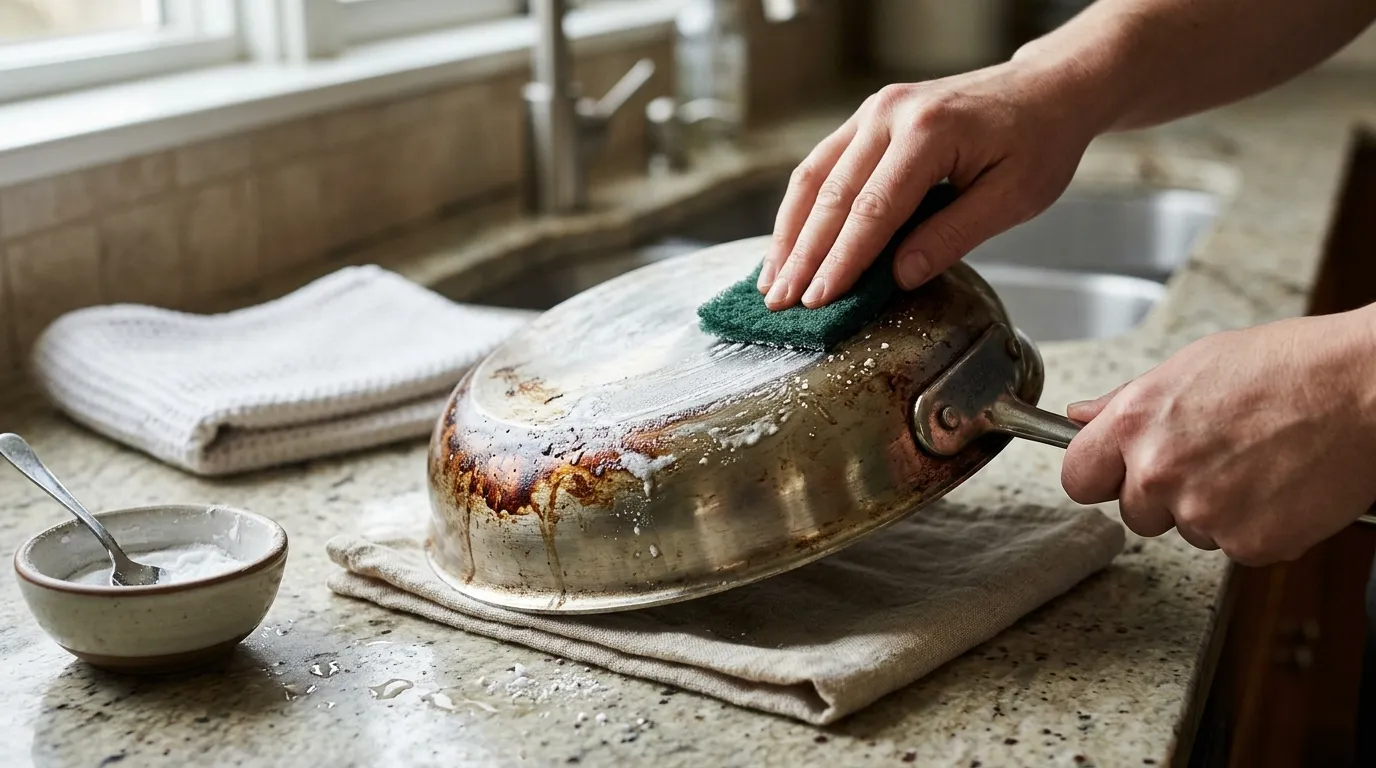
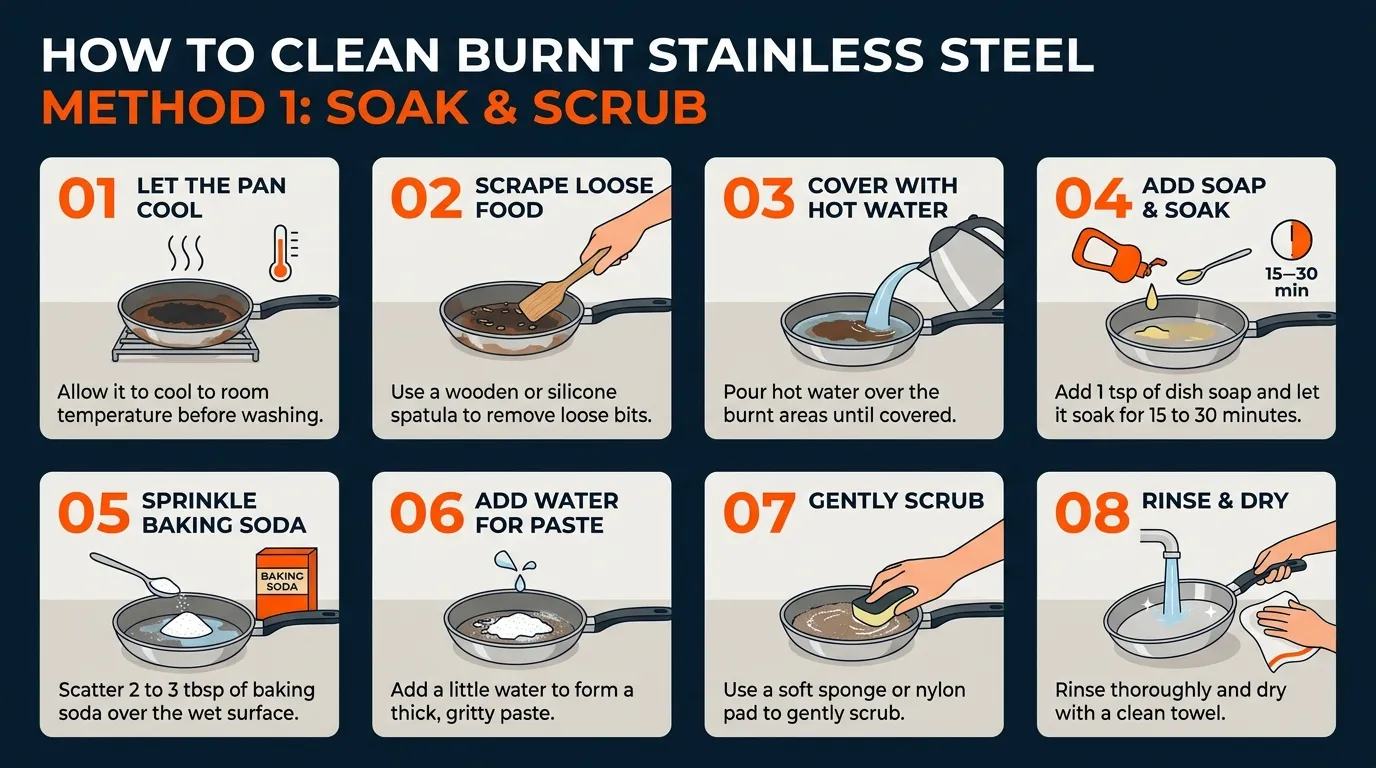
This method works well for burnt food and light to medium scorch marks.
- Let the pan cool to room temperature.
- Scrape away loose food with a wooden or silicone spatula.
- Add enough hot water to cover the burnt area.
- Add 1 teaspoon of dish soap.
- Let the pan soak for 15 to 30 minutes.
- Pour out most of the water.
- Sprinkle 2 to 3 tablespoons of baking soda over the wet surface.
- Add a small amount of water to make a thick paste.
- Rub the paste with a soft sponge or nylon pad.
- Rinse well and dry the pan.
Baking soda is a mild abrasive. It helps lift residue without being as aggressive as metal scouring wool. Use gentle pressure. A few short cleaning rounds are safer than one hard scrubbing session.
For a wide pan, spread the paste over the entire stained area. For a small spot, clean only that section. This saves time and reduces unnecessary rubbing.
How to boil baking soda in the pan
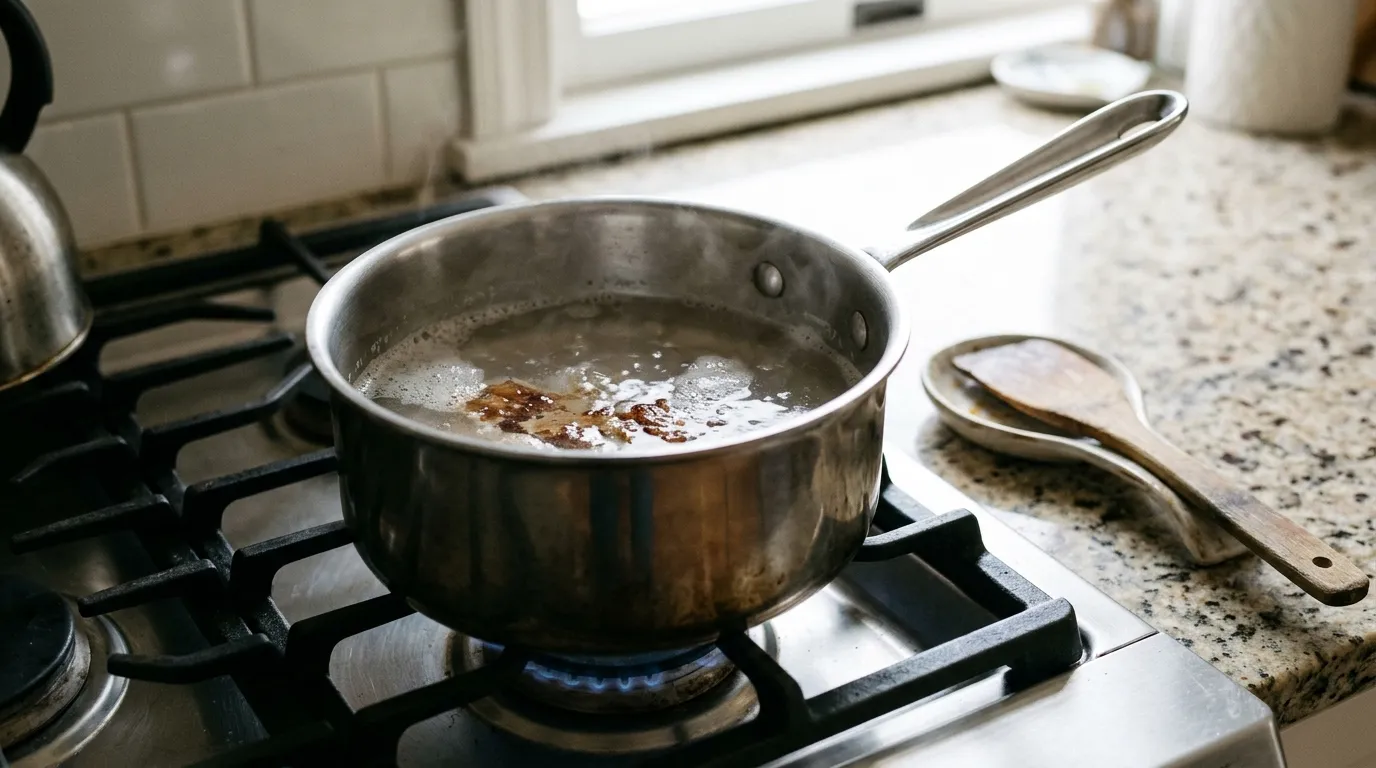
Use gentle heat when the burnt layer will not loosen during soaking.
- Add enough water to cover the burnt food.
- Add 2 to 3 tablespoons of baking soda.
- Place the pan on the stove.
- Bring the water to a gentle simmer.
- Simmer for 5 to 10 minutes.
- Turn off the heat and let the water cool.
- Scrape the softened residue with a wooden or silicone spatula.
- Wash the pan with dish soap.
- Rinse and dry it fully.
Do not leave the pan unattended while it simmers. Do not let all the water boil away. A dry pan can overheat again and create more stains.
If a thick layer remains, repeat the process once. Several gentle cycles are better than using a sharp tool or applying extreme force.
A simmering method works because heat and water soften the bond between the pan and the burnt food. Baking soda helps loosen greasy and acidic residue. It does not magically remove every mark, so severe burns may need a stainless-steel cleaner.
How to use vinegar for discoloration
Vinegar can help with rainbow stains, mineral spots, and some light food marks. These stains are not always burnt food. Stainless steel can show blue, purple, gold, or brown colors after high heat.
Use vinegar as a short treatment:
- Add enough white vinegar to cover the stained area.
- Let it sit for 5 to 10 minutes.
- Wash the pan with dish soap and a soft sponge.
- Rinse well.
- Dry with a clean towel.
You can also dilute the vinegar with equal parts water. Do not leave vinegar in the pan for hours or overnight. Long contact with acids may dull the finish, especially if the pan has a damaged surface.
Never mix vinegar with chlorine bleach. The combination can release dangerous chlorine gas. Also, do not mix vinegar with other cleaning products unless the label clearly says the products are compatible.
Vinegar is usually more useful for discoloration than for thick, black, baked-on food. If the residue feels raised or rough, use the baking soda simmer method instead.
How to clean a badly burnt stainless steel pan
For a heavy black crust, begin with the baking soda simmer method. If that does not work, use a cleaner made for stainless steel cookware.
A powdered stainless-steel cleanser that contains oxalic acid may remove severe stains. Bar Keepers Friend is one familiar example, but the product label matters more than the brand name. Use only a product that states it is suitable for stainless steel cookware.
Follow these steps:
- Wet the pan.
- Sprinkle a small amount of the cleaner over the stain.
- Rub gently with a damp, nonmetal pad.
- Work in the direction of the steel grain when visible.
- Rinse the pan very well.
- Wash it with dish soap.
- Dry it completely.
Wear gloves and use good airflow. Do not let powdered cleaner sit on the pan longer than the label allows. Do not combine it with bleach, ammonia, vinegar, or other cleaners.
A stainless-steel cleanser may remove stains that baking soda cannot. It may also make a brushed finish look uneven if you rub in circles or use too much pressure. Test a small area first, especially on a polished pan.
Cleaning method comparison
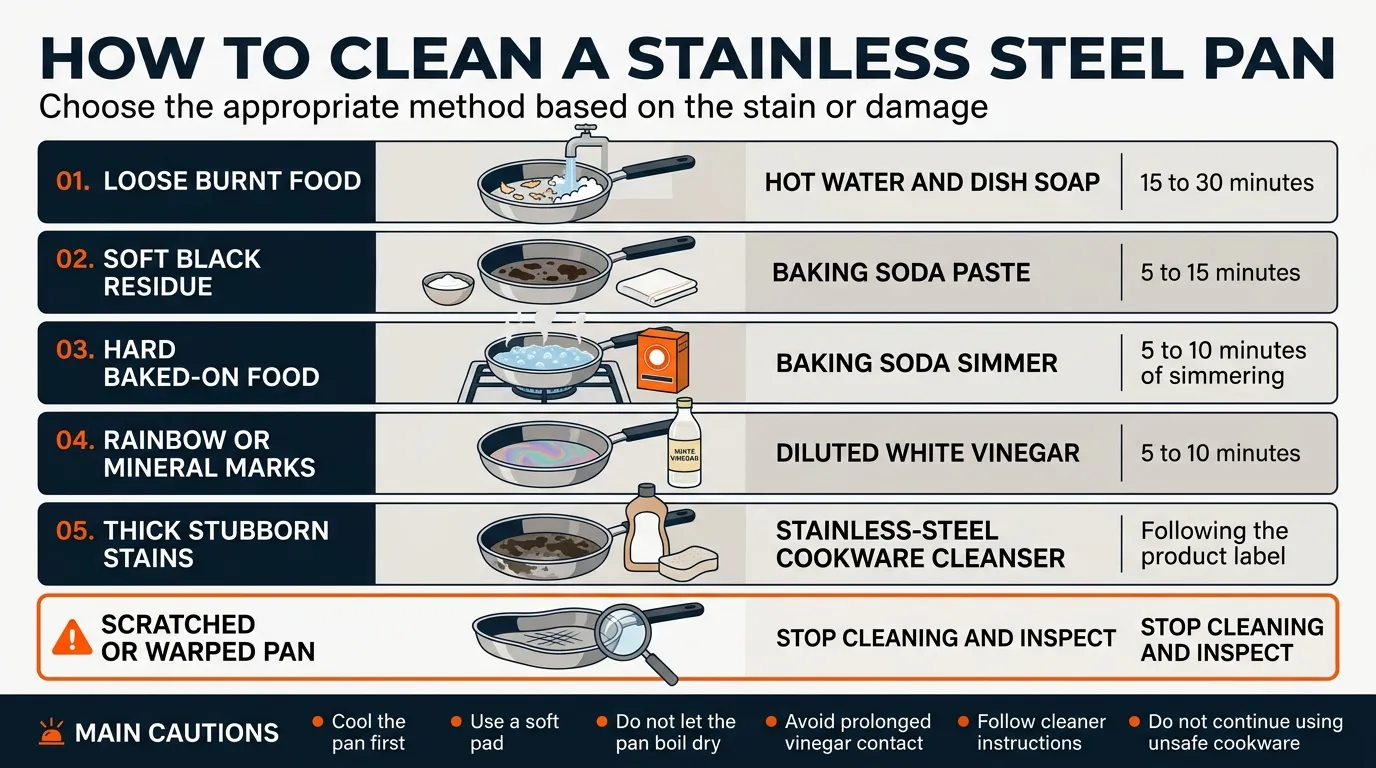
Use this table to choose the least harsh method likely to work.
| Problem | First choice | Time | Main caution |
|---|---|---|---|
| Loose burnt food | Hot water and dish soap | 15–30 minutes | Let the pan cool first |
| Soft black residue | Baking soda paste | 5–15 minutes | Use a soft pad |
| Hard baked-on food | Baking soda simmer | 5–10 minutes of simmering | Do not let the pan boil dry |
| Rainbow or mineral marks | Diluted white vinegar | 5–10 minutes | Do not soak for hours |
| Thick, stubborn stains | Stainless-steel cleanser | Follow label | Wear gloves and rinse well |
| Scratched or warped pan | Stop cleaning and inspect | — | Do not keep using unsafe cookware |
The deciding factor is the type of mark. A raised crust needs softening and lifting. A flat rainbow stain needs mild acid and washing. A deep, dull stain may need a purpose-made stainless-steel cleaner.
What not to use on burnt stainless steel
Avoid these common mistakes:
- Do not use chlorine bleach. It can damage stainless steel and create dangerous fumes when mixed with acids.
- Do not use oven cleaner unless the pan maker specifically approves it. Many oven cleaners are too harsh for cookware surfaces.
- Do not use a knife or razor blade. Sharp tools can gouge the metal.
- Do not pour cold water into a very hot pan. The sudden change may warp it.
- Do not use steel wool as a first step. It can scratch the finish and leave tiny steel particles that later rust.
- Do not scrub in random circles. Follow the grain on brushed stainless steel.
- Do not leave salt water sitting in the pan. Salt can contribute to surface pitting when left in contact with stainless steel.
- Do not mix cleaning products. Use one method at a time and rinse between methods.
A green scouring pad can also leave visible scratches. If you use one, choose a pad labeled safe for stainless steel and apply light pressure.
How to remove black marks from the outside
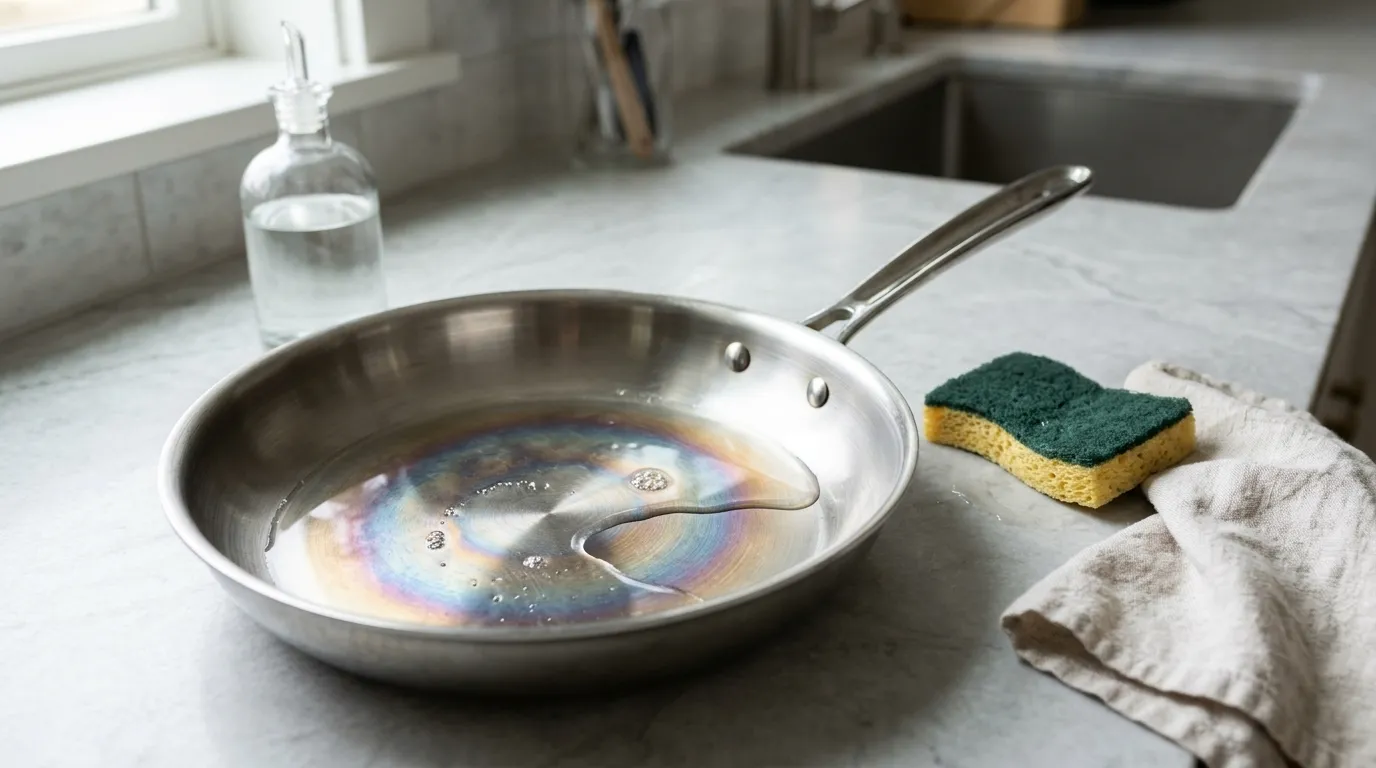
Burnt oil on the outside of a pan may need a different approach. First, place the cooled pan in a sink or on a protected counter. Apply dish soap and a baking soda paste to the outside stain.
Let the paste sit for 10 to 15 minutes. Then scrub gently with a nylon pad and rinse. Repeat rather than pressing hard.
If the outside has a polished finish, use a soft sponge. If it has a brushed finish, rub in the direction of the grain. Keep water away from electrical parts, removable handles, or areas where the pan connects to another material.
Do not place a pan in the dishwasher unless the manufacturer says it is dishwasher-safe. Dishwasher detergent and high heat may dull stainless steel, damage handles, or affect the pan’s appearance.
How to restore shine after cleaning
After removing the burnt residue, wash the pan with warm water and dish soap. Rinse away all baking soda or cleanser. Dry the pan at once with a soft towel.
Water spots often appear when stainless steel air-dries. Drying the pan also helps prevent dull mineral marks.
For a brushed pan, wipe with the grain. For a mirror-polished pan, use a soft microfiber cloth. Do not use wax, furniture polish, or products that are not intended for food-contact surfaces.
Some color changes may remain even after the pan is clean. If the surface is smooth, free from loose residue, and not pitted, the discoloration may be cosmetic rather than a sign that the pan is unsafe.
When a burnt pan may be beyond repair
Replace or stop using the pan if you find:
- A deep crack
- A badly warped base
- A loose handle that cannot be tightened
- Peeling layers on a bonded base
- Deep pits or holes
- A sharp raised edge
- A lid that no longer fits safely
A dark stain alone does not mean the pan must be discarded. The key questions are whether the cooking surface is smooth, intact, and stable on the stove.
If you cannot remove a rough patch after several gentle cleaning attempts, stop scraping harder. Deep damage can collect food and make the pan harder to clean safely.
How to prevent another burnt stainless steel pan
Prevention is easier than heavy cleaning.
- Preheat the pan over medium heat instead of high heat.
- Add oil after the pan has warmed.
- Do not leave an empty pan on a hot burner.
- Lower the heat when oil begins to smoke.
- Stir sugary or starchy food often.
- Deglaze stuck food while the pan is still warm, but not dangerously hot.
- Soak the pan soon after cooking.
- Dry stainless steel after washing.
- Use a burner that matches the pan’s base.
Stainless steel often needs more heat control than nonstick cookware. High heat can brown food quickly, but it can also burn oil and create stubborn stains.
Frequently asked questions
Can I clean a burnt stainless steel pan with baking soda and vinegar?
You can use baking soda and vinegar at separate stages, but mixing them at the same time reduces their cleaning strength. The fizz looks active, but the two ingredients mostly neutralize each other. Use baking soda for scrubbing or simmering, then rinse before using diluted vinegar for discoloration.
Is it safe to use a stainless steel pan after it has burned?
Usually, yes, if the pan is still smooth, stable, and free from cracks, deep pits, or loose parts. Wash away all burnt residue before cooking again. A cosmetic stain may remain without affecting normal use.
Can I use Bar Keepers Friend on stainless steel cookware?
Many stainless-steel cleaners are made for stainless steel cookware, but you should check the product label first. Use a small amount, rub gently, follow the grain, and rinse thoroughly. Do not mix the cleaner with other products.
Why did my stainless steel pan turn blue or rainbow-colored?
High heat can create a thin surface discoloration that looks blue, purple, gold, or rainbow-colored. It is often cosmetic. A short vinegar treatment or a stainless-steel cleaner may reduce it. Avoid overheating the pan again.
Can I use steel wool on a stainless steel pan?
Steel wool can remove residue, but it may scratch the surface and leave particles that rust. Use a soft sponge or nylon pad first. If a stronger pad is needed, choose one labeled safe for stainless steel and scrub lightly.
How do I clean a burnt stainless steel pan without baking soda?
Use hot water and dish soap first. You can simmer plain water to soften the residue, then scrape with a wooden spatula. A cookware-safe stainless-steel cleaner is another option. Follow its label and rinse the pan well.
Final recommendation
For most burnt stainless steel pans, use this order: cool the pan, soak it with hot water and dish soap, simmer baking soda if needed, and use a cookware-safe stainless-steel cleanser only for stubborn stains. Work gently, rinse between methods, and stop if the pan is cracked, warped, or deeply pitted.
The next time food sticks, lower the heat, add a little liquid, and clean the pan while the residue is still soft.