Gently heat, press on a flat surface, and cool slowly to re-flatten.
If your pan rocks or spins, you can still save it. I’ve spent years testing cookware in home and pro kitchens, and I understand How to Fix Pan Warping without guesswork. This guide shows simple steps, clear limits, and pro tips to keep your pans flat and safe.
What Is Pan Warping?
Pan warping is a bend or bulge in the base. The bottom may dome up or sink in. You see it when the pan wobbles, spins, or will not sit flat on the stove.
Most warping comes from uneven heat or fast cooling. Thin metal moves more. Thick, stable bases move less. The fix depends on the metal, the coating, and how deep the warp is.
A light warp can be eased at home. A sharp kink is hard to fix and may not be safe. The steps below will help you decide what to do next.
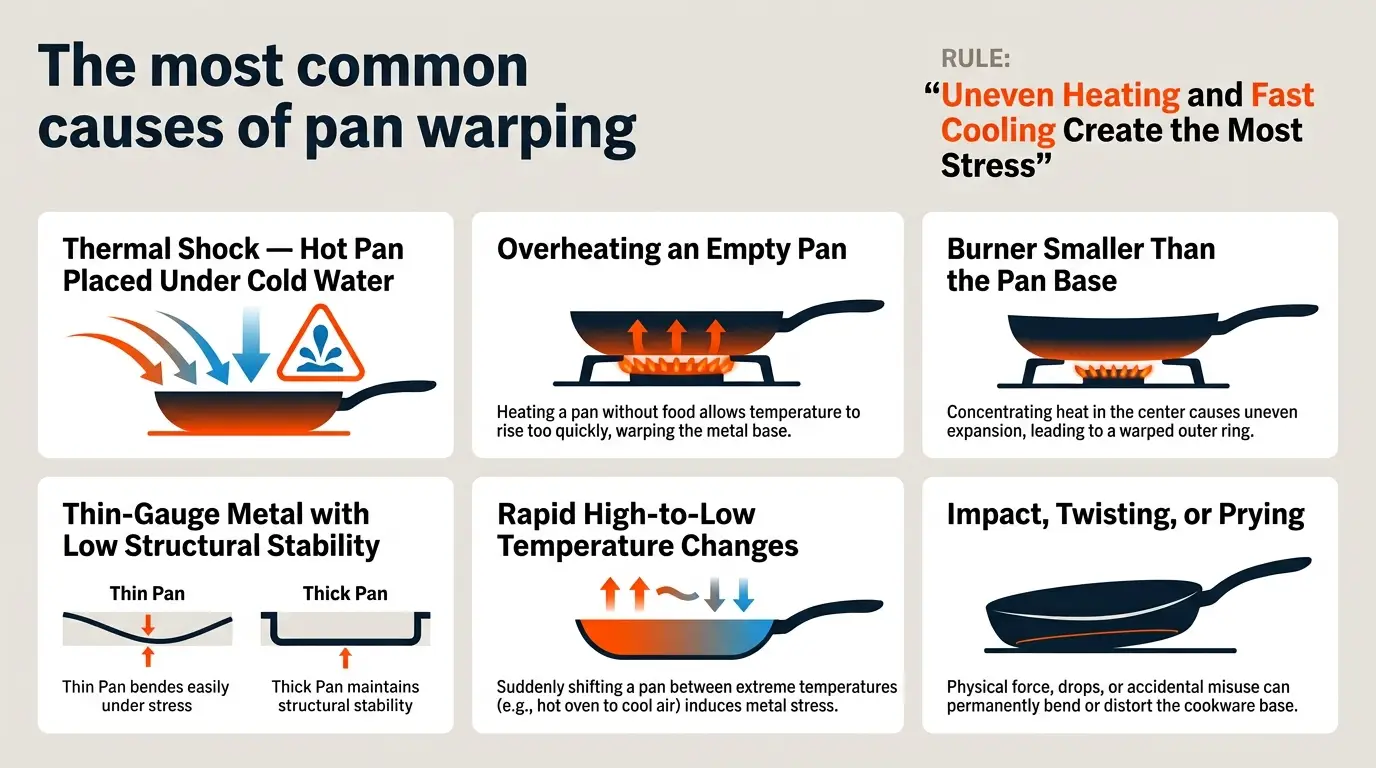
Common Causes of Pan Warping
- Thermal shock. Moving a hot pan into cold water makes metal contract fast.
- Overheating an empty pan. Dry heat spikes stress the base and center.
- Uneven burner size. Flame or coil that is smaller than the pan creates hot spots.
- Thin gauge metal. Cheap pans lack the mass to resist stress.
- Rapid temperature swings. High heat to low heat without a pause bends the base.
- Impact or prying. Slamming on a counter or twisting can set a bend.
Knowing the cause helps you choose How to Fix Pan Warping and how to stop it next time.
How to Fix Pan Warping at Home
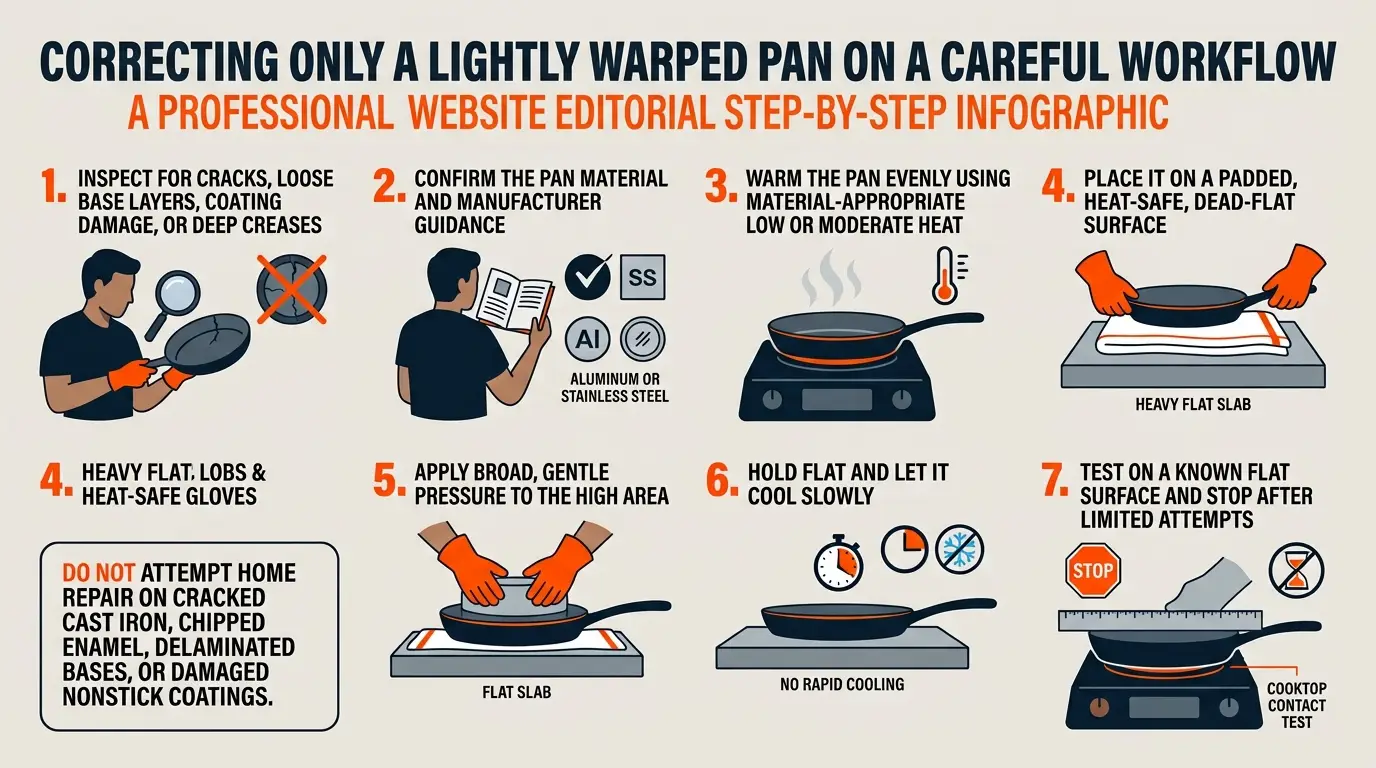
Before you start, check if repair makes sense. Light wobble is worth a try. Deep creases, cracked enamel, or loose bases are not safe to fix at home. If in doubt, contact the maker. Many brands cover warping under warranty.
Safety first
- Wear heat-safe gloves and eye protection.
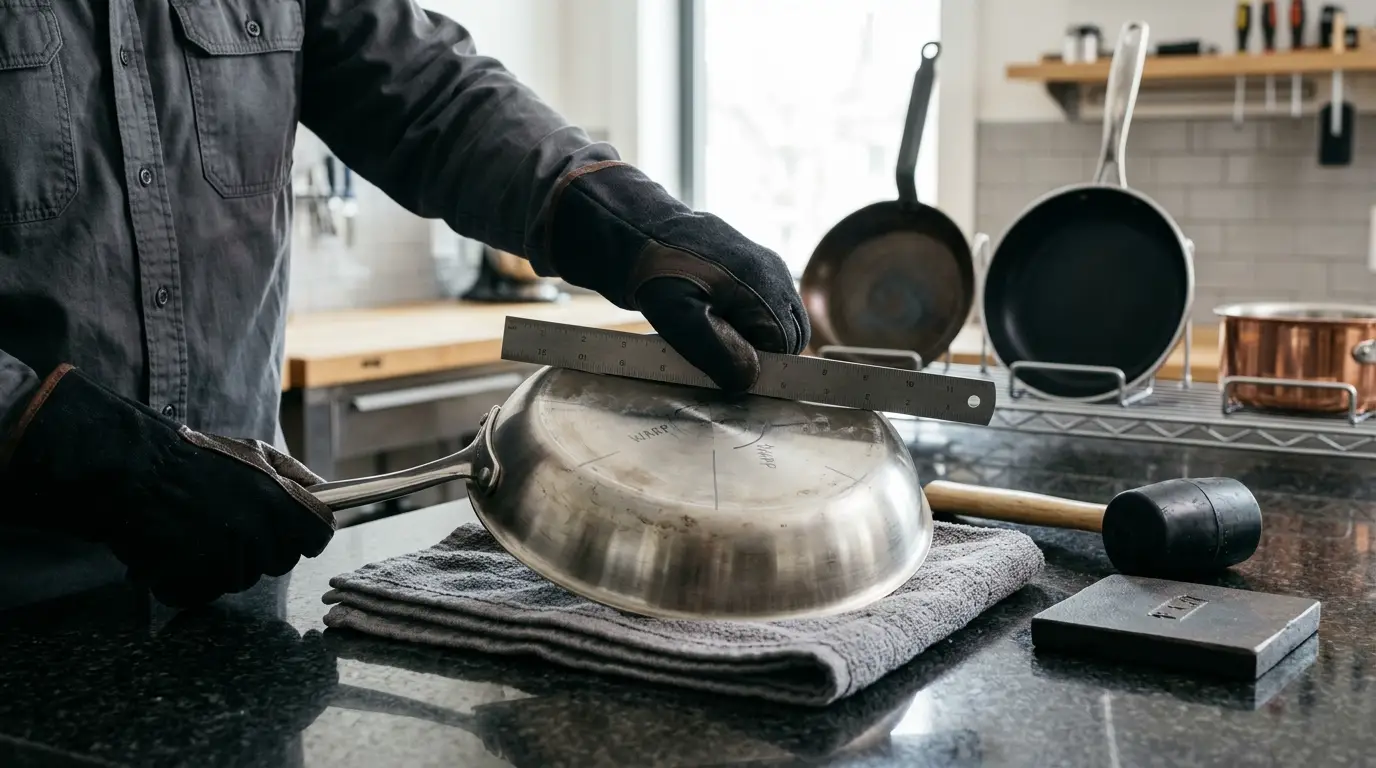
- Work on a solid, heat-safe, dead-flat surface like a thick butcher block or a granite slab covered with a towel.
- Use a rubber mallet or a heavy flat weight, not a metal hammer on bare metal.
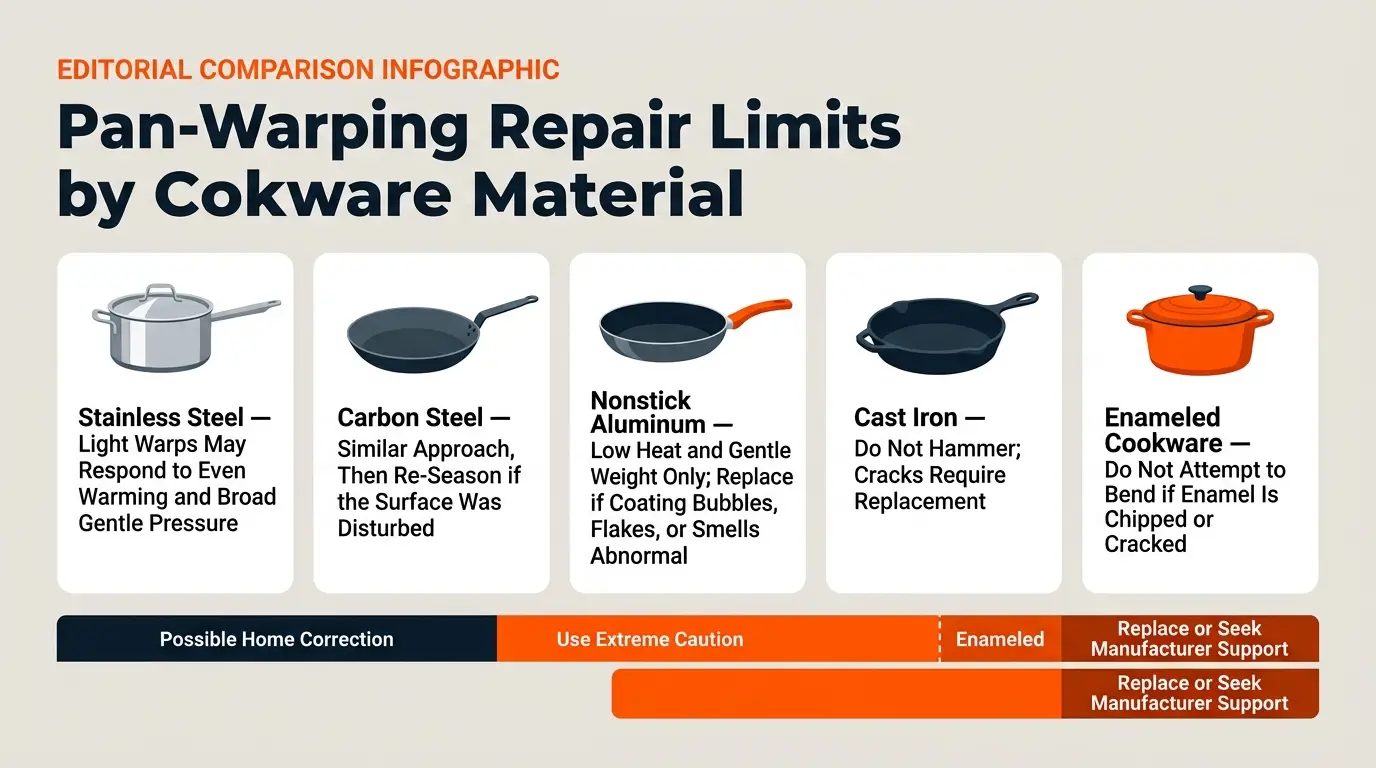
Step-by-step: Stainless steel or carbon steel (no nonstick)
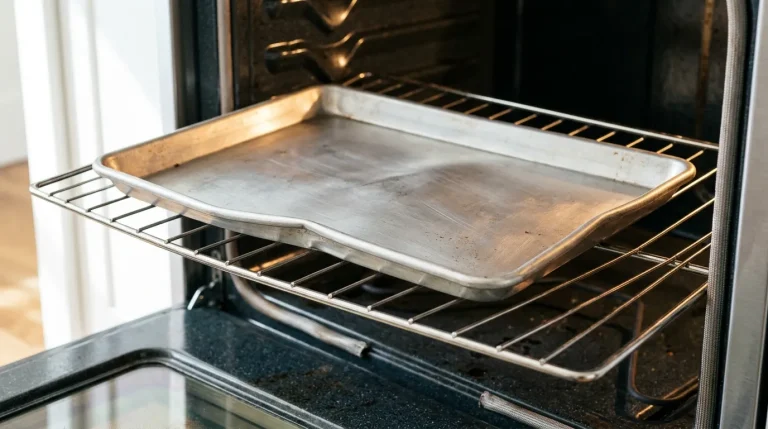
- Warm the pan. Place it empty in a 400–450°F oven for 20–30 minutes so the metal expands evenly.
- Move to a flat surface. Set the hot pan upside down on a towel over a flat slab.
- Press the high spot. If the center domes up, press down on the center. If the center is sunk in, support the rim and press up on the center from below.
- Tap with care. Use a rubber mallet with a towel barrier. Make light, even taps around the high area. Check often.
- Cool slowly. Leave the pan clamped under a flat weight until fully cool. Slow cooling sets the shape.
- Clean and test. Set on a glass cooktop or counter. If it still wobbles, repeat once. Do not chase perfection.
Step-by-step: Nonstick aluminum
- Use lower heat. Nonstick coatings can degrade above about 500°F. Keep oven at 300–350°F for 20 minutes.
- Gentle press only. Avoid mallet taps. Use a flat weight to press while it cools.
- Stop if you see damage. Flaking or fumes mean retire the pan. How to Fix Pan Warping on nonstick is limited and often not worth the risk.
Step-by-step: Cast iron
- Do not hammer cast iron. It can crack. You can improve contact by lapping.
- Lap the base. Tape 80–120 grit sandpaper to thick plate glass. Rub the pan base in slow circles. Switch to 220 grit to finish. Re-season after.
- Accept small wobble. Cast iron still cooks well if the warp is mild.
Tips that boost success
- Mark the high spots with a pencil line before heating.
- Support where you need the metal to move. Think slow bend, not sharp fold.
- Use checks on a known flat surface often. Do not over-correct.
How to Fix Pan Warping works best on light to moderate domes. Hard kinks, multi-ply delamination, or enamel chips call for a replacement.
When Not to Fix and Replace Instead
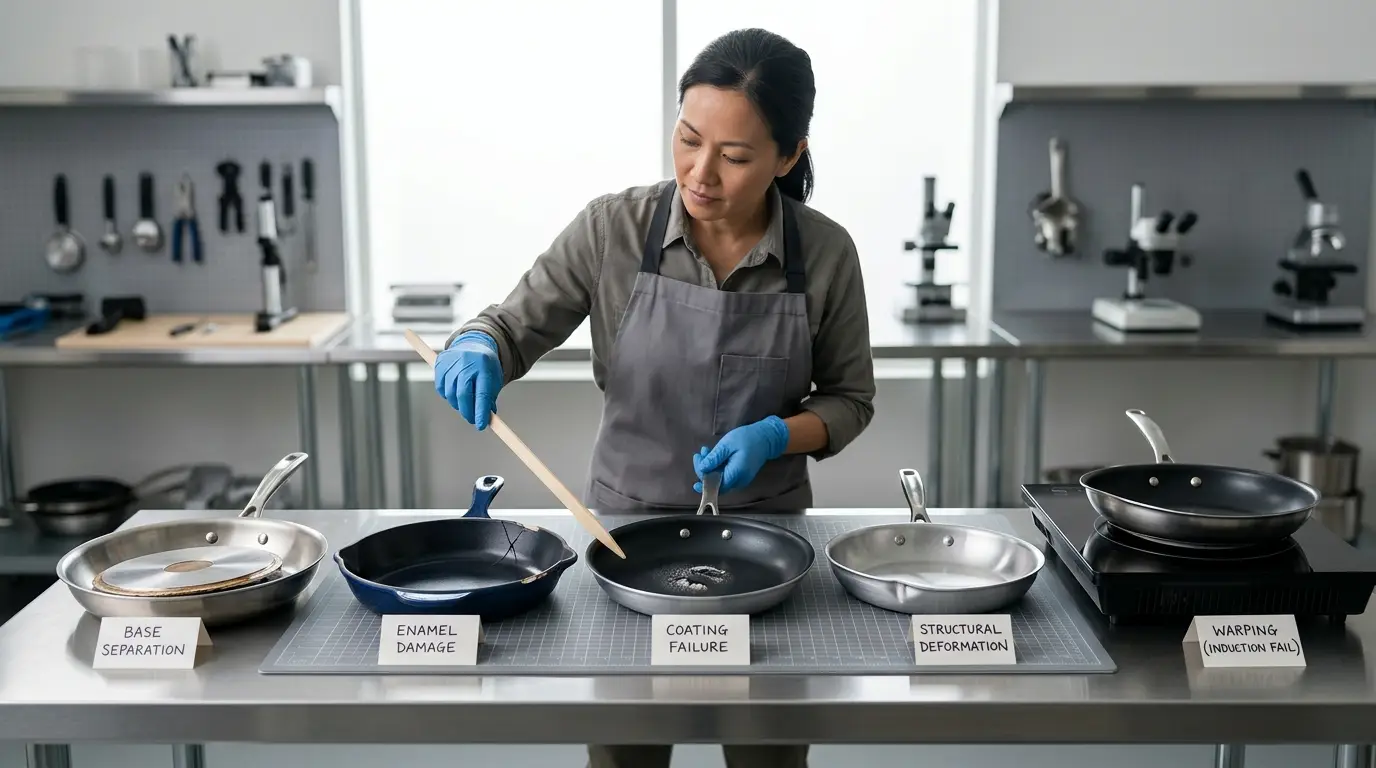
- Deep crease or a popped base disc. This type will not hold shape again.
- Enameled cast iron with chips or cracks. Impact can spread the damage.
- Nonstick with bubbles, flakes, or odd smell. Heat damage can be toxic.
- Severe wobble that kills induction contact. Safety and control suffer.
- Old thin pans that warp again after a fix. Time to upgrade.
If repair is not wise, use the brand warranty. Keep a proof of purchase. Many makers treat warping as a defect when used as directed.
How to Prevent Warping in the Future
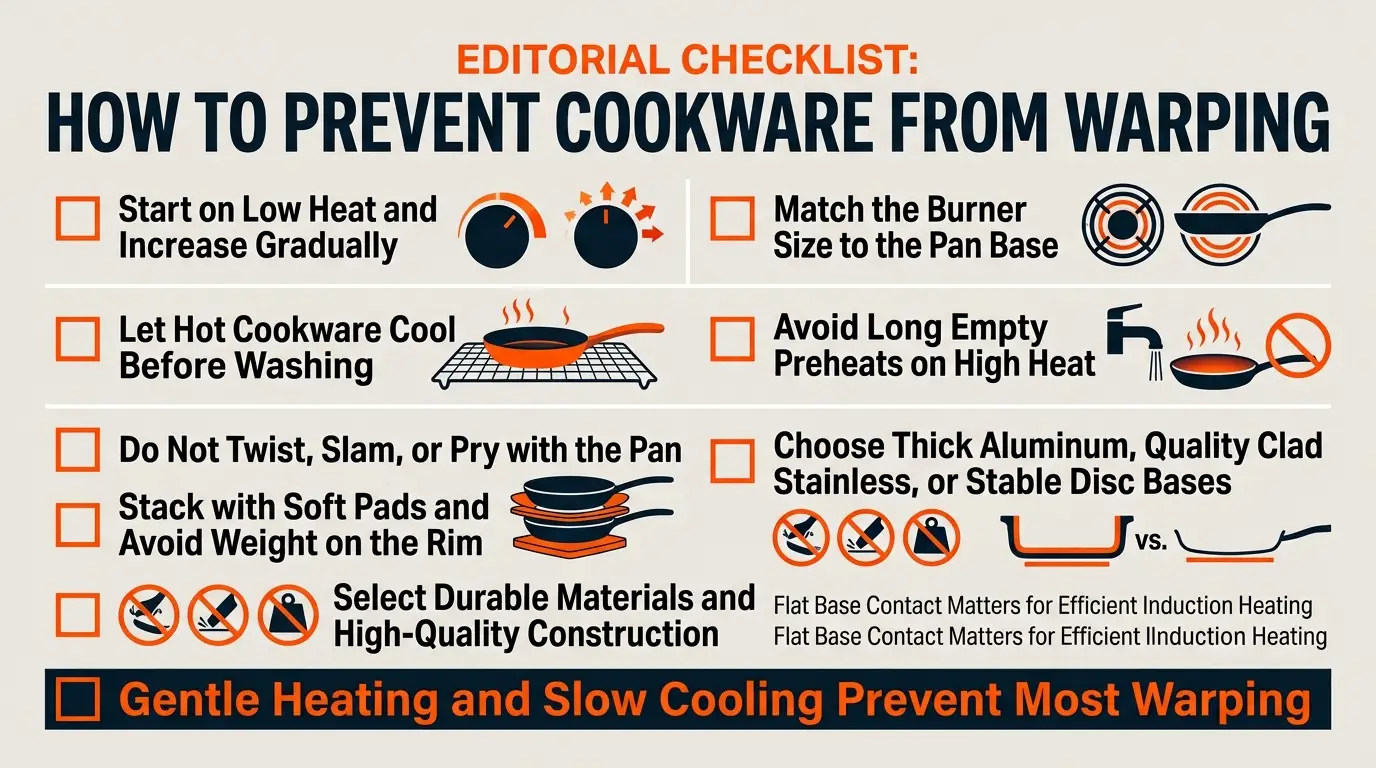
- Heat slow. Start on low, then move up over 2–3 minutes.
- Match burner to pan. Use a burner as wide as the base.
- Do not shock with cold water. Let the pan cool before washing.
- Avoid dry preheats on high. Add a little oil or water when preheating.
- Do not store with weight on the rim. Stack with soft pads.
- Use the right tool. Metal spatulas are fine on steel, but avoid prying.
- Choose better builds. Thick aluminum, tri-ply, or disc-base pans resist warp.
The best way How to Fix Pan Warping is to not need it. Gentle heat habits keep pans flat and food even.
Material Guide: Which Pans Warp Less
- Fully clad stainless steel. Multi-ply with a thick aluminum core spreads heat and holds shape well.
- Disc-bottom stainless. A thick base disc resists warp but avoid super high heat and cold sinks.
- Hard-anodized aluminum. Stiffer than raw aluminum. Look for 3 mm or more base thickness.
- Carbon steel. Can warp if thin. Choose 2.5–3 mm sheets for searing and oven use.
- Cast iron. Very stable once hot, but brittle. Avoid broiler blasts and sink shocks.
If you cook on induction, flatness is key. A warped base can break contact. For a short-term fix, an induction interface disk can help, but it slows heat response.
These facts shape how we decide How to Fix Pan Warping and what to buy next.
Troubleshooting and Real-Life Tips
From my test bench and home stove, here is what works.
- The flip test. Put a dry marble or a drop of water in the center. If it runs to the edge fast, you have a dome.
- Two-pass fix. One long session can overshoot. Two light sessions are safer.
- Weight, not force. A 10–15 pound flat weight spreads pressure better than hard hits.
- Re-season after work. Carbon steel and cast iron need a fresh thin coat of oil and an oven cure.
- Track heat habits. If the same pan warps twice, lower your preheat and avoid sudden cool downs.
How to Fix Pan Warping is part method and part patience. Steady hands beat strong arms every time.
Frequently Asked Questions of How to Fix Pan Warping
Can I fix a warped nonstick pan at home?
Yes, but be gentle. Low oven heat and light pressing can help, but any coating damage means it is time to replace.
Will a warped pan ruin my food?
It can cause oil to pool and create hot and cold spots. You may see uneven browning or burning on one side.
Is it safe to hammer a pan flat?
Use a rubber mallet and a towel on stainless or carbon steel only. Do not hammer cast iron or enameled cookware.
Why did my new pan warp on the first use?
Likely thermal shock or a burner that was too small and very hot. Start with medium heat and size the burner to the base.
How to Fix Pan Warping on an induction cooktop?
You must restore flat contact. A light press-and-cool method may help, but a badly warped pan needs replacement for stable induction use.
Can I use cold water to cool a hot pan?
Avoid it. Let the pan cool on the stove or on a rack. Cold water on hot metal is a common cause of warping.
Does thicker cookware prevent warping?
Yes. More mass spreads heat and resists stress. Look for heavy-gauge aluminum or quality clad stainless.
How to Fix Pan Warping on cast iron?
Do not hammer it. Lap the base on sandpaper over plate glass to level high spots, then re-season.
Will warranty cover a warped pan?
Many brands do if you used it as directed. Check the manual and contact support with photos and proof of purchase.
Is a slight wobble a big problem?
Not always. If the pan still heats fairly even and sits well with a bit of oil, you can keep using it.
Conclusion
You can often bring a warped pan back to service with heat, gentle pressure, and slow cooling. Know your metal, work in small steps, and stop if you see damage. The best fix is smart heat habits that prevent stress in the first place.
Try the simple method today on a lightly warped pan. If it fails, use the warranty or upgrade to a thicker, stable base. Want more kitchen repair tips? Subscribe, share your results, or ask a question in the comments.