Pick cast iron by size, weight, finish, build quality, and stove and cooking style.
If you want a pan that sears like a steakhouse and lasts a lifetime, this guide is for you. I cook on cast iron every day at home and in test kitchens. I will show you how to choose cast iron cookware with clear steps, real tips, and no fluff. You will learn what matters, what does not, and how to buy with confidence
A Quick Buying Checklist: how to choose cast iron cookware
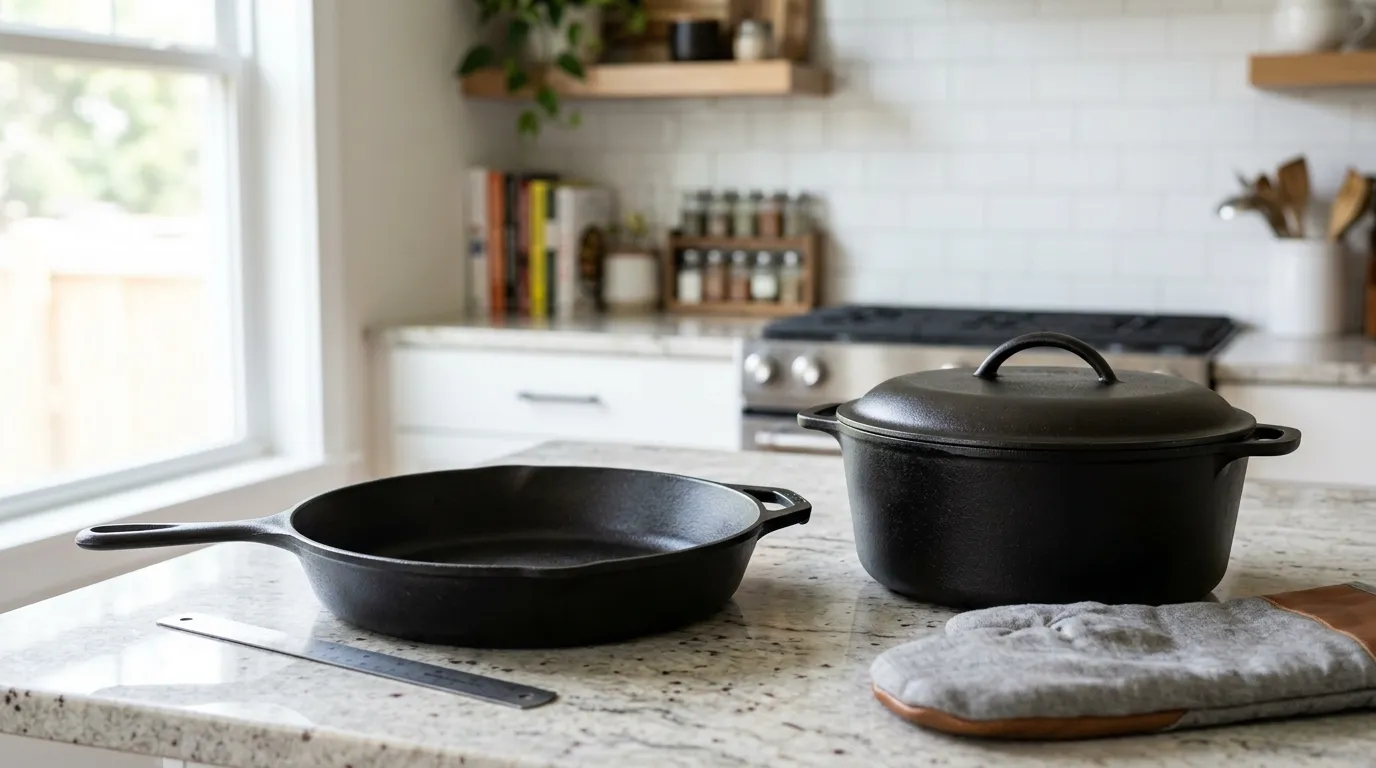
Start simple. Look for the core signs of a great piece. Then match it to your stove and food habits.
- Size fit Choose a 10 or 12 inch skillet, or a 5 to 7 quart Dutch oven for family meals.
- Weight and balance Heavy is good for heat. You should still lift and pour with control.
- Flat base Check with a ruler. The pan should sit flat and not wobble.
- Smooth enough surface It can be rough or smooth. It should feel even with no sharp sand.
- Good seasoning Black to dark brown. No sticky patches or flaking.
- Solid handle design Long handle plus helper handle. You should get a firm grip with an oven mitt.
- Lid fit Dutch oven lids should seal well. Light steam should escape, not pour out.
- Finish choice Bare for high heat sear. Enamel for easy cleanup and soups.
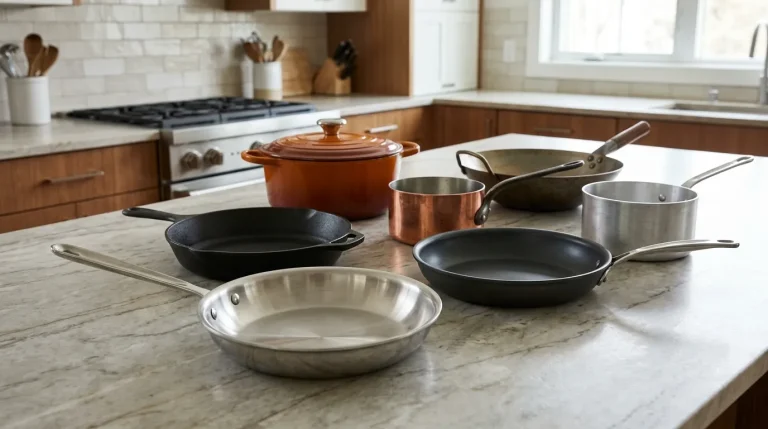
- Stove match Works on gas, electric, and induction. For glass tops, pick medium weight and flat.
- Brand support Good warranty and clear care guides. Avoid unknown sellers.
This list is your map for how to choose cast iron cookware. Use it in the store or online.
Cast Iron Types and Finishes
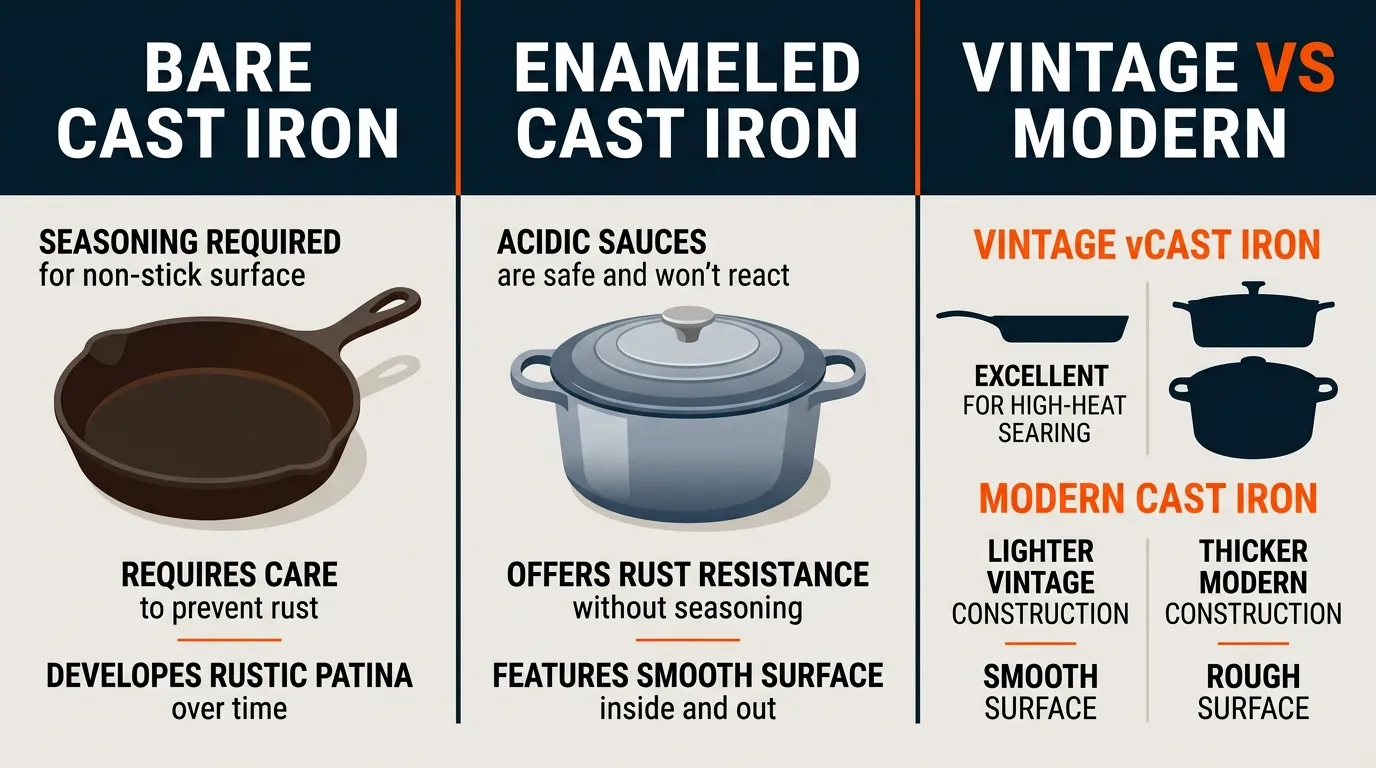
Choosing the right type gives you the best daily use. There are two main paths.
Bare cast iron
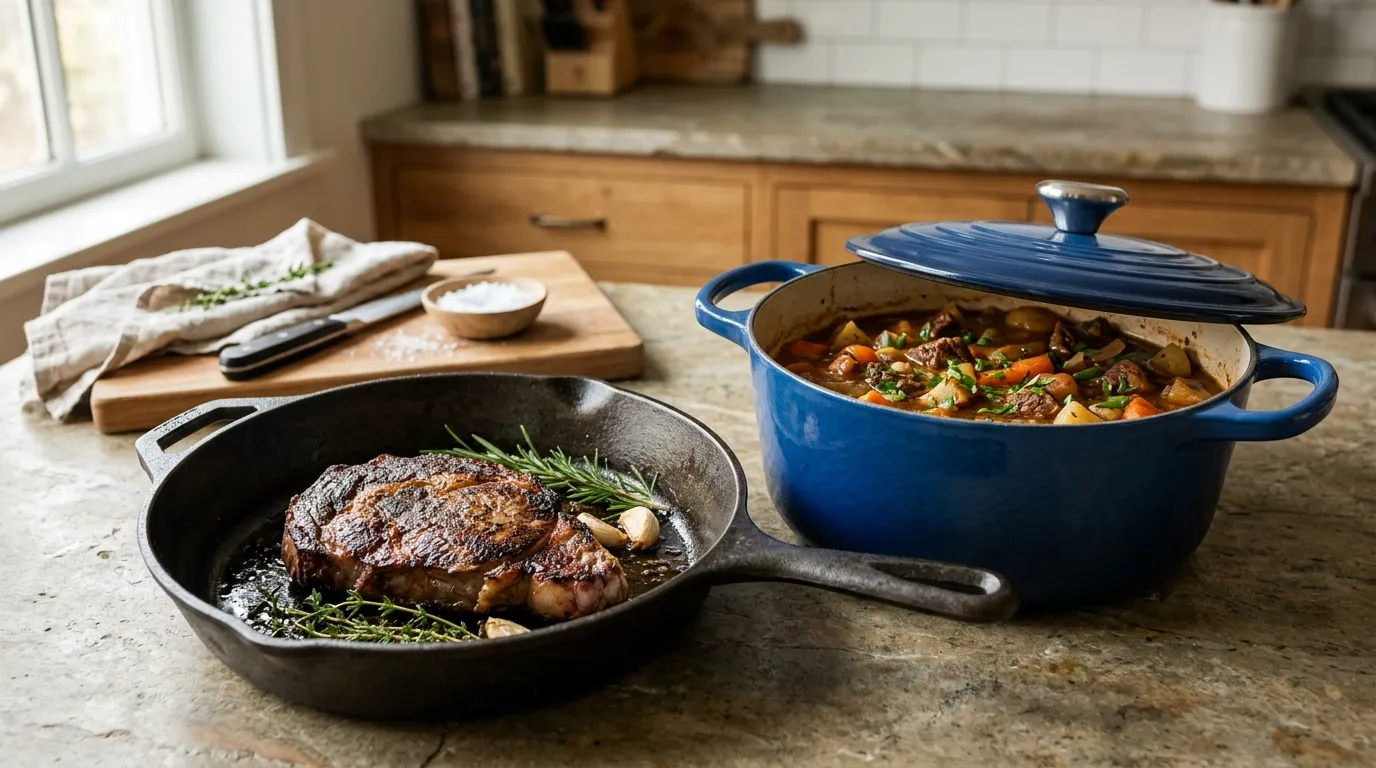
Bare iron is classic. It takes seasoning well. It gives top sear and oven range. It can react with acid sauces. That is normal and small.
Enameled cast iron
Enameled cast iron has a glass coat. It will not rust and cleans fast. It is great for stews and tomato sauce. Do not use metal tools that can chip the enamel.
Vintage vs modern
Vintage pans can be lighter and smoother. Many modern pans are thicker and hold heat longer. I cook on both. Smooth is nice for eggs, but a well seasoned rough pan also releases well.
Knowing these paths is key in how to choose cast iron cookware. Pick what fits how you cook day to day.
Size, Shape, Weight, and Your Stove
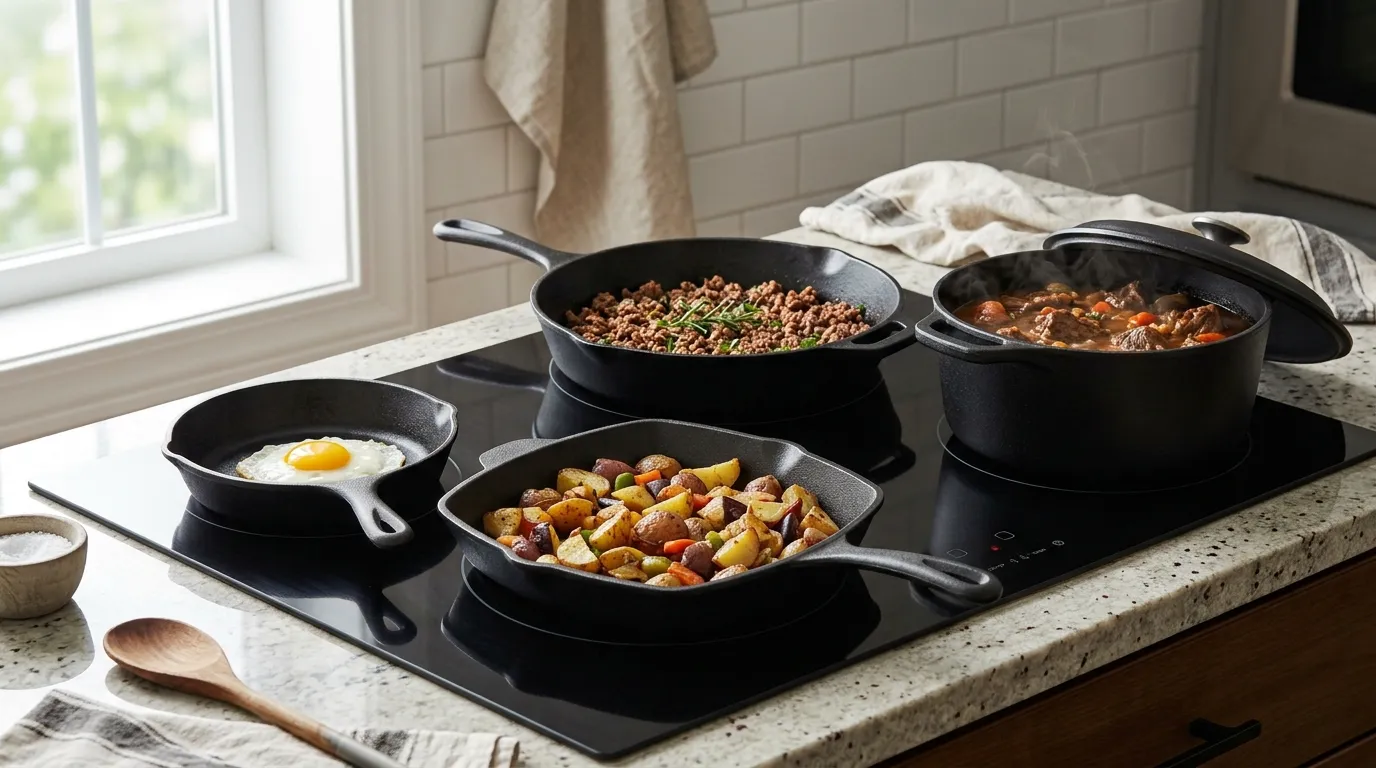
Choose size by how many people you feed and what you cook most.
- Skillets 8 inch for one egg or a steak. 10 inch for two people. 12 inch for family meals.
- Dutch ovens 4.5 to 5.5 quarts for couples. 6.5 to 7.5 quarts for families and bread.
- Shape Round for general use. Square for grill marks. Deep sides for frying.
Match weight to your grip and stove. A 12 inch pan can weigh 7 to 9 pounds. Test a safe pour with one hand and a helper handle. On glass tops, use flat, medium weight pans to avoid scratches. For induction, any cast iron works. A flat base gives the best heat.
These small checks make how to choose cast iron cookware feel simple and smart.
Seasoning, Nonstick Feel, and Surface Texture
Seasoning is a thin oil layer baked hard on the iron. It creates a natural nonstick over time. Pre seasoned pans save time. Bare pans let you control the build from day one.
Surface texture varies. Some brands are smooth. Others are sand cast with a light grit. Smooth can release eggs faster. Gritty can hold more oil and season fast. I test release with a fried egg on day three. Both types work if you keep oil light and heat steady.
If you care about easy eggs on day one, pick smooth. If you care about strong sear and lower cost, pick rough. Either way, how to choose cast iron cookware should include a plan to season well.
Build Quality and Design Details
Look beyond the logo. The small details add up.
- Wall and base thickness Even walls and a thick base spread heat well. Thin hot spots burn food.
- Flatness Spin test It should not spin on a flat counter. Slight concave is okay for oil pooling.
- Handles A long, open handle stays cooler. A wide helper handle makes lifts safe with mitts.
- Pour spouts Skillets with two spouts help left or right hand pours.
- Lids Dutch oven lids should sit flush. Self basting dimples drip steam back on food.
- Enamel check The coat should be even. No pinholes, fish eyes, or sharp rims.
- Knobs On enameled lids, make sure the knob is oven safe to at least 500°F.
Strong build and smart design are the heart of how to choose cast iron cookware that lasts.
Price, Brands, Warranty, and Where to Buy
Price ranges by type and brand. Bare cast iron skillets often cost less. Enameled Dutch ovens cost more due to the finish.
- Budget Bare skillets from trusted makers are a great start.
- Mid tier Lighter, smoother pans cost more. Many include polished interiors.
- Premium Enameled Dutch ovens from top brands offer tight lids and strong enamel.
Buy from a known retailer. Check return policies and warranty terms. Read care guides before you buy. Vintage can be great. Look for flat bases, no cracks, and clean rims. Avoid deep pitting near the cooking area. When you ask how to choose cast iron cookware on a budget, these checks keep you safe.
First Use Tests and Care Basics
Run a fast test at home. It takes minutes and builds trust.
- Heat test Warm the pan for 5 minutes on medium. The heat should feel even across the base.
- Water drop test A few drops should dance and bead. That shows it is hot enough.
- Egg test Add a thin oil film. Cook an egg. Note release and adjust heat next time.
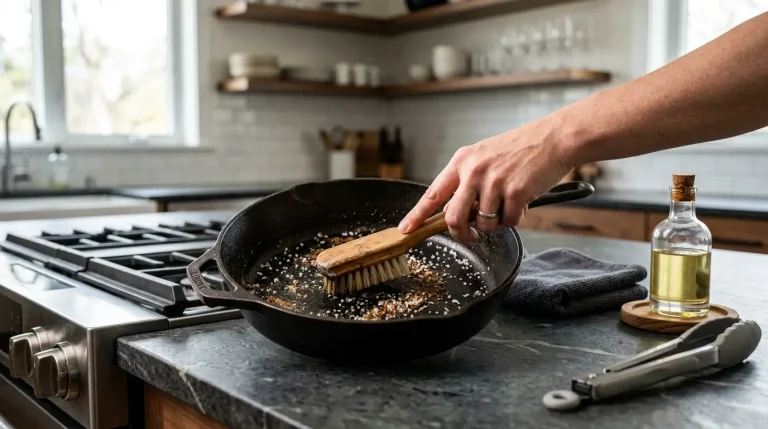
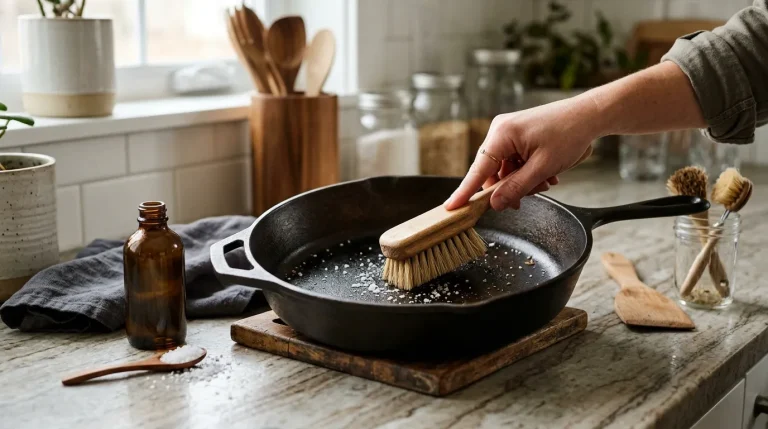
Care is simple. Wash with hot water and a soft brush. A little soap is fine. Dry well. Wipe with a drop of oil while warm. For enamel, soak and use a soft scrub. Avoid thermal shock. This start to finish plan supports how to choose cast iron cookware and keep it great.
Safety, Nutrition, and Common Myths
Cast iron can add small iron to food. Acidic foods pull more iron. This can help some people. If you have iron overload, talk to your doctor.
Modern enamel is made to be food safe. Avoid chipped spots on the rim that expose iron. Soap will not harm seasoning if you rinse and dry. High heat is fine, but you do not need max flame. Preheat slow for best control. On glass tops, lift the pan. Do not slide. Rust can be fixed. Scrub, dry, and re season. When you learn how to choose cast iron cookware, you also learn these simple care truths.
Frequently Asked Questions of how to choose cast iron cookware
What size skillet should I buy first?
A 10 inch skillet is the best first pick for most homes. It fits two steaks or four eggs and heats fast.
Is enameled or bare cast iron better for beginners?
Enameled is easier to clean and needs no seasoning. Bare is cheaper, sears hotter, and teaches core skills.
Will cast iron work on an induction burner?
Yes, cast iron is induction ready by nature. Ensure the base is flat for even heat and less noise.
How heavy should a good cast iron pan be?
Heavier pans store more heat and sear better. Pick the heaviest you can lift and pour with control.
Can I use soap on seasoned cast iron?
Yes, a little soap will not strip a good seasoning. Rinse, dry, and wipe a thin oil coat after.
How do I know if a vintage pan is worth buying?
Check for a flat base, no cracks, and smooth cooking surface. Light rust is fine but deep pitting near the center is not.
Why does food stick to my new pan?
Your heat may be too low or too high, or oil too thick. Preheat longer, use a thin oil film, and let food release on its own.
Conclusion
You now know how to choose cast iron cookware with skill and calm. Match type and size to your meals. Check weight, flatness, finish, and lid fit. Buy from trusted sellers and run a simple home test.
Start with one pan and cook three times this week. Sear a steak, bake cornbread, and simmer a sauce. You will learn fast and build seasoning with each meal. Ready to dive deeper? Subscribe for more gear guides, care tips, and tested recipes.