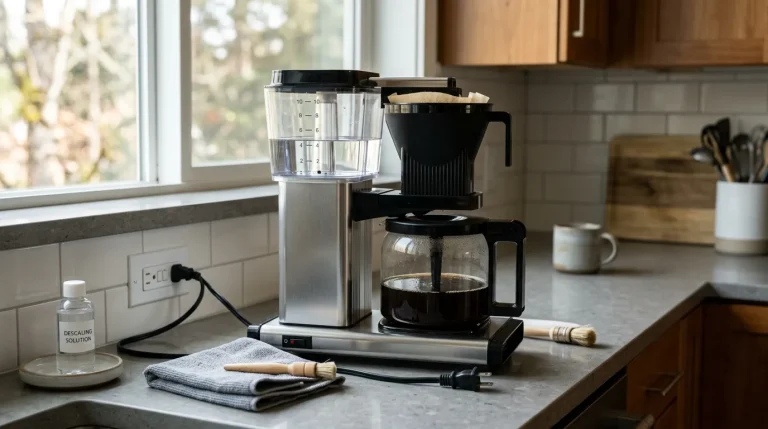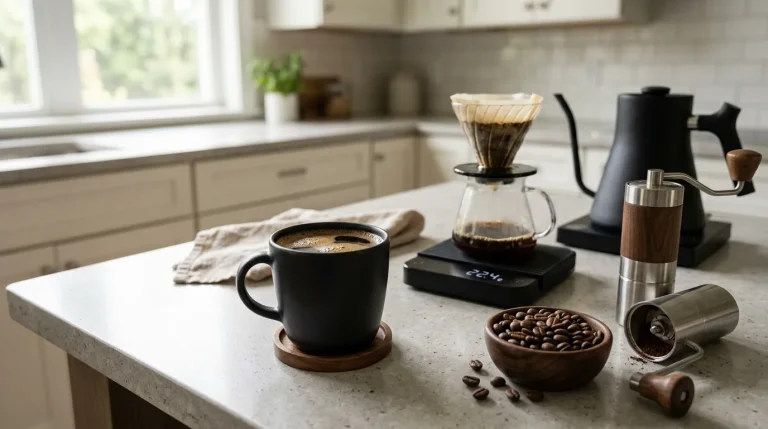
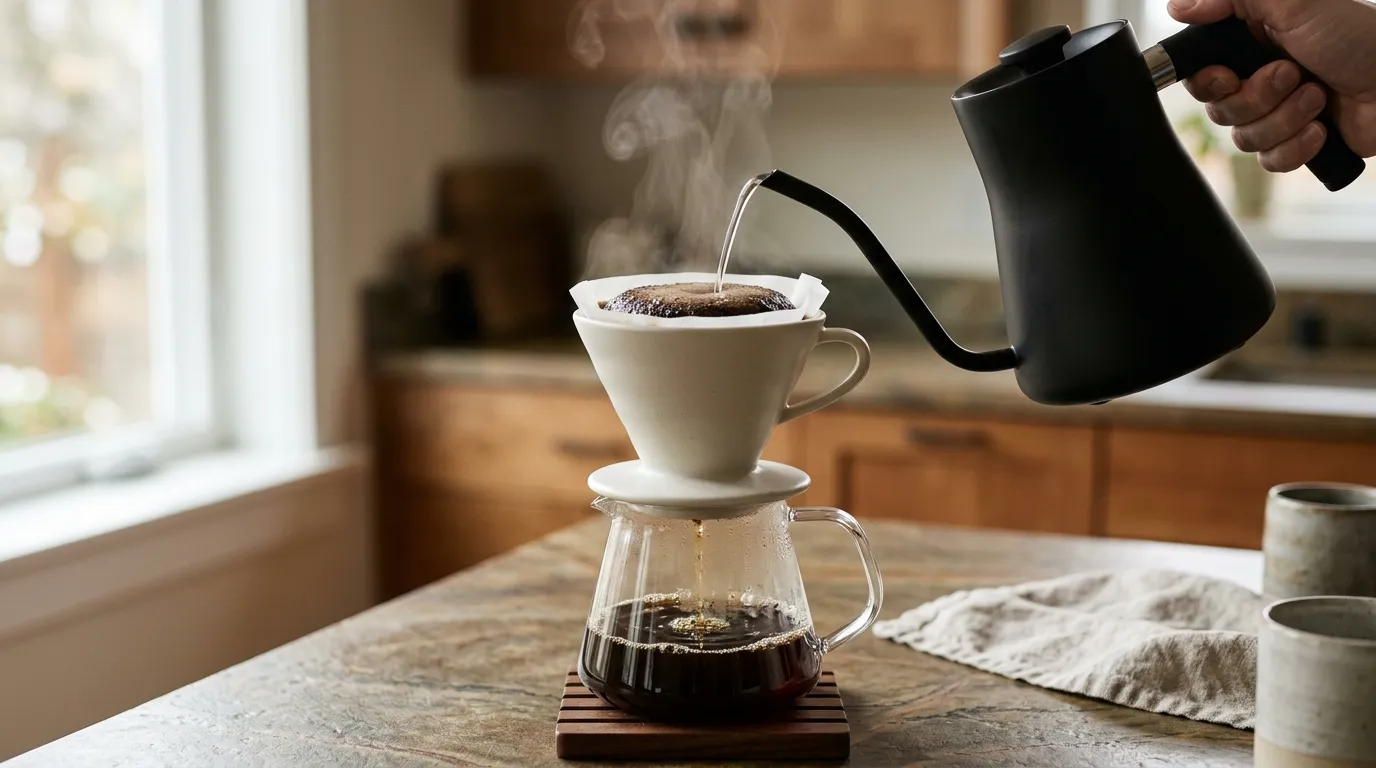
195–205°F (90–96°C) yields balanced extraction, sweet clarity, and steady flavor.
If you want café-level coffee at home, dialing in the Best Water Temperature for Coffee Brewing is the fastest win. I have brewed thousands of cups in cafés and at home, and temperature is the lever that most people overlook. This guide breaks down what to use, why it works, and how to adapt it to your gear, beans, and taste.
Why water temperature matters
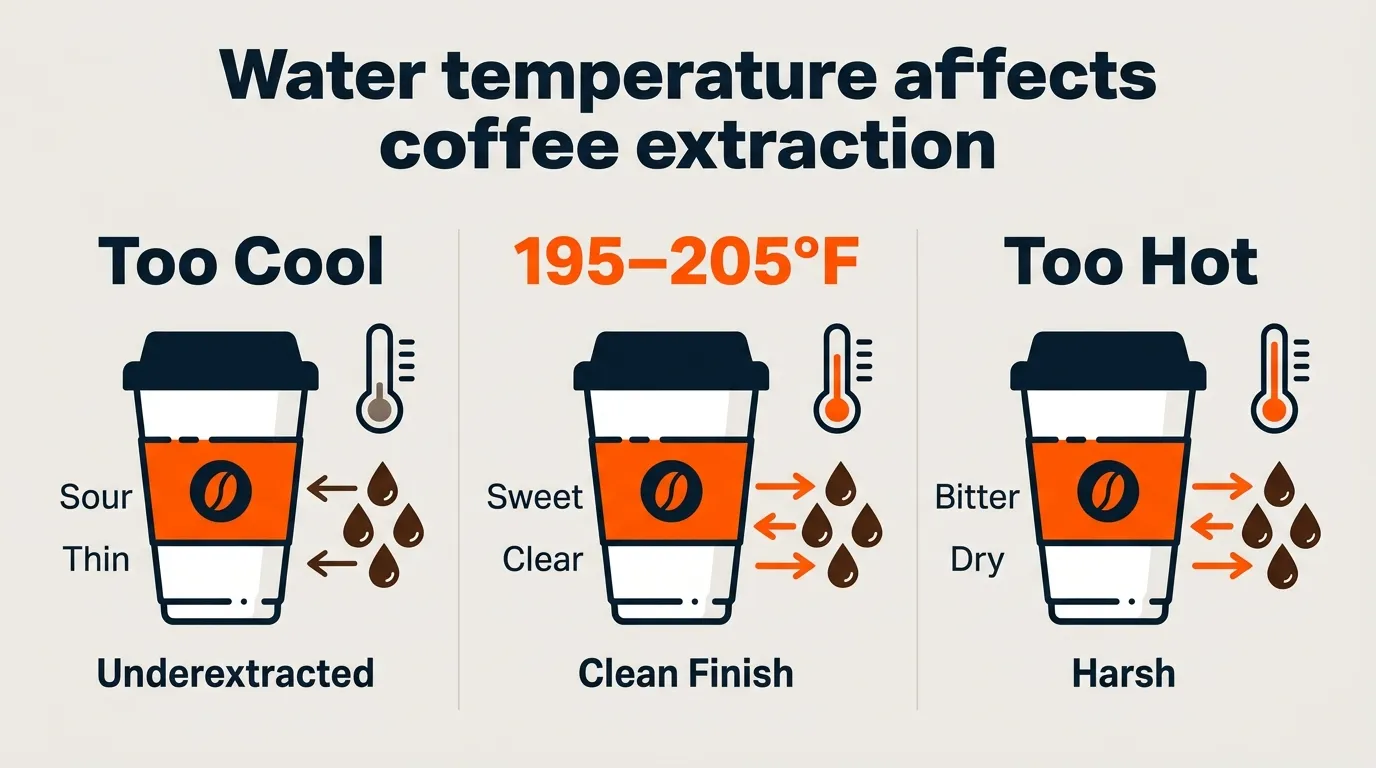
Water temperature controls how fast and how much flavor dissolves from coffee. Too cool and you get flat, sour cups. Too hot and you pull bitter notes and astringency. The Best Water Temperature for Coffee Brewing keeps extraction steady and sweet.
What happens in the cup:
- Cooler water underextracts. Expect sourness, thin body, and salty edges.
- Hotter water overextracts. Expect harsh bite, dryness, and a hollow aftertaste.
- The right range unlocks balance. You taste sweetness, clear acidity, and clean finish.
Pro tip from bar shifts: when a good coffee tastes “off,” temperature is often the fix, not the recipe.
The science behind extraction and temperature
Coffee flavors are water-soluble compounds. Acids dissolve first, then sugars and aromatics, then bitters and tannins. Temperature speeds this chain. Hotter water drives faster extraction but raises the risk of pulling harsh compounds. The Best Water Temperature for Coffee Brewing hits the sweet spot for sugars and aromatics.
Industry standards back this up. The Specialty Coffee Association recommends 195–205°F (90–96°C) for most brews. Within that band, you fine-tune by grind, roast, and brew method.
Recommended temperatures by brew method
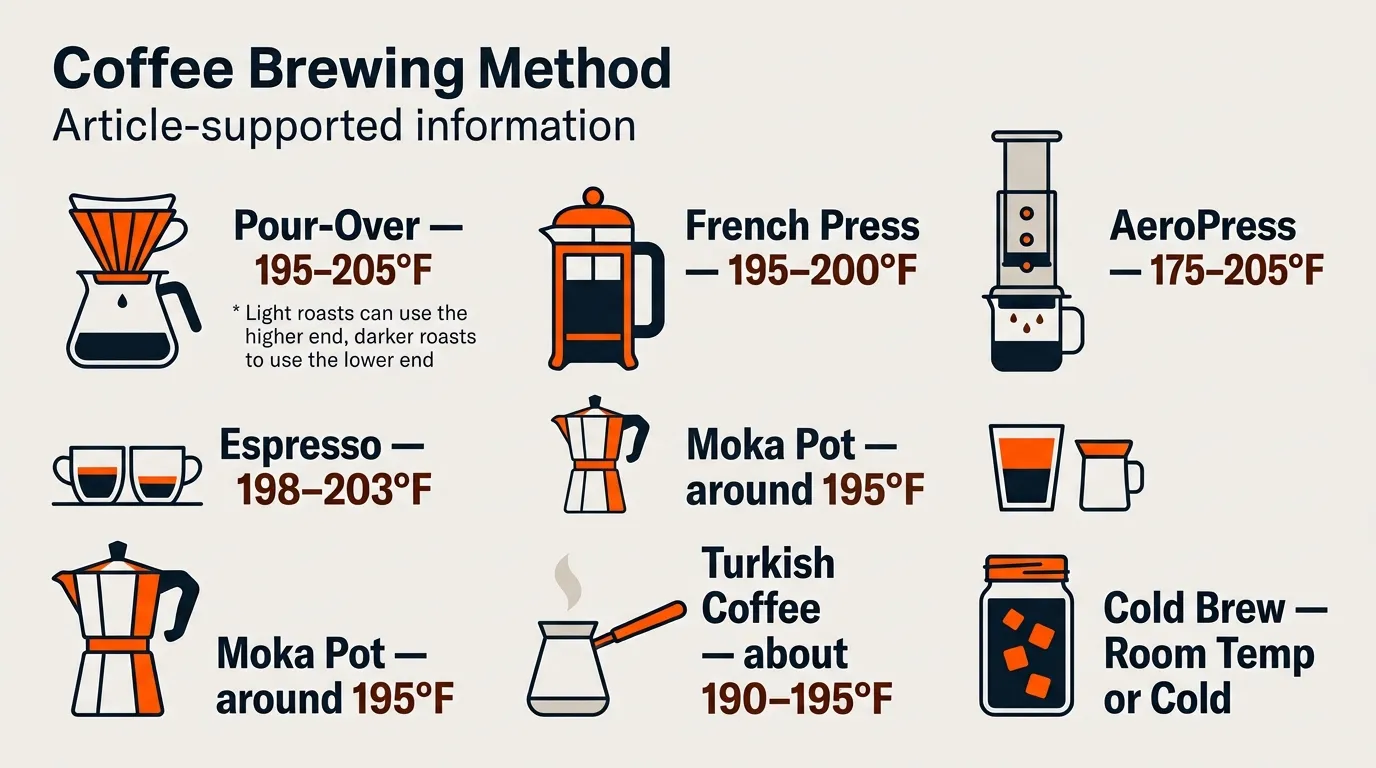
Start with this map, then adjust to taste. The Best Water Temperature for Coffee Brewing depends on contact time, grind size, and brew style.
Pour-over (V60, Kalita, Origami)
- Use 200–205°F for light roasts to open up sweetness.
- Use 195–200°F for medium to dark roasts to limit bitterness.
- If flow is slow, drop a few degrees. If flow is fast, raise a few.
French press
- Use 195–200°F. Longer steeps do not need extra heat.
- Stir gently and skim the crust for a cleaner cup.
- If it tastes silty or bitter, drop 2–3°F and keep the same time.
AeroPress
- Use 175–205°F based on recipe.
- Lower temps with longer time give sweet, tea-like cups.
- Higher temps with short time give bold, syrupy cups.
Espresso
- Machine temp usually 198–203°F at the group head.
- Light roasts like 200–203°F. Dark roasts prefer 198–200°F.
- Small 1–2°F nudges make big taste changes.
Moka pot
- Start with preheated water around 195°F to reduce harshness.
- Keep heat low so it percolates gently, not sputters.
Turkish coffee
- Use about 190–195°F at the start, then gentle heating.
- Avoid a hard boil to limit bitterness.
Cold brew
- Room temp or cold water extracts slowly over many hours.
- To mimic hot-brew clarity, flash-heat: bloom grounds with 205°F water for 30 seconds, then add cold water and steep.
How to measure and control water temperature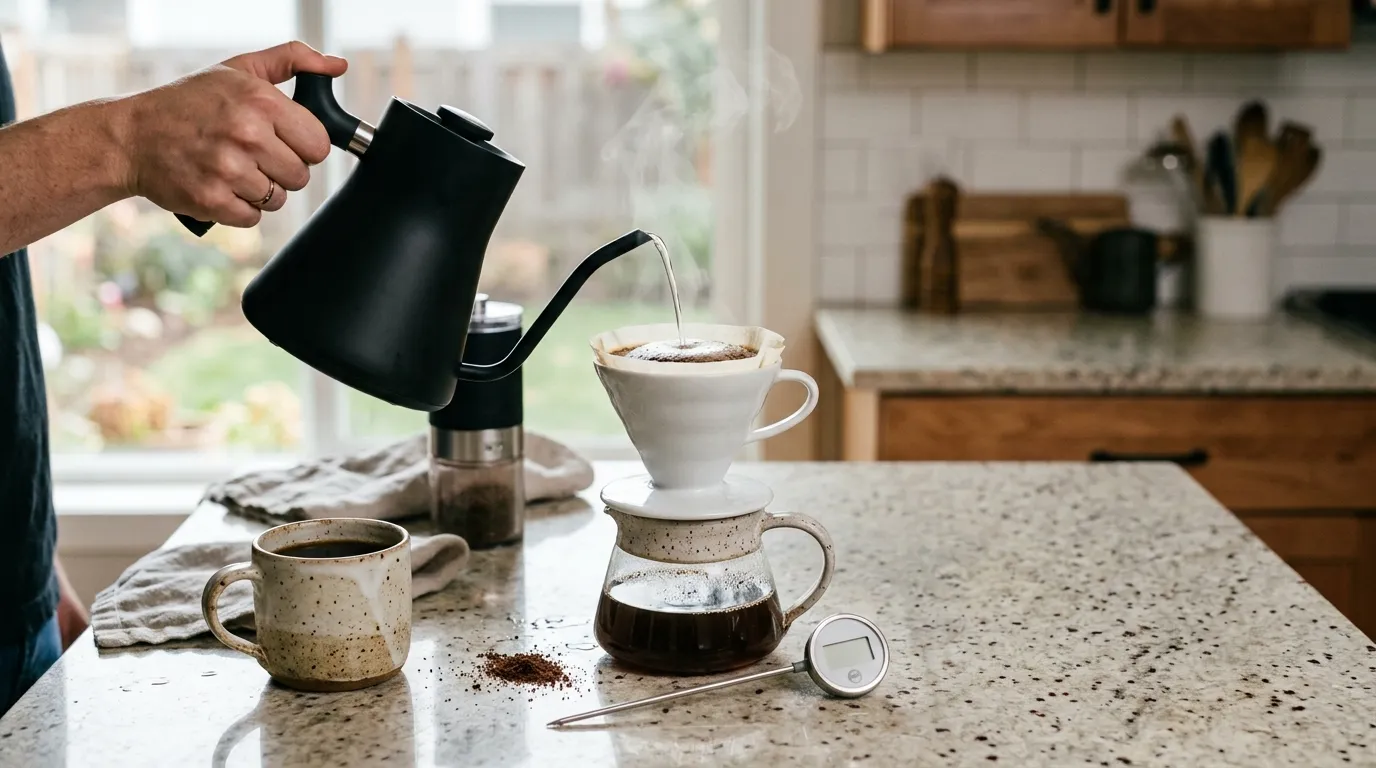
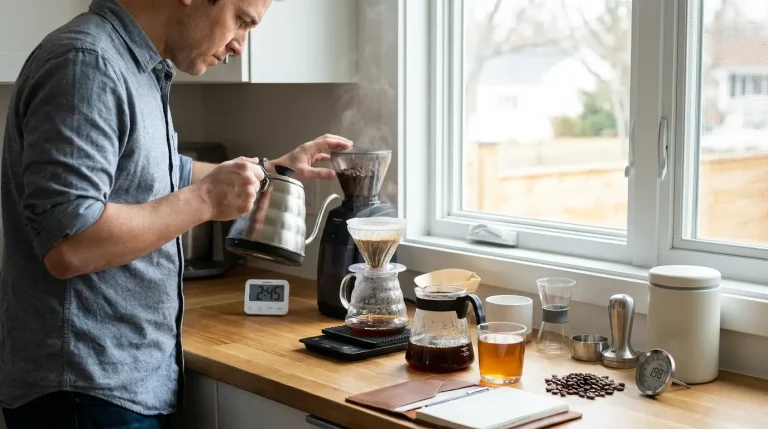
You do not need fancy gear to hit the Best Water Temperature for Coffee Brewing. A plan and simple tools work great.
Tools that help:
- Electric kettle with temperature control or PID. Set and forget.
- Instant-read thermometer. Cheap and reliable.
- Gooseneck kettle. Better pour control, more even extraction.
Simple methods without a thermometer:
- Off-boil timing: Bring water to a boil. Remove from heat. Wait 30–60 seconds for most kettles to reach about 200–205°F.
- Preheat everything: Rinse your brewer and mug. This keeps the brew temp steady.
- Use smaller pours: With pour-over, short pulses reduce heat loss.
Quick timing guide:
- 30 seconds off boil: about 205°F for light roasts.
- 60–90 seconds off boil: about 195–200°F for medium to dark roasts.
Variables that change your target

Aim for the Best Water Temperature for Coffee Brewing, then adapt for your context.
Key variables:
- Roast level: Light roasts like 200–205°F. Dark roasts prefer 195–200°F.
- Grind size: Finer grind extracts faster. Use slightly cooler water. Coarser grind extracts slower. Use slightly hotter water.
- Altitude: Water boils at a lower temp as you go higher. Expect about 2°F lower boiling point per 1,000 ft. Adjust by grinding finer or extending time if you cannot reach 200°F.
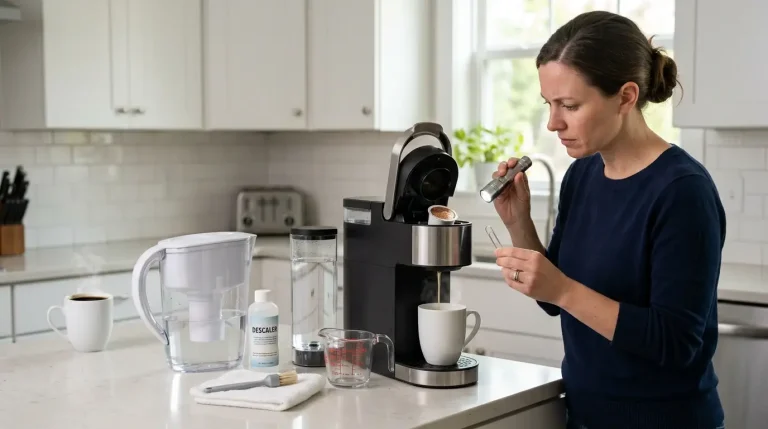
- Water chemistry: Softer water extracts faster. Harder water extracts slower. If your coffee tastes dull, check minerals. Aim for moderate hardness and alkalinity.
- Brew ratio and time: Stronger ratios or longer times need cooler water to avoid bitterness. Lighter ratios or shorter times may need hotter water.
Troubleshooting by taste

Use your tongue like a compass. Map the taste, then adjust temperature.
If the cup is:
- Sour, grassy, thin: Raise water temp 2–4°F and grind a bit finer.
- Bitter, dry, ashy: Lower water temp 2–4°F and grind a bit coarser.
- Flat, muted, no aroma: Raise temp slightly and agitate less.
- Hollow sweet spot but rough finish: Keep temp, reduce contact time by 10–15 seconds.
Step-by-step fix:
- Change one variable at a time.
- Taste side by side. Take notes on temp, time, grind.
- Lock the win. Repeat it three times before changing beans.
This is how I dial in the Best Water Temperature for Coffee Brewing fast, even with new gear.
My hands-on lessons from the bar and home

A few real moments shaped my approach to the Best Water Temperature for Coffee Brewing.
What worked:
- Light Ethiopian pour-over tasted sour at 198°F. At 203°F it turned sweet with peach and florals.
- Dark Sumatran at 205°F was harsh. At 196°F it became chocolatey and smooth.
Mistakes I now avoid:
- Brewing pour-overs into cold mugs. It drops temp fast and flattens sweetness.
- Ignoring altitude while traveling. At 6,000 ft, my kettle boiled at about 201°F. I needed a finer grind and a longer bloom.
Daily tips:
- Set your kettle once per bean and note it on the bag.
- Preheat your gear. Aim for stable, not just hot.
- Revisit your temp when the bag ages. Older beans often like 1–2°F hotter.
Frequently Asked Questions of Best Water Temperature for Coffee Brewing
What is the exact Best Water Temperature for Coffee Brewing?
There is no single number for every coffee. Use 195–205°F, then fine-tune by roast, grind, and brew method.
Does boiling water ruin coffee?
Boiling water can overextract and add bitterness. Let water sit off-boil for 30–60 seconds before brewing.
How do I brew at high altitude?
Your boil point is lower, so extraction slows. Grind a touch finer, extend contact time, or use a temperature-controlled kettle.
What temperature is best for espresso at home?
Most machines do well between 198–203°F. Light roasts like higher temps, while dark roasts taste better a bit cooler.
Can I make great coffee without a thermometer?
Yes. Use off-boil timing and preheat your gear. Taste and adjust 2–4°F at a time until it clicks.
Is colder water better for dark roasts?
Often yes. Try 195–200°F to reduce harshness and keep the chocolate notes.
How does water quality affect temperature choice?
Soft water extracts faster, so you may lower temp a bit. Hard water extracts slower, so you may raise temp slightly or grind finer.
Conclusion
You now have the keys to better coffee: start in the 195–205°F range, then nudge the temperature to match your roast, grind, and method. Keep notes, change one thing at a time, and lock in your favorite cup. Set your kettle, brew today’s coffee with care, and taste the difference in minutes. Want more brew guides and gear tips? Subscribe, share your results, or ask a question in the comments.