Clean often, check parts, and follow manuals to keep appliances efficient.
If you want a kitchen that runs smooth, start with small, regular habits. I’ve helped hundreds of homes build easy care routines. In this guide, I show How to Maintain Kitchen Appliances with simple steps, pro tips, and real examples you can use today. You will learn what to clean, when to inspect, and how to stop big repairs before they start
Why maintenance matters
Clean machines work better. They last longer. They also use less power and water. A few minutes each week can save you real money over time.
How to Maintain Kitchen Appliances is not hard. It is a set of light, steady habits. You check seals. You wipe coils. You replace filters on time. You watch for odd sounds or smells.
I have seen the same pattern in many homes. Skipped care leads to leaks, heat loss, and high bills. Manuals from makers also say the same thing. Follow the care plan and you cut risk and cost.
Weekly and monthly cleaning basics
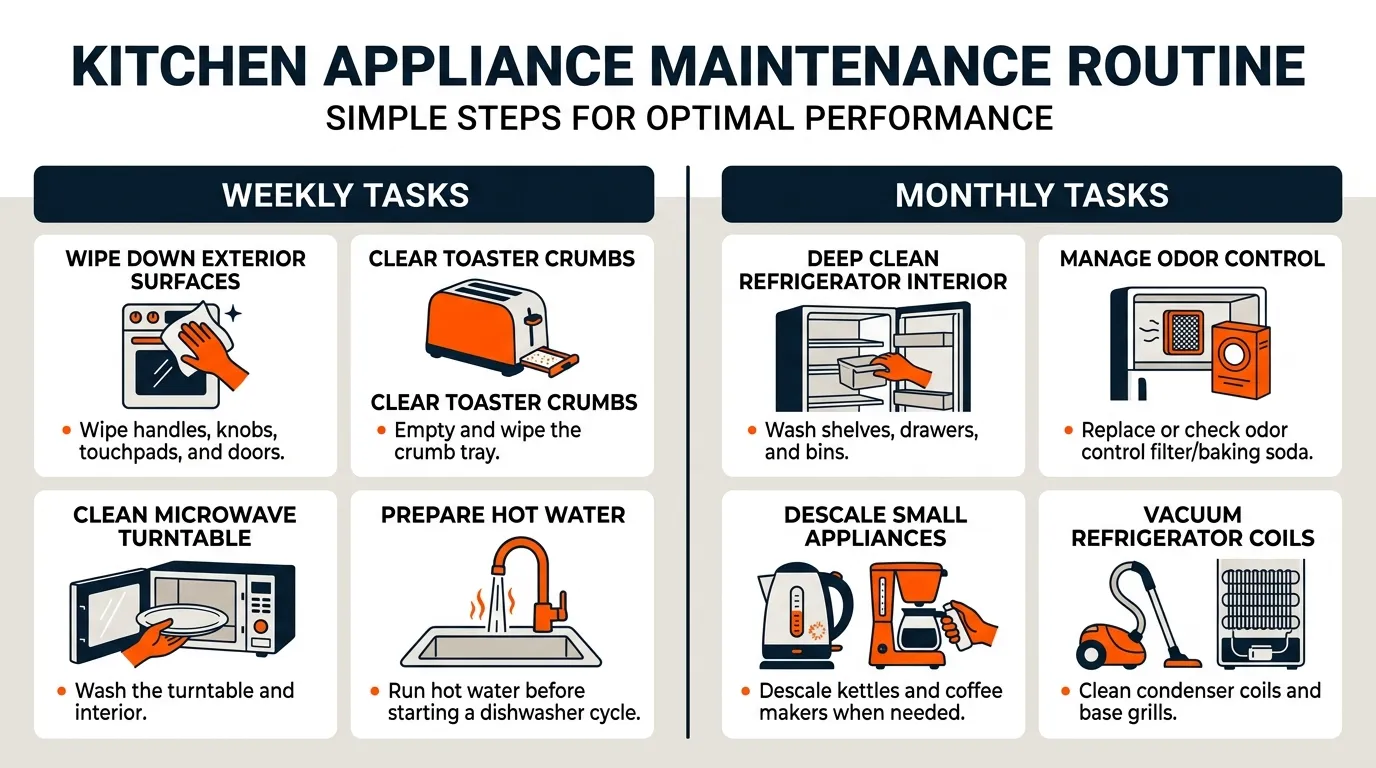
Use a simple rhythm so nothing slips. Keep supplies in one caddy for fast cleanup.
Weekly tasks:
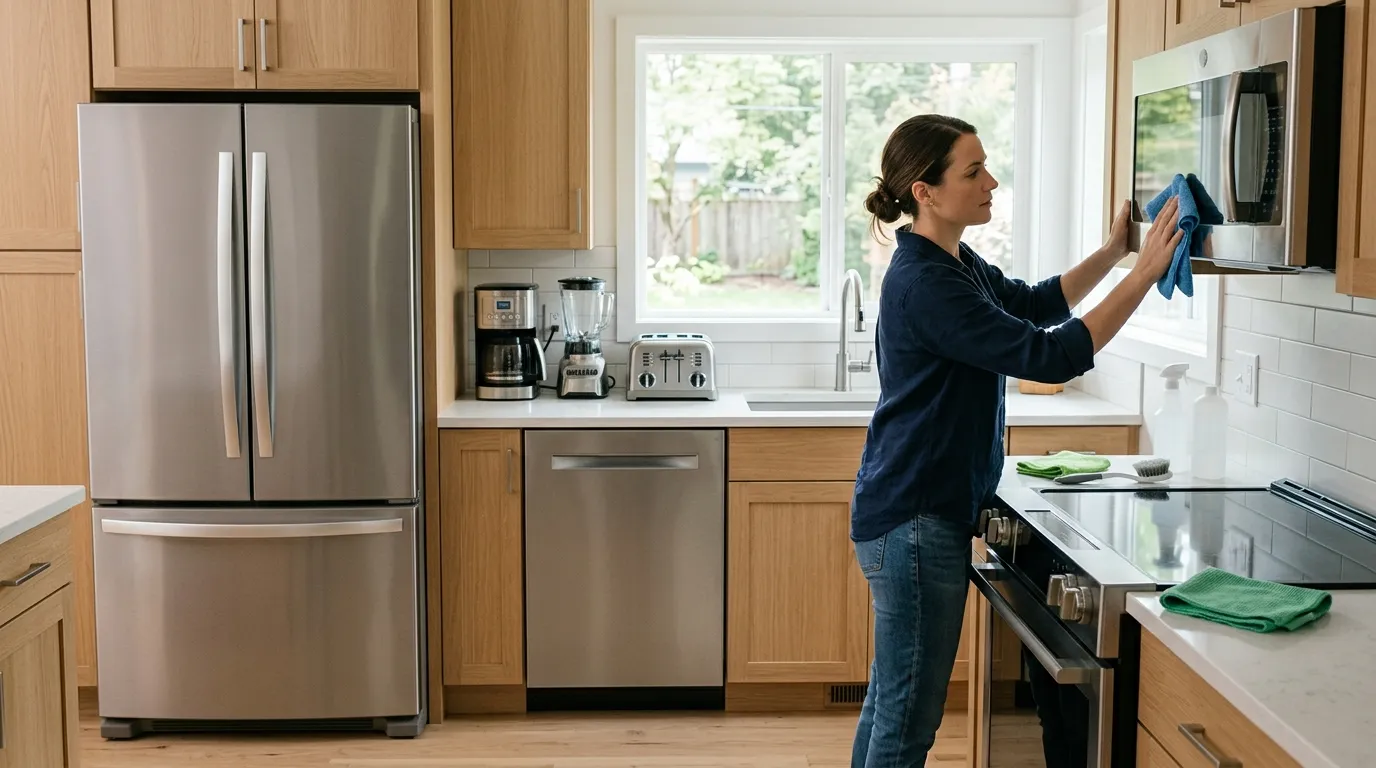
- Wipe handles, knobs, touchpads, and doors with warm soapy water.
- Clear crumbs from toaster trays and microwave turntables.
- Run hot water before starting the dishwasher to boost wash power.
- Empty and clean the dryer style filter on combo units if you have one.
Monthly tasks:
- Deep clean fridge shelves and bins. Check dates. Toss old food.
- Deodorize the fridge with baking soda. Replace every three months.
- Descale kettles and coffee makers if your water is hard.
- Vacuum fridge coils and base grills to improve airflow.
I show How to Maintain Kitchen Appliances this way to make it easy. Short, steady work beats rare deep cleans every time.
Appliance-by-appliance care guide
Refrigerator and freezer
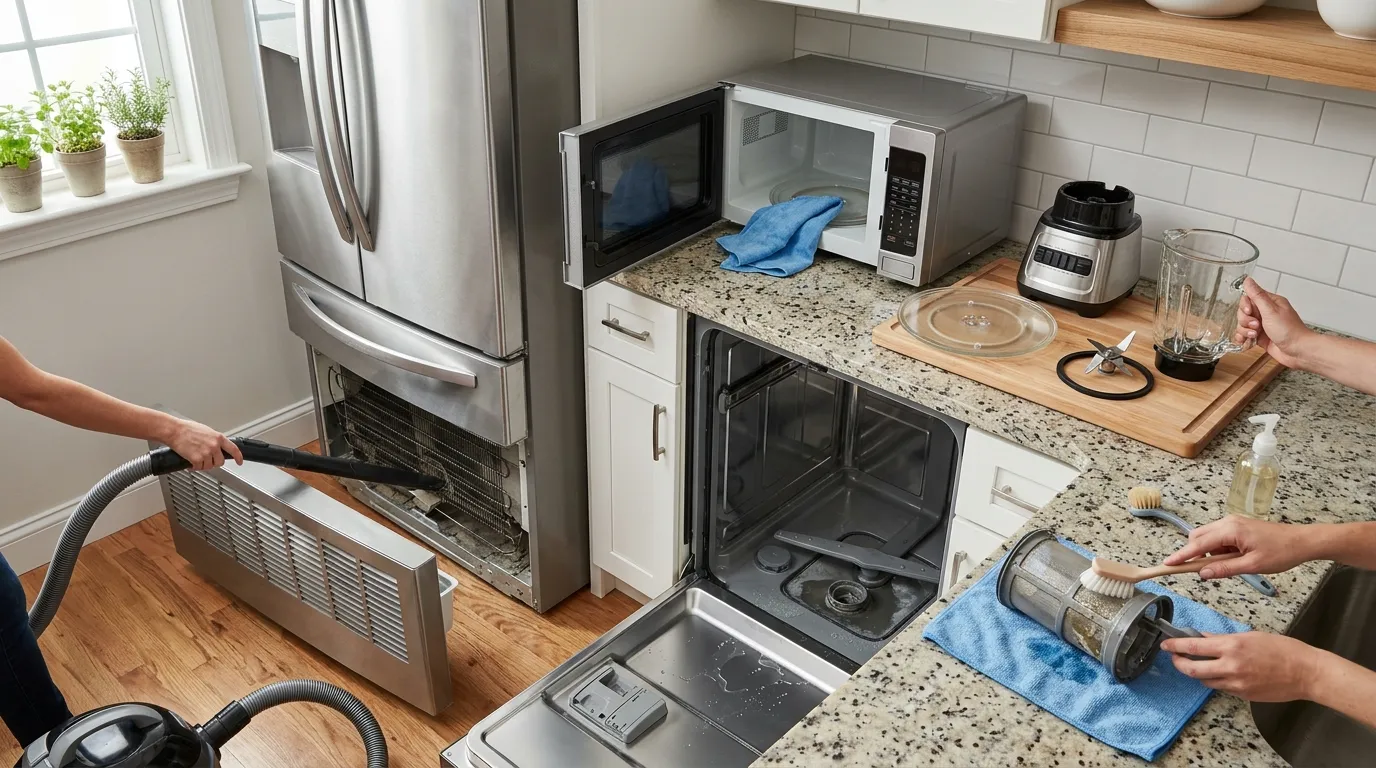
- Vacuum coils on the back or bottom. Unplug first for safety.
- Wipe door gaskets with mild soap. Dry well to prevent cracks.
- Keep vents clear inside. Do not block airflow with containers.
- Set temps right. Fridge at 37–40°F. Freezer at 0°F.
Pro tip: If doors do not seal, use the paper test. Close a paper strip in the door. If it slides out easy, the gasket may need care or a swap.
Range and oven
- Use a drip pan or sheet to catch spills. Clean after use.
- Run self-clean only when needed. Wipe spills fast to avoid smoke.
- Check door seal so heat stays in. Replace if torn or loose.
- Calibrate the oven. Use an oven thermometer and adjust as needed.
Personal note: I once chased high gas bills in a rental. A bent oven seal was the cause. A cheap new seal fixed it in minutes.
Cooktop
- Lift grates and wipe under them. Soak grates if greasy.
- Clean burner caps and ports with a soft brush. Keep ports clear.
- For glass tops, use a scraper made for glass. Avoid harsh pads.
Range hood
- Wash metal filters in hot soapy water. Many are dishwasher safe.
- Wipe the fan cover. Keep the duct clear for strong suction.
Dishwasher
- Rinse the filter monthly. It lifts out from the tub floor.
- Wipe the spray arms. Use a toothpick to clear small holes.
- Run a hot cycle with a washer cleaner to remove film and odors.
- Check the door seal and the float for free movement.
Microwave
- Steam clean with a bowl of water and lemon for five minutes.
- Wipe the door mesh and gasket. Keep vents clear.
- Do not run empty. It can harm the magnetron.
Coffee maker and kettle
- Descale with a mix of vinegar and water or a descaler.
- Rinse with two full cycles of clean water after descaling.
- Replace water filters as the maker suggests.
Blender and food processor
- Rinse right after use. Dried food is hard to remove.
- Hand wash blades. Dry at once to prevent rust.
- Check the base seal. Replace if it leaks.
Toaster and toaster oven
- Pull and empty the crumb tray each week.
- Wipe the inside with a damp cloth when cool.
Garbage disposal
- Freshen with ice cubes and lemon peels. Run cold water.
- Brush the splash guard underside. This is a common odor spot.
Stand mixer
- Wipe the head and base. Clean the beater hub.
- Grease from time to time as the manual states.
How to Maintain Kitchen Appliances well means you follow the maker guide. The manual tells you what parts need care and how often.
Water, power, and ventilation: the big three
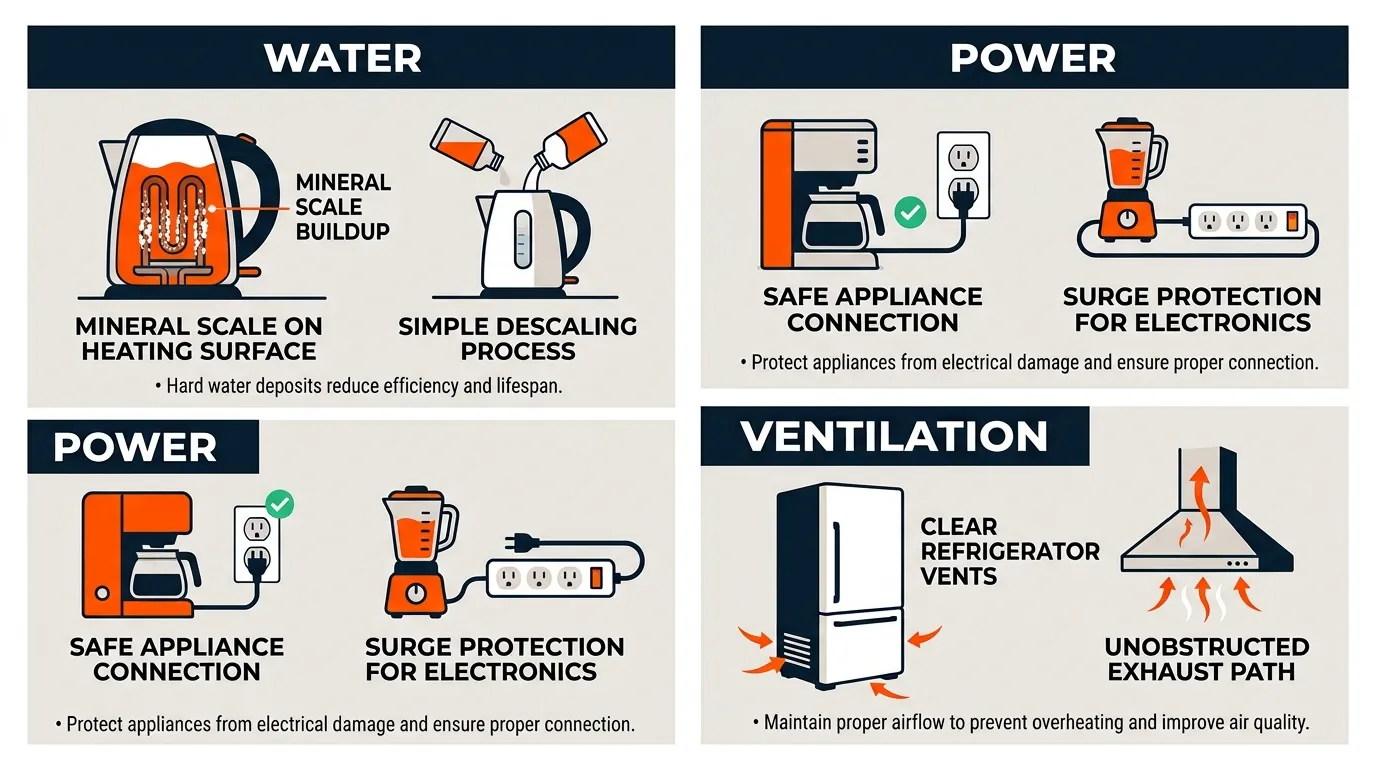
Hard water leaves scale on heaters, valves, and spray arms. It lowers flow and raises energy use. If you see chalky film, use a softener or a filter. Descale on a set cycle.
Power spikes can harm boards in smart fridges and ovens. Use a surge protector on small units. Ask a pro about whole home surge safety for large ones.
Good airflow is key. Fridges need space at the back and top. Hoods need clear ducts. Dry, cool air helps every motor, coil, and board last longer.
These points often decide How to Maintain Kitchen Appliances the right way. When water, power, and air are right, your machines thrive.
Troubleshooting and when to call a pro
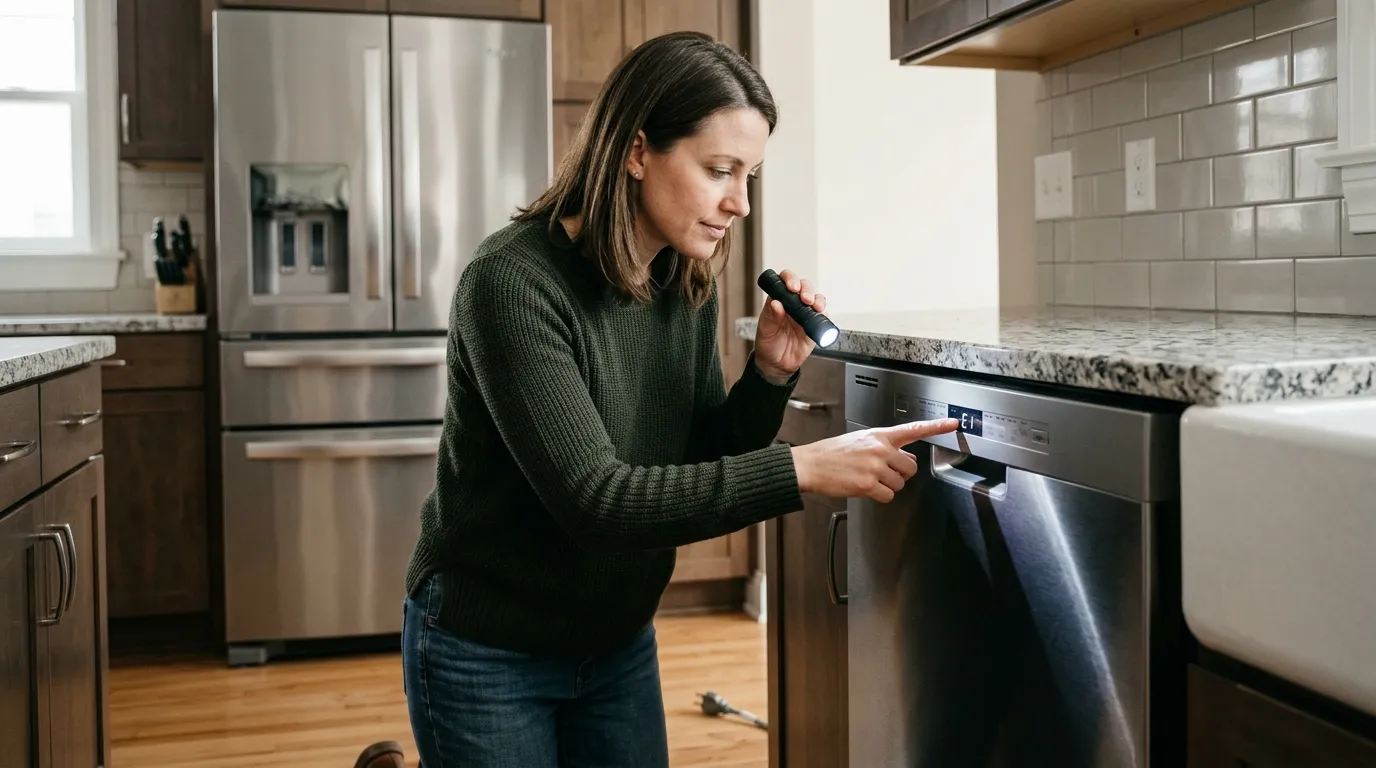
Start simple. Check the plug, breaker, and settings. Read any error code. Listen for new sounds. Smell for heat or a burn scent. If you find heat, smoke, or leaks, unplug and call a tech.
Why is my fridge running but not cooling?
Check temps, airflow inside, and door seals. Clean coils and confirm the fan runs. If the compressor is hot and silent, call a pro.
Is it safe to DIY this fix?
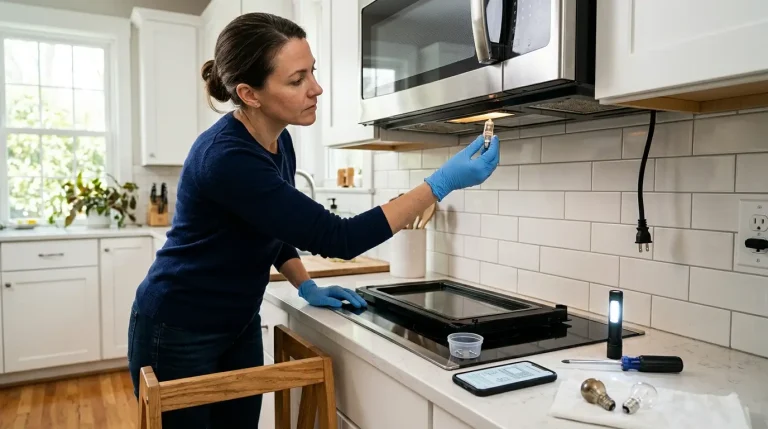
You can clean, descale, and replace filters. You can swap light bulbs and some gaskets. Do not open sealed systems, gas lines, or high voltage parts.
My dishwasher leaves film. What now?
Use rinse aid. Clean the filter and spray arms. Try a hotter cycle and avoid overloading.
Knowing your limits is part of How to Maintain Kitchen Appliances with care. A quick call can save a unit.
Smart habits that save money
- Load right. Do not block vents or spray arms. Space items so water and air can move.
- Skip heavy pre-rinse. Modern washers work better with a little soil.
- Use the right soap. Too much suds hurts pumps and seals.
- Log filter dates and coil cleanings. Set phone reminders.
One family I helped cut energy use by ten percent in one month. They cleaned coils and fixed a leaky gasket. Little wins add up.
Keep saying this to yourself: How to Maintain Kitchen Appliances is a set of tiny habits done on time.
Common mistakes to avoid
- Using harsh pads that scratch glass and steel.
- Spraying cleaner on control panels. Spray the cloth, not the panel.
- Blocking fridge vents with large trays.
- Ignoring error codes or new sounds.
- Letting seals stay wet. Dry after you wipe.
If you dodge these traps, you already know How to Maintain Kitchen Appliances better than most.
Essential tools and supplies
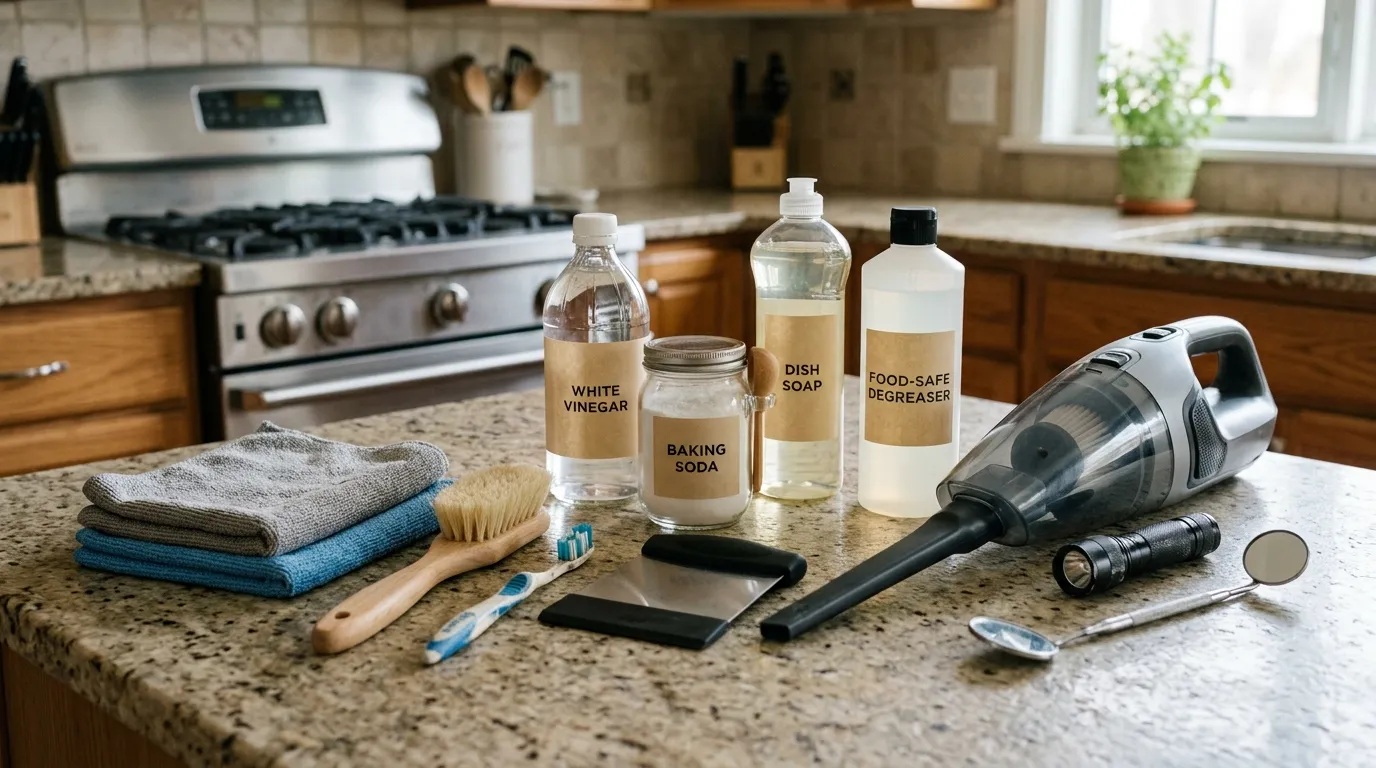
- Microfiber cloths for streak free cleaning.
- Soft brush and old toothbrush for small parts.
- Non scratch scraper for glass tops.
- Mild dish soap and a food safe degreaser.
- White vinegar or descaler for mineral scale.
- Baking soda for odor control.
- Vacuum with a crevice tool for coils and vents.
- Flashlight and a small mirror to see tight spots.
These basics make How to Maintain Kitchen Appliances fast and simple day to day.
Maintenance calendar template
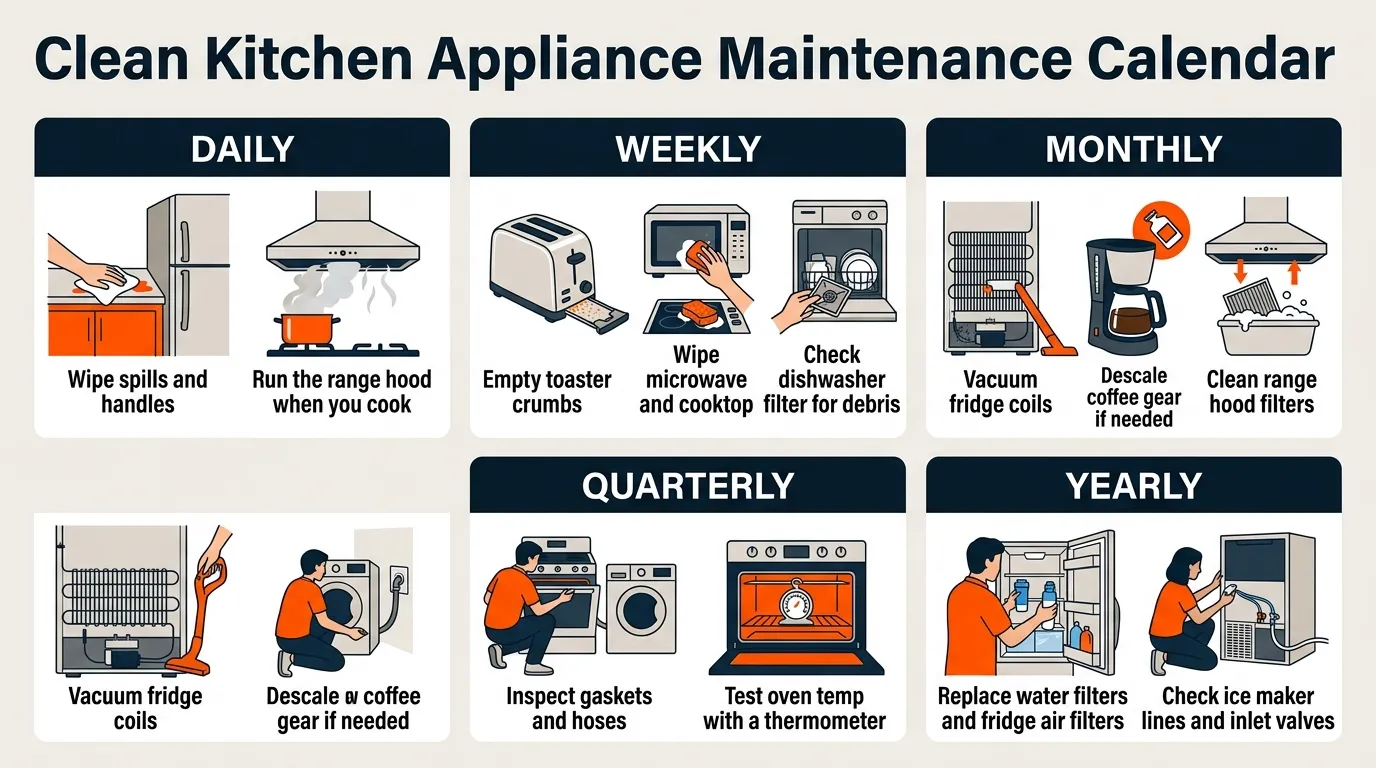
Daily
- Wipe spills and handles.
- Run the range hood when you cook.
Weekly
- Empty toaster crumbs.
- Wipe microwave and cooktop.
- Check dishwasher filter for debris.
Monthly
- Vacuum fridge coils.
- Descale coffee gear if needed.
- Clean range hood filters.
Quarterly
- Inspect gaskets and hoses.
- Test oven temp with a thermometer.
Yearly
- Replace water filters and fridge air filters.
- Check ice maker lines and inlet valves.
Use this as a base for How to Maintain Kitchen Appliances at home. Adjust for how you cook and your local water.
Frequently Asked Questions of How to Maintain Kitchen Appliances
How often should I clean refrigerator coils?
Clean them every three to six months, or more with pets. This improves cooling and can lower energy use.
What is the best way to descale a kettle or coffee maker?
Use equal parts white vinegar and water, then rinse with two cycles of clean water. Follow the maker guide if it needs a specific descaler.
Do I need a surge protector for my fridge?
Large fridges often go on a dedicated wall outlet. Ask a licensed electrician about surge protection for your home. A whole home device can guard many appliances.
Can baking soda really deodorize a fridge?
Yes. It absorbs odors over time. Replace the box every three months for best results.
How tight should a dishwasher be loaded?
Leave space between dishes so water can reach all sides. Keep tall items away from the spray arms and detergent cup.
Are extended warranties worth it for appliances?
They can help for units with complex boards or built in models. Compare the plan cost to average repair costs and the unit’s reliability before you buy.
How can I prevent rust on stainless steel?
Wipe spills fast, especially salt or acidic sauces. Clean with mild soap, dry well, and use a stainless cleaner to add a thin barrier.
Conclusion
Good care is calm, quick, and steady. You now know How to Maintain Kitchen Appliances with simple tasks that fit your week. Clean surfaces, protect airflow, watch water quality, and act early when something feels off.
Pick two habits from this guide and start today. Set a phone reminder for filters and coils. Then share your wins, ask a question, or subscribe for more home care tips.