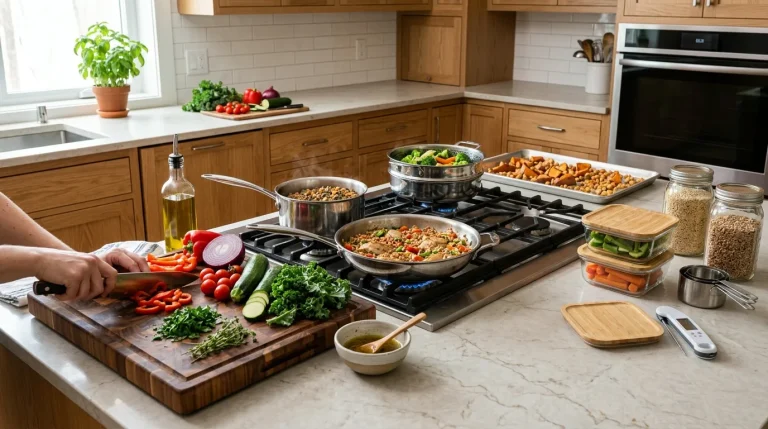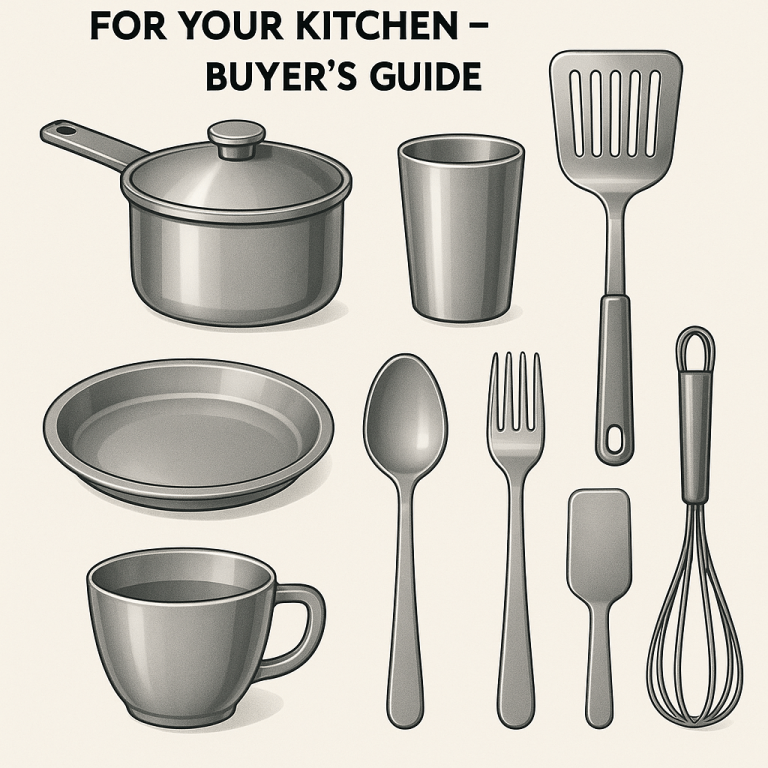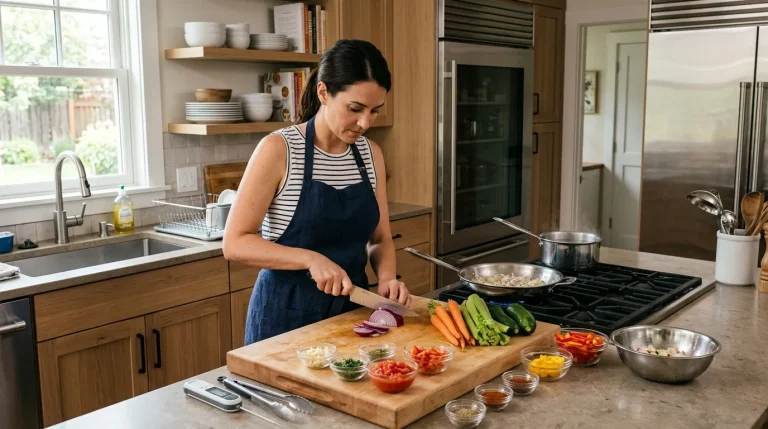
Start with a tiny set of tools, a smart layout, and a stocked pantry to cook well fast.
If you want to know how to set up a kitchen for beginners, this guide gives you the exact steps I use when helping first-time cooks build a simple, efficient, and budget-friendly space. I’ll share what to buy first, how to organize it, and the habits that make daily cooking easier and safer. By the end, you’ll feel confident, clear, and ready to cook.
Build Your Simple Kitchen Plan
How to Set Up a Kitchen for Beginners starts with a simple plan you can follow today. Think about what you cook most, how much space you have, and your budget. Aim for a small set of tools that do many jobs well.
Use this quick setup framework:
- Pick three core meals you will cook often. For example: eggs and toast, sheet-pan chicken, and pasta with veggies.
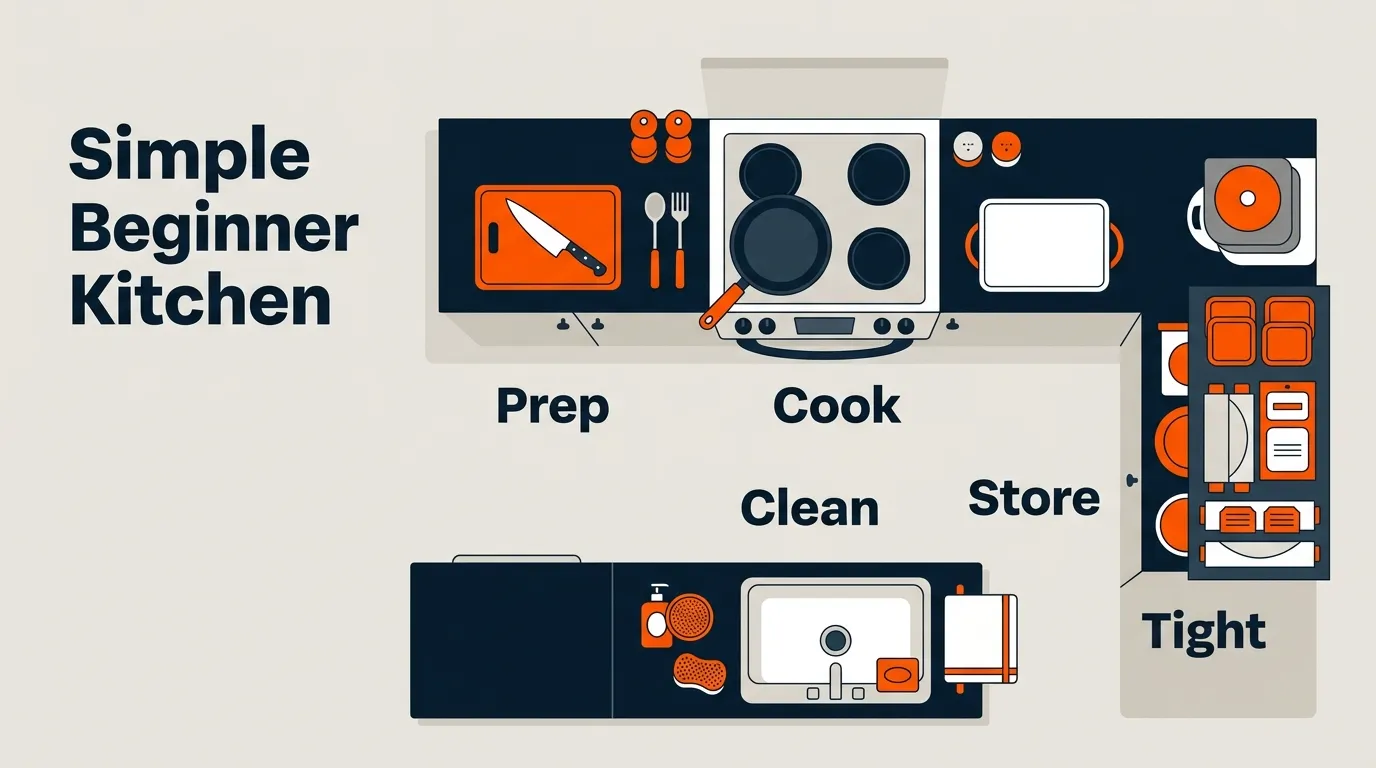
- Map your space into zones: prep, cook, clean, and store. Keep each zone tight.
- Set a budget cap now. Start small, upgrade later.
Pro tip from my own setups: clear your counters first. A clean space lowers stress and helps you see what you truly need.
Essential Tools and Cookware for Day-One Cooking
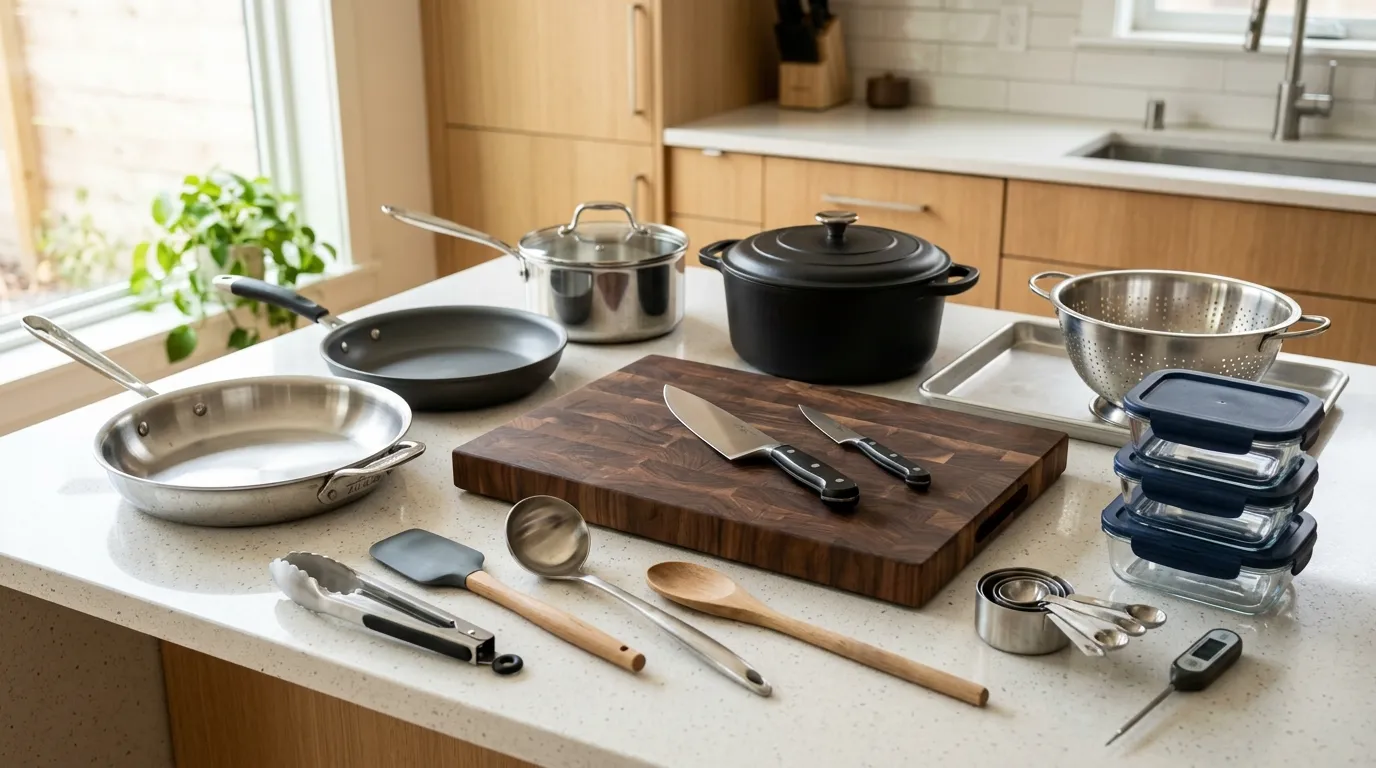
How to Set Up a Kitchen for Beginners is easier when you buy only what you will use weekly. Choose durable basics that handle many recipes.
Buy these first:
- Chef’s knife, 8 inch. One good knife beats a block of cheap ones.
- Paring knife. For fruit, trimming, and small cuts.
- Cutting board, large and stable. Wood or thick plastic.
- 10–12 inch nonstick skillet. Great for eggs, pancakes, and fish.
- 12 inch stainless steel or cast-iron skillet. For searing and oven use.
- 2–3 quart saucepan with lid. For rice, sauces, and reheating.
- 5–6 quart pot or Dutch oven. For soups, pasta, and braises.
- Sheet pan, half size. For roasting and baking.
- Tongs, spatula, ladle, and a wooden spoon. Simple and sturdy.
- Measuring cups and spoons. Dry and liquid sets.
- Instant-read thermometer. Removes guesswork.
- Colander. Draining pasta and washing produce.
- Storage containers with lids. Clear, stackable, BPA-free.
Skip for now:
- Knife sets with extras you will not use.
- Single-use gadgets like banana slicers.
- Tiny pans that only hold one egg.
Care tip: keep knives sharp. A sharp blade is safer and faster.
Useful Appliances for Beginners
How to Set Up a Kitchen for Beginners does not need many appliances. Add what saves time and fits your meals.
Buy early if you can:
- Blender. Smoothies, soups, sauces.
- Rice cooker or multi-cooker. Foolproof grains and hands-off meals.
- Toaster or toaster oven. Fast breakfasts and reheats.
- Electric kettle. Quicker water for tea and instant oats.
Nice-to-have later:
- Food processor. Great for big batches, but bulky.
- Stand mixer. Best for frequent baking.
Space tip: store bulky tools low. Keep daily tools at eye level.
Pantry Essentials to Stock First

How to Set Up a Kitchen for Beginners works best with a steady pantry. A small, smart stock makes fast meals.
Start with:
- Oils: olive oil for dressings, neutral oil for high heat.
- Vinegars: white wine or apple cider, plus balsamic.
- Salt: kosher salt for cooking, fine salt for baking.
- Spices: black pepper, garlic powder, chili flakes, cumin, paprika.
- Carbs: rice, pasta, oats, tortillas.
- Canned goods: tomatoes, beans, coconut milk, tuna.
- Baking basics: flour, sugar, baking powder, baking soda, yeast.
- Sauces: soy sauce, hot sauce, Dijon mustard.
- Broth or bouillon. Quick flavor boost.
- Nut butter and jam. Easy breakfasts and snacks.
Label and date what you open. Rotate older items forward so they get used.
Fridge and Freezer Setup that Saves Money
How to Set Up a Kitchen for Beginners should include a smart cold storage plan. You will waste less and cook more.
Stock your fridge with:
- Eggs, milk or plant milk, yogurt or a dairy-free option.
- Washed greens, hardy veggies (carrots, broccoli), and fresh herbs.
- Chicken thighs or tofu for easy protein.
- Prepped produce in clear bins so you see it.
Use your freezer:
- Frozen veggies and fruit. Same nutrition, less waste.
- Bread, tortillas, and cooked rice in portions.
- Raw meat or plant protein split into meal-size packs.
- Ice cube trays for pesto, broth, or lemon juice.
Label everything with a date. Keep raw meats on the lowest shelf to avoid drips.
Layout and Workflow: Create Work Zones
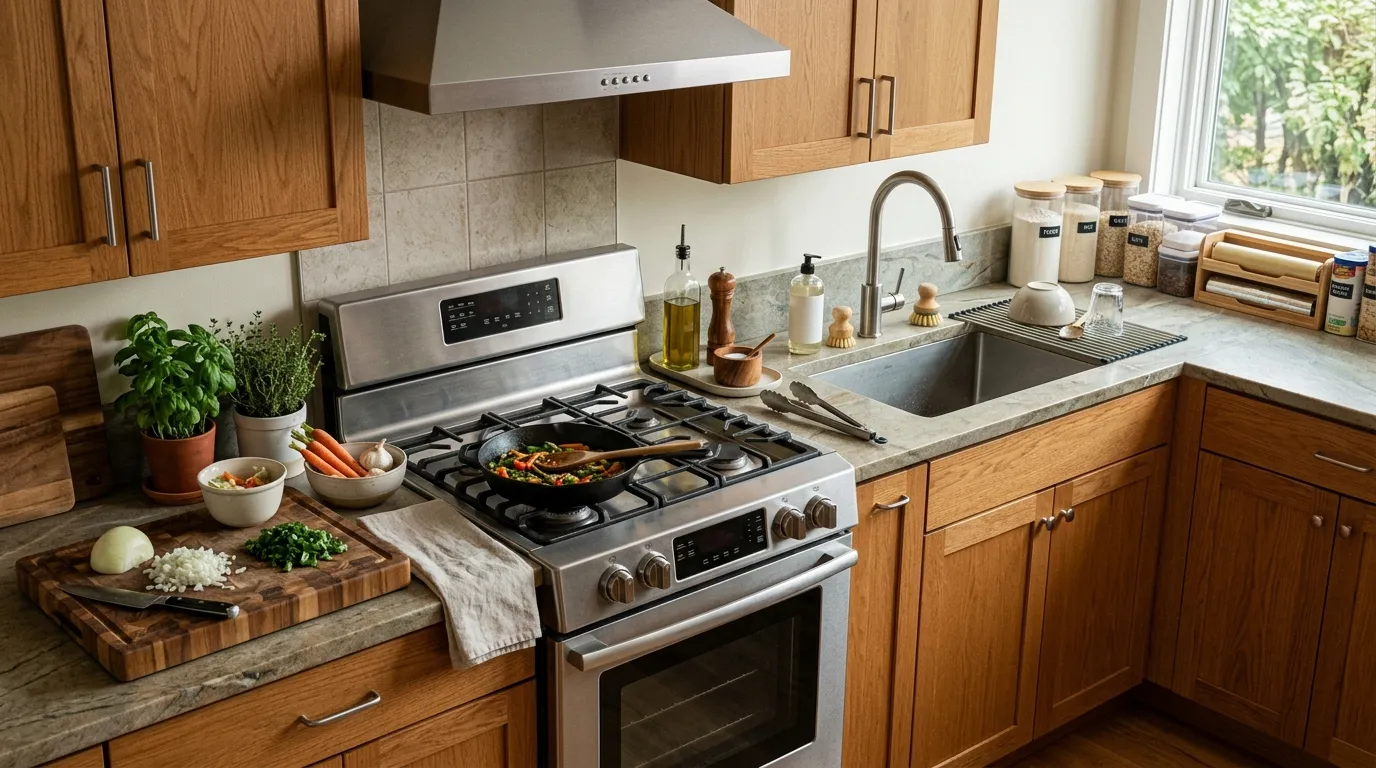
How to Set Up a Kitchen for Beginners shines when you use zones. Zones cut steps and clean-up time.
Try this simple map:
- Prep zone. Cutting board, knives, trash bowl, towels.
- Cook zone. Pans, utensils, oil, salt, pepper near the stove.
- Clean zone. Soap, scrubber, drying rack, compost or trash.
- Store zone. Containers, wraps, and labels in one drawer.
My favorite trick: a “grab tray” by the stove with oil, salt, pepper, and tongs. It keeps weeknight cooking smooth.
Food Safety Basics and Cleaning Habits
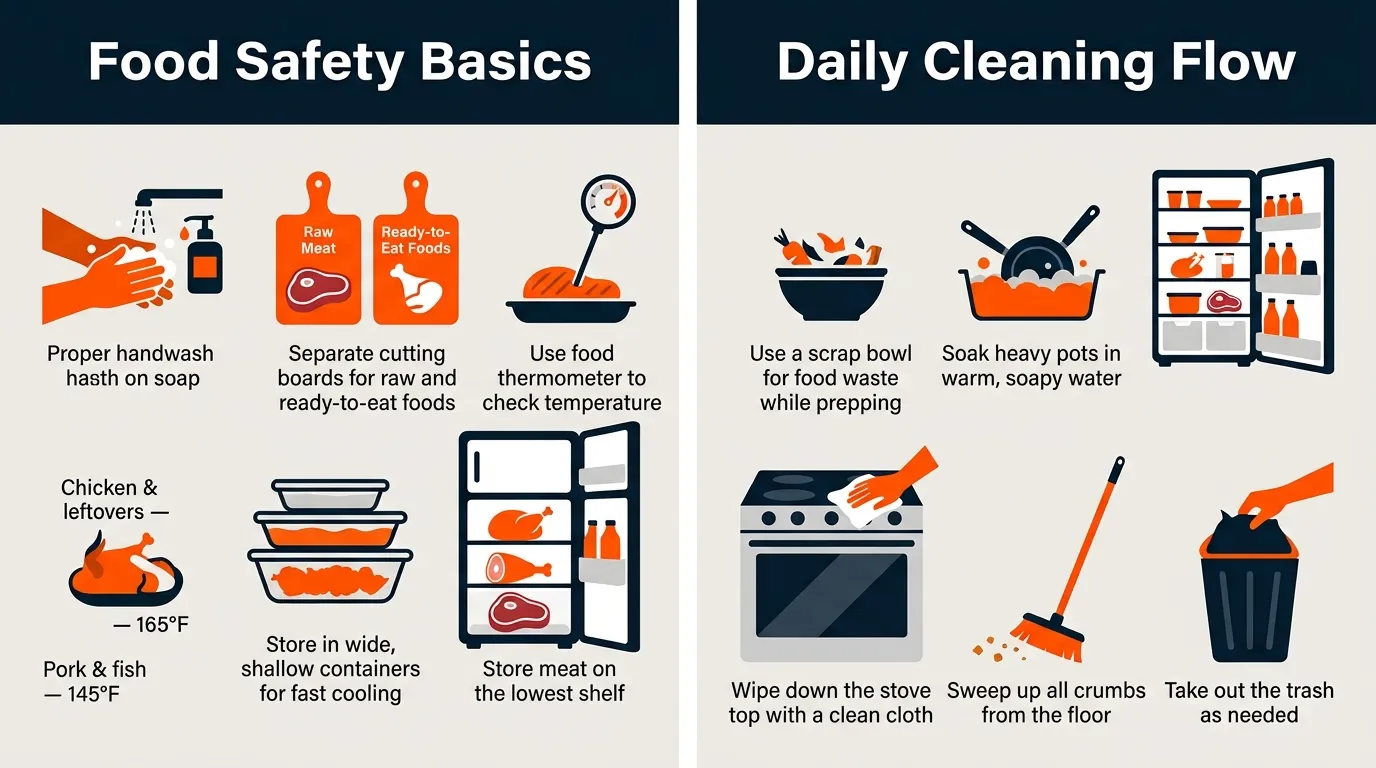
How to Set Up a Kitchen for Beginners must include safety. Small habits prevent illness and save time.
Follow these basics:
- Wash hands before and after handling raw meat.
- Use separate boards for raw meat and ready-to-eat foods.
- Cook chicken and leftovers to 165°F. Cook pork and fish to 145°F.
- Chill leftovers within two hours. Use shallow containers.
- Wipe counters with hot, soapy water. Disinfect high-touch spots.
Daily cleaning flow:
- As you cook, toss scraps in a bowl. It keeps the board clear.
- Soak pans while you eat. A quick soak saves scrubbing.
- Do a 2-minute reset at night: wipe stove, sweep crumbs, and empty the trash if needed.
Budget and Shopping Strategy that Works
How to Set Up a Kitchen for Beginners does not have to be pricey. Spend where it matters, save on the rest.
Use this plan:
- Buy one good knife and one good skillet. Go budget on tools like spatulas.
- Shop store brands for staples like rice, beans, and flour.
- Plan 3–4 meals per week. Leave room for leftovers and a night off.
- Buy produce in season. It is cheaper and tastes better.
- Freeze extra portions to stretch your budget.
Sample starter budget:
- $60–$120 for tools and pans.
- $20–$40 for pantry staples.
- $30–$50 for fresh foods for the week.
Smart Storage for Small Kitchens
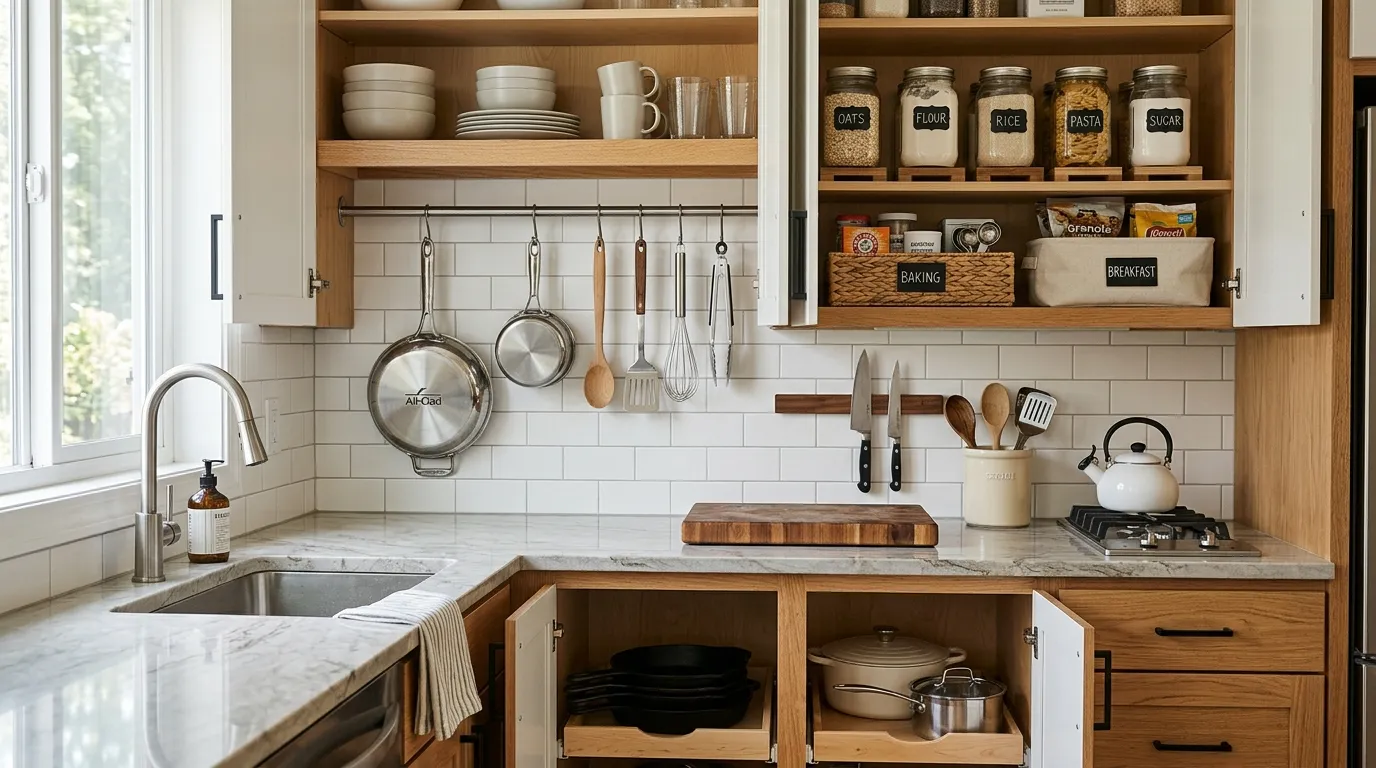
How to Set Up a Kitchen for Beginners often means working small. Use vertical space and clear bins.
Try these tips:
- Use shelf risers to double space.
- Hang pans or tools on hooks or a rail.
- Store dry goods in clear, labeled containers.
- Keep heavy items low and light items high.
- Group by task: baking bin, breakfast bin, spice rack.
If a tool lives on the counter, it must work daily. If not, store it or let it go.
A Starter Menu and Skills Roadmap
How to Set Up a Kitchen for Beginners becomes real when you cook right away. Build skills with simple wins.
Learn these five core skills:
- Cook rice or grains fluffy and not sticky.
- Roast a sheet pan dinner with even browning.
- Pan-sear protein and finish in the oven.
- Make a simple vinaigrette from oil, acid, salt, and pepper.
- Build a one-pot soup with onion, garlic, broth, and veggies.
One-week starter menu:
- Breakfasts: oats with fruit; eggs and toast; yogurt with honey.
- Lunches: tuna and bean salad; grain bowl with roasted veggies.
- Dinners: sheet-pan chicken and broccoli; pasta with tomato and spinach; stir-fry with rice; soup and salad.
Batch once, win all week:
- Roast a tray of veggies.
- Cook a pot of rice.
- Make a jar of vinaigrette.
Common Mistakes to Avoid
How to Set Up a Kitchen for Beginners goes smoother when you dodge these traps.
Watch out for:
- Buying gadget overload. You only need a few good tools.
- Skipping labels and dates. This leads to waste and smells.
- Overcrowding pans. Food steams and turns soggy.
- Chasing complex recipes first. Start simple, then build.
- Forgetting to prep. Five minutes of chopping saves 20 later.
A lesson from my own early days: I bought a full knife block. I used two knives. I now buy single knives and spend the savings on better pans.
Frequently Asked Questions of How to Set Up a Kitchen for Beginners
What should I buy first when setting up a kitchen?
Start with a chef’s knife, cutting board, nonstick skillet, saucepan, and a sheet pan. Add tongs, a spatula, and storage containers to round it out.
How do I budget for my first kitchen?
Set a limit for tools, pantry, and weekly fresh food. Buy one quality item each month and fill gaps with budget picks.
How can I cook healthy meals with little time?
Keep prepped veggies, cooked grains, and a protein ready. Use sheet-pan dinners and one-pot soups for fast, balanced meals.
How do I organize a tiny kitchen?
Use vertical space, clear bins, and a task-based layout. Keep only daily-use items on the counter for a clean look and easy access.
What are must-have spices for beginners?
Start with kosher salt, black pepper, garlic powder, paprika, chili flakes, and cumin. Add curry powder or Italian seasoning as you try new dishes.
Conclusion
You now know how to set up a kitchen for beginners with a simple plan, a tight set of tools, and habits that make cooking easy. Start small, cook a few wins, and grow with your taste and budget.
Pick one section to act on today. Clear your counter, stock three pantry items, or cook one sheet-pan meal this week. If this helped, subscribe for more beginner–friendly guides and share your first cooked meal in the comments.