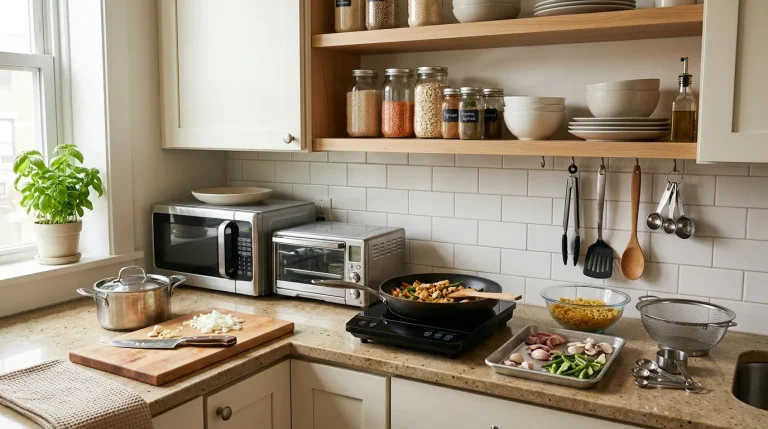
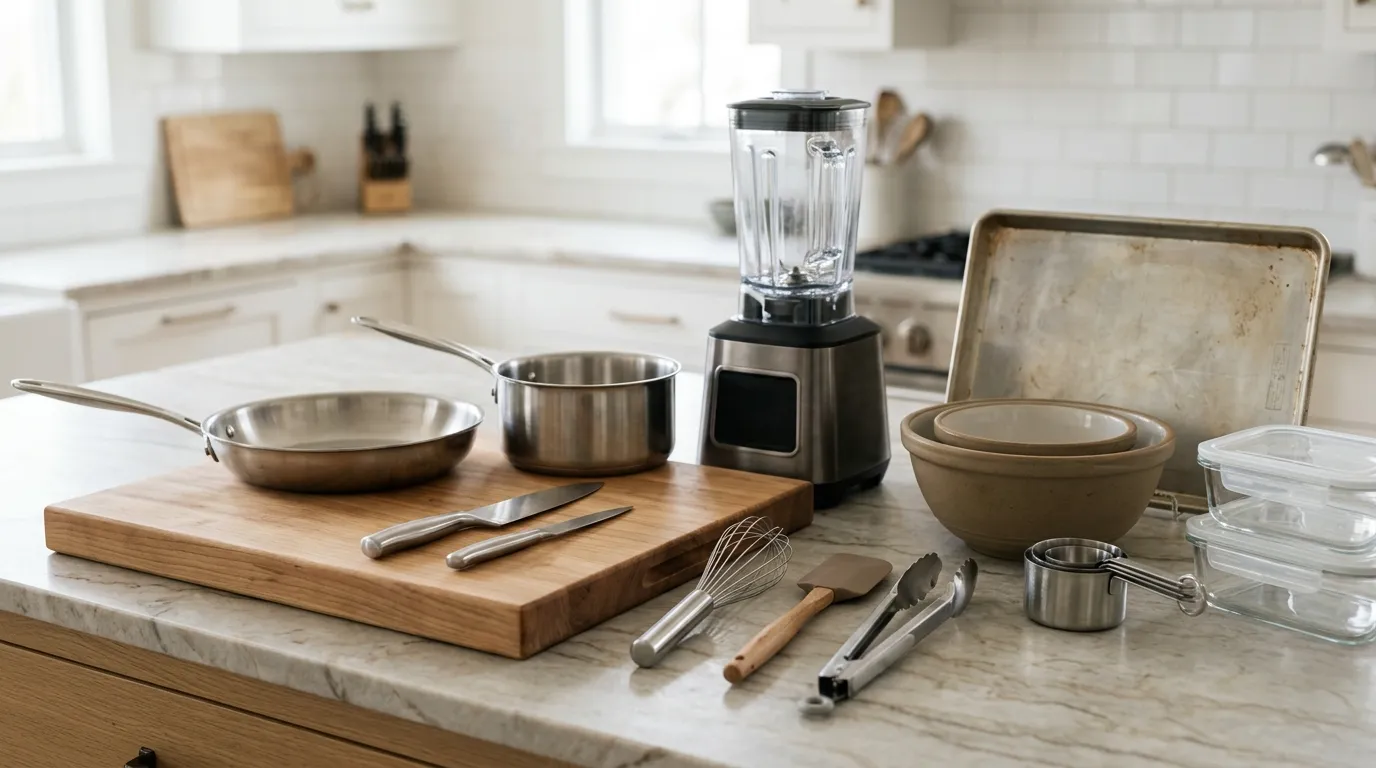
A smart kitchen essentials buying checklist keeps cooking simple, safe, and cost-effective.
I help home cooks build kitchens that work in real life. This kitchen essentials buying checklist comes from years of testing gear, outfitting small apartments, and setting up family kitchens. You will learn what to buy first, what to skip, and how to match tools to your cooking style. Keep reading to build a lean, expert-approved toolkit that lasts.
How to use this kitchen essentials buying checklist
This checklist helps you plan, shop, and set up your space. Start with core tools you will use every day. Then add items based on your habits and budget.
Use these steps:
- Define your top five meals. Buy tools that serve those meals first.
- Pick durable materials. Stainless steel, cast iron, and glass are safe bets.
- Buy open-stock pieces. Sets look neat but often include items you won’t use.
- Test grip and weight. Tools should feel balanced and safe in your hand.
- Track gaps after two weeks. Add only what you missed.
Personal tip: I once bought a 12-piece cookware set. I used three pieces and stored nine. Now, I buy one great pan at a time.
Cookware essentials that cover 90% of meals

Start with three pieces. Add more only if you need them.
Buy first:
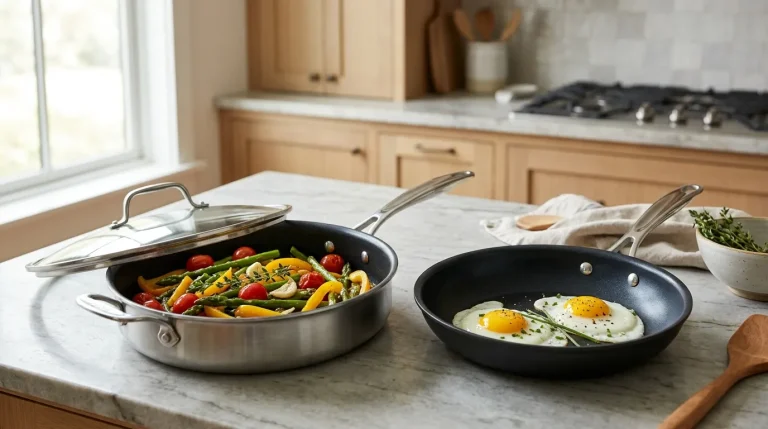
- 10–12 inch stainless steel skillet. For searing, sautéing, and pan sauces.
- 3-quart saucepan with lid. For rice, grains, and reheating soup.
- 6–8 quart stockpot. For pasta, broth, and batch cooking.
Add if helpful:
- Cast iron skillet. Great heat retention and oven use.
- Nonstick skillet. For eggs and delicate foods. Use low to medium heat.
- Dutch oven (5–6 quart). For stews, braises, and bread.
What to check:
- Even heating. Thick, multi-ply bases reduce hot spots.
- Oven-safe handles and lids. Increases versatility.
- Riveted handles. Stronger than welded ones.
Care note: Nonstick wears out. Many cooks replace it every 3–5 years with gentle use.
Knives and cutting gear you will actually use
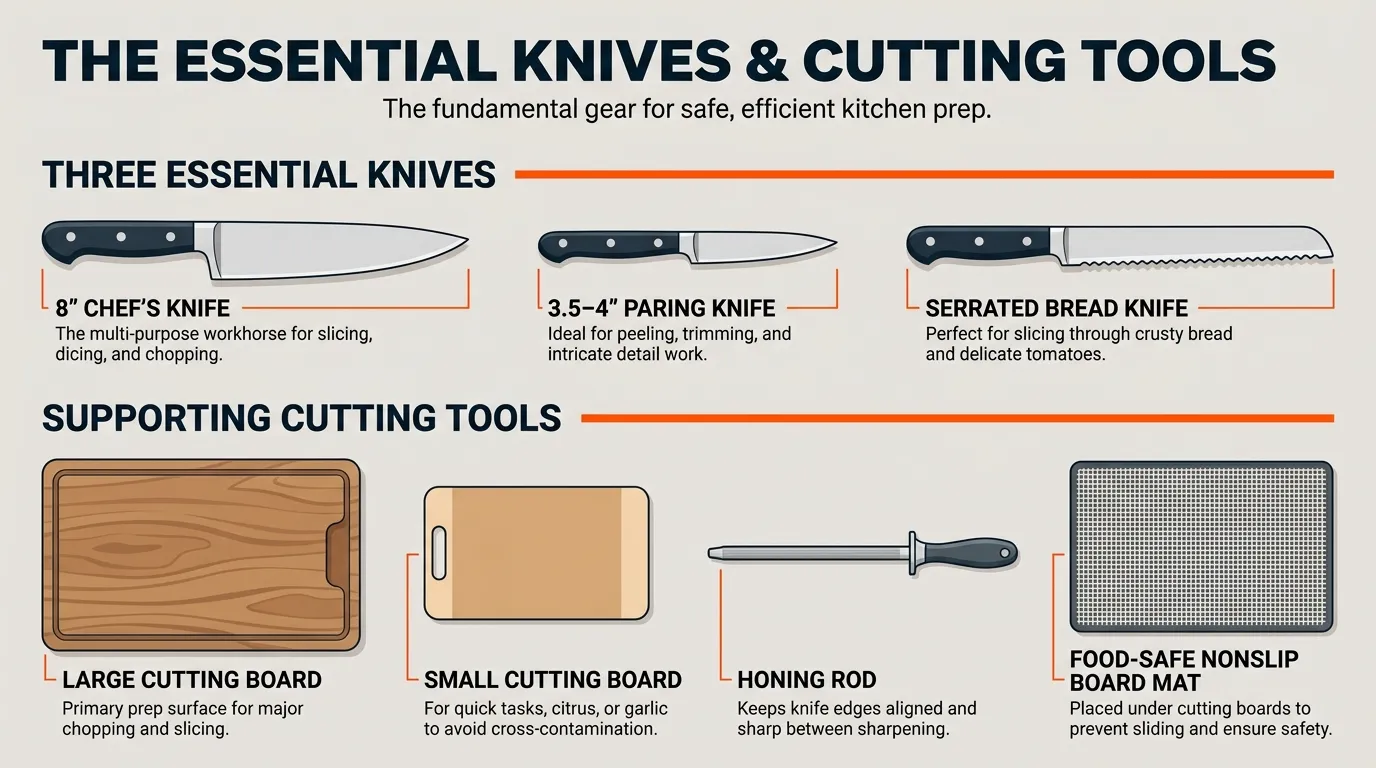
You do not need a big block. Three knives cover most tasks.
Essentials:
- 8-inch chef’s knife. Your daily worker. Try before you buy.
- 3.5–4 inch paring knife. For peeling and detail work.
- Serrated bread knife. For bread, tomatoes, and soft fruit.
- Cutting boards. One large and one small. Use wood or rubber for knives.
- Honing rod. Realign edges between sharpenings.
- Food-safe board mat. Stops sliding and keeps you safe.
My habit: I hone before dinner prep and sharpen every six months. A sharp knife is safer than a dull one.
Utensils and tools that speed up prep
Aim for tools that do more than one job.
Daily drivers:
- Heat-safe spatula and fish spatula. For flipping, scraping, and lifting.
- Tongs with scalloped tips. Think of them as an extra hand.
- Ladle and slotted spoon. For soups and draining.
- Balloon whisk. For sauces and batters.
- Measuring cups and spoons. Accurate baking and consistent cooking.
High-value add-ons:
- Instant-read thermometer. Prevents overcooking and improves safety.
- Y-peeler. Fast, safe peeling for veggies and fruit.
- Box grater and microplane. For cheese, zest, garlic, and spices.
- Can opener and kitchen shears. Simple but essential.
- Colander or mesh strainer. For pasta, rice, and rinsing produce.
Bakeware and mixing basics
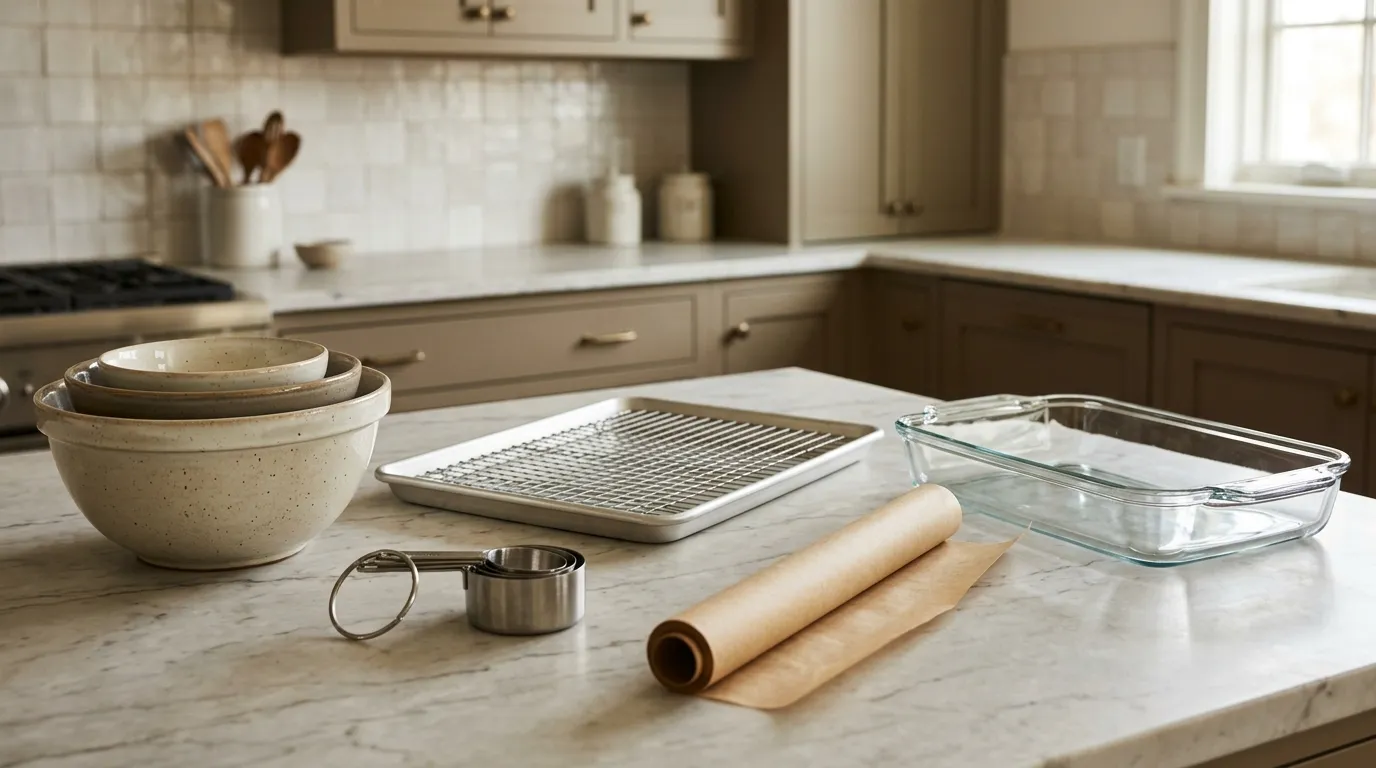
Even if you do not bake often, these pans help with roasting and meal prep.
Start with:
- Half sheet pan with rack. Meal prep, roasting, and cookies.
- 9×13 baking dish. Casseroles, brownies, and roasting.
- Two or three nesting mixing bowls. For batters, salads, and storage.
Add if you bake:
- Muffin tin, loaf pan, and 9-inch round cake pans.
- Pie dish or tart pan if you love pies.
- Silicone baking mat or parchment sheets.
Tip: Choose light-colored aluminum sheet pans for even browning.
Food storage and organization that prevent waste
Good storage saves money and cuts cleanup time.
Essentials:
- Glass containers with locking lids. Safe for fridge, freezer, and microwave.
- Mason jars. For sauces, dressings, and dry goods.
- Zip or silicone bags. For freezing and sous vide.
- Labels and painter’s tape. Date everything to avoid guessing.
Organization habits:
- Store lids upright in a small bin.
- Use clear bins to group snacks or baking items.
- Keep grains and pasta in airtight containers.
Small appliances: buy for your lifestyle, not the hype
Pick two or three to start. Add more only if you will use them weekly.
High-impact picks:
- Blender or immersion blender. Smoothies, soups, and sauces.
- Toaster oven or air fryer. Fast heating and crisp results.
- Rice cooker or multi-cooker. Hands-off grains and stews.
Nice to have:
- Food processor. Chops, slices, and doughs in minutes.
- Hand mixer. Light, compact, and perfect for batters.
- Electric kettle. Faster, safer boiling.
Question to ask: Will I use this at least weekly for a key meal? If not, wait.
Cleaning, safety, and maintenance you should not skip
Clean tools last longer. Safe kitchens reduce stress.
Must-haves:
- Dish soap, scrub brush, non-scratch sponge, and drying rack.
- Two kitchen towels and two microfiber cloths in rotation.
- Heat-resistant oven mitts and trivets.
- Fire extinguisher with a home rating. Keep it visible.
- First aid kit and bandages.
- Non-toxic cleaner or diluted vinegar for surfaces.
Safety habits:
- Use a thermometer to check cooked meat.
- Turn pot handles inward on the stove.
- Keep a baking sheet near the stove as a splatter shield.
Pantry staples that power simple meals
A strong pantry makes weeknights easy.
Core items:
- Salt, black pepper, chili flakes, cumin, paprika, garlic powder.
- Neutral oil and extra-virgin olive oil.
- Vinegars like white, apple cider, and balsamic.
- Rice, pasta, oats, canned tomatoes, canned beans, and broth.
- Soy sauce, mustard, hot sauce, and honey.
Set a reminder to rotate spices every 6–12 months for peak flavor.
Budget and buying tips to stretch every dollar
You do not need top-shelf everything. Choose where to splurge.
Splurge on:
- Chef’s knife. It affects speed, safety, and joy.
- Stainless skillet or Dutch oven. Long life and daily use.
- Thermometer. Prevents mistakes and food waste.
Save on:
- Sheet pans, mixing bowls, and spatulas. Basic versions work well.
- Measuring tools. Accurate and cheap.
Smart shopping:
- Buy open stock, not full sets.
- Check return policies and lifetime warranties.
- Watch outlet stores, seconds sales, and holiday promos.
- Consider certified refurbished small appliances.
Common mistakes and lessons I learned the hard way
I have made all the classic errors. You can skip them.
Mistakes to avoid:
- Buying a big set first. You will not use half of it.
- Skipping a thermometer. Overcooked meat gets old fast.
- Keeping dull knives. It slows you down and risks cuts.
- Ignoring storage. Food waste rises when you cannot see leftovers.
- Chasing trends. If the gadget solves a rare task, skip it.
My fix: I now use a one-in, one-out rule. If I buy a new tool, an old one goes.
Sustainable and space-saving choices
Small steps add up.
Ideas:
- Choose multi-use tools. A Dutch oven replaces several pans.
- Buy nesting sets for bowls and measuring cups.
- Pick repairable gear. Replace a handle, not the whole pan.
- Prefer glass and stainless over single-use plastic.
- Donate duplicates to local kitchens or shelters.
Pro tip: Store by frequency. Daily tools live within arm’s reach.
Kitchen layout and workflow that make cooking easier
Set zones so you move less and cook faster.
Create zones:
- Prep zone. Board, knives, bowls, trash bowl.
- Cook zone. Pans, oil, salt, tongs.
- Bake zone. Pans, parchment, measuring tools.
- Clean zone. Soap, brushes, towels.
Simple wins:
- Keep a small bin for compost or scraps near the board.
- Use a lazy Susan for oils and vinegars.
- Add hooks for mitts and towels to free drawer space.
Sample kitchen essentials buying checklist by setup
Use these starter kits. Then add based on your meals.
First apartment or dorm:
- Chef’s knife, paring knife, board, and honing rod
- 10-inch skillet, 3-quart saucepan, medium pot
- Spatula, tongs, ladle, whisk, measuring set
- Sheet pan, 9×13 dish, two mixing bowls
- Two glass containers, can opener, colander, thermometer
Tiny kitchen:
- 10-inch nonstick or cast iron skillet
- 3-quart saucepan with lid
- Cutting board with a scrap bin
- Tongs, spatula, whisk, shears
- Two nesting bowls and a half sheet pan
Family kitchen:
- 12-inch skillet, Dutch oven, 8-quart stockpot
- Knife trio, big board, kids’ cups and plates
- Thermometer, sheet pans, muffin tin
- Storage set, labels, snack bins
Avid baker:
- Stand or hand mixer, digital scale
- Two sheet pans, loaf and muffin pans
- Cooling racks, silicone mats, bench scraper
- Offset spatula, rolling pin, pie dish
Care and replacement timelines that protect your investment
Simple routines keep tools like new.
Suggested cadence:
- Hone knives weekly. Sharpen every 6–12 months, or as needed.
- Season cast iron every few uses. Dry well to prevent rust.
- Replace nonstick when scratched or sticky.
- Calibrate thermometers yearly.
- Swap sponges often. Wash towels hot each use day.
Label dates on lids or handles to stay on track.
Frequently Asked Questions of kitchen essentials buying checklist
How do I start a kitchen on a tight budget?
Begin with a chef’s knife, cutting board, skillet, saucepan, and sheet pan. Add a thermometer, tongs, and two storage containers next.
What should I splurge on first from the kitchen essentials buying checklist?
Invest in a comfortable chef’s knife and a solid pan. These tools improve results and last for years.
Is a knife set better than buying knives one by one?
Buy one by one to match your hand and tasks. A three-knife lineup beats a big set you do not use.
Do I need both nonstick and stainless pans?
Not at first. Stainless handles most jobs; add a small nonstick for eggs and delicate foods if you cook them often.
How many pots and pans do most people need?
Most home cooks thrive with three to five pieces. Add more only when you hit a true limit.
What food storage is safest for reheating?
Use glass containers with vented lids. They reheat well and do not absorb stains or smells.
How often should I replace spices?
Every 6–12 months for ground spices and 1–2 years for whole. Store in a cool, dark place for best flavor.
Conclusion
A clear kitchen essentials buying checklist turns guesswork into smart choices. Start with a few core tools, buy for your most-cooked meals, and build slow. Use storage and safety gear to protect your time, food, and budget.
Ready to outfit your kitchen with confidence? Pick three essentials from this guide today, make one focused shopping trip, and cook your next meal with less stress. If you found this useful, subscribe for more checklists, or leave a comment with your favorite must-have tool.