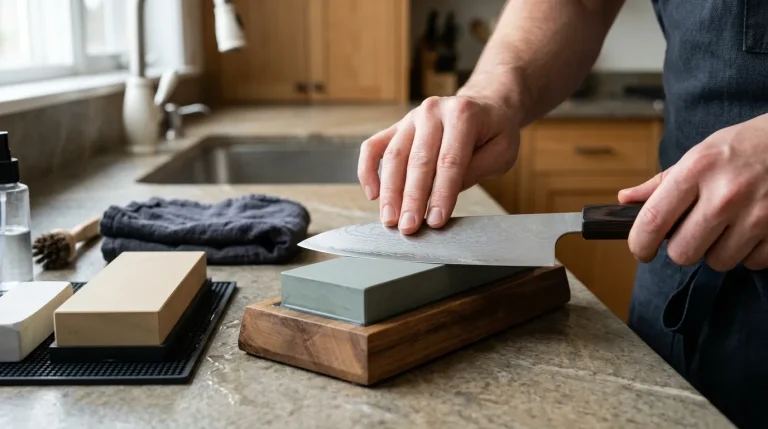
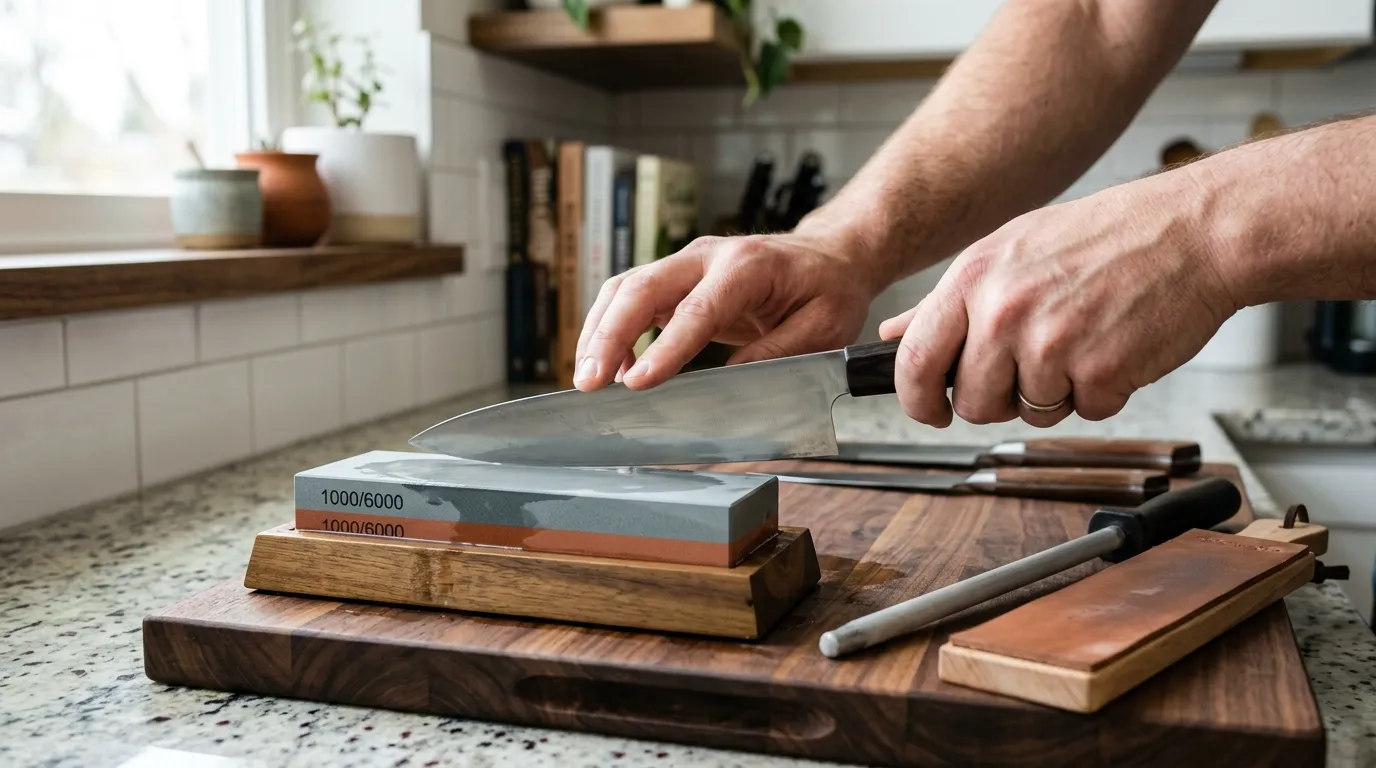
Sharpen kitchen knives every 2–4 months; hone weekly to keep the edge.
If you cook at home or work the line, this knife sharpening frequency guide will save time, money, and fingers. I have sharpened knives in busy kitchens and quiet home sinks. Here, you get clear rules, pro tips, and simple tests. Read on for a practical knife sharpening frequency guide you can use today.
How often should you sharpen?
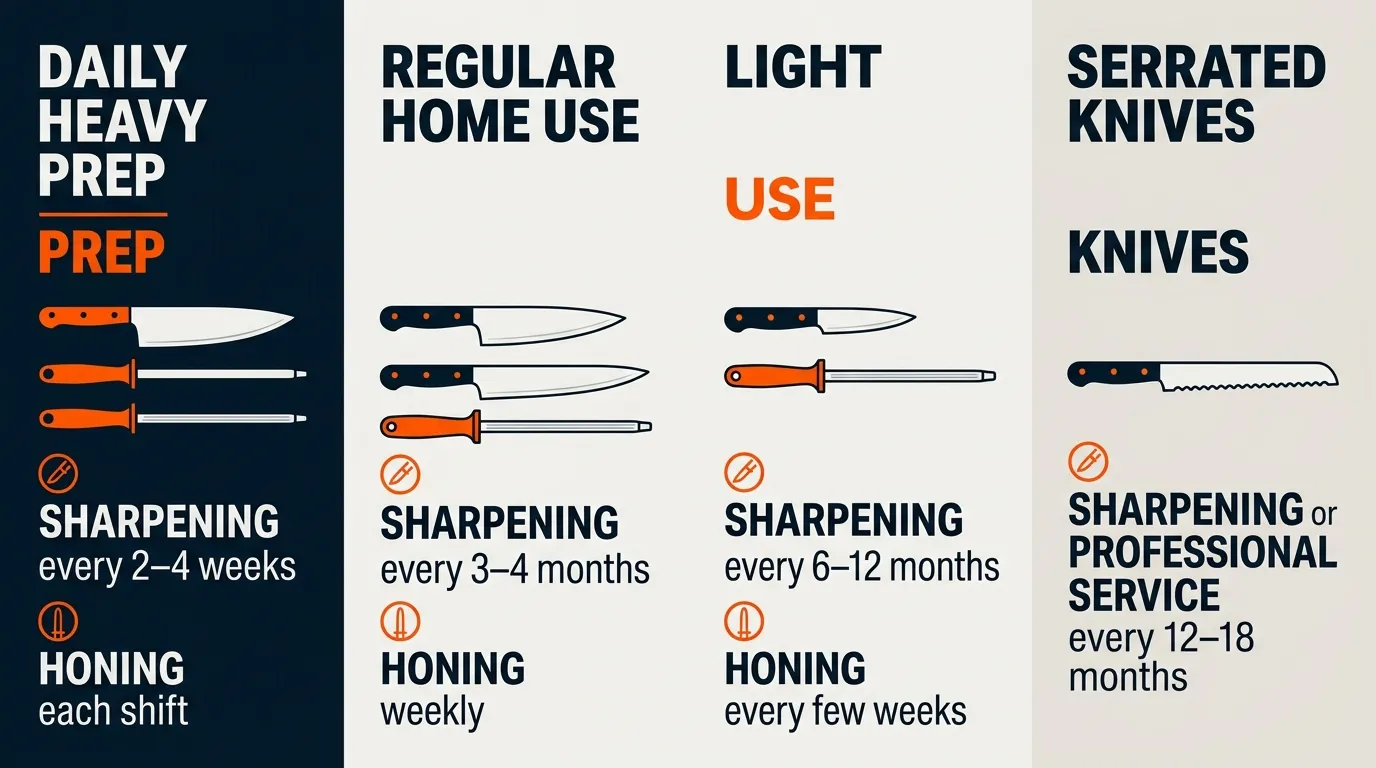
For most home cooks, sharpen every 2–4 months. Hone weekly, or every few sessions, to keep the edge aligned. Pros who cut all day should sharpen every 2–4 weeks, and hone each shift. Light users can stretch to 6–12 months with good care. This knife sharpening frequency guide gives ranges, then helps you dial it to your gear and habits.
A quick map you can trust:
- Daily heavy prep: sharpen every 2–4 weeks. Hone each shift.
- Regular home use, 3–5 cooks per week: sharpen every 3–4 months. Hone weekly.
- Light use: sharpen every 6–12 months. Hone every few weeks.
- serrated knives: sharpen or service every 12–18 months, or as needed.
If you slice lots of crusty bread, frozen food, or hard squash, you will need to sharpen more often. If you use soft boards and clean well, you can go longer.
Sharpening vs honing vs stropping
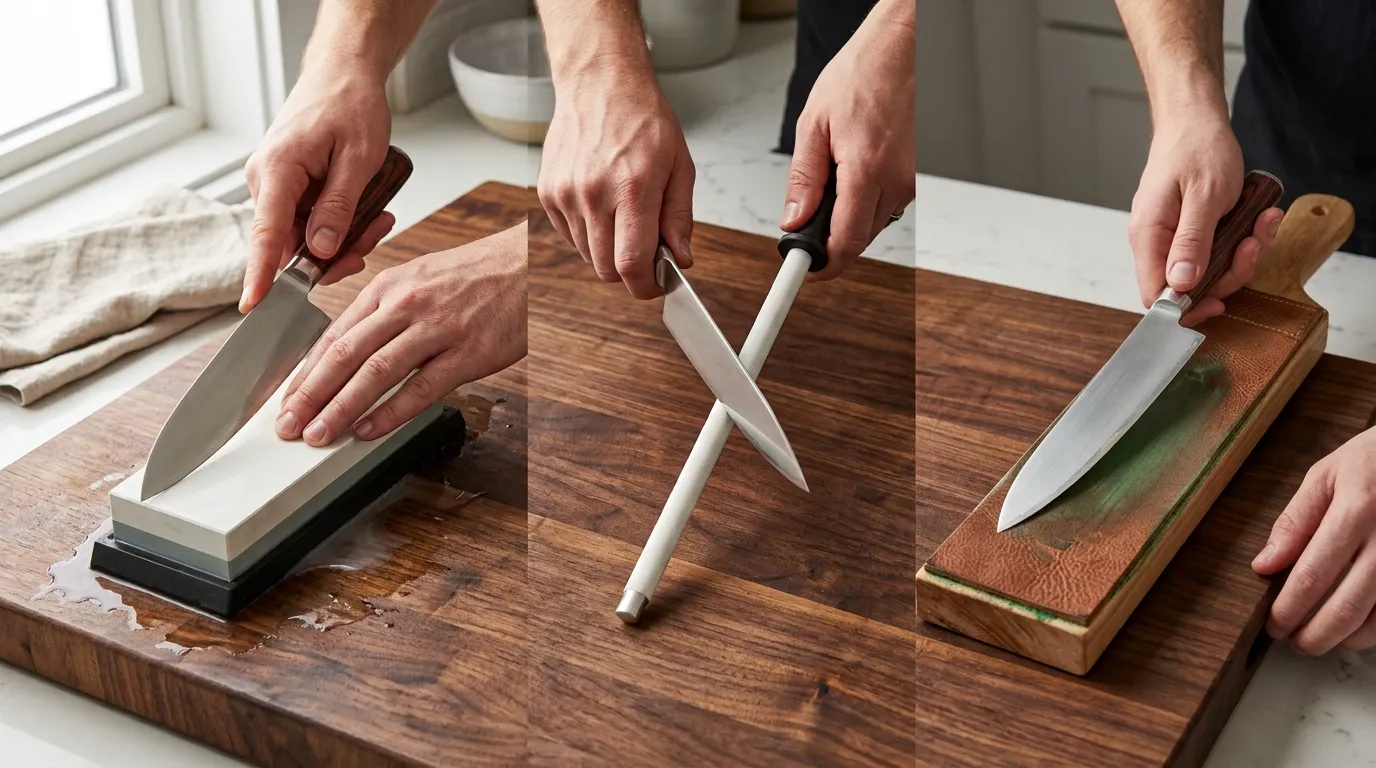
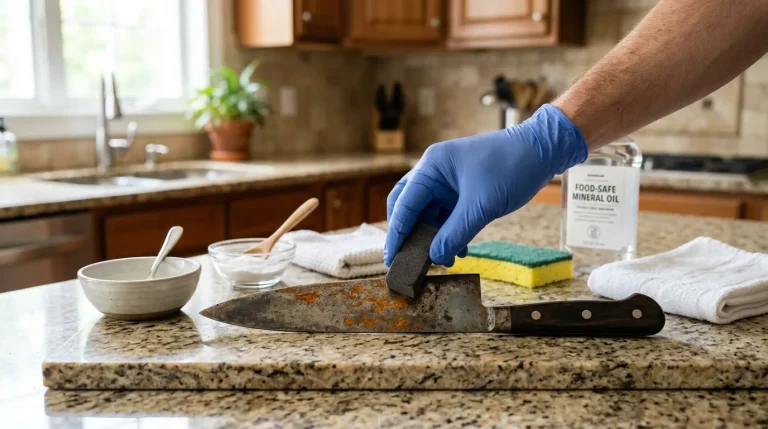
Sharpening removes metal to form a new edge. You do this on stones, systems, or a pro machine. You should not need to sharpen very often when care is good.
Honing realigns the edge. Think of it as combing hair, not giving a haircut. A ceramic or steel rod brings back bite fast.
Stropping polishes and cleans the edge. A leather strop with fine paste can make a keen edge last. In this knife sharpening frequency guide, you will use honing and stropping often, and sharpening less.
Factors that change your timeline
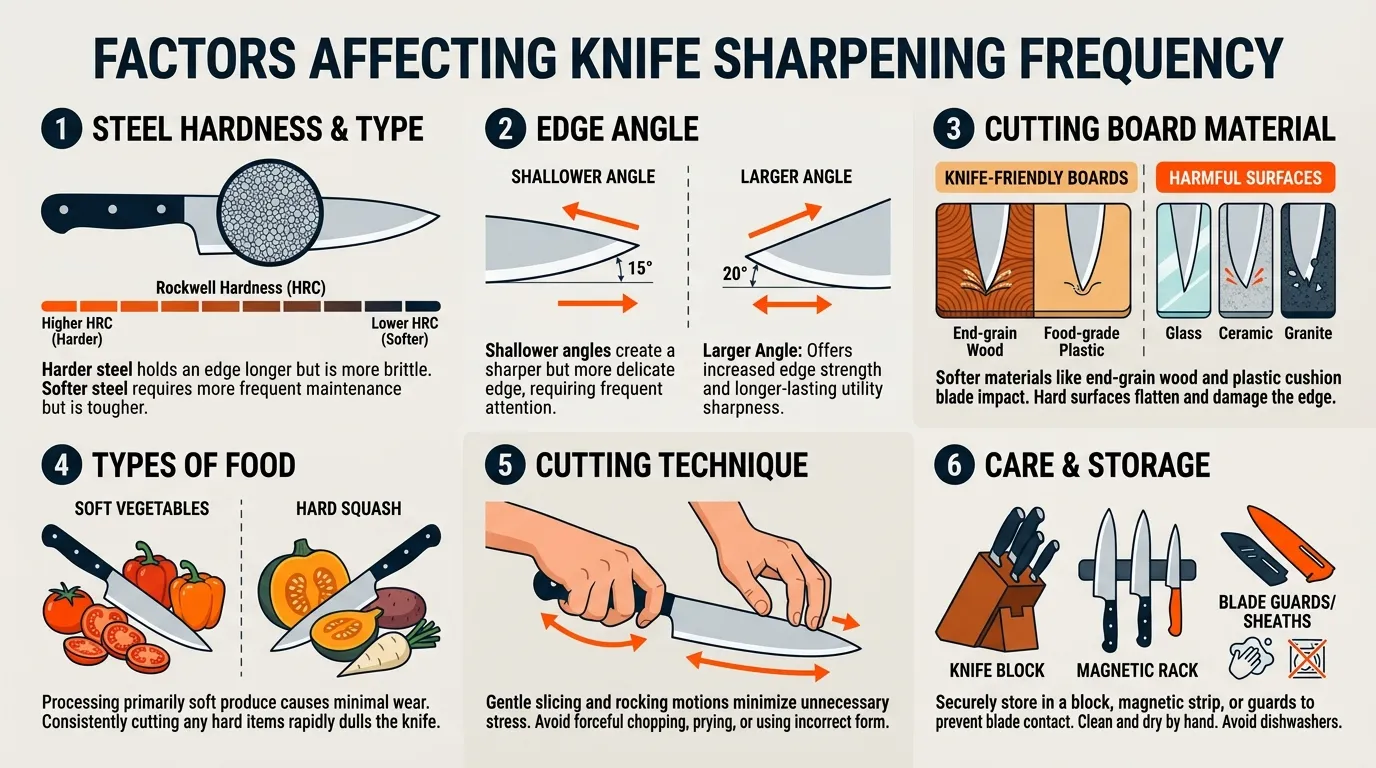
Your schedule is not fixed. These points change how often you sharpen.
- Steel hardness and type. Softer steels around HRC 56–58 (many German knives) dull faster but chip less. Harder steels at HRC 60–63 (many Japanese knives) hold an edge longer but can chip if abused.
- Edge angle. A 15-degree per side edge cuts fast but dulls sooner. A 20-degree edge lasts longer but feels less sharp. You can add a tiny micro-bevel to boost life.
- Cutting board. End grain wood is kind to edges. Plastic is fine. Glass, stone, or plates kill edges fast.
- Foods. Hard squash, bones, thick rinds, or bread crust wear the edge. Herbs and soft veg are easy.
- Technique. Rocking hard, twisting in cuts, or scraping with the edge rolls it. Use the spine to scoop.
- Care and storage. Hand wash and dry right away. Use guards, a block, or a rack. Skip the dishwasher.
Use this knife sharpening frequency guide to adjust. If you change boards or buy a new steel, revisit your plan.
Practical schedules by knife type and use
Use these simple plans as a start. Then tune them with the tests below. This knife sharpening frequency guide aims to be real and easy to follow.
Chef’s knife or gyuto
- Hone: every 1–3 cooking sessions.
- Sharpen: pros every 2–4 weeks; home cooks every 3–4 months.
Santoku or nakiri
- Hone: every 2–3 sessions.
- Sharpen: pros every 3–5 weeks; home cooks every 3–5 months.
Paring knife
- Hone: weekly or as needed.
- Sharpen: every 4–6 months at home; every 1–2 months in service.
Bread or serrated knife
- Hone: not needed on most models.
- Sharpen: every 12–18 months by a pro, or when it crushes bread.
Boning and fillet knives
- Hone: before each use.
- Sharpen: every 1–3 months, based on protein work.
Pocket or EDC kitchen helper
- Hone or strop: weekly.
- Sharpen: every 1–2 months, or when slicing paper feels rough.
Simple tests to know when it is time
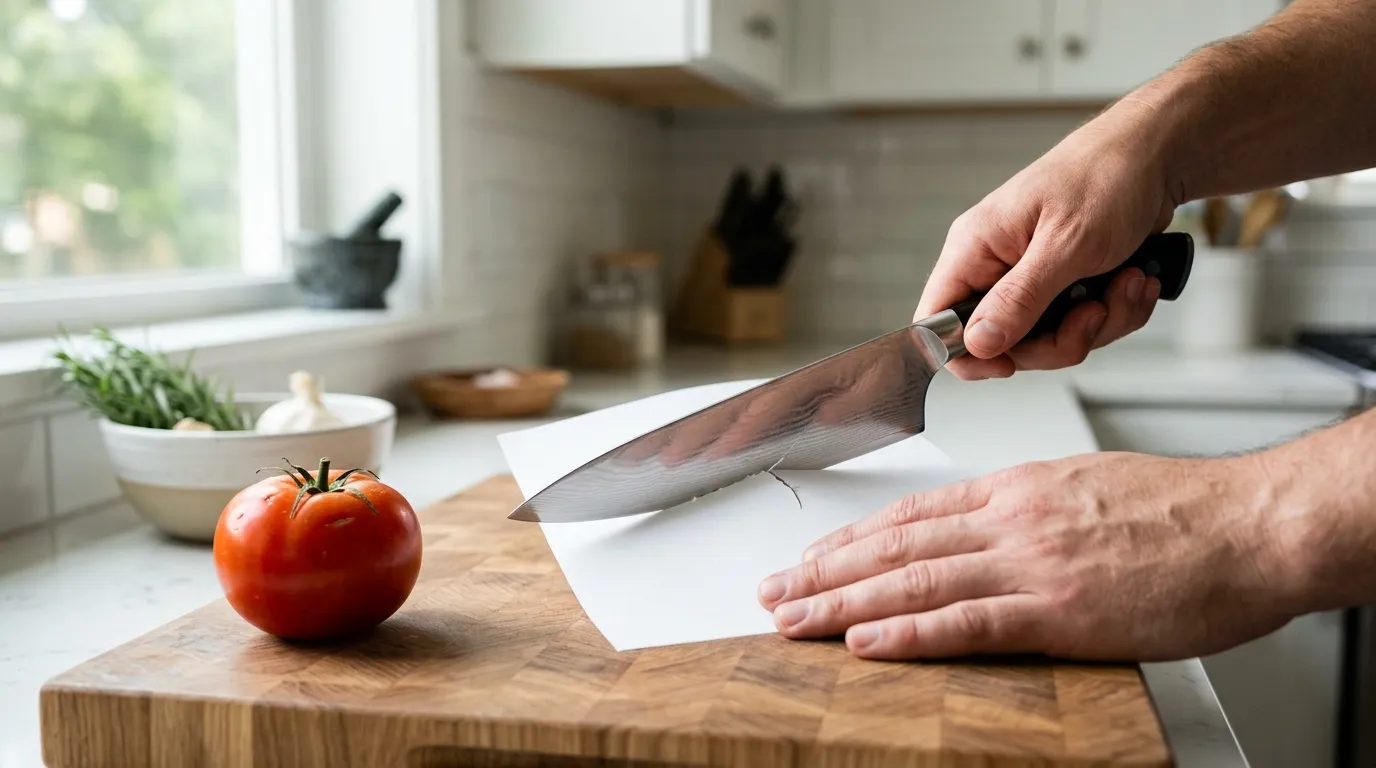
Use quick, safe checks. They take seconds and guide your next step. This knife sharpening frequency guide leans on tests you can do at home.
- Paper slice test. Hold thin paper. If the blade snags or tears, it needs honing or sharpening.
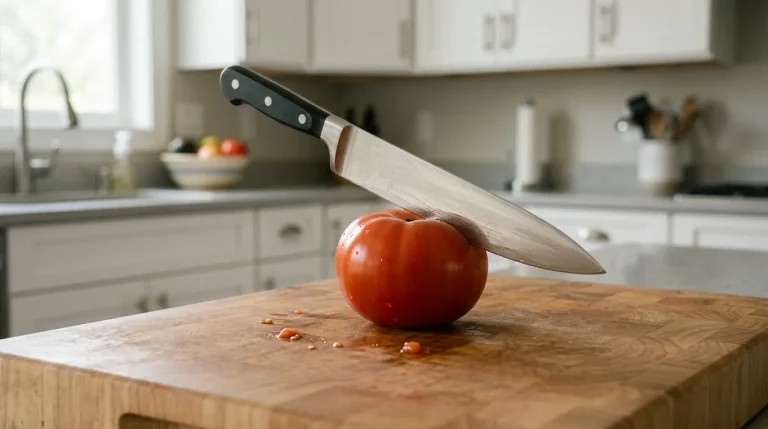
- Tomato test. If the skin slides and crushes before it cuts, hone first. If that fails, sharpen.
- Fingernail bite test. Set the edge on your nail with no pressure. If it skates, the edge is rounded.
- Light reflection test. Hold to a light. If you see shiny spots on the edge, those are flat spots.
- Burr check during sharpening. Feel a tiny burr form and flip. No burr means more work on that side.
Methods: stones, rods, systems, and pros
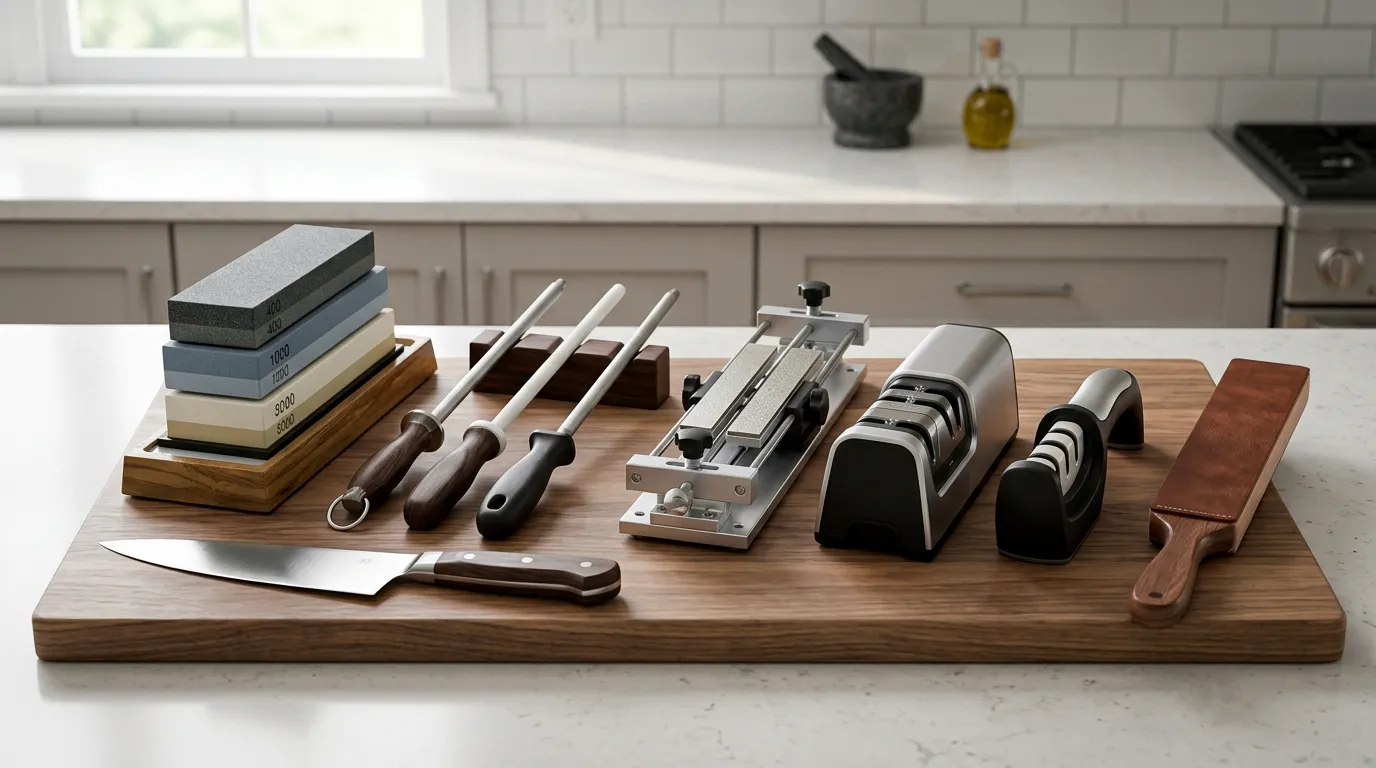
Pick a method you can repeat with control. Consistency beats speed. This knife sharpening frequency guide covers the main options.
Whetstones
- Grits: 400–600 for repairs, 800–1,000 for basic edges, 2,000–3,000 for working sharp, 4,000–8,000 for polish.
- Pros: best control and edge quality. Cheap to maintain.
- Cons: needs practice and flattening of stones.
Honing rods
- Ceramic: light sharpening plus alignment. Great for weekly care.
- Steel: aligns soft steels fast. Skip on very hard, brittle knives.
- Diamond: aggressive. Use with a light touch and not too often.
Guided systems and pull-through
- Guided: steady angle, fast learning. Good for busy folks.
- Pull-through: quick fix, but can remove too much metal and set a coarse angle. Use as a stopgap.
Electric machines
- Fast and easy. Choose a unit that matches your edge angle. They remove more metal, so use sparingly.
Professional service
- Good for major repairs, chips, and serrated blades.
- Cost varies by region and blade length. Ask about angles and grit finish.
A tiny micro-bevel (about 2 degrees higher on the last pass) can make a thin edge tougher. It adds life without losing much bite.
Mistakes to avoid and safety tips
Good edges are safe edges. Bad habits cause slips and chips. This knife sharpening frequency guide flags pitfalls I see a lot.
- Oversharpening. Each pass takes steel. Hone first. Sharpen only when tests say so.
- Wrong angle. Pick an angle and keep it. Wandering angles round the edge.
- Skipping the burr. No burr, no apex. Build a burr, then clean it up.
- Hard boards and plates. They undo your work fast. Use wood or plastic.
- Heavy pressure. Let the grit cut. Use light, even strokes.
- No cleanup. Wipe the blade after sharpening. Remove swarf and grit to protect food.
- Safety setup. Towel under the stone. Fingers above the spine. Slow is smooth.
Care habits that extend time between sharpening
Small steps add weeks of sharp time. Stack these habits, and your knives will thank you. This knife sharpening frequency guide is as much about care as it is about sharpening.
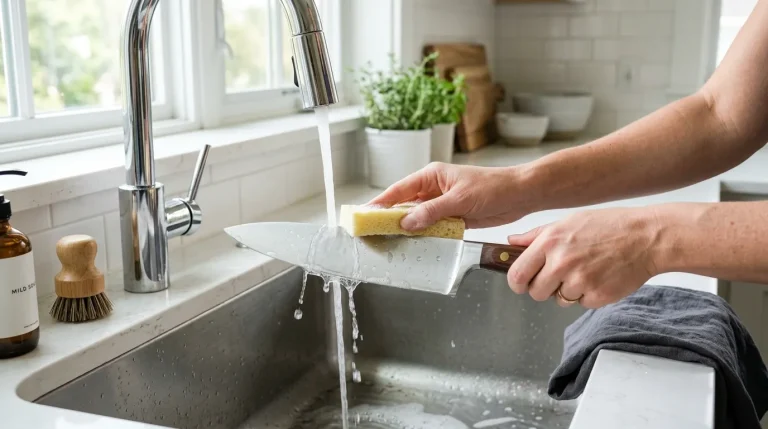
- Hand wash and dry right away. Moisture harms edges and handles.
- Use end grain or soft plastic boards. Avoid glass, marble, or plates.
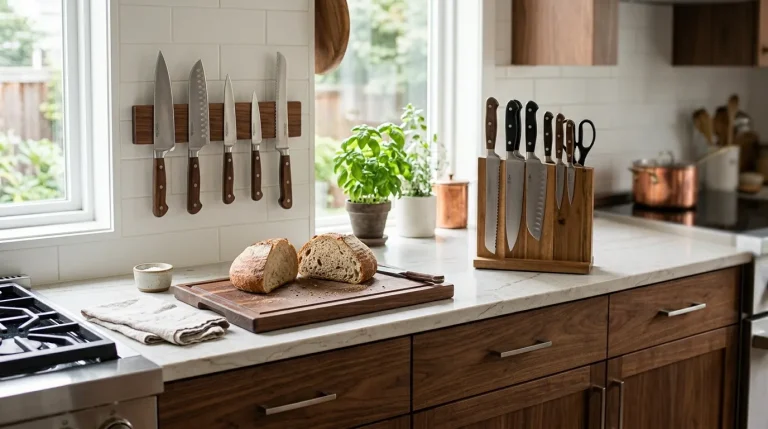
- Store with guards, a block, or a magnetic rack. Do not toss in a drawer.
- Hone little and often. Two to four light strokes per side is plenty.
- Strop after big prep days. It keeps the edge clean and keen.
- Use the spine to scoop. Do not scrape the edge on the board.
- Rotate knives. Share the workload across your set.
My field notes and lessons learned
In my first line cook job, I killed a soft steel chef’s knife in a week. I rocked hard on poly boards and scraped food with the edge. I learned to hone each shift, strop on leather, and sharpen on a 1,000/3,000 stone set every three weeks. Edge life doubled at once.
With a hard Japanese gyuto at 61 HRC, I ran a 15-degree edge and chipped on squash. I added a tiny micro-bevel at the end, and it stopped chipping. For home clients, switching from glass to end grain wood cut sharpening visits in half. This knife sharpening frequency guide comes from those wins and many small mistakes, so you can skip the pain.
Frequently Asked Questions
How often should I sharpen my kitchen knives?
Most home cooks should sharpen every 2–4 months and hone weekly. Pros should sharpen every 2–4 weeks, with daily honing.
Do I need to hone if I already sharpened last month?
Yes. Honing realigns the edge and keeps it cutting clean. It helps you go longer between full sharpening sessions.
What grit stones should I start with?
A 1,000 grit stone and a 3,000 or 4,000 grit stone cover most needs. Add a 400–600 grit for repairs and a strop for polish.
Are electric sharpeners bad for knives?
Not always, but they remove more metal fast. Use a quality unit that matches your angle and do not run it every week.
How do I know if I am removing too much metal?
If you sharpen more often than your tests demand, or your blade thins fast, you are overdoing it. Hone more and sharpen less.
How often should I sharpen a serrated knife?
Every 12–18 months is common, or when it crushes bread. A pro can sharpen the gullets without changing the shape.
Conclusion
Sharp knives save time, boost control, and make cooking fun. Set a simple plan: hone often, strop sometimes, and sharpen when the tests say it is time. Use this knife sharpening frequency guide to match your steel, your board, and your habits.
Try the paper test tonight. If it snags, hone it. If it still drags, schedule a stone session this week. Want more tips like this knife sharpening frequency guide? Subscribe, share your results, or drop a question in the comments.