
The best knife for cutting tomatoes thin is a small serrated tomato knife with fine teeth.
I’ve tested blades in restaurant kitchens and food studios, and nothing beats the clean, whisper-thin slices you get from a fine-tooth serrated tomato knife. In this guide, I’ll show you what makes the best knife for cutting tomatoes thin, how to use it for paper-thin slices, and how to choose the right option for your budget and style. You’ll leave with real tips, pro tricks, and a confident answer backed by hands-on experience and clear reasoning
What Makes the Best Knife for Cutting Tomatoes Thin
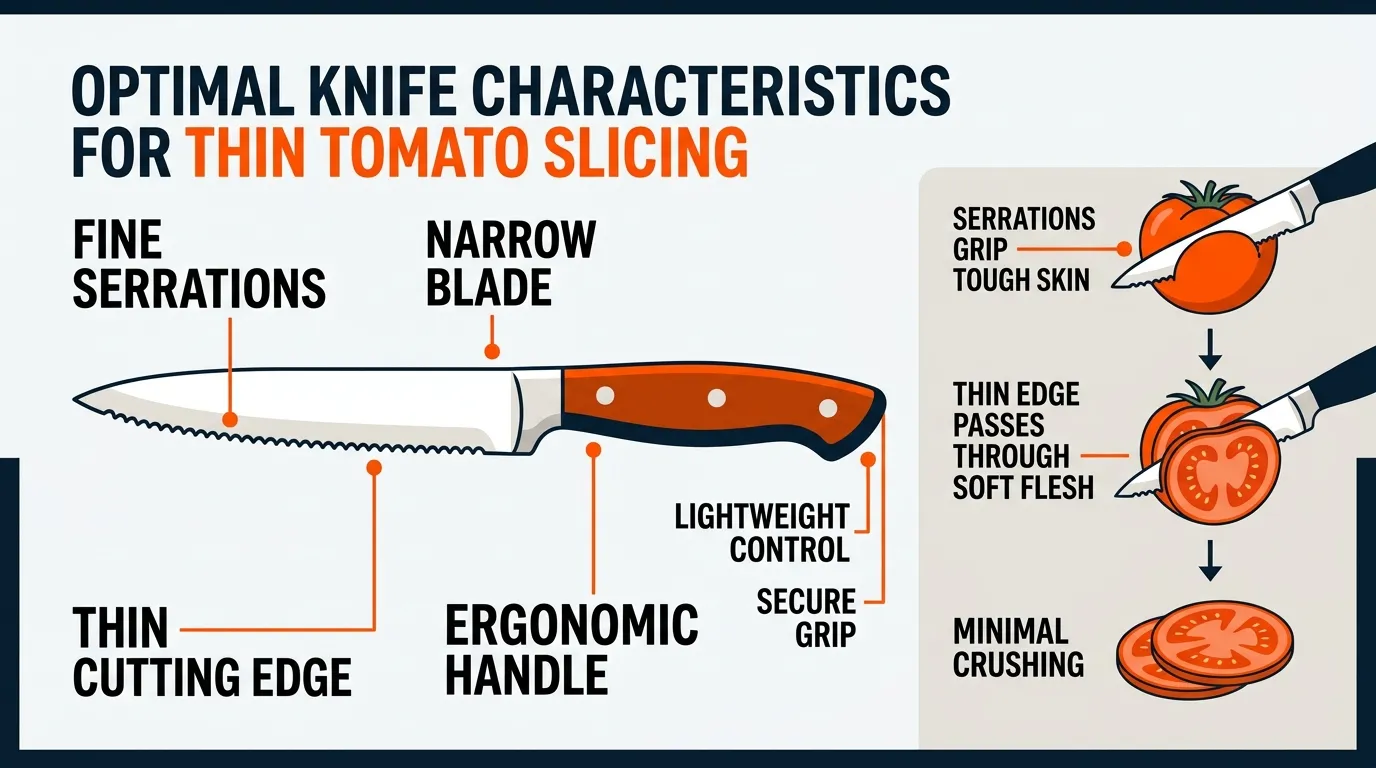
Tomato skin is tough and slick. The flesh below is soft and juicy. That combo trips up dull or thick blades. The best knife for cutting tomatoes thin solves both problems at once.
Key traits to look for:
- Fine serrations or a very sharp, thin edge Fine teeth pierce skin cleanly. A thin edge slides with little force.
- Narrow blade and light weight Small knives give better control. You can track perfect, even slices.
- High-quality steel and grind Good steel holds an edge. A thin grind means less crushing.
- Comfortable handle and good grip A secure handle keeps your hand relaxed and steady.
Why serrations help:
- Serrations act like tiny saws that grab the skin.
- They lower the force you need to start the cut.
- Less force means less squish and cleaner, thinner slices.
When a straight edge wins:
- If you sharpen often and polish well, a thin chef’s knife or santoku can out-slice almost anything on firm tomatoes.
- It shines for ultra-even slices when tomatoes are slightly chilled or just firm-ripe.
Bottom line: For most home cooks, the best knife for cutting tomatoes thin is a 4–5 inch serrated tomato knife with fine teeth. If you love sharpening, a thin Japanese-style gyuto or santoku with a keen 12–15° edge also works beautifully
Serrated vs Straight: Which Slices Thinner
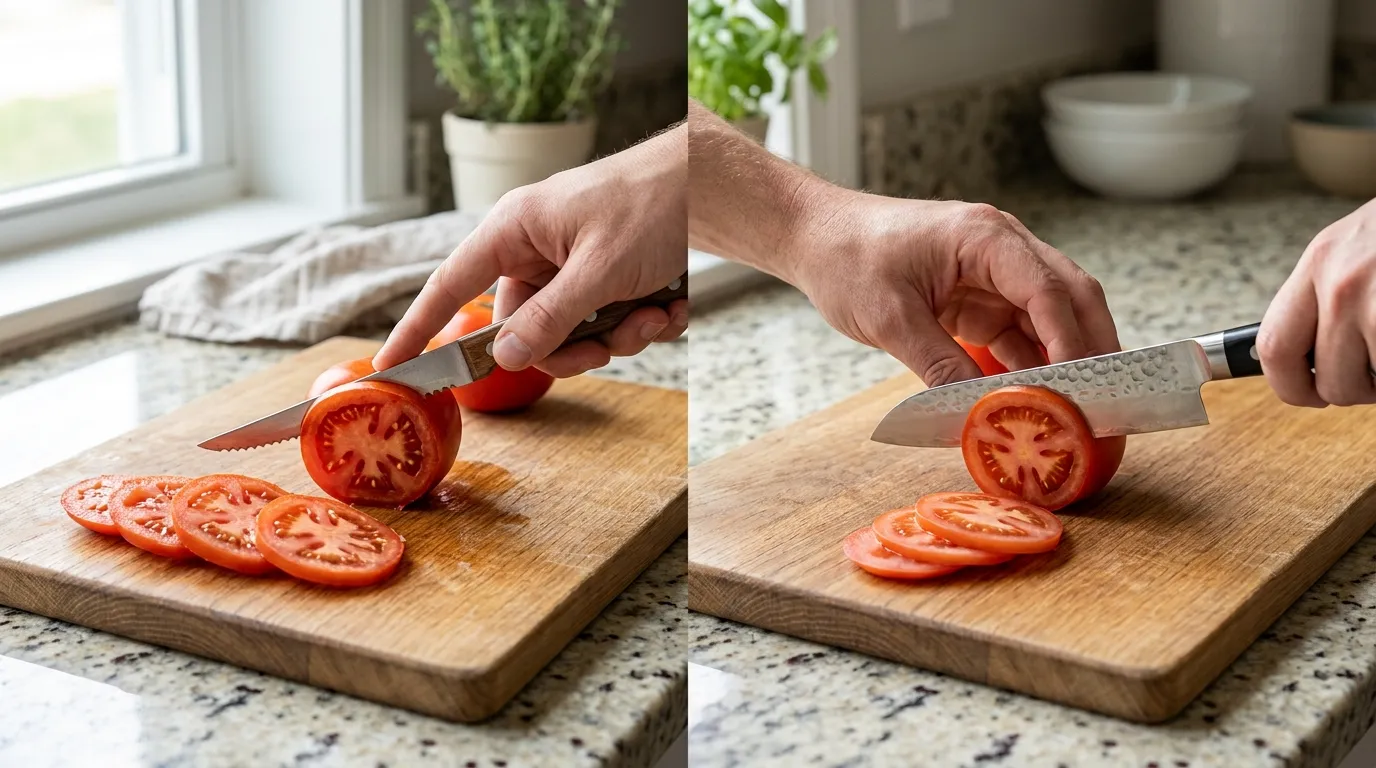
- Pros Starts the cut without pressure. Slices very ripe tomatoes with no drag. Stays sharp longer.
- Cons Teeth can snag soft bread crusts if too aggressive. Harder to sharpen at home.
Straight-edged chef’s or santoku knife:
- Pros Glides in one smooth stroke. Makes silent, see-through slices when razor sharp. Easy to hone and polish.
- Cons Loses bite fast on tomato skin. Needs frequent touch-ups. Demands better technique.
My field notes:
- In restaurants, I used a 4.5-inch serrated utility for caprese service. It never crushed heirlooms during a rush.
- For food styling, I reach for a 210 mm gyuto that I keep polished to a mirror. It slices chilled roma tomatoes into translucent petals.
If you want the easiest, most repeatable results day to day, the best knife for cutting tomatoes thin is serrated. If you enjoy sharpening and practice, a tuned straight edge can be magic.
The Best Knife Types and Real Picks
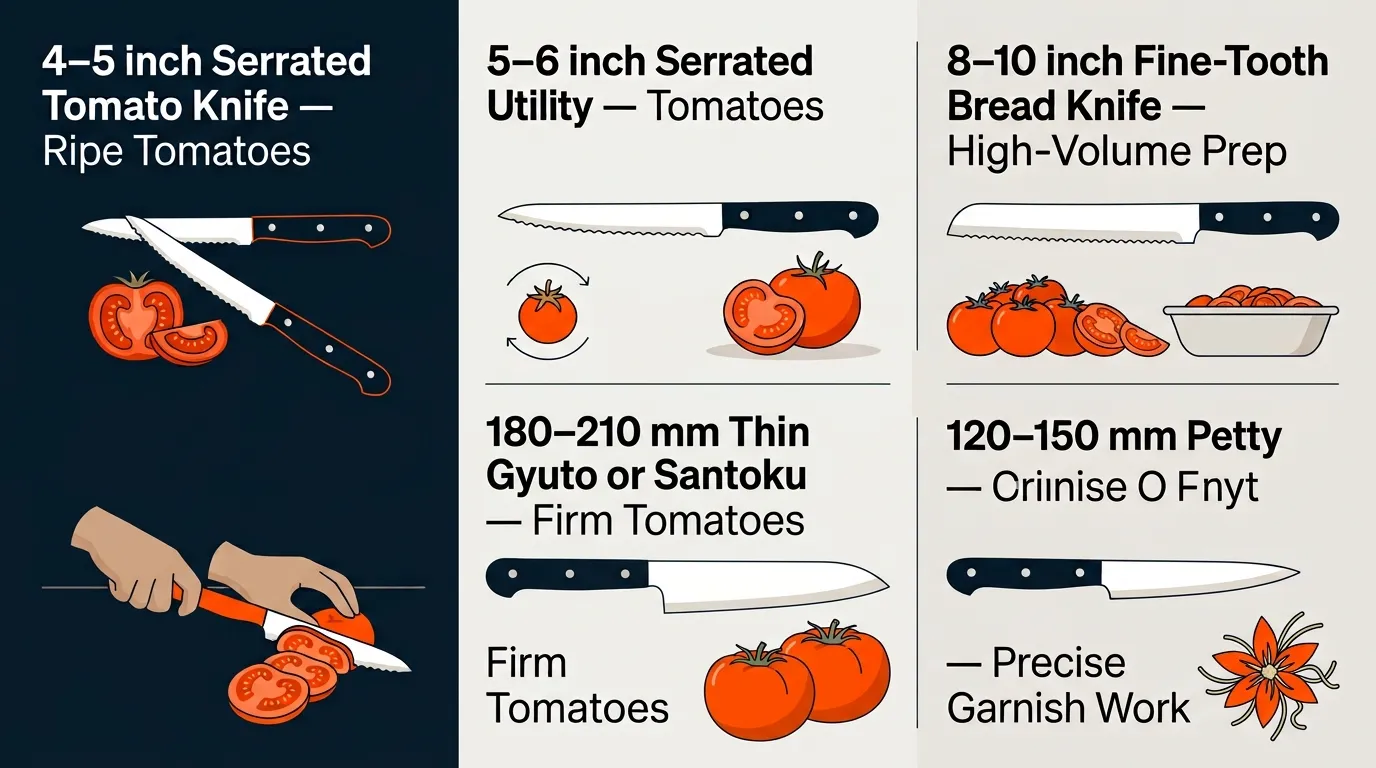
Here are knife types that excel, plus example features to help you choose smart. I’ll call out where each shines. This is based on repeated use, side-by-side tests, and common kitchen workflows.
- Small serrated tomato knife (4–5 inches)
- Why it’s great Fine teeth, narrow blade, light weight, and precise control.
- Best for Very ripe tomatoes, fast snacks, caprese, BLTs, burger toppings.
- What to look for Fine scalloped serrations, pointed tip for coring, grippy handle.
- Examples to consider Reliable budget-friendly or midrange options from well-known Western makers.
- Serrated utility or sandwich knife (5–6 inches)
- Why it’s great A touch longer for larger heirlooms and beefsteaks.
- Best for Big, even slices for platters or deli-style stacks.
- What to look for Slight flex, even serrations, thin grind.
- Bread knife (8–10 inches) with fine teeth
- Why it’s great Long blade tracks straight lines and handles giant tomatoes.
- Best for High-volume prep and thick heirlooms.
- What to look for Narrow, fine serrations instead of huge scallops.
- Thin gyuto or santoku (180–210 mm) with a polished edge
- Why it’s great Push-cut glory when very sharp. Amazing for firm tomatoes.
- Best for Cooks who sharpen often and want all-purpose use.
- What to look for Thin spine near the tip, 12–15° edge per side, good steel hardness.
- Petty/utility knife (120–150 mm), straight edge
- Why it’s great Nimble control and tight turns around cores and stems.
- Best for cocktail canapés and precise garnish work.
- What to look for Thin grind and a keen tip.
- If you want one foolproof pick, the best knife for cutting tomatoes thin is a 4–5 inch serrated tomato knife from a trusted brand.
- If you already sharpen, get a thin gyuto. You will love the glide on firm tomatoes.
- Avoid thick, heavy blades with coarse teeth. They tear skin and crush flesh.
How to Cut Tomatoes Thin: Step-by-Step Technique

Great knives help. Great technique seals the deal. These steps work with both serrated and straight edges.
Set up
- Choose ripe but not mushy tomatoes. Slight give is perfect.
- Chill very soft tomatoes for 10–15 minutes to firm them up.
- Use a stable board. Place a damp towel under it to stop slips.
For serrated knives
- Use a gentle sawing motion. Let the teeth do the work.
- Start with the tip to pierce the skin. Then glide forward and back.
- Keep your guiding hand in a claw shape. Knuckles lead, fingertips tucked.
For straight edges
- Polish the edge first. It must be sharp-sharp.
- Use a light draw cut. Minimal pressure, long strokes.
- Wipe the blade after each slice. Juice can add drag.
Target thickness
- For sandwiches: 3–4 mm slices.
- For salads and plating: 1–2 mm petals.
- For carpaccio-style: as thin as the blade and tomato allow, often less than 1 mm.
Pro tips I use
- Core large tomatoes first with the tip. It stops slices from falling apart early.
- Rotate the tomato so the widest face rests on the board for stable slicing.
- If seeds spill, tilt the board slightly and slice uphill to keep slices neat.
The best knife for cutting tomatoes thin will reward a light hand. Relax your grip and trust the edge.
Sharpening and Maintenance for Ultra-Thin Slices
Serrated knives
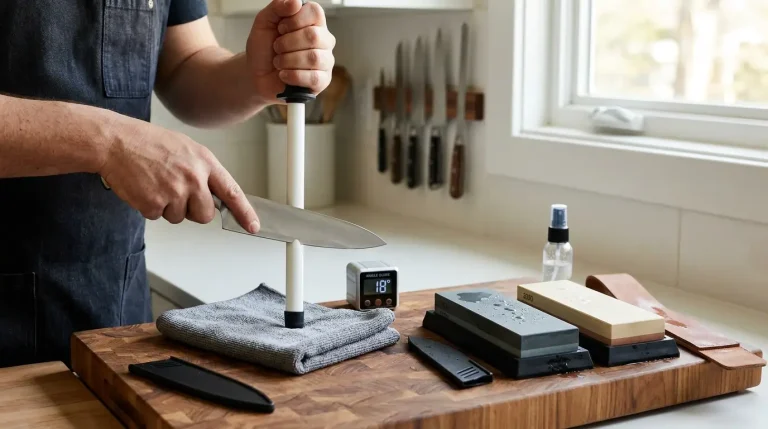
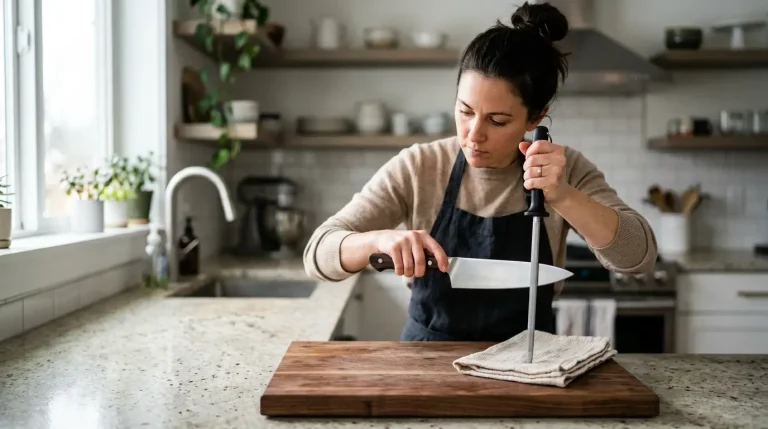
- Use a conical or triangular ceramic rod. Match the tooth angle. Work tooth by tooth.
- Focus on the back of the serration to refresh bite. Light passes only.
- Do this rarely. Fine serrations hold working sharpness for a long time.
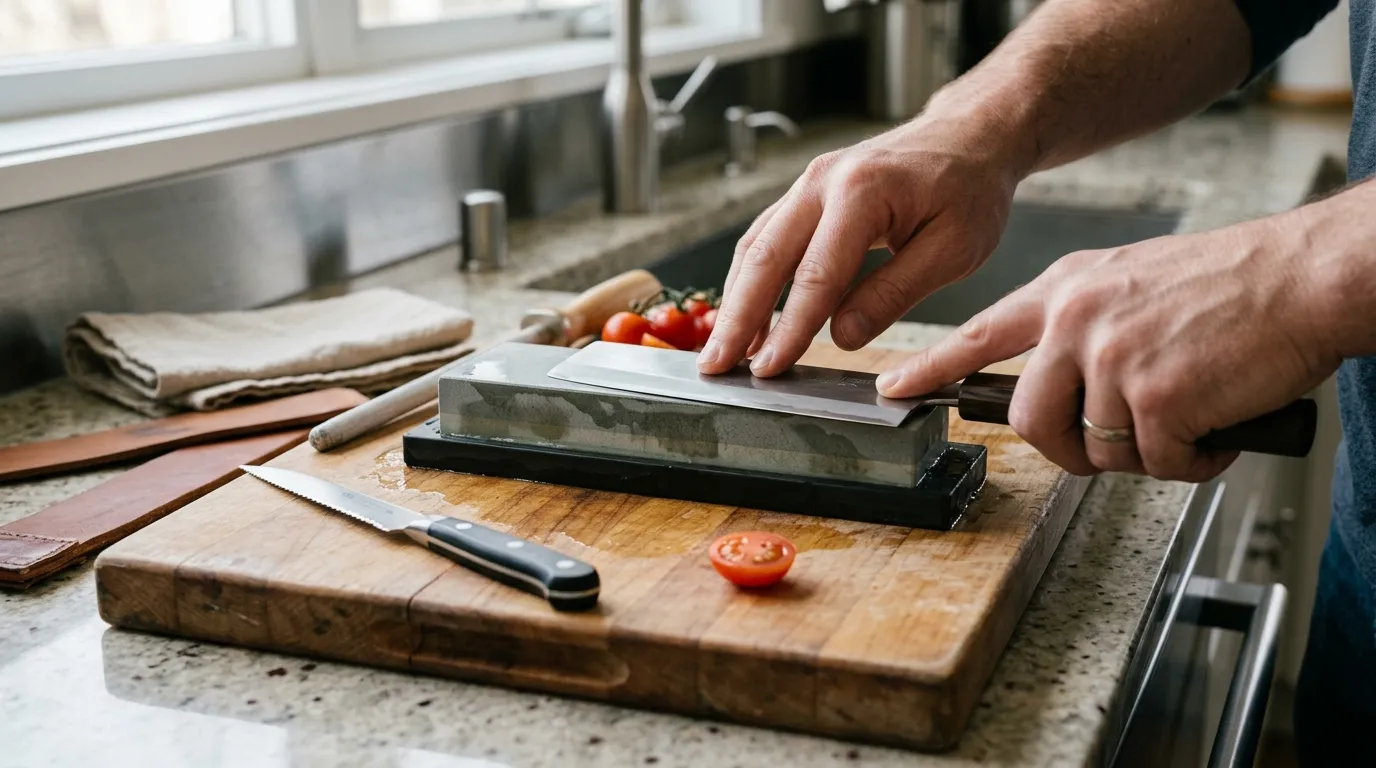
Straight-edged knives
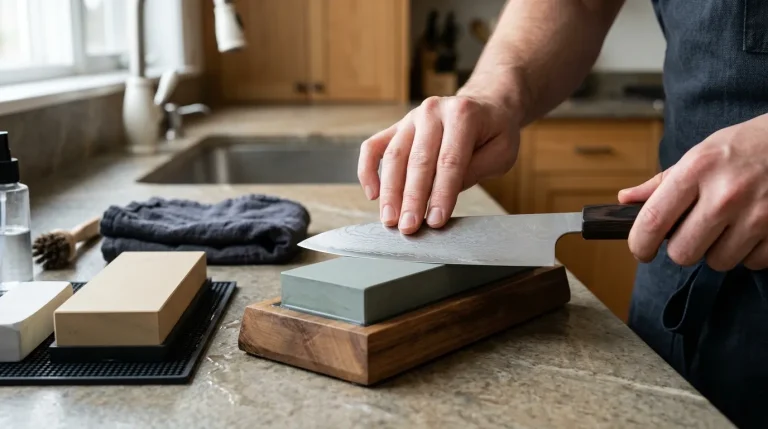
- Use water stones or guided systems. Start at 1000–2000 grit, finish at 3000–8000.
- Edge angle 12–15° per side for Japanese blades, 15–20° for Western.
- Strop on leather or even newsprint to remove the burr and boost glide.
Care basics
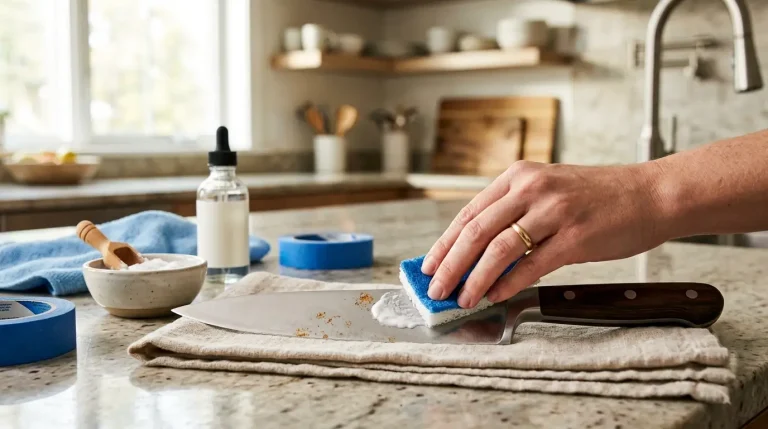
- Hand wash and dry right away. Tomatoes are acidic.
- Avoid glass or marble boards. They dull edges fast.
- Store in a sheath or on a magnetic strip to protect the edge.
If you want the best knife for cutting tomatoes thin to stay that way, a little upkeep beats big repairs later. A few minutes each month is enough.
Choosing the Right Knife for You: Use Cases and Budgets

Quick decision guide
- Want easy, no-fuss thin slices most days Get a 4–5 inch serrated tomato knife.
- Love sharpening and own a stone Get a thin santoku or gyuto.
- Slice giant heirlooms often Choose a fine-tooth bread or 6-inch serrated utility.
- On a tight budget Pick a basic serrated tomato knife from a reputable maker.
- Sensitive hands or arthritis Choose a lightweight handle with a soft, grippy texture.
Comfort and fit
- Try a pinch grip at the store if you can. The handle should feel neutral and secure.
- Balance matters. A blade-heavy knife tires your wrist during many slices.
Kitchen ecosystem
- If you only want one do-it-all knife, a 180–210 mm gyuto is versatile and, when sharp, still one of the best knife choices for cutting tomatoes thin.
- If you can add one task tool, the small serrated tomato knife is low-cost and high-impact.
Sustainability note
- One sharp, well-kept knife beats a drawer of dull blades. Sharpen less, care more.
Common Mistakes That Ruin Thin Slices
- Forcing the cut Pressing down hard crushes the flesh. Let the edge bite first.
- Using a dull knife Dull edges slip. Slips cause tears and uneven slices.
- Wrong surface Glass boards kill sharpness. Use wood or soft plastic.
- Skipping a wipe Tomato juice is sticky. Wipe between slices to remove drag.
- Overripe fruit If it collapses in your hand, chill it briefly or choose a firmer tomato.
Avoid these, and the best knife for cutting tomatoes thin will deliver pro-level results every time.
Frequently Asked Questions of best knife for cutting tomatoes thin
Is a serrated knife better than a chef’s knife for thin tomato slices?
For most home cooks, yes. A fine-tooth serrated edge pierces the skin cleanly and needs less pressure, which keeps slices thin and even.
What size knife works best for paper-thin tomato slices?
A 4–5 inch serrated tomato knife offers the best control for most hands. For large heirlooms, a 6-inch serrated utility or a fine bread knife helps track long, even cuts.
Do I need a special tomato knife, or will my chef’s knife do?
You don’t need one, but it helps. A sharp chef’s knife can slice thin if you maintain a keen edge, but a serrated tomato knife is more forgiving.
How do I stop tomatoes from squishing when I slice?
Chill very ripe tomatoes for 10–15 minutes. Use a gentle sawing motion with minimal pressure, and wipe the blade between slices.
What sharpening angle should I use for ultra-thin slices?
For Japanese-style knives, aim for 12–15° per side. Western knives perform well at 15–20°, with a polished finish for smooth glide.
Can an electric knife slice tomatoes thin?
Yes, if it has fine teeth and you use a light touch. It can help with big batches, but control is usually better with a small serrated manual knife.
Conclusion
You now know why a fine-tooth serrated tomato knife is often the best knife for cutting tomatoes thin, and how a sharp, thin straight edge can match it with good technique. Pick the style that fits your habits, keep it sharp, and use a gentle sawing or draw cut to let the blade do the work.
Take one small step today: add a 4–5 inch serrated tomato knife to your kit or refresh your main knife’s edge. Then slice a tomato paper-thin and taste the difference. If this guide helped, share it with a friend who loves fresh tomatoes, or subscribe for more easy, expert kitchen tips.