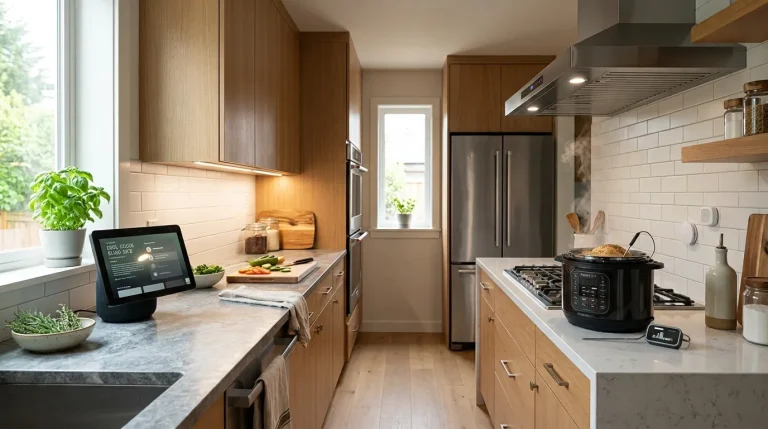
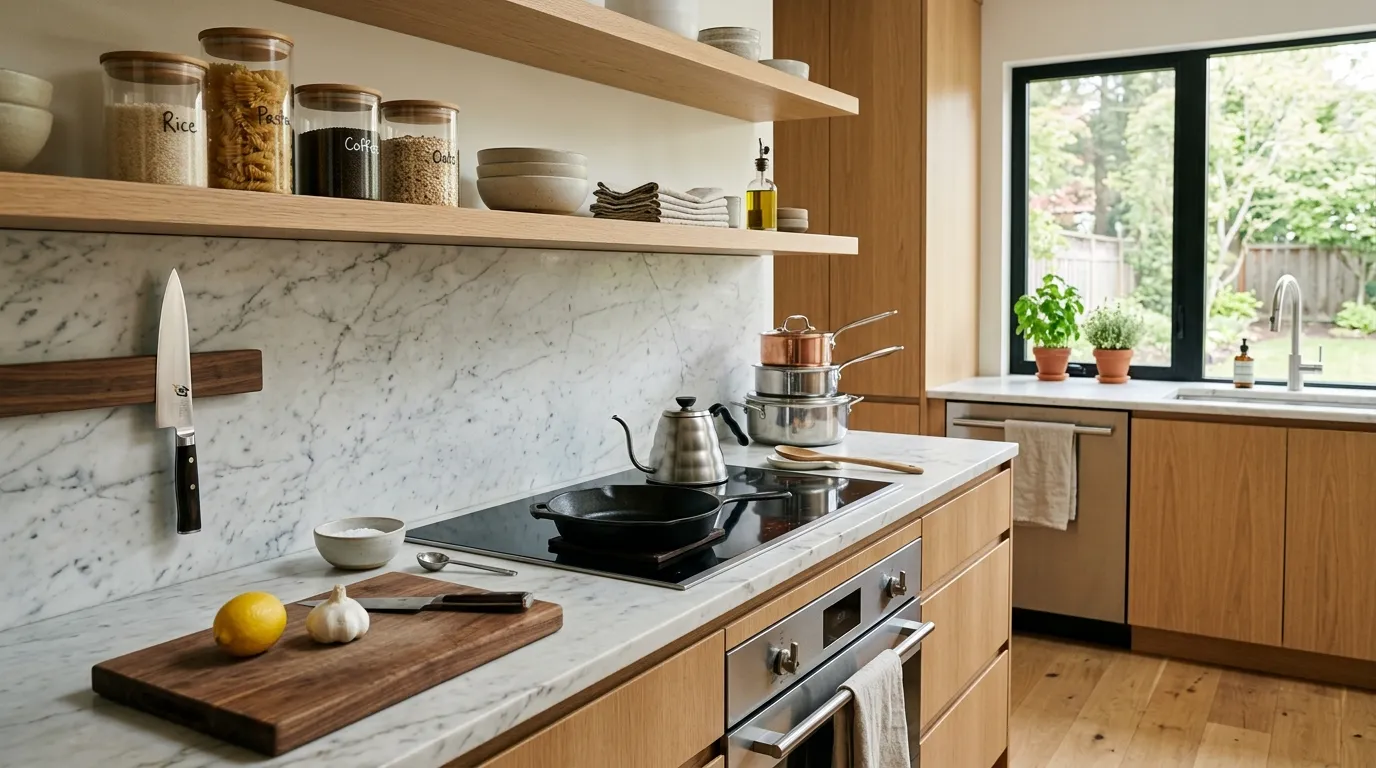
A Minimalist Kitchen Guide helps you cook better with fewer tools, less clutter, and joy.
If you want to cook faster, waste less, and love your space again, you are in the right place. I have built and coached many simple kitchens. This Minimalist Kitchen Guide gives you clear steps, real examples, and tested tips. You will learn what to keep, what to skip, and how to make it feel calm yet ready for action.
What Is a Minimalist Kitchen?
A minimalist kitchen is a space that does more with less. It strips back to the tools, food, and systems that serve you daily. No extras. No visual noise.
In practice, that means fewer gadgets and clear counters. It also means a capsule pantry, smart storage, and a steady routine. The goal is ease. In this Minimalist Kitchen Guide, we focus on function first, then style that supports it.
You still cook all your favorite meals. You just do it with less stress and less stuff. This shift changes how your kitchen looks and how it feels to cook.
Why Minimalism Works in the Kitchen
A kitchen has many moving parts. Food, heat, water, time, tools. Fewer, better items cut friction. Research on choice overload shows that fewer choices help you act faster and feel better about your pick. The same is true at the stove.
Key benefits you can expect:
- Faster prep and cleanup Fewer tools and simpler surfaces speed up every task.
- Better food quality You can see what you have, so food gets used on time.
- Lower costs You buy once and buy well. No more duplicates.
- Safer space Clear counters and solid tools reduce accidents.
- Greener habits Less waste, less plastic, and less energy use.
This Minimalist Kitchen Guide pairs the science of habit with real kitchen flow. Clear zones, fewer steps, and calm sight lines lead to steady cooking and less stress.
A Step-by-Step Minimalist Kitchen Guide to Declutter
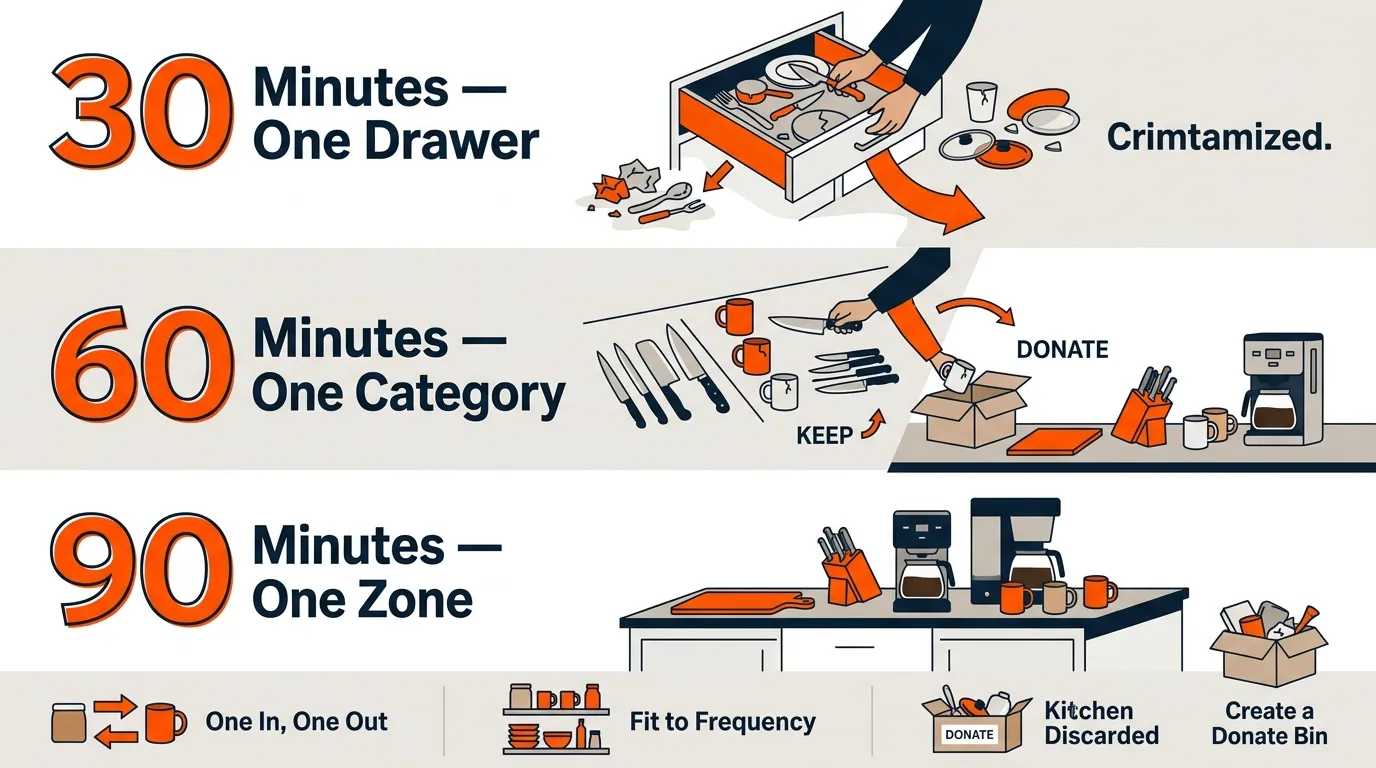
You do not need a full weekend. Use short, focused rounds. I use the 30–60–90 method. It helps you build pace and wins.
- 30 minutes Triage one drawer. Pull out clear trash. Remove dead tools and broken lids.
- 60 minutes One category sweep. Pick knives, mugs, or baking tools. Keep the best, donate the rest.
- 90 minutes One zone reset. Do the prep zone or coffee zone. Empty, clean, and reload only the items you use weekly.
Use simple rules:
- One in, one out Keep counts for mugs, spatulas, and containers.
- Fit to frequency Keep daily tools at arm’s reach. Rare tools can live higher or deeper.
- Create a donate bin Keep it near the door. Move items out fast.
A quick story from my work Life got easier for a client when we cut her seven spatulas to two. She had more space and less to clean. She now cooks more often and says cleanup takes half the time. This Minimalist Kitchen Guide works because it matches how you live, not how a store display looks.
The Essential Kit: Tools You Actually Need
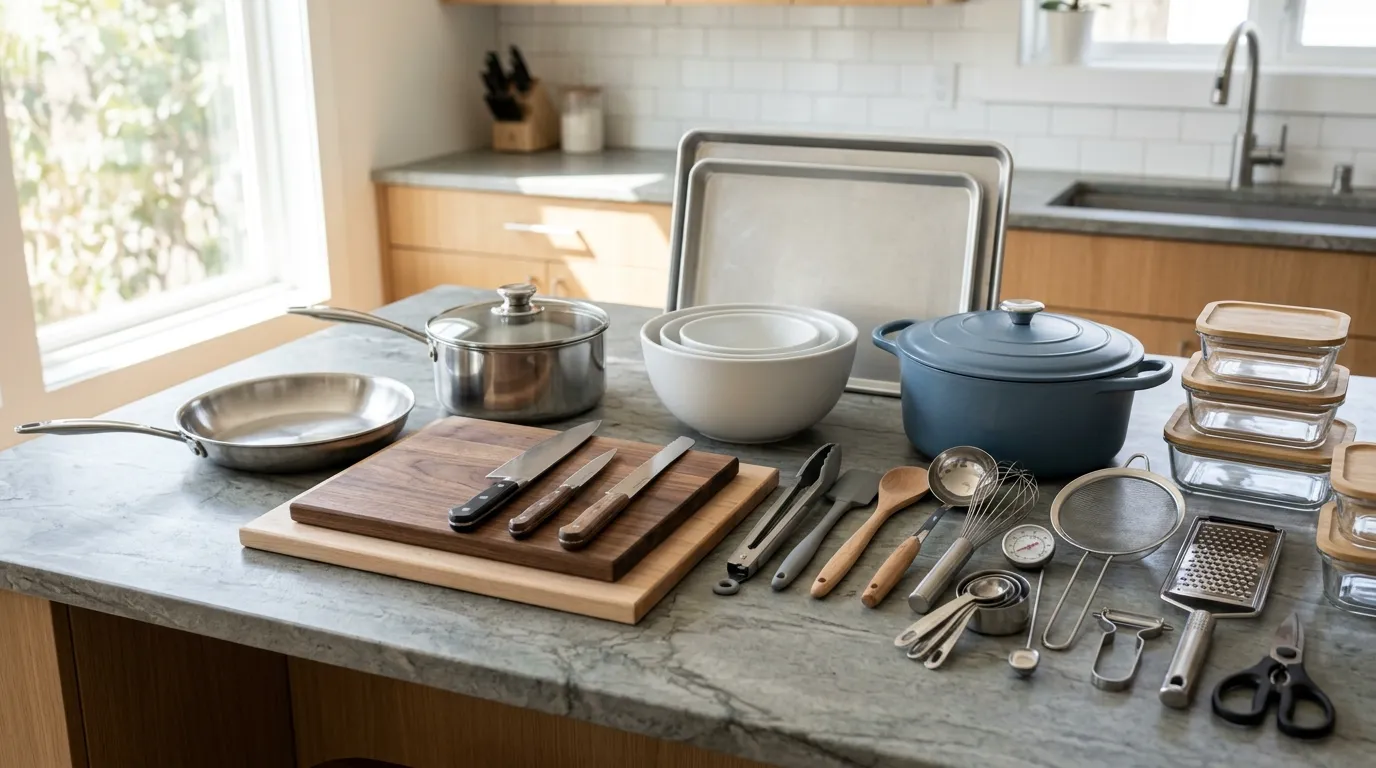
You need less than you think. Pick durable tools that cover many tasks. Here is a lean starter set I use in most projects.
Knives
- Chef’s knife 8 inches for most jobs.
- Paring knife For small cuts and fruit.
- Bread knife Serrated for loaves and tender items.
Boards and bowls
- Two cutting boards One for produce, one for meat or bread.
- Three mixing bowls Nesting, metal or glass.
Cookware
- Skillet 10–12 inches, stainless or cast iron.
- Saucepan 2–3 quarts with lid.
- Dutch oven 5–6 quarts. Great for soups, braises, and bread.
- Sheet pan Two half sheets for roasting and baking.
Tools
- Tongs, spatula, wooden spoon, ladle, whisk
- Measuring cups and spoons
- Instant-read thermometer
- Fine mesh strainer
- Box grater and peeler
- Can opener and shears
Containers
- Five to eight glass containers Mixed sizes with tight lids.
- Two squeeze bottles Oil or sauces.
- Mason jars For dry goods or dressings.
Appliances Choose with care
- Blender or stick blender One is enough for soups and smoothies.
- Rice cooker or multi-cooker Only if you use it weekly.
- Toaster oven if you cook for one or two It can replace an oven many days.
Choose quality, not count. A strong pan and a sharp knife beat ten weak gadgets. This Minimalist Kitchen Guide favors gear that lasts and does many jobs.
Smart Layouts and Storage That Save Steps
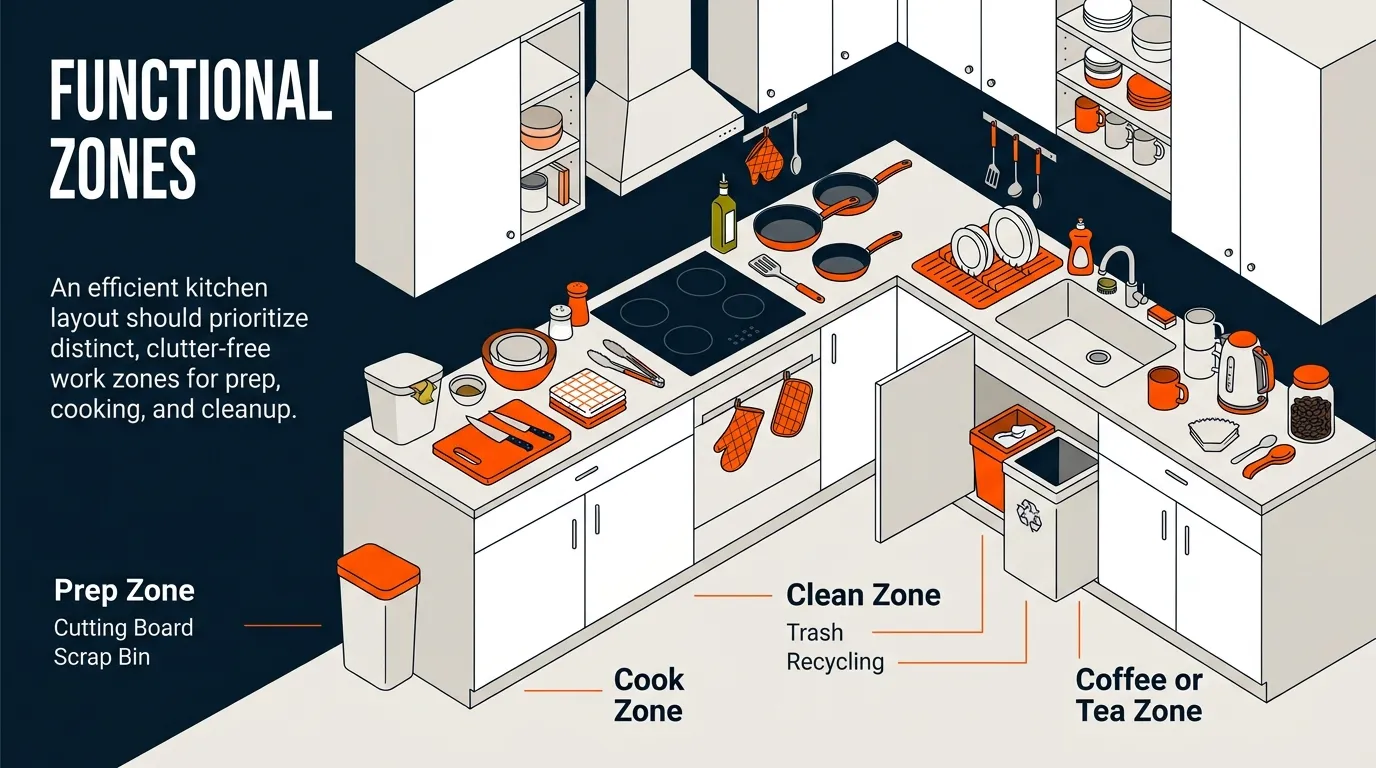
Your body is the best blueprint. Store things where you use them. Cut steps and turns. Keep sight lines clear to reduce visual load.
Zone ideas
- Prep zone Board, knives, bowls, towels, bin for scraps.
- Cook zone Salt, oil, tongs, spatula, oven mitts, pans.
- Clean zone Soap, brush, drying mat, trash, and recycling.
- Coffee or tea zone Mugs, kettle, beans, filters, spoons.
Storage tips
- Use vertical space Add shelf risers and hooks. Hang tools, not clutter.
- Follow FIFO First in, first out. Put new items behind old items.
- Label light Use short labels for jars and bins. Date perishable items.
- Keep counters lean Only daily tools and one decor piece max.
From my own kitchen I keep salt, oil, tongs, and a spoon rest by the stove. I reach less and cook more. This Minimalist Kitchen Guide keeps motion smooth and safe.
Pantry and Meal Planning Made Simple
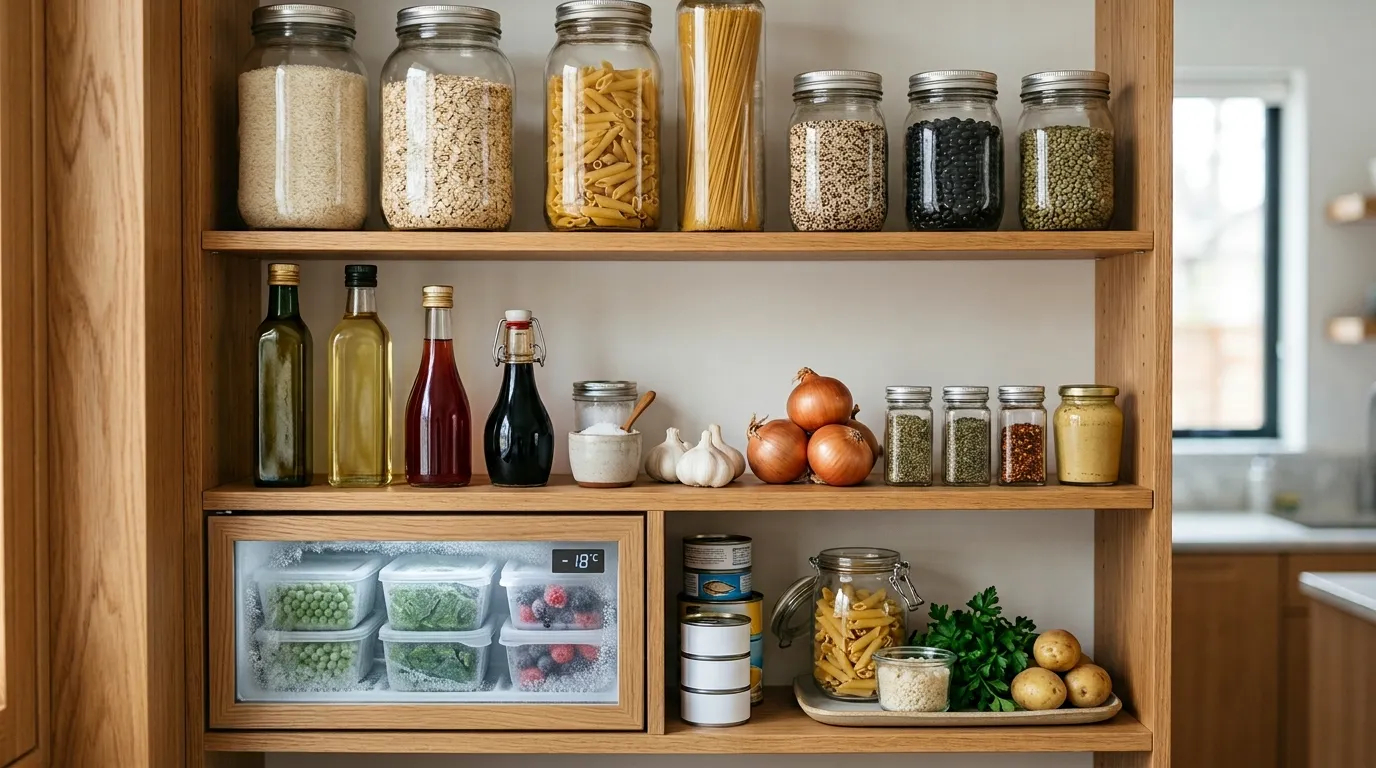
A capsule pantry is the heart of a minimalist kitchen. Stock flexible items that mix well. Then plan simple meals around them.
Capsule pantry basics
- Grains Rice, oats, pasta, quinoa.
- Proteins Beans, lentils, canned fish, eggs, tofu.
- Fats Olive oil, neutral oil, butter or ghee.
- Acid and salt Vinegar, citrus, soy sauce, kosher salt.
- Flavor builders Garlic, onions, chilies, dried herbs, mustard.
- Freezer helpers Frozen peas, spinach, berries, broth.
Meal planning in 15 minutes
- Pick two mains per week Soup and a stir-fry. Or tacos and a pasta.
- Batch one base Cook a pot of grains or beans.
- Prep small Chop onions and greens for two days only.
- Plan rescue meals Eggs on toast, tuna pasta, fried rice.
Waste less with simple habits
- Use a weekly eat-first bin Put near the front. Clear it by Friday.
- Cook once, eat twice Make extra rice or roast veg for new meals.
This Minimalist Kitchen Guide uses patterns, not strict rules. You choose a base and swap flavors. It stays fresh without the stress.
Design Tips for Calm, Bright Spaces
Good design helps you act without effort. Aim for calm and clear.
Keep it simple
- Light colors on walls and cabinets Reflect light and lift mood.
- One or two materials Wood and steel. Or stone and glass.
- Low-contrast counters Hide small mess and reduce glare.
- Warm light in the evening Use under-cabinet task lights.
Small space moves
- Foldable tools Nesting bowls and collapsible colanders.
- Magnetic strip for knives Saves drawer space and adds safety.
- Rolling cart as a mobile zone Holds coffee gear or baking tools.
Renters can still upgrade Try peel-and-stick tiles, shelf liners, and command hooks. This Minimalist Kitchen Guide shows that simple changes can feel big.
Cleaning, Upkeep, and Daily Routines
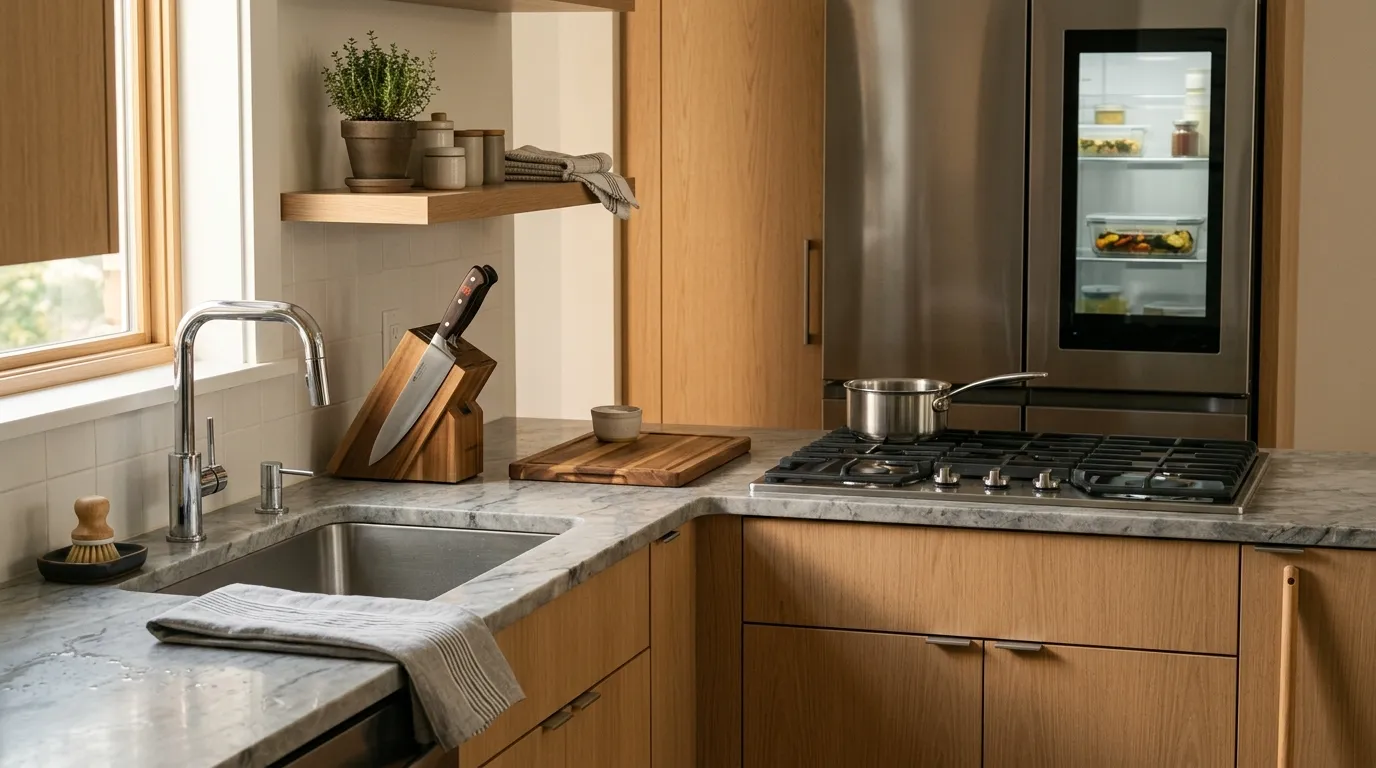
A simple kitchen is easy to reset. Small, steady habits keep it that way.
Daily five
- Clear the sink after dinner.
- Wipe the stove and counters.
- Sweep crumbs near the prep zone.
- Check the eat-first bin.
- Set out tomorrow’s pan or pot.
Weekly twenty
- Clean the fridge door shelves.
- Wash the trash can lid.
- Sharpen the chef’s knife a few strokes.
- Restock salt, oil, and towels.
- Bake soda refresh for sponges or brushes.
Food safety basics Use the thermometer for meats and leftovers. Cool hot food fast in shallow containers. Keep raw proteins low in the fridge. These simple steps match best practice and keep you healthy. This Minimalist Kitchen Guide builds safety into your flow.
Buying Better: Budget, Materials, and Longevity
Spend once. Use for years. That is the core rule.
How to choose
- Hold the tool It should feel balanced and solid.
- Check the material Stainless, cast iron, carbon steel, and glass last.
- Look for service Lids and parts should be easy to replace.
- Read the care needs You should be willing to follow them.
Where to spend
- Knives and pans Daily drivers deserve quality.
- Boards and containers You touch them often. They must feel safe and clean.
Where to save
- Specialized gadgets Skip unless used weekly.
- Duplicate sizes One skillet can do many jobs.
This Minimalist Kitchen Guide helps you build a kit you will trust for a decade or more.
Mistakes I Made and How You Can Avoid Them
I have tested many layouts and tools. Here are common traps and fixes.
- Buying sets you do not need Sets look neat, but half the pieces sit. Buy singles that fit your meals.
- Deep storage with no map Items vanish. Use shallow bins and labels you can see at a glance.
- Pretty, not practical I once chose a tiny sink. Washing pans was hard. Now I pick a deep, single-bowl sink first.
- Over-prepping on Sunday Big preps can lead to waste. Prep for two days, not seven.
- Hiding trash and recycling too far away If it is hard to reach, it piles up. Keep it near your prep zone.
This Minimalist Kitchen Guide is honest about trade-offs. Beauty matters, but function goes first.
A Real-World Minimalist Kitchen Guide Case Study
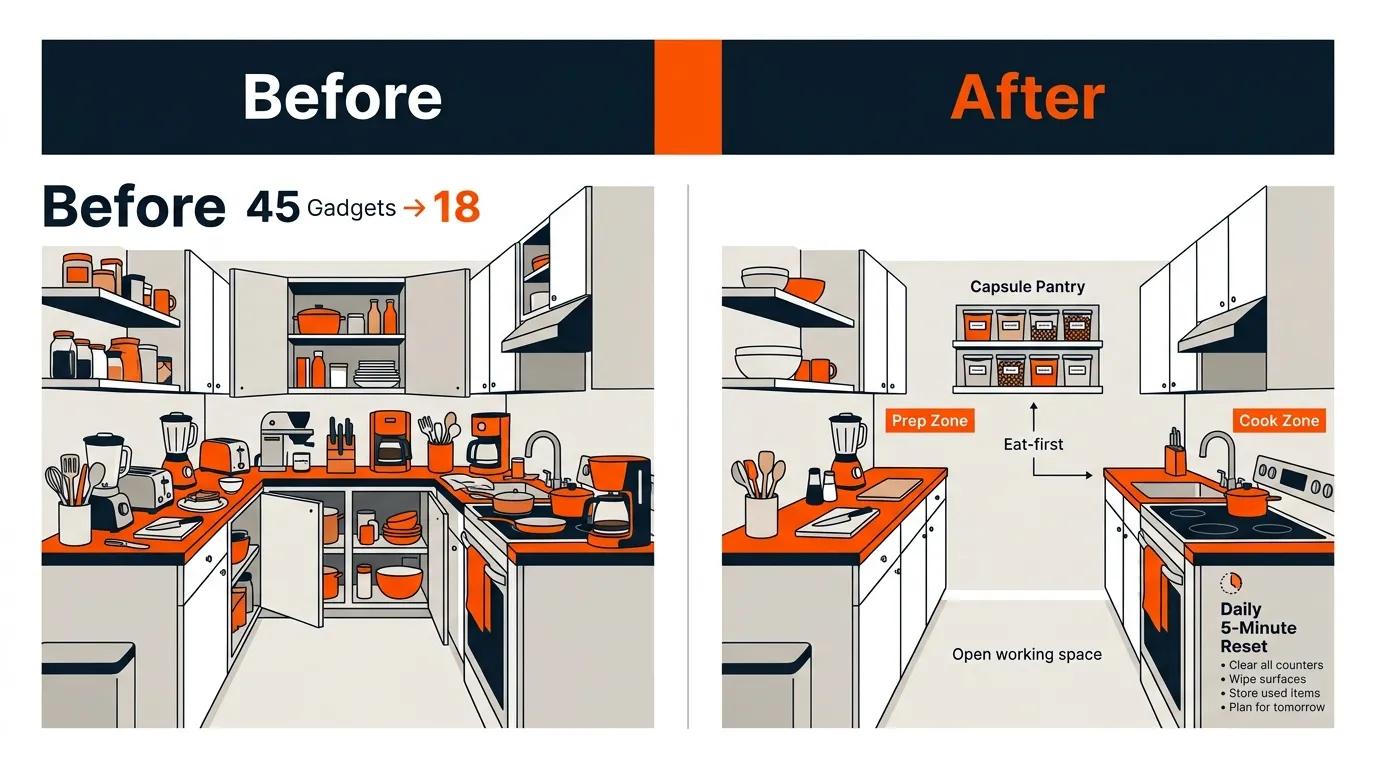
A family of four had a small galley kitchen. They cooked most nights but felt slow and crowded.
What we changed
- Cut gadgets from 45 to 18. Donated four duplicate spatulas and two blenders.
- Built zones Prep under the window. Cook by the range with a small shelf for oil and salt.
- Capsule pantry Moved bulk snacks to clear bins with labels. Set an eat-first bin.
- Routine Daily five-minute reset. Knife touch-up every Sunday.
Results after four weeks
- Prep time fell by 30 percent.
- Food waste dropped by about a third.
- The kids made eggs on their own on weekends.
Their words The kitchen feels calm. We know where things live. This Minimalist Kitchen Guide gave them a system they now keep with ease.
Frequently Asked Questions of Minimalist Kitchen Guide
How many pans do I really need?
Most home cooks do well with one skillet, one saucepan, and one Dutch oven. Add a sheet pan or two for roasting and baking.
What is a capsule pantry in a Minimalist Kitchen Guide?
It is a tight list of staples that mix and match for many meals. It cuts choices and keeps shopping easy.
How do I keep counters clear without losing tools?
Store daily tools in the prime drawer or a small caddy. Leave only the kettle or coffee maker out if used every day.
Is cast iron worth it for a minimalist kitchen?
Yes, if you will care for it. It lasts, sears well, and goes from stove to oven.
How do I start if I feel overwhelmed?
Begin with one drawer and one rule. Remove broken or unused items. Small wins build fast momentum.
Can I be minimalist and still bake often?
Yes. Keep core tools like a sheet pan, mixer or whisk, and two cake pans. Skip one-off gadgets you rarely use.
Does a Minimalist Kitchen Guide work for families?
It does. Clear zones and fewer choices help kids help out. Label bins and keep snacks at kid height.
Conclusion
A calm, capable kitchen is not about owning more. It is about owning what serves you and setting it up right. With this Minimalist Kitchen Guide, you can declutter, design smart zones, stock a capsule pantry, and build easy routines.
Pick one step today. Empty one drawer. Set an eat-first bin. Or sharpen your chef’s knife. Small moves stack into lasting change.
Want more simple kitchen ideas and weekly checklists? Subscribe for fresh tips, or drop a comment with your biggest kitchen headache so I can help next.