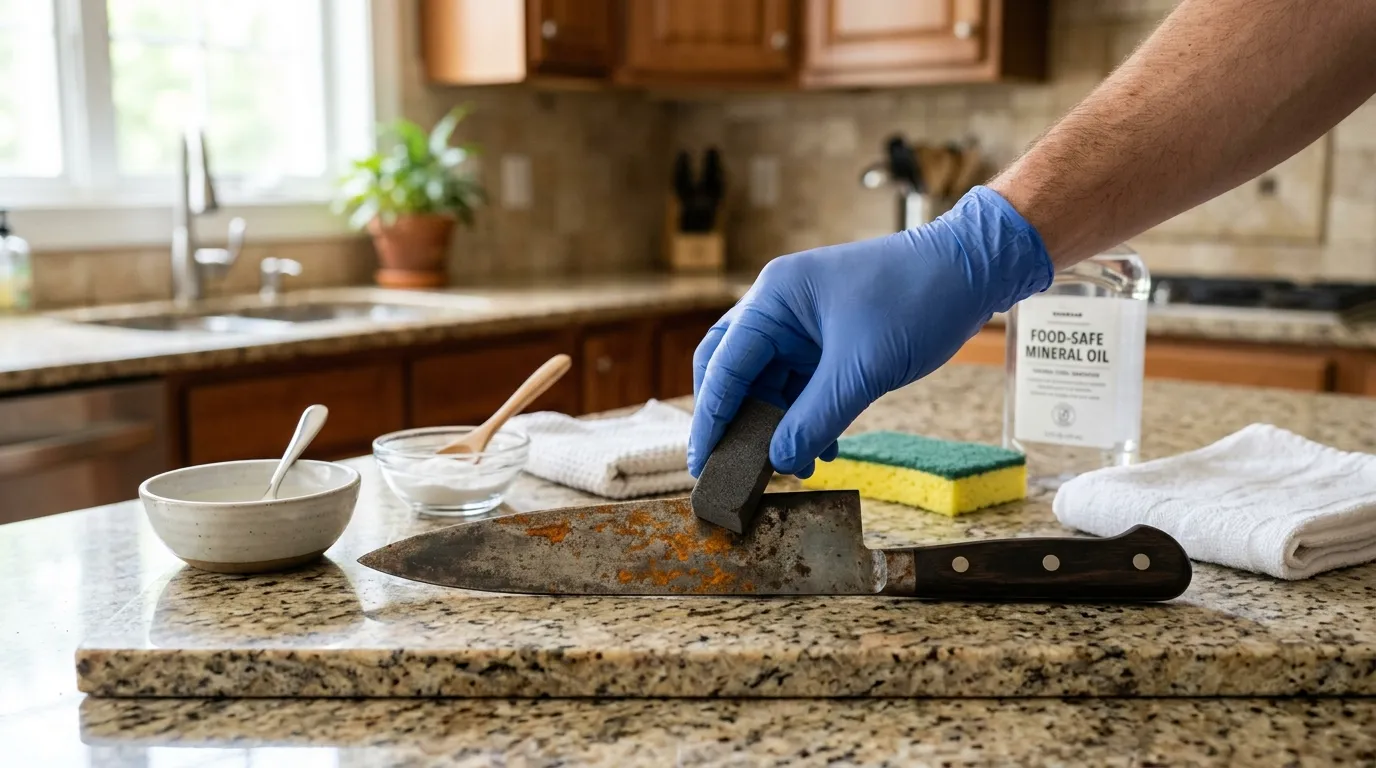
Remove knife rust with gentle abrasives or mild acids, then dry and oil.
If orange spots are showing on your favorite blade, don’t panic. This knife rust removal guide walks you through safe, proven steps I use in my own shop. You will learn why rust starts, how to stop it fast, and how to keep it from coming back. Follow this knife rust removal guide for clear steps, food-safe tips, and pro-level results
What rust is and why it forms on knives
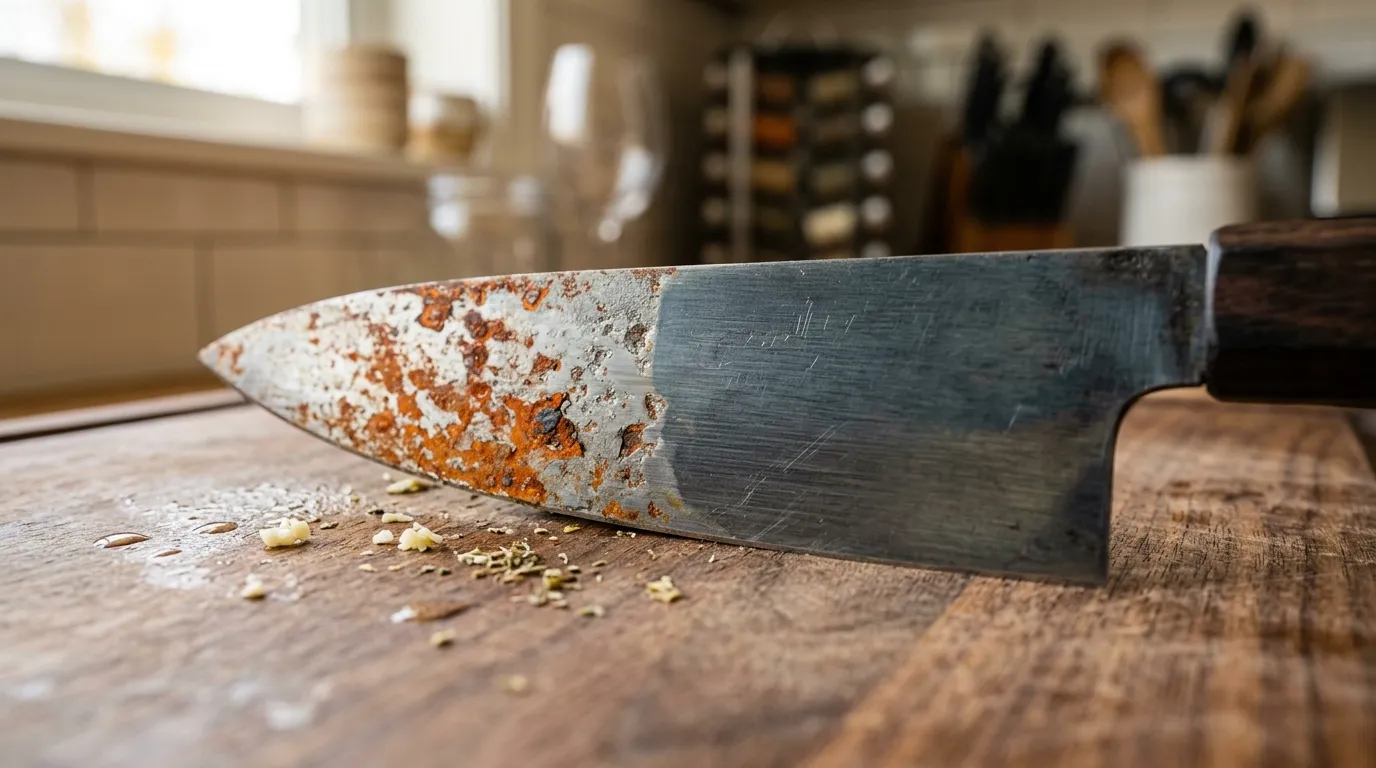
Rust is iron oxide. It forms when steel meets water and oxygen. Salt, acids, and food residue speed it up. Even “stainless” steel can rust if left wet or dirty.
There is a key difference between rust and patina. Patina is a thin, dark layer on carbon steel. It helps protect the blade. Rust is active, flaky, and orange to red. It eats the steel and dulls the edge.
High-carbon blades rust faster than many stainless knives. But they also clean up well and take a strong edge. This knife rust removal guide explains both types so you can act with care.
Tools and supplies you may need
Pick the mildest tool that works. Start gentle. Move up only if needed.
- Soft sponge or microfiber towel. For cleaning and drying without scratches.
- Baking soda. A mild abrasive that is food-safe.
- White vinegar or lemon juice. A weak acid that lifts rust.
- Salt. Helps acid work on stubborn spots.
- Bar Keepers Friend or similar oxalic cleanser. For tougher stains on stainless.
- Rust eraser or fine abrasive pad. Targeted removal with control.
- Sandpaper in 800–2000 grit. For pitting or deep spots.
- Mineral oil or camellia oil. Food-safe protection after cleaning.
- Dish soap and warm water. To degrease before and after.
- Painter’s tape. To protect the edge and handle.
- Nitrile gloves and good airflow. For safe handling.
I keep all of these in a small bin. It makes this knife rust removal guide easy to follow any time.
Step-by-step knife rust removal methods
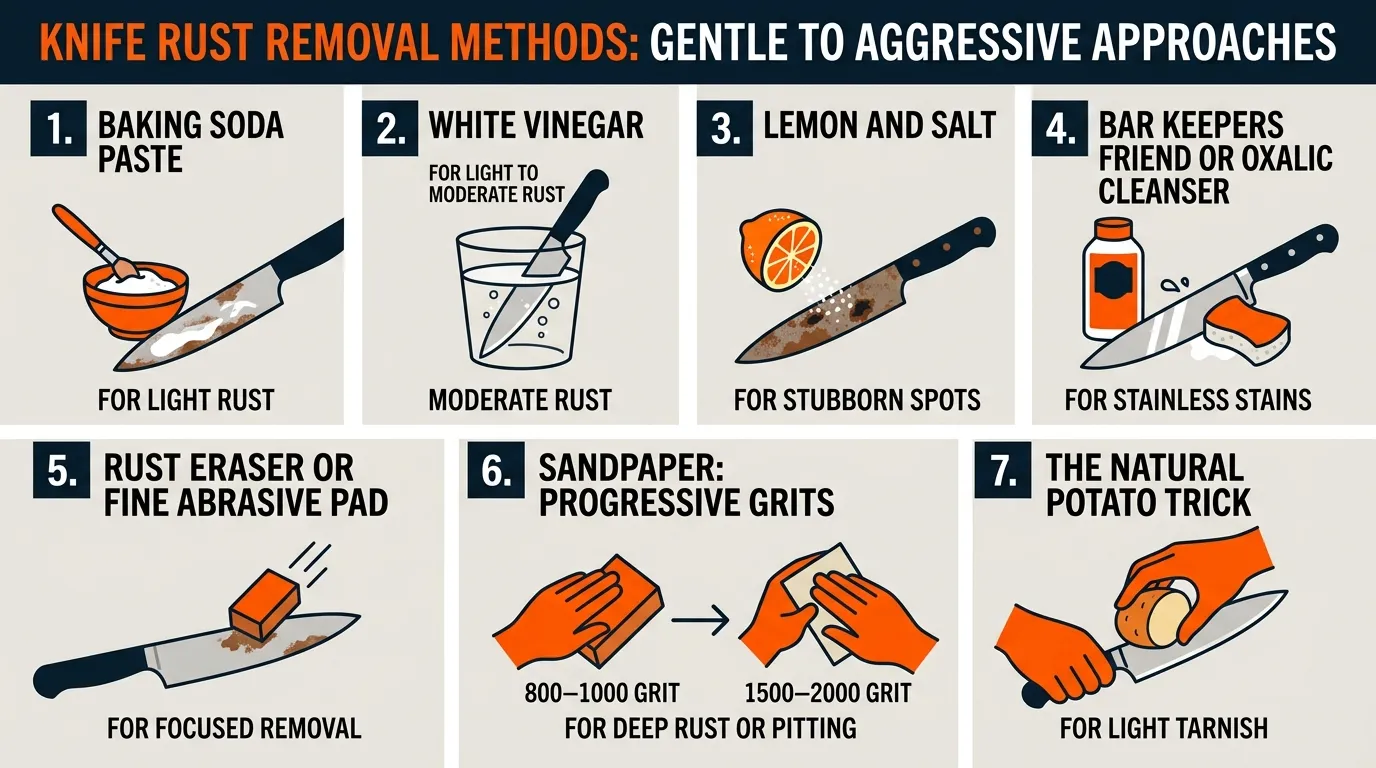
Match the method to the severity. Work in short sessions. Check progress often. Always rinse and dry well between steps.
Before you start: prep and safety
- Wash the knife with dish soap and warm water. Dry it.
- Tape the edge for safety if you are new to this.
- Never mix bleach with vinegar or acids.
Method 1: Baking soda paste (light rust, food-safe)
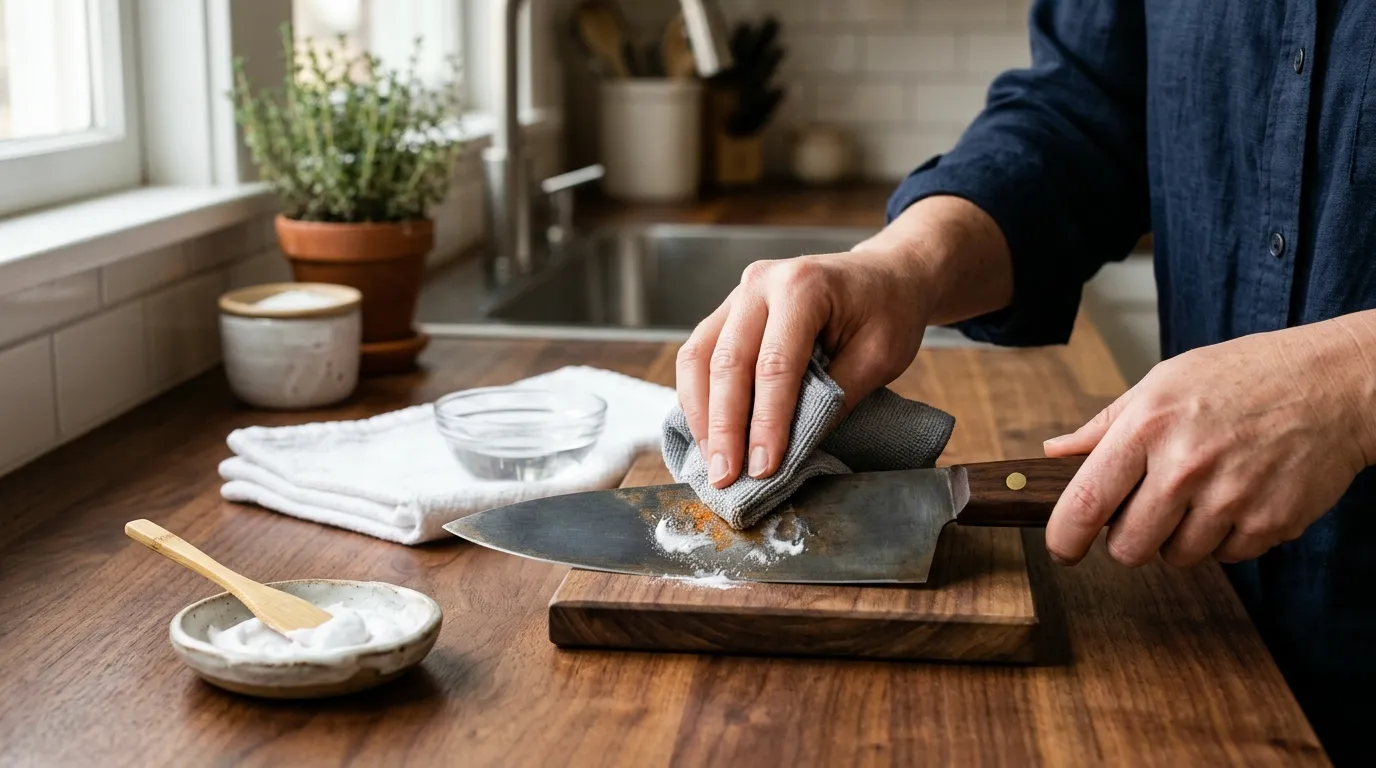
- Make a paste with baking soda and a few drops of water.
- Spread it on the rust. Let it sit 5–10 minutes.
- Rub with a soft sponge or cloth along the blade.
- Rinse, dry, and oil.
Method 2: White vinegar soak (light to moderate rust)
- Submerge only the rusty area in white vinegar for 5–15 minutes.
- Wipe the rust with a soft sponge. Do not soak too long.
- Rinse well, dry fast, and oil.
Tip: For spot work, soak a paper towel in vinegar. Lay it on the rust patch. This limits exposure and keeps the rest of the knife safe.
Method 3: Lemon and salt (stubborn spots, food-safe)
- Sprinkle salt on the rust.
- Rub with half a lemon. Let it foam for 3–5 minutes.
- Scrub gently. Rinse, dry, and oil.
Method 4: Bar Keepers Friend or oxalic cleanser (stainless stains)
- Wet the blade. Shake a small amount on the rust.
- Rub with a damp sponge along the grain.
- Rinse well, dry, and oil.
Note: Use this sparingly on carbon steel. It can lighten patina.
Method 5: Rust eraser or fine abrasive pad (focused removal)
- Wet the eraser or pad slightly.
- Rub only the rust, moving with the blade lines.
- Feather the area to blend. Rinse, dry, and oil.
Method 6: Sandpaper progression (deep rust or pitting)
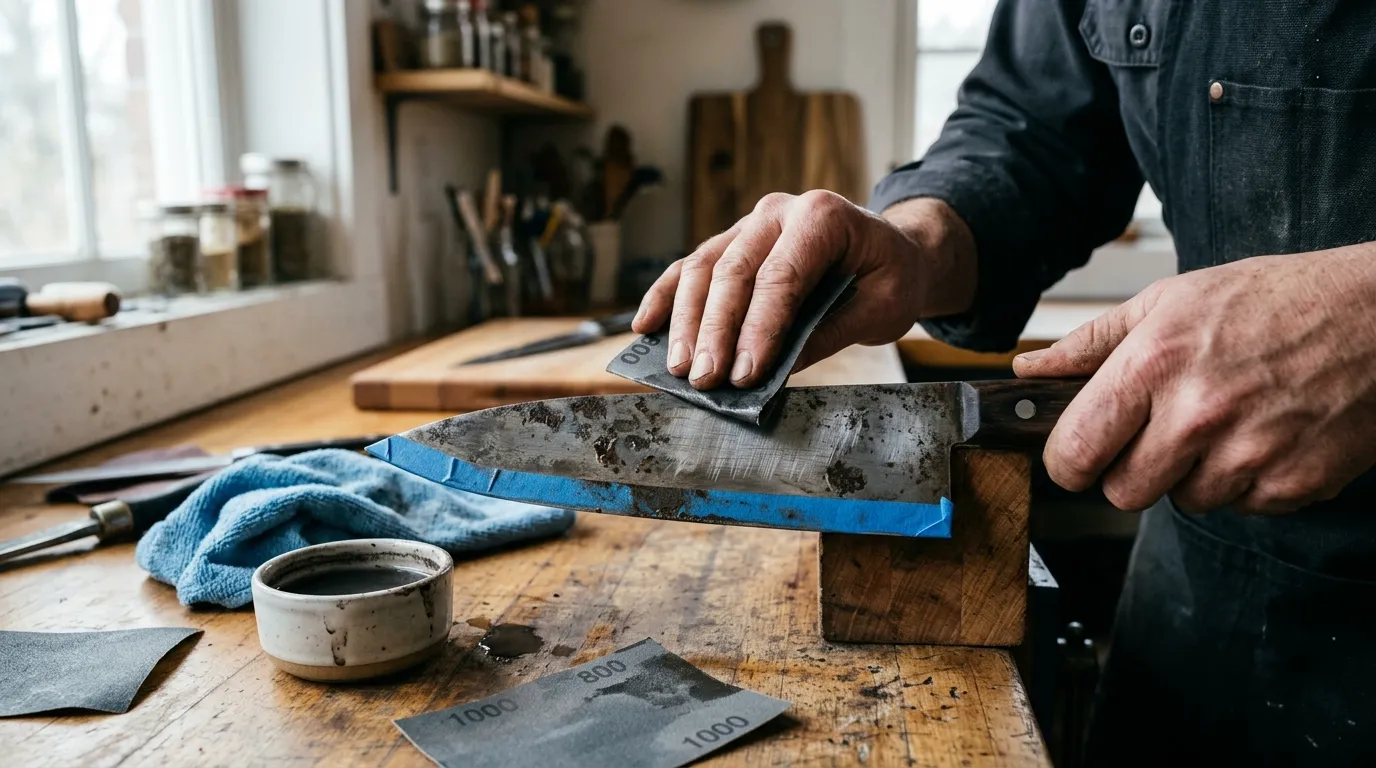
- Start at 800–1000 grit. Sand with the blade’s grind lines.
- Move to 1500–2000 grit to refine.
- Clean often. Keep strokes even. Rinse, dry, and oil.
Note: Sanding can change the finish. Go slow. Protect the edge. In this knife rust removal guide, sanding is a last resort at home.
Method 7: Natural potato trick (light tarnish)
- Push the rusty area into a cut potato for 10 minutes.
- The natural acids help. Wipe, rinse, dry, and oil.
From my bench: I once rescued a carbon steel chef’s knife with an orange bloom after a rainy cookout. A 10-minute baking soda paste and a rust eraser fixed it. The patina stayed. The edge was safe.
Edge care and sharpening after rust removal
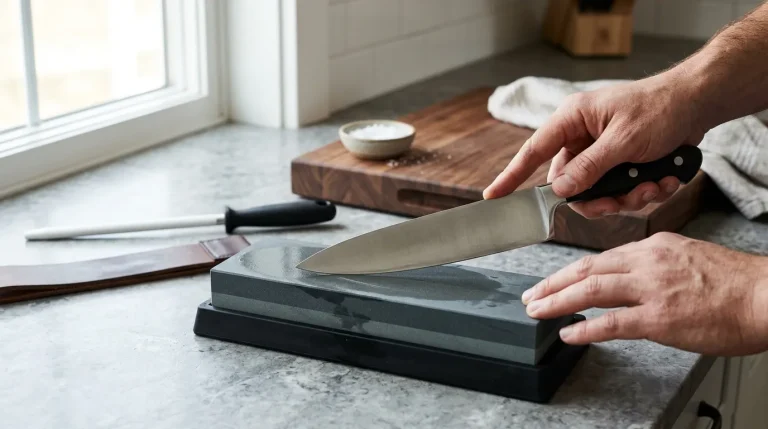
Rust dulls an edge fast. After cleaning, the edge may feel toothy or rough. Touch up on a fine whetstone or ceramic rod. Use light strokes.
If pitting touched the bevel, re-profile the edge with a coarse stone. Then work up to a finer grit. Strop on leather to finish. Oil the blade after. This step locks in the gains from this knife rust removal guide.
Prevent rust: daily and long-term care
The best fix is prevention. A few small habits protect any blade.
Daily steps
- Wash by hand. No dishwasher.
- Dry right away. Pay attention to the spine and handle joint.
- Wipe with a thin coat of mineral oil if the knife is carbon steel.
Weekly or monthly
- Deep clean. Remove any staining.
- Refresh oil. For kitchen knives, a food-safe oil is ideal.
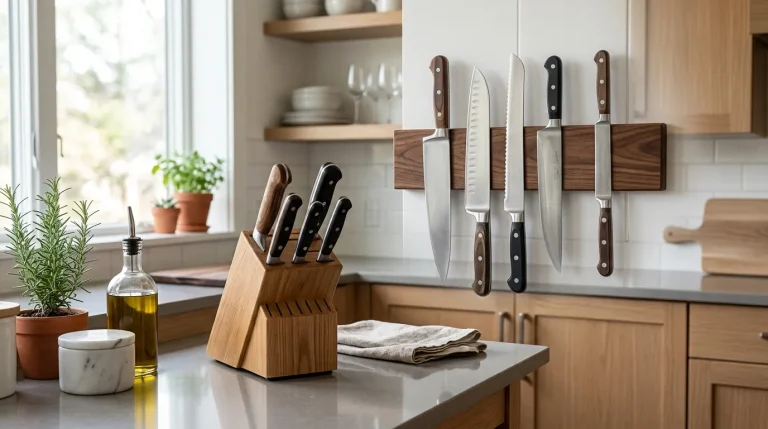
- Check storage. Use a dry block, magnetic strip, or saya.
Long-term storage
- Avoid leather sheaths for long storage. They hold moisture and salts.
- Add silica gel packs to drawers or cases.
- For boats or humid homes, use a rust inhibitor paper wrap.
These habits keep your blade sharp and bright. This knife rust removal guide works best when paired with smart storage.
Care tips by knife type
Kitchen knives
- Wipe during prep, especially with tomatoes, citrus, and onions.
- Build a stable patina on carbon steel with cooked potatoes or mustard dabs. Rinse after.
Stainless kitchen knives
- Rinse after cutting salty foods.
- Dry the handle scales and rivets well.
Pocket and outdoor knives
- Clean pivot and liners. Use a drop of light oil.
- After rain, open the knife and air dry fully.
High-carbon blades
- Expect patina. Stop orange rust fast.
- Keep a small oil cloth in your kit.
Following this knife rust removal guide by knife type saves time and keeps value high.
Food-safe and eco-friendly options
You can go green and still get great results.
- Baking soda paste. Safe, cheap, gentle.
- Lemon or vinegar. Mild acids that lift rust fast.
- Fine abrasive pads with water. No harsh chemicals.
When you use stronger cleaners, rinse very well. Then wash with dish soap. Dry and oil. This keeps your knife safe for food. That is key in any knife rust removal guide.
Troubleshooting and when to call a pro
Deep pits or black rust under the patina can be stubborn. If the blade has a mirror polish or a logo you want to save, consider a pro. They can restore finish and geometry.
If the handle swells, cracks, or smells musty, moisture got inside. Stop rust first. Then service the handle. For rare or heirloom knives, this knife rust removal guide still helps, but expert work protects value.
Time and cost estimates
- Light rust: 10–20 minutes with baking soda or vinegar. Almost no cost.
- Moderate rust: 30–60 minutes with a cleanser and rust eraser. Low cost.
- Heavy rust or pitting: 1–2 hours with sanding and a full edge reset. Low to moderate cost.
These ranges reflect real shop times. They match most home cases I see. This knife rust removal guide aims to cut both time and risk.
Common mistakes to avoid
- Leaving the knife wet in a sink or dishwasher.
- Scrubbing across the grain with coarse pads.
- Over-soaking in vinegar for hours.
- Mixing bleach with acids.
- Skipping oil after cleaning.
Fix the cause, not just the stain. Small steps beat big repairs. That is the heart of this knife rust removal guide.
Frequently Asked Questions of knife rust removal guide
Can stainless steel knives rust?
Yes. Stainless resists rust but is not rust-proof. Salt, acids, and neglect can still cause stains or rust.
Is vinegar safe for all knives?
Short soaks are safe for most steels. Avoid long soaks and rinse well to protect the finish and any glued handles.
Will rust removal ruin the patina on carbon steel?
Gentle methods keep patina. Target only the orange rust and avoid harsh scrubbing.
What oil should I use after cleaning?
Use food-safe mineral oil for kitchen knives. For outdoor knives, light machine oil also works.
How do I remove rust near the edge safely?
Tape the edge and use a rust eraser or baking soda paste. Work slowly along the blade lines.
Can I put a rusty knife in the dishwasher to clean it?
No. Dishwashers trap moisture and use harsh detergents. Hand wash, dry fast, and oil instead.
How often should I oil a carbon steel knife?
Wipe a thin coat after each deep clean or any wet use. In humid places, oil more often.
What if rust keeps coming back?
Find the source: moisture, salty air, or storage issues. Improve drying and add desiccant packs.
Conclusion
Rust happens, even to careful owners. With simple tools and steady hands, you can clean it fast, save the edge, and protect the finish. Follow the steps in this knife rust removal guide, from gentle pastes to careful sanding, and choose the least aggressive path that works.
Take 15 minutes today to inspect, clean, dry, and oil one knife. Build the habit and rust will lose. Want more hands-on tips? Subscribe for new guides, or drop your questions in the comments.