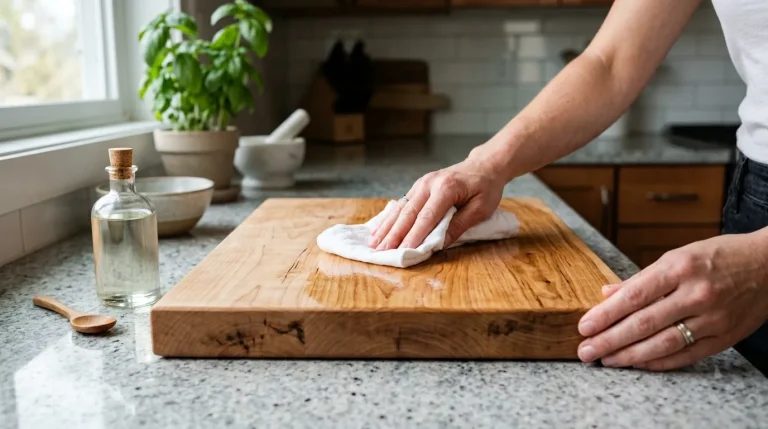
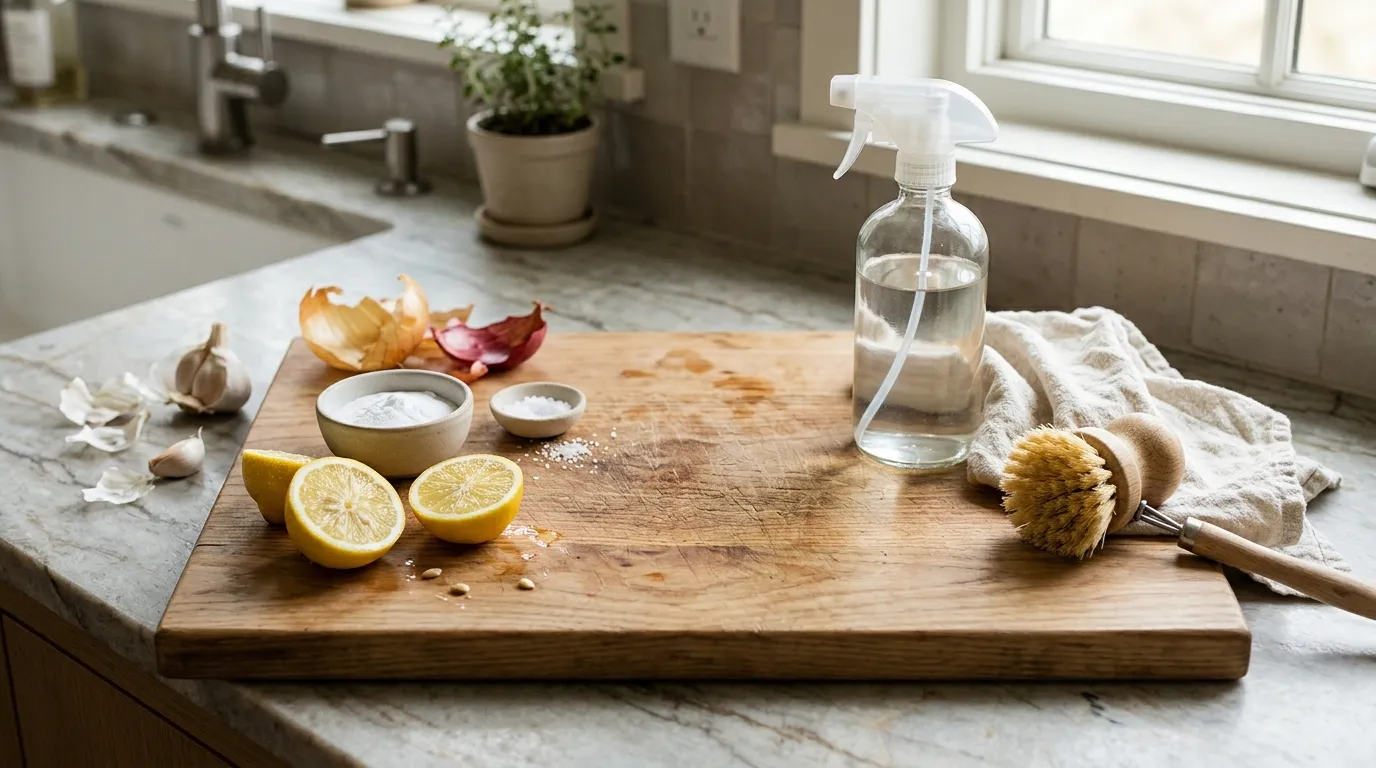
Remove stubborn cutting board smells with vinegar, baking soda, lemon, and quick drying.
If garlic, onion, or fish lingers on your board, you are in the right place. This cutting board smell removal guide shares proven, safe steps I use in home and test kitchens. You will learn fast fixes, deep cleans by material, and smart habits that stop odors for good.
Why Cutting Boards Smell: What’s Happening
Odors stick when oils, moisture, and food bits settle into tiny pores and knife grooves. Wood and bamboo are more porous than plastic, so smells can cling more. Plastic can trap fats in cuts too.
Common odor sources are strong aromatics and proteins. Garlic and onion have sulfur notes. Fish has amines. Old meat juices can spoil fast.
Heat, time, and poor drying make smells worse. Warm sinks speed up growth. A board left flat on a damp counter can sour in hours.
I wrote this cutting board smell removal guide to explain what you smell and why. When you know the cause, the fix is simple and safe.
Quick Fixes That Work Right Now
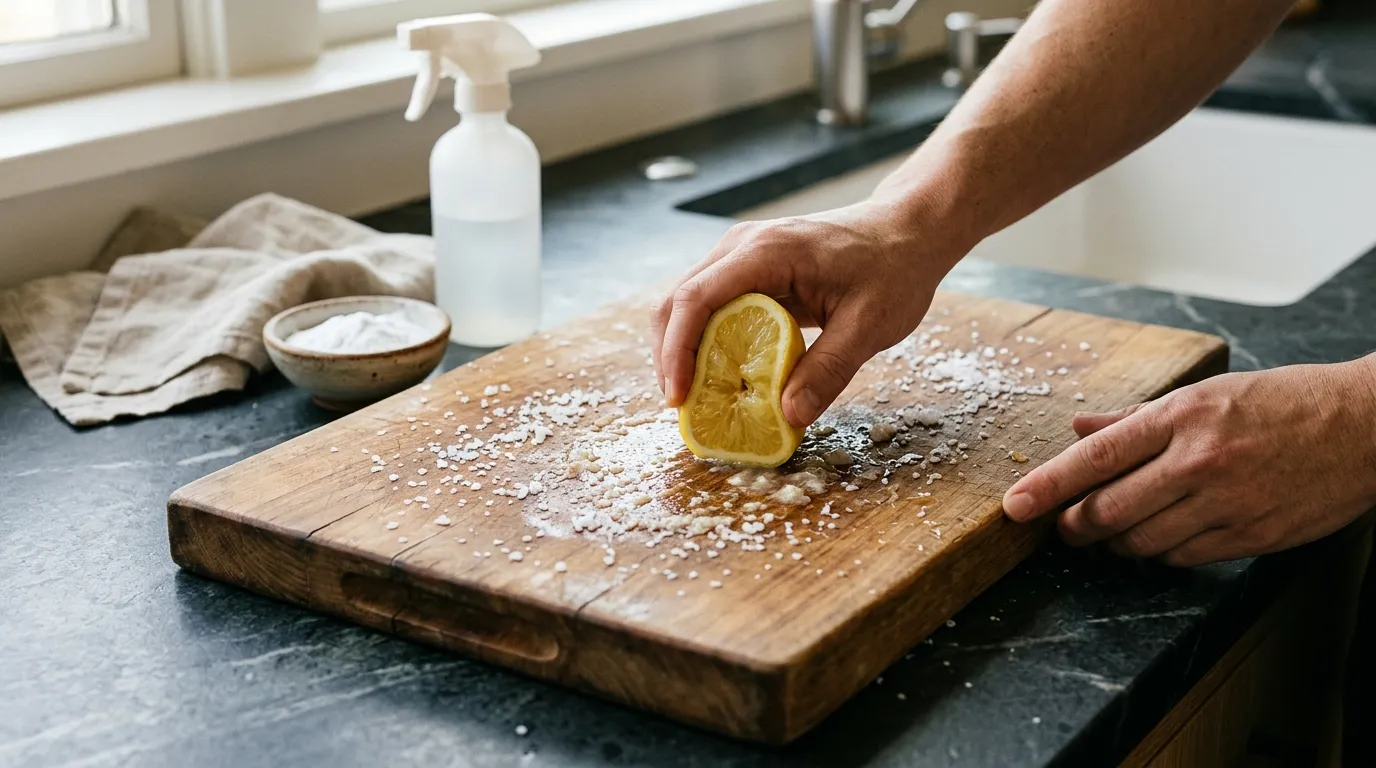
Reach for simple items you already have. These fast steps help most smells in minutes. Use them before a deep clean.
- Vinegar spray. Mist white vinegar on both sides. Wait 2 minutes. Rinse and dry upright.
- Lemon and salt scrub. Sprinkle coarse salt. Scrub with half a lemon. Rinse and dry well.
- Baking soda paste. Mix 3 parts baking soda with 1 part water. Spread, wait 5 minutes, then scrub and rinse.
- Boiling water rinse for plastic. Pour hot, not boiling, water to loosen fats. Then wash with soap.
- Sunlight boost. Set the dry board in bright sun for 30 to 60 minutes. Flip once.
In my kitchen, the lemon and salt trick beats garlic fast. The baking soda paste wins on fishy notes. This cutting board smell removal guide shows which one to pick and when.
Deep-Clean Methods by Material
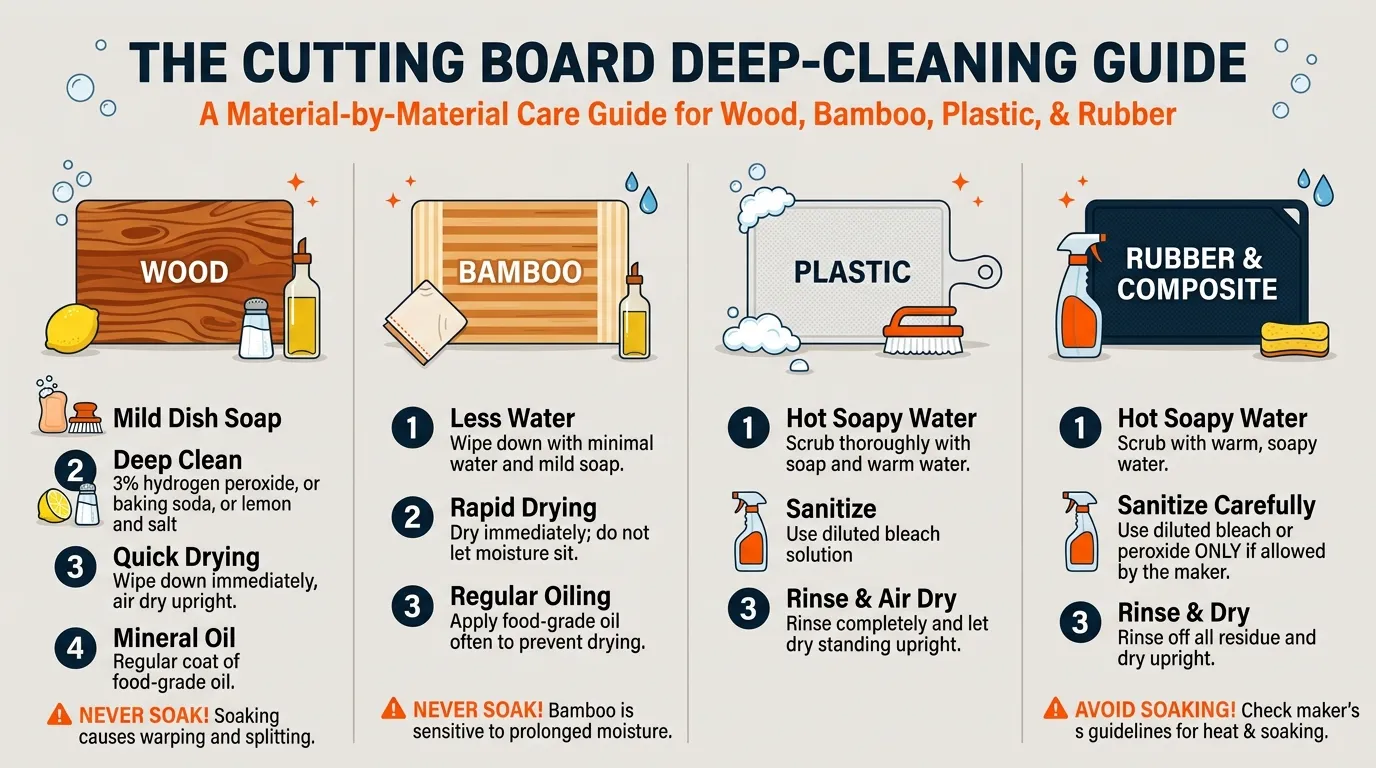
Match the method to the board. The right process kills smells and protects the board.
Wood
- Wash with hot water and mild dish soap. Never soak.
- Disinfect with 3 percent hydrogen peroxide. Pour, let it fizz 2 minutes, then wipe and rinse.
- Deodorize with baking soda paste or lemon and salt. Rinse well.
- Dry on edge with full air flow. Then oil with food grade mineral oil.
- Avoid bleach. It can dry wood and raise the grain.
Personal tip: I once soaked a maple board “to be sure.” Big mistake. It warped. Short contact with water and fast drying saves wood.
Bamboo
- Treat like wood, but use less water. It swells less, yet layers can split if soaked.
- Oil often. Bamboo needs a thin coat after each deep clean.
Plastic
- Scrub with hot water and dish soap.
- Sanitize with diluted bleach. Use 1 tablespoon unscented bleach in 1 gallon of water. Let sit 2 minutes, then rinse and air dry.
- Dishwasher if labeled safe. Top rack is best to limit warping.
I test plastic boards with peroxide first. It lifts stains and smells. Bleach is my backup for raw poultry weeknights.
Rubber and Composite
- Wash with hot water and dish soap.
- Use diluted bleach or peroxide if allowed by the maker.
- Avoid long soaks. Heat can warp some rubber boards.
Use this cutting board smell removal guide to pick the safest method for each board. Simple steps and the right cleaner go a long way.
Natural Deodorizers: What Works and What Doesn’t
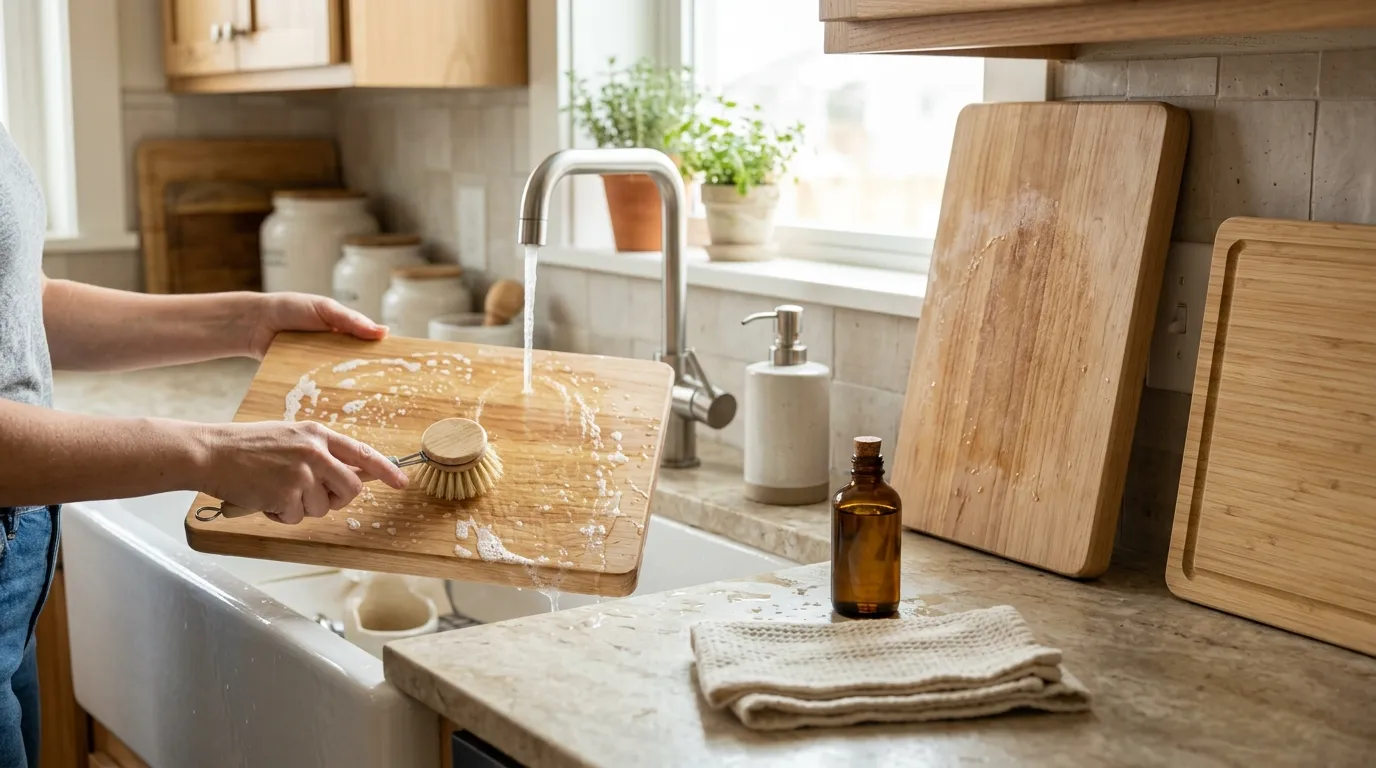
Know what to use and what to skip. Natural does not mean weak. It means smart use.
- White vinegar works. Acetic acid lowers pH and cuts many smells.
- Baking soda works. It buffers acids and lifts oils.
- Lemon works. Citric acid and peel oils clean and brighten.
- Salt helps. It adds gentle grit for scrubs.
- Activated charcoal helps overnight. Place a dry board in a bin with charcoal nearby to absorb air odors.
- Coffee grounds mask more than they remove. Use baking soda first.
- Essential oils smell nice, but can taste strong later. Use with care.
One caveat from this cutting board smell removal guide. Never mix bleach and vinegar. That mix makes a toxic gas. Use one, rinse, then the other if needed.
Prevent Smells Before They Start
Good habits beat deep cleans. Make these part of your routine.
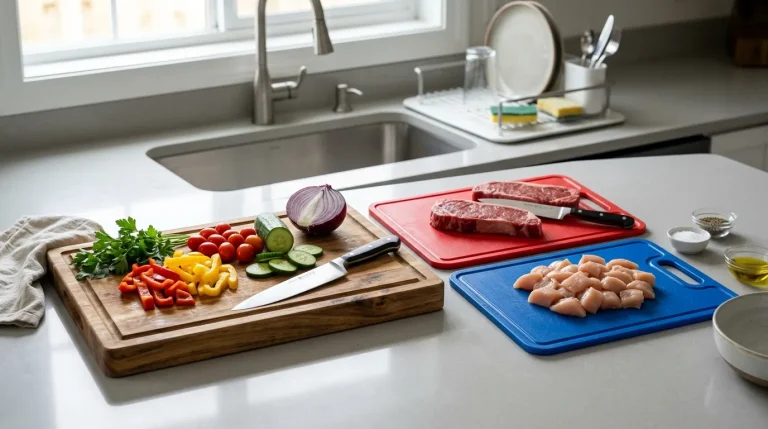
- Use separate boards. One for raw meat. One for produce and bread.
- Rinse right away. Do not let juices dry on the board.
- Wash hot with soap. Scrub both faces and the edges.
- Dry on edge. Give space for air to move. Do not stack damp boards.
- Oil wood and bamboo each month. It blocks odors and stains.
- Smooth rough spots. Use a bench scraper or fine sandpaper on raised grain.
- Deep clean weekly if you cook often. Small steps now save time later.
In tests, the dry-on-edge habit cut smells more than any single cleaner. This simple move is the hero of this cutting board smell removal guide.
When to Replace Your Cutting Board
No guide can save a board that has aged out. Know the signs.
- Deep grooves that trap food and smell even after a scrub.
- Cracks, warps, or loose layers on bamboo.
- Black spots or mold that return after a deep clean.
- A plastic board with dull, gray knife scars across the face.
- Lingering odor after two full cycles of clean, deodorize, and dry.
If you see two or more signs, retire it. Safety first. A new board costs less than a bad night of food illness. Keep this cutting board smell removal guide for your next board’s care.
Frequently Asked Questions of cutting board smell removal guide
How do I remove raw chicken smell fast?
Wash with hot water and soap, then sanitize. Use 1 tablespoon bleach in 1 gallon of water for 2 minutes, rinse, and air dry.
Can I use bleach on wooden boards?
Do not use bleach on wood. It can dry and crack fibers. Use hydrogen peroxide 3 percent or vinegar, then oil the board after.
What kills garlic and onion smell on wood?
Use lemon and salt to scrub, then a baking soda paste for five minutes. Rinse and dry on edge with good airflow.
Why does my board still smell after washing?
Odors hide in grooves and wet fibers. Do a deep clean, dry it upright, and oil wood to seal pores.
Is the dishwasher safe for removing odors?
For dishwasher-safe plastic boards, yes. Use the top rack, then air dry. Do not put wood or bamboo in the dishwasher.
Will baking soda damage my board?
No, baking soda is gentle. Rinse well so no powder stays in the grain, then dry and oil wood.
How often should I deep clean my board?
If you cook daily, deep clean once a week. After raw meat or fish, sanitize right away.
Conclusion
Smells cling to boards when oils, moisture, and cuts give them a home. Tackle them fast with vinegar, lemon and salt, and baking soda, then dry the board on edge. Match the deep-clean to wood, bamboo, plastic, or rubber, and oil wood each month.
Use this cutting board smell removal guide now and set up habits that keep odors away. Try one quick fix today, then pick a weekly deep-clean method that fits your board. Share what worked for you, subscribe for more kitchen care guides, and keep cooking with confidence.