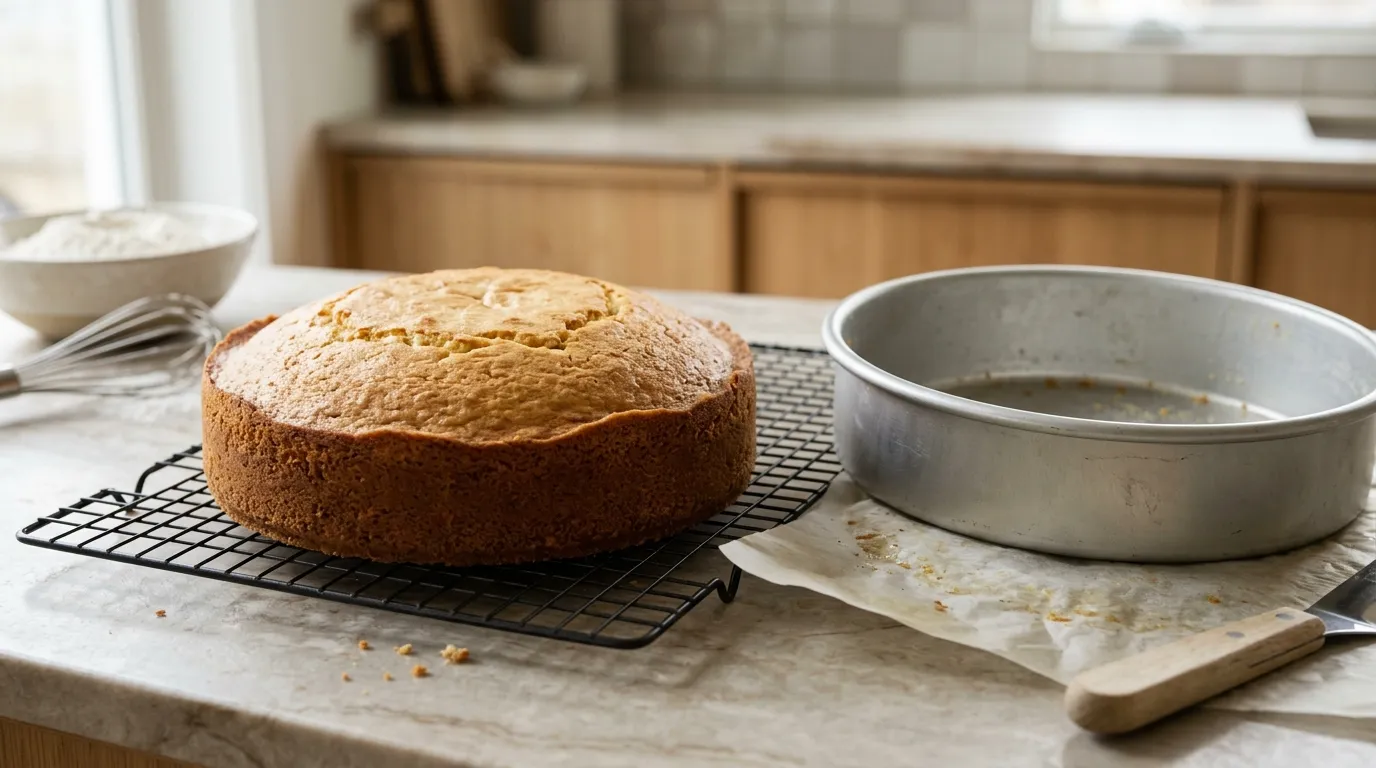
Grease, flour, parchment, then cool and loosen before release.
If you have battled a stuck cake, you are not alone. I have baked for events, taught home classes, and tested every cake sticking to pan fix you can imagine. In this guide, I share what works, why it works, and the simple steps that save the day. Read on to master the cake sticking to pan fix with calm, science, and a few pro tricks.
Why Cakes Stick: The Simple Science
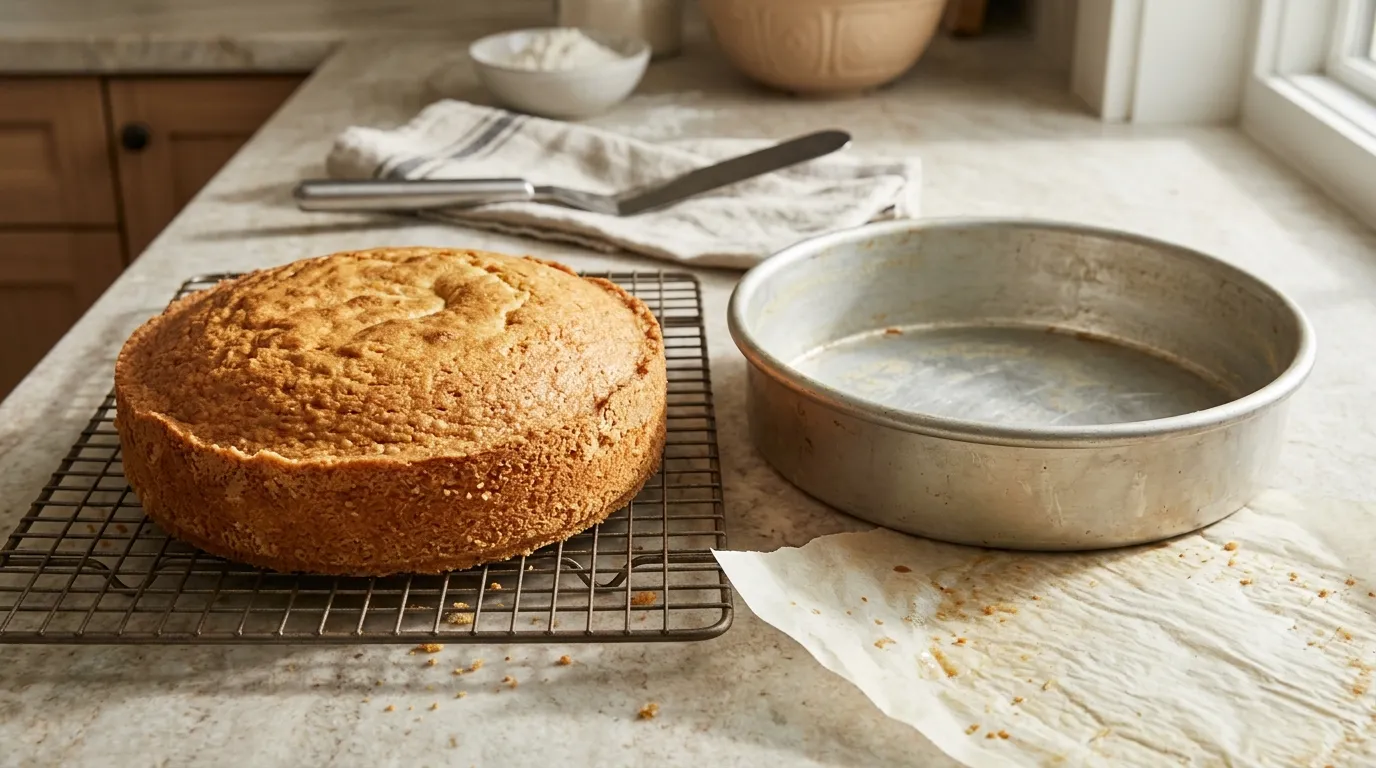
Cakes stick when sugar caramelizes on bare metal. Protein in eggs also forms tight bonds with hot pans. If there is not enough fat or a barrier, the cake grabs the surface.
Other causes play a role. Dark pans run hotter and cause overbrowning. Thin batters seep into scratches. Sprays can pool in corners. Humidity softens crusts. Overbaked edges turn sticky as sugar sets too hard.
I learned this the hard way with a Bundt cake at a wedding tasting. One side bonded like glue. The fix came from prep and timing, not luck. A cake sticking to pan fix starts long before the bake.
Immediate Cake Sticking to Pan Fix: Step-by-Step Rescue
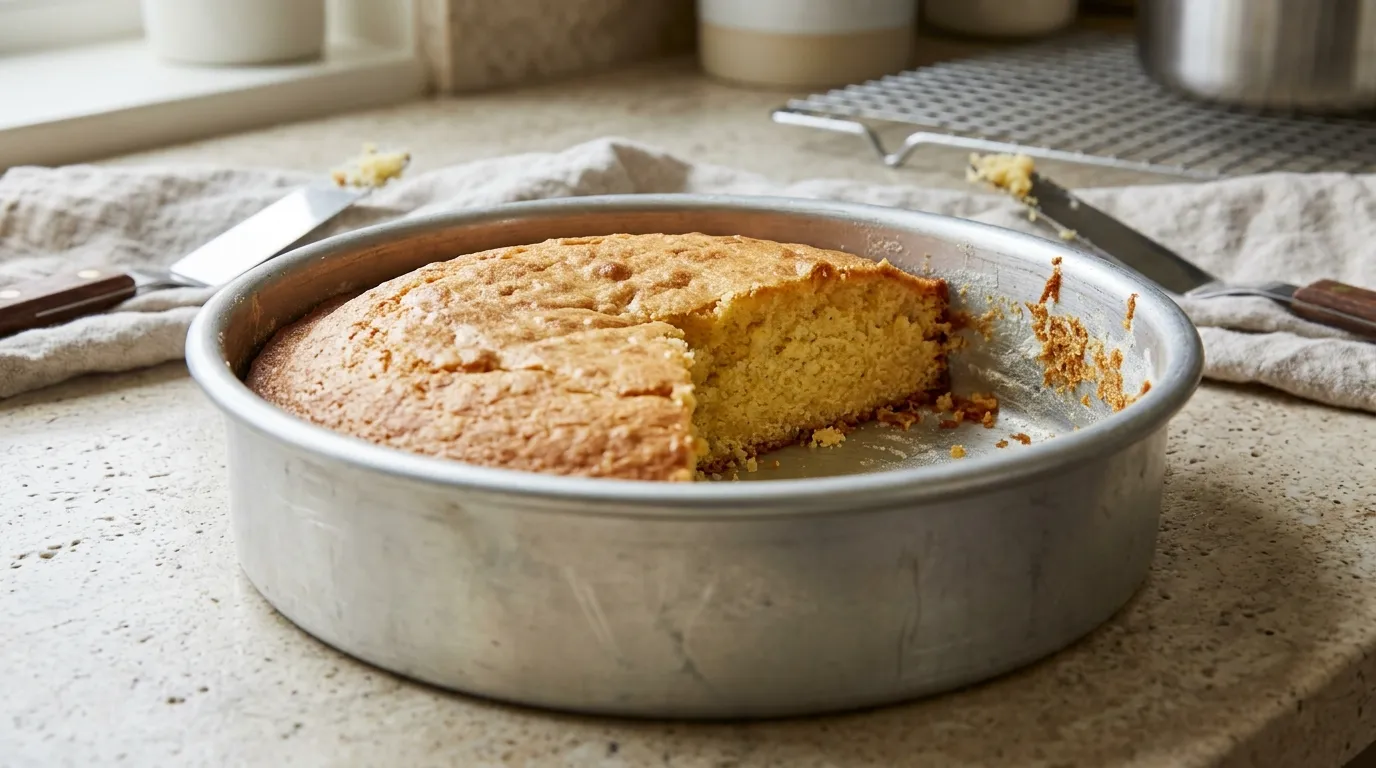
If your cake is stuck, breathe. Do not force it. Try these gentle steps.
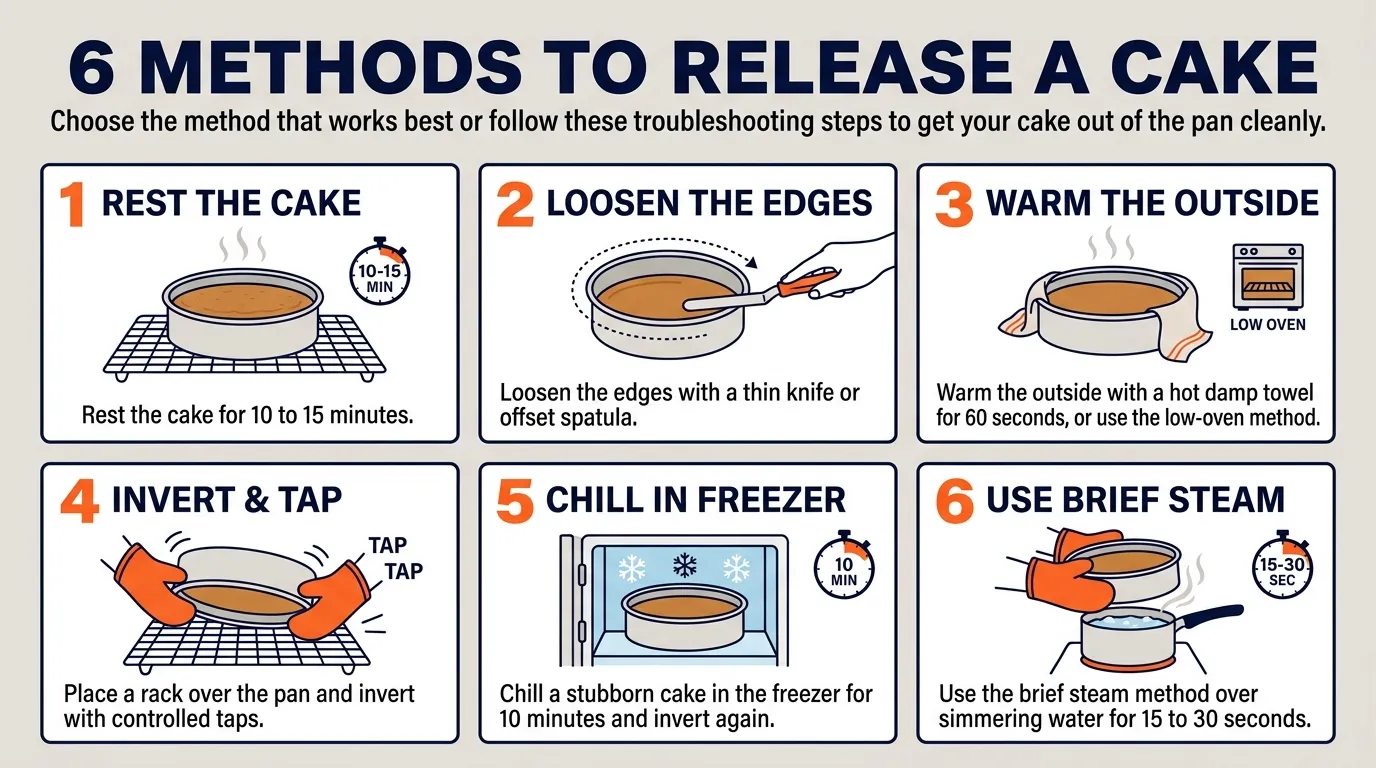
- Rest the cake 10 to 15 minutes. The steam inside helps release the sides.
- Run a thin knife or offset spatula around the edge. Keep the blade against the pan, not the cake.
- Warm the outside. Lay a hot, damp towel around the pan for 60 seconds. Or place the pan back in a 200°F oven for 2 minutes.
- Tap and invert. Set a rack on top. Hold both and give firm taps on the counter.
- Chill a stubborn cake. Freeze the pan for 10 minutes. Invert again while still cold.
- Use a brief steam. Place the pan over a pot of simmering water for 15 to 30 seconds.
These moves solve most issues. This cake sticking to pan fix keeps the crumb intact and avoids deep gouges. If a bit tears, save it. You can patch it with frosting later.
The Foolproof Pan Prep: Grease, Line, Dust
Good prep is the best cake sticking to pan fix. Make it a habit every time.
- Grease the pan. Use soft butter, neutral oil, or baking spray with flour. Cover every corner and the center tube if using a Bundt.
- Add a barrier. Line flat bottoms with a parchment circle. For square or loaf pans, add parchment “slings” that hang over the sides.
- Dust for grip. For vanilla cakes, dust buttered pans with all-purpose flour. For chocolate cakes, use cocoa powder to avoid white streaks.
- Try cake goop. Mix equal parts flour, oil, and shortening. Brush on a thin layer. It works wonders in detailed pans.
- Avoid heavy puddles of spray. Wipe away excess with a paper towel to prevent gumminess.
From my bakes, cake goop plus parchment is the most reliable combo. It is a set-and-forget cake sticking to pan fix for high-stakes days.
Lining and Release Strategies for Every Pan
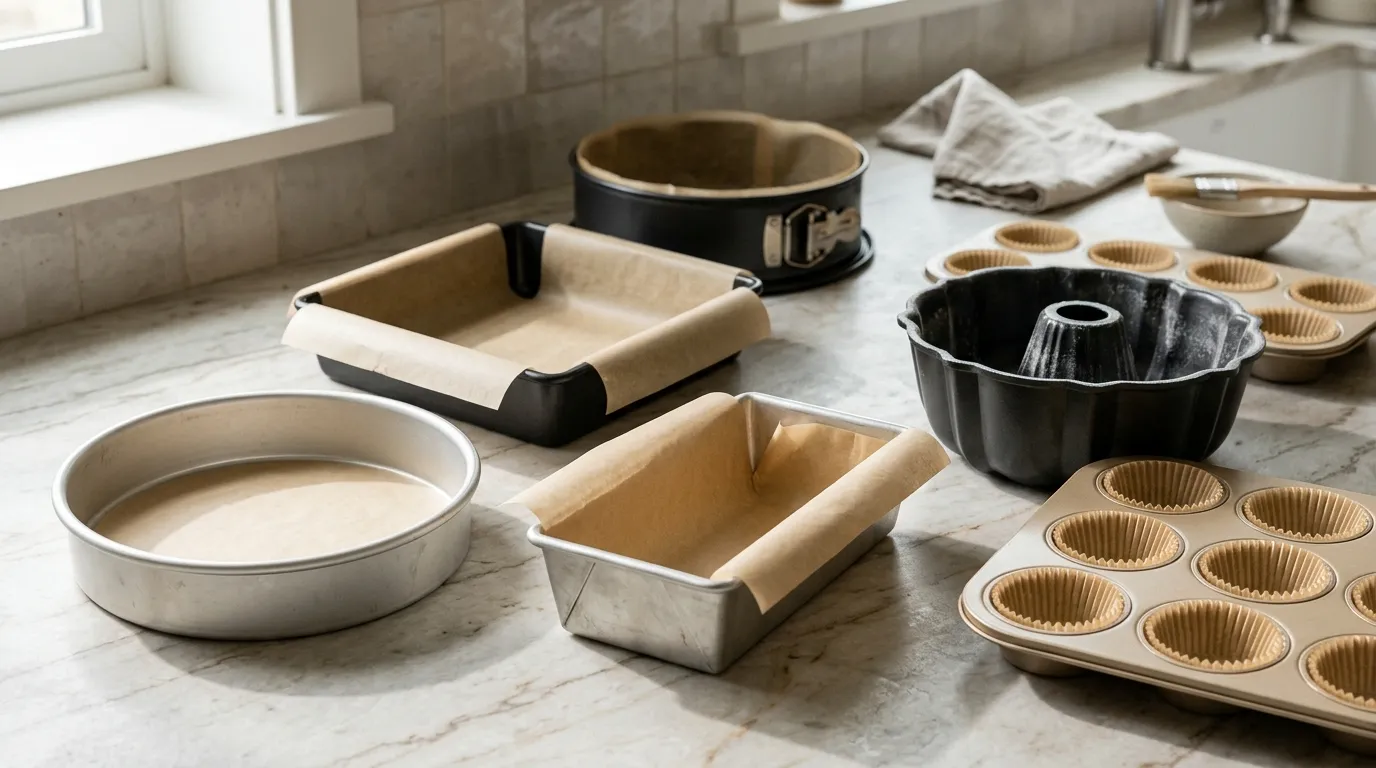
Different pans need different tactics. Use these quick guides.
- Round and square pans. Grease, parchment bottom, then flour. Add parchment slings for bars and snack cakes.
- Loaf pans. Grease, then parchment sling for clean lifts.
- Bundt pans. Use a soft brush to coat every ridge with cake goop. Tap out excess cocoa for chocolate batters. Avoid only-regular spray; choose spray with flour or goop.
- Cupcakes. Use paper liners or grease silicone molds well. Fill two-thirds full to avoid overflow bonds.
- Springform pans. Line the bottom with parchment. Grease the ring. Wrap the base if using a water bath.
These methods form a full release system. They make a cake sticking to pan fix part of your routine, not a last-minute panic.
Cooling, Timing, and Cutting Clean Edges
Timing matters more than tools. A cake that is too hot or too cold will cling.
- Cool in the pan for 10 to 15 minutes on a rack.
- Loosen the edges while warm with a thin knife.
- Check doneness with a toothpick or a thermometer. Aim for about 205 to 210°F in the center for most butter cakes.
- Invert once, not over and over. Repeated flips can crack the crumb.
I once waited 40 minutes on a dense carrot cake. Big mistake. The sugar set like glue. Now I set a timer, and the release stays smooth. Small, steady steps are a hidden cake sticking to pan fix
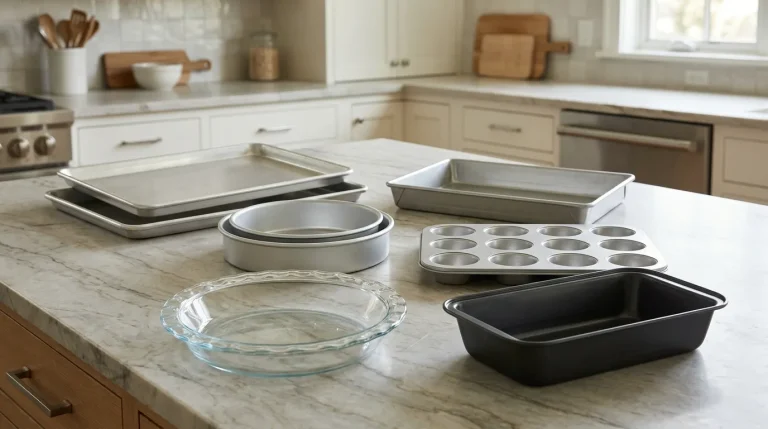
Choose the Right Pan and Coating
Your pan choice shapes the bake and release.
- Light aluminum. Even heat and less overbrowning. Great for layer cakes.
- Dark nonstick. Runs hotter and browns fast. Reduce oven temp by 25°F and check early.
- Heavy Bundt pans. Hold detail and heat. Grease well and flour or cocoa.
- Silicone. Easy release but soft sides. Place on a sheet pan and cool longer.
- Condition and replace. Scratched nonstick can stick. Warped pans cause pooling and hot spots.
Quality pans lower stress. A good pan is a silent cake sticking to pan fix that pays off every weekend.
Repairing Damage and Making It Look Great
Even pros patch cakes. Make fixes part of your toolkit.
- Patch tears with buttercream or ganache. Chill, then smooth with a warm spatula.
- Use a glaze. A thin icing hides small dents and adds shine.
- Trim and stack. Level layers and flip the neat bottom side up.
- Brush with simple syrup. Adds moisture and masks rough spots.
- Repurpose if needed. Turn broken cake into parfaits, trifles, or cake pops.
A clean finish beats perfection. Your guests will never know. This mindset is a quiet cake sticking to pan fix when things go sideways.
Cleaning, Maintenance, and Storage to Prevent Future Sticking
Care keeps pans smooth and reliable.
- Wash by hand with warm, soapy water. Avoid metal scrubbers on nonstick.
- Dry fast to stop rust on steel pans.
- Do not bake cooking sprays onto the surface. That film builds up and gets tacky. Scrub it off with baking soda paste if needed.
- Reseason bare aluminum very lightly with oil if recommended by the maker.
- Store pans stacked with parchment between them to avoid scratches.
Clean pans give a clean release. Good care is a long-term cake sticking to pan fix you will feel in every bake.
Troubleshooting Checklist and Common Mistakes
Use this quick list before and after every bake.
- Did you grease fully, including corners and the center tube? If not, redo and add parchment.
- Did you flour or cocoa-dust after greasing? That extra coat is key.
- Did you bake at the right temp for your pan color? Dark pans need cooler temps.
- Did you cool 10 to 15 minutes, then release once? Set a timer.
- Is your pan warped or scratched? Replace it for a reliable cake sticking to pan fix.
- Are you using sprays without flour for detailed pans? Switch to cake goop or spray with flour.
- Is humidity high? Line with parchment and cool on a rack to reduce moisture on the crust.
Run this list and you will lock in a consistent cake sticking to pan fix every time.
Frequently Asked Questions of cake sticking to pan fix
How do I get a stuck cake out without breaking it?
Let it rest 10 to 15 minutes, then run a thin knife around the edge. Warm the pan with a hot towel or low oven, invert with a rack, and tap.
What is the best way to prep a pan for a cake?
Grease, line with parchment, then dust with flour or cocoa. For Bundt pans, use cake goop and coat every ridge.
Why does my cake stick even with nonstick pans?
Nonstick coatings wear down and dark pans run hot. Use parchment, reduce the oven temp by 25°F, and grease even if the pan is nonstick.
Can I use oil instead of butter to grease a pan?
Yes. Neutral oil works well and leaves fewer milk solids. Add flour or cocoa on top for the best release.
How long should I cool a cake before removing it from the pan?
Cool 10 to 15 minutes on a rack. Release the edges, then invert once while the cake is still warm but set.
Is parchment paper necessary for cakes?
It is not required, but it is the most reliable bottom release. For layer cakes, parchment circles prevent almost all sticking.
What can I do if part of the cake tears?
Patch with buttercream or ganache and chill. Use a glaze or simple syrup to smooth the finish and hide small flaws.
Conclusion
Cake release is not luck. It is prep, timing, and the right tools. Grease well, line with parchment, dust, and cool with care. When things go wrong, use gentle heat, a steady hand, and quick patches to save the day.
Put one cake sticking to pan fix into practice this week. Try cake goop plus parchment, set a 15-minute release timer, and enjoy a clean lift. If you found this helpful, share it, subscribe for more baking guides, or drop your questions in the comments.