Pick ENERGY STAR models, right-size, compare lifetime costs, and check rebate options.
If you want to know how to choose energy efficient appliances, you’re in the right place. I help people cut bills without cutting comfort. In this guide on how to choose energy efficient appliances, I share clear steps, real examples, and pro tips you can use today. I’ll show you how to choose energy efficient appliances with simple checks that save money for years to come.
What makes an appliance energy efficient
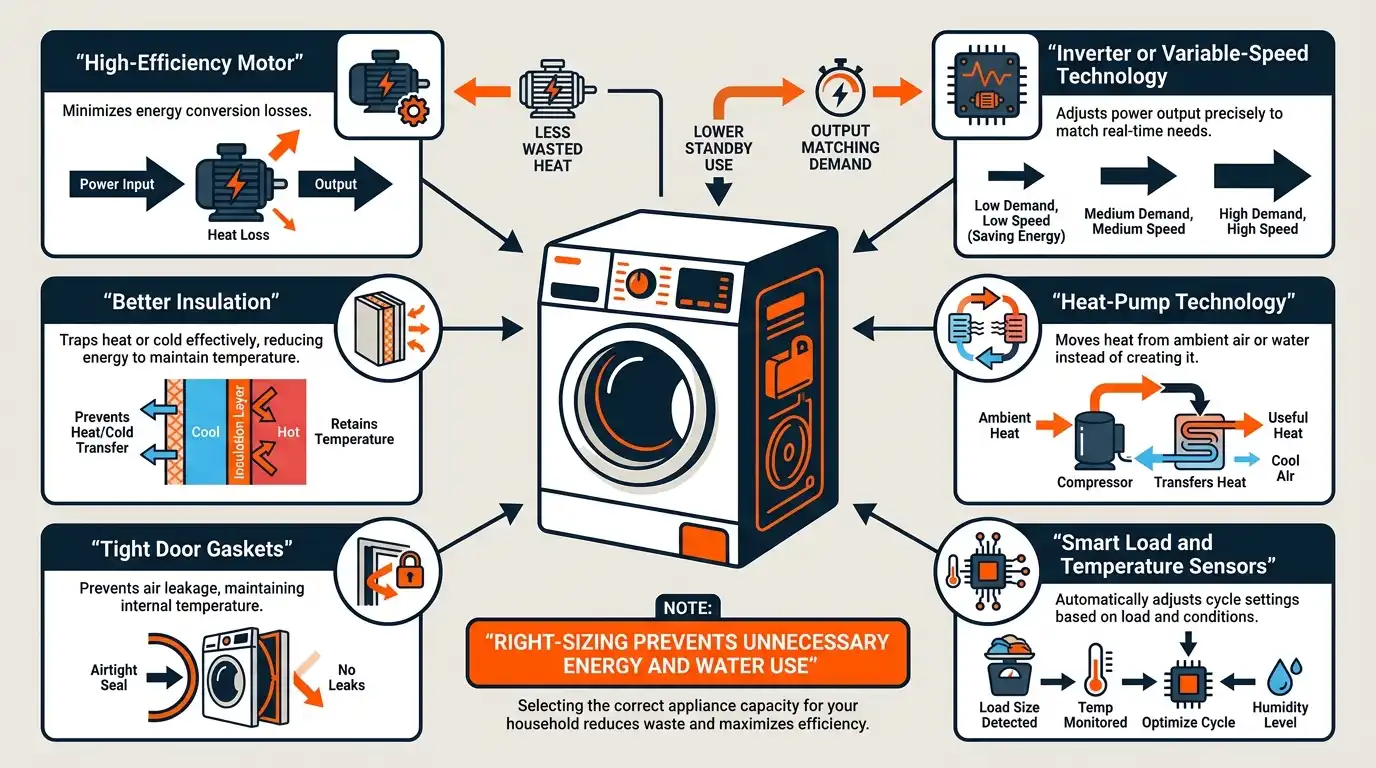
An energy efficient appliance does the same job using less power or water. It wastes less heat. It idles with low standby use. It fits your space and needs, so you do not overbuy.
Key design cues to watch:
- High-efficiency motors move parts with less power.
- Inverter or variable speed tech matches output to demand.
- Better insulation keeps heat or cold where it belongs.
- Heat pump tech moves heat instead of making it.
- Tight door gaskets and smart sensors cut waste.
According to the U.S. Department of Energy, certified products often use much less energy than standard ones. You pay less each month, and the device runs cooler and may last longer. Before you learn how to choose energy efficient appliances, know the basics that set top models apart.
How to read labels and ratings like a pro
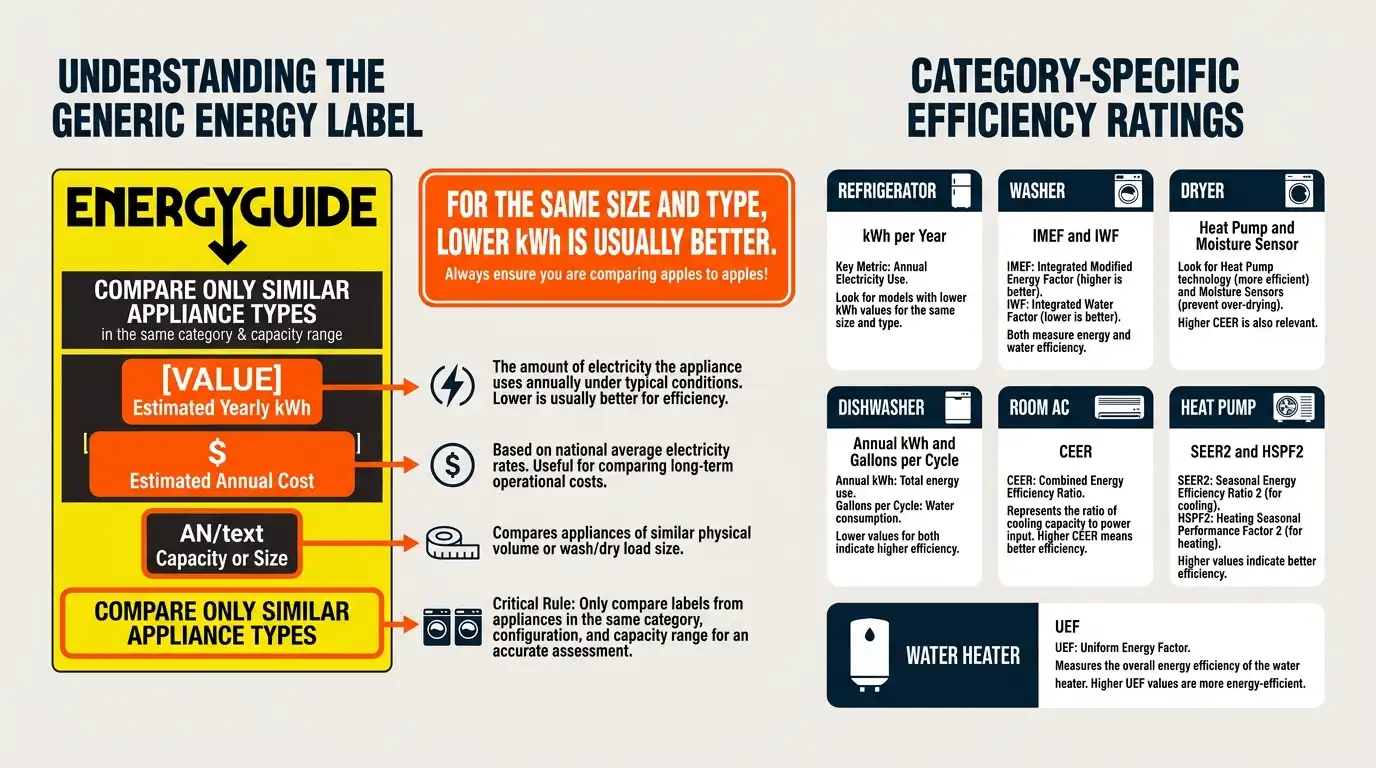
Labels tell the story. They are not hard once you know what to look for.
What to check first:
- ENERGY STAR mark This means the product meets strict efficiency rules set by the EPA and DOE.
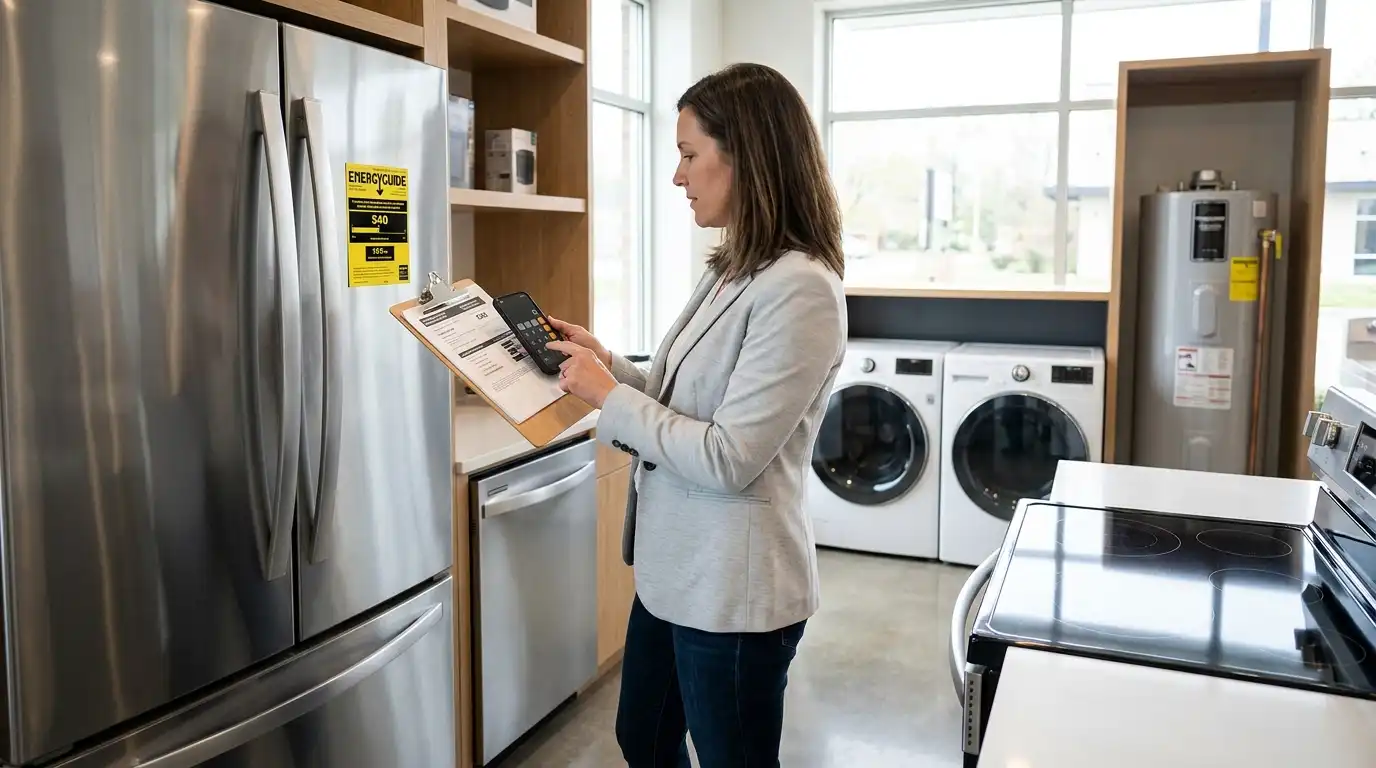
- EnergyGuide label This yellow label shows estimated yearly kWh use and cost. Lower kWh is better for the same size and type.
- Capacity and size Bigger uses more. Pick the right size for your home.
- Noise and water use Lower is better if tasks are the same.
Useful ratings by category:
- Refrigerators kWh per year, adjusted volume.
- Washers IMEF and IWF for energy and water use per cycle.
- Dryers ENERGY STAR, heat pump options, moisture sensors.
- Dishwashers Annual kWh, gallons per cycle, soil sensors.
- Room ACs CEER. Higher is better.
- Heat pumps and mini-splits SEER2 for cooling, HSPF2 for heating.
- Water heaters UEF. Higher is better.
When you ask how to choose energy efficient appliances, start with labels. They let you compare across brands in a fair way.
Total cost of ownership and payback
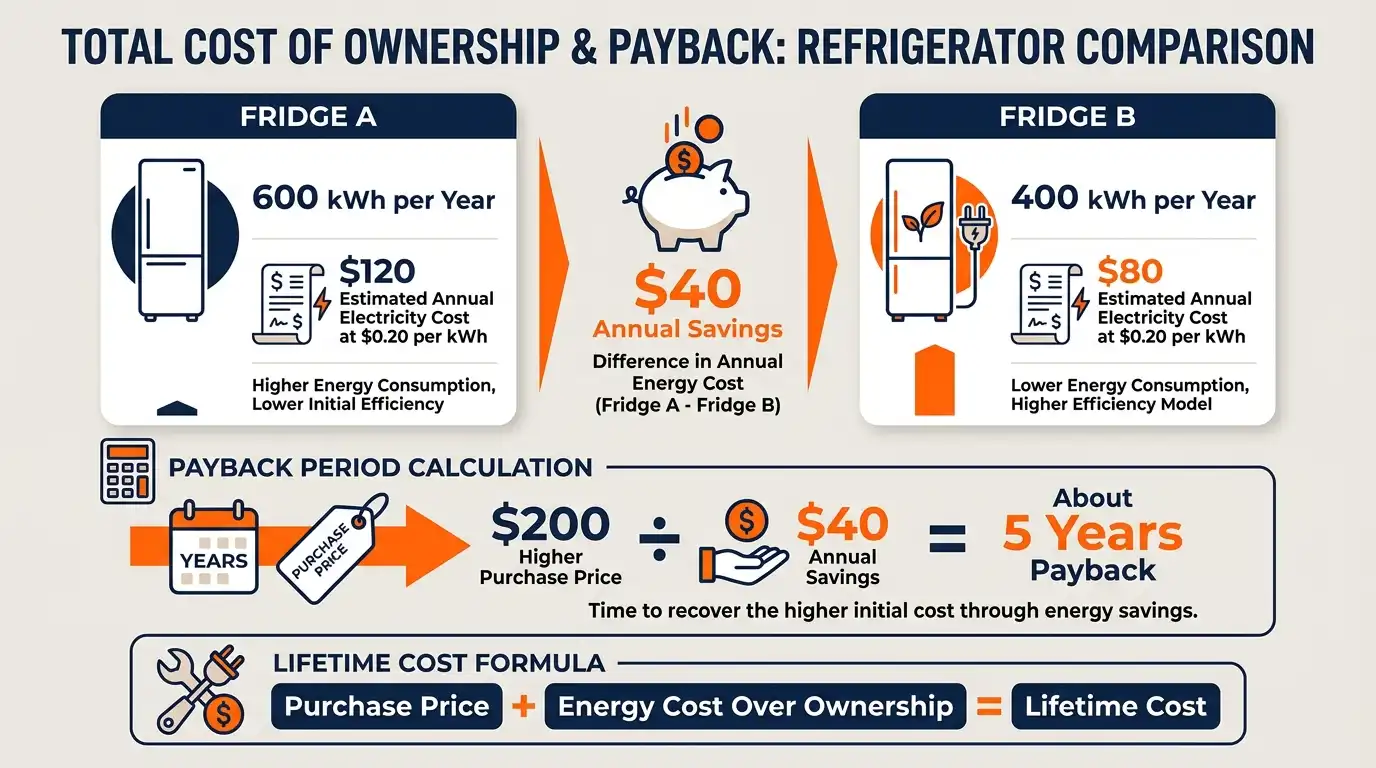
Sticker price is only part of the bill. The real cost is purchase plus power over time.
A quick way to compare:
- Find the EnergyGuide kWh per year.
- Multiply by your electric rate on your bill.
- Add that to the price over the years you plan to keep it.
Simple example:
- Fridge A uses 600 kWh per year. Power costs 20 cents per kWh. That is 120 dollars per year.
- Fridge B uses 400 kWh per year. That is 80 dollars per year.
- If B costs 200 dollars more, the savings is 40 dollars per year. Payback is about 5 years.
A simple way to see how to choose energy efficient appliances is to compare lifetime cost, not just price on day one.
Step-by-step how to choose energy efficient appliances
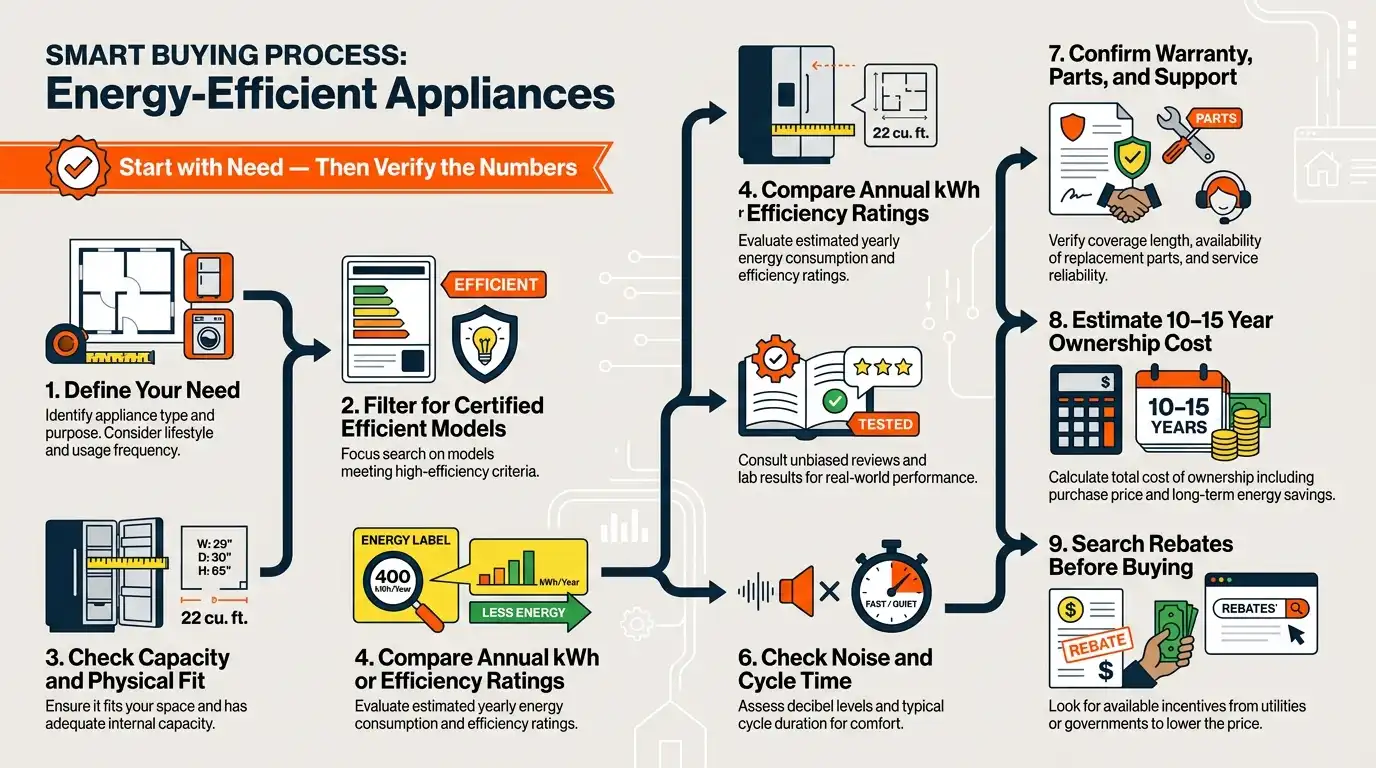
Use this fast flow when you shop online or in store.
- Define need Size, features, and daily use. Overbuying wastes energy.
- Filter by ENERGY STAR Then sort by annual kWh or UEF, as fit.
- Check capacity ratings Make sure it fits doors, cabinets, and your load size.
- Read the EnergyGuide Compare kWh for similar sizes.
- Scan expert tests Look at measured use, not just claims.
- Check noise and cycle times Efficiency should not ruin comfort.
- Confirm parts and support Motors, filters, and warranties matter.
- Estimate total cost Add power costs for 10 to 15 years.
- Hunt rebates Check utility and state offers before you buy.
Here is how to choose energy efficient appliances in a simple path. Start with need, then filter, then verify the numbers.
Room-by-room buying guide with proven picks
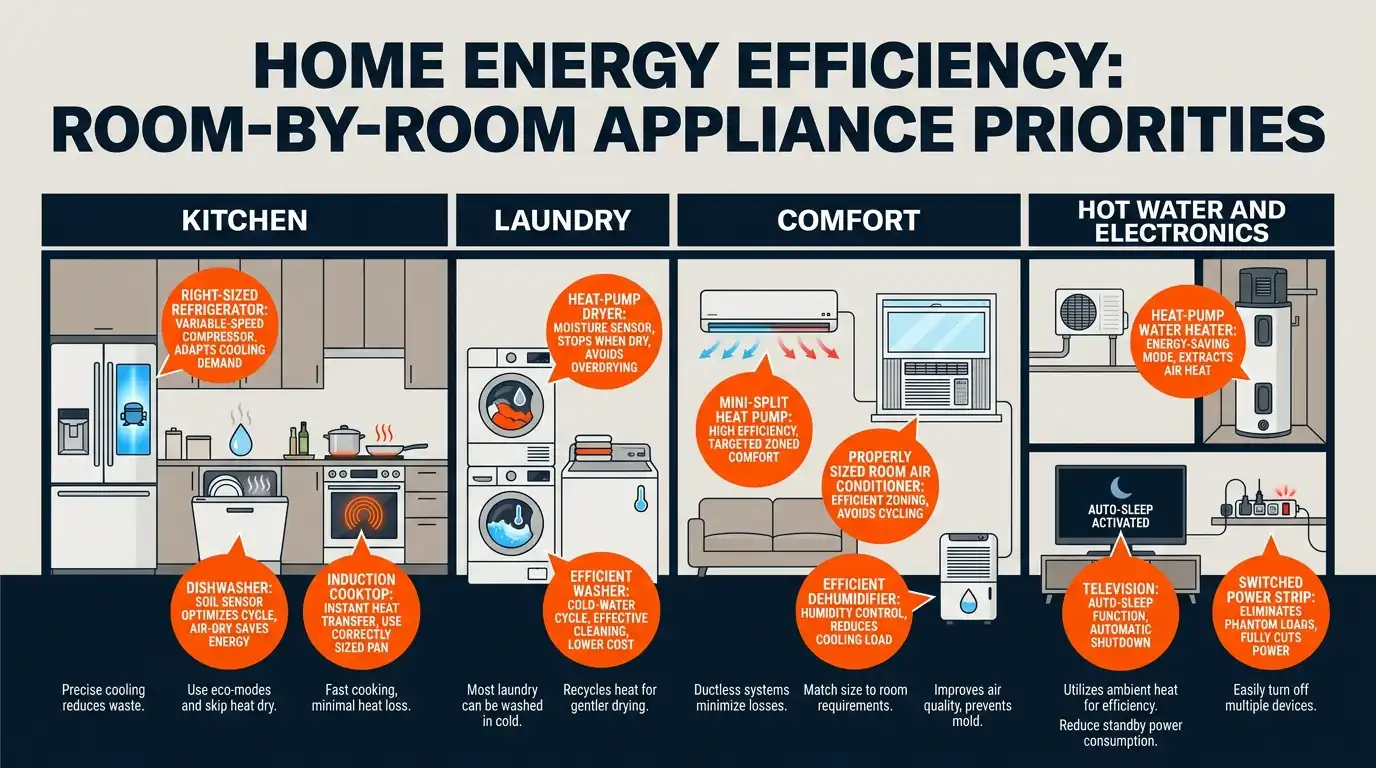
Kitchen
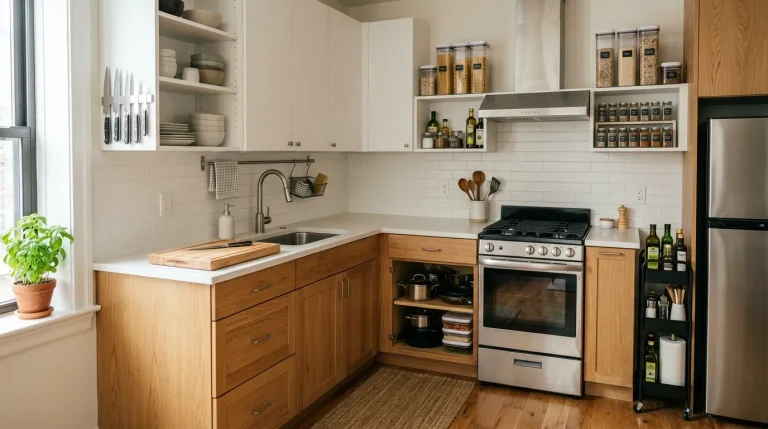
- Refrigerator Right-size it. Top or bottom freezers often beat side-by-side on use. Look for better insulation and variable speed compressors.
- Dishwasher Choose soil sensors, air-dry, and low gallons per cycle. Skip heat dry when you can.
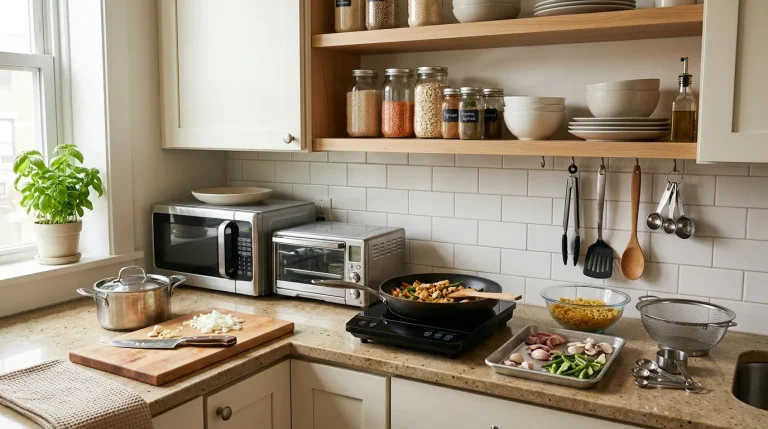
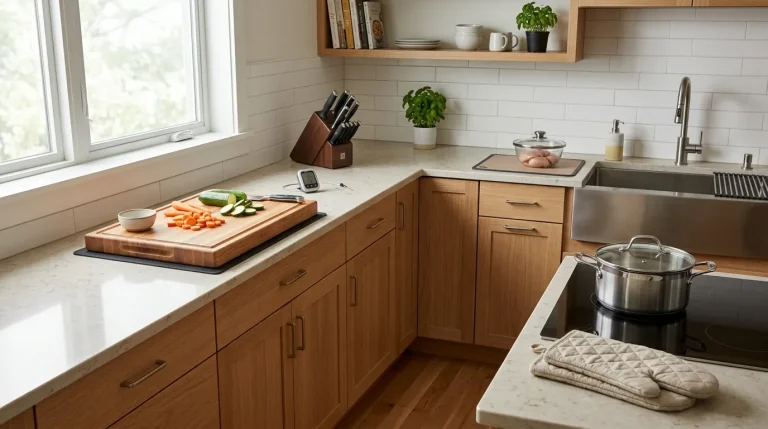
- Range Induction cooktops are fast and can waste less heat than gas or coils. Use the right pan size.
Laundry
- Washer Front-load or high-efficiency top-load with low IWF. Cold wash cycles save a lot.
- Dryer Heat pump dryers can use much less energy than vented electric. Moisture sensors stop the cycle when clothes are dry.
Comfort
- HVAC In mild rooms, a high-efficiency mini-split can save a lot. Check SEER2 and HSPF2 ratings that suit your climate.
- Room AC Look for high CEER, right-size BTUs, and smart scheduling.
- Dehumidifier ENERGY STAR models use less for the same pints per day.
Hot water and more
- Water heater Heat pump water heaters can cut energy use a lot. Check UEF and noise for your space.
- TV and office gear Check standby use. Set auto sleep and power strips.
Here is how to choose energy efficient appliances for each space. Match size to use, then pick the best rating in that size group.
Smart features that save without effort
Smart controls can cut waste with little work.
What helps most:
- Eco modes Lower heat, shorter cycles, and smart sensors save power and water.
- Scheduling Run washers or dishwashers when rates are low. Many utilities offer time-of-use plans.
- Load detection Sensors adjust run time to your load.
- Remote alerts Fix a blocked filter or coil fast and keep the unit efficient.
- Demand response Some models shift use when the grid is tight, and you may earn bill credits.
Another tip on how to choose energy efficient appliances is to check if the app is simple and updates well. If the app is clunky, you may not use it.
Rebates, incentives, and responsible recycling
Do not leave free money on the table.
Where to look:
- Federal and state programs Some offer tax credits or instant rebates for heat pumps, heat pump dryers, induction, and water heaters.
- Utility rebates Many power companies pay you to choose high-efficiency models or to recycle an old fridge.
- Retail promos Stores may stack offers during holiday sales.
- Proper disposal Old fridges and ACs need certified recycling. This keeps refrigerants out of the air.
Part of how to choose energy efficient appliances is to plan the buy around rebates. This can turn a good pick into a great deal.
Common mistakes to avoid
A few traps can wipe out savings.
- Oversizing Bigger units short-cycle and waste energy.
- Ignoring standby Always check idle use on TVs and office gear.
- Chasing the lowest price Cheap now can mean high bills later.
- Skipping venting and placement Poor airflow kills efficiency.
- Not reading cycles Extra-hot modes defeat savings unless you need them.
Avoid these mistakes in how to choose energy efficient appliances so your picks pay off for years.
Use and care tips that boost savings
Buying right is step one. Use and care lock in the wins.
- Keep coils and filters clean Dirty parts force longer run times.
- Use cold water when you can Modern detergents clean well in cold.
- Air-dry dishes or clothes when you have time Sun and air are free.
- Fill, but do not overfill Full loads save trips. Overloads hurt results.
- Use lids and match pan size on cooktops This keeps heat where you need it.
Knowing how to choose energy efficient appliances is step one. Smart use helps them hit their rated savings.
A quick checklist for the store or your browser
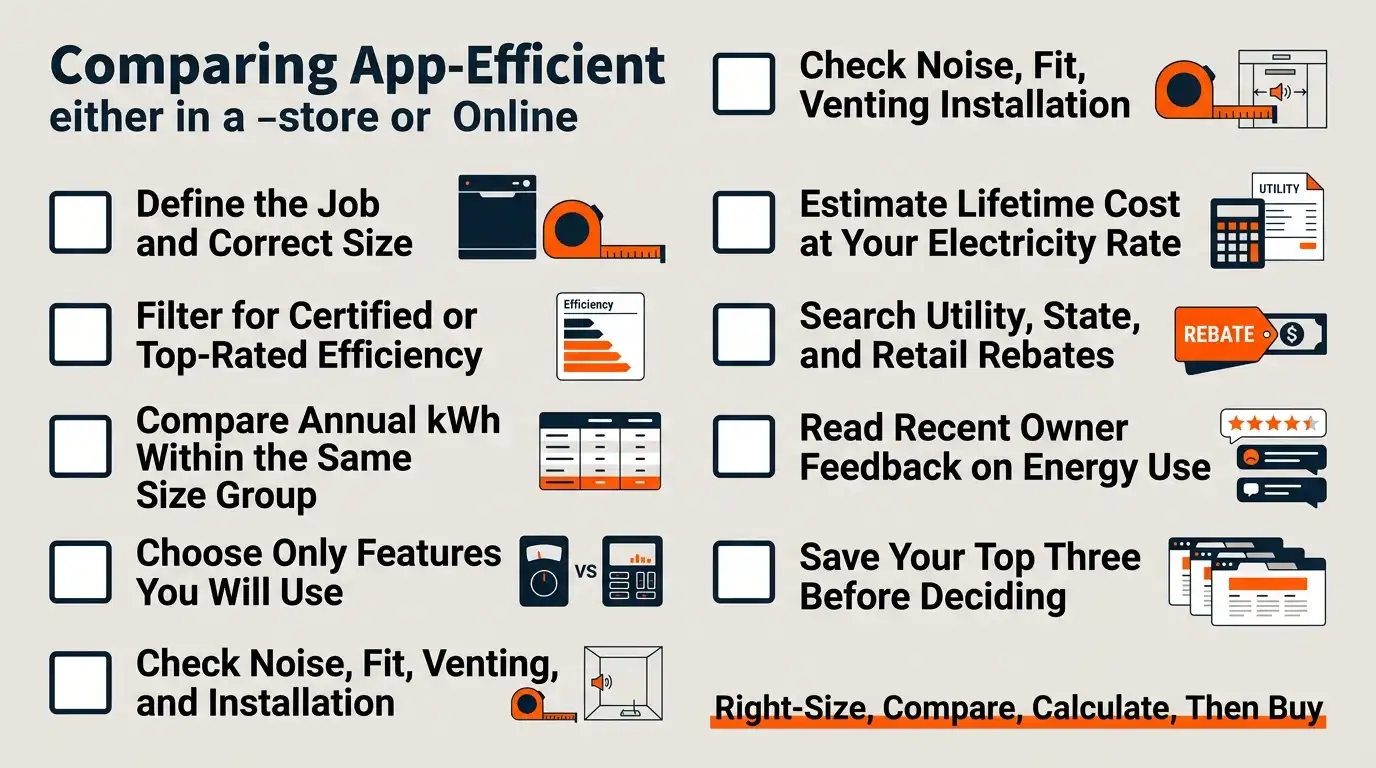
- Define the job and right size in cubic feet or BTUs.
- Filter for ENERGY STAR or top UEF or CEER.
- Compare EnergyGuide kWh within the same size group.
- Confirm features you will use, not just shiny extras.
- Check noise, fit, and install needs.
- Estimate total cost at your power rate.
- Search utility and state rebates.
- Read two recent owner reviews on energy use.
- Save your top three and sleep on it.
This also fits into how to choose energy efficient appliances. Slow down, compare, then click buy with confidence.
Frequently Asked Questions of how to choose energy efficient appliances
What is the fastest way to learn how to choose energy efficient appliances?
Start with ENERGY STAR, then compare the EnergyGuide kWh for the same size. Pick the lowest kWh that still meets your needs.
Do heat pump dryers really save energy?
Yes. They can use far less energy than standard electric dryers by moving heat instead of making it. Moisture sensors also prevent over-drying.
Is induction cooking worth it for efficiency?
For many homes, yes. Induction sends more heat to the pan and less to the room, which can cut wasted heat and keep kitchens cooler.
How long should an efficient appliance last?
With good care, many last 10 to 15 years or more. Check warranties and parts support to protect your investment.
How do I balance price and efficiency when I buy?
Compare total cost over the years you will own it, not just the sticker. Rebates and lower power bills often offset a higher upfront price.
Conclusion
You now know how to choose energy efficient appliances with clear steps, smart checks, and real numbers. Right-size the model, read the labels, compare lifetime costs, and use rebates to seal the deal. Caring for your gear keeps the savings flowing.
Take one action today. Pick one appliance you use a lot and price an efficient upgrade with your real power rate. Want more guides like this? Subscribe, share your wins, or ask a question in the comments.