Buy heavy-bottom pans for even heat, safe coatings, and sizes you’ll use.
If you’ve wondered how to choose pots and pans, you’re in the right place. I test cookware for a living and cook most nights at home. In this guide, I break down materials, build, sizes, and value. You’ll see what matters, what does not, and what fits your stove and recipes. By the end, you’ll know exactly how to choose pots and pans with calm, not guesswork.
Start with your cooking habits and your stovetop
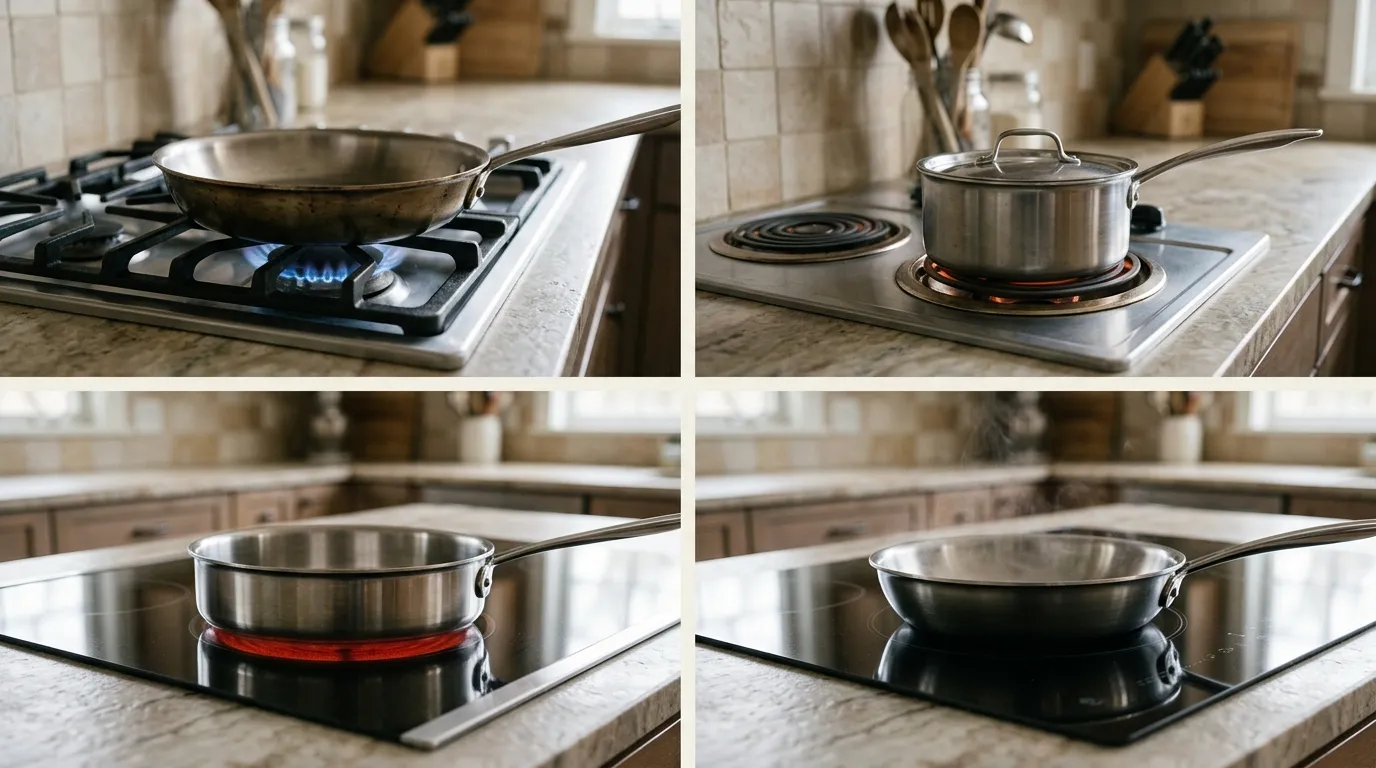
Before you shop, think about how you cook. It will guide every choice. This is how to choose pots and pans without waste.
Ask yourself:
- What do I cook most? Searing steak, simmering sauces, quick eggs, or soup nights.
- What is my stove? Gas, electric coil, glass-ceramic, or induction.
- How much do I cook at once? One pan meals or big batches.
- How much weight can I lift safely? Heavy pans are steady but can strain wrists.
- Do I use the oven or broiler often? Check oven-safe limits.
- Do I want dishwasher-safe gear? Or am I fine with hand wash.
Key stovetop notes:
- Induction needs magnetic bases. Bring a magnet when you shop.
- Glass-ceramic likes flat, medium-weight bottoms to avoid scratches.
- Gas likes fast response. Short, vented handles help near flames.
This simple audit is step one in how to choose pots and pans that fit your life.
Cookware materials explained
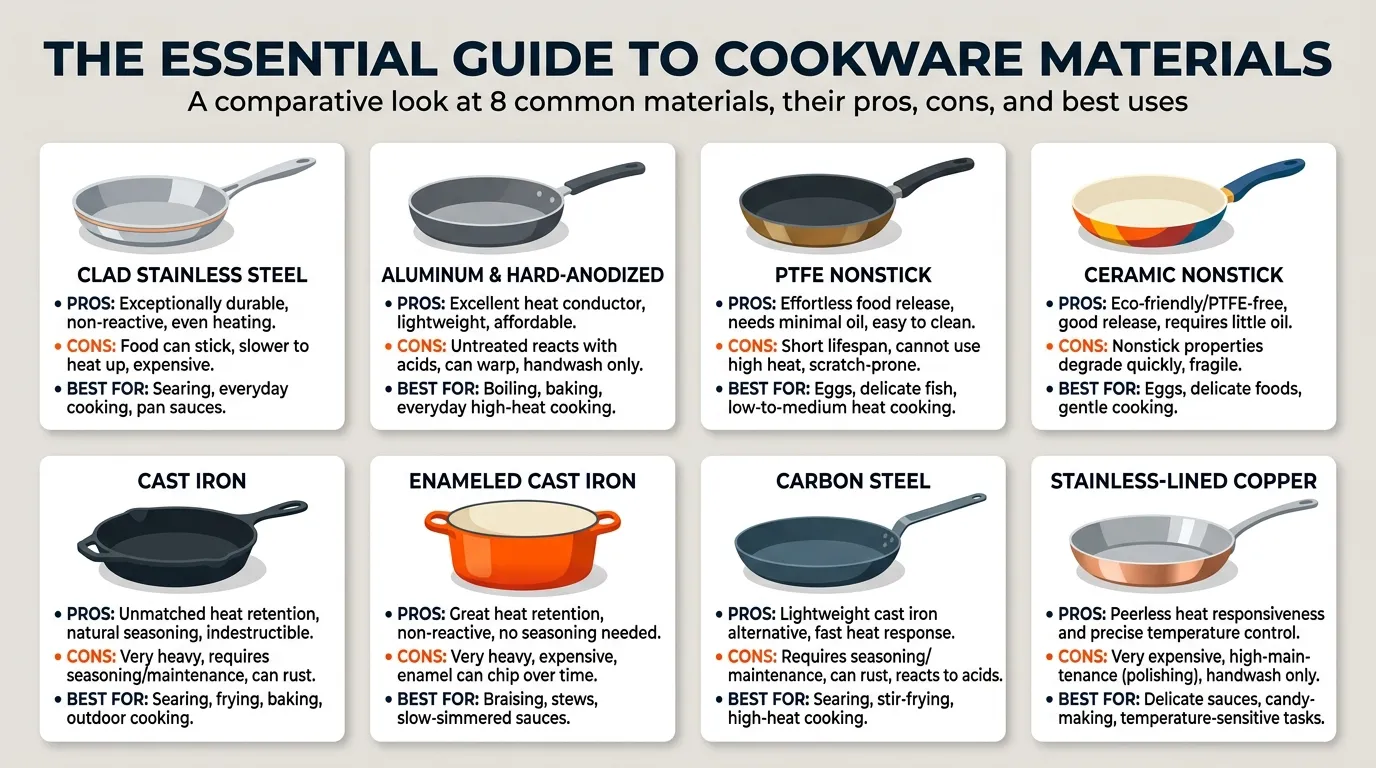
Material choice shapes heat, weight, care, and taste. This is the core of how to choose pots and pans.
Stainless steel (clad)
- What it is: Steel outside with an aluminum or copper core.
- Pros: Even heat, no rust, no flavor change, oven safe.
- Cons: Food can stick if you rush preheat. Heavier than plain aluminum.
- Best for: Searing, pan sauces, pasta water, sauté.
- Tip: Tri-ply (steel/aluminum/steel) is the sweet spot for most homes.
Aluminum and hard-anodized
- What it is: Great heat conductor. Hard-anodized is treated for strength.
- Pros: Light, fast heat, good value.
- Cons: Bare aluminum can react with acid. Many have nonstick coatings.
- Best for: Weeknight pans, big sauté pans, quick boils.
- Tip: Look for thick walls to resist warping.
Nonstick PTFE (often called Teflon)
- Pros: Eggs slide out. Easy cleanup. Needs little oil.
- Cons: Wears over time. Avoid very high heat. Use gentle tools.
- Best for: Eggs, pancakes, delicate fish.
- Tip: Keep a cheap nonstick just for eggs and replace every few years.
Ceramic nonstick (sol-gel)
- Pros: Slick at first. PFAS-free claim is common. Simple cleanup.
- Cons: Loses glide faster than PTFE. Can brown less evenly.
- Best for: Low to medium heat tasks.
- Tip: Hand wash. Avoid sprays. Expect a shorter life.
Cast iron
- Pros: Holds heat like a champ. Amazing sear. Oven and grill friendly.
- Cons: Heavy. Needs seasoning. Slow to change heat.
- Best for: Steaks, cornbread, roast chicken, frying.
- Tip: Buy pre-seasoned. Dry well and oil light after washing.
Enameled cast iron
- Pros: No seasoning. Acid-safe. Great for braises.
- Cons: Heavy. Pricey. Enamel can chip if dropped.
- Best for: Soups, stews, no-knead bread, slow cooking.
- Tip: Use medium heat and wide wooden tools.
Carbon steel
- Pros: Lighter than cast iron. Takes a killer sear. Seasoning builds fast.
- Cons: Can rust if wet. Reacts with acid.
- Best for: Stir-fries, crepes, steaks.
- Tip: Heat oil, wipe, and store dry. Great for gas and induction.
Copper (often lined with stainless)
- Pros: Fast, even, and very responsive.
- Cons: Expensive. Needs polish. Not for induction unless bonded.
- Best for: Candy, sauces, fish, chefs who watch every degree.
- Tip: Choose lined copper for safety and easy care.
Knowing the pros and cons of each is central to how to choose pots and pans with confidence.
Construction quality and heat performance
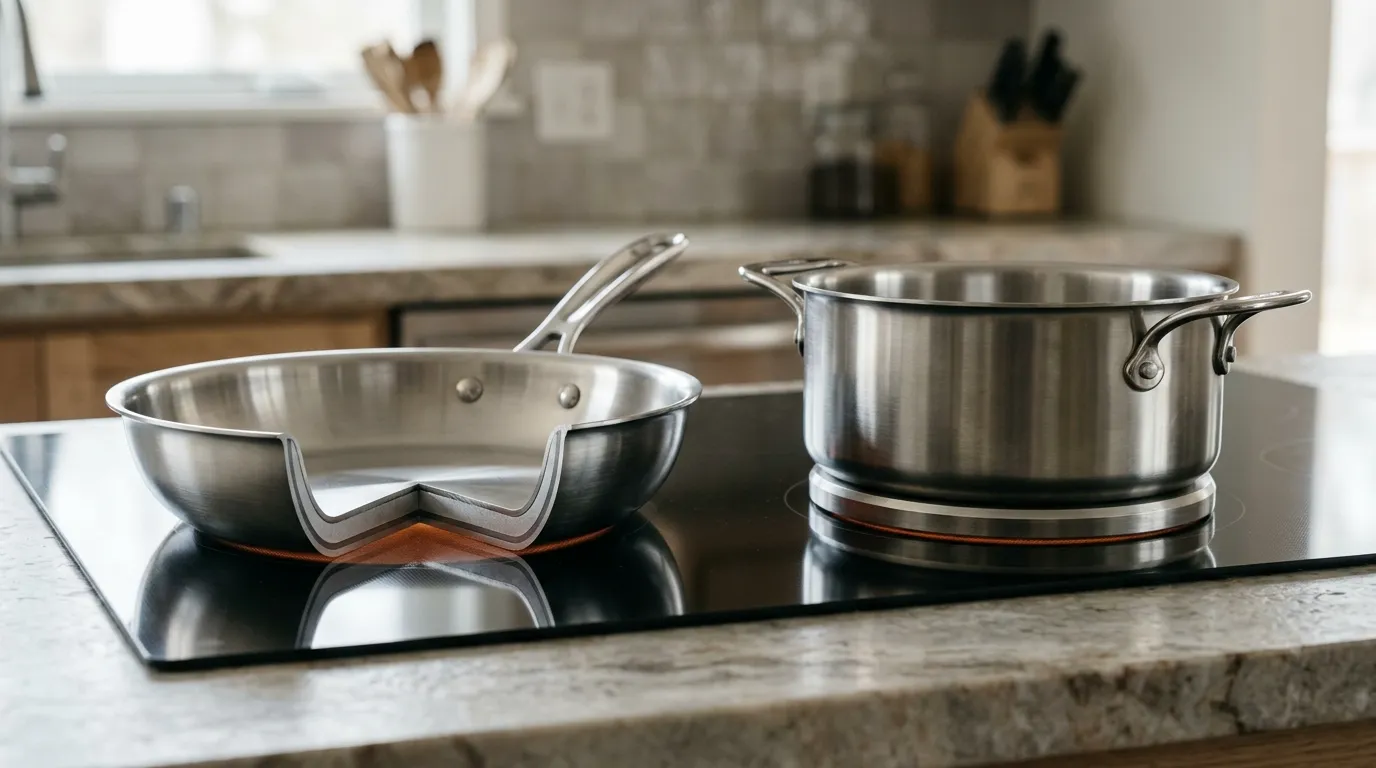
Material is one part. Build is the other. This is a big lever in how to choose pots and pans that last.
Cladding and base
- Tri-ply: Steel outside, aluminum core, steel inside. Balanced heat and weight.
- Five-ply: Adds extra core layers. More even, more stable, often heavier.
- Disc-base: An aluminum or copper plate on the bottom only. Fine for pots. Less ideal for skillets due to hot rims.
Thickness and weight
- Thicker bottoms spread heat better and resist warping.
- A little heft is good. If it feels flimsy, skip it.
Handles and lids
- Riveted handles are strong. Welded are easier to clean.
- Metal lids are oven-safe. Glass lids show progress but can limit heat.
- A helper handle on large pans saves wrists.
Oven and broiler safety
- Check ratings. Many stainless pans are safe to 500°F or more.
- PTFE nonstick often tops out around 400–500°F. Skip the broiler.
Simple in-store tests
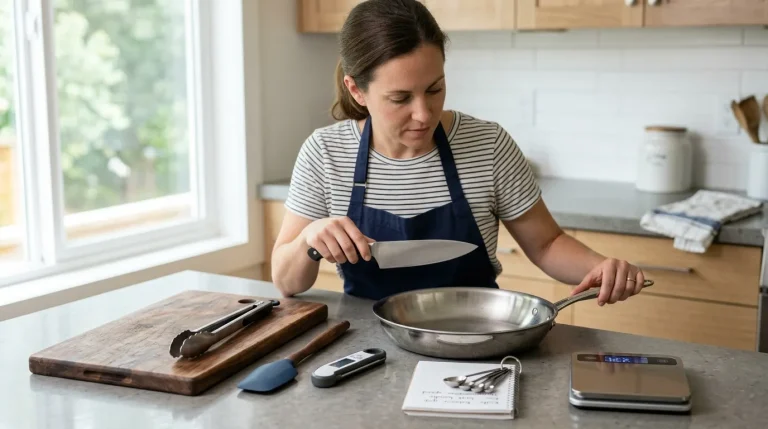
- Flatness: Set the pan on a flat counter. Press edges. Rocking means it may warp.
- Balance: Hold the handle. The pan should not tip forward when empty.
- Magnet: For induction, magnet should stick hard to the base.
At home heat tests
- Oil shimmer: Heat, add a drop of oil. It should shimmer, not smoke at low heat.
- Evenness: Dust the pan with flour on low heat. Look for even browning.
Attention to build is smart practice for how to choose pots and pans that cook well every day.
Sizes, shapes, and must-have pieces
Buy shapes you will use weekly. This is where many people nail or miss how to choose pots and pans.
Core starter kit for most homes
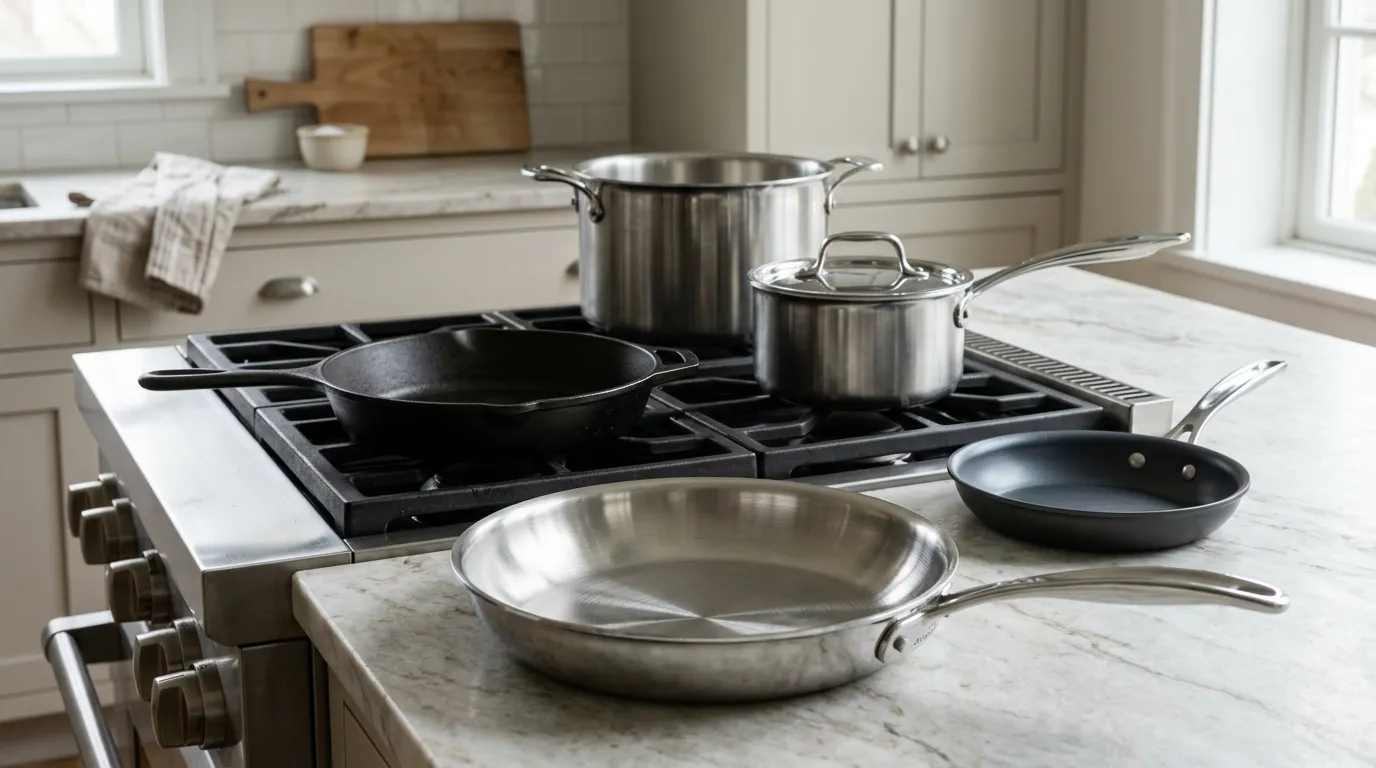
- 10 or 12 inch skillet (stainless or carbon steel) for sear and sauté.
- 2 or 3 quart saucepan with lid for grains, sauces, reheats.
- 6 to 8 quart stockpot with lid for pasta, soups, blanching.
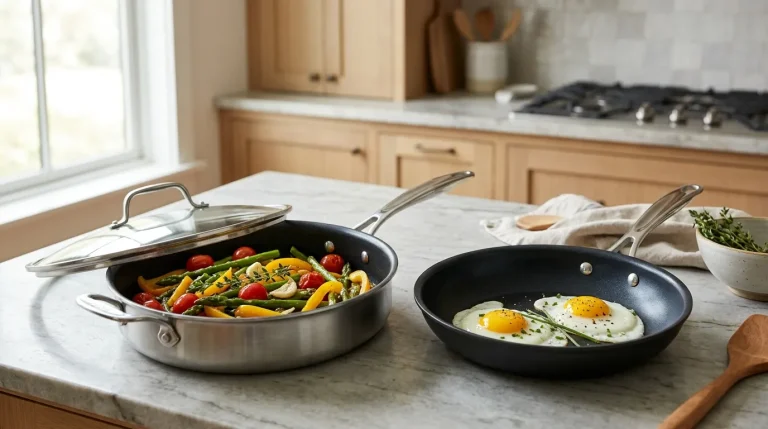
- 3 to 4 quart sauté pan with lid for one-pan meals and pan sauces.
- 10 inch nonstick skillet for eggs and delicate fish.
Nice to have
- Enameled Dutch oven for braises and bread.
- Cast iron grill pan for indoor sear marks.
- Small 1 quart butter pan for melts and syrups.
- Wok (carbon steel) if you love stir-fries.
Fit to burner size
- Match pan base to the flame circle or coil. Too large wastes heat. Too small can burn rims.
Lids and nesting
- Universal lids save space. Nested sets help small kitchens. Use soft pan protectors to avoid scratches.
This piece list is a solid path in how to choose pots and pans without clutter.
Sets vs. open stock
Many ask how to choose pots and pans as a set or one by one. Here is a simple rule.
Buy open stock for control
- You pick the best material for each task.
- Skip filler pieces like tiny saucepans you never use.
Buy a set when
- You need a full kitchen fast on a deal.
- You like matching lids and stackable parts.
Smart mix
- Get a tri-ply skillet and saucepan.
- Add a cheap nonstick for eggs.
- Add a Dutch oven for braises.
- Fill gaps later when you feel the need.
Warranties and returns
- Lifetime warranties matter with clad steel. Keep proof.
- Test one piece before you commit to a full line.
This blended plan is my favorite way for how to choose pots and pans and save money.
Safety, coatings, and maintenance
People often worry about safe use. Safety is a key part of how to choose pots and pans.
Nonstick safety basics
- PTFE is safe when used as directed. Keep heat medium or lower. Do not preheat empty on high.
- Replace if the coating peels or is deeply scratched.
- Avoid aerosol sprays. They gum up coatings.
Ceramic coating notes
- Great glide at first. Glide fades faster than PTFE.
- Keep heat low to medium. Hand wash to extend life.
Metals and food
- Bare aluminum and copper can react with acid. Choose lined or anodized for tomato or wine sauces.
- Stainless is stable. If you have nickel sensitivity, look for low-nickel steel.
Cast iron and carbon steel
- Seasoning is a thin baked-on oil layer. It adds nonstick and rust block.
- Acid foods can strip seasoning. Re-season if dull.
Cleaning tips
- Stainless: Use a paste of baking soda or a stainless cleanser for stuck bits.
- Cast iron: Hot water, scrub, dry, oil light. No long soaks.
- Nonstick: Soft sponge only. No metal tools.
A little care makes any pick last. That is real talk on how to choose pots and pans with safety in mind.
Budget and value
You can kit a kitchen well at any price. Budget is a big lever in how to choose pots and pans with value.
Good, better, best
- Budget: One tri-ply skillet, one 3 quart saucepan, one 8 quart stockpot, one nonstick egg pan. Mix brands. Shop sales.
- Mid-range: Full tri-ply starter set plus a Dutch oven. Add a carbon steel skillet.
- Premium: Five-ply set or copper-clad for control. Add specialty pieces you will use.
Where to shop
- Restaurant supply stores sell tough, plain pans for less.
- Open-box deals and factory seconds are fine if bases are flat.
Longevity math
- A good stainless pan can last decades. Cost per year is low.
- Nonstick has a shorter life. Budget for a cycle every 2–4 years.
Sustainability
- Choose repairable handles and lifetime warranties when you can.
- Donate or recycle worn aluminum. Cast iron can be re-seasoned and passed on.
These money moves support a smart plan for how to choose pots and pans that fit your wallet.
Testing before you buy and at home
Small tests save big regrets. Use them in your plan for how to choose pots and pans.
In store
- Magnet test for induction. It should snap firm to the base.
- Flatness check on a counter. No gaps. No rock.
- Grip test with your usual oven mitt. Is it comfy.
At home
- Egg test on nonstick with a dab of butter. It should slide on low heat.
- Water bead test on stainless. Heat to medium. Drop water. If it beads and skates, it is ready to sear.
- Simmer test on a saucepan. Can it hold a steady, tiny bubble on low.
Keep or return
- Many stores allow a short trial. Use it. A return is better than years of fuss.
These tests make how to choose pots and pans feel simple and sure.
Storage and long-term care
Care is part of how to choose pots and pans you will love for years.
Storage
- Use soft pan protectors when stacking.
- Hang heavy pans from studs, not flimsy racks.
- Keep lids nested or on a rack to save space.
Daily habits
- Preheat gently. Add oil after the pan is warm for stainless and carbon steel.
- Do not shock a hot pan with cold water. That can warp it.
- Salt water only after it boils to avoid pitting stainless.
Deep clean
- Stainless rainbow tints fade with a vinegar rinse.
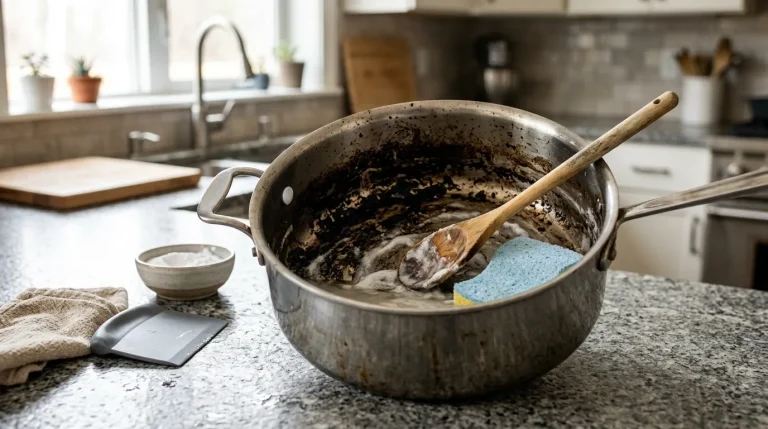
- For burnt bits, simmer water with a spoon of baking soda, then scrub.
Seasoning refresh
- For cast iron or carbon steel: Heat pan, rub a thin coat of oil, bake at 450°F for one hour. Cool in oven.
Good habits keep performance high. That’s a quiet win in how to choose pots and pans for the long run.
Mistakes to avoid and tips from my kitchen
Here are lessons from years of testing. These will speed up how to choose pots and pans that work.
Common mistakes
- Buying a huge set on sale, then using only three pieces.
- Picking pans that are too heavy to handle when full.
- Ignoring burner size and getting scorched rims.
- Using high heat on nonstick and killing the coating fast.
My field notes
- My daily driver is a 12 inch tri-ply skillet. It sears well and goes oven-to-table.
- I keep a $20 nonstick only for eggs. I replace it every two years.
- A 3 quart sauté pan with a lid solved weeknight meals for a family of four.
- I avoid glass lids on high-heat sears. Metal lids handle the oven better.
Small choices add up. These are the moves that make how to choose pots and pans a joy, not a chore.
Frequently Asked Questions of how to choose pots and pans
What is the best material for everyday cooking?
Tri-ply stainless steel is the most versatile for most homes. It heats even, is tough, and is safe in the oven.
How many pieces do I really need?
Start with four: a skillet, a saucepan, a stockpot, and a nonstick egg pan. Add a sauté pan or Dutch oven if you cook one-pan meals.
Are nonstick pans safe to use?
Yes, when used as directed at low to medium heat. Replace when the coating is worn or scratched.
Do I need induction-compatible cookware?
Only if you have or plan to get an induction cooktop. Use a magnet to check; if it sticks to the base, you are good.
Should I buy a cookware set or open stock?
Open stock gives you control and avoids filler pieces. A set makes sense if the price is great and you will use most pieces.
How do I prevent food from sticking to stainless steel?
Preheat, then add oil, then food. Let a crust form before turning; the pan will release when the sear sets.
What size skillet should I buy first?
A 10 or 12 inch skillet fits most meals. If you cook for four, pick the 12 inch.
Conclusion
The smart path for how to choose pots and pans is simple. Match material and build to your stove and food. Buy core pieces you will use each week. Add specialty pans only when you feel the gap.
Test in hand. Keep heat in check. Care a little, and your pans will serve for years. Ready to build your perfect lineup? Pick one core piece today, cook with it for a week, and let that guide your next buy. If this helped, share it with a friend or leave a question so I can help you dial in the rest.