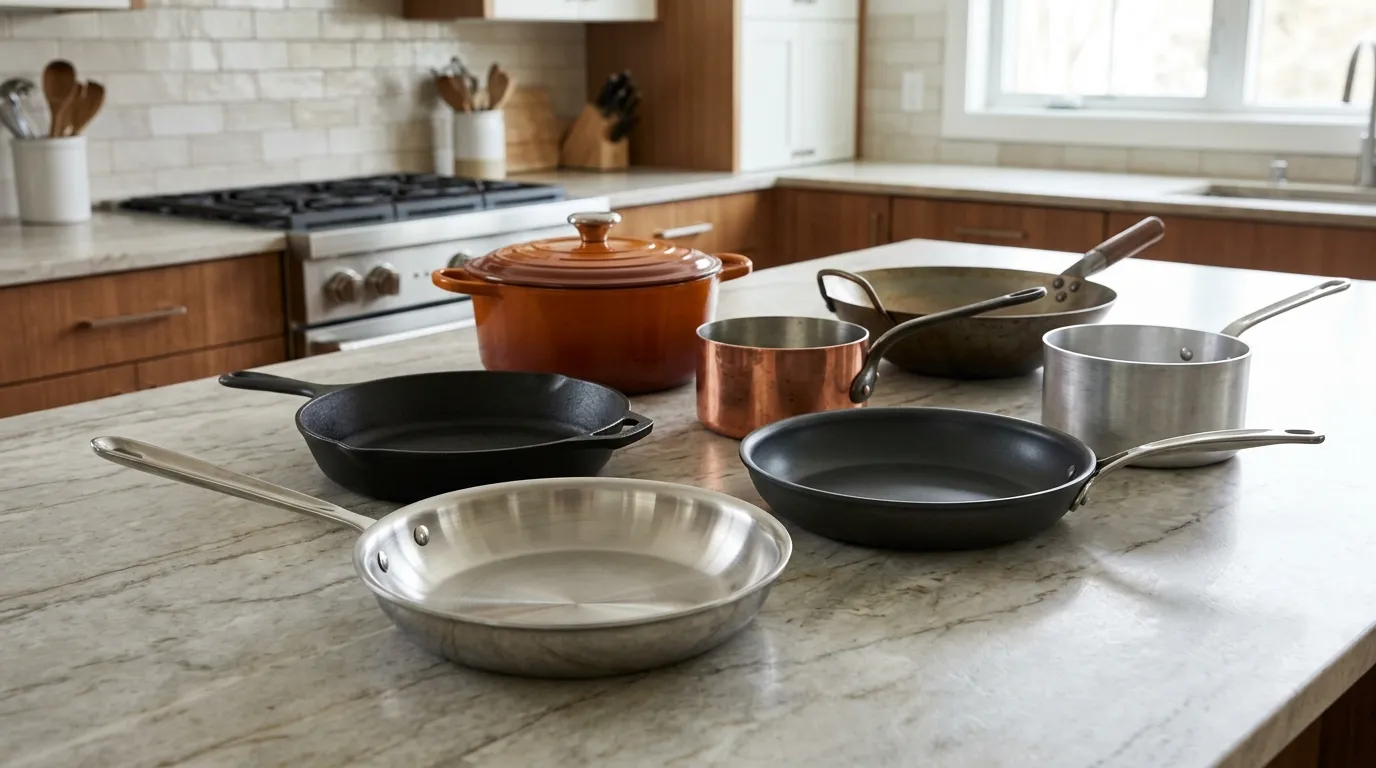
Most cookware types differ by material, heat response, durability, and care needs.
You want cookware that cooks well, lasts long, and fits your life. In this guide on cookware types explained, I share what I use at home and in pro tests. You will learn how each pan behaves, what to buy first, and how to care for it. By the end, cookware types explained will feel simple, clear, and easy to act on.
Cookware types explained at a glance
Here is a fast map of common choices. I keep this at the front of my mind when I shop or test.
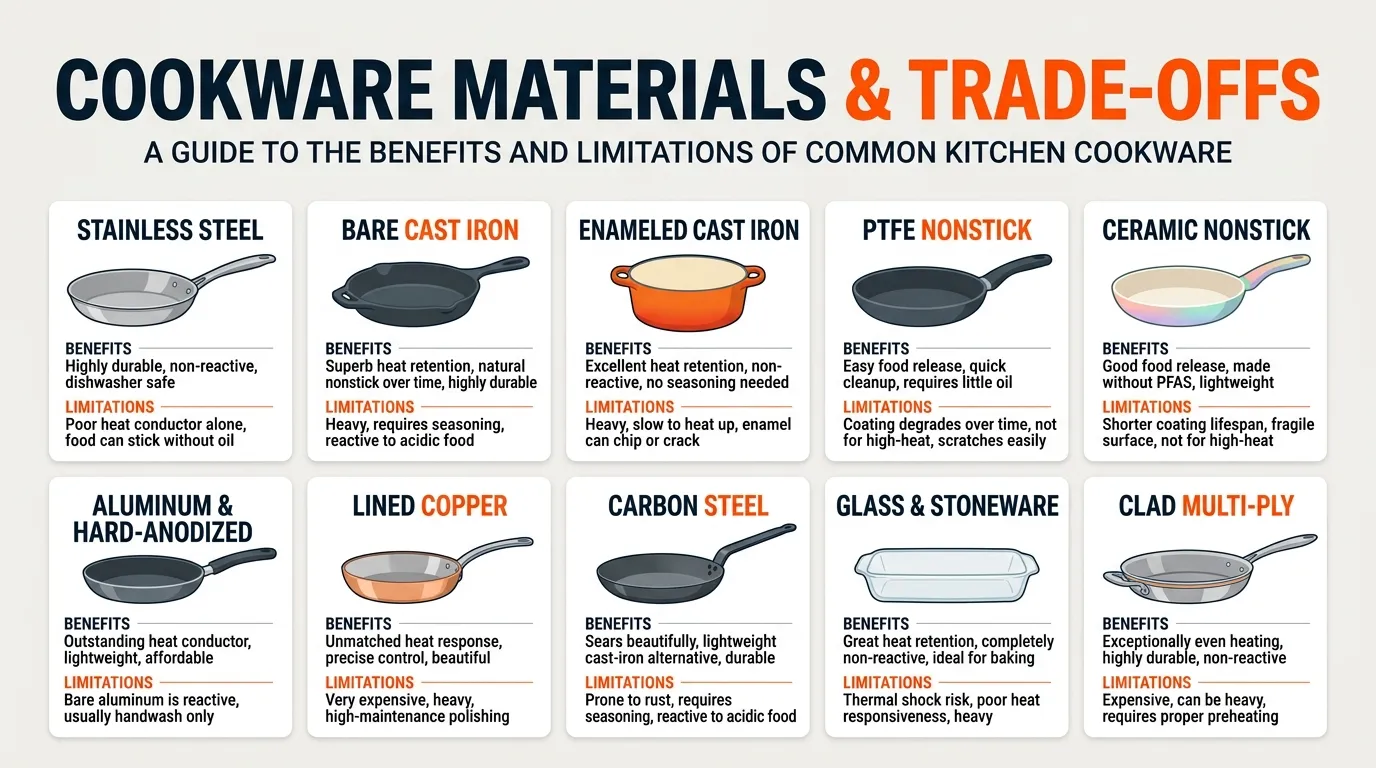
- Stainless steel. Great for browning, sauces, and everyday meals. Low care. Can stick if used wrong.
- Cast iron. Amazing sear and heat hold. Heavy. Needs seasoning. Best for steaks, cornbread, and baking.
- Enameled cast iron. Dutch ovens and braisers. No seasoning. Slow, steady heat for stews.
- Nonstick PTFE. Easy eggs and fish. Shorter life. Avoid high heat and metal tools.
- Ceramic nonstick. PTFE-free. Slick at first. Coating can fade faster. Still avoid high heat.
- Aluminum and hard-anodized. Even heat, fair price, often nonstick. May not work on induction.
- Copper and clad copper. Super fast response. Pricey. Needs care. Great for sugar and sauces.
- Carbon steel. Like light cast iron. Seasons well. Searing, eggs, and woks.
- Glass and stoneware. Oven work and baking. Not for stovetop.
- Clad multi-ply. Layers of steel and aluminum or copper. Balanced heat and strength.
When people search for cookware types explained, they want clear picks and trade-offs. Use this map as your base.
How cookware materials affect cooking
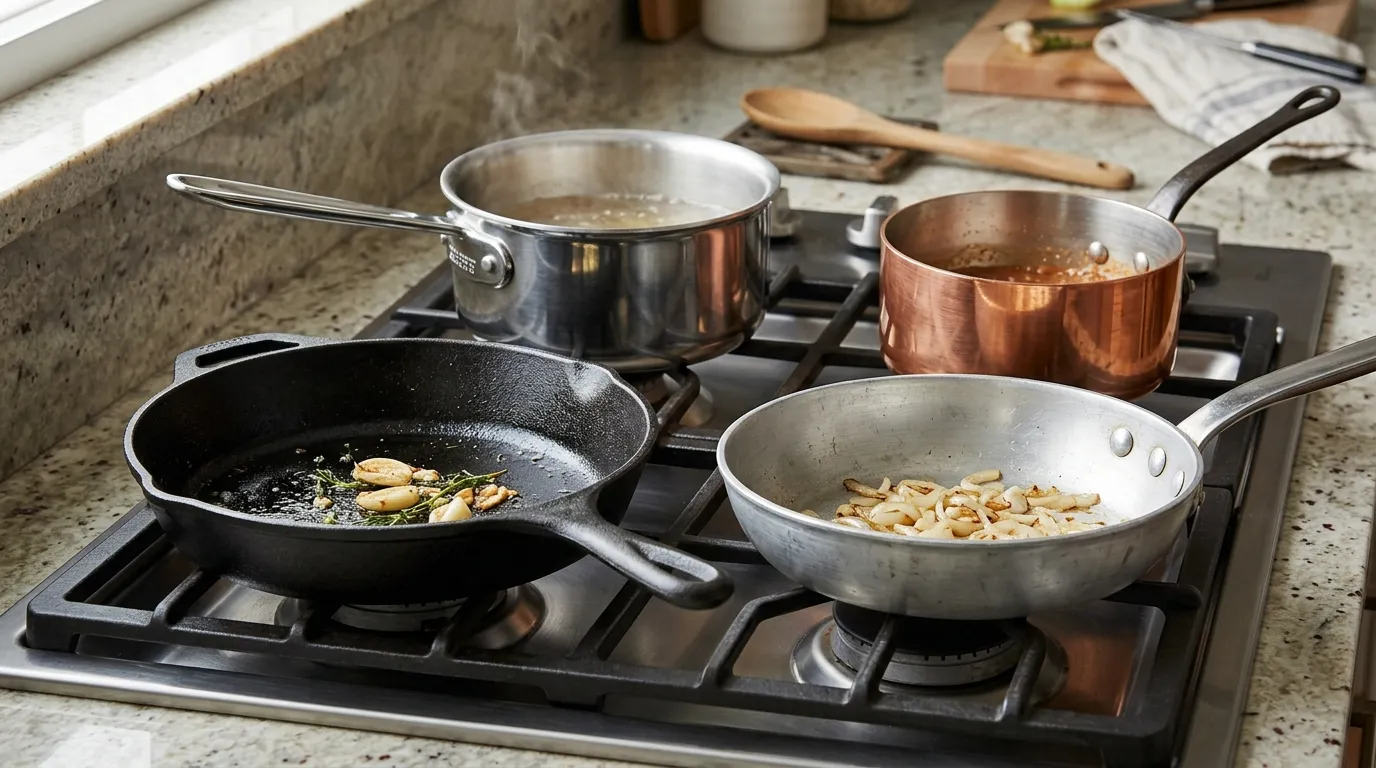
Heat moves and stores in each metal in a unique way. That is why eggs stick in one pan but not in another.
- Heat capacity. Cast iron holds heat well. It is slow to change. Stainless and copper change fast.
- Conductivity. Copper and aluminum spread heat fast. They cook more even at the same flame.
- Reactivity. Bare aluminum and copper can react with acid. A steel lining solves this.
- Surface. Polished steel can stick if cold. Seasoned iron and nonstick release food with ease.
Think of your pan like a car. Some are nimble and quick. Others are strong and steady. In cookware types explained, these traits guide your pick.
Stainless steel: the everyday workhorse
Stainless steel is my daily driver. I use tri-ply steel with an aluminum core. It heats even and stays flat.
- Pros. Durable, safe with acid, oven and dishwasher friendly. Great fond for pan sauces.
- Cons. Food can stick if you rush. It is less conductive than copper or aluminum.
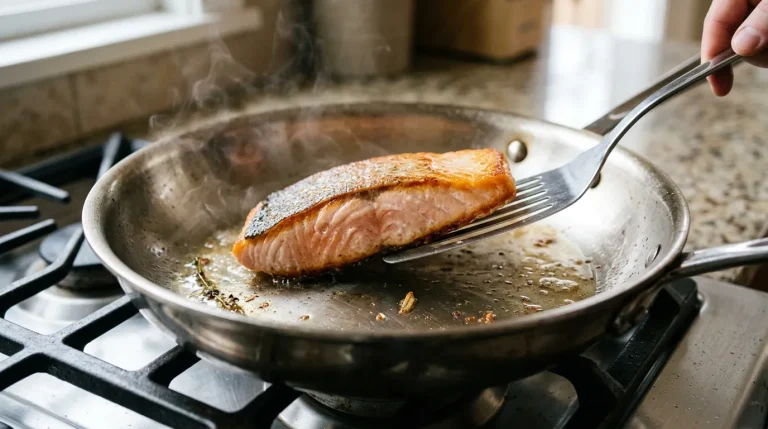
- Tips. Preheat until water beads and dances. Add oil, then food. Do not move food too soon.
Tri-ply is a sweet spot for most cooks. Five-ply can damp hot spots more, but it can be slower to heat. For cookware types explained in simple terms, stainless gives the best mix of value, control, and life.
Personal note: My first steel skillet taught me patience. I stopped stirring early, let the crust form, and flip became easy
Cast iron and enameled cast iron

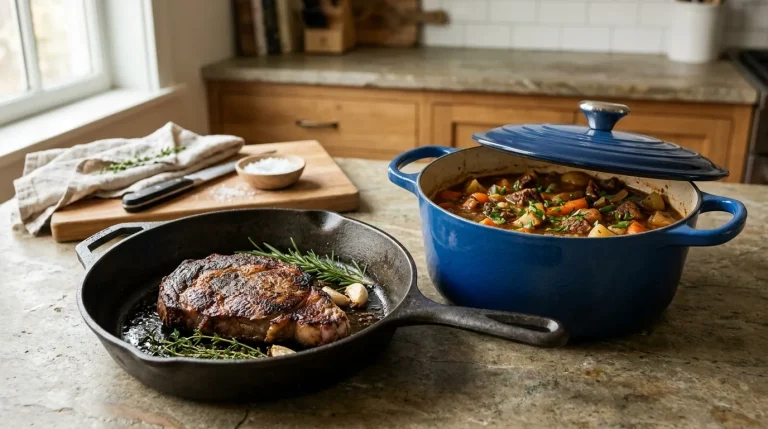
Cast iron shines when you need a deep sear and stable heat. It is perfect for steaks, chops, and crispy edges.
- Bare cast iron. Needs seasoning. Handles high heat. Avoid long acidic cooks.
- Enameled cast iron. No seasoning. Great for soups, braises, and bread.
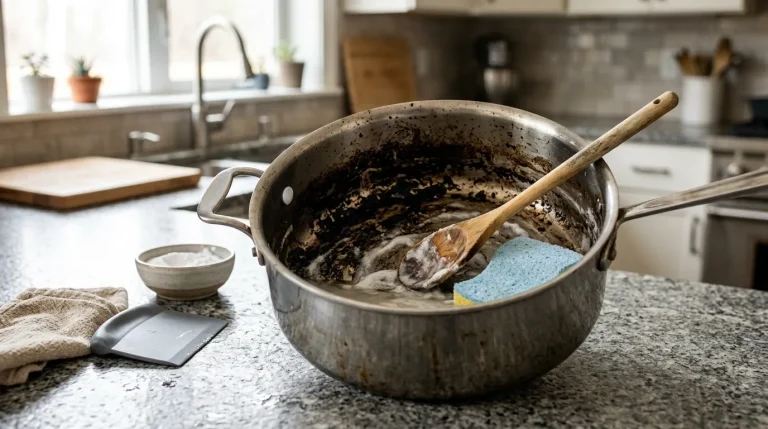
Care is simple. For bare iron, clean with hot water, dry well, and wipe a thin oil layer. I once soaked a pan overnight and it rusted. A quick scrub and a new seasoning fixed it.
Enameled cast iron chips if dropped. Use low to medium heat on the stovetop. For cookware types explained with comfort food in mind, this is your braise hero.
Nonstick: PTFE and ceramic
Nonstick makes eggs, crêpes, and fish easy. But it has limits.
- PTFE nonstick. Very slick. Keep heat under about medium. Do not use metal tools. Vent well.
- Ceramic nonstick. PTFE-free. Coating is a silica-based layer. It is slick when new but can lose glide faster.
Tips from testing. Do not preheat nonstick empty. Use a film of oil for best release. Expect to replace nonstick every 2 to 4 years, based on use. If you want cookware types explained for easy breakfasts, keep one good nonstick just for eggs.
Aluminum and hard-anodized
Aluminum spreads heat well and costs less. Many pans add a nonstick coat.
- Bare aluminum. Light and fast. Can react with acid. Often used as a core, not a surface.
- Hard-anodized. The surface is tougher and dark. Often paired with nonstick.
Check for a steel plate if you have induction. Hand wash to extend coating life. In cookware types explained for busy weeknights, hard-anodized gives even heat with low fuss.
Copper and clad copper
Copper is the sprinter of pans. It heats and cools in a flash. That control is gold for sugar, caramel, and sauces.
- Lined copper. Needs a stainless or tin lining. Tin is very nonstick but softer. Steel is tough but a bit less slick.
- Clad copper. A core of copper inside steel. Easier care and less polishing.
Polish keeps it pretty, not more safe. Use medium heat; copper moves heat so fast you do not need a blast. For cookware types explained at the top tier, copper wins on control but not on price.
Carbon steel and woks
Carbon steel is lean and quick. It seasons like cast iron but weighs less.
- Skillets. Great for searing and for eggs once seasoned. Handles oven heat.
- Woks. Best on gas with a round bottom and a ring. On flat tops, use a flat-bottom wok.
Season with thin oil layers and high heat. I made my first wok too oily and it turned sticky. Thin coats fixed it. If you want cookware types explained for high-heat stir-fries, carbon steel is the move.
Specialty shapes and when to use them
Shape matters as much as metal. Pick by job, not by set count.
- Skillet or fry pan. Sloped sides for quick toss and sear.
- Sauté pan. Straight sides for sauces and shallow braise. More room, less splash.
- Saucepan. Tall and narrow for grains, soups, and small boils.
- Dutch oven. Heavy pot for stews, bread, and slow cooks.
- Stockpot. Large volume for pasta, stocks, and canning.
- Roasting pan. Low sides for even browning in the oven.
- Sheet pan. Your meal-prep champ. Use heavy gauge to resist warping.
- Griddle or grill pan. Wide surface for pancakes or grill marks.
If you want cookware types explained to plan a starter kit, choose a 10 or 12 inch skillet, a 3 quart saucepan, and a 6 to 7 quart Dutch oven. Add as you cook more.
Care, safety, and sustainability
Good care means better food and longer life.
- Heat control. Most cooking needs medium heat. High heat is for boiling water or cast iron sear.
- Tools. Wood, silicone, or nylon for nonstick. Metal is fine on steel and cast iron.
- Cleaning. Let pans cool, then wash. For stuck fond on steel, simmer water to lift it.
- Health notes. Use intact, stable coatings. Replace chipped enamel or peeling nonstick.
- Eco tips. Buy fewer, better pans. Many steel and cast iron pieces last decades and can be recycled.
Across cookware types explained, the safest habit is simple. Use the right pan for the job and do not overheat it.
Buying guide and budget picks
You do not need a giant set. Build slow and smart.
- Start here. One stainless tri-ply skillet, one nonstick skillet for eggs, one 3 quart saucepan, and one Dutch oven.
- Upgrade path. Add a carbon steel pan for searing. Add a sheet pan and a roasting pan.
- Budget notes. Spend on the pan you use daily. Skimp on specialty tools you use twice a year.
My go-to mix at home is this. A 12 inch tri-ply skillet, an 8 inch nonstick only for eggs, a 3 quart clad saucepan, a 7 quart enameled Dutch oven, and a carbon steel wok. For cookware types explained with value in mind, this mix covers 95% of meals.
Frequently Asked Questions of cookware types explained
Which cookware is best for beginners?
Start with stainless steel tri-ply, a small nonstick for eggs, and a Dutch oven. This covers searing, sauces, and slow cooks with little fuss.
Is ceramic nonstick safer than PTFE?
Both are safe when used right. Keep heat moderate and avoid scratches; replace any pan with damaged coating.
Can stainless steel be nonstick?
Yes, with method. Preheat until water beads, add oil, and let food release before moving.
Do I need a full set?
No. Buy by task, not by count. A few good pieces beat a big box of pans you never touch.
Will my pans work on induction?
They will if the base is magnetic. Check with a fridge magnet; if it sticks, it works.
How long should nonstick last?
Often 2 to 4 years, based on heat and care. Gentle tools and lower heat extend life.
Are copper pans worth it?
For precise sauces and candy, yes. For daily frying, clad stainless is a better value.
What is the easiest pan to maintain?
Stainless steel needs the least care. It is tough, dishwasher safe, and resists stains.
Can I cook acidic foods in cast iron?
Short cooks are fine in seasoned iron. For long tomato braises, use enameled cast iron or stainless.
Why does food stick to my pan?
Cold pan, cold oil, or early flipping cause sticking. Preheat, oil, and wait for a natural release.
Conclusion
You now have cookware types explained in clear, simple terms. Match metal and shape to the job, and you will cook with more control and joy. Start small, care for what you own, and upgrade with purpose.
Pick one change to try this week. Maybe season a carbon steel pan. Maybe fix your stainless preheat routine. Ready for more? Explore my gear guides, subscribe for test updates, and drop your questions in the comments.