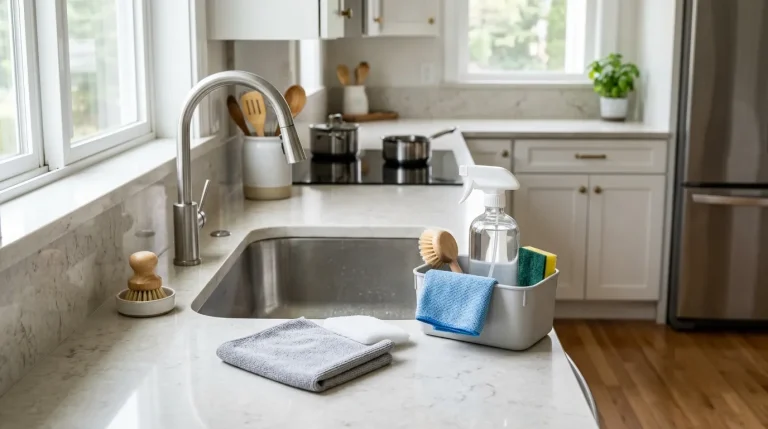

For beginners: keep clean, stay alert, handle knives and heat safely.
If you’re just starting to cook, you want wins, not wounds. I’ve trained new cooks at home and on busy lines. This guide shares kitchen safety tips for beginners that work in real life. You’ll learn how to set up your space, use knives with care, avoid burns, and keep food safe. Read on to cook with confidence without the stress of “what if.”
Build a safe kitchen setup
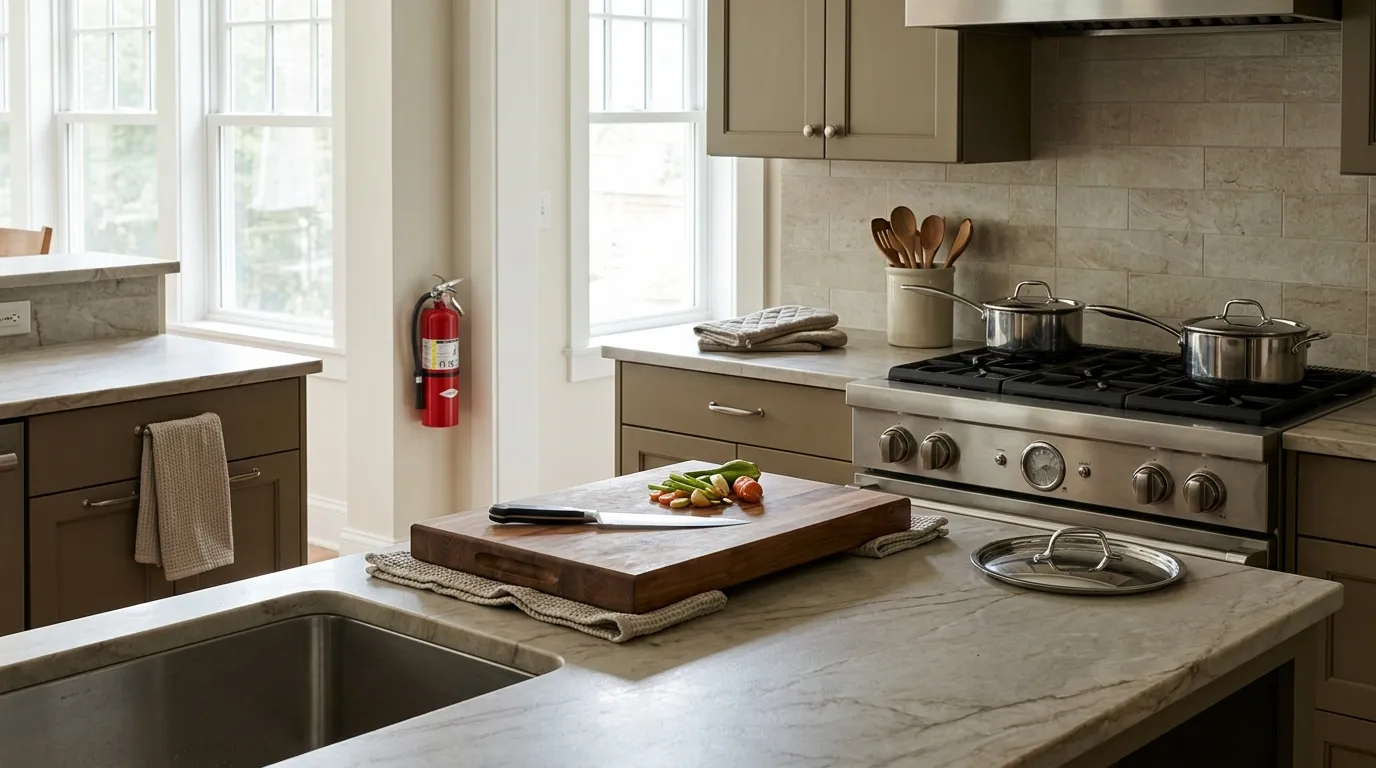
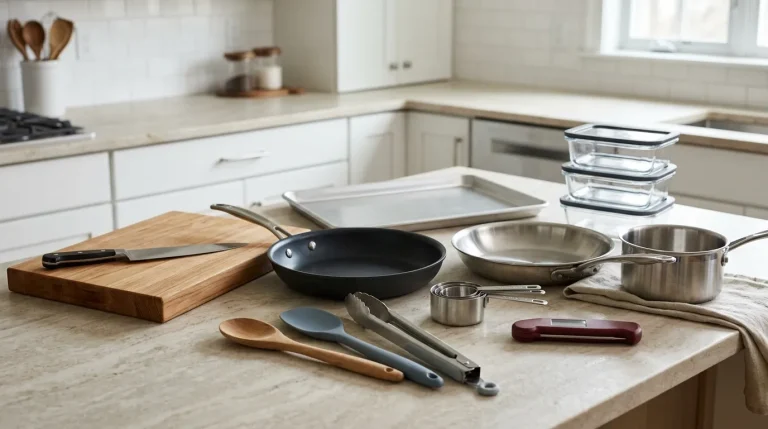
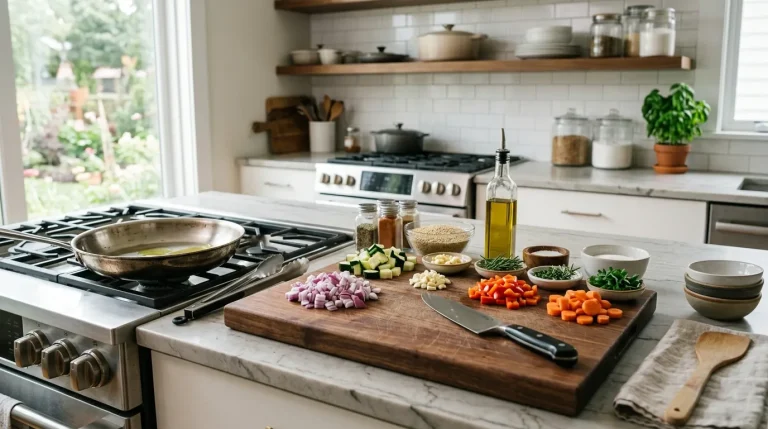
Start with a clean, calm space. Clear counters. Wash your hands. Keep tools within easy reach. Set a small bowl for scraps. Good lighting and airflow help you see and think.
Place a dry towel under your cutting board. It stops slip. Turn pot handles in. Keep paper towels, dish cloths, and wooden spoons away from burners. Keep a lid near the stove to smother flare-ups. Store a multipurpose ABC extinguisher within reach, not next to the stove. A box of baking soda works for small grease fires.
I learned this the hard way. In my first apartment, a slick board sent a tomato flying. I added the towel trick that day and never looked back. Use these kitchen safety tips for beginners to set your base right.
Tips you can apply now:
- Keep a clear zone around the stove and sink.
- Wear short sleeves or roll them up.
- Use closed-toe, non-slip shoes.
- Keep kids and pets out of the path where you carry hot pans.
Knife safety basics for beginners
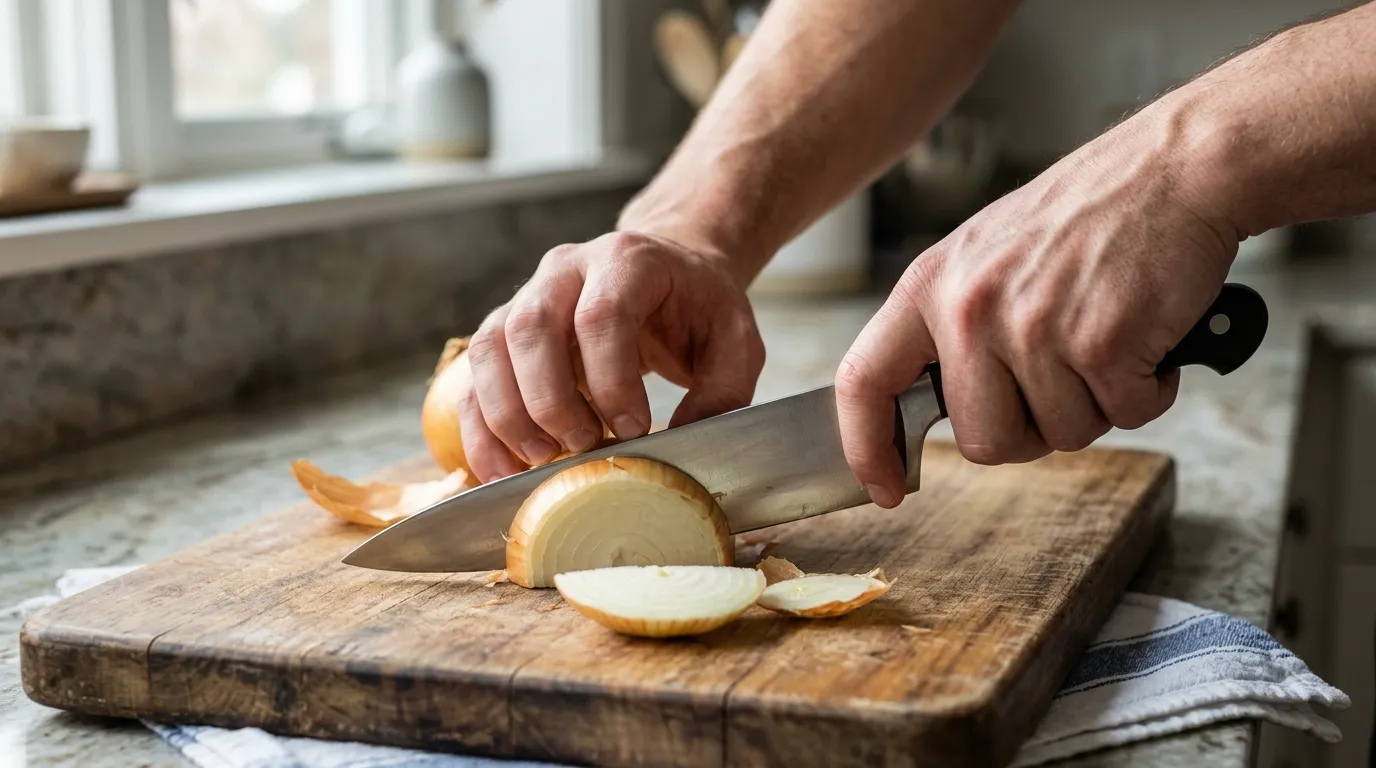
A sharp knife is safer than a dull one. A dull edge slips. Hold the knife with a firm pinch grip at the blade and handle. Tuck your fingertips in a claw on the food. Cut with smooth, steady strokes. Do not rush.
Use a stable board. Place a damp towel under it. Wash, dry, and store knives alone. Do not toss a knife into soapy water. Do not try to catch a falling knife. Step back. Let it drop.
When I teach friends, I start with onions. We slow down. We learn the claw. We count strokes out loud. It builds calm. That is one of my favorite kitchen safety tips for beginners.
Practical habits:
- Hone your knife before use.
- Keep blades pointed down when walking.
- Store in a block, sheath, or on a magnetic strip.
- Use a cut-resistant glove if you feel nervous.
Heat, burns, and fire prevention
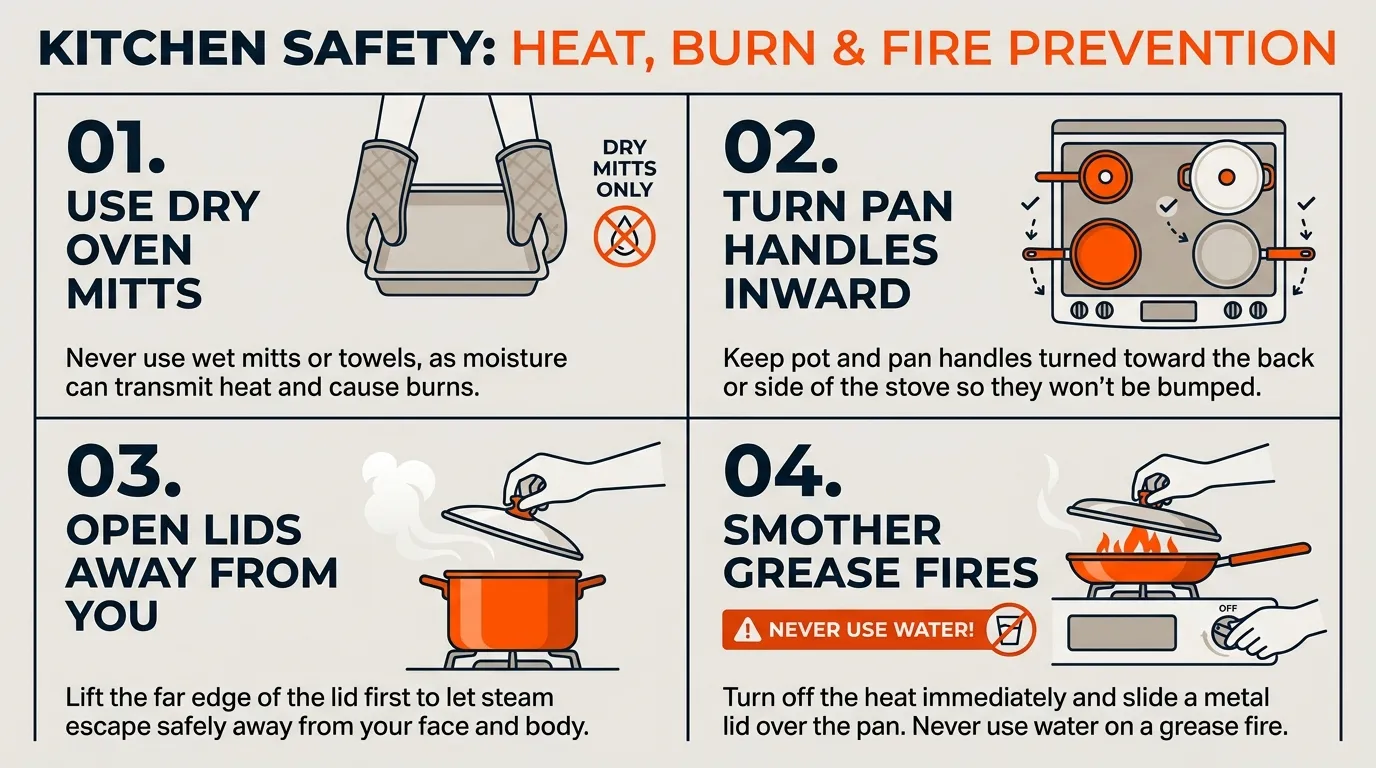
Heat is sneaky. Steam burns fast. Use dry oven mitts. Wet cloths make burns worse. Open lids away from you. Keep long hair tied back. Set a timer every time.
For grease fires, never use water. Turn off the heat. Slide on a lid. Leave it covered. Use baking soda if needed. If the fire grows, leave and call for help. Keep flammable items far from the cooktop.
Simple rules that stick:
- Check handles before lifting. Use two hands for heavy pans.
- Keep pan handles turned in, not over the edge.
- Wipe grease splatter as you go.
- Air fryer and toaster ovens get very hot on top and back.
Use these kitchen safety tips for beginners to make hot work safe work.
Food safety essentials
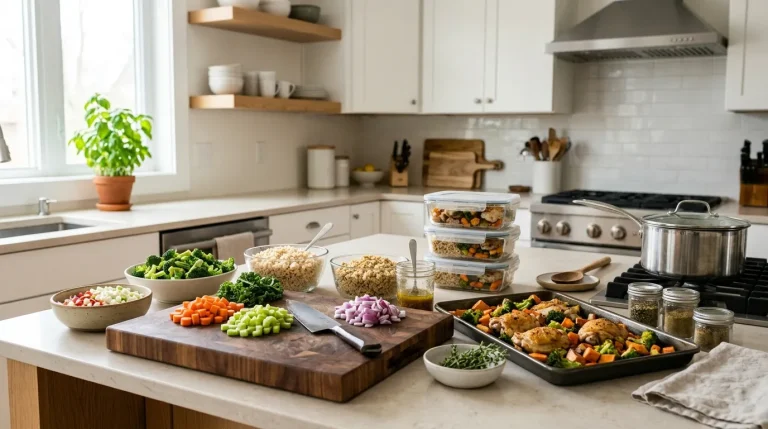
Food safety starts with clean hands. Wash with soap and warm water for 20 seconds. Use separate boards for raw meat and ready-to-eat foods. Color-coding helps.
Know the danger zone: 40°F to 140°F. Bacteria grow fast here. Keep cold food at or below 40°F. Keep hot food at or above 140°F. Cook to safe temps:
- Poultry: 165°F
- Ground meats: 160°F
- Whole cuts of beef, pork, lamb: 145°F and rest 3 minutes
- Fish: 145°F or until it flakes
- Leftovers: reheat to 165°F
Chill leftovers within 2 hours. If it is above 90°F outside, chill within 1 hour. Thaw in the fridge, cold water, or the microwave. Not on the counter. Label and date leftovers. First in, first out.
I once served chicken at 155°F in a rush. A thermometer saved me. I put it back in the pan, hit 165°F, and served it safe. Small tools, big wins. Add a thermometer to your list of kitchen safety tips for beginners.
Prevent cuts, slips, and falls
Spills happen. Wipe them right away. Water and oil turn floors into ice rinks. Use a non-slip mat by the sink. Keep cords and clutter off the floor.
Protect your body. Bend your knees when lifting heavy pots. Use a step stool, not a chair, to reach high shelves. Do not store heavy items up high.
Cut and carry with care:
- Do not stack sharp tools in the sink.
- Drop broken glass into a thick container or wrap it before trash.
- Keep knife tips on the board when scraping. Flip the knife and use the spine.
These small moves are big kitchen safety tips for beginners.
Appliance and electrical safety
Treat appliances with respect. Unplug before cleaning. Keep cords dry and away from heat. Do not overload outlets. Use GFCI outlets near sinks.
Microwaves need microwave-safe containers. No metal. Vent containers with a small gap. Let food rest after heating. Stir to even out hot spots. For pressure cookers, follow the manual. Release steam away from you. For blenders, attach lids tight and start on low.
Daily habits that pay off:
- Empty toaster crumbs often.
- Let pans cool before washing to avoid warping and steam bursts.
- Check cords for cracks. Replace damaged parts.
Add this section to your list of kitchen safety tips for beginners and review it often.
Cleaning chemicals and safe storage
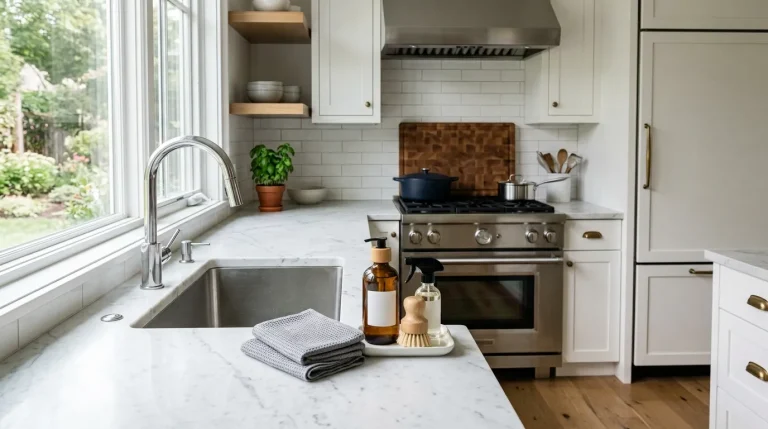
Never mix cleaners. Bleach and ammonia make toxic gas. Vent the room when you clean. Wear gloves if needed. Rinse surfaces that touch food.
Store chemicals low and locked, away from food and tools. Label spray bottles. Keep knives, peelers, and graters out of reach of kids. Child-proof latches help.
Simple storage rules:
- Keep raw meat on the lowest fridge shelf.
- Seal dry goods in airtight bins.
- Keep alcohol away from heat.
Safe storage is one of the most overlooked kitchen safety tips for beginners.
Emergency readiness for home cooks
Stuff happens. Be ready. For burns, cool the area under cool running water for 10 to 20 minutes. Do not use ice. Cover with a clean, dry cloth. Seek care for large, deep, or facial burns.
For cuts, apply firm pressure with a clean cloth. Wash with water when bleeding slows. Cover with a bandage. See a pro if the cut is deep, gapes, or will not stop bleeding. For choking, learn hands-only CPR and abdominal thrusts from a certified class. Keep emergency numbers in your phone and on the fridge.
Fire basics:
- Know the PASS method for extinguishers: Pull, Aim, Squeeze, Sweep.
- Check smoke alarms monthly.
- Have a clear path from stove to the door.
These steps round out the most important kitchen safety tips for beginners.
Frequently Asked Questions of kitchen safety tips for beginners
What are the first rules I should learn?
Wash your hands, keep raw and cooked foods apart, and use a thermometer. Stay focused at the stove and keep your space clear.
How do I put out a small grease fire?
Turn off the heat, slide a lid on, and keep it covered. Never use water or flour; use baking soda or a proper extinguisher if needed.
Do I really need a meat thermometer?
Yes. It removes guesswork and prevents undercooked or dry food. It is one of the best kitchen safety tips for beginners.
Is it safe to cook with kids?
Yes, with rules. Set a no-go zone around the stove, assign simple tasks, and supervise at all times.
How should I thaw meat safely?
Thaw in the fridge, in cold water changed every 30 minutes, or in the microwave. Do not thaw on the counter.
What should I do if I cut myself?
Apply pressure, clean with water, and cover. Seek care if it is deep, wide, or keeps bleeding.
Can I use a damp towel to grab a hot pan?
No. Moisture turns to steam and can burn you. Use dry, thick mitts or pot holders.
Conclusion
Safe cooks cook more. Set up your space, respect knives and heat, and keep food temps on point. Use these kitchen safety tips for beginners each time you cook, and they will become second nature. Start with one habit today, like washing hands or using a thermometer, and build from there.
Ready to level up your kitchen skills? Try one new tip tonight, share your wins in the comments, and subscribe for more simple, smart guides.