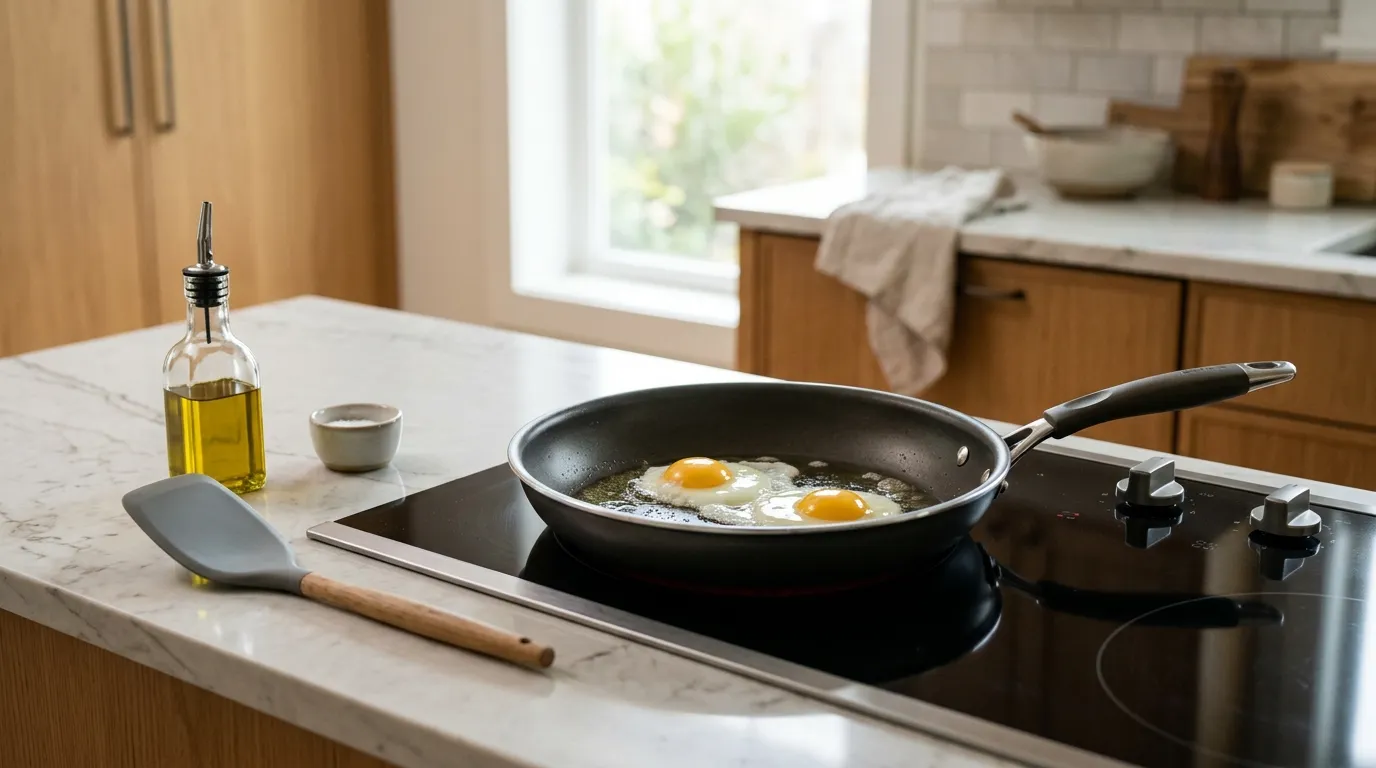
Most nonstick pans are safe when used on low to medium heat and cared for.
If you want clear rules, tested tips, and peace of mind, you are in the right place. I have cooked with PTFE, ceramic, and cast aluminum for years in home and test kitchens. This non stick cookware safety guide breaks down real risks, the latest science, and simple habits that keep your food and your pans safe for the long haul.
What Makes Nonstick Coatings Safe or Risky?
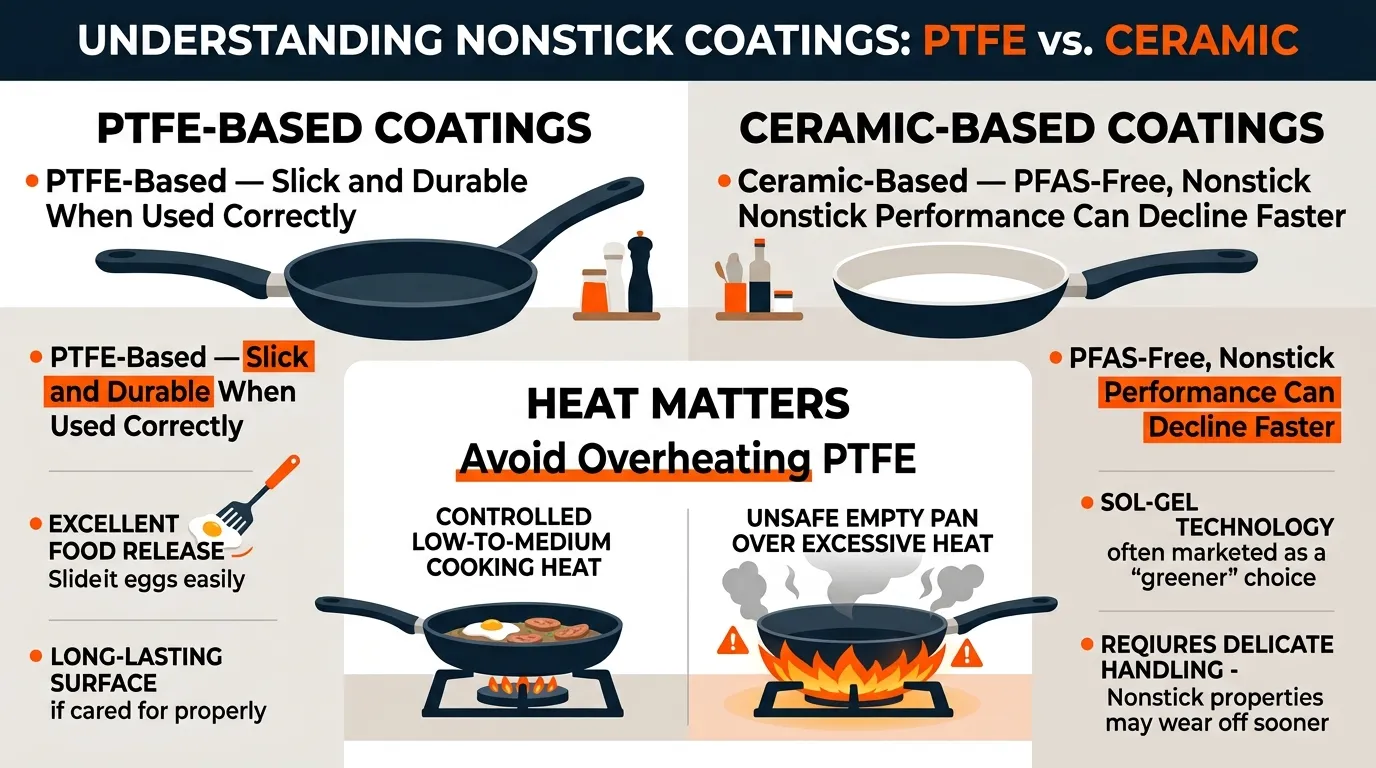
Nonstick coatings fall into two big groups: PTFE-based (like traditional Teflon) and ceramic-based. PTFE is slick and durable when used right. Ceramic starts slick, then often loses glide with time.
Heat is the main safety pivot. PTFE coatings can degrade and fume above about 500°F (260°C), which is why low to medium heat is key. Ceramic coatings do not off-gas the same way, but they can wear faster, leading to sticking and over-oiling.
In my test kitchen, empty preheating was the number one mistake I saw. An empty pan on high heat can overshoot safe temps in minutes. This non stick cookware safety guide will help you avoid that trap.
Choosing Safer Nonstick Cookware
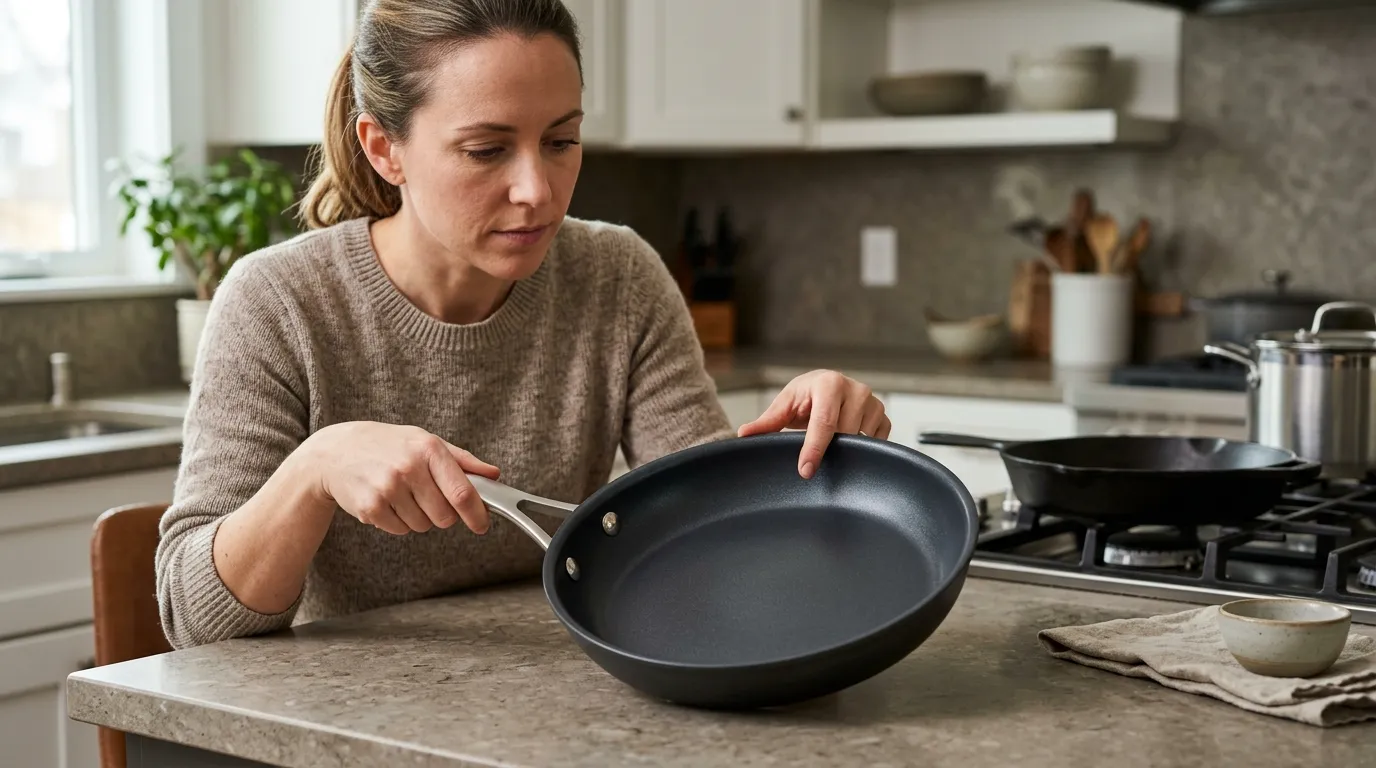
Look for clear labels, not buzzwords. Check oven-safe limits, metal utensil safety, and whether the brand discloses the coating type.
Practical checks I use before buying:
- Weight and feel A thicker base heats more evenly and reduces hot spots.
- Rivet and handle details Solid, tight hardware helps safety and control.
- Oven rating A 400–500°F oven rating gives more flexibility.
- Disclosure of materials PTFE, ceramic, or other. Know what you are using.
- Warranty terms Good brands stand behind their coating and handle failures.
If you want a quick path, this non stick cookware safety guide suggests a midweight, PTFE pan for eggs and fish, plus a stainless or cast iron pan for searing and browning.
Smart Use: Heat, Oils, and Utensils
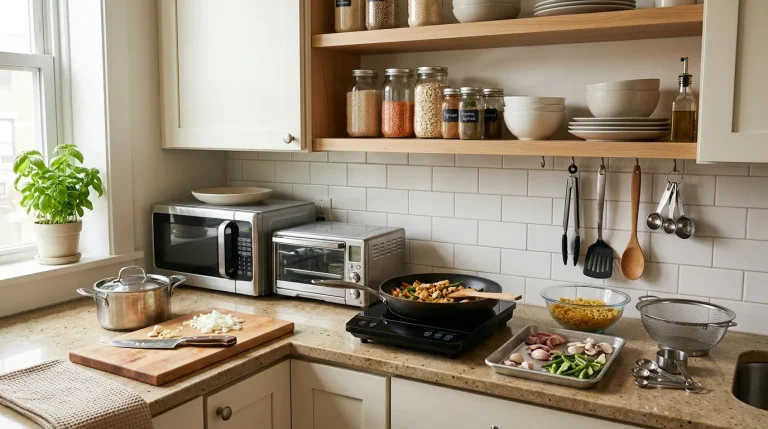
The golden rules are simple. Start on low to medium heat. Add food soon after preheating. Never heat an empty pan on high.
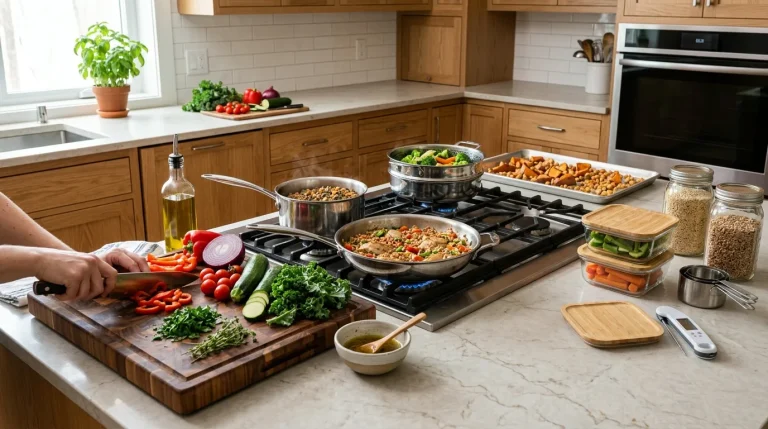
Use the right fats. Skip aerosol sprays, which can build gummy layers. Use a small amount of butter, avocado oil, or refined olive oil instead.
Utensils matter. Choose silicone, wood, or nylon. Keep metal away from the coating. This non stick cookware safety guide also recommends a soft cloth trivet so you never stack bare pans on the coating.
Cleaning, Storage, and Lifespan
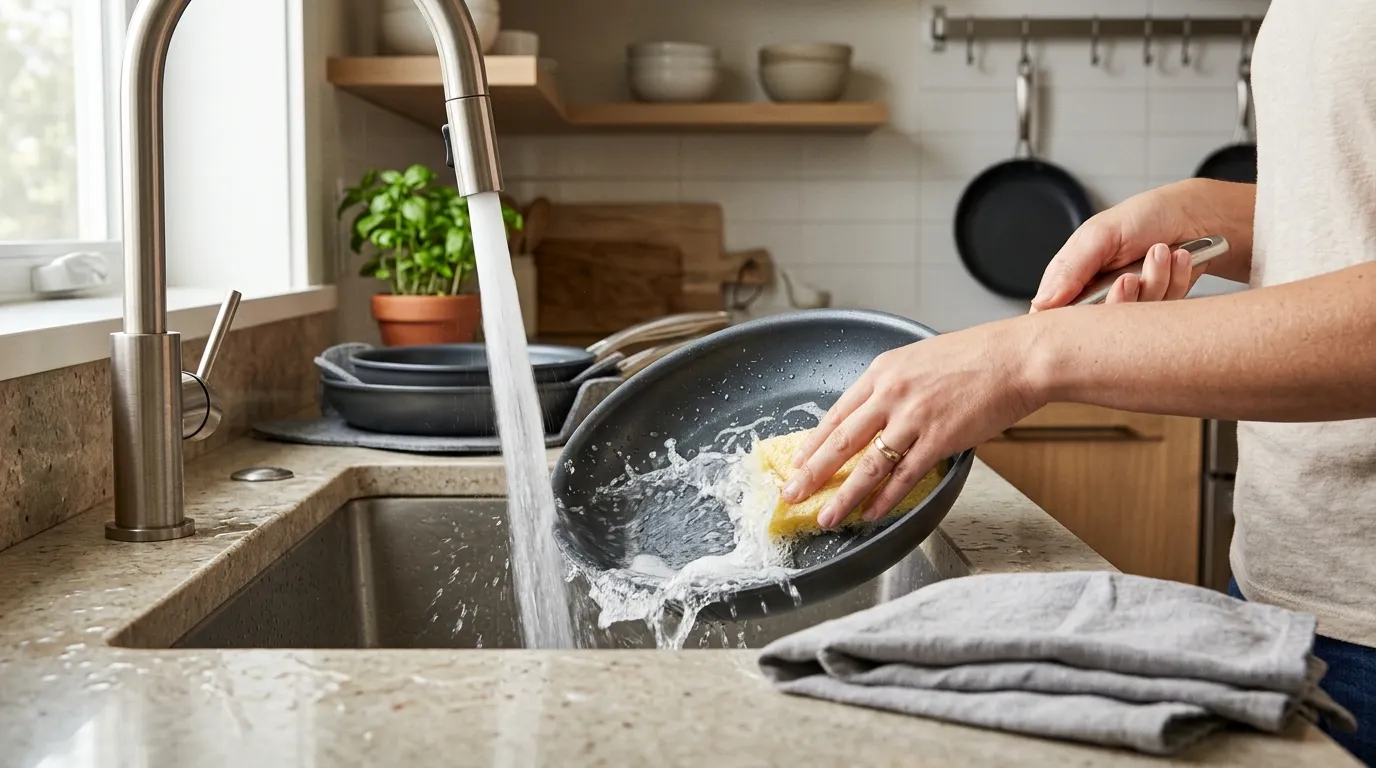
Let the pan cool before washing. A hot shock under cold water can warp the base. Hand wash with warm water, a soft sponge, and mild soap.
To remove residue, simmer a little water with a drop of dish soap for two minutes, then wipe clean. Dry right away to prevent water spots.
Store safely. Hang the pan or place a paper towel or pan protector between stacked pieces. Replace the pan if the coating is deeply scratched, flaking, or stained with stubborn buildup. A realistic lifespan is two to five years with daily use. This non stick cookware safety guide helps you extend that.
PFAS, PTFE, PFOA, Ceramic, and Alternatives
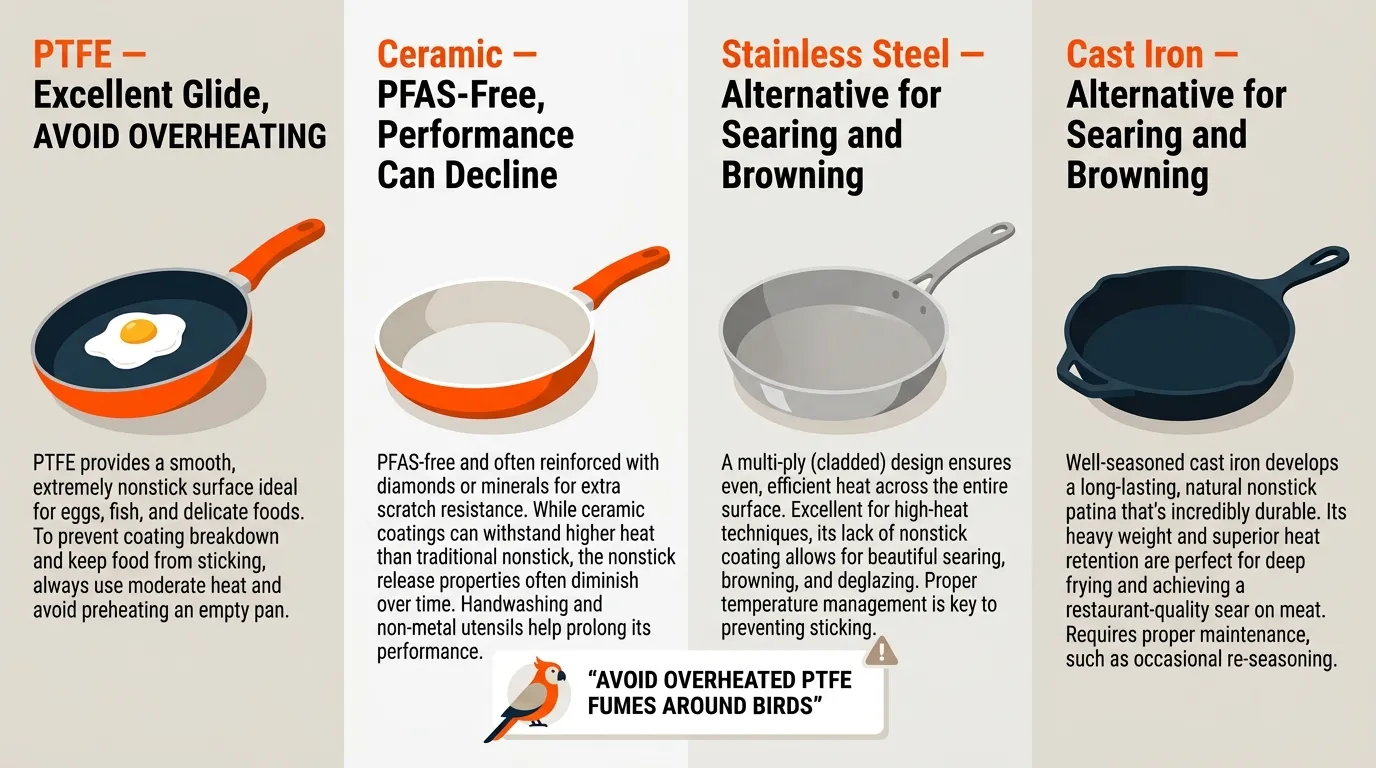
PTFE is a type of PFAS, a large chemical family. PFOA, once used in making PTFE, has been largely phased out in modern coatings. Today’s reputable PTFE pans are PFOA-free. The main risk with PTFE is not normal cooking. It is overheating.
Ceramic coatings are PFAS-free and are made with a sol-gel process. They do not fume like overheated PTFE but can lose nonstick power faster. You may use more oil as ceramic ages.
Bird owners should be extra careful. Overheated PTFE fumes can harm birds. Use low heat, good ventilation, or choose PFAS-free cookware. If you want a belt-and-suspenders path, this non stick cookware safety guide urges ceramic or stainless when cooking near pet birds.
Troubleshooting and Common Myths
If food starts to stick, do a quick reset. Clean the pan well, then re-season lightly with a thin film of oil heated for two minutes. This restores glide in many cases.
Myth: All scratches are dangerous. Reality: Hairline scuffs are common. Deep scratches or flaking mean it is time to replace the pan.
Myth: Nonstick cannot handle searing. Reality: You can brown food lightly on medium heat, but for a deep crust, use stainless or cast iron. As this non stick cookware safety guide explains, use each tool for its best job.
Nonstick for Families, Babies, Pets, and Sensitive Users
For baby food, use low heat and avoid any worn coatings. Transfer hot food to glass or stainless containers to cool.
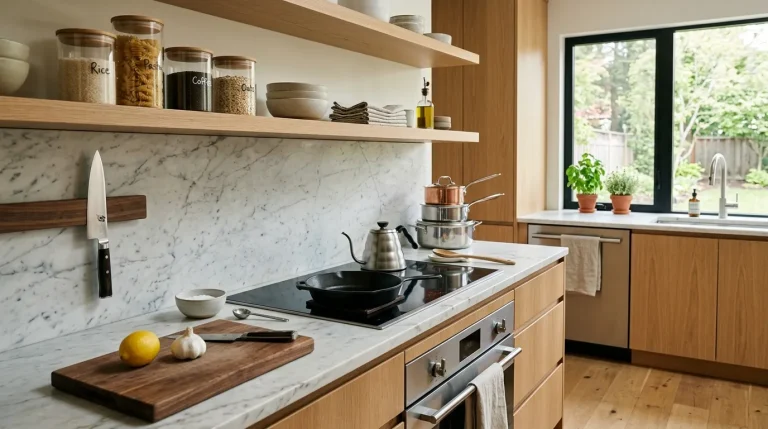
Ventilate the kitchen. Turn on the hood or open a window. This keeps indoor air fresh for kids and pets.
If you keep birds, avoid empty preheating and high heat with PTFE pans. Or use ceramic, stainless, or cast iron near your birds. This non stick cookware safety guide places ventilation and temperature control at the top of the list.
Buying Checklist and Quick Safety Rules
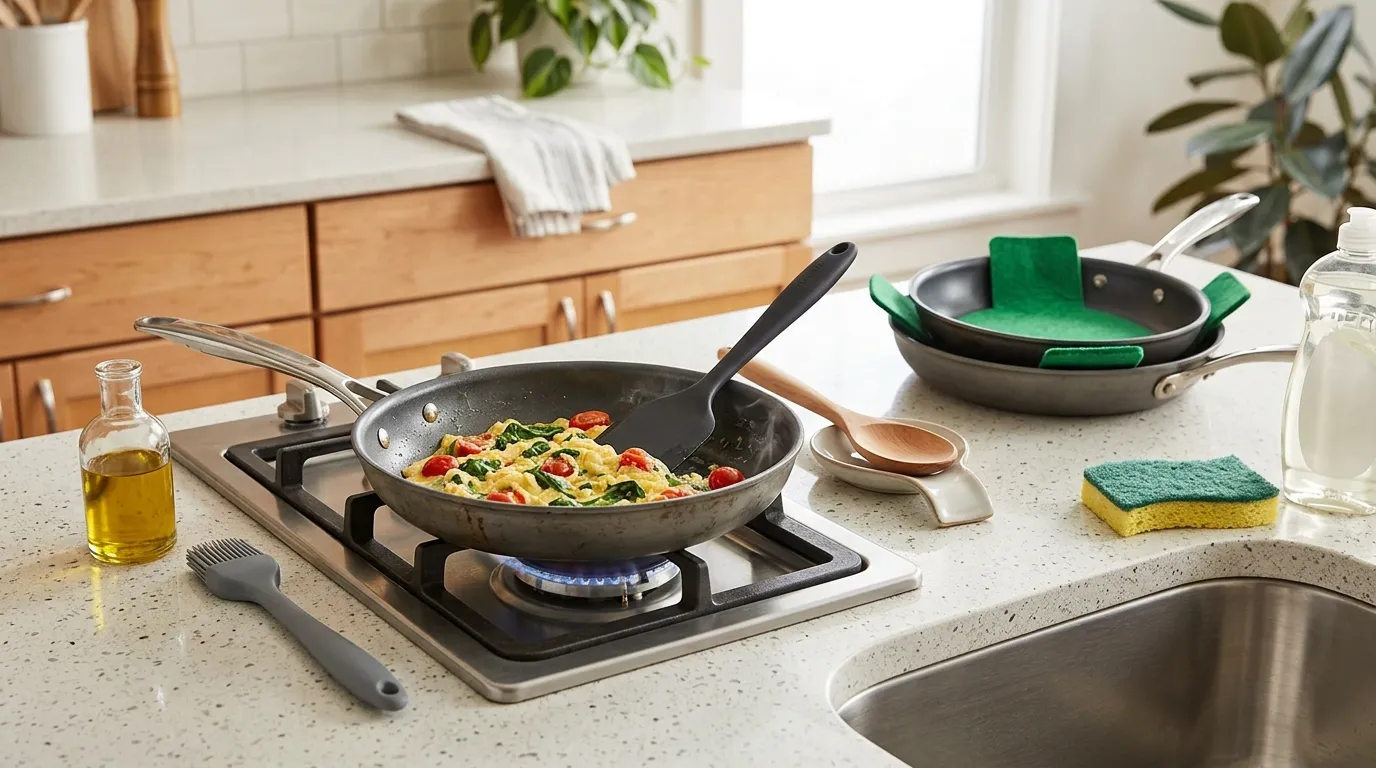
Use this fast pass when shopping and cooking.
Buying checklist:
- Coating type Choose PTFE for max glide, ceramic for PFAS-free.
- Base quality Pick an even, thick base for stable heat.
- Oven rating Aim for at least 400°F if you bake or finish in the oven.
- Handle security Riveted or welded, sturdy, and comfortable.
- Brand transparency Materials and care instructions are easy to find.
Daily rules:
- Heat Keep it low to medium. Skip empty preheating.
- Fat Use a small amount of stable oil. Avoid aerosol sprays.
- Tools Silicone, wood, or nylon only.
- Clean Hand wash, soft sponge, mild soap.
- Replace When coating is flaking or deeply scratched.
Tape this near your stove if you like. This non stick cookware safety guide works best when you make it a habit.
Frequently Asked Questions
Is Teflon still safe to use?
Yes, modern PTFE pans are safe when used below 500°F and not overheated. The key is gentle heat and proper care.
Are nonstick pans with scratches dangerous?
Light surface scuffs are usually fine. Replace the pan if the coating is flaking or if there are deep scratches that expose the base.
Can I use nonstick pans in the oven?
Check the label first. Many are oven-safe to 350–500°F, but handles and lids may have lower limits.
Do ceramic nonstick pans contain PFAS?
Ceramic coatings are typically PFAS-free. They can lose nonstick performance sooner than PTFE, so handle with care.
What oil is best for nonstick?
Use a small amount of stable oil like avocado or refined olive oil. Avoid aerosol sprays because they leave sticky residues.
Conclusion
Safe nonstick cooking is simple. Control heat, use gentle utensils, clean by hand, and replace a worn pan. With those habits, your cookware lasts longer and your kitchen stays healthier.
Put this non stick cookware safety guide into action this week. Audit your pans, adjust your heat, and try a two-egg test on medium to feel the difference. Want more tips like this? Subscribe, share your questions in the comments, and cook with confidence using this non stick cookware safety guide.