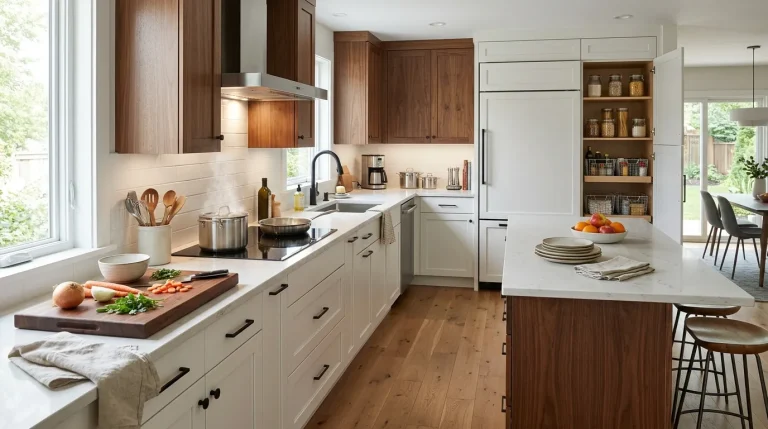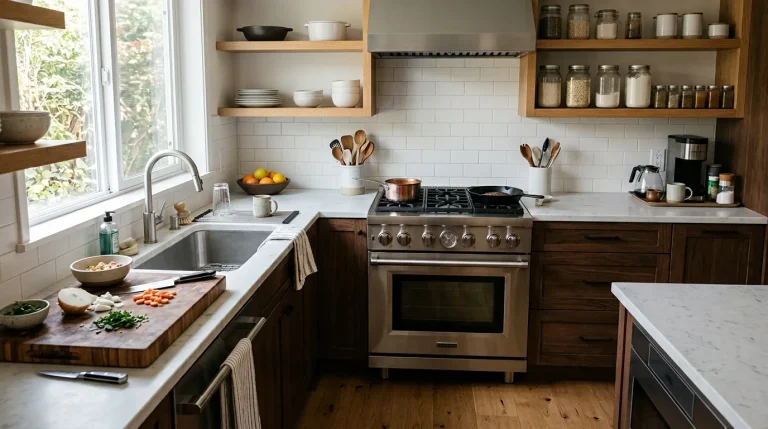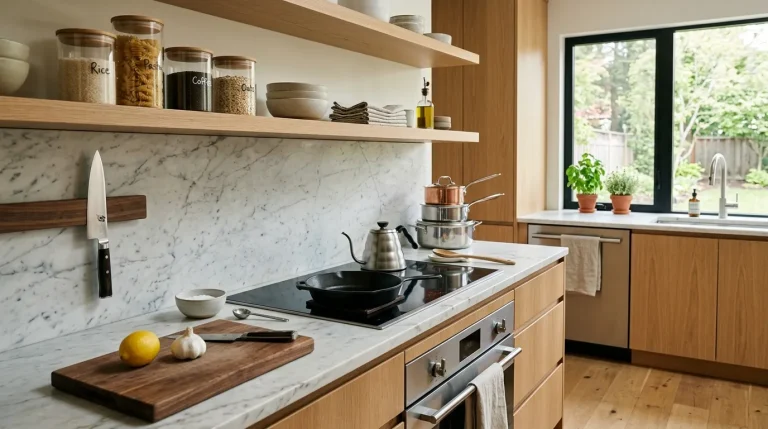
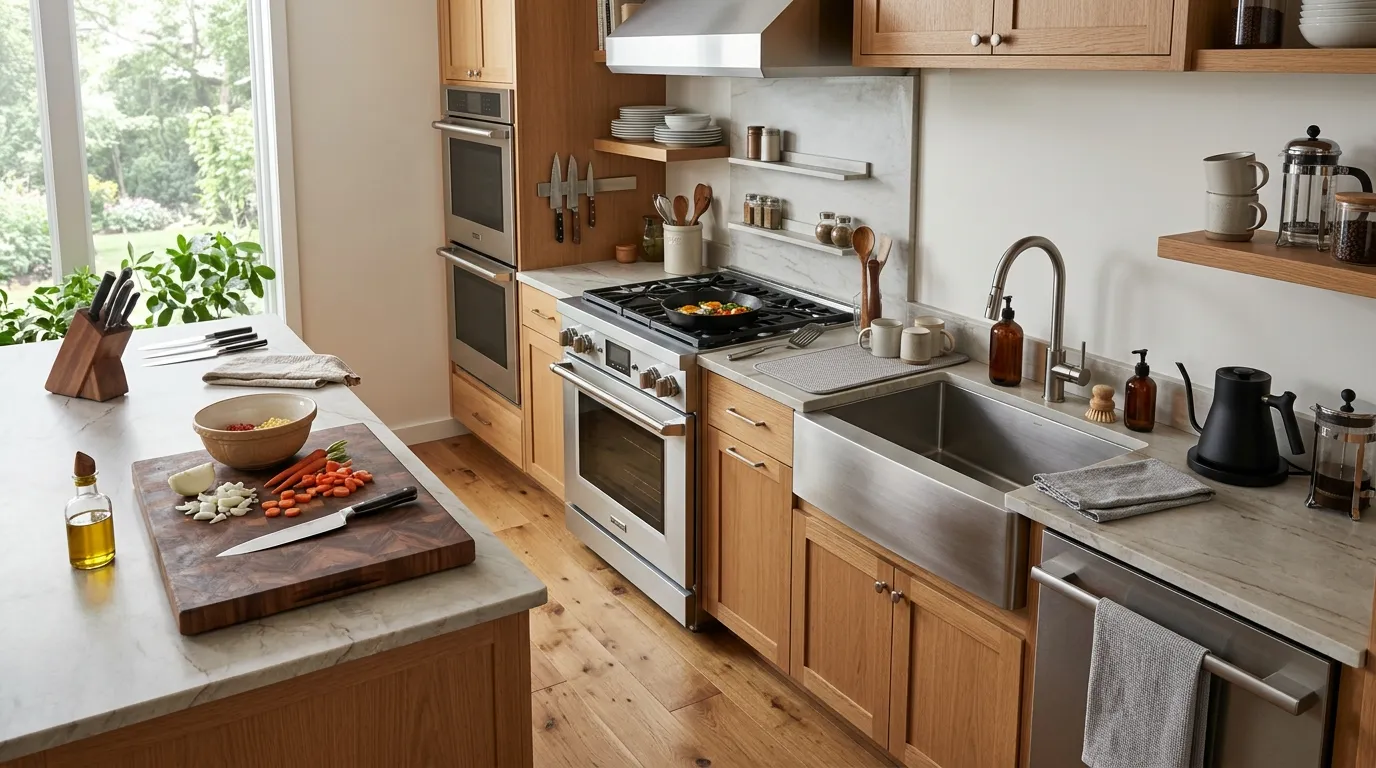
Create zones, declutter hard, and store by frequency for faster cooking.
If you want to know how to organize kitchen for efficiency, you are in the right place. I have set up dozens of small, busy, and family kitchens. In this guide, I share the exact steps I use. You will learn simple systems that save time and cut stress. Follow along, and you will feel the change this week.
Start with your goals and constraints
Before you move a single spoon, define success. Your kitchen serves your life, not the other way around. Decide what you cook most, when you cook, and who helps.
Say out loud how to organize kitchen for efficiency for your home. Write three goals. Examples: faster breakfasts, safer meal prep with kids, or zero takeout on weeknights. Then note your limits. Small counters, deep corners, or only two drawers. Clear goals point to clear choices.
Tips to set smart targets:
- Pick two key meals to optimize first.
- Choose one pain point to fix this week.
- Take quick photos of current clutter to track progress.
Map work zones that match your routine
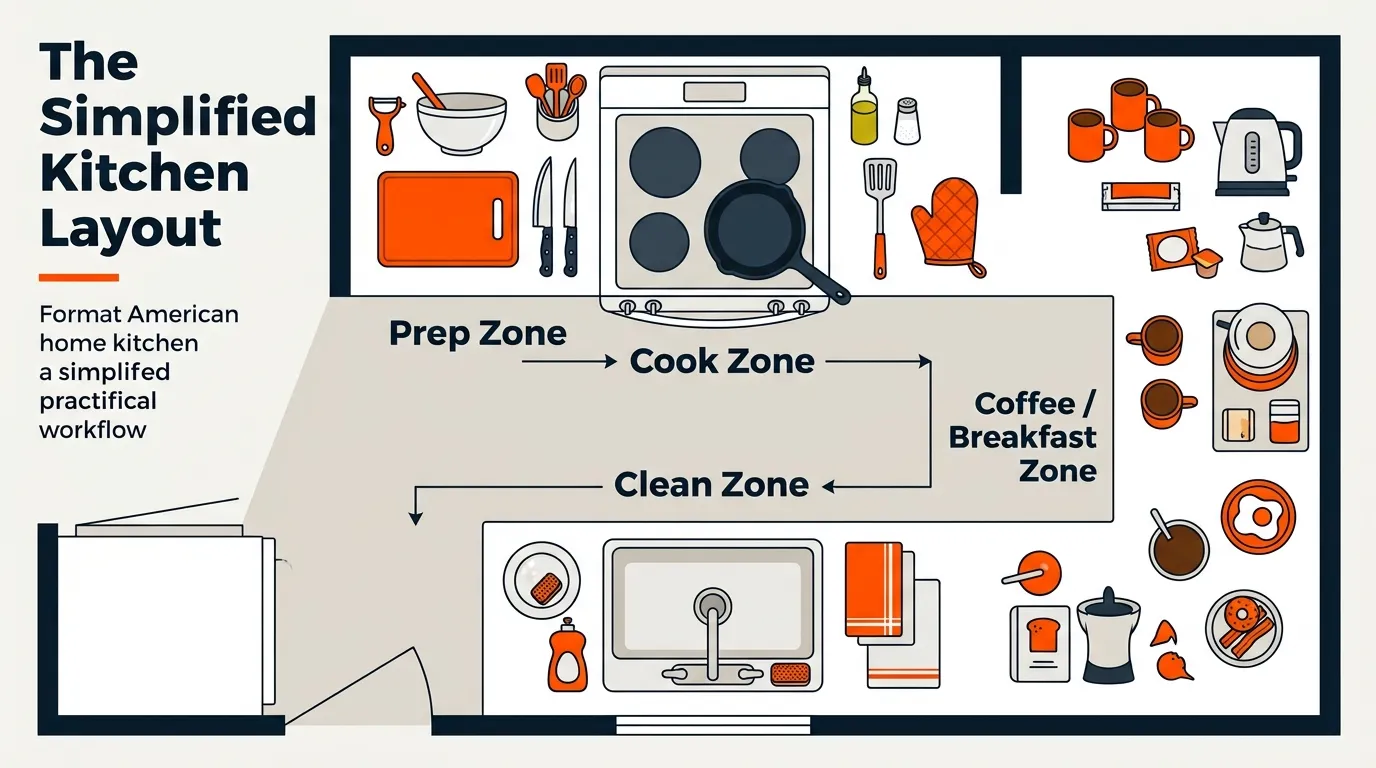
When you ask how to organize kitchen for efficiency, think in zones. Zones group tools where you use them. This cuts walking and hunting.
Core zones to set up:
- Prep zone. Cutting board, knives, mixing bowls, peelers, towels.
- Cook zone. Pans, oils, salt, spatulas, oven mitts.
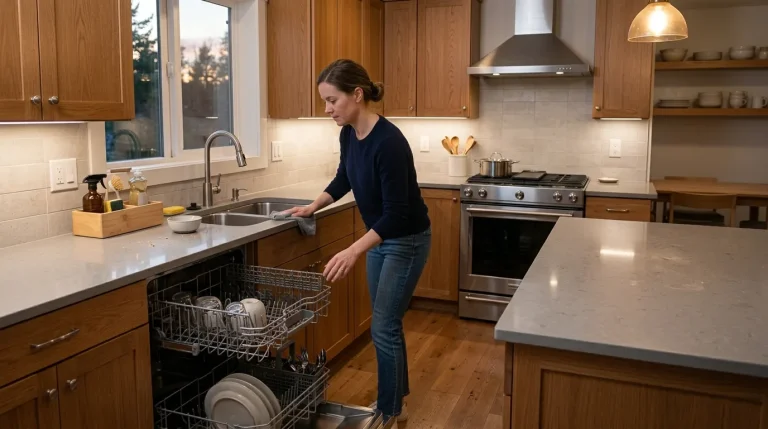
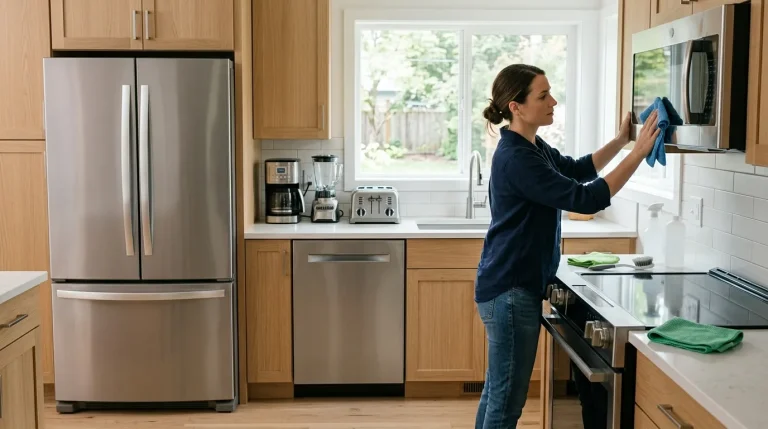
- Clean zone. Dish soap, scrubbers, towels, trash bags.
- Coffee or breakfast zone. Mugs, filters, kettle, cereals.
- Bake zone if you bake often. Measuring cups, mixer, flour, sugar.
Place each zone near its action. Knives and board by the biggest clear counter. Oils and spatulas by the stove. Glasses near the sink. Keep kids’ cups in a low drawer if they serve themselves.
Declutter ruthlessly and set par levels
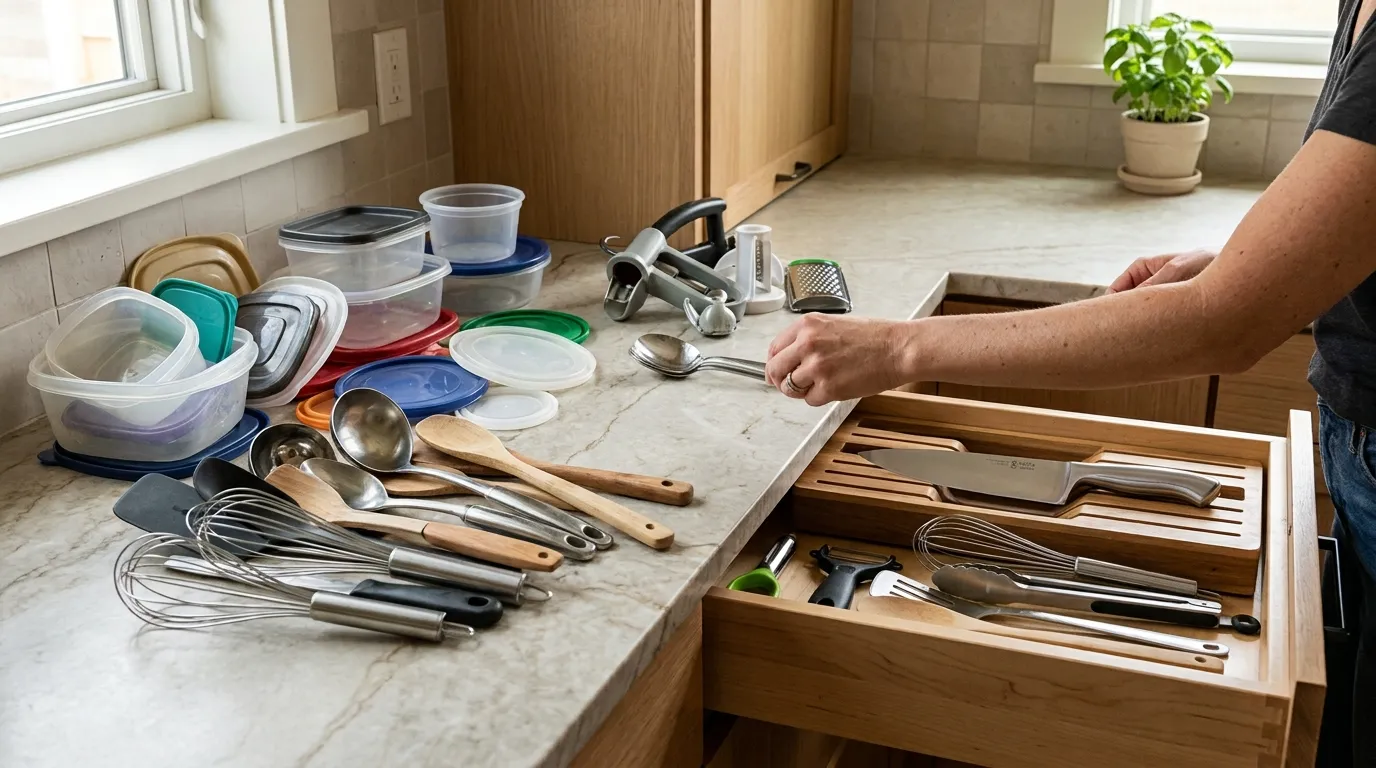
How to organize kitchen for efficiency starts with less stuff. Clutter is friction. When drawers fight you, you stop cooking.
Work fast and firm:
- Pull out by category. Pans, gadgets, containers.
- Keep best-in-class. One sharp chef’s knife beats five dull knives.
- Toss duplicates, broken lids, and one-use gadgets you never touch.
Set par levels, like restaurants do. Decide the number you need to run your home.
- Weeknight plates. Keep enough for two days, not ten.
- Food containers. Keep one size per use case with two spare.
- Towels. Keep five in the kitchen and store the rest elsewhere.
Design smart storage by category and frequency
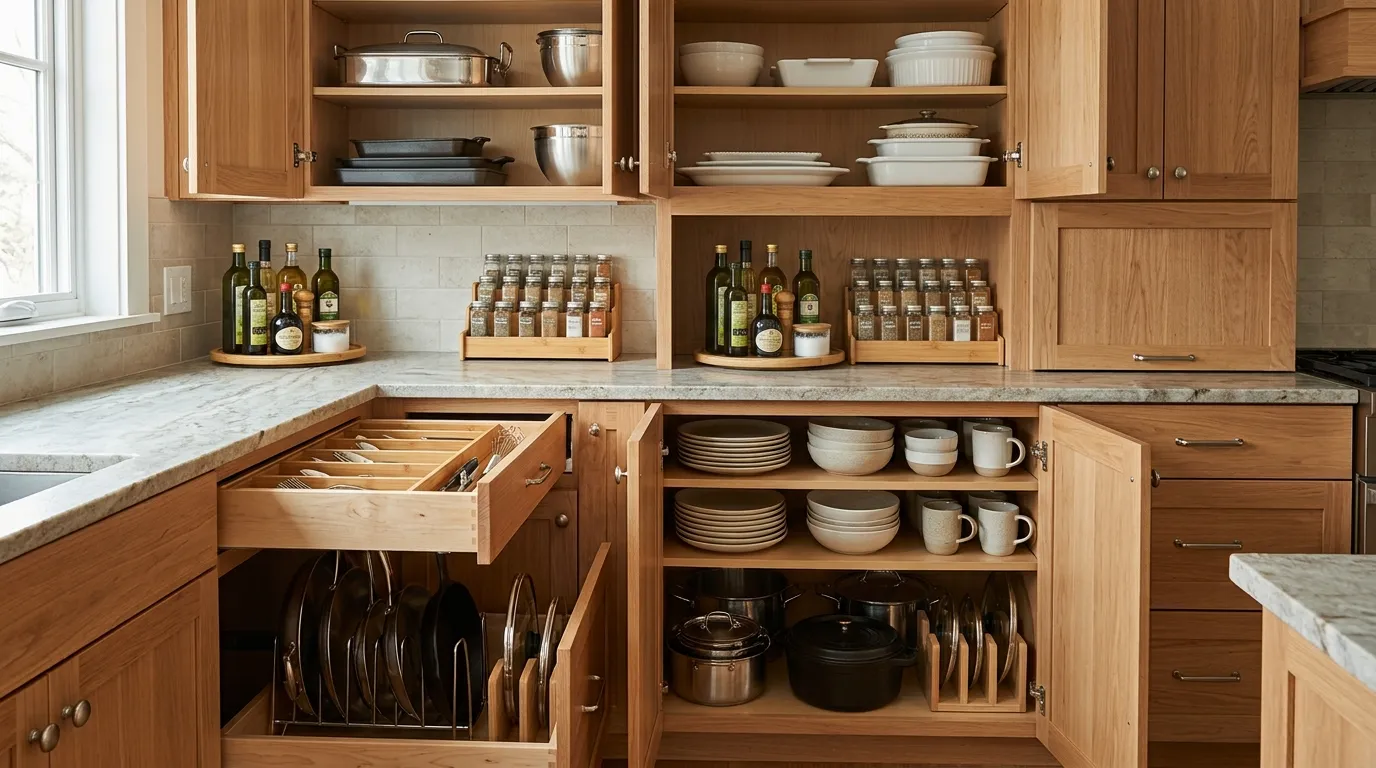
The golden rule is store by category and by how often you use it. This is the engine behind how to organize kitchen for efficiency.
Use these simple placements:
- Daily items live between shoulders and knees. This is prime space.
- Rare or seasonal items go high or low.
- Heaviest items live between knee and hip to protect your back.
Storage helpers that work:
- Drawer dividers for utensils and gadgets.
- Deep bin for lids so they stand upright.
- Lazy Susan in a corner cabinet for oils and vinegars.
- Pan rack so pans store vertical and slide out fast.
- Tiered risers so you can see spices and cans.
Optimize countertops and vertical space
Clear counters save time. They also lower stress. The math is simple. More space equals faster prep.
For how to organize kitchen for efficiency on counters:
- Keep out only what you use daily. Kettle, toaster, or coffee maker.
- Use a magnetic knife strip on a wall to free a drawer.
- Mount a rail with hooks for ladles and measuring cups.
- Use a slim tray to corral oils and salt by the stove.
Go vertical when cabinets are tight:
- Add under-shelf baskets to double a shelf.
- Use door-mounted racks for wraps and spices.
- Add a pegboard for pots if you like the look.
Streamline cooking workflow and meal prep
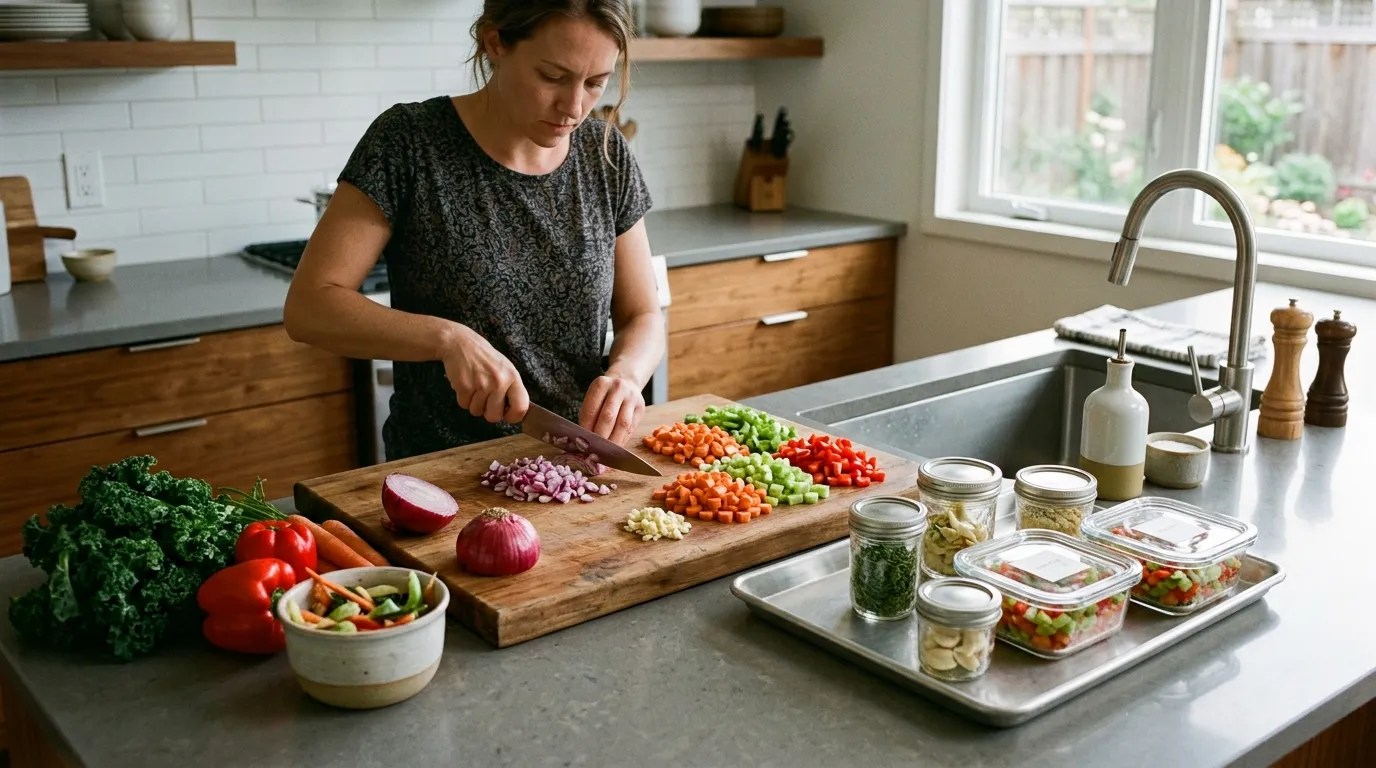
A smooth workflow is how to organize kitchen for efficiency in action. Think assembly line.
Make prep easy:
- Put a cutting board that fits over the sink or stove for more space.
- Keep a compost or scrap bowl on the counter to stay tidy.
- Pre-label clear bins for chopped veg, snacks, and leftover parts.
Batch tasks that repeat:
- Chop aromatics for the week. Store in small glass jars.
- Pre-cook grains and freeze flat in bags.
- Use sheet pans as trays to move groups of items in one go.
Pantry organization that prevents waste
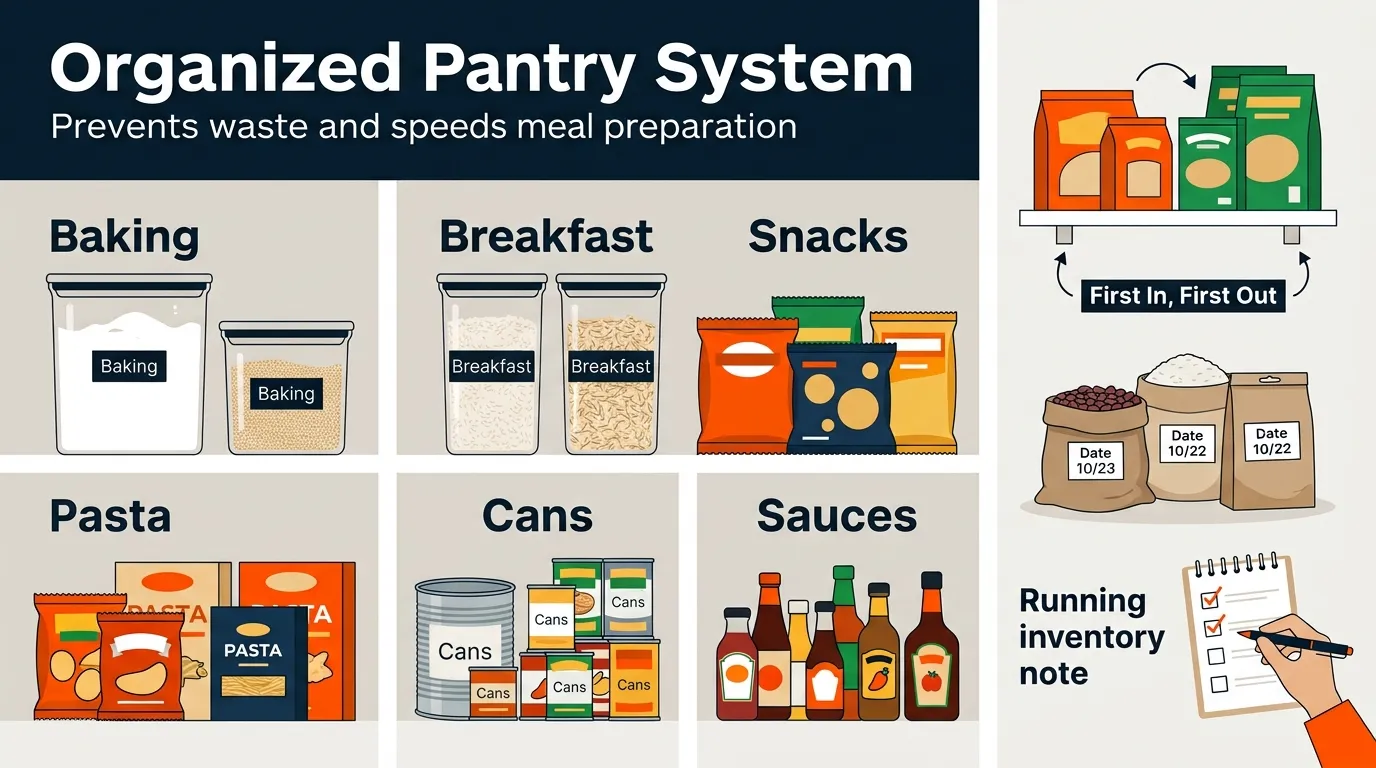
A tidy pantry saves money and meals. It is key to how to organize kitchen for efficiency.
Core steps:
- Group by type. Baking, breakfast, snacks, pasta, cans, sauces.
- Use clear bins so you see what you have.
- Use labels, large and plain.
Adopt FIFO. First in, first out:
- Put new items behind old ones.
- Date bulk goods with a marker.
- Keep a running list on the inside of the door.
Right-size containers:
- Use airtight bins for flour, sugar, rice, and oats.
- Keep snacks in portion bins if that helps kids self-serve.
Fridge and freezer organization for speed and safety
Cold storage can make or break your day. Done right, it speeds meals and reduces waste. It is central to how to organize kitchen for efficiency.
Fridge map:
- Top shelf for ready-to-eat foods.
- Middle shelves for leftovers and meal-prepped items.
- Lower shelf for raw meat in a leakproof bin.
- Crisper drawers for produce by type. Leafy greens in high-humidity. Fruit in low-humidity.
Freezer rules:
- Freeze flat in labeled bags so items stack and thaw fast.
- Keep a soup bin, a protein bin, and a veggie bin.
- Use a whiteboard or note to track what is inside.
Labeling, inventory, and maintenance habits
Systems fail without upkeep. Habits keep your kitchen sharp. They complete how to organize kitchen for efficiency.
Simple routines:
- Five-minute reset each night. Clear sink, wipe counters, reset zones.
- One-in, one-out rule for gadgets and mugs.
- Sunday check. Scan pantry, plan three meals, note restocks.
Label everything you reach for:
- Shelves, bins, and drawers. Use plain words.
- Dates on leftovers and meal prep.
- Par level notes on sticky labels inside doors.
Small kitchen, big results: space-savvy tactics
Tiny kitchens can still sing. I once set up a 90-square-foot galley for a family of four. We cut dinner time by 20 minutes within a week. It proves how to organize kitchen for efficiency matters more than size.
Space boosters:
- Rolling cart as a mobile prep zone.
- Collapsible bowls and nesting sets only.
- Over-the-sink drying rack that rolls up.
- Cutting board that covers the stove as extra counter.
Boundaries help:
- Keep a donation box on top of the fridge.
- Choose multi-use tools. Bench scraper, Dutch oven, blender with cups.
Tools, gadgets, and layout tweaks that matter
You do not need every gadget. Pick tools that reduce steps. This supports how to organize kitchen for efficiency and keeps drawers light.
High-impact picks:
- Sharp chef’s knife and a small paring knife.
- Instant-read thermometer for perfect doneness.
- Magnetic timer to keep you on track.
- Digital scale for baking and batch prep.
Layout tweaks:
- Turntables for corner access.
- Pull-out shelves or low-cost wire baskets.
- Door hooks for mitts and towels near the oven.
Safety and ergonomics you’ll actually feel
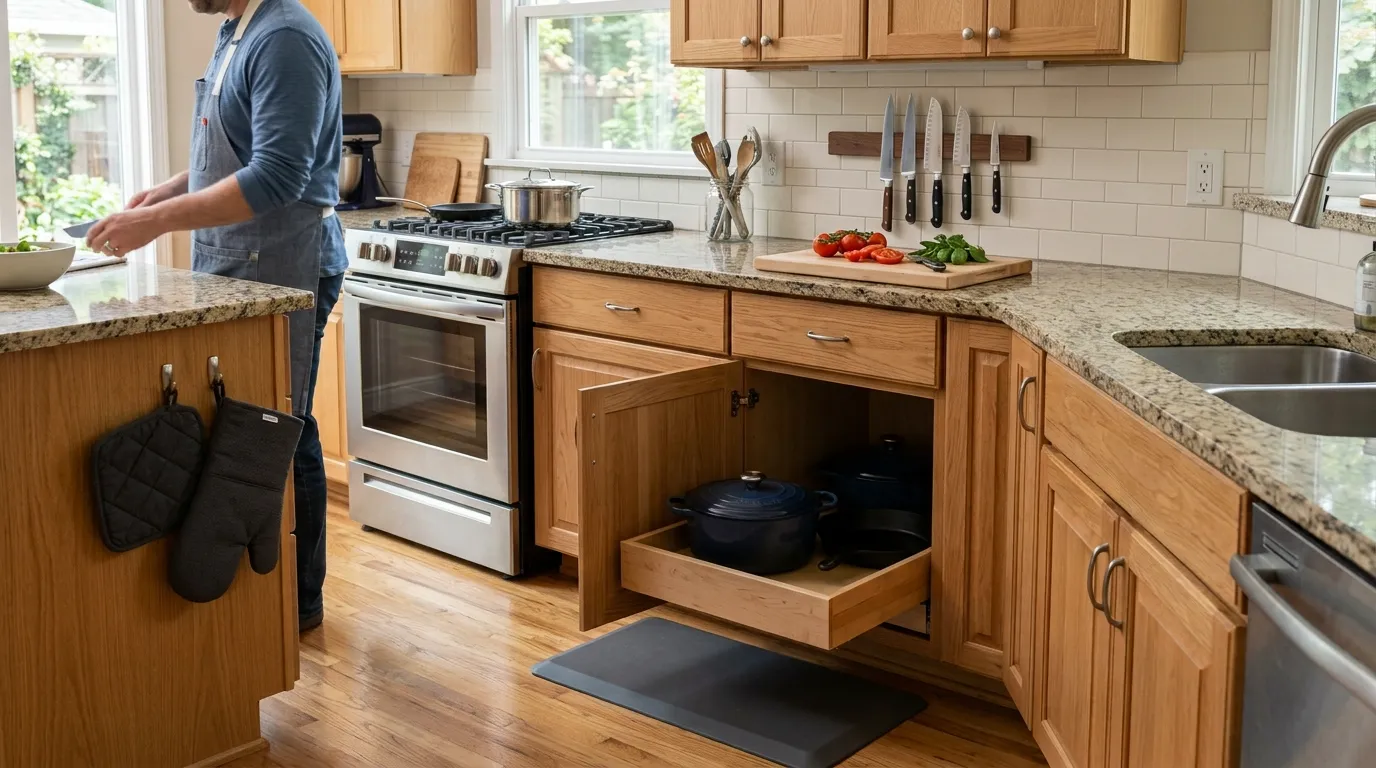
An efficient kitchen is also safe and kind to your body. Think flow and reach. It is part of how to organize kitchen for efficiency that lasts.
Protect your back and hands:
- Store heavy pots between knee and hip height.
- Keep knives on a strip, not piled in a drawer.
- Use anti-fatigue mats where you stand most.
Reduce slips and burns:
- Place oven mitts within one arm of the oven.
- Keep a salt or baking soda jar near the stove for flare-ups.
- Secure rugs with grippy liners.
Budget-friendly plan and timeline
You can do this in stages. This is how to organize kitchen for efficiency on any budget.
One-week plan:
- Day 1. Set goals and take photos.
- Day 2. Declutter tools and gadgets.
- Day 3. Set zones and move items.
- Day 4. Tackle pantry with bins and labels.
- Day 5. Reset fridge and freezer.
- Day 6. Add dividers, racks, and hooks.
- Day 7. Test, adjust, and set habits.
Low-cost wins:
- Use shoe boxes as drawer bins to start.
- Repurpose jars for dry goods and labels made with tape and marker.
- Add one high-impact item each month.
Frequently Asked Questions of How to Organize Kitchen for Efficiency
What is the first step to organize a kitchen for efficiency?
Start by defining your top two cooking goals and your main pain point. Then declutter by category so you cut volume before you set zones.
How do I decide what to keep on the counter?
Keep only daily-use tools like a kettle or coffee maker. If you do not use it each day, store it or let it go.
How should I organize my spices for fast cooking?
Place spices near the stove but away from heat. Use a tiered rack or a lazy Susan and group by cuisine or use.
How often should I reset my kitchen zones?
Do a quick five-minute reset each night and a deeper check weekly. Adjust zones whenever a new habit sticks for two weeks.
What is the best way to store pots and pans?
Use a vertical rack so pans slide out without lifting a stack. Keep lids in a separate bin or on a rack mounted to a door.
Conclusion
You now have a clear plan to cut clutter, save steps, and cook with ease. Set zones, keep only what earns its spot, and store by how often you use each item. Build simple habits so your system stays strong.
Choose one area and fix it today. Tomorrow, do the next. In two weeks, you will feel the flow. If this guide helped, share it with a friend, subscribe for more step-by-step home tips, or leave a comment with your biggest kitchen win.