Knives slip because edges are dull, surfaces wet, grips poor, and angles wrong.
If you wonder why knife slips while cutting, you are not alone. I have trained home cooks and line cooks to fix this fast. In this guide, I break down why knife slips while cutting in clear steps you can use today. You will learn the causes, the science, and safe fixes that work.
Why knife slips while cutting: the root causes
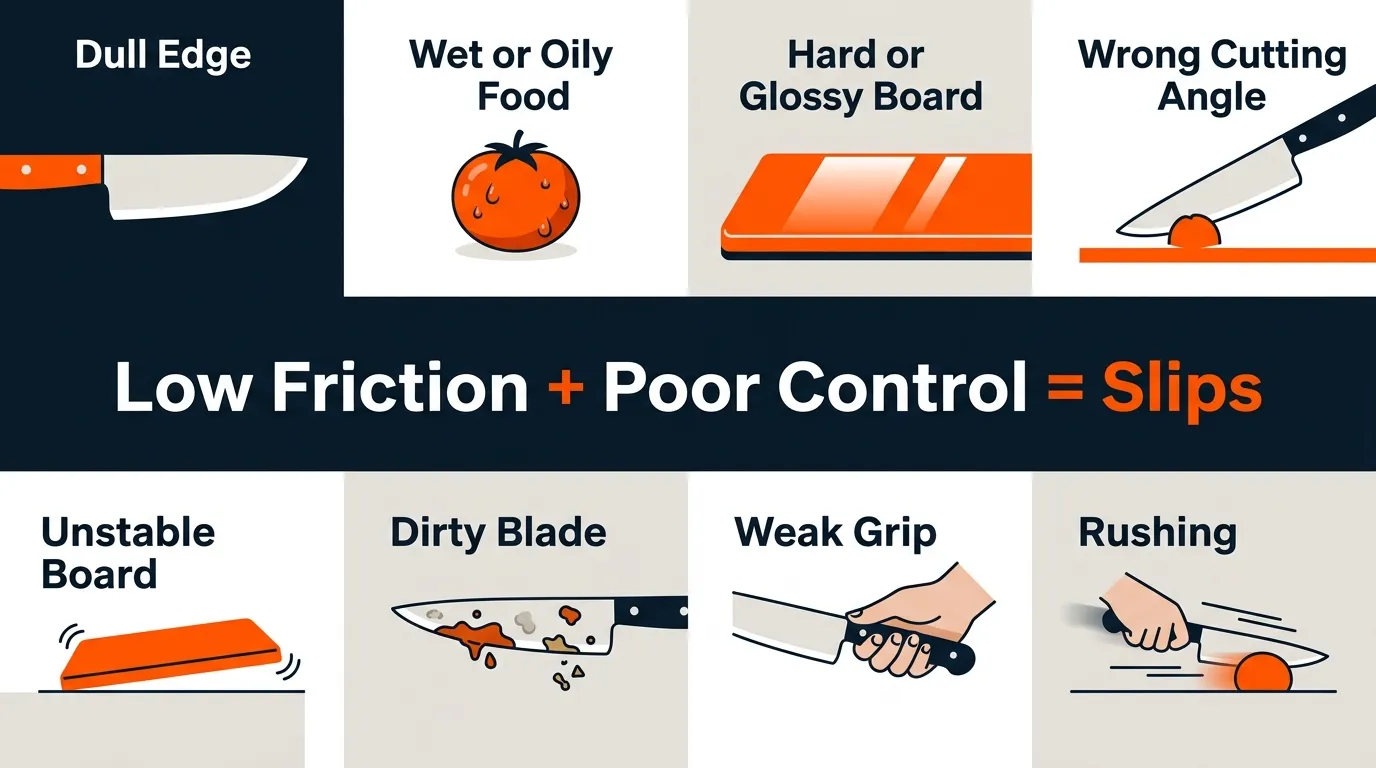
Knife slips come from low friction and poor control. Small details add up. Fix the details, and your cuts feel easy and safe.
Main culprits I see in real kitchens:
- Dull edge reduces bite and needs more force, which leads to slides.
- Wet or oily food makes a slick film between steel and skin.
- Hard, glossy boards or glass offer poor traction.
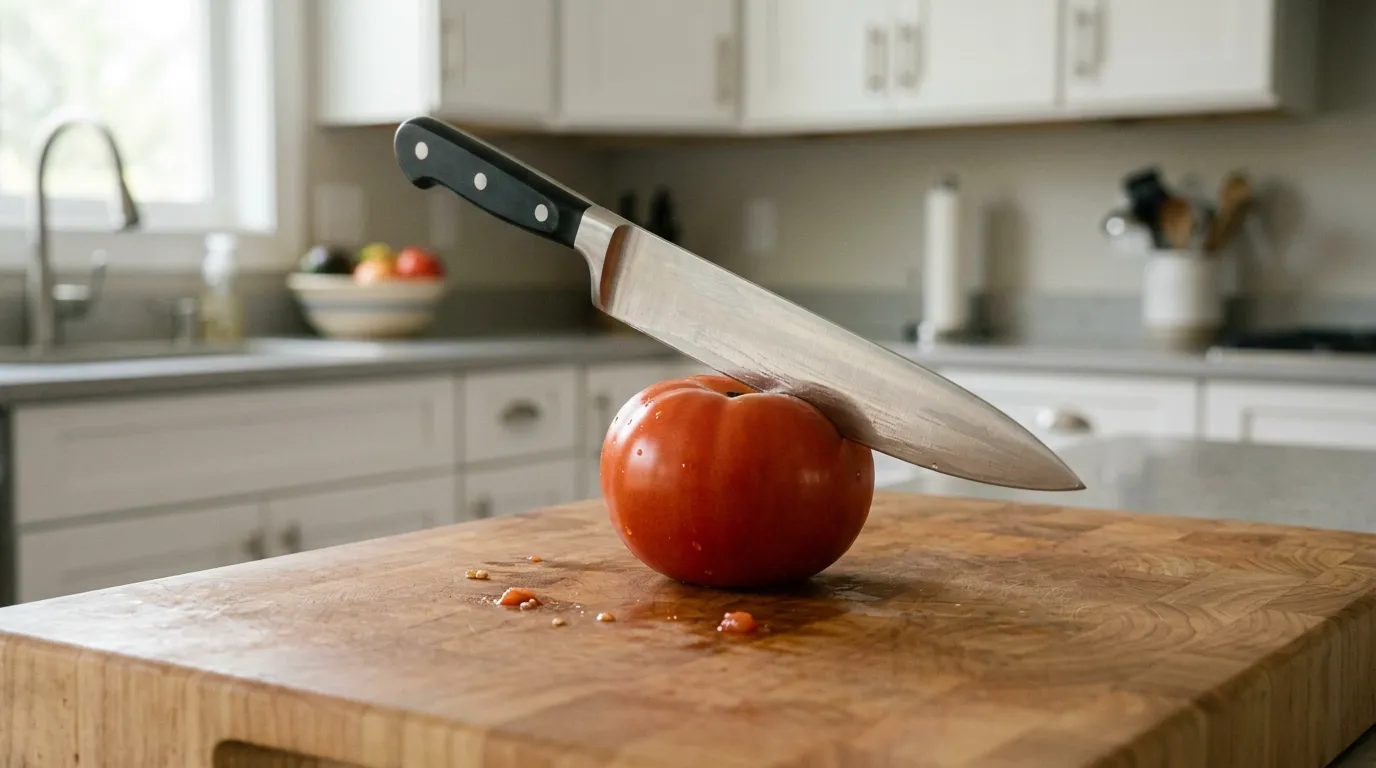
- Wrong cutting angle skates over smooth skins, like tomato or pepper.
- Unstable board or wobbly counter shifts under pressure.
- Dirty blade has fat, soap, or starch that lowers grip.
- Weak grip or tense wrist leads to shaky paths.
- Rushing the cut. Speed without control invites slips.
If you want a simple plan for why knife slips while cutting, start with sharpness, dryness, and a stable board. Then polish your grip and angle.
The simple science: friction, angle, and motion
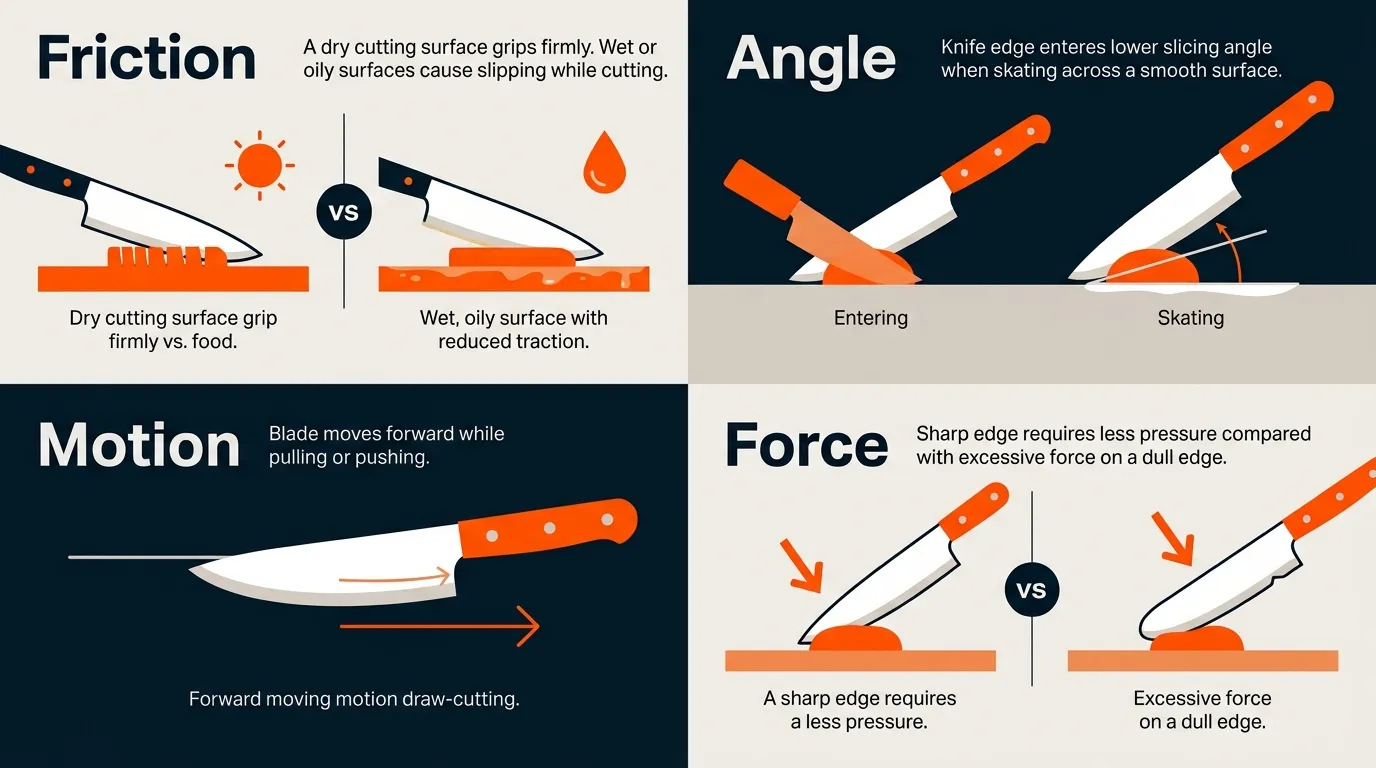
Think of cutting like a tire on the road. Friction is your traction. When surfaces are wet or smooth, traction drops. Pressure and angle help the edge dig in.
Key ideas, in plain words:
- Friction: Dry contact grips. Oil, juice, and wax reduce contact.
- Angle: A lower slice angle helps the edge start a cut.
- Motion: A draw cut (pull or push while moving forward) shears fibers.
- Force: Less force with a sharp edge reduces sudden slips.
This is the core physics behind why knife slips while cutting. Improve friction and angle, and the edge will bite, not skate.
Sharpness and edge geometry that prevent slips
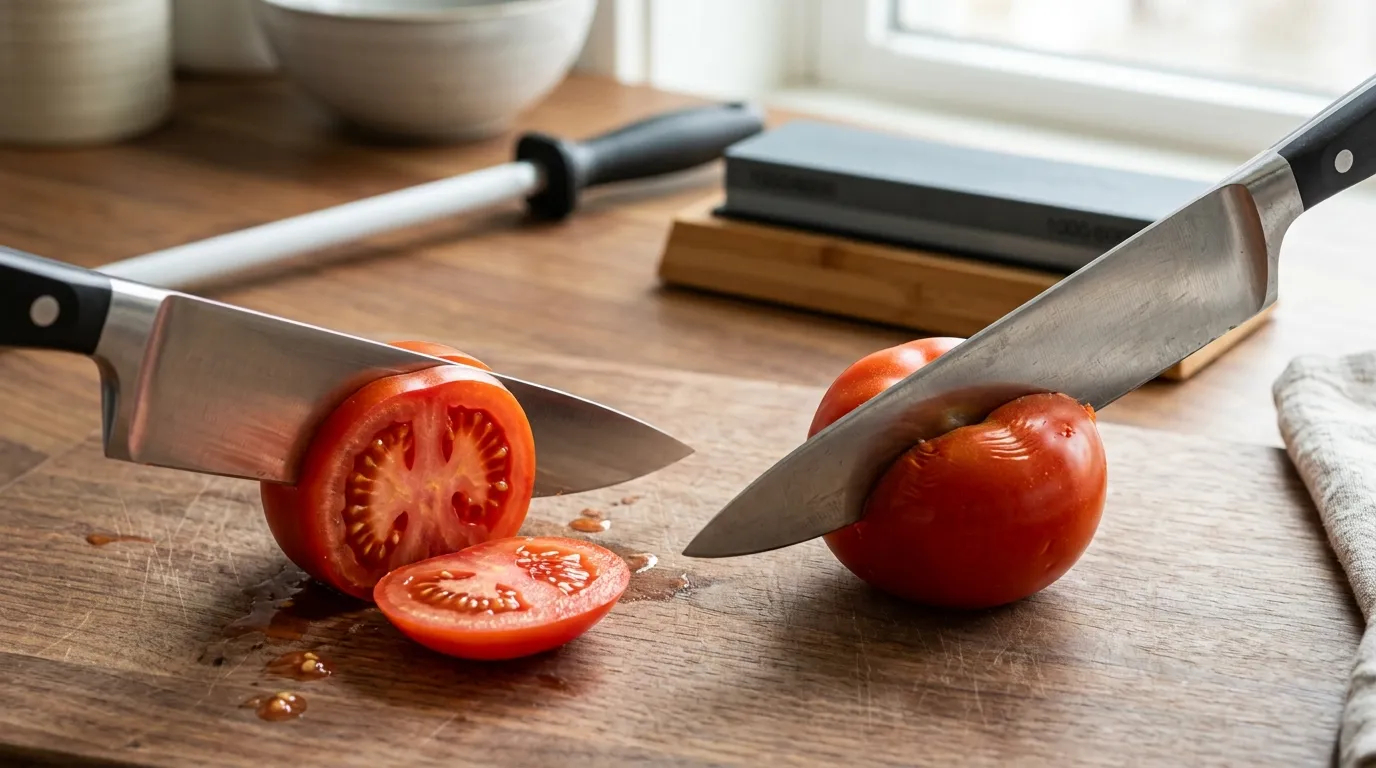
A sharp edge bites with light pressure. A dull edge crushes. It will ride over skins and then lurch. That is when hands get cut.
What to know and do:
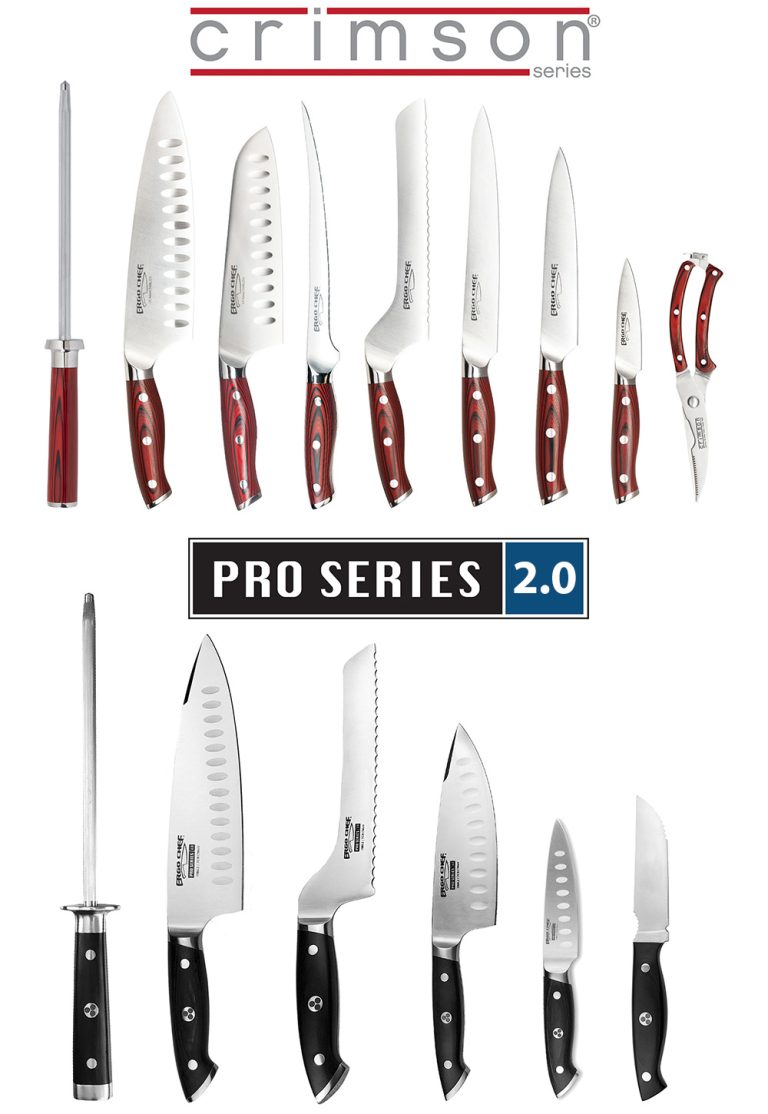
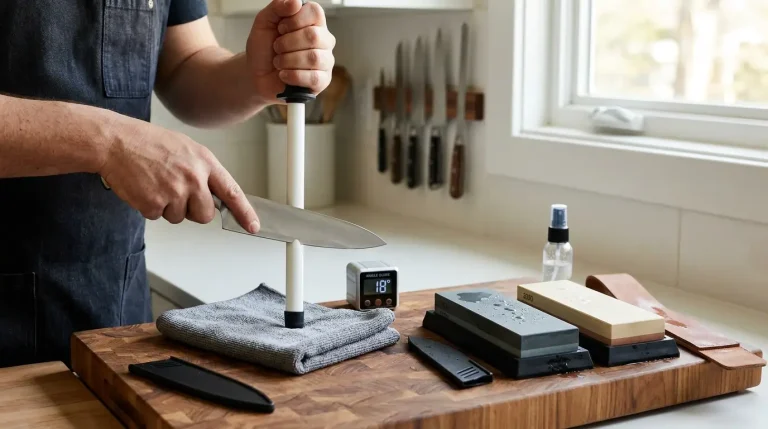
- Hone often. Use a steel or ceramic rod before sessions.
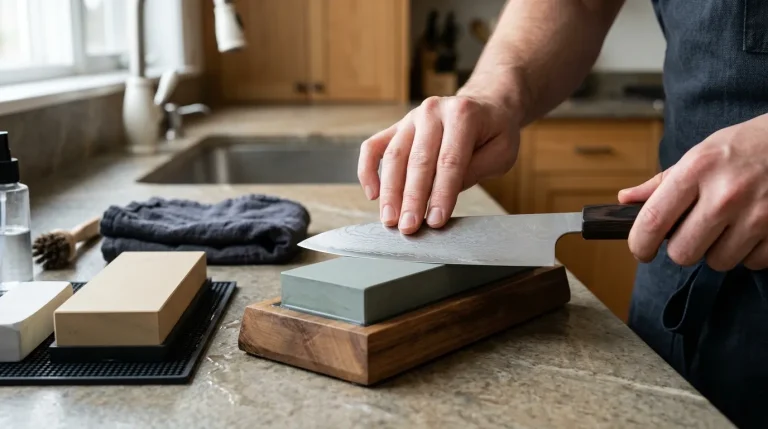
- Sharpen on stones or a guided system every few weeks, or sooner.
- Pick a fine edge angle. About 15–20 degrees per side suits home cooks.
- Use micro-serrations for crusty bread or tomatoes if you struggle.
- Remove burrs. A raised burr can glance and then catch hard.
From my coaching work, most people who ask why knife slips while cutting have never truly sharpened. A proper edge changes everything in minutes.
Cutting surface and setup
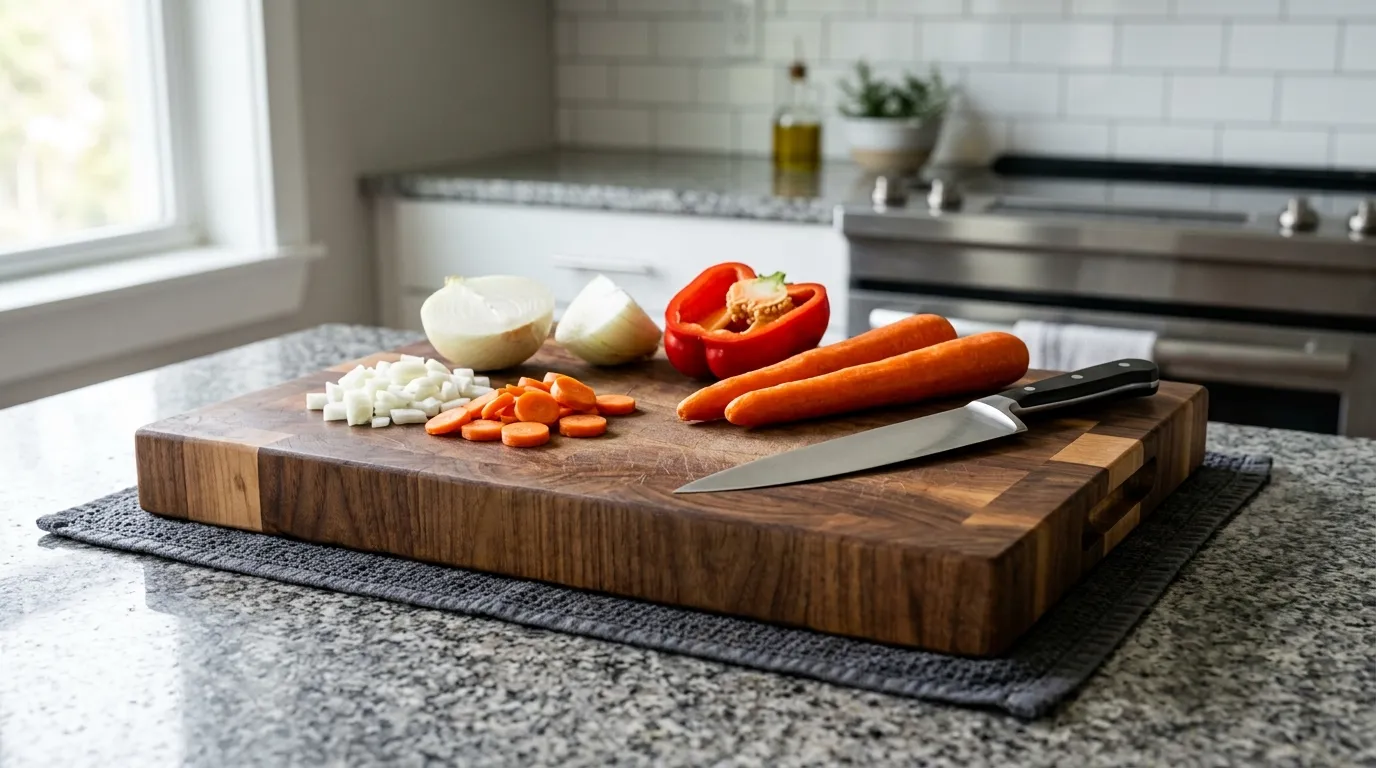
Your board sets the stage. Glass and stone are slick and hard. They are also bad for edges. Wood and quality plastic are better.
What works best:
- Use end-grain wood or a thick plastic board.
- Add a damp paper towel or mat under the board to stop movement.
- Keep the board dry. Wipe often during prep.
- Retire warped, shiny, or deeply grooved boards.
Board stability is a top fix for why knife slips while cutting. A steady base gives your blade a safe path.
Food factors: moisture, skins, and texture
Some foods fight back. Tomato, pepper, eggplant, and citrus have tough skins. Raw poultry skin and waxed apples are also slick. Juices add a thin, slippery film.
Use these quick tricks:
- Pat food dry before cutting. Water is a tiny ice rink.
- Score tough skins with a light nick to start the cut.
- Chill meat for 15–20 minutes. Firm fibers cut cleaner.
- Use a draw cut on tomatoes and peppers to engage the edge.
- Lightly salt a wet surface, then rinse and dry the board. It boosts grip.
These simple steps answer why knife slips while cutting on tricky produce.
Grip, stance, and technique
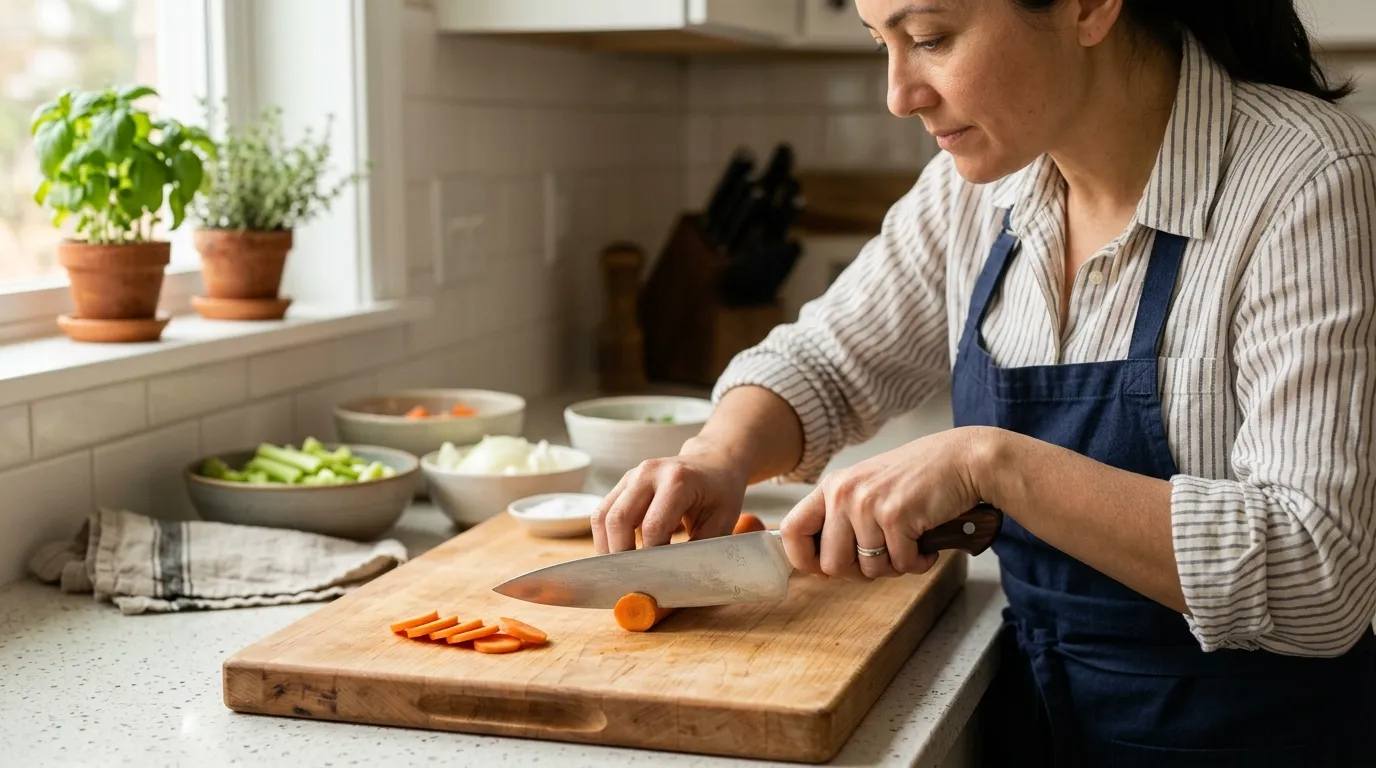
A good grip locks the blade to your hand. Your body sets the line. Small tweaks make a big change right away.
Try this:
- Use a pinch grip. Thumb and index on the blade, other fingers on the handle.
- Use a claw guide hand. Curl fingers. Tuck the thumb.
- Keep the tip on the board for fine cuts. Rock with control.
- Slice, do not shove. Draw the edge to let it work.
- Start slow. Build rhythm once the bite feels steady.
When students ask me why knife slips while cutting, I watch the pinch and the angle. A small angle change stops most slides.
Cleanliness, moisture control, and handle traction
Residue kills traction. A clean, dry setup is safer and faster.
Make it routine:
- Wipe the blade often with a dry towel.
- Wash off grease or starch with warm water. Dry fully.
- Keep hands dry. If your palms sweat, use a quick towel wipe.
- If the handle is slick, add a removable grip sleeve or tape.
These habits help solve why knife slips while cutting during long prep days.
Safety checklist and quick fixes
Use this short list when a blade starts to skate.
- Hone now. If that fails, sharpen before the next task.
- Dry the food, blade, handle, and board.
- Stabilize the board with a damp towel or mat.
- Change the angle. Try a gentle draw cut.
- Slow down. Use less force with better control.
- Switch tools. Use a serrated edge for crust or waxy skin.
- Replace worn boards or out-of-true blades.
Follow this, and you will fix why knife slips while cutting in minutes.
Real-world examples and lessons I learned
In a busy class, a student struggled with tomatoes. The knife skated and then bit hard. We honed the edge, dried the board, and used a slow draw cut. The problem vanished.
On a line shift, raw chicken felt like soap. Hands were clean but damp. We wiped hands and handle, added a mat under the board, and switched to a slightly lower angle. Grip returned at once.
These moments show why knife slips while cutting is not one issue. It is a stack of small frictions and angles. Fix the stack, fix the slip.
Frequently Asked Questions of why knife slips while cutting
Why does my knife slide on tomato skin?
Tomato skin is smooth and taut. Use a draw cut, reduce the angle, and start with a tiny scoring nick.
Can a very sharp knife still slip?
Yes, if the board or food is wet, or your angle is wrong. Dry surfaces and use a light slicing motion.
Is glass a good cutting surface?
No. It is slick and dulls edges fast. Use wood or thick plastic instead.
How often should I hone and sharpen?
Hone before each session. Sharpen when honing no longer restores bite, often every few weeks.
Do gloves help with slipping?
Textured, food-safe gloves can improve grip when hands sweat. Keep gloves clean and dry for best traction.
Conclusion
Knife slips are not random. They come from dull edges, wet surfaces, shaky boards, and poor angles. Tackle each point with simple steps and your cuts will feel smooth and safe.
Put this into action today. Hone your knife, dry your setup, steady your board, and use a calm draw cut. Share your results, subscribe for more kitchen tips, and tell me which fix helped you most.