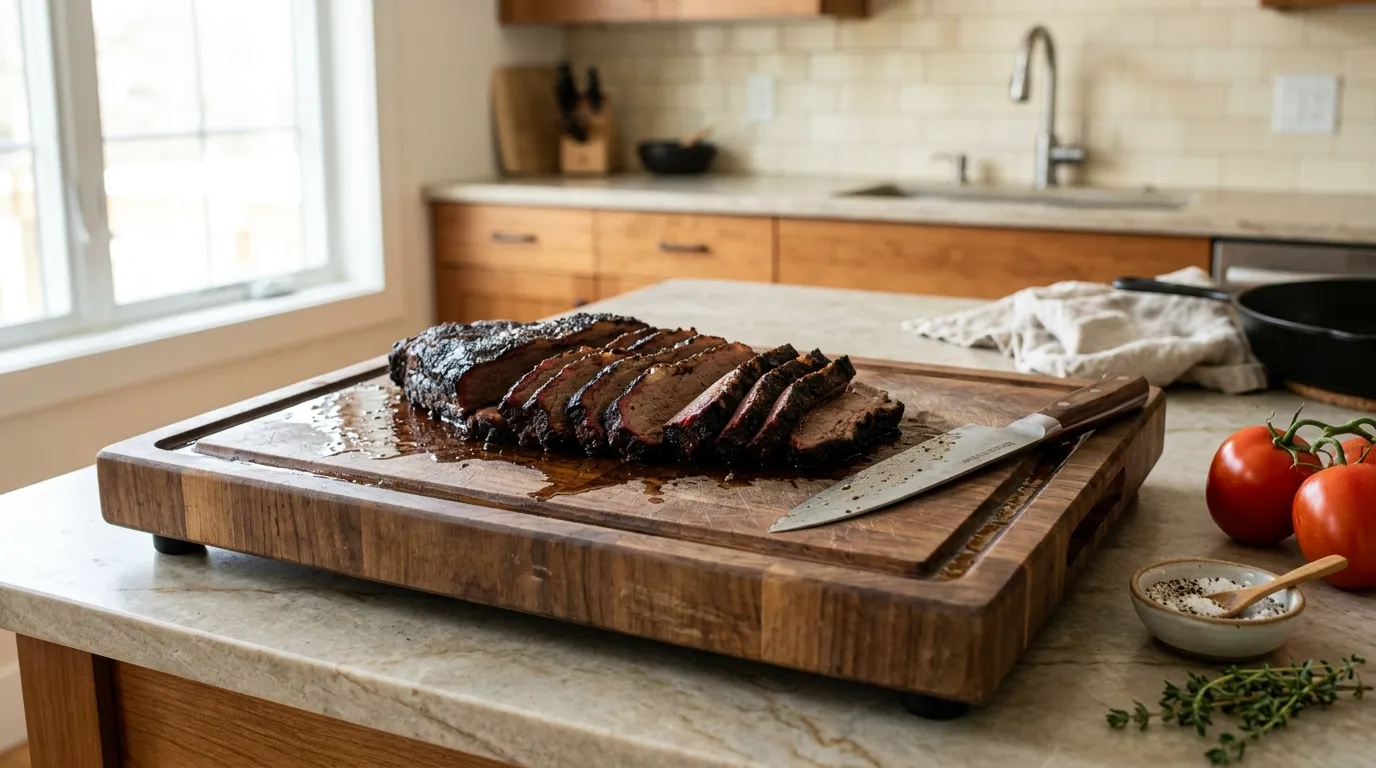
Deep-grooved, non-slip HDPE or end-grain boards keep messy juices under control.
If you slice brisket, ripe tomatoes, or watermelon, you need a board that holds every drop. I’ve tested dozens in busy kitchens and at home, and I know what fails and what performs. This guide breaks down the best cutting board for juicy foods, why it works, and how to pick with confidence. Stick around to learn pro tips, smart care, and small tweaks that make a big, clean difference.
What Makes a Cutting Board Great for Juicy Foods
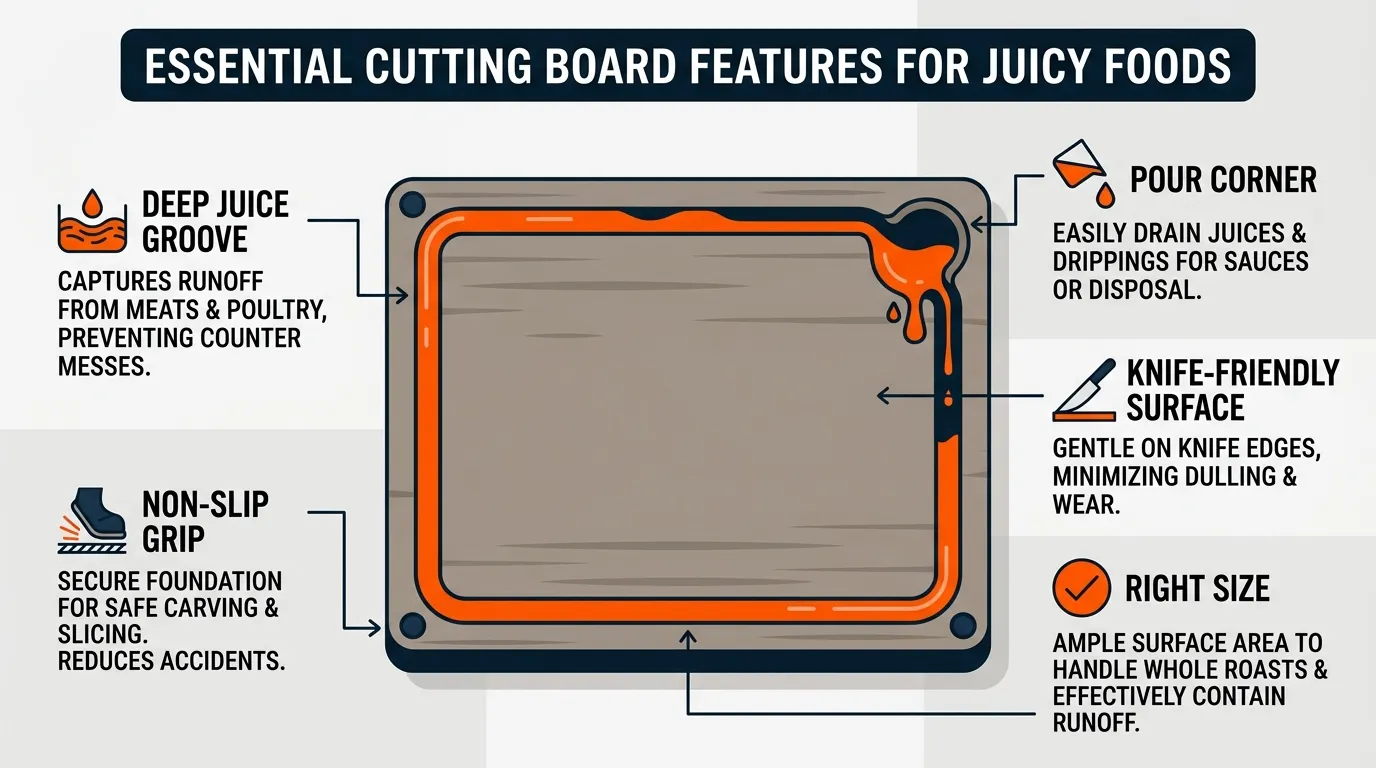
Juicy foods leak. A lot. So the best cutting board for juicy foods must capture liquid before it spreads. It should keep your knife safe, your counter dry, and cleanup easy.
Key features that matter most:
- Deep juice groove: Look for a moat at least 0.25 inches deep with a wide channel.
- Non-slip grip: Rubber feet or a removable mat keep the board from sliding.
- Drain-friendly edges: A pour corner or well helps you decant drippings fast.
- Knife-friendly surface: It should not dull blades or develop deep scars fast.
- Right size: Big enough for roasts or melons, with room to carve and rest.
Here’s my rule of thumb. If you cook roasts, large fruit, or barbecue, the best cutting board for juicy foods needs a groove, a stable base, and enough surface to rest meat. Bonus points for reversible sides, so one stays pristine for bread or herbs.
Material Showdown: Plastic, Bamboo, Wood, Composite, and Rubber
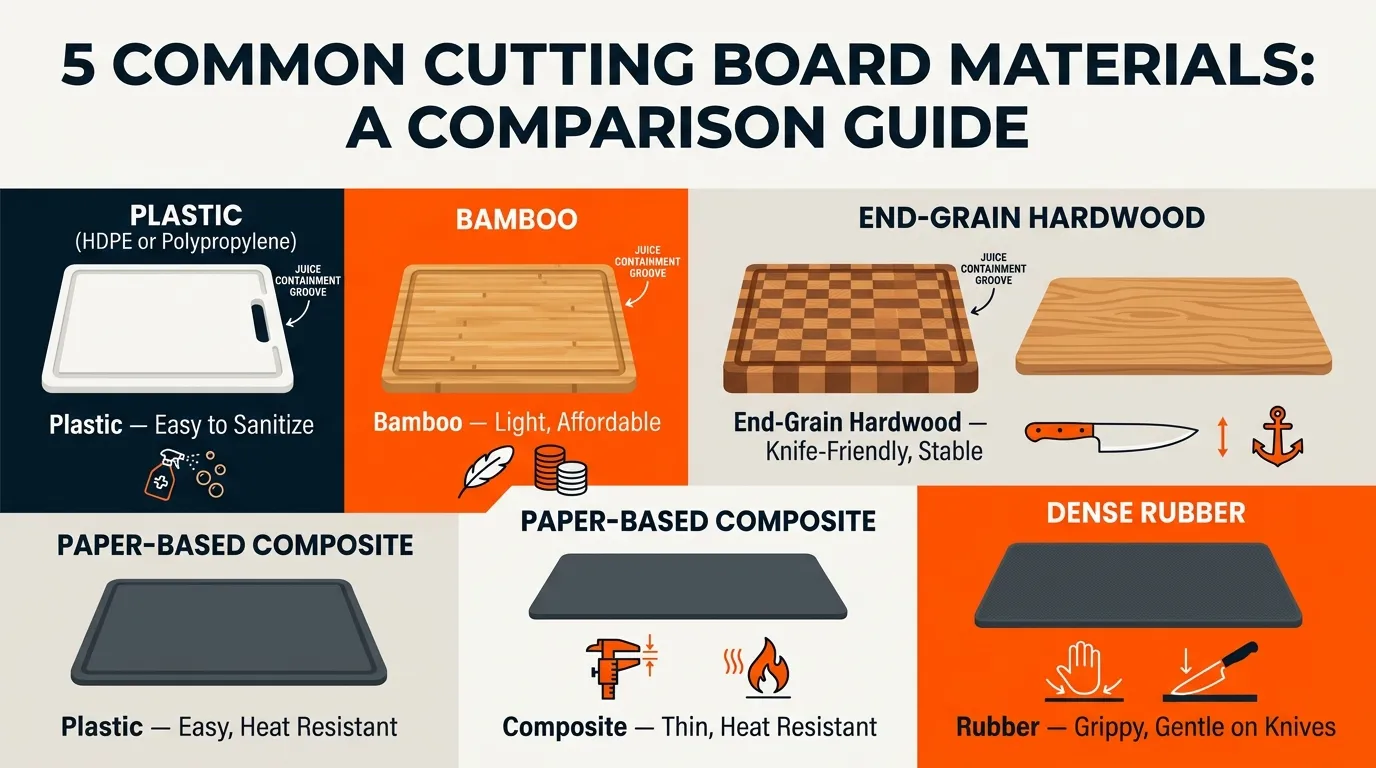
Different boards shine in different tasks. When liquid is in play, the best cutting board for juicy foods comes down to balance: containment, grip, and care.
Plastic (HDPE or polypropylene)
- Pros: Dishwasher safe, light, easy to sanitize, often NSF-certified.
- Cons: Scars faster, can get slick, may bow in high heat if thin.
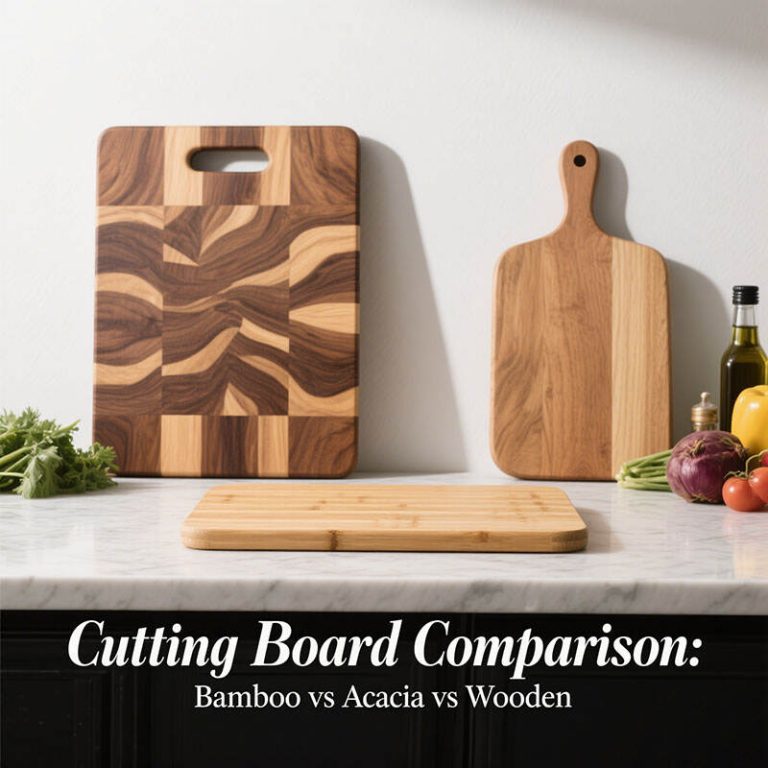
Bamboo
- Pros: Affordable, light, eco-forward, often includes a groove.
- Cons: Harder on knives, can split if soaked, not dishwasher safe.
End-grain hardwood (maple, walnut)
- Pros: Gentle on knives, beautiful, very stable, great with a deep groove.
- Cons: Hand-wash only, heavier, costs more, needs oiling.
Composite (paper-based resin)
- Pros: Thin, heat resistant, low-maintenance, some have grooves.
- Cons: Can be harder on edges, limited groove depth on thinner boards.
Rubber (dense commercial style)
- Pros: Grippy, self-healing, great traction when wet, gentle on knives.
- Cons: Heavier, pricier, limited groove options on some models.
For pure juice control, I lean toward grooved end-grain wood or a thick, grooved HDPE. If you want easy sanitizing and low fuss, plastic wins. If you want a stable, pro feel and superb blade care, a grooved end-grain board is the best cutting board for juicy foods in many home kitchens.
My Top Picks and Why (From Real-World Testing)
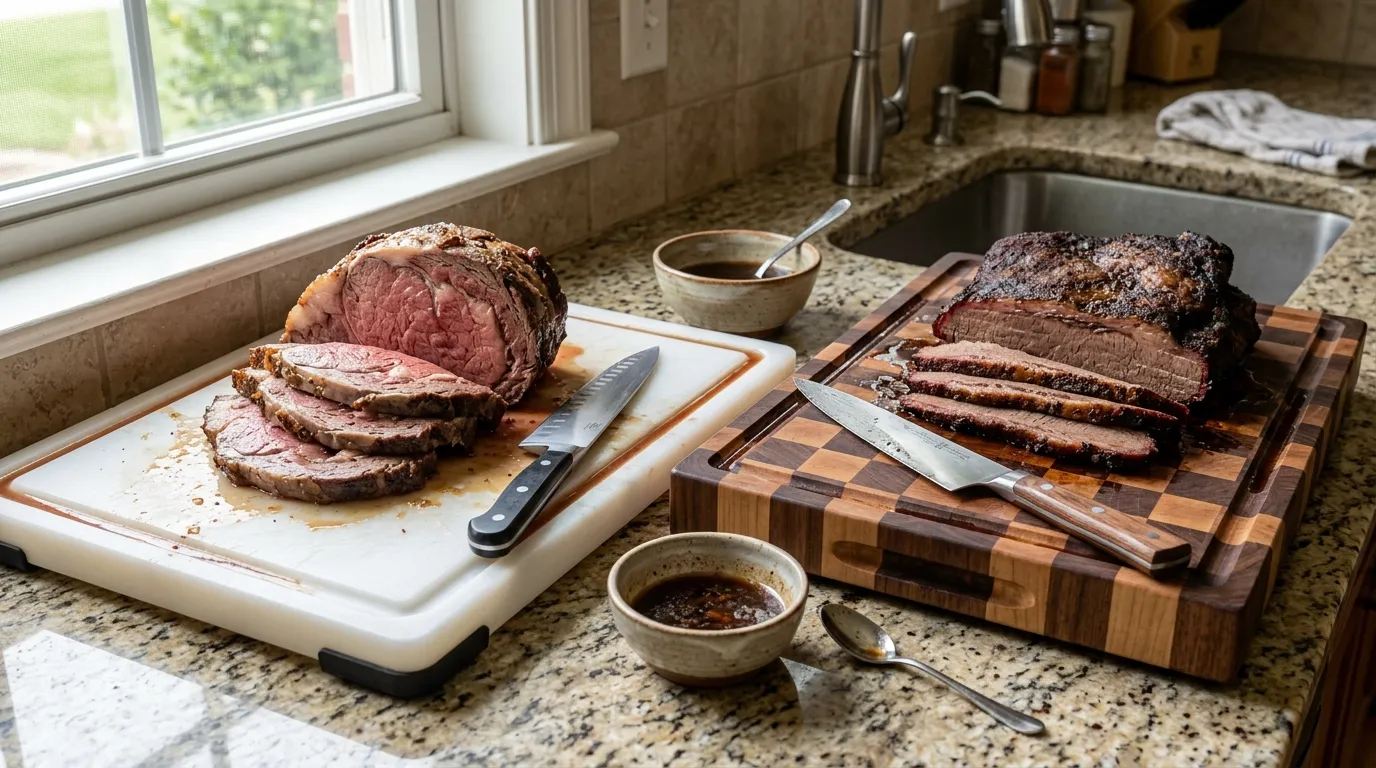
I’ve carved dozens of briskets, piled tomatoes for salsa, and quartered watermelons on many boards. These picks have saved my counters and my sanity. Each can be the best cutting board for juicy foods depending on your setup.
Grooved end-grain hardwood board
- Why I trust it: A deep moat, heavy weight, and soft-on-knife surface.
- Real-life win: After a roast chicken rest, the groove held all the drippings. Nothing spilled, and pouring through the corner was smooth.
Thick, grooved HDPE board with non-slip feet
- Why I trust it: Dishwasher safe and rugged in busy prep days.
- Real-life win: Sliced tri-tip for a party. The moat caught all the liquid, and the board never skated.
Rubber board with a removable silicone dam or mat
- Why I trust it: Super grippy and easy to resurface. The add-on dam holds juices.
- Real-life win: Perfect for tomato runs. Knife stays sharp, board stays put.
Composite board with a groove and pour notch
- Why I trust it: Slim, heat safe, durable, great for smaller cuts.
- Real-life win: Ideal for steak nights. Easy to tip drippings into a pan for sauce.
If you want one do-it-all pick, the best cutting board for juicy foods for most people is a large, grooved HDPE with non-slip feet. If you prize blade care and a premium feel, a grooved end-grain hardwood board is worth it.
Sizing, Setup, and Kitchen Workflow for Juicy Foods
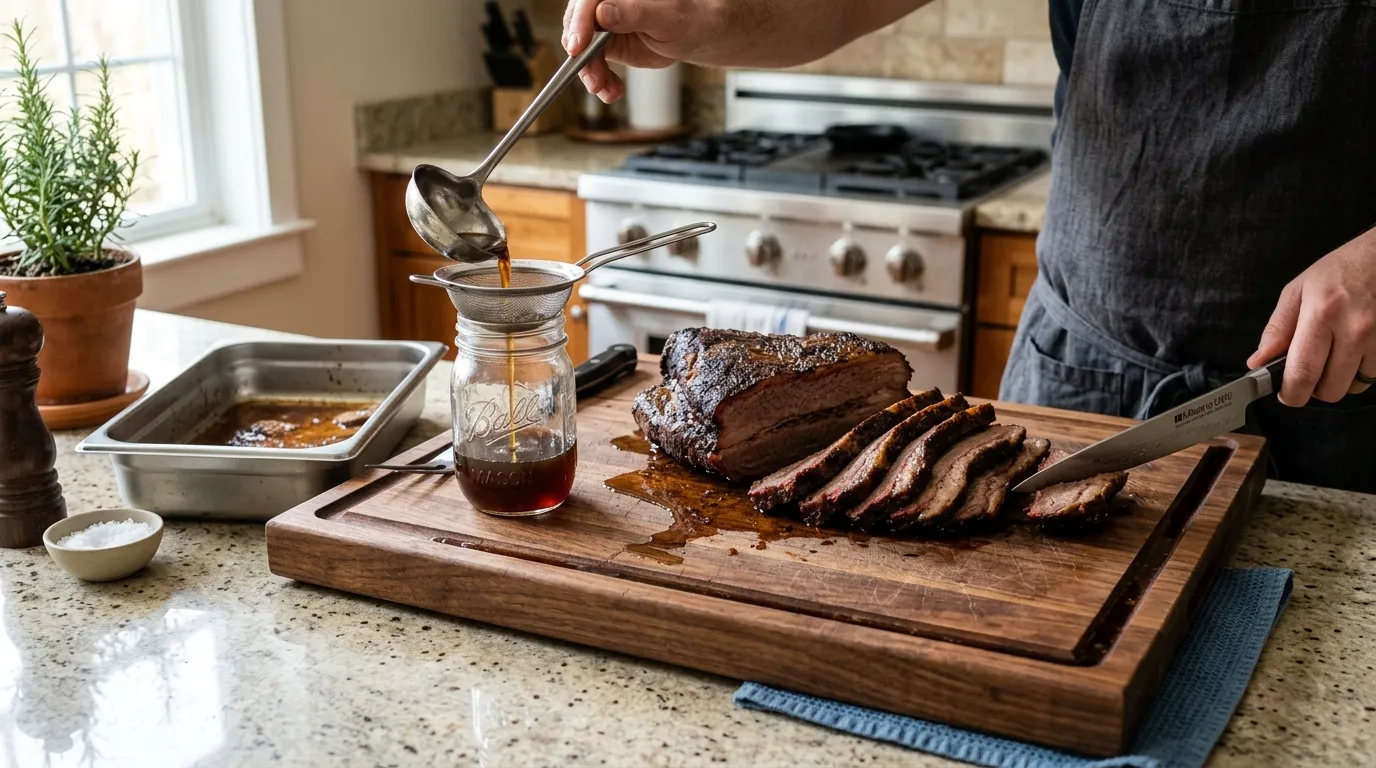
Size matters. A cramped board turns carving into chaos. For brisket, pork shoulder, or a whole watermelon, aim for at least 18 by 24 inches. For steak or tomatoes, 12 by 18 inches works.
Set up like a pro:
- Place a damp towel or silicone mat under the board if it lacks feet.
- Keep a hotel pan or bowl nearby to pour off juices.
- Rest meats on the board, tented, so the groove can catch early drips.
I often place a small sieve over a jar to strain the drippings as I pour. It keeps bits out and saves liquid gold for sauce. This small step helps any board feel like the best cutting board for juicy foods.
Care, Cleaning, and Food Safety for Juicy Foods
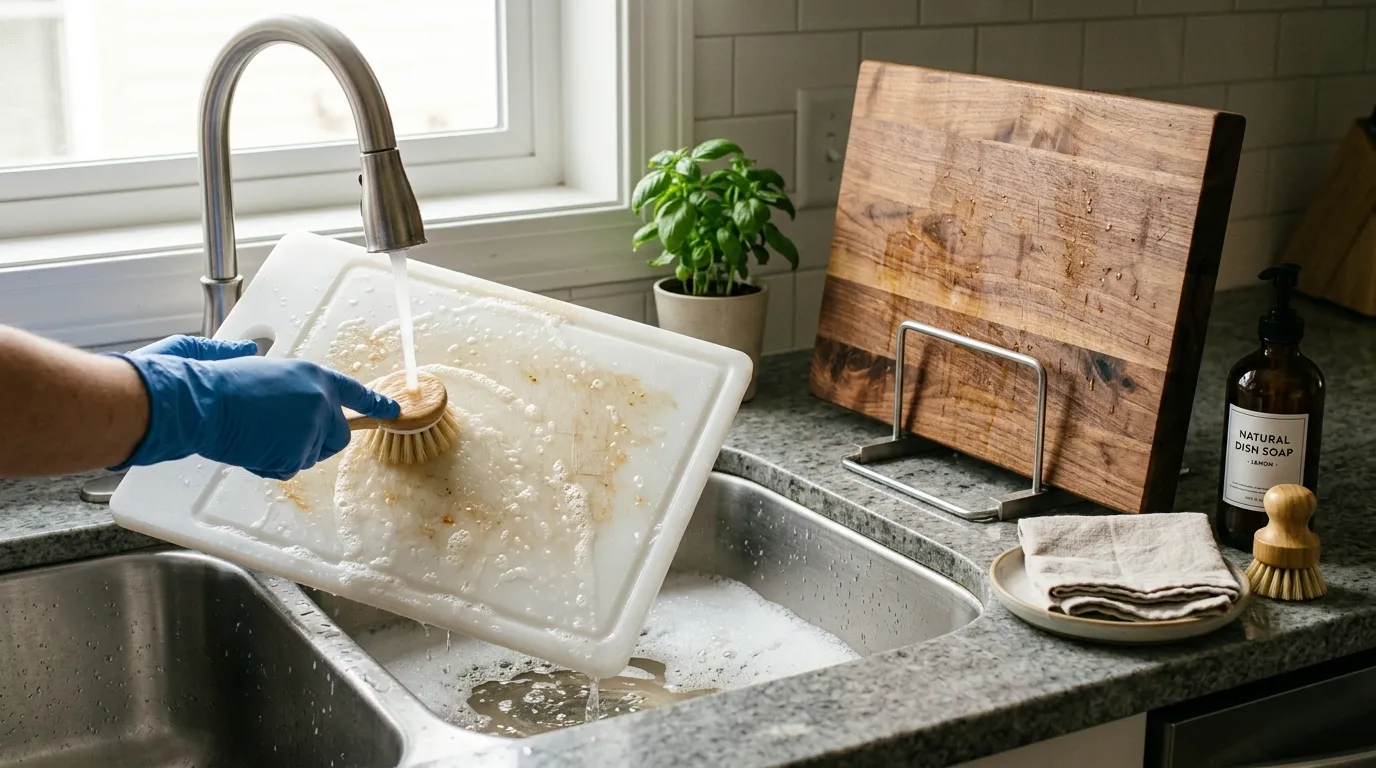
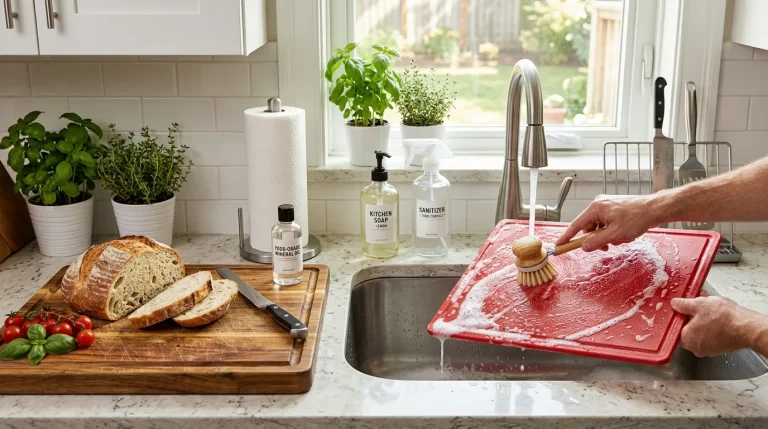
Sticky juices invite germs, so clean fast and well. Plastic HDPE boards can go in the dishwasher. That is handy after raw poultry. Wood and bamboo are hand-wash only. Dry right away and stand upright for airflow.
Sanitizing basics:
- For plastic: Hot dishwasher cycle or a mild bleach solution after raw meat.
- For wood: Wash with hot soapy water, wipe with diluted vinegar, then dry. Oil with food-grade mineral oil when dry.
Replace plastic boards when grooves are deep or stained. Recondition rubber with a light sanding if needed. These habits keep any pick performing like the best cutting board for juicy foods.
Budget and Buying Guide
You do not need to overspend to get a solid board. Use this quick checklist when you shop for the best cutting board for juicy foods.
- Groove depth and width: Deep, wide, and easy to pour.
- Non-slip base: Built-in feet or a mat to prevent movement.
- Size: Enough space for the food and your hands.
- Material match: HDPE for low maintenance; end-grain for premium feel.
- Care fit: Be honest about cleaning habits and storage space.
If you host big cooks, buy one large grooved board and one small flat board. You will cover almost every juicy task without stress.
Frequently Asked Questions of best cutting board for juicy foods
What is the safest material for raw meat juices?
HDPE plastic is a top choice because it is dishwasher safe and easy to sanitize. Many pros use it when handling raw poultry and pork.
Do I really need a juice groove?
If you cut roasts, fruit, or tomatoes, yes. A groove limits mess and saves drippings for sauces.
Can wooden boards handle juicy foods without warping?
Yes, if you hand-wash and dry right away. Oil them often so they resist stains and water.
How big should a board be for brisket?
A board around 18 by 24 inches gives room to slice and separate the point and flat. Extra space also keeps your knife work safe.
How do I stop a cutting board from sliding?
Use rubber feet or place a silicone mat or damp towel under the board. Stable boards mean safer cuts and cleaner counters.
What makes the best cutting board for juicy foods last longer?
Choose the right material for your habits, clean fast, and store dry. Replace plastic when grooved and re-oil wood often.
Conclusion
A clean carve starts with the right surface. Choose a large, grooved, non-slip board that fits your habits and space, and you will control every drop. For low-fuss care, a grooved HDPE is the best cutting board for juicy foods. For a premium feel and gentle knife care, pick a grooved end-grain board.
Set up a stable station, pour off drippings, and keep tools sharp and safe. Try one upgrade this week, and see how calm your next carve can be. If you found this helpful, share it, subscribe for more kitchen guides, or drop your questions in the comments.