Choose kitchen knives by fit, purpose, steel, balance, and maintenance demands.
If you want a simple, expert-backed plan on how to choose kitchen knives, you’re in the right place. I’ve sharpened, tested, and taught with hundreds of blades in busy kitchens and home classes. This guide cuts through hype and shows how to choose kitchen knives that match your hands, your food, and your habits—so you buy once, and love them for years
How to choose kitchen knives: what makes a good knife
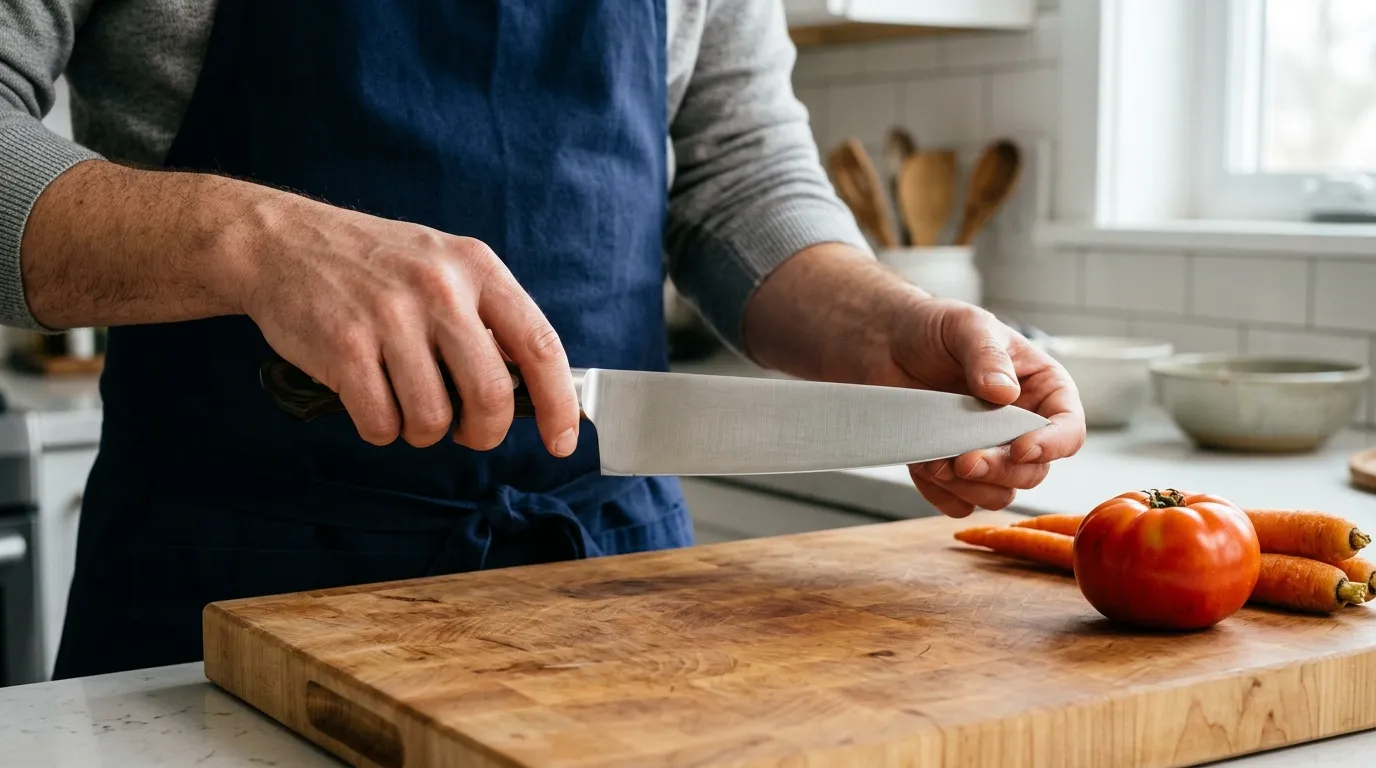
A good knife does three things well: it cuts clean, it feels safe, and it lasts. When you learn how to choose kitchen knives, judge each blade by performance, comfort, and care needs. If a knife fails any one of these, it will live in a drawer.
Key traits I test in a shop or class:
- Sharpness out of the box Push through a tomato skin with almost no force.
- Balance and feel Pinch the blade at the heel; it should feel steady, not tip-heavy.
- Edge profile The curve should match your cutting style, rock or push.
- Safety The handle should not twist when wet; your fingers should clear the board.
- Build quality Check for even grind, straight spine, tight handle fit, and no gaps.
Pro tip from the line: If the knife makes you choke up and hold it tighter, it’s not right for you. Learn how to choose kitchen knives that relax your grip, not tense it.
The three knives most home cooks need

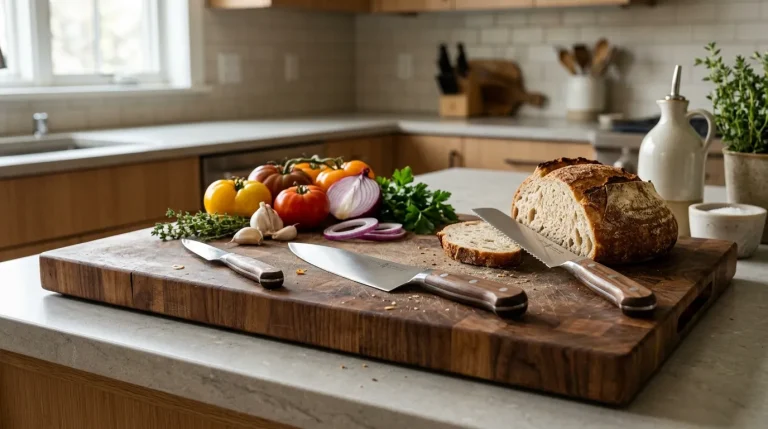
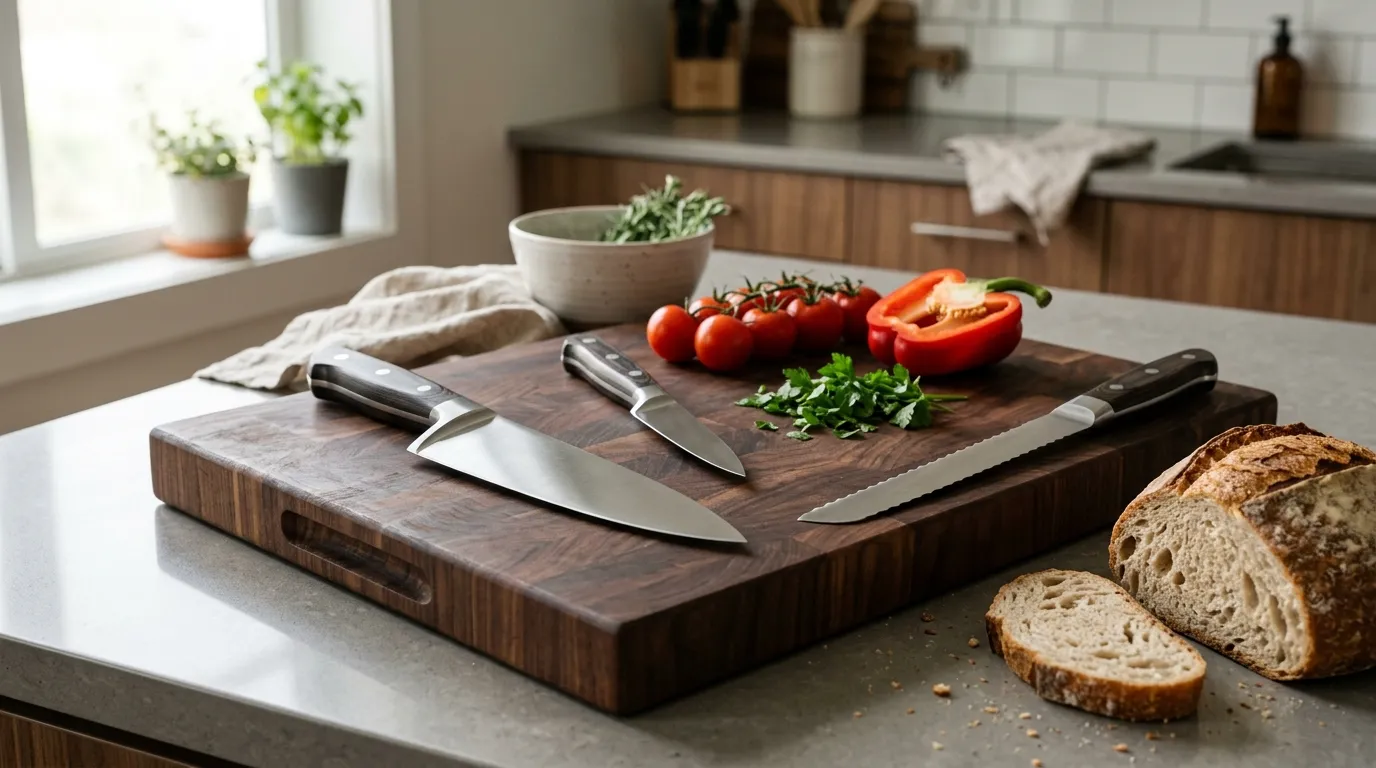
You do not need a giant block. Start lean and smart. This core set will handle 95% of your prep and is the best place to start when you think about how to choose kitchen knives.
- 8-inch chef’s knife or a 7-inch santoku Workhorse for slicing, dicing, and mincing.
- 3–4 inch paring knife In-hand work like peeling and trimming.
- 9–10 inch bread/serrated knife Tomatoes, cakes, crusty loaves, and layered foods.
Nice-to-haves as you grow:
- Utility/petty knife For fruit, cheese, small veg.
- Boning or fillet knife For meat and fish work.
- Nakiri For fast veg push-cuts with a flat profile.
Steel 101: stainless, high-carbon, and hardness
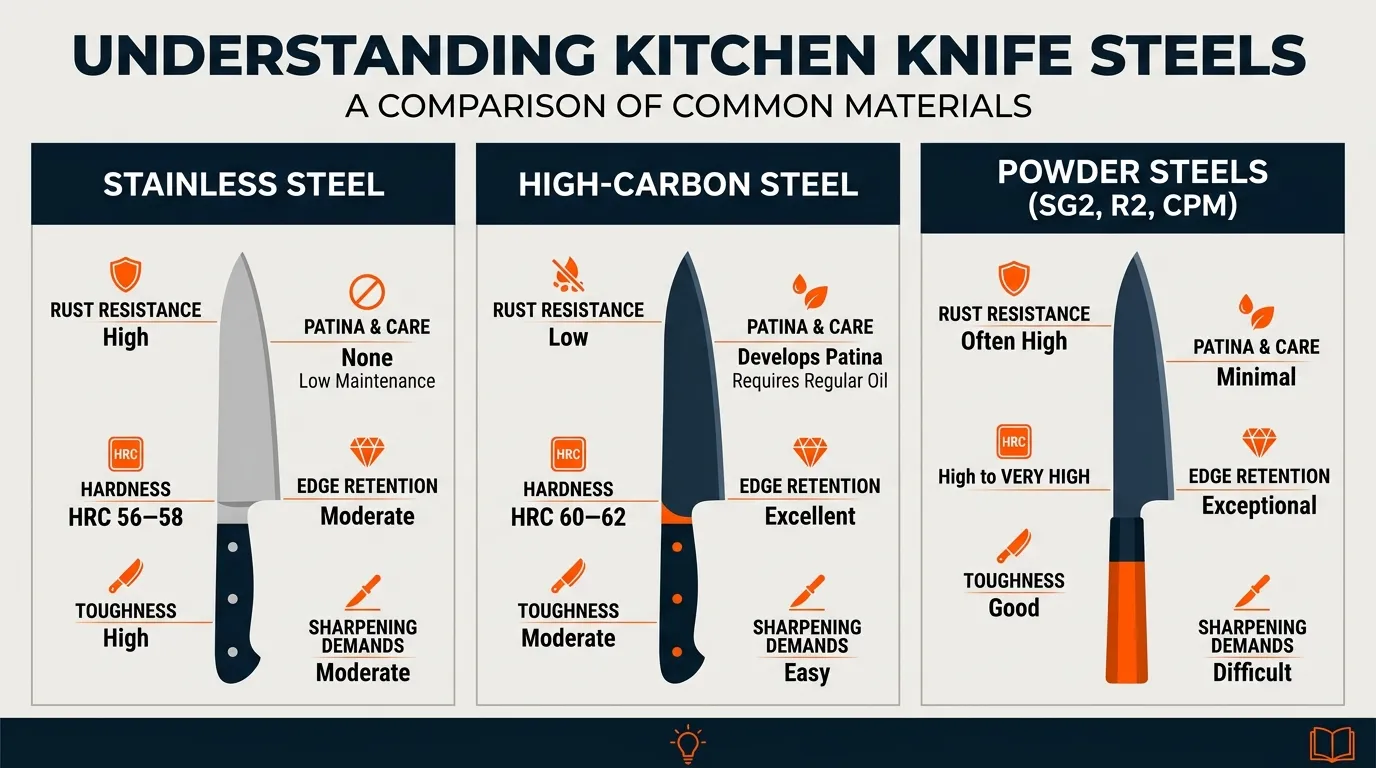
Steel choice shapes edge life, toughness, and care. Understanding it helps you master how to choose kitchen knives without guesswork.
What the numbers mean:
- Hardness HRC 56–58 (typical German steels) are tough and forgiving; HRC 60–62 (many Japanese steels like VG-10, SG2) hold a sharper edge but chip easier.
- Stainless vs high-carbon Stainless resists rust; high-carbon forms a patina and can rust if left wet, but often sharpens faster and can feel “grabbier” on food.
- Powder steels (SG2/R2, CPM) Offer high hardness and long edge life; cost and sharpening skill go up.
Real-world tip: If you wipe as you work and dry right after, you can enjoy carbon or semi-stainless. If you leave knives in the sink, pick softer stainless and save yourself stress.
Forged vs stamped, grind, and edge angle
This is where feel meets geometry. Knowing these basics tightens your plan for how to choose kitchen knives.
- Forged vs stamped Forged often feels heavier with a bolster; stamped is lighter and agile. Quality exists in both. Pick by balance, not marketing.
- Grind and thickness Thin behind the edge glides through food. Look down the spine and along the bevel for even, thin geometry.
- Edge angles Western knives are often 15–20° per side; many Japanese edges are 10–15° per side. Lower angles slice better but can be more fragile.
- Single vs double bevel Single bevels (yanagiba, usuba) are for specialists. Most home cooks should stick to double bevels.
Shop test: Slice a carrot coin. If the blade cracks the carrot instead of gliding, it’s too thick or too dull for your needs.
Handles, balance, and ergonomics
Comfort is non-negotiable. This is a top factor in how to choose kitchen knives that you will use every day.
What to check in hand:
- Grip Pinch the blade and try a few rock and push cuts in the air. No hot spots.
- Balance The center of mass should sit near your pinch point. If the tip dives, fatigue rises.
- Handle materials Micarta and pakkawood feel warm and stable. Dense plastics are low care. Natural woods look great but may need extra care.
- Tang and fit A full tang with tight rivets is a good sign, but hidden tangs can be strong too. Look for zero gaps.
Small hands often love slim wa handles (oval or octagon). Larger hands may prefer broader Western scales. Trust your hand more than the spec sheet.
Try-before-you-buy checklist
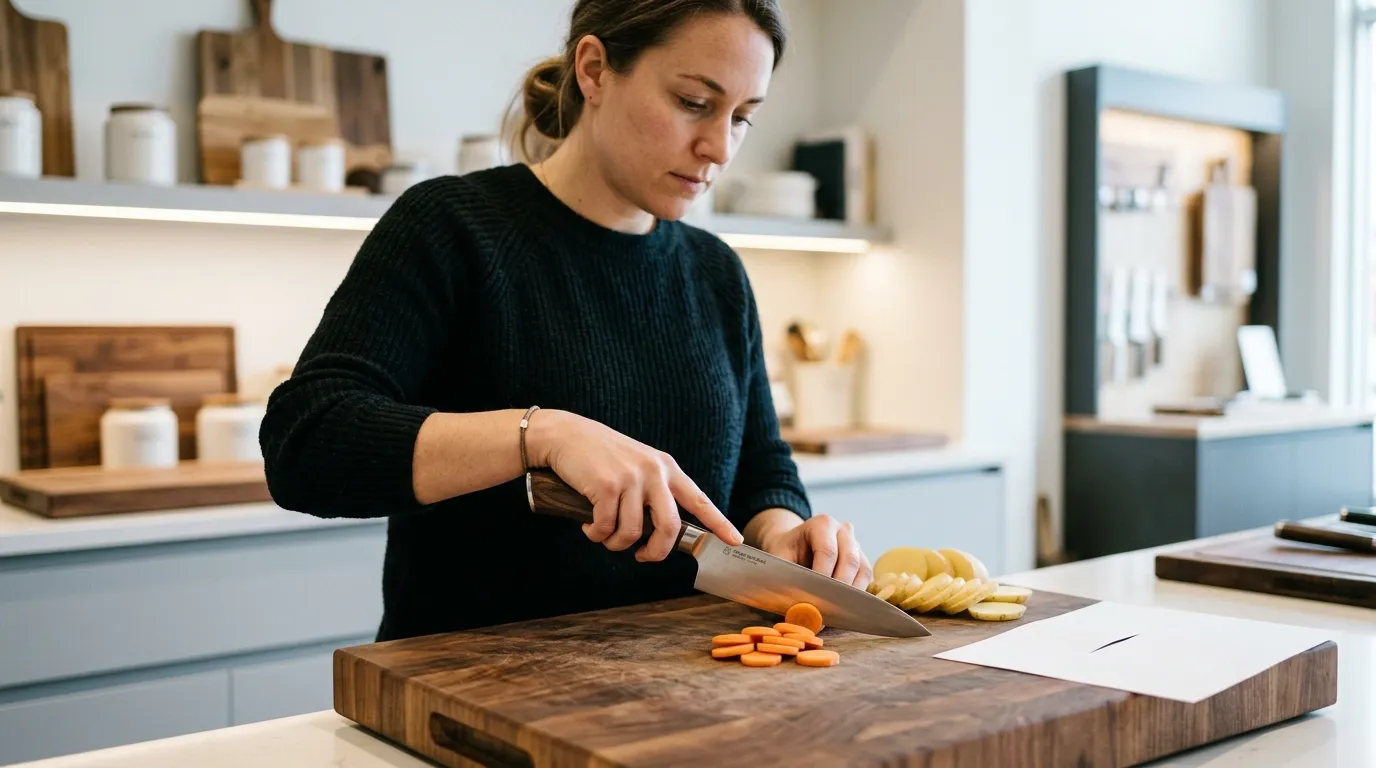
Use this five-minute test in a store or at home if there’s a return window. It sharpens your sense for how to choose kitchen knives with confidence.
- Do three moves Rock, push-cut, and tip work. Any wobble or strain? Pass.
- Board clearance Can you knuckle-guide without hitting the board or handle?
- Food release Slice a potato; see if slices suction to the blade. Subtle convex grinds help.
- Wet grip Spritz your hand. If it twists, it’s a no.
- Quick paper test A clean slice across printer paper hints at grind and edge.
Red flags:
- Warped spine, uneven bevels, or rattling handles.
- Overbuilt bolsters that block sharpening.
- Pretty patterns but poor geometry.
Budget and value: spend where it counts
You can buy smart at any price. Your budget also shapes how to choose kitchen knives that fit your life.
Starter tier
- $50–$100 for a chef’s knife Focus on grind and comfort. Add a $20 honing rod and a safe board.
Mid tier
- $100–$200 Jump to better steel and finish. Santoku or gyuto in this range can be stellar.
Premium tier
- $200–$400+ Top steels, artisan grinds, and fine handles. Worth it if you cook often and care for tools.
Set vs build-your-own:
- Build-your-own gives you the exact three knives you love.
- Sets add filler you may not touch. If you buy a set, check return policy and test each piece.
Care matters: honing, sharpening, boards, and storage
Edge care is half the battle in how to choose kitchen knives you will love long-term.
Honing vs sharpening
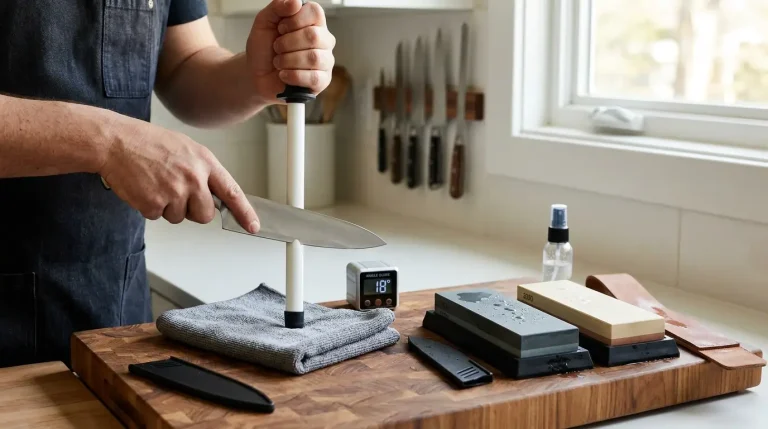
- Hone weekly A ceramic or steel rod realigns the edge. Few light strokes per side.
- Sharpen as needed Stones give the best results. Start with 1000 grit, then 3000–6000. If stones scare you, use a guided system or a pro service.
Boards
- Choose soft woods like maple, walnut, or end grain. Quality plastic is fine too.
- Avoid glass, stone, or hard bamboo. They wreck edges fast.
Storage
- Use a sheath, upright block, or magnetic strip with gentle pull-off. Keep blades dry before storage.
Safety and real-world use
Better knives are safer knives. This is a core truth in how to choose kitchen knives that protect you.
Simple rules that work:
- Keep them sharp A dull edge slips. A sharp one tracks straight.
- Use the pinch grip It gives control and keeps fingers safe.
- Clear the board Wipe the board, not the blade on the back of your hand.
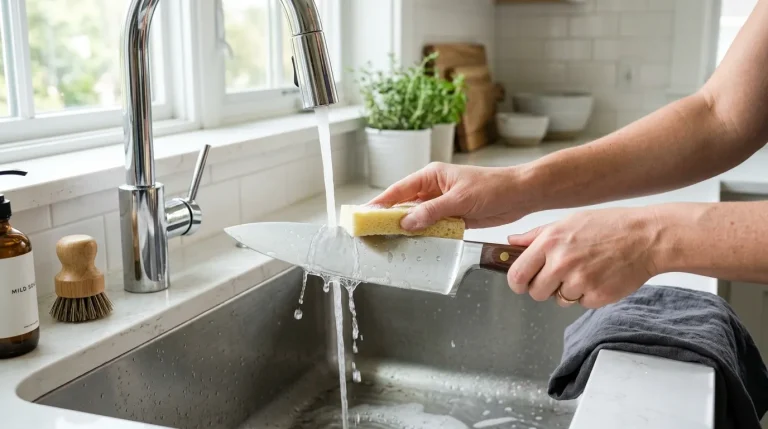
- Mind the sink Knives do not belong under soapy water. Wash and dry right away.
Story from the line: I’ve seen more cuts from dull house knives than from razor chef blades. Once teams switched to regular honing and soft boards, nicks dropped fast.
Common mistakes to avoid
Learn these, and you’re already mastering how to choose kitchen knives.
- Buying by looks Damascus patterns can hide poor geometry. Test the cut, not the shine.
- Going too big A 10-inch chef’s knife can tire new users. Start with 8 inches.
- Ignoring care needs High-carbon demands dry hands. If that’s not you, go stainless.
- Skipping the board A great knife on a glass board is a bad combo.
- Chasing sets Get your trio first, then fill real gaps.
Frequently Asked Questions
How often should I sharpen my kitchen knives?
Sharpen when honing no longer brings the edge back. For most home cooks, that’s every 3–6 months, based on use and cutting boards.
What size chef’s knife should I buy first?
An 8-inch chef’s knife fits most hands and kitchens. It gives reach without feeling heavy or scary.
Are Japanese knives better than German knives?
Neither is “better,” just different. German knives are tough and forgiving; Japanese knives are thinner and can feel sharper but need gentler use.
Do I need a full-tang knife?
Full tangs are a good sign of build quality, but not a rule. Hidden tang artisan knives can be very strong if well made.
What’s the best way to test a knife in-store?
Pinch the blade, mimic your cut style, and do a paper slice. Check wet grip and board clearance if you can.
Conclusion
Choose knives that match your hand, your food, and your habits. Focus on a great chef’s or santoku, a paring, and a serrated blade. Check steel, balance, and board fit. Care for them with a soft board, quick honing, and dry storage, and they’ll return the favor every day.
Use this guide as your field checklist on how to choose kitchen knives. Head to a shop, try a few, and trust the one that makes you smile when you slice. If this helped, subscribe for more gear guides, or drop a comment with your top pick and why.