Introduction
A pan burns food when the cooking surface gets hotter than the food can handle, heat is uneven, or food stays in one place too long. This is common in U.S. kitchens, whether you cook on a gas range, electric coil, smooth-top electric stove, or induction cooktop.
High heat is only one cause. A thin pan, dry surface, cold food, excess sugar, poor timing, and burnt residue can all make food scorch. The good news is that most cases are easy to fix once you identify the cause.
The Short Answer: Why Your Pan Burns Food
Your pan may burn food because of one or more of these problems:
- The burner setting is too high.
- The pan has hot spots.
- The pan is too thin or warped.
- There is not enough oil or cooking liquid.
- The food is too dry or sugary.
- The pan is overcrowded.
- The food is not moved at the right time.
- Burnt residue is heating beneath fresh food.
- The pan or cooktop is not suited to the cooking method.
- A nonstick coating is worn or damaged.
A pan does not need to look red-hot to burn food. Cooking surfaces can become hot enough to scorch food while still looking normal. Thin foods, spices, garlic, milk, and sugar burn faster than thick foods with more water.
The best first step is simple: lower the heat, clean the pan, and watch the food instead of relying only on the burner dial.
How Heat Burns Food in a Pan
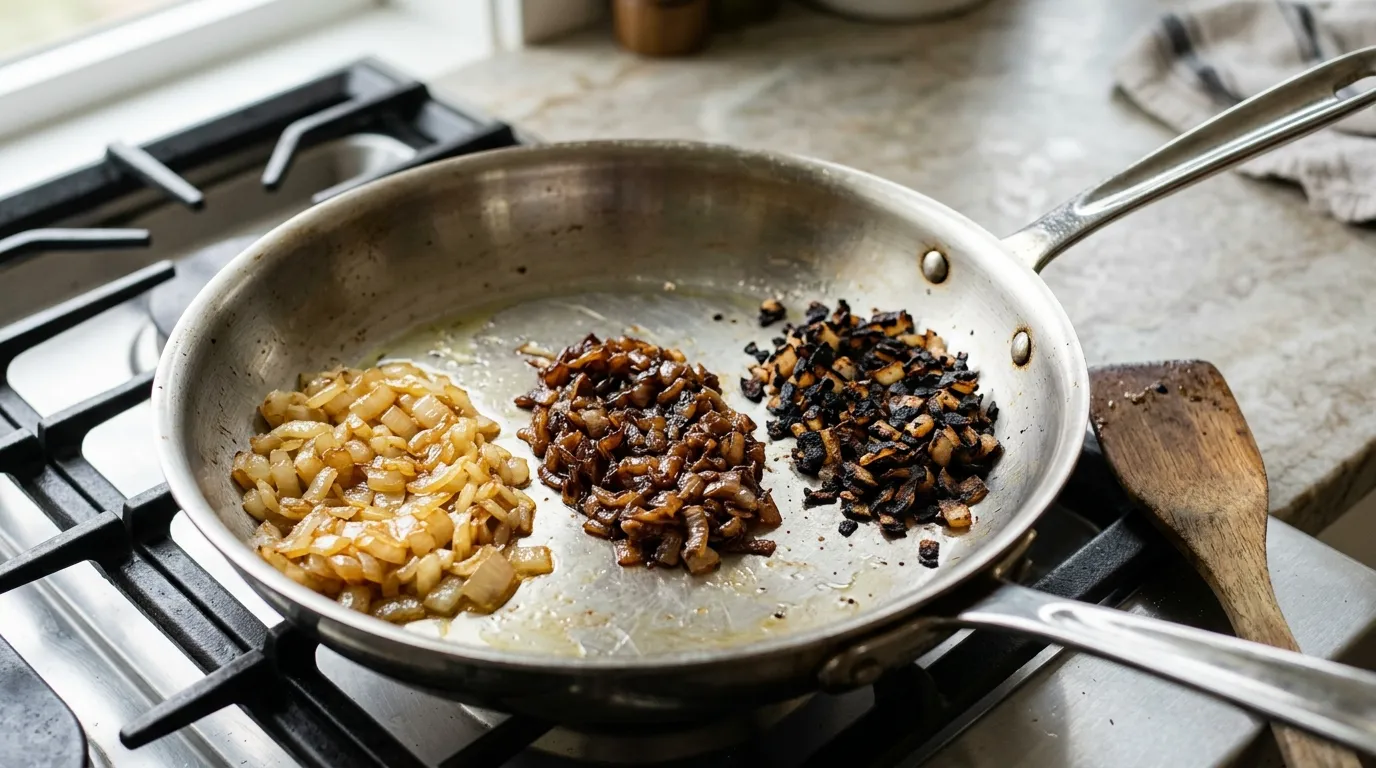
Heat moves from the burner into the pan and then into the food. If the pan transfers heat faster than the food can absorb it, the surface dries out and starts to brown. If heating continues, the browned surface turns bitter, black, and burnt.
Several cooking reactions can happen as food heats:
- Evaporation: Water leaves the food as steam.
- Browning: Proteins and sugars react and create new flavors.
- Caramelization: Sugar breaks down under heat.
- Pyrolysis: Food material breaks down from excessive heat and turns black.
Browning is useful. Burning is not simply “more browning.” It is a later stage in which the food structure breaks down and produces bitter smoke and char.
Why a dry pan burns food quickly
Water helps limit surface temperature while it is still evaporating. Once the surface dries, its temperature can rise much faster. This is why food may cook well at first and then burn suddenly.
This effect is easy to see with:
- Tortillas
- Bread
- Pancakes
- Shredded cheese
- Garlic
- Ground spices
- Thin fish fillets
- Small pieces of chicken
A pan can also burn food when the food releases water, the water evaporates, and the heat remains high. The food then fries or sears in a much hotter, drier pan.
Why sugars and milk burn fast
Sugar browns and burns quickly. Sauces with honey, maple syrup, brown sugar, or fruit can scorch before the meat or vegetables finish cooking.
Milk proteins and milk sugars can also stick to a hot surface. This is why cream sauces, custards, and oatmeal often burn on the bottom even when the top looks fine.
Common Reasons a Pan Burns Food
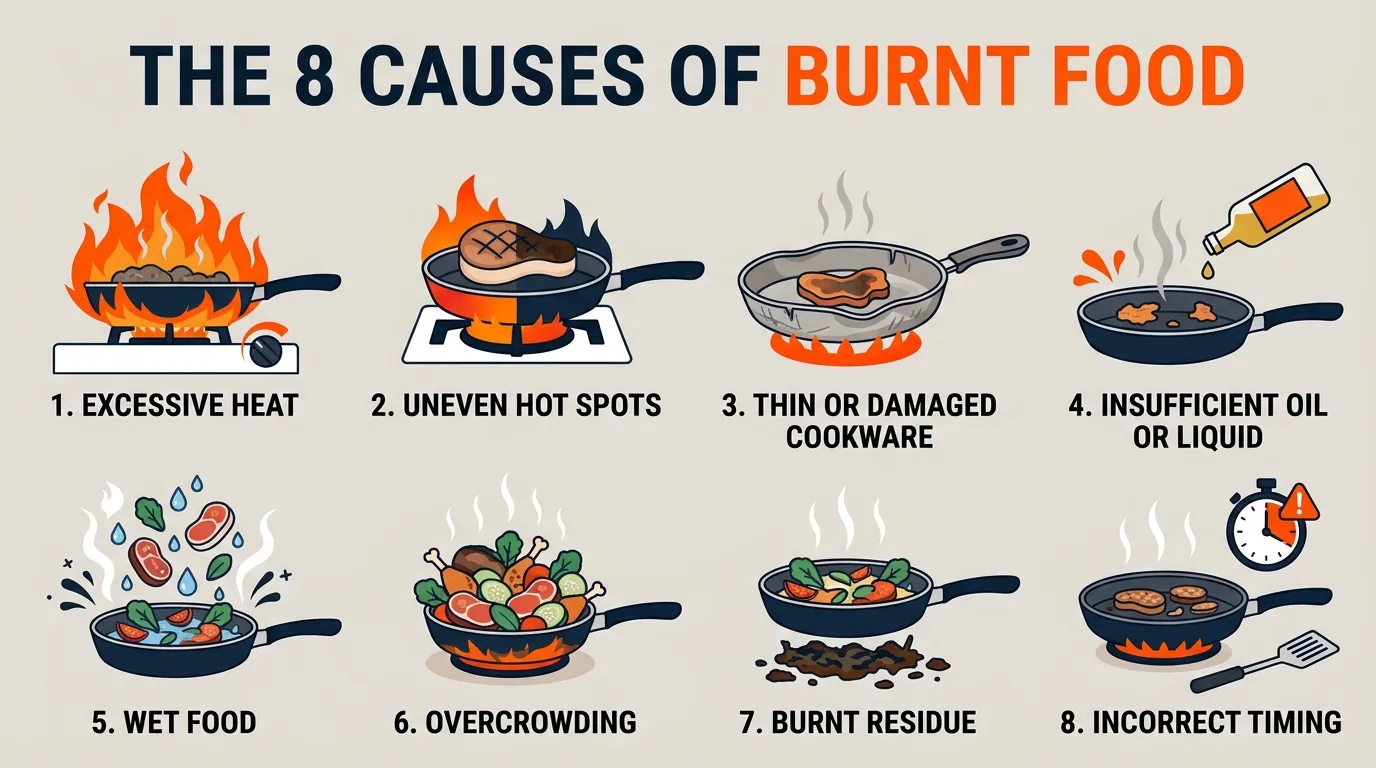
1. The heat is too high
this is the most common cause. Many recipes begin with medium-high heat, but stovetops vary. “Medium” on one U.S. range may be much hotter than medium on another.
High heat is useful for a short sear or for boiling water. It is often too strong for:
- Eggs
- Pancakes
- Fish
- Rice
- Cream sauces
- Garlic
- Breaded food
- Thick cuts that need time to cook through
Lower the heat if the food darkens before it cooks inside. A well-heated pan should usually produce a steady sizzle, not harsh smoke.
2. The pan has hot spots
A hot spot is an area that becomes much hotter than the rest of the cooking surface. Hot spots are common with thin pans, small burners, warped pans, and some electric or induction setups.
A hot spot can burn one side of a pancake while the other side stays pale. It can also burn a steak in one area while leaving another area undercooked.
To test for uneven heating, warm an empty pan briefly over low or medium heat. Add a thin film of water only if the pan manufacturer allows it. Watch how the water moves and evaporates. Do not leave an empty nonstick pan over heat, and never use this test as a reason to overheat cookware.
A thicker, flat pan often spreads heat more evenly. Cast iron holds heat well but may heat slowly. Stainless steel can cook well but needs proper preheating and enough fat. Aluminum often heats quickly and may develop hot spots if the pan is very thin.
3. The pan is too thin or damaged
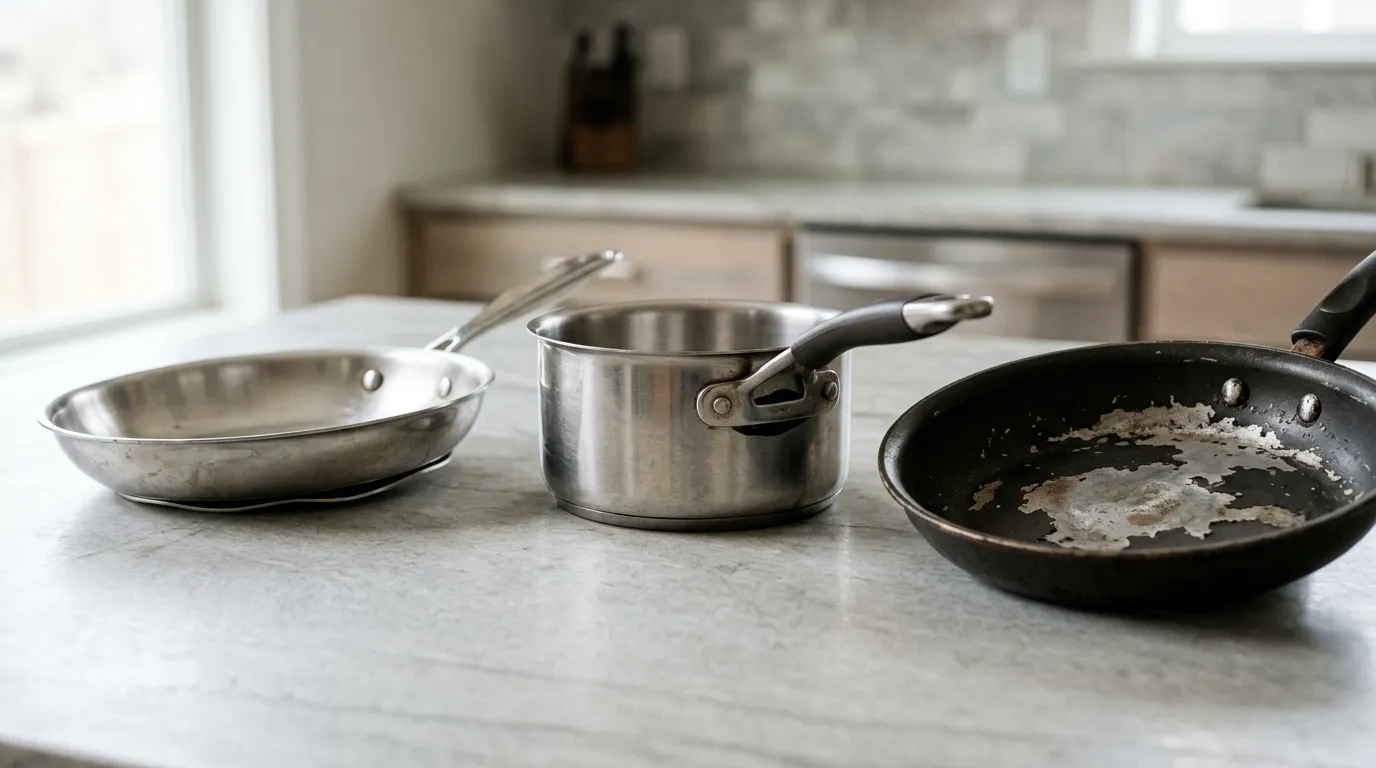
Thin pans respond quickly to burner changes. That can be useful, but they also lose heat control and may develop very hot areas.
A warped pan may not sit flat on an electric or induction surface. Only part of the base may touch the cooktop. That can create uneven heating and poor contact.
Replace or stop using a pan if you see:
- A base that rocks on a flat surface
- A badly bulging center
- Cracks
- Loose handles
- A peeling or flaking coating
- Deep scratches in a coated cooking surface
For cookware safety, follow the care guidance from the pan maker. The U.S. Food and Drug Administration provides general food safety guidance, but it does not approve every pan for every cooking method.
4. There is too little oil or liquid
Oil helps food make even contact with the pan. It also transfers heat and can reduce sticking. It cannot make an unsafe cooking temperature safe, but too little oil can cause dry patches and rapid scorching.
Add enough oil to lightly coat the cooking surface when the recipe calls for it. For a sauce, use the amount of stock, water, wine, tomato, or other liquid needed to keep the bottom from drying too soon.
Do not pour water into very hot oil. It can splatter and cause burns. Move the pan off the heat first, then add liquid slowly if the recipe requires it.
5. The food is wet on the outside
Wet food may stick at first. When its surface water evaporates, the pan can become dry and very hot beneath it. This often happens with vegetables, meat, and frozen food.
Pat food dry when appropriate. Remove excess marinade before searing. Do not crowd wet food into a pan and expect it to brown well.
6. The pan is overcrowded
Crowding traps steam. Food then releases water faster than it can evaporate. The pan may cool at first, but once the liquid disappears, food touching the bottom can burn.
Use a larger pan or cook in batches. Leave space between pieces. This matters most for:
- Mushrooms
- Potatoes
- Chicken pieces
- Ground meat
- Frozen vegetables
- Breaded foods
7. Burnt residue is still in the pan
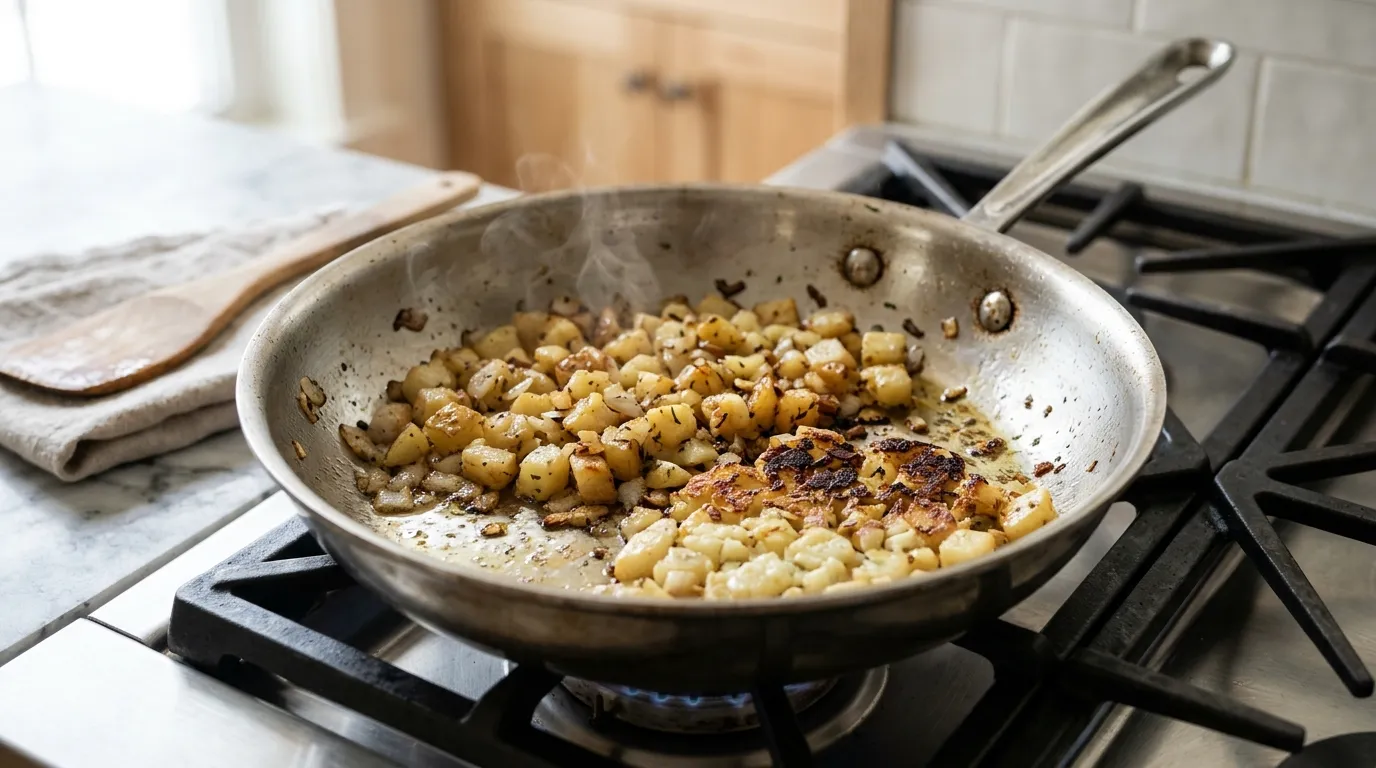
Old oil, flour, sugar, and food particles can burn under a new meal. A pan may look clean but still have a thin brown film.
Clean the pan fully between uses. For stainless steel or cast iron, use the care method recommended for that material. Do not use harsh tools or abrasive products on a coated pan unless the manufacturer says they are safe.
8. The food is not moved or turned at the right time
Food may stick at first and release later. Pulling it away too soon can tear the surface. Waiting too long can burn it.
Use visual signs:
- The underside is golden, not dark brown.
- The edges look set.
- The food releases with a gentle lift.
- Smoke is absent or very light.
- The smell is savory, not sharp or bitter.
For delicate food, use a thin, flexible spatula. For sauces and grains, stir or scrape as the recipe requires.
Pan Material Matters
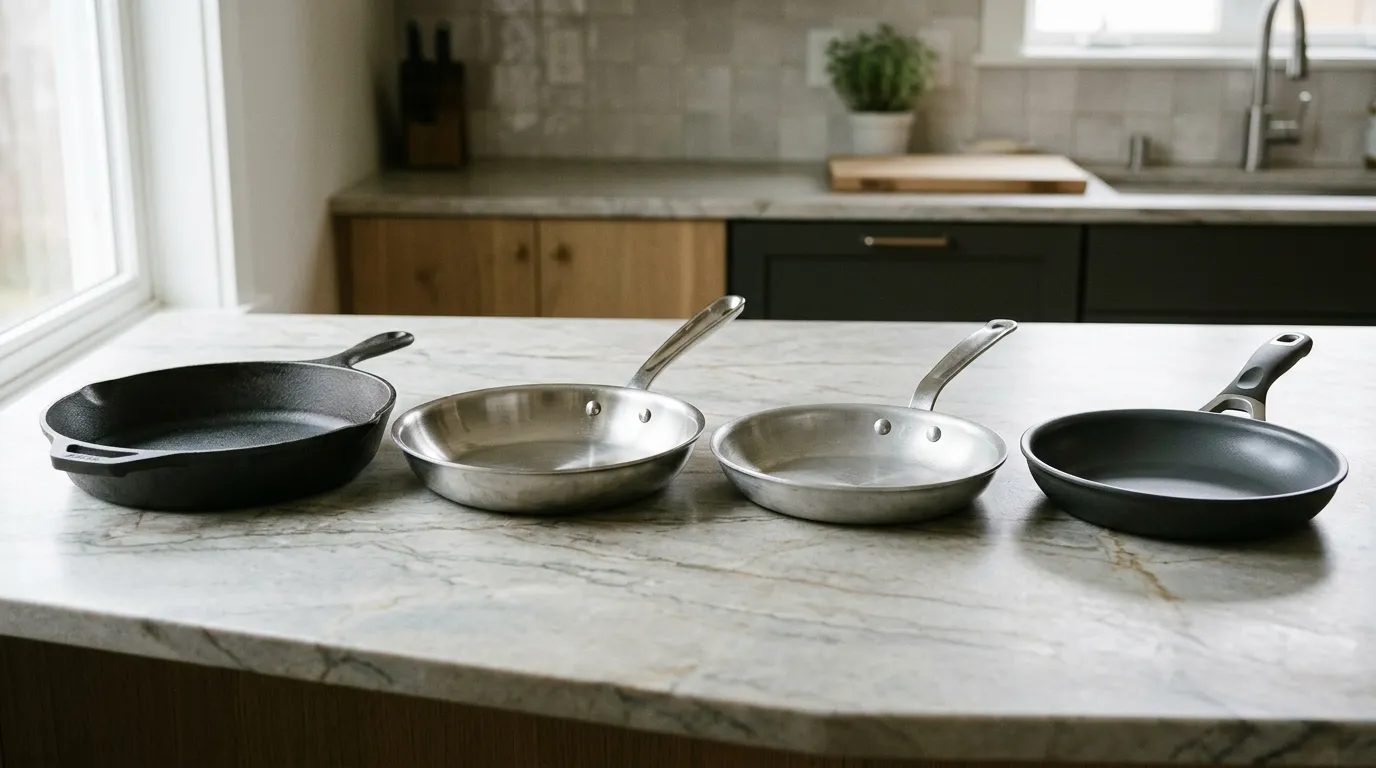
The pan material changes how quickly it heats, how long it holds heat, and how much control you have.
| Pan type | Main heat trait | Common burning issue | Helpful adjustment |
|---|---|---|---|
| Thin aluminum | Heats fast | Hot spots and quick overheating | Use lower heat and watch closely |
| Thick aluminum | Heats fairly fast and spreads heat better | Can still scorch sugary food | Reduce heat when sauce thickens |
| Stainless steel | Responds more slowly than thin aluminum | Food may stick or scorch without enough fat | Preheat gently, then add oil and food |
| Cast iron | Holds heat for a long time | Food may burn after the burner is lowered | Lower heat sooner and use residual heat |
| Enameled cast iron | Holds heat well | Sugary sauces can scorch on the bottom | Use low to medium heat and stir |
| Nonstick | Needs less fat and moderate heat | Coating can degrade under high heat | Avoid high heat and empty-pan heating |
| Copper-lined cookware | Changes temperature quickly | Requires correct heat control and care | Follow the maker’s instructions |
These are general patterns, not rules for every model. Construction, thickness, cooking surface, and burner size all matter.
Gas ranges
A gas flame should stay under the base of the pan. Flames climbing the sides waste energy and can heat the handle. A very small pan on a large burner may overheat quickly.
Electric coil and smooth-top ranges
Electric burners often stay hot after you lower the dial. Move the pan to a cool burner when you need a quick temperature drop. A flat pan base gives better contact on a smooth-top range.
Induction cooktops
Induction heats compatible cookware through a magnetic field. It can heat the pan very quickly and may create strong heat in a focused area. Use the lowest setting that achieves the result and check that the pan base is flat and induction-compatible.
How to Stop a Pan From Burning Food
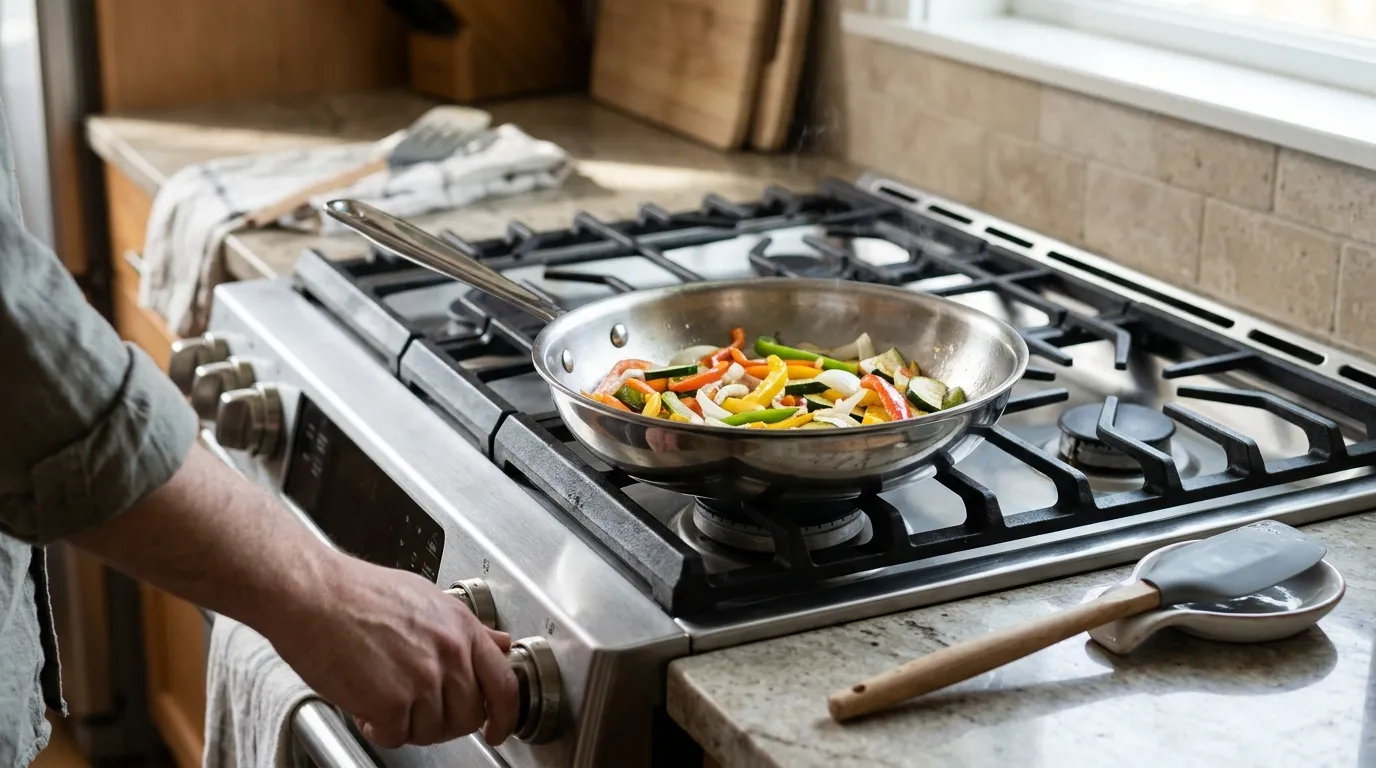
Use this troubleshooting order. It starts with the safest and most useful checks.
Step 1: Lower the heat
If food is smoking, browning too fast, or turning bitter, reduce the heat at once. For severe smoking, turn off the burner and move the pan to a cool burner if it is safe to do so.
Never leave a smoking pan unattended.
Step 2: Check the pan size and burner size
The burner should suit the pan base. A small pan over a large burner can heat too fast. A large pan over a small burner can create uneven cooking.
Step 3: Clean the cooking surface
Remove burnt oil and stuck food before cooking again. Residue acts like a layer of charcoal under fresh food.
Step 4: Adjust the fat or liquid
Use enough oil for the cooking method. Add cooking liquid before the bottom dries out. This is especially important for sauces, rice, beans, and braised dishes.
Step 5: Cook in smaller batches
If food sits in a pile, divide it. A crowded pan steams food first and can burn it later.
Step 6: Change the timing
Add fragile ingredients later. Garlic, herbs, spices, and dairy often need less time than onions, meat, or root vegetables.
Step 7: Use the right pan
Choose a heavy, flat pan for steady heat. Choose nonstick cookware for delicate foods when the coating is in good condition. Choose stainless steel or cast iron when you want strong browning and can control the heat.
Step 8: Use a thermometer when needed
A food thermometer helps you avoid cooking by color alone. The USDA advises using a food thermometer to check meat, poultry, seafood, and egg dishes. Safe internal temperatures vary by food, so use the USDA’s current chart rather than guessing.
What to Do When Food Starts Burning
Act early. A small amount of browning may be useful, but black smoke and a bitter smell signal trouble.
- Turn down or turn off the heat.
- Move the pan away from the hot burner if it is safe.
- Do not scrape burnt bits into a delicate sauce.
- Transfer usable food to a clean pan or bowl.
- Taste the food only after it cools enough to do so safely.
- Clean the original pan before using it again.
If oil catches fire, do not use water. Turn off the heat if you can do so safely, slide a lid over the pan, and leave it covered until cool. Never carry a burning pan. If the fire grows or you cannot control it, leave the area and call 911.
How to Prevent Burnt Food in Specific Dishes
Eggs
Use low to medium-low heat. Eggs keep cooking after you remove them from the burner, so take them off while they are still slightly soft.
Pancakes
Use medium heat and let the pan preheat evenly. If the first pancake burns while the center stays wet, lower the heat. Wipe away excess oil and check for a hot spot.
Chicken
Dry the surface before searing. Use moderate heat so the outside does not burn before the center cooks. A thermometer is more reliable than color.
Fish
Use enough fat to prevent dry contact. Let the fish release before turning it. Thin fillets need less heat and time than thick pieces.
Rice
Rice often burns when the liquid runs out before the grains finish. Use the recipe’s liquid ratio, keep the lid on when required, and use low heat after the mixture reaches a simmer.
Tomato, cream, and cheese sauces
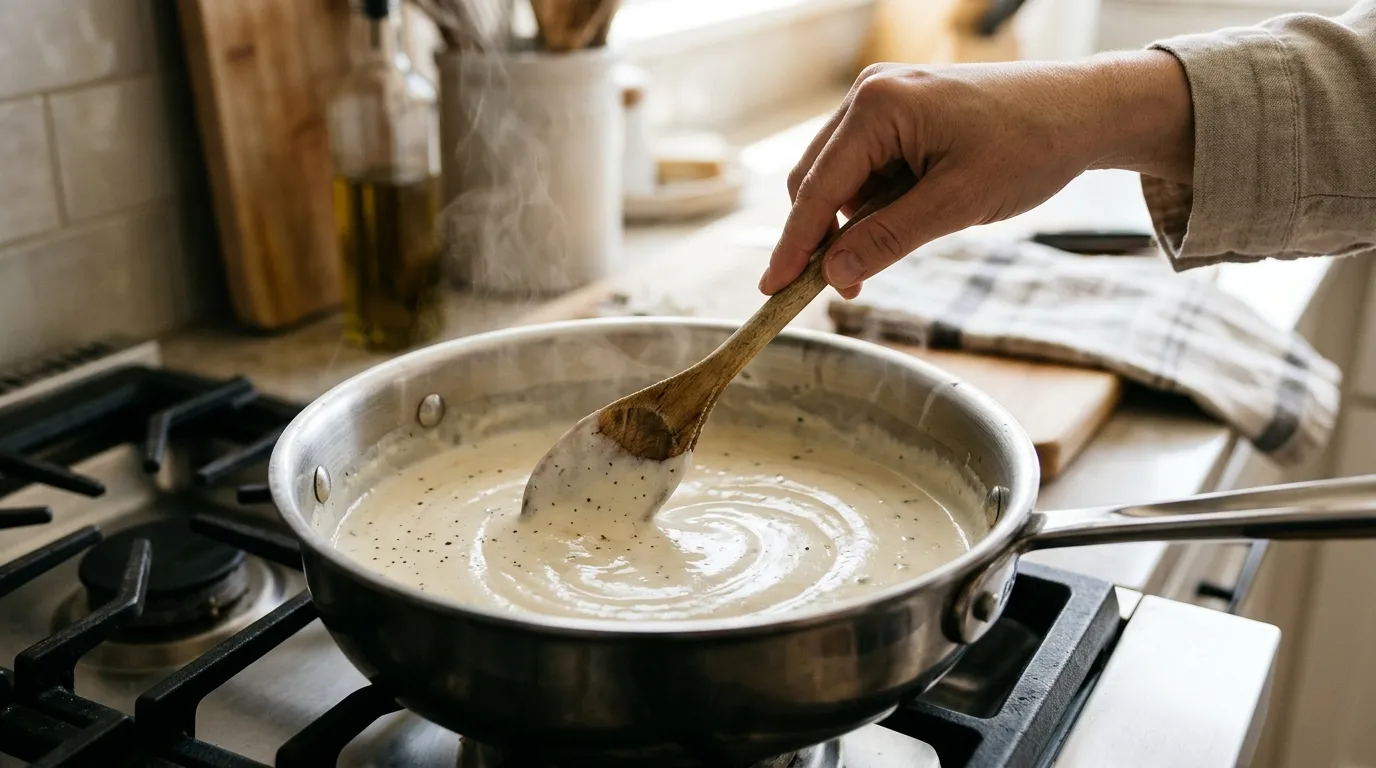
Use low heat. Stir often enough to prevent a bottom layer from forming. A heavy pan can help, but it cannot replace temperature control.
Garlic and spices
Add them later than onions or firm vegetables when possible. Garlic and ground spices can go from fragrant to burnt in seconds.
Common Mistakes That Make Burning Worse
Turning the heat to high to cook faster
High heat often burns the outside while leaving the inside raw. Moderate heat may take a little longer but gives better control.
Preheating a nonstick pan while empty
Many manufacturers advise against high heat and prolonged empty heating for nonstick cookware. Follow the care guide for your specific pan.
Using cooking spray on a very hot pan
Some sprays can leave a sticky residue when overheated. Use the product as directed, and do not treat spray as a replacement for safe heat control.
Adding cold food to a very hot pan
Cold food can cause sticking and uneven cooking. Let suitable ingredients lose some chill when the recipe allows it. Do not leave meat or other perishable foods at room temperature for long periods.
Ignoring the smell
A sharp, acrid smell often appears before food turns black. Treat it as an early warning. Lower the heat and check the bottom.
Scraping burnt bits into the meal
Fond can add flavor when it is brown and controlled. Black, bitter residue usually harms the dish. Move the good food to a clean pan instead.
Frequently Asked Questions
Why does my pan burn food even on low heat?
The pan may hold heat for a long time, the burner may run hotter than expected, or the pan may have a hot spot. A heavy pan can stay hot after you lower the dial. Move it to a cool burner and reduce the heat earlier next time.
Why does food burn in a stainless steel pan?
Food may burn when the pan is overheated, the surface is too dry, or the food is moved before it has formed a browned crust. Preheat gently, add enough oil, and use moderate heat.
Why does my nonstick pan burn food?
A nonstick pan can still burn food if the heat is too high, the food is sugary, or the pan has burnt residue. Nonstick cookware is not meant to make high heat risk-free. Use low to medium heat and replace the pan if the coating is peeling or flaking.
Why does food burn in the middle of the pan?
The center may sit over the strongest part of the burner, especially with a small burner or a pan with a raised or warped base. The pan may also be designed to concentrate heat in the center. Lower the setting and check that the base is flat.
Can a dirty pan cause food to burn?
Yes. Burnt oil and stuck food create dark, rough areas that heat faster than clean metal. They can also make fresh food stick, which increases the chance of scorching.
Should I use more oil if my food burns?
Not always. More oil may help with sticking, but it will not correct excessive heat, a hot spot, or a sugary sauce. Fix the heat and pan setup first, then use the amount of fat the recipe needs.
Conclusion
A pan burns food when heat reaches the cooking surface faster than the food can handle. The usual causes are high heat, hot spots, dry ingredients, crowding, residue, and poor timing.
Start by lowering the heat and checking the pan base. Then clean the surface, use enough oil or liquid, cook in smaller batches, and choose a pan that matches the food. If the pan is warped, cracked, or has damaged nonstick coating, stop using it and follow the manufacturer’s replacement guidance.
The next time food starts to darken too fast, do not simply stir harder. Lower the heat, move the pan, and find out which part of the cooking setup is creating the excess heat.