A monthly kitchen deep clean stops grime, protects health, and saves money.
If you want a kitchen that looks great, cooks better, and stays safe, this monthly kitchen deep clean guide is for you. I’ve led dozens of deep cleans in busy homes and rentals, and I’ve learned what works, what wastes time, and what damages surfaces. Follow this monthly kitchen deep clean guide to see real results in a single session, without stress or guesswork.
Why a Monthly Deep Clean Matters
A monthly routine keeps grease from hardening and stains from setting. It also lowers the risk of pests and foodborne illness. You save on repairs because appliances run cooler and last longer.
Food safety guidance is clear. Keep your fridge at 37–40°F and your freezer at 0°F. Clean and sanitize high-touch points. Follow label dwell times for disinfectants. Small habits add up, but a monthly reset is the force multiplier.
You also get mental space. When the kitchen is reset, meal prep is faster and less messy. That lowers the urge to order takeout and helps your budget.
What to Gather Before You Start
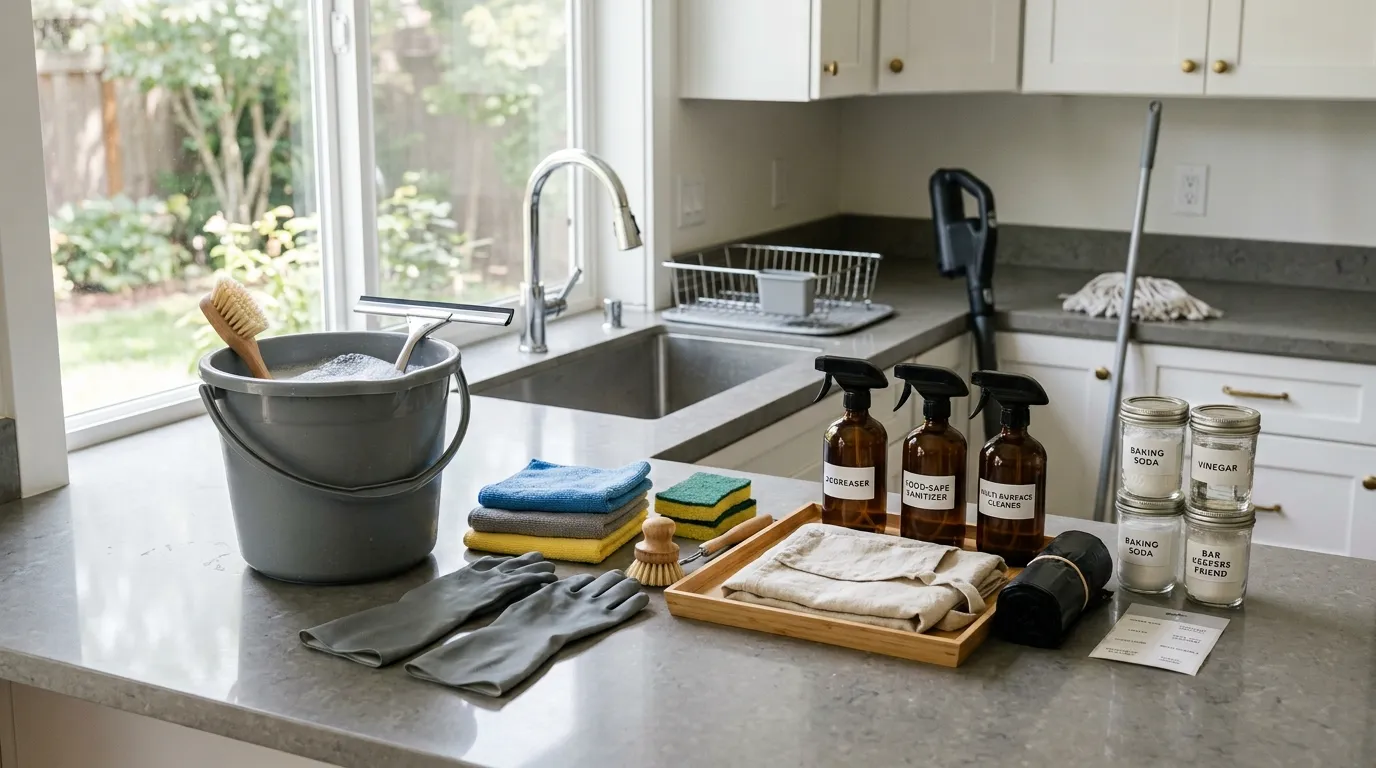
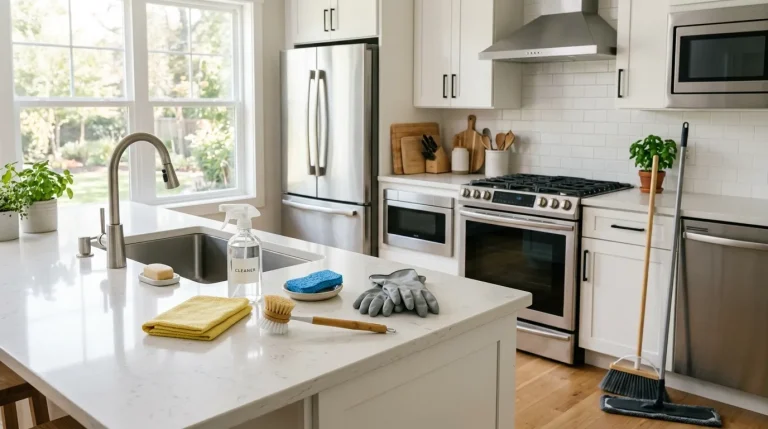
Use safe, simple tools. Test any product on a hidden spot first. Open windows and wear gloves.
Essentials
- Microfiber cloths, scrub sponges, and a soft detail brush
- Degreaser for hood, stove, and cabinets
- Dish soap and warm water in a bucket
- Baking soda for gentle abrasion
- White vinegar for glass and stainless steel exteriors, but never on stone
- Oxygen bleach or hydrogen peroxide for stains and grout
- Food-safe sanitizer for cutting boards and food-contact areas
- EPA-registered disinfectant for handles, knobs, and trash bins
- Glass cleaner or diluted alcohol for streak-free shine
- Vacuum with crevice tool, mop, and a small step stool
- Garbage bags, bin liners, labels, and a permanent marker
Pro setup
- Put on gloves and an apron
- Play a timer to keep pace
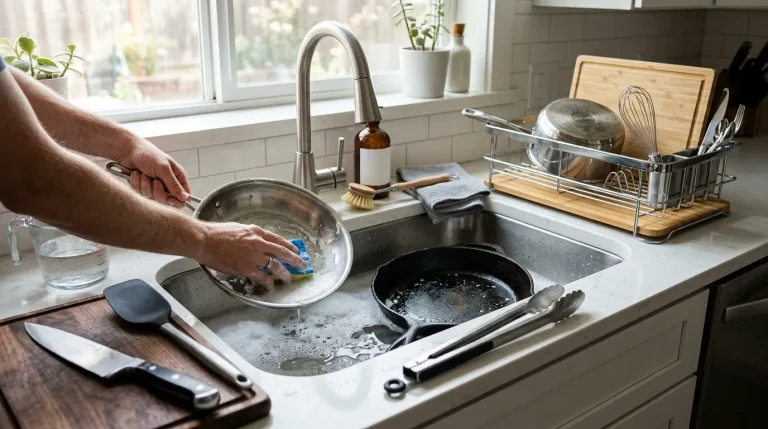
- Start a sink of hot soapy water for soaking parts
The Monthly Kitchen Deep Clean Guide: Step-by-Step
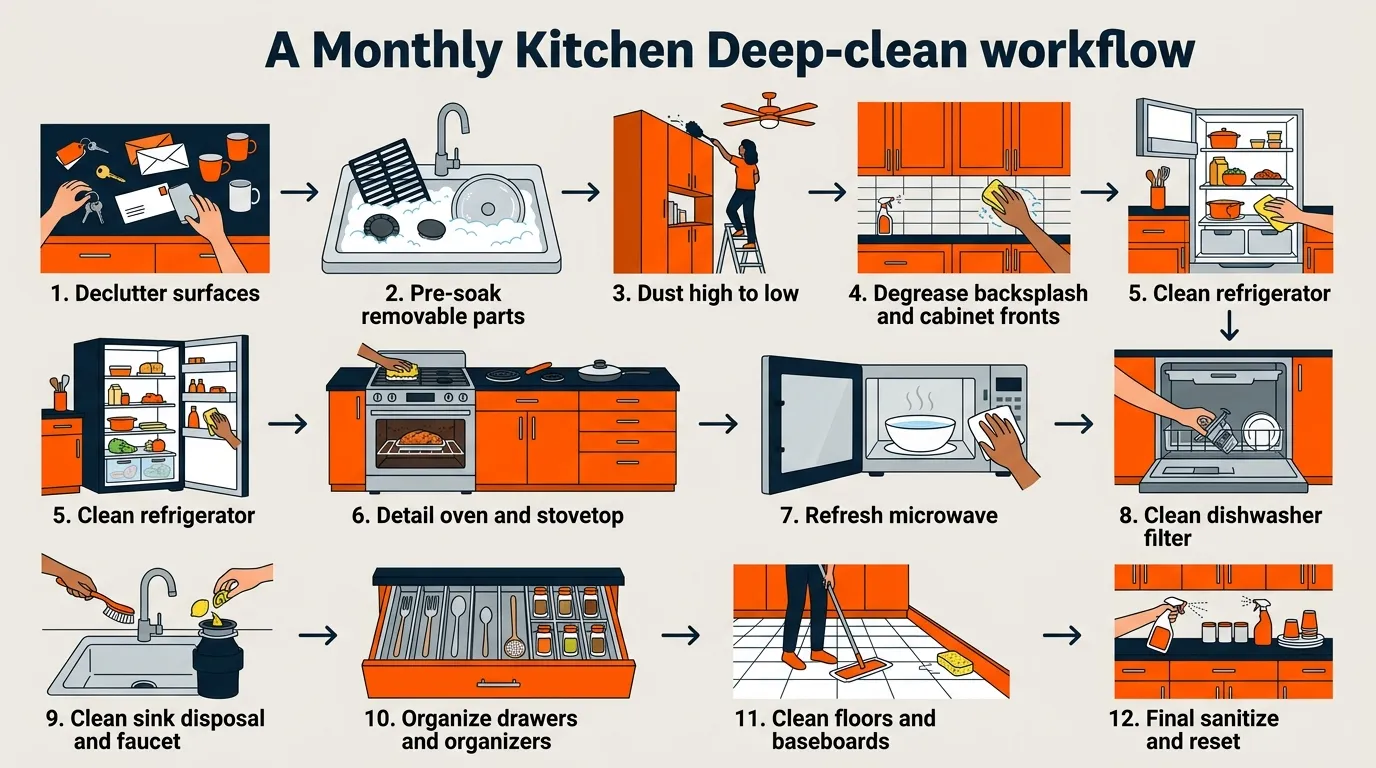
This monthly kitchen deep clean guide follows a top-to-bottom flow. It reduces backtracking and cuts total time.
- Declutter surfaces
- Clear counters, stove, and sink. Move small appliances. Toss obvious trash.
- Pre-soak removable parts
- Soak stove grates, hood filters, fridge shelves, and bins in hot soapy water.
- Dust high to low
- Ceiling corners, light fixtures, and tops of cabinets. Use a dry microfiber.
- Degrease backsplash and cabinet fronts
- Spray, let dwell for 2–3 minutes, then wipe. Repeat on heavy spots.
- Clean the refrigerator
- Empty by shelf. Toss expired items. Wash shelves and bins. Wipe gaskets.
- Detail the oven and stovetop
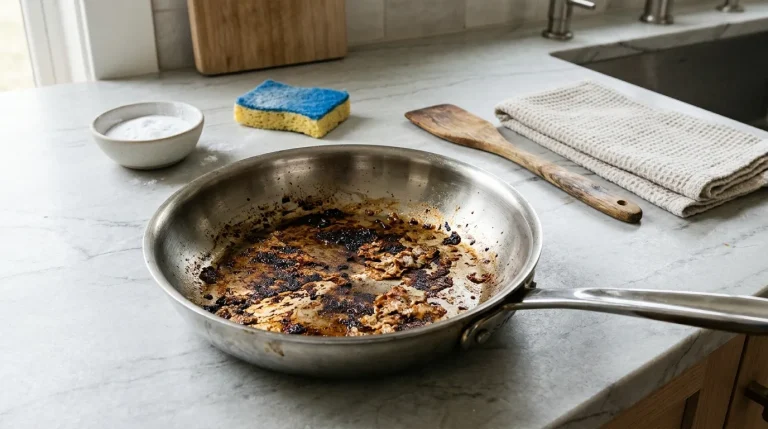
- Wipe loose crumbs. Use a paste of baking soda and a little water on baked-on spots. Rinse well. Clean knobs and control panel.
- Microwave refresh
- Heat a bowl of water with lemon slices for 3 minutes. Let steam sit for 2 minutes. Wipe clean.
- Dishwasher care
- Remove and rinse the filter. Wipe the door seal. Run a hot cycle with a cleaner if needed.
- Sink, disposal, and faucet
- Scrub with baking soda. Clean the aerator. Sanitize handles. Freshen the disposal with ice and salt.
- Drawers and organizers
– Empty, vacuum crumbs, wipe, and replace liners. Group like with like. - Floors and baseboards
- Vacuum edges and under appliances if safe to move. Mop with the right solution for your floor.
- Final sanitize and reset
- Sanitize handles, light switches, and the trash bin lid. Return items. Label leftovers with dates.
Tip
- Keep this monthly kitchen deep clean guide printed on your fridge. Check off each step as you go.
Deep Clean Appliances the Right Way
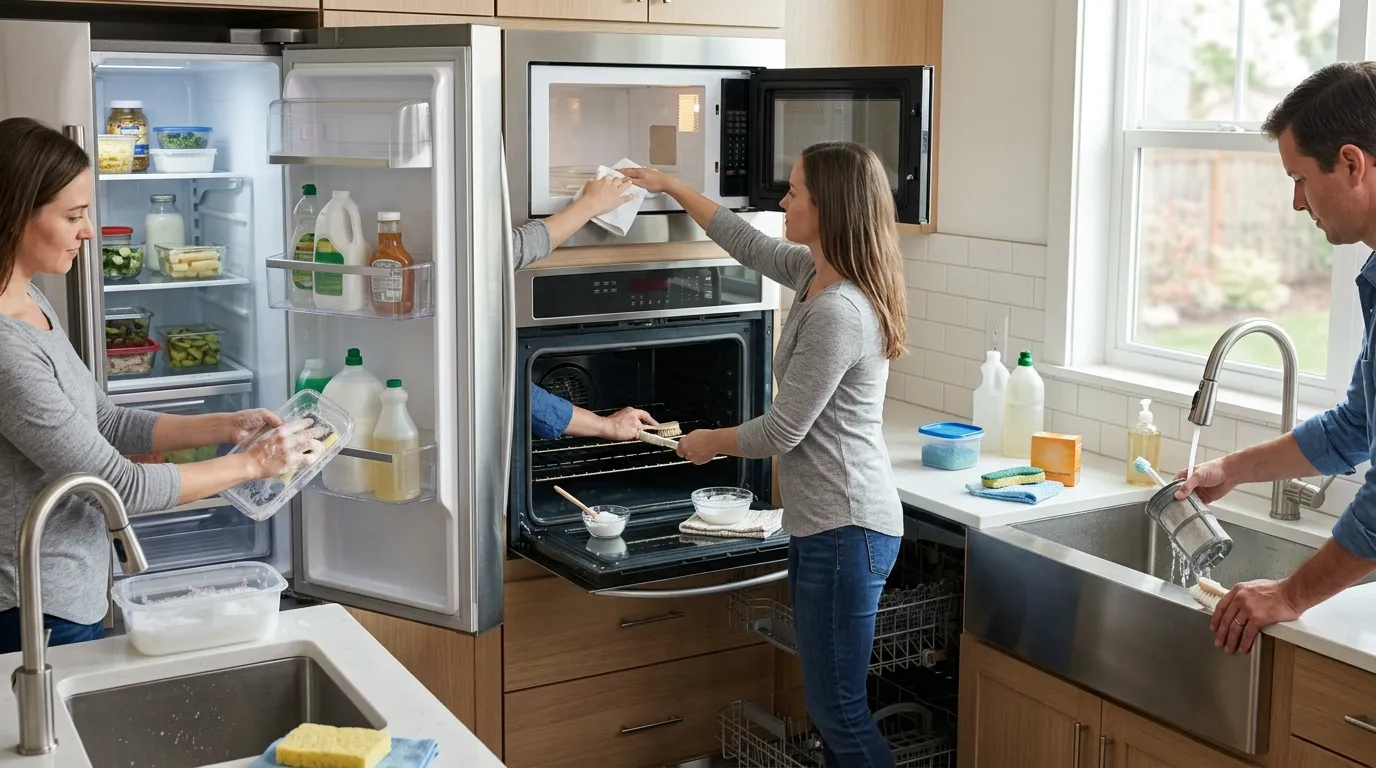
Appliances hold hidden grime. A few small moves protect them and you.
Refrigerator and Freezer
- Work fast. Keep food in a cooler if needed.
- Wash shelves in warm soapy water. Dry well before reinstalling.
- Wipe gaskets with mild soap. Avoid petroleum jelly, which can degrade rubber.
- Vacuum coils if exposed to boost efficiency.
Oven and Range
- Avoid self-clean cycles if your oven is old or you smell gas. Heat stress can blow fuses.
- Use a baking soda paste on the door and racks. Rinse and dry.
- For glass doors, use a non-scratch pad and a glass-safe cleaner.
Stovetop and Hood
- Degrease grates and drip pans after soaking. Rinse and dry fully before use.
- For hood filters, soak in hot water with a degreasing dish soap. Rinse until water runs clear.
- Wipe the fan housing and light covers.
Microwave
- Steam-clean with lemon water. Wipe the ceiling and turntable.
- Clean the door seal and vents with a detail brush.
Dishwasher
- Remove and clean the filter monthly. This prevents smells and poor wash results.
- Wipe spray arms and the door seal. Run a cleaner on the hottest cycle.
Small Appliances
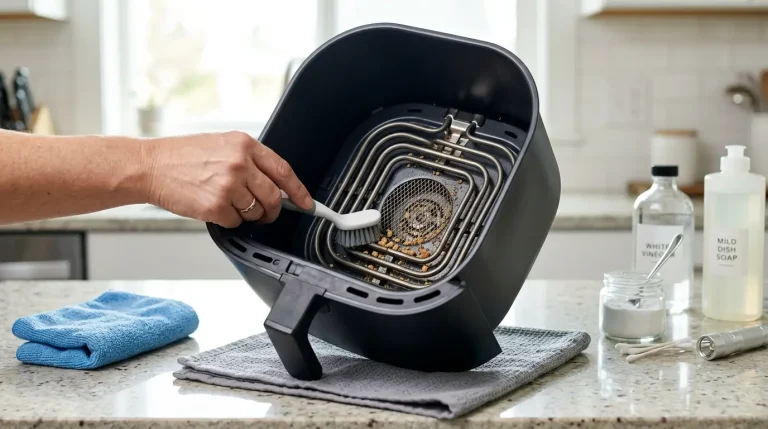
- Unplug first. Wipe coffee maker exteriors and descale if needed.
- Empty crumb trays in toasters. Clean blender gaskets and lids.
Cabinets, Drawers, and Surfaces
Cabinets catch grease mist. Drawers trap crumbs. This is where order returns.
- Painted cabinets need mild soap and water. Dry at once to prevent swelling.
- Real wood likes a damp wipe and a dry follow-up. Avoid harsh degreasers.
- Laminate handles strong cleaners well, but still test first.
- Hardware shines with soapy water and a soft toothbrush. Dry to prevent spots.
- For quartz counters, use a pH-neutral cleaner. Do not use abrasive pads.
- For granite or marble, skip vinegar and citrus. Use a stone-safe cleaner only.
Organize to prevent clutter
- Use lazy susans in corners.
- Add shelf risers for plates.
- Add drawer dividers for tools.
- Label bins for snacks, baking, and spices.
Sink, Disposal, and Drains
The sink is a hot zone for germs. Clean, then sanitize.
- Sprinkle baking soda in the basin. Scrub and rinse.
- On stainless steel, follow the grain to avoid scratches.
- For white sinks, a paste of baking soda and hydrogen peroxide lifts stains.
- Clean the faucet aerator. Soak if clogged.
Disposal reset
- Drop in a cup of ice and a quarter cup of coarse salt. Run for 10 seconds with cold water.
- Wipe the splash guard underside. This part smells first.
- Use an enzyme cleaner monthly. Avoid bleach in the disposal to protect seals.
Drain care
- Pour a kettle of hot water weekly. Use an enzyme drain product if slow.
- If still slow, call a pro. Do not push harsh drain openers that can damage pipes.
Floors, Baseboards, and Trash Zone
Grease drifts down. Finish with the floor and bin for a true reset.
- Vacuum edges and under the stove if safe to move.
- Mop tile with warm water and a neutral cleaner. Spot-scrub grout with oxygen bleach.
- Mop hardwood with a wood-safe cleaner. Keep water light to protect finish.
- Disinfect the trash can, lid, and pedal. Dry and add a fresh liner.
- Place a baking soda sachet or charcoal deodorizer in the cabinet bin.
Safety, Sanitizing, and Eco Choices
Know the difference. Cleaning removes soil. Sanitizing lowers germs on food-contact areas. Disinfecting kills most germs on nonfood surfaces when you follow dwell times.
- Never mix bleach and ammonia. Vent the room when using any strong cleaner.
- Food-contact surfaces need a food-safe sanitizer. Wipe, then allow proper contact time.
- For knobs and switches, use an EPA-registered disinfectant. Let it sit per label.
- Alcohol above 70 percent works on small spots. Keep away from flames.
Eco and sensitive options
- Use fragrance-free products for allergy-prone homes.
- Microfiber lifts soil with less product.
- Steam can clean many sealed surfaces. Avoid on unsealed wood or soft plastics.
A 90-Minute Workflow You Can Repeat
This sprint plan keeps you moving. Set a timer and follow the blocks.
- Minutes 0–10: Declutter, start soaks, fill sink with soapy water.
- Minutes 10–25: Dust high areas, cabinet tops, and lights.
- Minutes 25–40: Degrease backsplash and cabinet fronts.
- Minutes 40–55: Fridge empty by shelf, wash bins, wipe gaskets.
- Minutes 55–70: Oven, stovetop, and microwave details.
- Minutes 70–80: Dishwasher filter, sink scrub, faucet and disposal.
- Minutes 80–88: Floors, baseboards, and trash can sanitize.
- Minutes 88–90: Final sanitize of handles and switches. Reset and label.
Use this monthly kitchen deep clean guide each month. You will get faster every round.
Mistakes to Avoid and Pro Tips
Real lessons from real homes help you skip pain points.
Mistakes to avoid
- Using vinegar or lemon on stone counters. It can etch.
- Mixing chemicals. This can make toxic gas.
- Scrubbing stainless steel across the grain. This can scratch.
- Ignoring hood filters and dishwasher filters. Smells and poor results will follow.
- Skipping dwell times. Germs can remain.
Pro tips I use
- Work top to bottom and left to right. No backtracking.
- Keep a detail brush in your pocket. Vents and gaskets need it.
- Wear a headlamp. You will see hidden grease lines.
- Line the bottom fridge shelf with a washable mat.
- Store a small caddy under the sink. Easy grab means you clean more often.
Use this monthly kitchen deep clean guide as your checklist. It keeps your focus clear and your results steady.
Keep It Clean Between Deep Cleans
A few tiny habits make the next deep clean easy.
Daily
- Wipe spills at once. Grease hardens fast.
- Load or rinse dishes. Run the dishwasher at night.
- Do a 3-minute counter reset before bed.
Weekly
- Empty crumb trays and toaster pans.
- Wipe the microwave and stove knobs.
- Toss old leftovers and wipe the fridge handle.
Monthly
- Follow this full monthly kitchen deep clean guide.
- Label condiments with open dates.
- Replace sponge and wash cloths on schedule.
Frequently Asked Questions of monthly kitchen deep clean guide
How long does a monthly kitchen deep clean take?
Most homes finish in 90 to 150 minutes. Bigger kitchens or heavy grease can take longer.
What order should I follow when deep cleaning the kitchen?
Go high to low and clean to dirty. Save floors and trash bins for last.
Which cleaner works best for tough kitchen grease?
A citrus or alkaline degreaser works well on cabinets and hoods. Let it dwell for 2–3 minutes before wiping.
Can I use vinegar on granite or marble?
Do not use vinegar or lemon on stone. Use a stone-safe, pH-neutral cleaner instead.
How often should I clean my oven?
Light cooks can deep clean every 2–3 months. Heavy cooks should spot clean weekly and deep clean monthly.
What is a safe way to sanitize cutting boards?
Wash with hot soapy water, rinse, then use a food-safe sanitizer. Allow proper contact time and air-dry upright.
How do I stop fridge odors between deep cleans?
Keep the temp at 37–40°F and store foods covered. Use a baking soda box or a charcoal deodorizer and replace it often.
Conclusion
A clean kitchen saves time, cuts stress, and keeps food safe. Follow this monthly kitchen deep clean guide once a month and you will see and feel the change. Your meals will taste better, and the space will welcome you back.
Pick a date, print the checklist, and set a 90-minute timer this week. If this helped, subscribe for more room-by-room guides, or share your own wins and hurdles in the comments.