Use a quality whetstone, keep a steady angle, and finish with light stropping for best results.
I have sharpened dozens of Shun knives in home kitchens and pro spaces. This guide gives clear steps and real tips on shun knife how to sharpen. You will learn tools, angles, gentle techniques, and how to keep the edge long. Read on to sharpen with care and confidence.
Understanding Shun knives and the blade steel
Shun knives are made to hold a very sharp edge. The brand often uses high-quality stainless steel alloys like VG-MAX. That steel takes a fine edge but can be thin and brittle at the tip. Knowing the steel helps when you learn shun knife how to sharpen.
A Shun blade needs a steady angle and light pressure to avoid chips. You should treat the edge like glass. Small mistakes can remove too much metal fast. Practice on an inexpensive knife first if you are new.
Tools and materials you need
A good setup makes shun knife how to sharpen safe and effective. Gather these items before you begin.
- Whetstones: 1000 grit for shaping, 3000–6000 grit for refining, 8000+ for polishing.
- Honing rod: ceramic is best for quick realignment.
- Leather strop and compound to polish and deburr.
- A towel, non-slip mat, and water for wet stones.
- Angle guide (optional) for practice and consistency.
Use clean water and a stable surface. A poor tool choice makes sharpening hard. Good tools save metal and time.

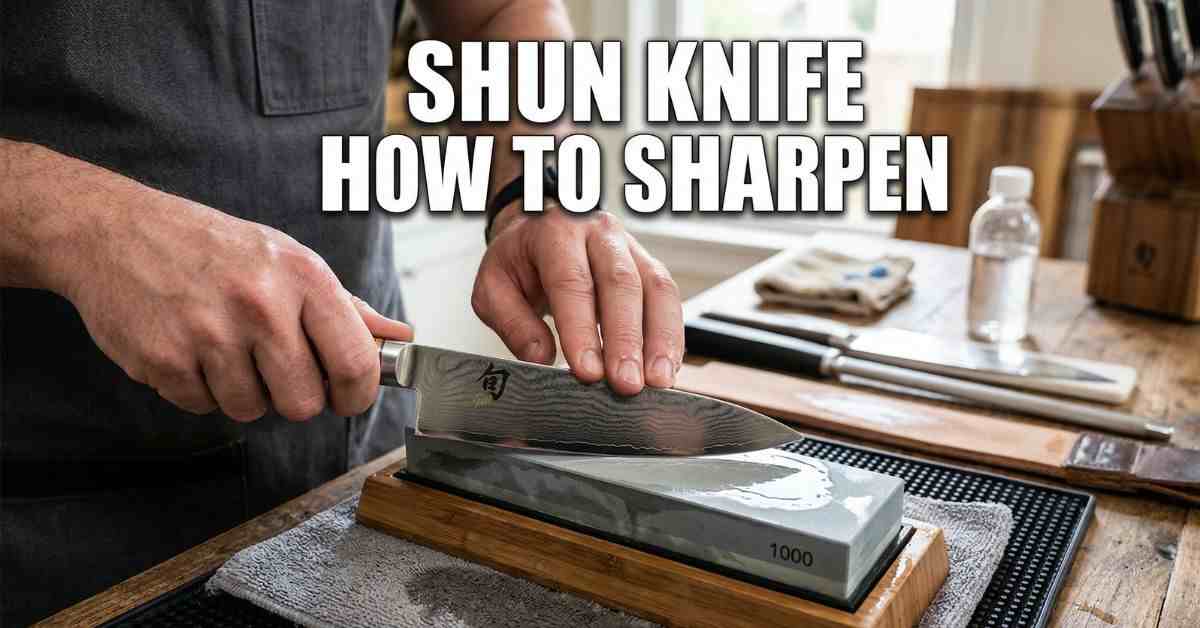
Step-by-step: How to sharpen a Shun knife
Follow these steps to learn shun knife how to sharpen. Keep your strokes steady and count them.
- Soak the whetstone if required. Most water stones need 5–10 minutes of soaking.
- Start with the coarse grit if edge is dull. Hold the blade at about 15 degrees to the stone. Shun knives often respond well to 12–16 degrees per side.
- Push the blade away from you across the stone. Maintain angle and light pressure. Count strokes on one side, then match on the other side.
- Move to medium grit to refine the edge. Repeat even strokes and keep angle steady.
- Finish on fine grit to polish the edge. Use fewer strokes and lighter pressure.
- Strop the blade on leather with light pulls away from the edge. Use a polishing compound for a razor finish.
- Clean and dry the knife fully before use or storage.
I learned to time strokes by feel. If you apply too much pressure, you will remove metal fast. If you rush, you will leave burrs. Take your time when practicing shun knife how to sharpen.
Honing, stropping, and maintenance
Honing is not sharpening, but it helps keep the edge aligned. Visit this section to sharpen less often and keep a good edge.
Hone with a ceramic rod at the same angle as your sharpened edge. Do 4–6 light passes per side before or after each use. Strop weekly or after heavy sharpening to remove the last burr and polish. Use gentle strokes and avoid rolling the edge on the leather.
Daily care matters for shun knife how to sharpen long term. Hand wash and dry each time. Store in a sheath or block to protect the edge.

When to sharpen and troubleshooting
Know when to sharpen and how to fix common problems. This keeps your knife safe and sharp.
Signs to sharpen:
- The blade no longer slices cleanly through tomatoes and paper.
- You feel dragging when slicing soft foods.
- Visual nicks or chips appear on the edge.
Troubleshooting:
- If you see chips, use a coarser grit and repair the nick slowly.
- If the edge rolls, use a fine grit to reprofile and strop.
- If you over-sharpen, reduce angle and use fewer strokes next time.
These tips will shorten your learning curve for shun knife how to sharpen.
Personal tips, mistakes to avoid, and lessons learned
I sharpened my first Shun with too much pressure. I quickly removed too much metal. I learned to use light strokes and small angles. Here are honest tips from that experience.
- Do not rush. Slow, steady strokes save the blade.
- Use a consistent angle. A guide helps at first.
- Match side strokes. Uneven sides will make the edge chatter.
- Keep stones flat. Flatten stones regularly to keep even contact.
- Practice on cheap knives before your favorite Shun.
These lessons cut down my sharpening time and saved blades. They will help you when learning shun knife how to sharpen.

PAA-style quick questions
What angle should I use for Shun knives?
Keep between 12 and 16 degrees per side. Many Shun blades need a low angle for best cutting.
How often should I sharpen a Shun knife?
Sharpen when you feel drag or see dull cuts. Hone often and sharpen a few times a year for normal home use.
Can I use an electric sharpener on a Shun?
You can, but be careful. High-speed or coarse machines can remove too much metal and hurt the blade.
Frequently Asked Questions of shun knife how to sharpen
What grit stone should I start with for a very dull Shun knife?
Begin with a 1000 grit stone to reshape a dull edge. Move to 3000–6000 grit to refine then strop to finish.
How do I hold the angle consistently?
Use an angle guide or practice holding the blade by eye. Keep wrist steady and use the same reference point on the spine.
Is stropping necessary after sharpening?
Stropping is helpful. It removes the last burr and polishes the edge for smoother cutting.
Can I sharpen a damascus Shun the same way?
Yes. Damascus-clad Shun knives have similar cores. Use light pressure and the same angles to protect the cladding.
How long does a Shun knife stay sharp between sharpenings?
With good care and regular honing, many Shun knives stay usable for weeks to months. Heavy use shortens this time.
Conclusion
Sharpening a Shun knife is a skill you can learn with simple tools and steady practice. Start with the right stones, keep a consistent angle, and use light pressure. Hone often and strop to keep the edge keen. Try the steps, learn from small mistakes, and protect your blade with routine care. Share your sharpening wins or questions below and subscribe for more hands-on knife tips.