Coffee makers overflow due to clogs, fine grind, overfilling, or misaligned parts.
If you want the real reasons why coffee maker overflows, you’re in the right place. I test brewers for a living and fix friends’ messy morning mishaps. In this guide, I’ll show you the science, the simple checks, and the pro tips that stop a spill before it starts.
How Your Coffee Maker Works (And Where Overflow Starts)
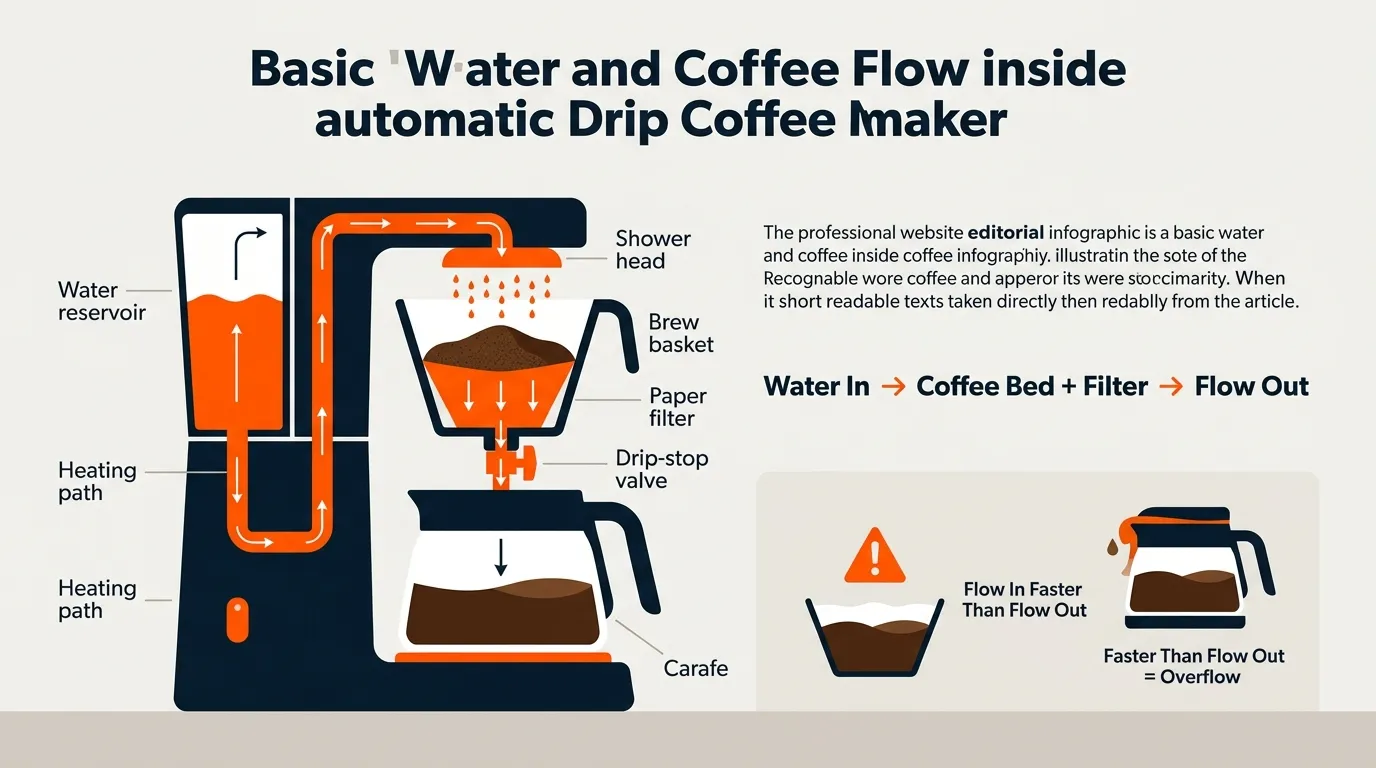
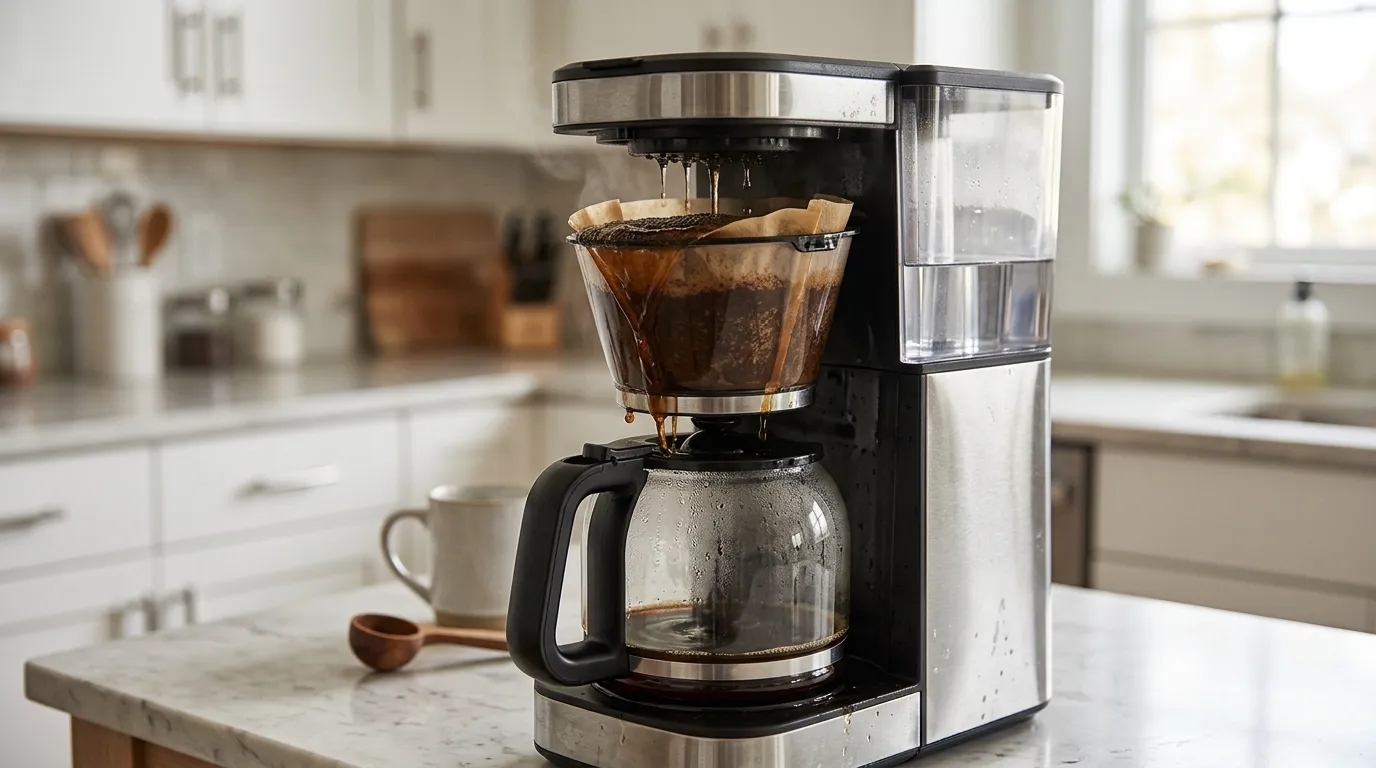
A drip coffee maker heats water, pumps it up, and showers it over the grounds. The water drips through the coffee bed and paper or mesh filter, then flows into the carafe. If flow in is faster than flow out, you get an overflow.
Two things set the pace: grind size and filter resistance. Fine grounds slow the drip. Clogged filters block it. Add a tight lid or a misaligned carafe, and pressure builds.
When people ask why coffee maker overflows, I check the basket first. A stuck drip-stop valve or a collapsed paper filter is often the hidden cause.
Top Reasons Your Coffee Maker Overflows
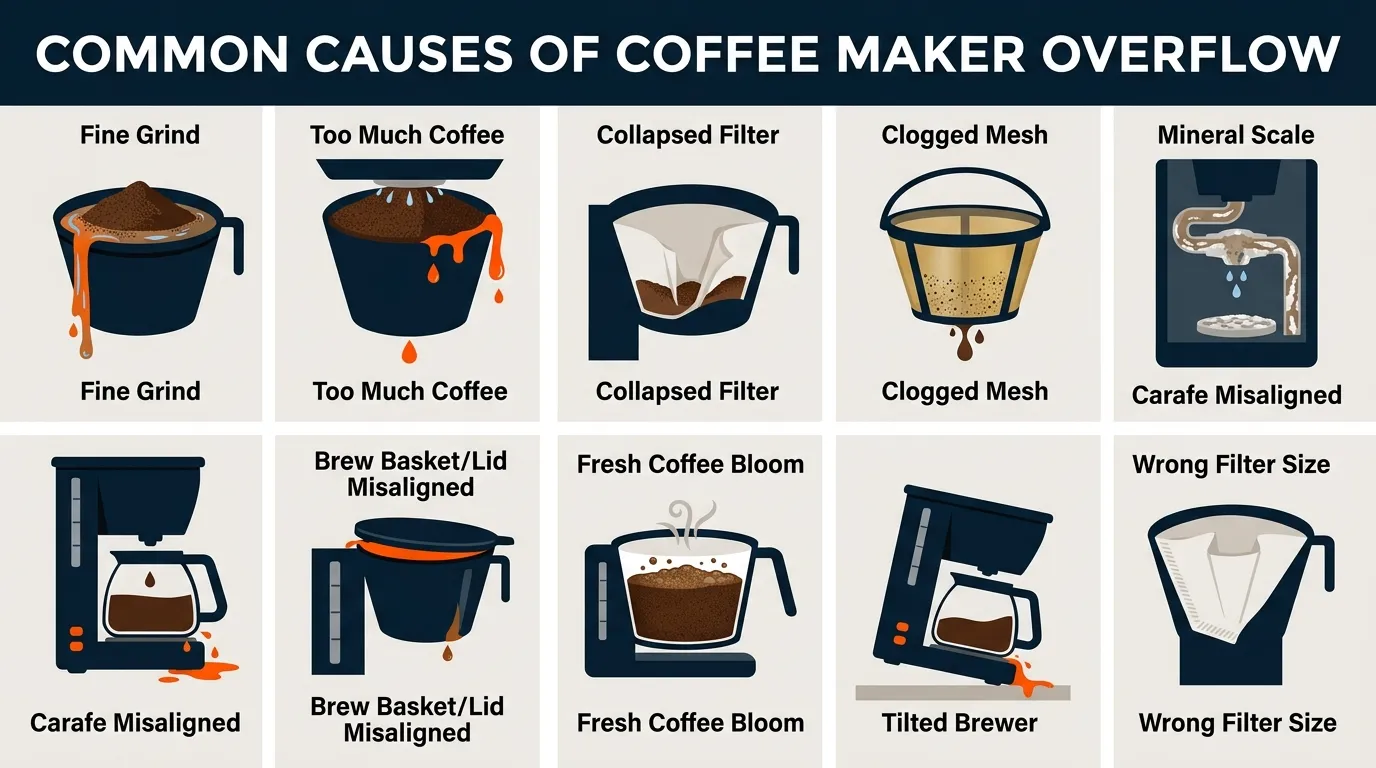
Many small things stack up. One minor issue can be fine, but two at once cause trouble. Here are the most common reasons I see and fix.
- Grind too fine slows drainage and backs up water in the basket.
- Too much coffee in the basket reduces headspace and blocks flow.
- Paper filter collapse folds the edge and sends water over the rim.
- Reusable mesh filter clog from coffee oils or fines.
- Mineral scale chokes the spray head or valve and changes flow.
- Carafe not seated leaves the drip-stop closed, so water pools.
- Lid or brew basket not latched right breaks the seal or blocks vents.
- Bloom gases from fresh coffee push liquid up and out.
- Brewing on a tilt makes water pool on one side and spill.
- Using the wrong size filter lifts the rim and causes bypass.
If you wonder why coffee maker overflows only on Mondays, think routine. A rushed scoop, a new bag of coffee, or a mis-seated carafe can be enough. I have made all these mistakes, often before my first sip.
Step-by-Step Fix: Stop an Overflow Right Now
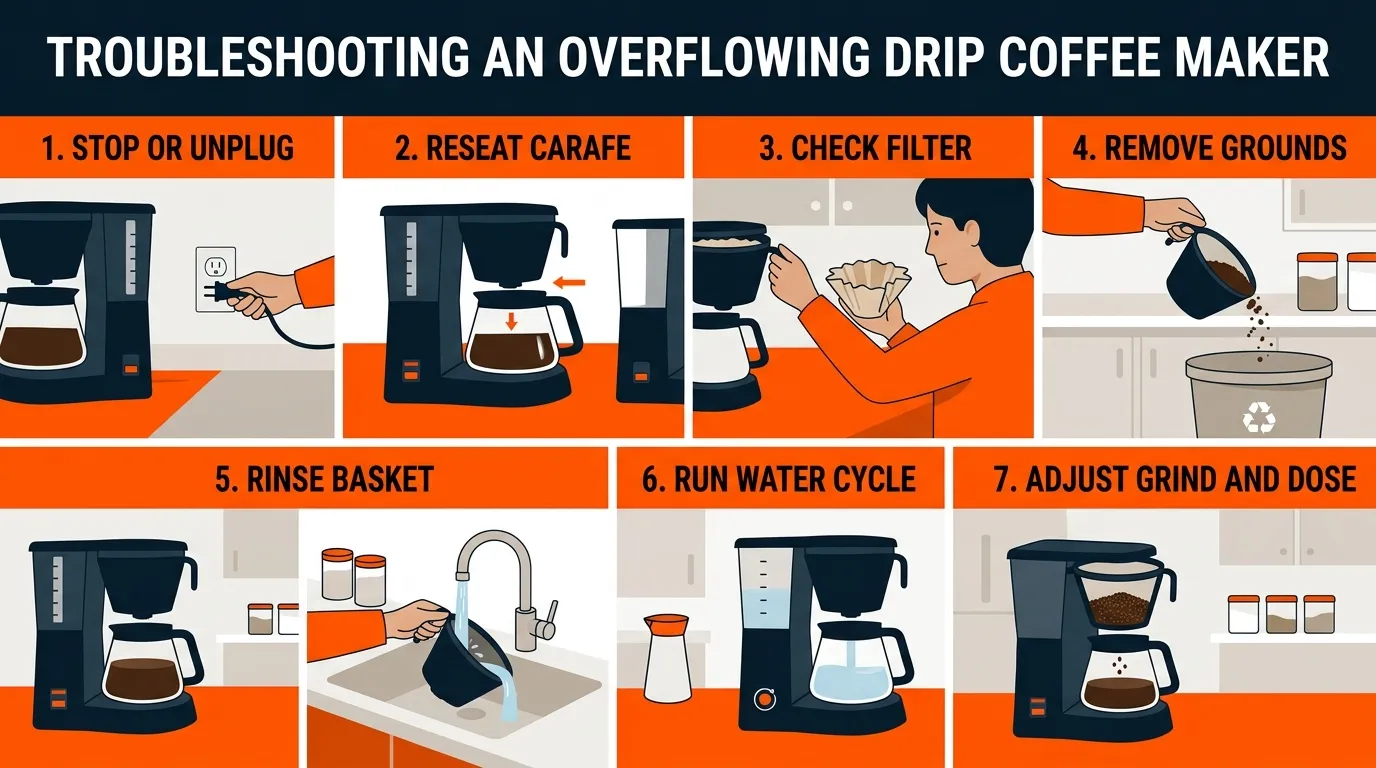
- Press stop or unplug the machine. Safety first. Mop up liquid so the base stays dry.
- Reseat the carafe fully under the basket. Listen for the valve click.
- Lift the basket lid. Check for a collapsed filter or coffee piled high.
- Remove the filter and grounds if safe. Rinse the basket and filter holder.
- Run a plain water cycle to clear blockages. Watch the flow rate.
- Brew again with a coarser grind and 10–20% less coffee. Note the change.
This quick flow check shows why coffee maker overflows under real use. You fix the cause, not just the mess.
Prevention Habits That Keep Your Counter Dry
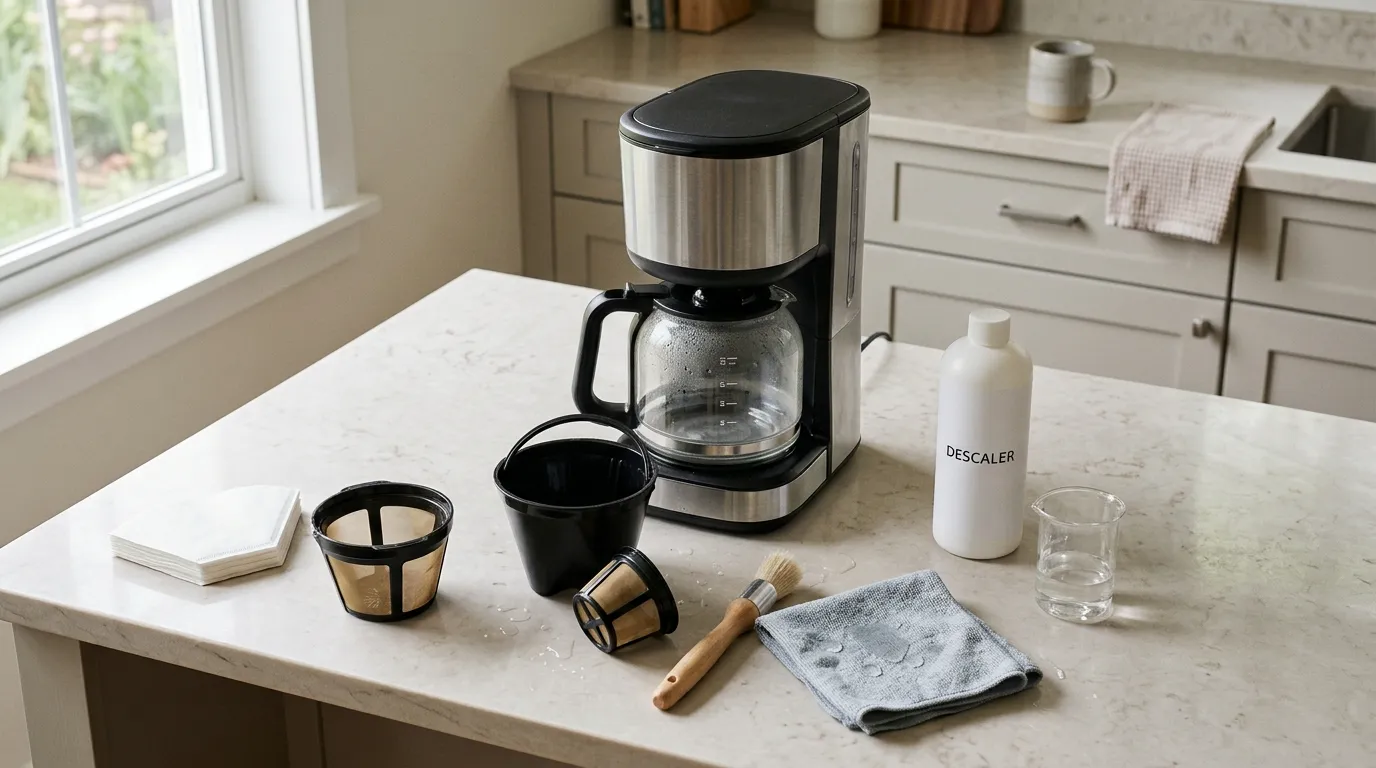
Small habits beat big cleanups. These simple steps prevent most spills I see.
Daily
- Seat the carafe flat and centered before hitting brew.
- Use the right filter size and press the rim into the basket.
- Shake the filter to level grounds. Do not overfill past the line.
Weekly
- Rinse reusable filters with hot water and a drop of dish soap.
- Wipe the spray head and basket holes with a soft brush.
Monthly
- Descale with a proper descaler as the manual suggests.
- Check the drip-stop valve for smooth spring action.
Do these and you will rarely ask why coffee maker overflows again
Special Cases: Single-Serve, Espresso, and Thermal Carafes
Single-Serve Pod Machines
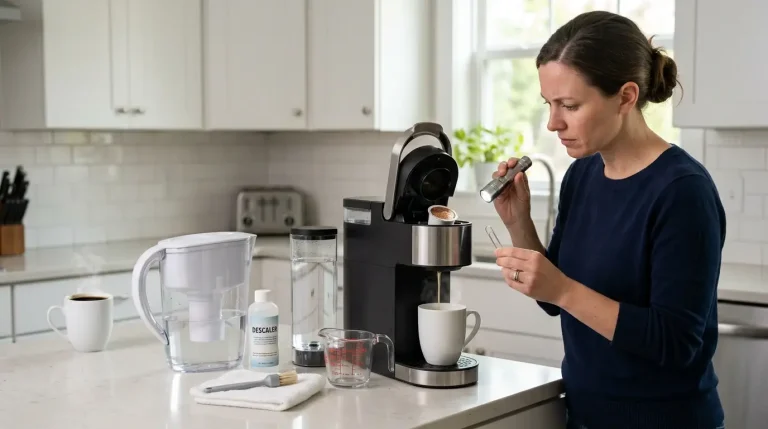
Pod needles clog with coffee oils and scale. This chokes flow and causes leaks or overflow into the pod holder. Run the cleaning tool, descale on schedule, and pierce pods cleanly. If you ask why coffee maker overflows on a pod brewer, start with the needles.
Espresso Machines
A too-fine grind, heavy tamp, or overdosed basket blocks flow. Water then finds the weakest path and can gush. Use a scale, adjust grind until a 1:2 ratio runs in 25–35 seconds, and keep the shower screen clean.
Thermal Carafes
Thermal lids can sit high and hold the drip-stop closed. Always twist the lid open to the brew mark. Warm the carafe first so coffee flows fast and stays hot.
Water, Grind, and Filter Science Made Simple
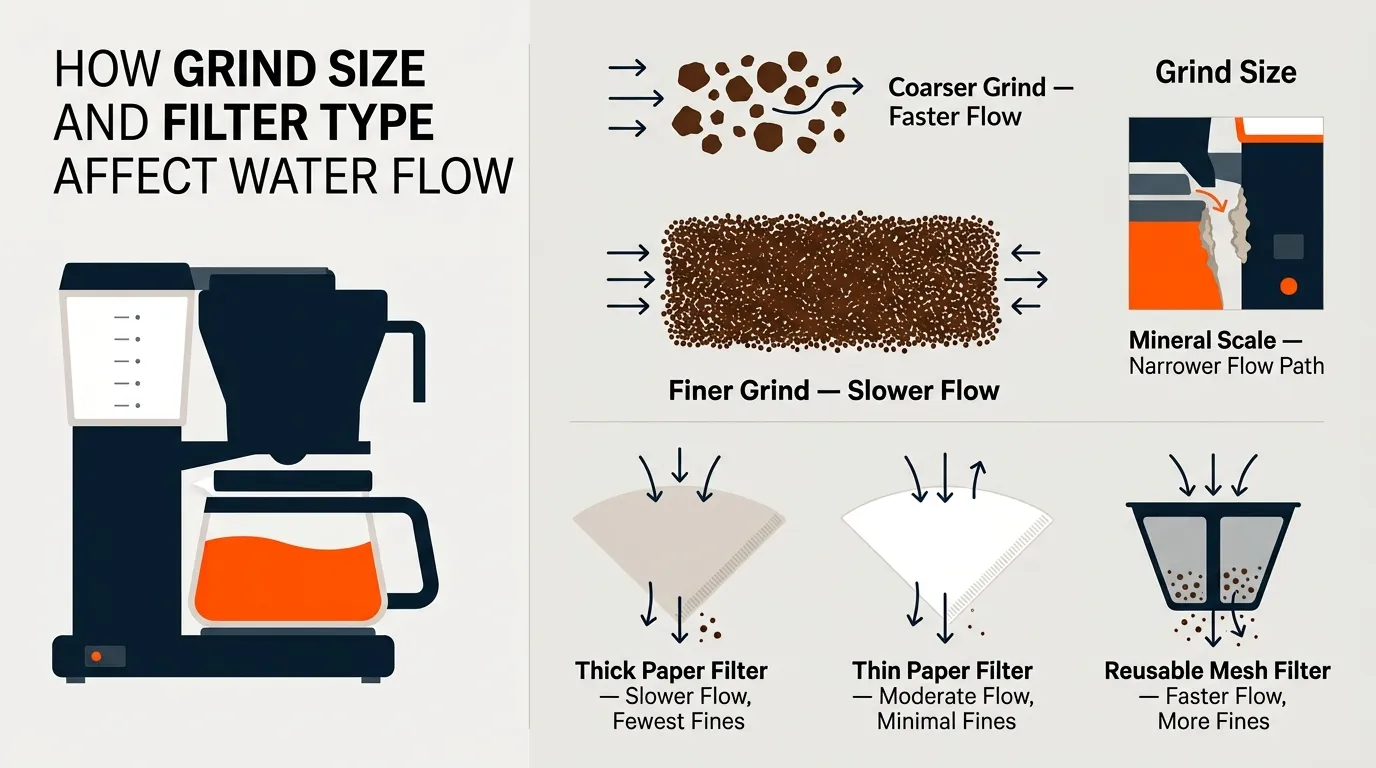
Water hardness matters. Hard water leaves scale that narrows tiny passages. That slows drip speed and can tilt the balance toward overflow. Descaling clears these bottlenecks and restores even flow.
Grind size sets resistance. Think of sand vs. gravel. Finer grounds pack tight and slow water. If you wonder why coffee maker overflows with a new bag, your grinder may have shifted finer, or the coffee is fresher and gassier.
Filters change flow and taste. Thick paper filters drain slower but catch more fines. Thin paper or mesh drains faster but can let fines build at the bottom. Wet paper filters before brewing so they seat well and do not collapse.
Safety, Damage, and When to Repair or Replace
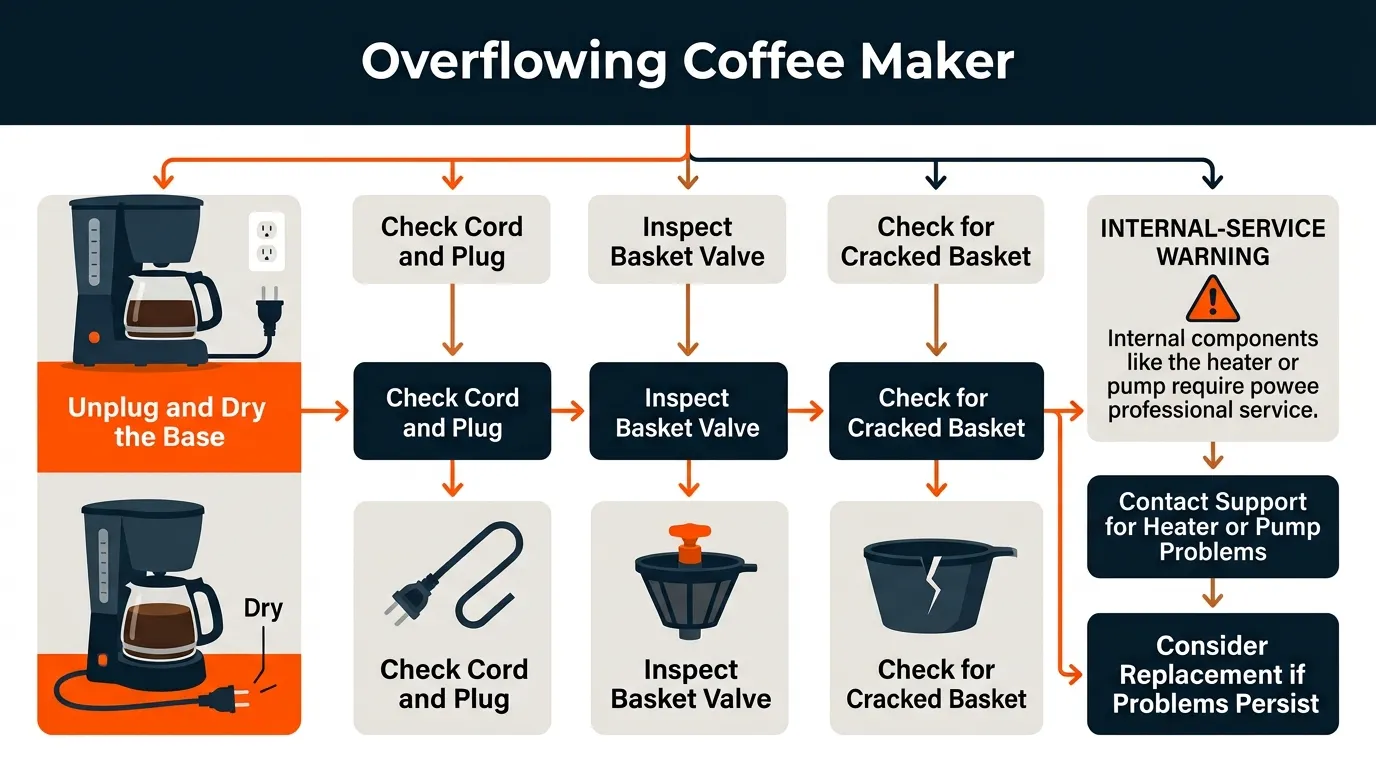
Hot coffee near power is a real risk. Unplug, dry the base, and wait before you brew again. Check the cord and plug for damage.
If the overflow is new and often, look for a stuck basket valve or cracked basket. These are cheap parts and easy to swap. If the heater or pump fails tests, or you see leaks inside the body, contact support. When you keep asking why coffee maker overflows after every fix, it may be time for a replacement.
Frequently Asked Questions of Why Coffee Maker Overflows
Why does my coffee maker overflow only sometimes?
It is often a stack of small issues. A fine grind plus a mis-seated carafe or a fresh, gassy roast can tip it over.
Can the type of coffee cause overflow?
Yes. Very fresh coffee releases more gas and can push water up. Dark roasts also shed more fines that slow flow.
Will descaling stop overflow for good?
It helps if scale was the cause. You still need the right grind, dose, and a well-seated filter and carafe.
Do reusable mesh filters overflow more than paper?
They can if clogged with oils and fines. Clean them well, and use a slightly coarser grind.
How much coffee should I use to avoid overflow?
A safe start is 1 to 2 tablespoons per 6 ounces of water. Adjust by taste, but keep headspace in the basket.
Conclusion
Now you know the core reasons a brewer spills and how to stop it. Control the flow with the right grind, dose, filter fit, and a clean path. These small steps will keep your counter dry and your coffee better.
Try one fix today: coarsen the grind and reseat the carafe. Then set a reminder to descale next month. Want more no-fuss coffee tips? Subscribe for guides, or drop a question in the comments.