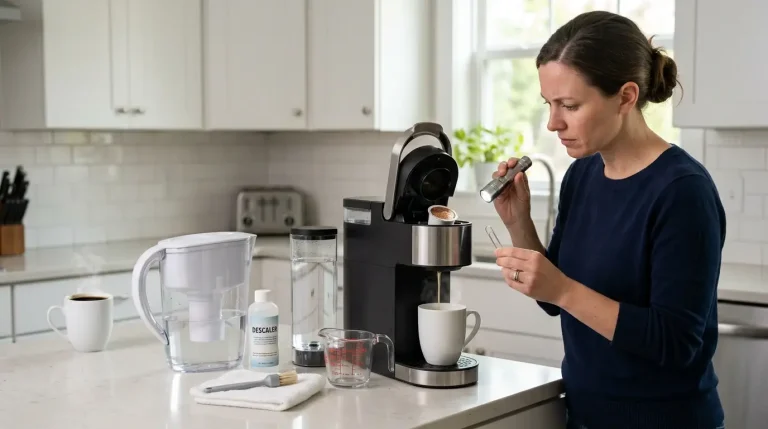
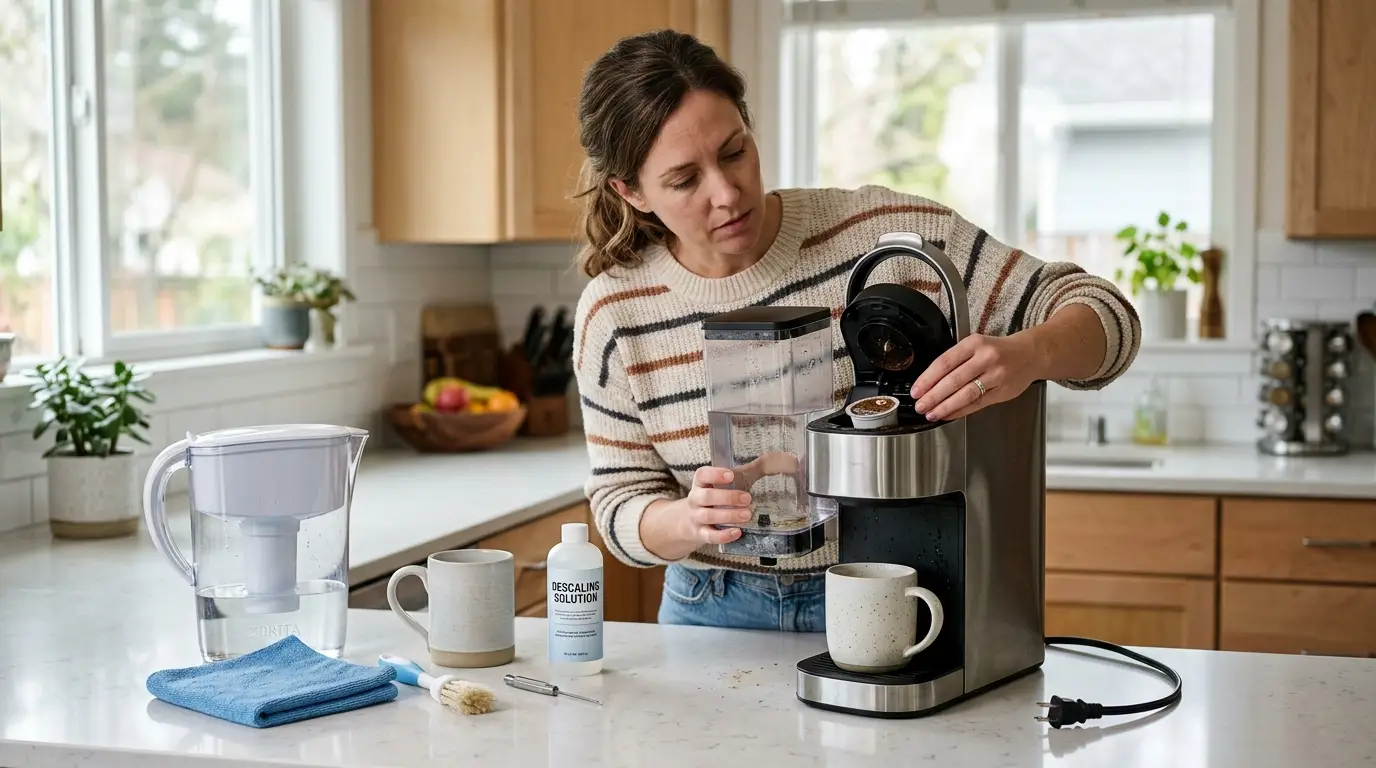
Most of the time a clogged line or airlock prevents your Keurig from pumping water.
I’ve spent years fixing coffee makers and testing Keurigs, so I know the common causes and fixes for a Keurig Not Pumping Water. This guide breaks down why the problem happens, how the Keurig pump works, step-by-step troubleshooting you can do at home, when to call a technician, and simple maintenance to stop the issue from coming back. Read on for clear, practical solutions you can try today.
Why your Keurig Not Pumping Water — common causes
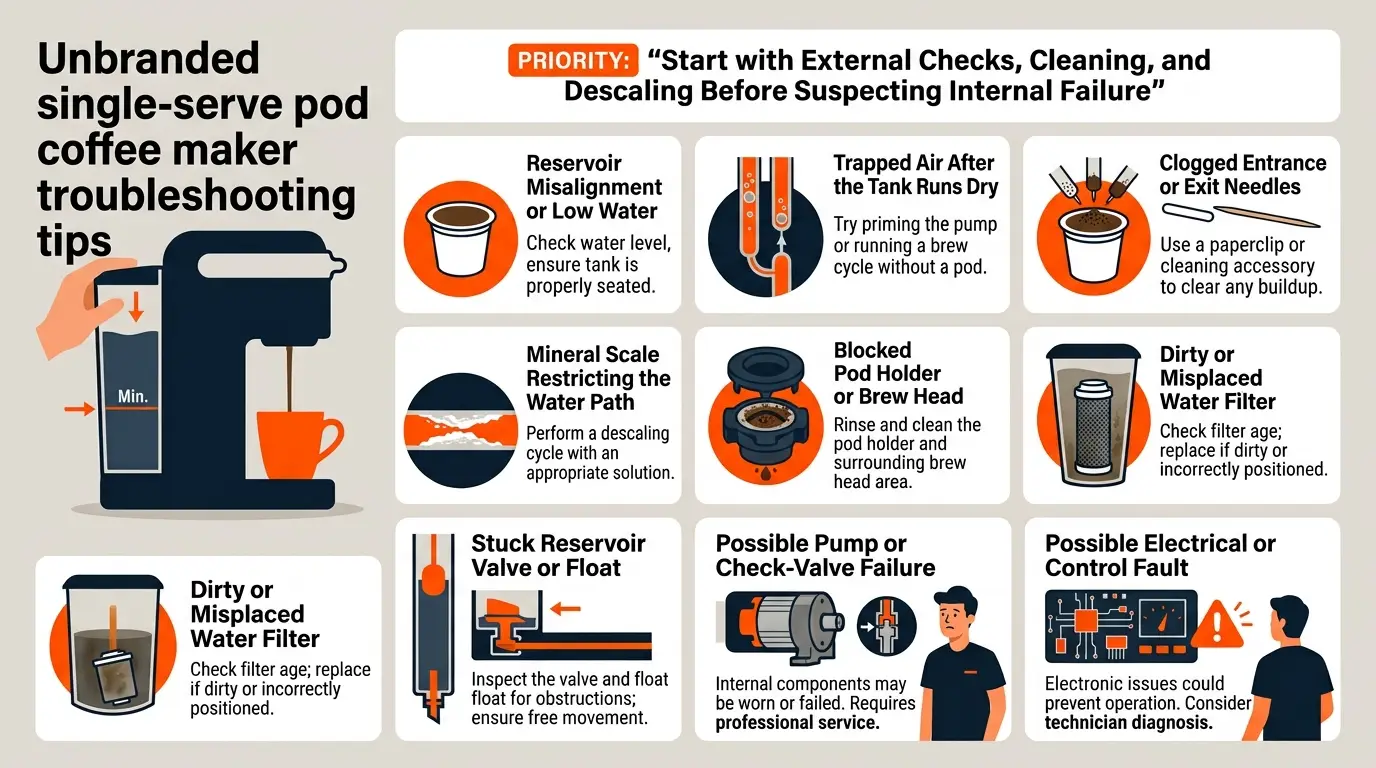
Keurig Not Pumping Water can come from small, easy-to-fix problems. Knowing the likely causes saves time and money. Here are the main reasons:
- Water reservoir issues. The reservoir may not sit correctly or has low water.
- Airlock in the system. Trapped air can block the pump from drawing water.
- Blocked needles or tubes. Mineral scale and coffee grounds clog the intake.
- Clogged internal lines. Hard water builds up in the water path over time.
- Faulty pump or motor. The pump can fail electrically or mechanically.
- Faulty check valve. A bad valve prevents water flow in one direction.
- K-Cup or brew head problems. A stuck K-Cup or clogged brew head can stop flow.
- Electrical issues. A bad power supply or control board can halt pumping.
- Dirty or blocked filters. Inline filters and charcoal filters can clog.
Each of these causes creates the same symptom: your Keurig Not Pumping Water. The good news is most are repairable at home. Read the troubleshooting steps below for fast fixes.
How the Keurig pump works (simple overview)
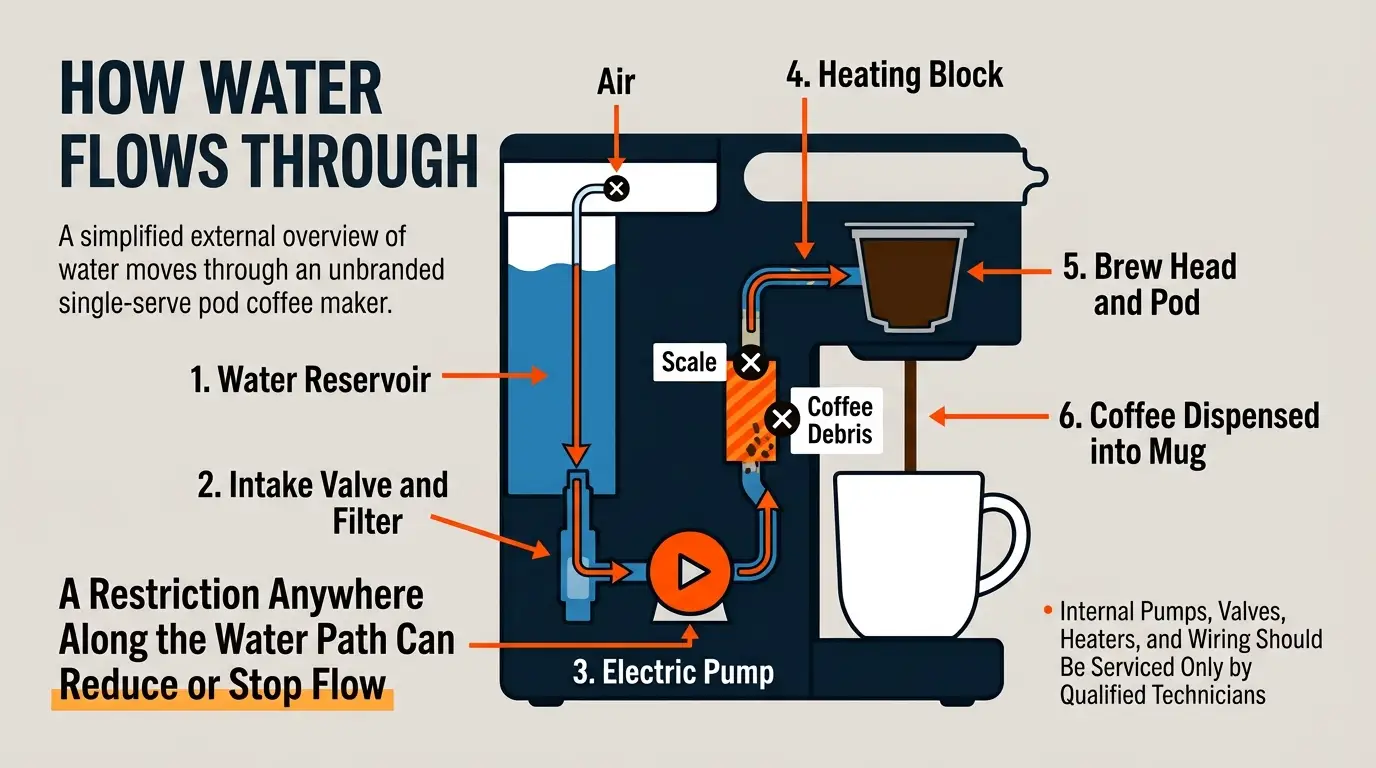
Understanding the pump helps you fix Keurig Not Pumping Water faster. The machine moves water like this:
- Water sits in the reservoir.
- A small electric pump draws water through a tube.
- Water passes through a filter and heating block.
- Hot water is pushed through the brew head and K-Cup into the cup.
If any part of that path is blocked, the Keurig Not Pumping Water symptom appears. Pumps do not like air, scale, or debris. Regular cleaning keeps the path clear and the pump healthy.
Step-by-step troubleshooting for Keurig Not Pumping Water
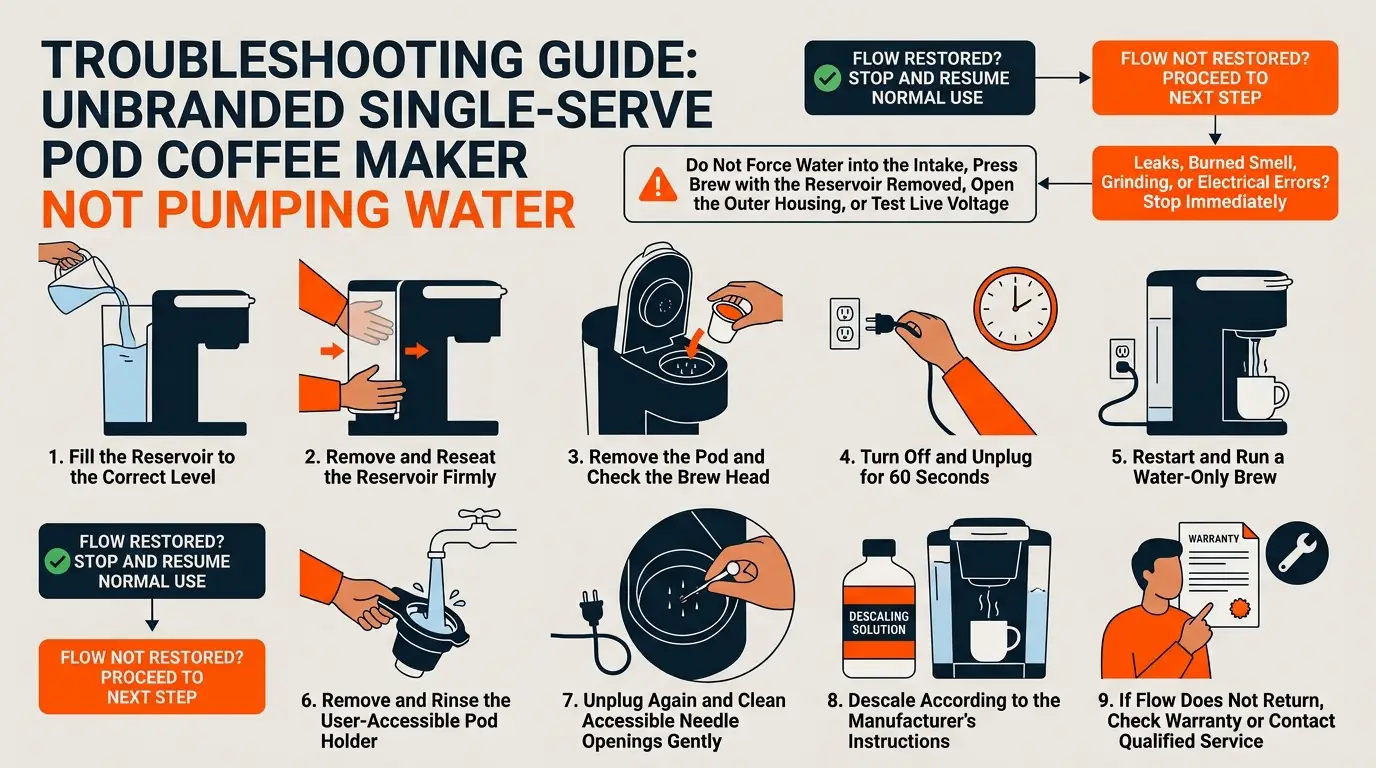
Follow these steps in order. Each step is quick and uses common tools. Perform simple checks first before disassembling anything.
- Check water level and reservoir placement
- Refill the water reservoir to the max line.
- Remove and reseat the reservoir so it locks in place.
- Try brewing again.
- Power-cycle the machine
- Unplug the Keurig for 60 seconds.
- Plug it back in and try a brew cycle.
- This can reset the control board if the pump didn’t start.
- Clear airlocks
- Remove the reservoir and try pushing water through the inlet tube with a syringe or small hand pump.
- While the reservoir is off, press the brew button for a few seconds to try to purge air.
- Re-seat the reservoir and try again.
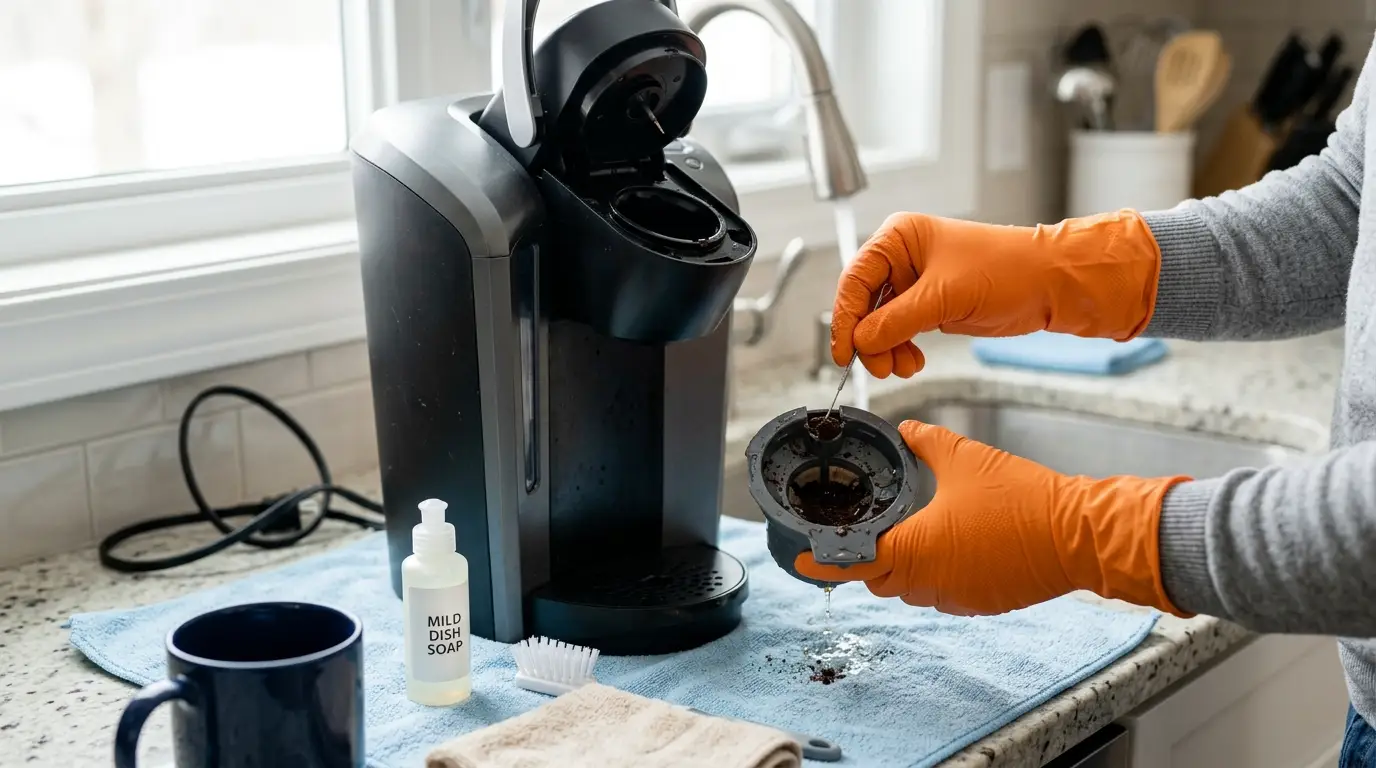
- Clean the exit and entrance needles
- Remove the K-Cup holder and use a paperclip to clear the needles.
- Rinse parts in warm water and reassemble.
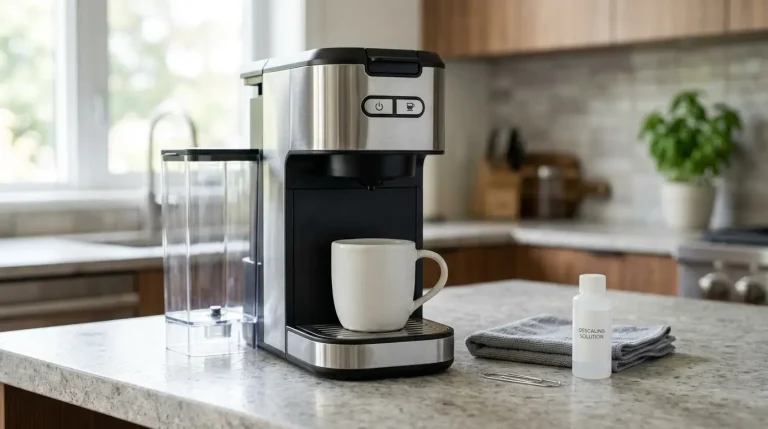
- Descale the Keurig
- Run a descaling solution or white vinegar and water cycle per the manual.
- Descale helps when mineral scale causes your Keurig Not Pumping Water.
- Check and replace filters and water lines
- Remove any charcoal filters and test the machine without them.
- Inspect the intake tube for kinks or blockages.
- Listen for the pump
- When you brew, listen for the pump motor sound. A faint buzz but no water may mean an airlock or clogged line.
- No sound at all can indicate a dead pump or power issue.
- Test pump voltage (for advanced users)
- If you’re comfortable with electronics, check the pump wiring and voltage.
- Replace the pump if it gets power but won’t run.
- Replace the pump or take it to a pro
- If all else fails, the pump may be worn out. Replacing a small pump is often cheaper than a new unit.
- If under warranty, contact support first.
Why is my Keurig making noise but not pumping?
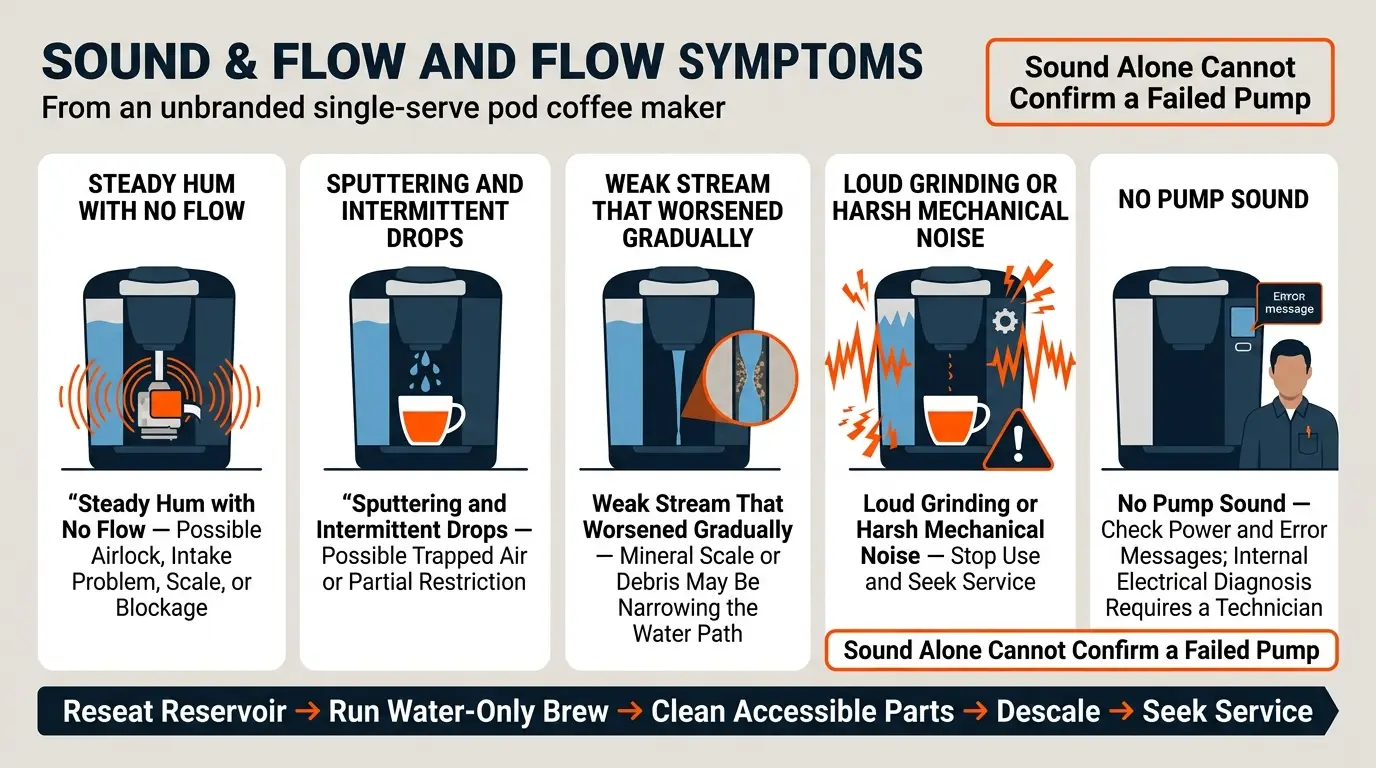
If you hear the pump but no water flows, you likely have an airlock or a clogged line. Try removing the reservoir, purging the inlet tube, and running a descaling cycle.
Can descaling fix a non-pumping Keurig?
Yes. Descaling removes mineral scale that blocks tubes and valves. It often restores normal flow when hard water buildup causes Keurig Not Pumping Water.
When to repair, replace, or call a pro for Keurig Not Pumping Water
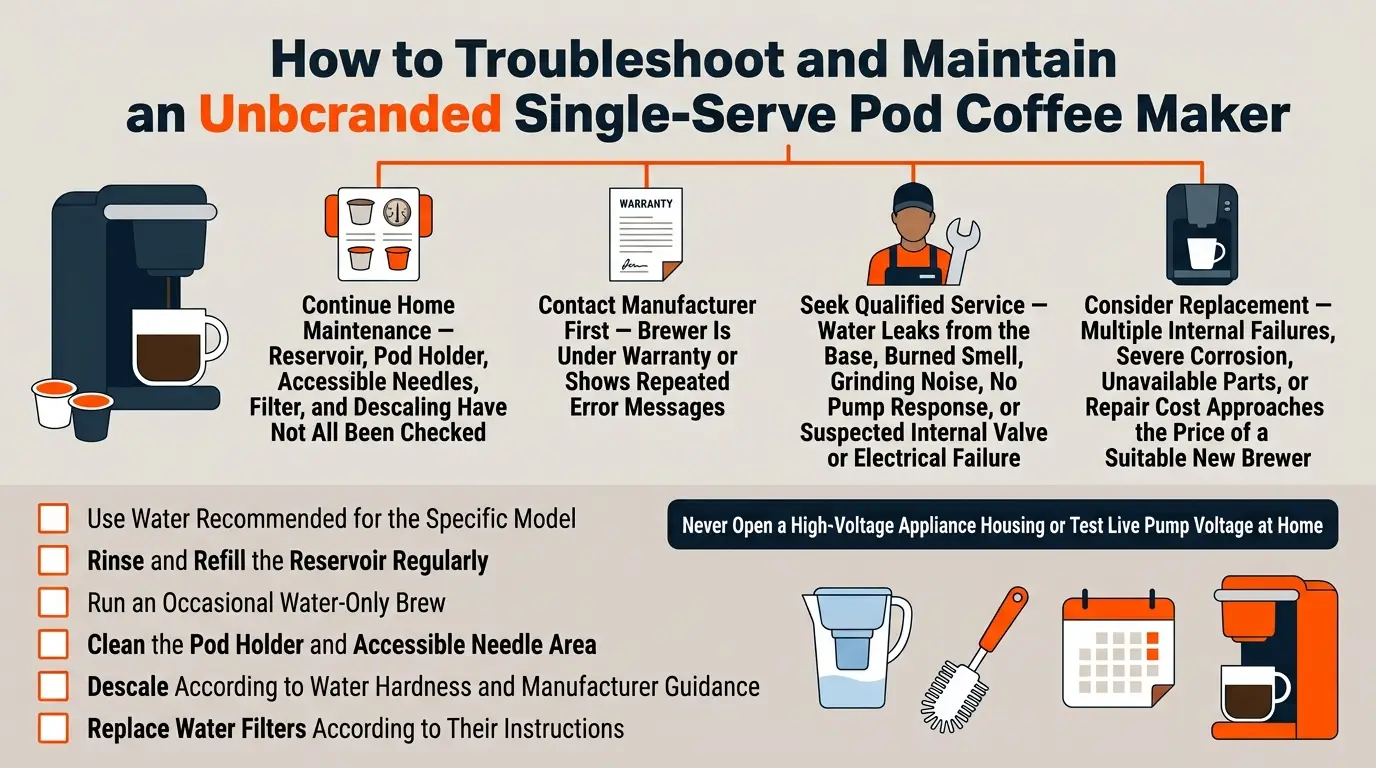
Deciding whether to repair or replace depends on age and cost. Use these guidelines:
- Under 2 years with warranty: Contact support first.
- Pump motor failure: If the pump costs less than half a new machine, consider replacement.
- Control board or multiple failures: If several parts fail, replacement may be cheaper.
- Frequent recurring problems: Consider upgrading to a newer model with better water filters.
- DIY comfort level: If you are not comfortable disassembling electronics, seek professional help.
Typical repair costs vary. A replacement pump part often runs low cost, while service labor can tip the scales. Be transparent with repair shops about the exact symptom “Keurig Not Pumping Water” to speed diagnosis.
Maintenance tips to prevent Keurig Not Pumping Water
Prevention is faster than repair. Use these habits to keep your Keurig pumping well:
- Use filtered water to reduce scale buildup.
- Empty and refill the reservoir daily if you live in a hard water area.
- Descale monthly or per manufacturer guidelines.
- Clean needles and the K-Cup holder weekly.
- Replace charcoal filters every 2 months if your model uses them.
- Store the machine in a dry place and avoid long idle times with water inside.
Small habits stop most causes of Keurig Not Pumping Water before they start.
Personal experience and lessons learned
I once fixed a Keurig that wouldn’t pump for a friend. The machine buzzed but no water came out. I descaled it and cleared a tiny clog in the entrance needle with a paperclip. The fix took 20 minutes. Lesson learned: start simple. Check the reservoir, clear air, and descale before replacing parts. It keeps repairs cheap and your coffee routine intact.
Frequently Asked Questions of Keurig Not Pumping Water
Why does my Keurig make a humming sound but no water comes out?
A humming sound usually means the pump is trying to work but air or scale is blocking flow. Clear the reservoir connection, purge the line, and descale the machine.
How often should I descale to avoid a Keurig Not Pumping Water issue?
Descale every 3 months if you use tap water, or monthly with very hard water. Using filtered water extends the time between descales.
Can I run vinegar through my Keurig to fix a non-pumping issue?
Yes. White vinegar is a common descaling agent. Run a vinegar solution per the manual, then flush with clean water until the vinegar smell is gone.
Is the pump repairable or should I buy a new machine?
Many pumps are replaceable and affordable. If multiple parts fail or the unit is old, replacing the whole machine may be better value.
What tools do I need to troubleshoot a Keurig Not Pumping Water?
Basic tools include a paperclip, syringe, small pliers, and a screwdriver. For electrical checks, a multimeter helps but is optional.
Conclusion
Keurig Not Pumping Water is usually a fixable problem. Start with the reservoir, clear airlocks, clean the needles, and descale the system. If the pump itself fails, weigh repair costs versus replacement. Use filtered water and a short maintenance routine to prevent the issue. Try the steps in this guide, and if you need help, consider a repair shop or warranty service. If this helped you, leave a comment or subscribe for more appliance fixes and tips.