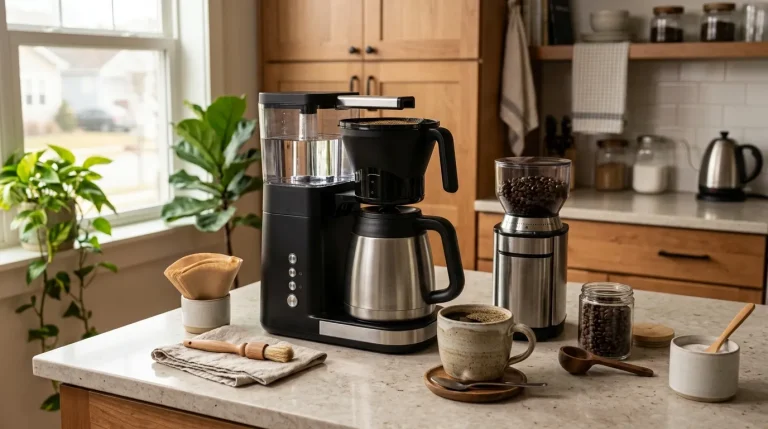
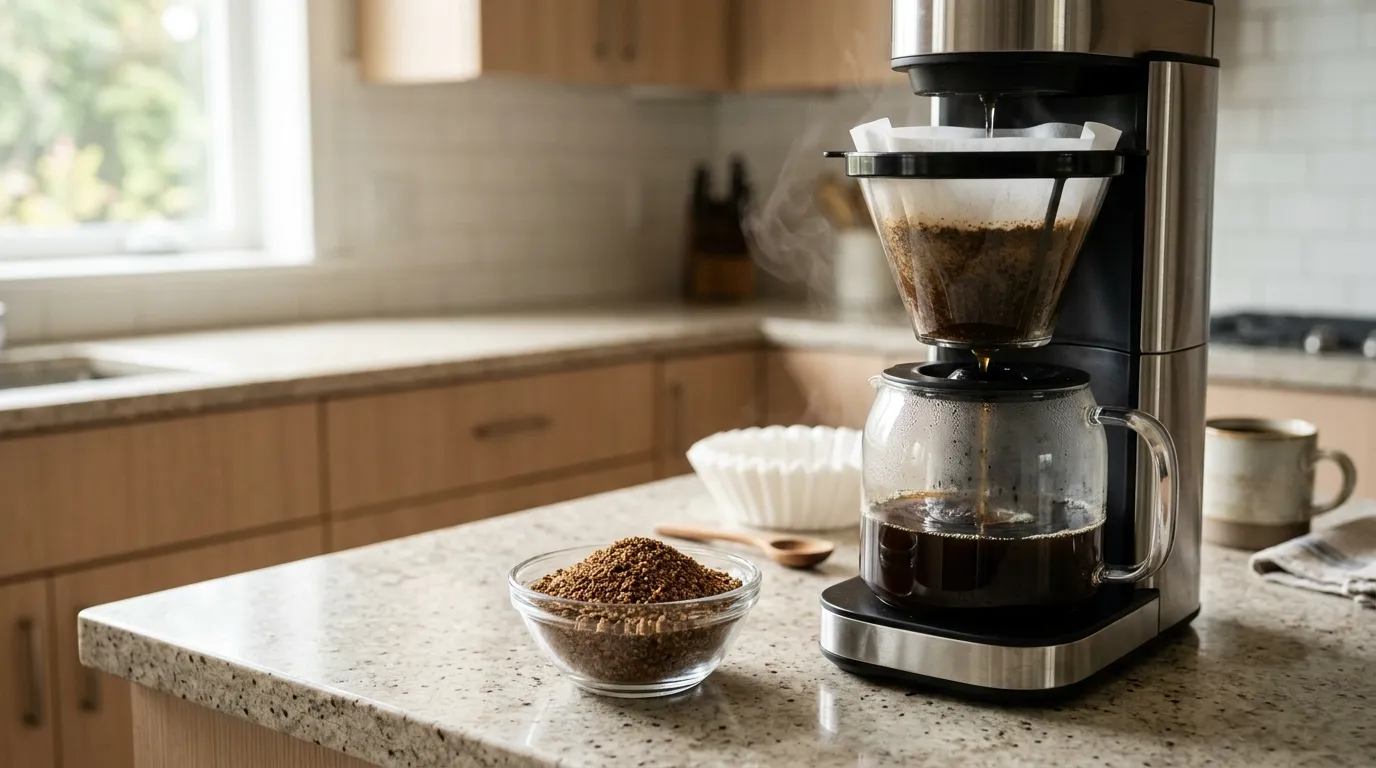
Use a medium grind, like sand, for balanced, clear drip coffee flavor.
If you want the Best Coffee Grind Size for Drip Coffee, you are in the right place. I brew drip daily, test new beans each week, and coach friends on grind. This guide breaks down what works, why it works, and how you can lock it in fast. You will learn how the Best Coffee Grind Size for Drip Coffee changes with filters, flow, and time, so every cup feels easy and repeatable.
What Grind Size Means And Why It Matters
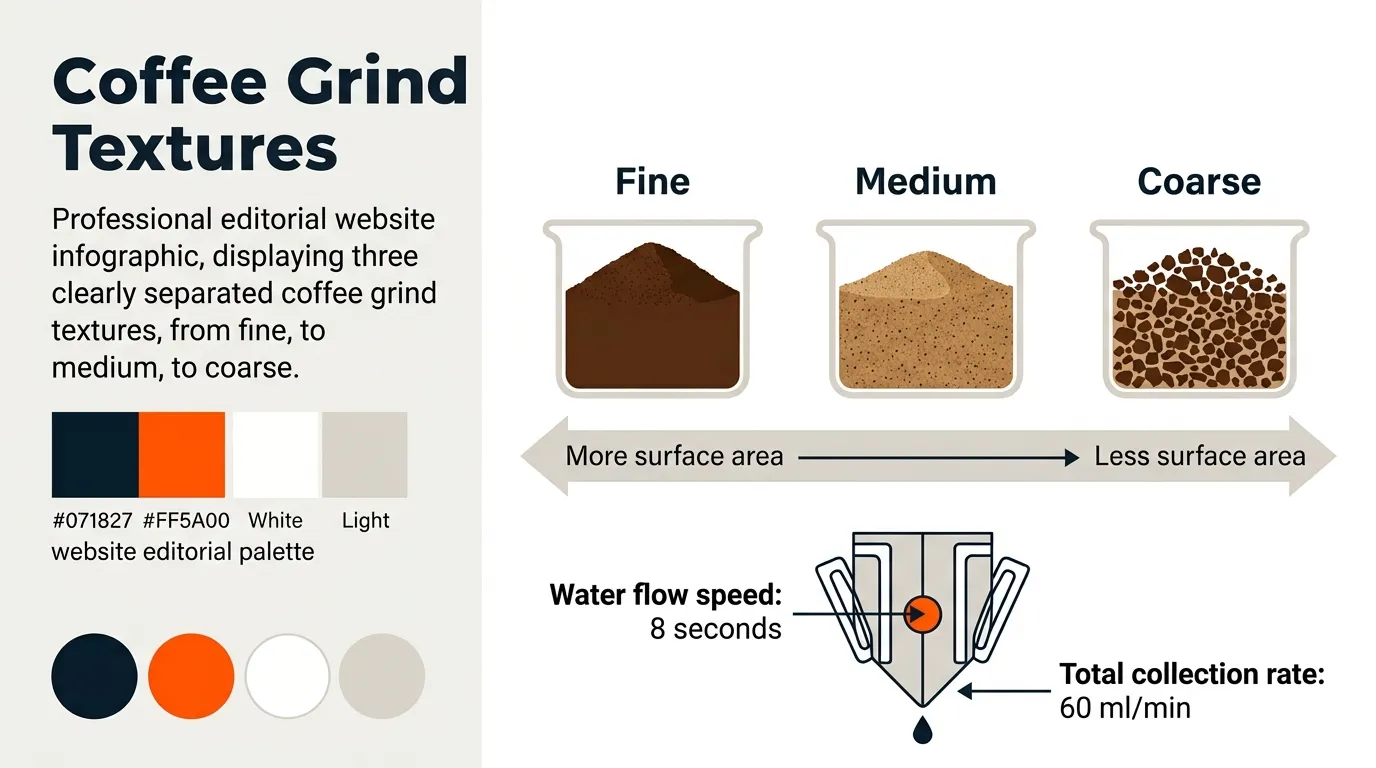
Grind size is how big or small your coffee particles are. It changes how water moves through the bed. It also sets how fast flavors pull out.
Small grounds have more surface area. Water draws more taste, fast. That can push bitter if the flow slows too much. Large grounds have less surface area. Water draws less taste, and can leave the cup thin or sour.
Drip coffee uses gravity and a filter to shape flow. Too fine and the bed clogs. Brew drags on. You get harsh notes. Too coarse and water races through. You get weak, sharp notes.
This is why the Best Coffee Grind Size for Drip Coffee sits in the middle. It gives an even flow. It also gives a clean cup.
The Best Coffee Grind Size for Drip Coffee
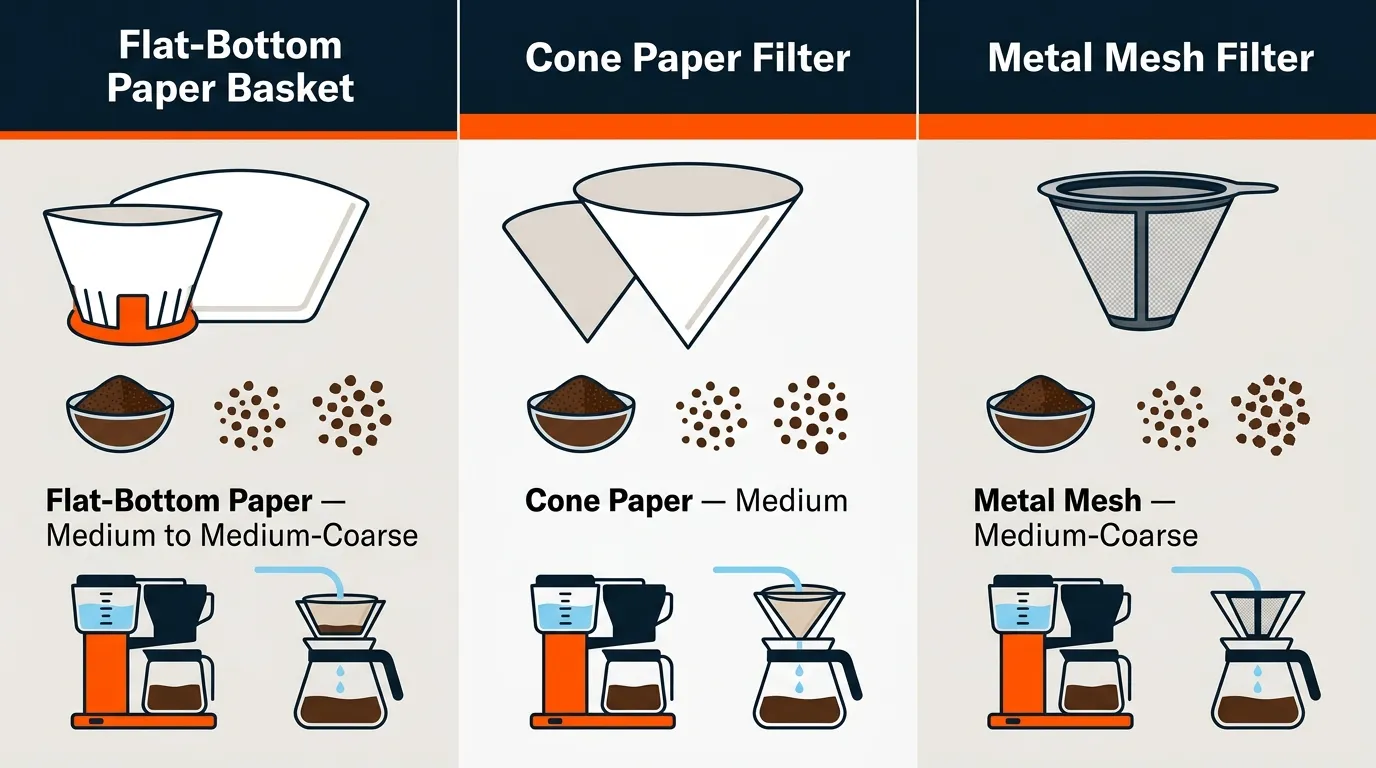
The Best Coffee Grind Size for Drip Coffee is medium. Think clean sand. Not powder. Not chunky sea salt.
Here are simple ranges I use and teach:
- Flat-bottom paper basket: medium to medium-coarse. About 650 to 800 microns.
- Cone paper filter: medium. About 550 to 700 microns.
- Metal mesh filter: medium-coarse. Aim a notch coarser than paper.
If your grinder has numbers, start near the middle. On many home burr grinders that is 12 to 18. These marks vary by brand. Use taste to guide the next move.
Helpful targets:
- Coffee to water ratio: 1:15 to 1:17 by weight.
- Total brew time in the basket: about 4 to 5 minutes.
- Flow should start steady after the bloom.
Why this works:
- Medium grind balances speed and contact.
- It helps avoid fines that clog paper.
- It clears silt for a bright, sweet cup.
I test with many beans. Light roasts often like a touch finer. Dark roasts often like a touch coarser. The Best Coffee Grind Size for Drip Coffee still lives near medium in both cases. Nudge, do not jump.
Quick visual checks:
- Looks like beach sand when dry.
- Feels gritty but not sharp between fingers.
- Few powdery specks on your palm.
The Best Coffee Grind Size for Drip Coffee is a start, not a rule. Each maker and filter shifts flow. Use the steps below to fine tune.
How Grind Size Affects Taste And Time
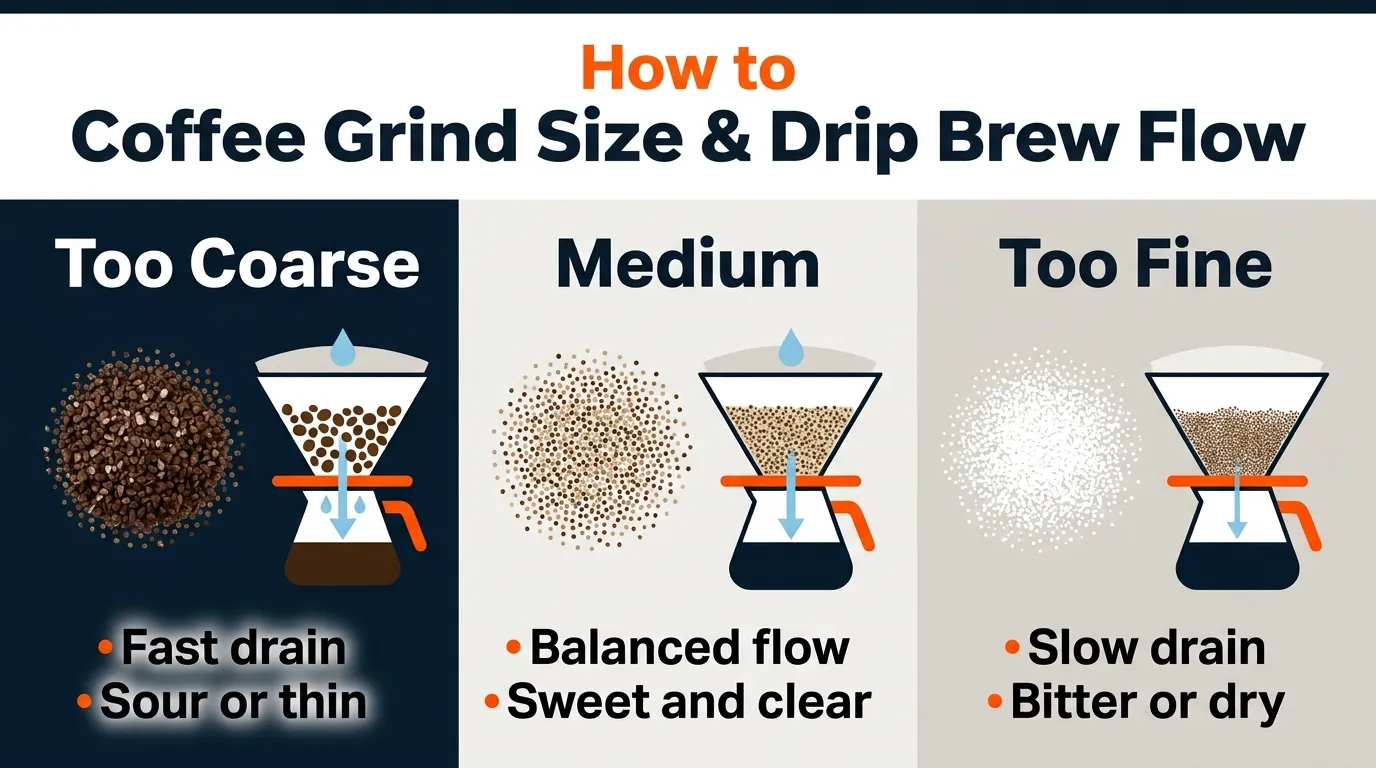
Brew time and taste go hand in hand. When the grind is right, you hit a sweet zone. The cup tastes sweet, clear, and round.
If brew time is too fast:
- Likely too coarse.
- Cup tastes sour, grassy, or thin.
- Body feels light, aftertaste fades quick.
If brew time is too slow:
- Likely too fine.
- Cup tastes bitter, harsh, or dry.
- Body feels heavy but flat.
Industry standards for drip give these clues:
- Target brew strength near 1.15 to 1.35% TDS.
- Aim for an extraction yield near 18 to 22%.
- These numbers match what most people call balanced.
You do not need a meter to use this. Taste the cup. Match time to feel. Then adjust grind one small step at a time.
The Best Coffee Grind Size for Drip Coffee makes it easy to land in that zone. It keeps flow smooth and flavors even.
Match Your Grind To Your Drip Coffee Maker
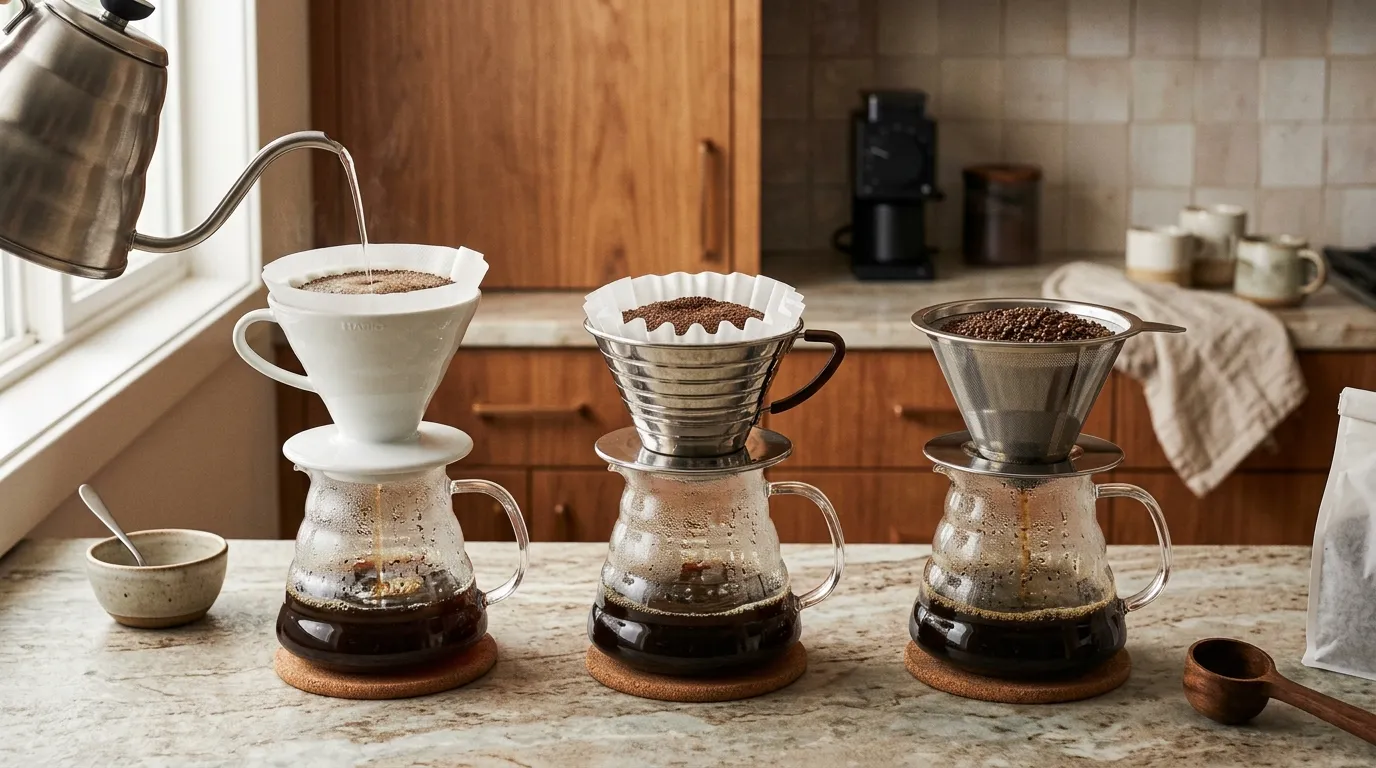
Not all drip machines run the same. The basket shape, filter type, and shower head change flow. So the Best Coffee Grind Size for Drip Coffee shifts a bit per setup.
Filter shape:
- Cone filters slow flow near the tip. Use medium. Keep total time near 4 minutes.
- Flat-bottom baskets spread water. Use medium to medium-coarse. Aim near 4.5 to 5 minutes.
Filter material:
- Paper filters hold back oils and fines. Use medium. Expect a clean cup.
- Metal mesh lets oils and fines pass. Go a bit coarser. Expect more body and a warmer taste.
Machine behavior:
- Makers with pre-infusion or pulse flow need slightly coarser grinds. This avoids stalls.
- Makers with weak heaters can run slow by design. Go slightly coarser to keep time on track.
My kitchen rule:
- If your basket drains slow at the end, go a touch coarser.
- If it drains too fast and your bed looks uneven, go a touch finer.
The Best Coffee Grind Size for Drip Coffee is still medium first. Shift in small steps based on your gear.
Step-By-Step: Dial In Your Grind In 5 Minutes
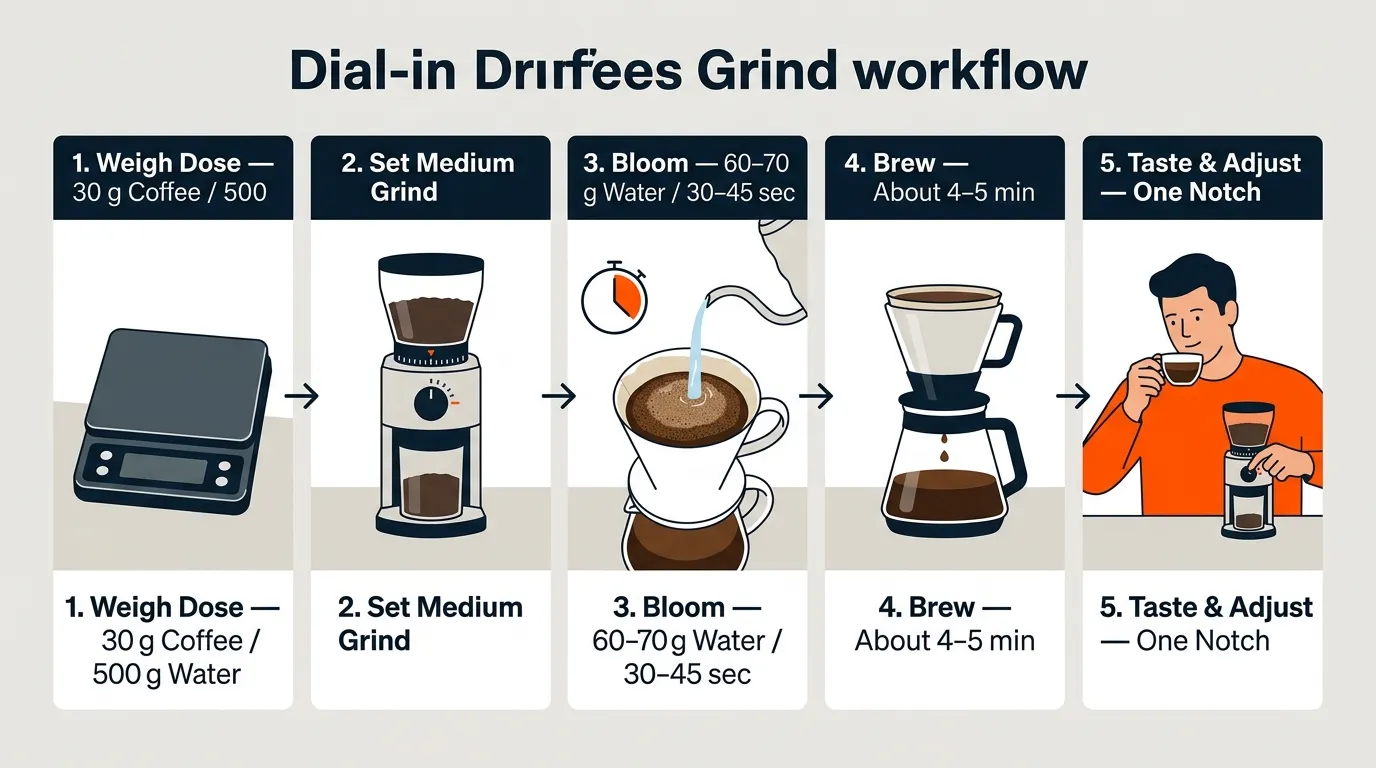
You can lock in the Best Coffee Grind Size for Drip Coffee fast. Here is my simple loop.
- Weigh dose. Use 30 grams coffee to 500 grams water. This is near 1:16.7.
- Set a medium grind. Use your grinder mid-scale.
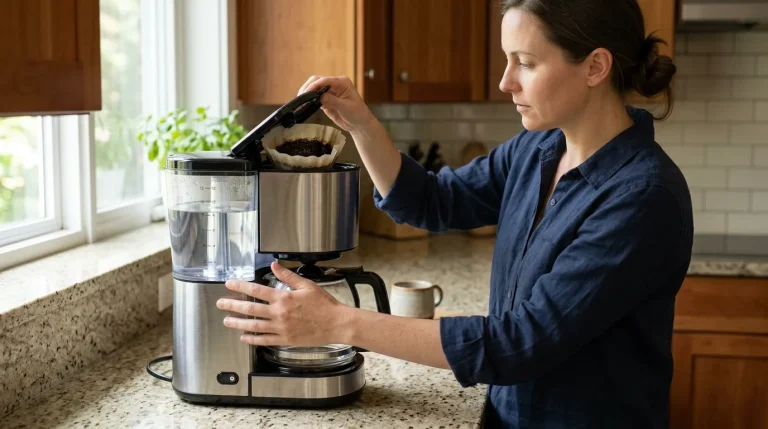
- Bloom well. Wet all grounds with 60 to 70 grams water. Wait 30 to 45 seconds.
- Brew steady. Pour or let the machine run. Total time should land near 4 to 5 minutes.
- Taste. Sweet and clear? You are close.
- Adjust one notch. If sour or thin, go finer. If bitter or dry, go coarser.
- Repeat next day. Make one change at a time only.
Personal note: I keep a tiny brew log. It lists bean, roast date, setting, time, and taste words. Two brews later, I am dialed. This is how I teach friends to fix drip at home. It works.
Common Problems And Fixes

If the cup is off, change grind first. It is the fastest lever. Here is a quick map tied to the Best Coffee Grind Size for Drip Coffee.
- Sour, sharp, or salty taste: Grind is too coarse. Go one notch finer. Keep ratio same.
- Bitter, ashy, or dry finish: Grind is too fine. Go one notch coarser. Check brew time.
- Weak body, fast drain: Grind is too coarse. Make it a bit finer. Or raise dose slightly.
- Sludge or silty cup with paper: Too fine. Or your burrs make lots of fines. Go coarser.
- Overflow during bloom: Grind too fine, or water added too fast. Go coarser. Bloom gentler.
- Uneven bed or channels: Level the bed before brewing. Tap the basket. Keep a calm pour.
Remember, the Best Coffee Grind Size for Drip Coffee sits near medium. Most fixes are tiny nudges near that point.
Grinder And Water: Small Changes, Big Gains
Your grinder and water shape the cup more than most think. Nail these and the Best Coffee Grind Size for Drip Coffee gets easy.
Grinders:
- Burr grinders beat blade grinders. Burrs give even size. Even size gives even taste.
- Conical burrs are great at home. They are calm, simple, and kind to the wallet.
- Keep burrs clean. Old coffee oils add harsh notes. Brush them often.
Water:
- Use fresh, clean water. Hard water can mute brightness. Very soft water can push sour.
- Aim for balanced minerals. Many home filters get close enough.
- Hotter water extracts more. Auto drip should hit near 195 to 205°F at the bed.
Dose and ratio:
- If you like a stronger cup, raise dose, not grind first. Keep the Best Coffee Grind Size for Drip Coffee near medium. Then adjust dose to taste.
Experience tip: When I test a new bean, I start at the same medium grind. Then I change only water-to-coffee ratio for strength. I touch grind next. This keeps cause and effect clear.
Frequently Asked Questions Of Best Coffee Grind Size for Drip Coffee
What is the Best Coffee Grind Size for Drip Coffee?
Use a medium grind that looks like sand. It gives balanced extraction and clean flavor.
Does the filter type change the Best Coffee Grind Size for Drip Coffee?
Yes. Paper filters like medium. Metal filters need a touch coarser to avoid fines in the cup.
How does roast level affect the Best Coffee Grind Size for Drip Coffee?
Light roasts often like slightly finer to unlock sweetness. Dark roasts often like slightly coarser to avoid harsh notes.
What brew time pairs with the Best Coffee Grind Size for Drip Coffee?
Aim for about 4 to 5 minutes total in the basket. If it is faster or slower, adjust your grind one notch.
Can I use a blade grinder for the Best Coffee Grind Size for Drip Coffee?
You can, but results vary. A burr grinder gives a more even medium grind and better taste.
What ratio matches the Best Coffee Grind Size for Drip Coffee?
Start with 1:16 by weight. Move to 1:15 for more strength or 1:17 for a lighter cup.
How do I know if I went too fine with the Best Coffee Grind Size for Drip Coffee?
Brew time drags and the cup tastes bitter or dry. Go one notch coarser and try again.
Will pre-infusion impact the Best Coffee Grind Size for Drip Coffee?
A gentle pre-wet is good. If your machine pre-infuses a lot, a tiny move coarser can keep flow smooth.
Do different drip machines need different Best Coffee Grind Size for Drip Coffee?
Yes, small design shifts change flow. Start at medium and adjust to your maker’s behavior.
Can water temperature change the Best Coffee Grind Size for Drip Coffee?
If the water runs cool, go a hair finer to help extraction. If it runs hot, you can go a hair coarser.
Conclusion
Medium grind is your north star. It looks like sand, runs in about five minutes, and tastes sweet and clear. From there, make small moves based on taste, time, and your filter. The Best Coffee Grind Size for Drip Coffee is simple once you learn how it shapes flow.
Try the steps today. Log your grind, time, and taste for two brews. You will dial it in fast and enjoy better mornings. Want more guides like this? Subscribe, share your results, or leave a question so I can help you fine-tune your next cup.