Food sticks when pan heat, moisture, and surface are off; fix with heat, fat, patience.
You want clean release and golden crust. I get it. I’ve tested pans for years in home and pro kitchens. If you’ve searched why food sticks to pan fix, you’re not alone. This guide explains why food sticks to pan fix and gives you simple steps that work, backed by food science and practice.
The science of sticking, in plain words

Food clings for a few clear reasons. Proteins and sugars bond to bare metal when the pan is not hot enough. Water turns to steam and glues food down if the surface is wet or cold.
Oil makes a thin barrier. Heat makes a dry, even film so food can brown and lift. Rough, dirty, or worn pans grab more. Before you try a why food sticks to pan fix, know the cause.
In tests, stainless needs more heat and patience than nonstick. Cast iron and carbon steel need good seasoning. Nonstick needs lower heat and gentle tools.
Fix it fast: a simple checklist
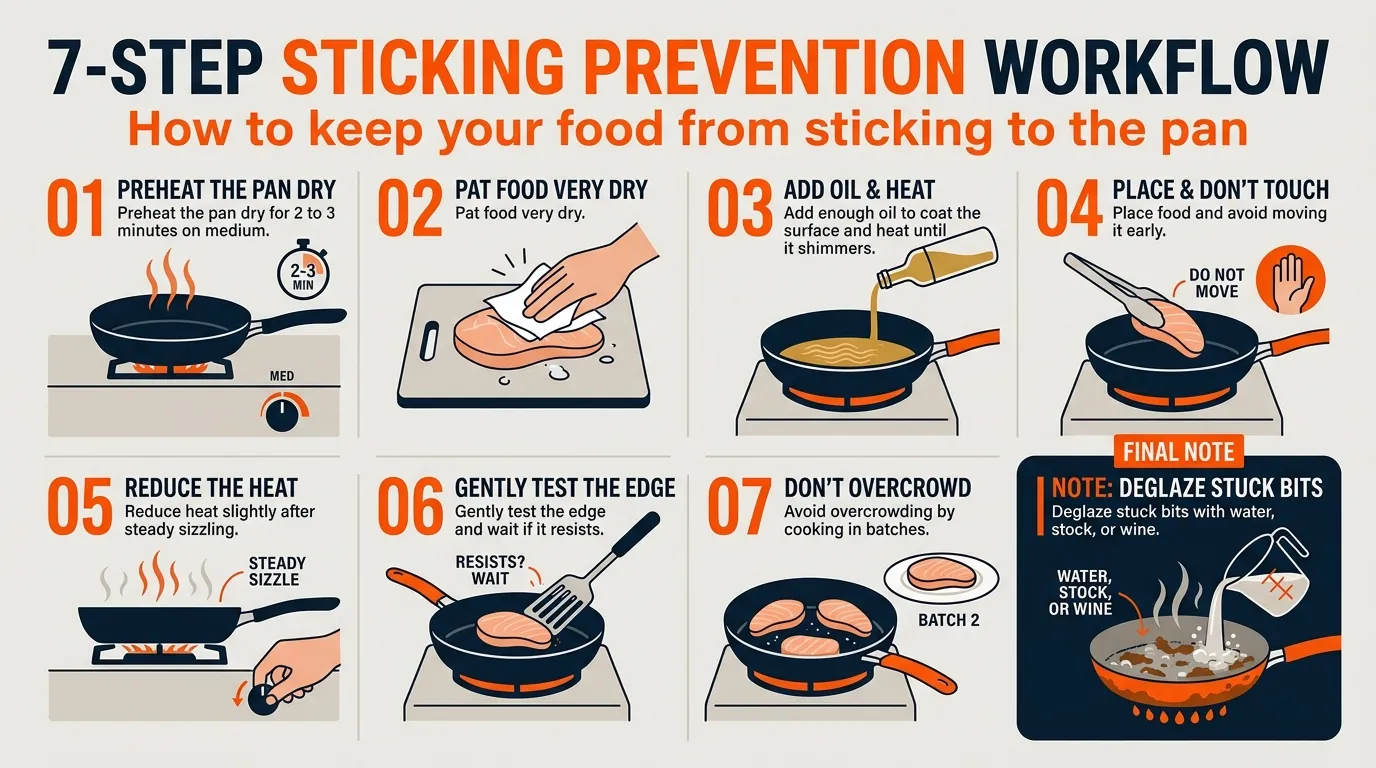
Here is the fastest why food sticks to pan fix you can use. It works for eggs, fish, meat, and pancakes.
- Preheat the pan dry for 2 to 3 minutes on medium.
- Pat food very dry with paper towels.
- Add enough oil to thinly coat. Heat until it shimmers.
- Place food and do not move it early. Let a crust form.
- Reduce heat a notch once you hear steady sizzle.
- Nudge the edge. If it resists, wait 30 more seconds.
- Do not crowd the pan. Cook in batches.
- Deglaze stuck bits with water, stock, or wine.
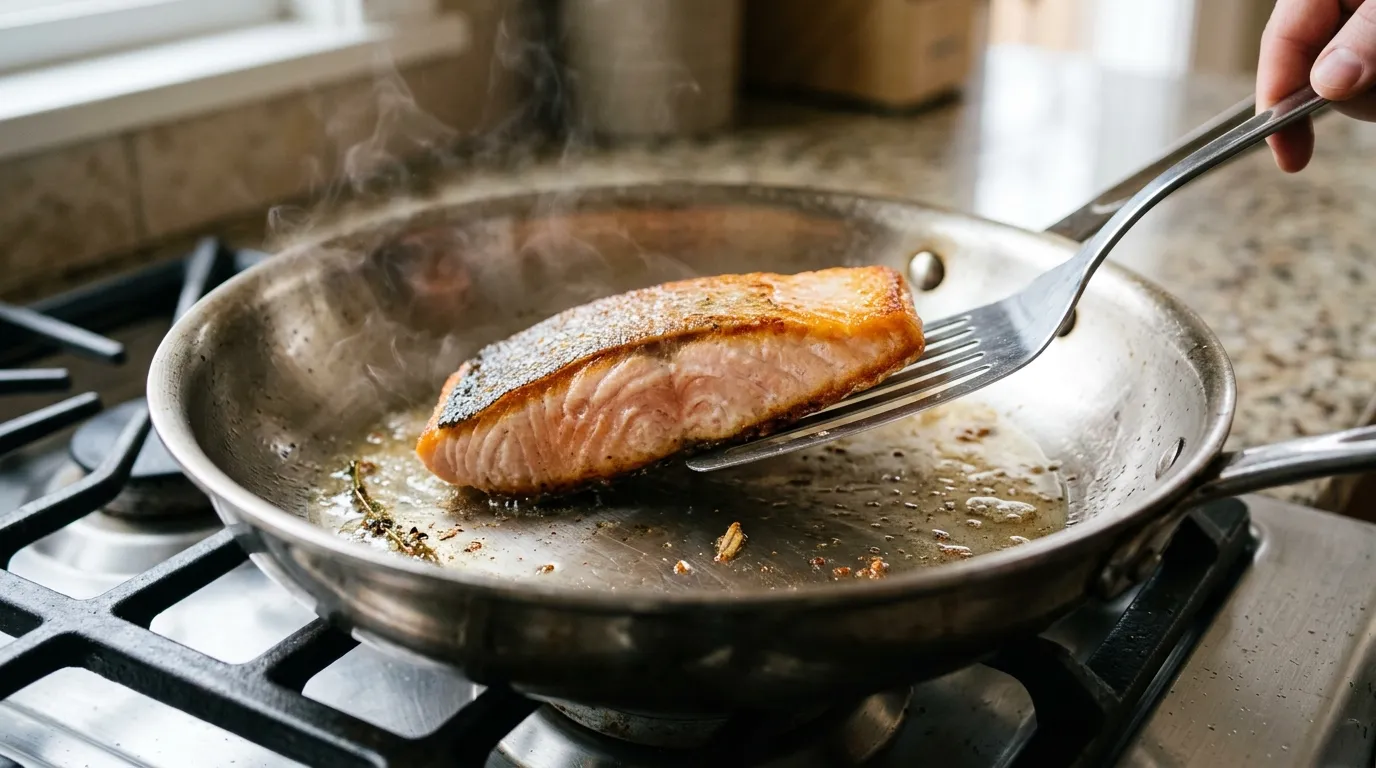
I learned to wait for release when searing salmon. The skin let go on its own after a quiet minute. No force. Clean flip.
Heat control made easy

Heat is the heart of any why food sticks to pan fix. Cold pans grab. Overheated pans burn and stick.
- Use the water drop test on stainless. A few drops should dance and bead. Then add oil.
- Watch oil, not the clock. It should shimmer and flow fast, not smoke hard.
- Keep medium to medium-high for searing. Drop to medium once browning starts.
If your burner runs hot, preheat on medium-low. Add time, not flame. Your food will thank you.
Picking and using the right fat
Good oil choice is a quiet why food sticks to pan fix. Different fats act in different heat zones.
- For high heat sear, use avocado, peanut, canola, or refined sunflower oil.
- For flavor with eggs or pancakes, use butter plus a splash of oil to raise the burn point.
- For steady browning, ghee or clarified butter works very well.
Use enough to coat the whole surface. A dry patch is a stick trap. Swirl the pan to even it out.
Pan types and seasoning that prevent sticking
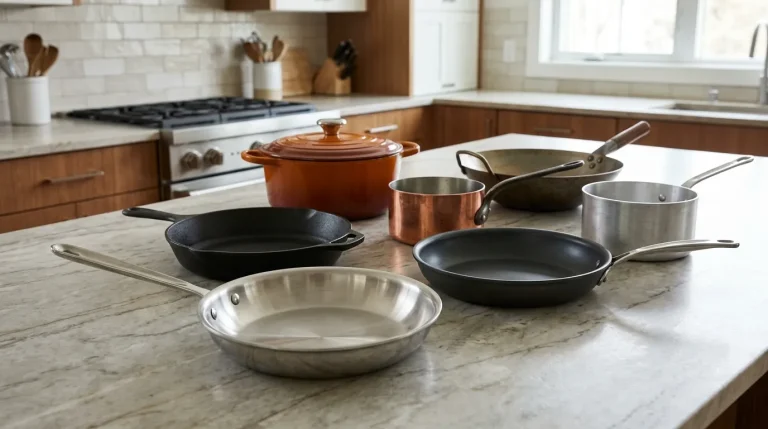
Seasoning is a lasting why food sticks to pan fix. The right surface makes life easy.
- Stainless steel: Great for sear and fond. Needs good preheat and oil.
- Cast iron: Holds heat. Needs seasoning. Great nonstick feel when cared for.
- Carbon steel: Lighter than cast iron. Season it. Amazing for eggs after build-up.
- PTFE nonstick: Easy release at low to medium heat. Avoid metal tools and high heat.
- Ceramic nonstick: Good at first. Tends to lose release over time.
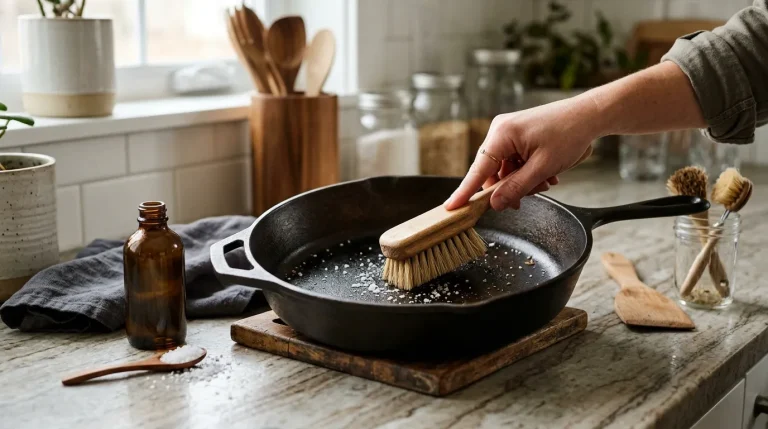
To season cast iron or carbon steel, scrub, dry, rub with a thin oil layer, and bake it hot. Repeat light coats. Thin layers bond better than thick ones.
Master moisture: dry food, dry pan, then fat
Drying is the cheapest why food sticks to pan fix. Water fights browning and bonds food to the pan.
- Thaw foods in the fridge, then pat dry well.
- Salt meats 30 minutes ahead. Pat again before cooking.
- Drain marinades. Wipe off excess sugar or honey before the pan.
- Keep sauces for the end. Glaze after crust forms.
Eggs love a gentle, even heat. For scrambled eggs, preheat low, add butter, then eggs. Stir slow. No rush.
Tricky foods that love to stick and how to win
Use these moves as your why food sticks to pan fix for eggs and fish. They save breakfast and dinner.
- Eggs: Preheat low, add butter, pour eggs, then lower heat more. Stir or slide only after edges set.
- Skin-on fish: Pat skin very dry. Score tiny slits. Press for 10 seconds to keep it flat. Wait for release.
- Chicken skin: Start skin-side down in a cold pan with a little oil. Heat to medium. Fat renders and lifts skin.
- Pancakes: Medium heat. Let bubbles form and edges set before flipping.
- Tofu: Press the block. Dust with starch. Hot pan, enough oil, one side undisturbed.
With salmon, I time the flip by smell and sound. When the sharp hiss softens and the nose gets nutty, it is ready.
Cleaning, care, and how to restore a sticky pan
A clean surface is a hidden why food sticks to pan fix. Old film makes food latch on.
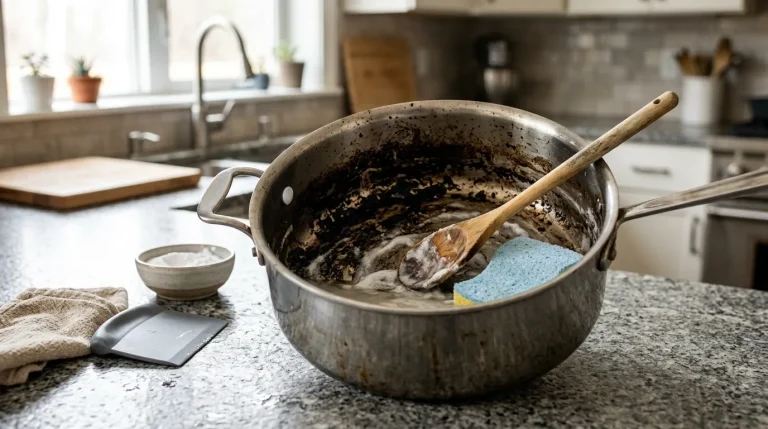
- For stainless: Boil water with a spoon of baking soda. Scrape soft bits with a wooden spatula. For tint or tough stains, use a gentle stainless cleaner.
- For cast iron: Scrub with salt and a splash of oil. Dry on heat. Re-oil thinly. Re-season if dull.
- For nonstick: Use soft sponges only. No spray oils that carbonize. Wash by hand. If scratched or peeling, replace.
Avoid stacking pans bare. Use a cloth or paper between them. Small moves keep surfaces smooth.
Quick troubleshooting guide
Use this map to pick your why food sticks to pan fix fast.
- Food welded right away: Pan was cold. Preheat longer. Do the water drop test.
- Food burnt and stuck: Heat was too high or oil too little. Lower heat. Add a bit more fat.
- Sticks on one side only: Uneven heat. Center your pan. Preheat a bit longer.
- Fish tears on flip: You flipped too soon. Wait for release. Use a thin, wide spatula.
- Eggs cling on stainless: Heat too high or pan not seasoned. Reduce heat. Try carbon steel or nonstick for eggs.
If you feel panic, add a splash of water. Steam lifts fond. Save the sauce. Dinner lives.
Safety notes and when to replace a pan
Sometimes the only why food sticks to pan fix is a new pan. Gear wears out.
- Deep scratches on nonstick can shed flakes. Replace it.
- Warped pans heat unevenly. That causes hot spots and stick.
- Loose handles are a hazard. Fix or move on.
Mind smoke. If oil smokes hard, clean the pan and start over. A fresh start beats a bitter meal.
Frequently Asked Questions of why food sticks to pan fix
Why does stainless steel make food stick so much?
Stainless needs a proper preheat and enough oil. Once a crust forms, food releases on its own.
Can I stop sticking without using much oil?
Yes. Preheat well, dry the food, and do not move it early. Nonstick or well-seasoned carbon steel also helps.
Does room temperature meat stop sticking?
A slight warm-up helps with even cooking, not release. Drying the surface and hot oil matter more.
Why do my eggs still stick on nonstick pans?
The coating may be worn or overheated. Cook eggs on low heat with butter and a gentle spatula.
What is the best oil to prevent sticking?
Use high smoke point oils for searing like avocado or canola. For eggs and pancakes, butter plus a little oil works well.
How do I fix fish that keeps tearing?
Dry the skin, heat the pan, and press for a few seconds. Wait for natural release before flipping.
Conclusion
You can solve sticking with a few steady habits. Preheat the pan. Dry the food. Add the right fat. Then wait for release. That simple rhythm changes your cooking.
Start with one fix tonight. Try a dry, hot pan and a proper oil shimmer. Feel the difference in the first clean flip. If this helped, subscribe for more kitchen-tested tips, share your win, or drop a question in the comments.