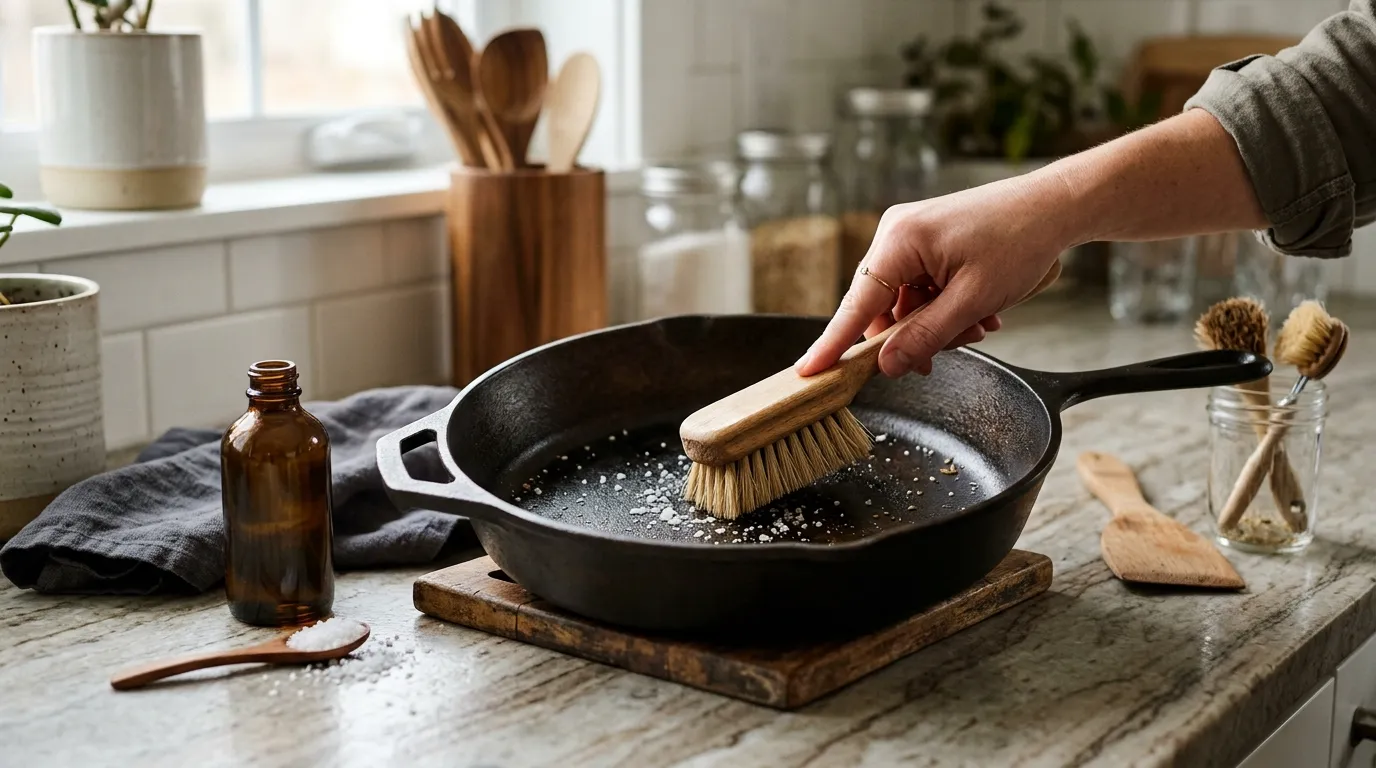
Scrub gently, dry fast, and oil light to protect the seasoning.
If you want to master how to clean cast iron cookware, you’re in the right place. I’ve restored flea‑market skillets and kept daily drivers slick for years. This guide blends proven methods, pro tips, and simple steps so you can clean, protect, and love your pan for life.
How cast iron seasoning works
Cast iron is full of tiny pores. When you heat thin layers of oil past their smoke point, the oil polymerizes and bonds to the surface. That hard, glassy film is seasoning. It resists rust, releases food easier, and gets better with use.
Knowing this makes how to clean cast iron cookware feel simple. You’re protecting that bond each time you wash. Heat, water, and oil are your tools to clean without stripping the layer you built. Keep this idea in mind as you read the steps below.
Daily cleaning: the 5-step method
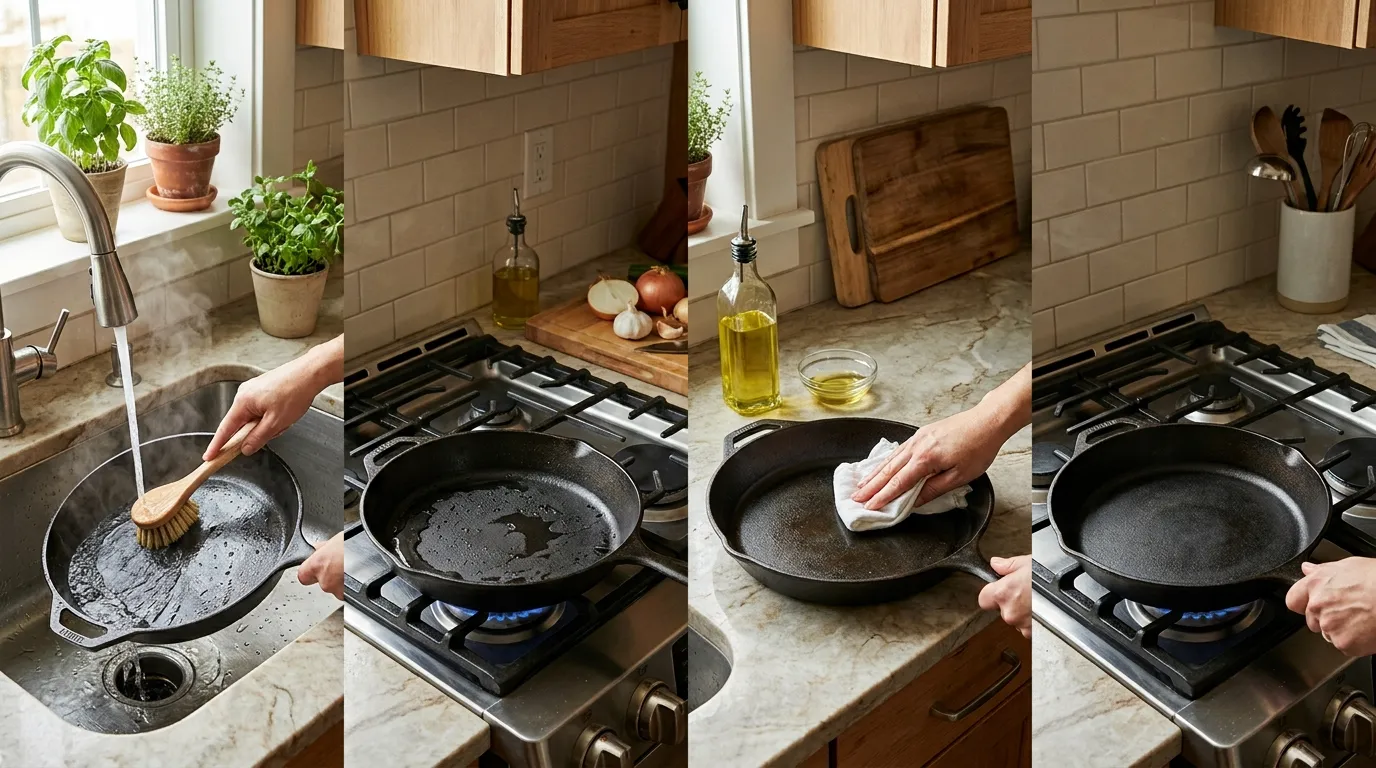
Follow this after most cooks. It keeps the pan clean and the seasoning strong.
- Rinse while warm. Pour out grease. Rinse with hot water. Warm metal releases bits easier.
- Scrub gently. Use a stiff brush, non-scratch pad, or coarse salt with a splash of water.
- Dry right away. Put the pan on low heat for 2 to 3 minutes until no steam shows.
- Oil thinly. Add a few drops of neutral oil. Wipe until the surface looks dry, not slick.
- Set the oil. Heat the empty pan on medium for 1 to 2 minutes. Cool and store.
If your towel shows dark residue, that is normal. It is bonded oil, not dirt. This is the core of how to clean cast iron cookware every day with no stress.
How to clean stuck-on food without ruining seasoning
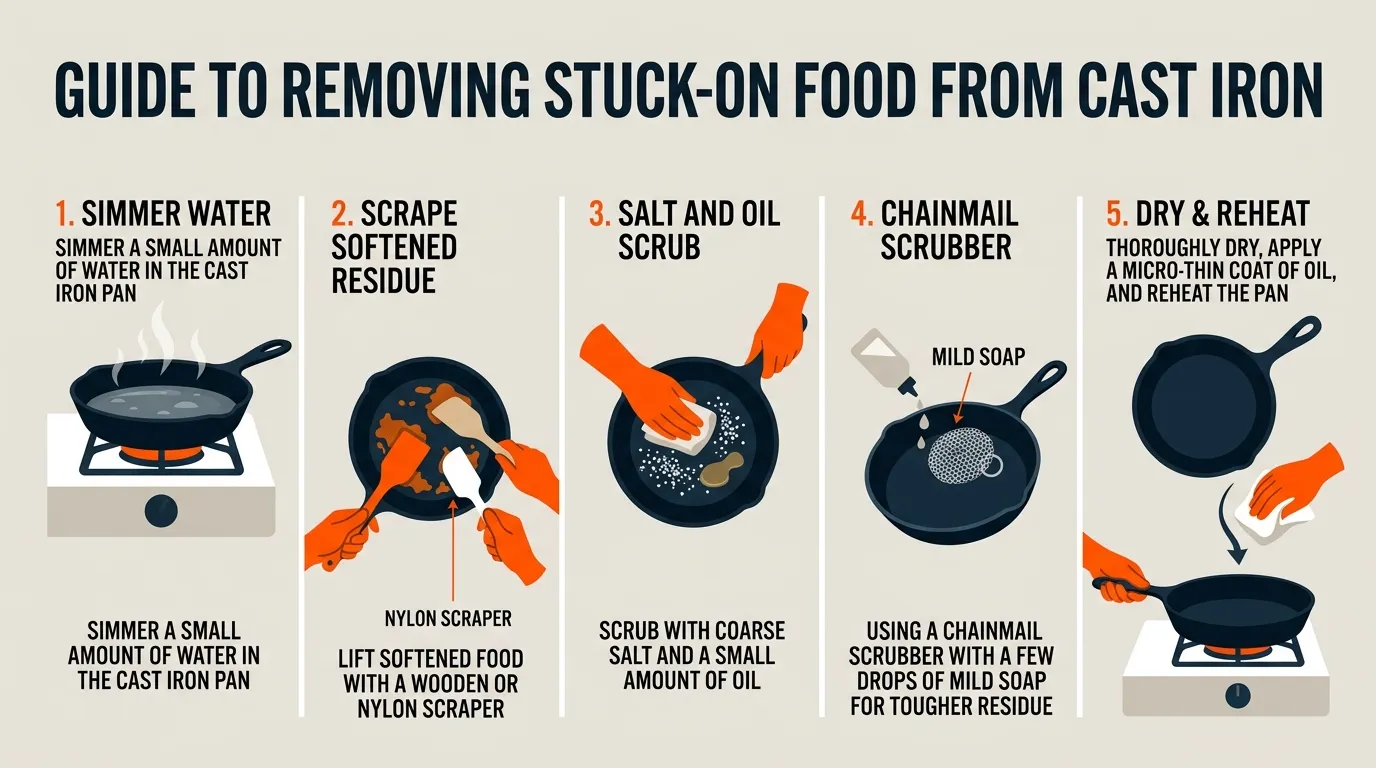
Stuck bits happen. Do not soak. Do not panic. Use heat and friction in short bursts.
- Simmer lift: Add a half cup of water. Simmer 2 to 3 minutes. Use a wooden or nylon scraper.
- Salt scrub: Sprinkle coarse salt. Add a teaspoon of oil. Rub with a paper towel or brush.
- Chainmail pad: For tougher crusts, use chainmail with a few drops of mild soap if needed.
- Re-warm and oil: Dry over heat. Wipe a micro-thin coat of oil. Heat again to set.
I once burned cornbread in a camp skillet. A 2-minute simmer and salt scrub saved the day. This approach keeps how to clean cast iron cookware quick, safe, and gentle.
Rust removal and full reseasoning
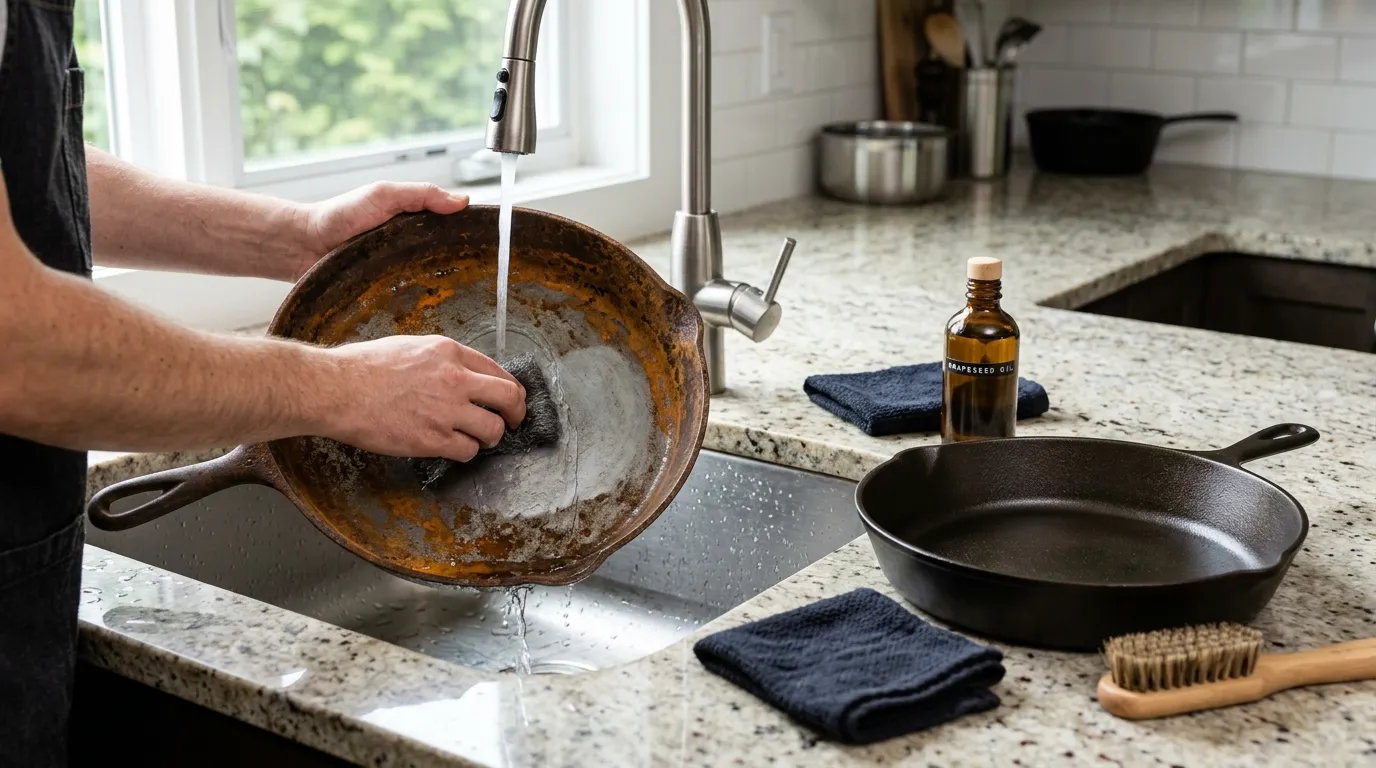
Light rust looks orange and dusty. Heavy rust feels rough.
- For light rust: Scrub with a non-scratch pad or fine steel wool under warm water. Dry over heat. Oil thinly. Heat to set.
- For heavy rust: Mix equal parts water and white vinegar. Soak only until the rust softens, often 30 to 45 minutes. Check often. Rinse, then scrub to bare metal. Dry over heat.
- Reseason: Wipe a whisper-thin coat of high-smoke oil (grapeseed, canola). Bake upside down at 450 to 500°F for 1 hour. Cool in the oven. Do 2 to 3 coats if needed.
Rust is not toxic, but it can pit metal over time. A careful reseason brings back the slick finish. This is the deep answer to how to clean cast iron cookware that sat too long.
Can you use soap? What about the dishwasher?
A little mild dish soap is fine. Modern soaps are not harsh lye. They will not strip hard, bonded seasoning. Rinse well and always re-oil.
Do not use the dishwasher. Prolonged wet heat and detergent will rust the pan and weaken seasoning. Avoid long soaks for the same reason. These rules are central to how to clean cast iron cookware without drama.
Cleaning different cast iron types
Not all cast iron is the same. Match the method to the surface.
- Bare cast iron: Follow the daily 5-step method. Use salt or chainmail for tougher jobs.
- Enameled cast iron: Soap is fine. Avoid metal pads. Do not shock a hot pot with cold water. For stains, use a paste of baking soda and water.
- Grill pans: Use a folded paper towel and tongs to wipe between ridges. A nylon grill brush helps. Steam-release stuck bits with a splash of water on low heat.
- Dutch ovens: Clean like a skillet. Dry the rim and lid lip well to prevent rust.
When people ask how to clean cast iron cookware with ridges or enamel, these small tweaks make all the difference.
Tools, oils, and products that work
The right kit makes cleaning fast and safe.
- Useful tools: Stiff brush, plastic or wood scraper, chainmail scrubber, non-scratch sponge, paper towels, lint-free cloths, coarse salt.
- Good oils: Canola, grapeseed, rice bran, avocado. They have higher smoke points and cure well. Extra-virgin olive oil is fine for cooking and light wipe-downs, but it can get sticky for full reseasoning.
- Conditioners: Beeswax-and-oil blends are handy. Use a tiny amount.
- Skip this: Oven sprays, harsh abrasives, steel wool unless you plan to reseason.
In testing, thin, even coats beat heavy ones every time. If the pan feels tacky after cooling, you used too much oil. Learn this feel, and how to clean cast iron cookware becomes second nature.
Food safety, smell, and taste
Seasoned cast iron is safe. The polymerized layer is inert. Brief soap use does not hurt it. Heat during cooking kills surface bacteria.
If the pan smells fishy or rancid, the oil layer went on too thick. Wash with hot water and a drop of soap. Dry, then wipe a micro-thin oil coat and heat to reset. Store with the lid cracked or a paper towel under the lid. These small habits are part of how to clean cast iron cookware and keep it fresh.
Mistakes to avoid and pro tips
Avoid these common pitfalls.
- Do not soak or air-dry. Water is the enemy of iron.
- Do not over-oil. Sticky pans collect dust and food.
- Do not leave acidic foods simmering for hours. Tomato sauce can dull young seasoning.
- Do not blast cold water onto a hot pan. It can warp.
Pro tips I swear by:
- Preheat low and slow. Add oil after the pan warms.
- After big cooks, do a 1-minute “micro-season.” Wipe oil, heat, cool.
- Keep a small bottle of oil and a cloth in the drawer with the pan. No excuses.
These habits shape how to clean cast iron cookware the easy way, every time.
Frequently Asked Questions of how to clean cast iron cookware
Can I use soap when I clean my cast iron?
Yes, a small amount of mild dish soap is safe. Rinse well, dry over heat, and add a thin oil coat to protect the seasoning.
How do I clean cast iron after cooking steak?
While warm, rinse with hot water and scrub with a brush. Dry over heat, wipe a tiny bit of oil, heat for a minute, then cool and store.
What oil should I use for seasoning after cleaning?
Use a neutral, high-smoke-point oil like canola, grapeseed, or rice bran. Wipe so thin the surface looks dry, then heat to set.
How do I remove sticky buildup on my pan?
Wash with hot water and a drop of soap, then scrub with chainmail or salt. Dry, apply a whisper-thin oil layer, and bake at 450°F for an hour if needed.
Is rust dangerous on cast iron?
Light rust is not dangerous, but it can damage the surface over time. Scrub it off, dry over heat, and reseason to restore the protective layer.
How often should I re-season a pan from scratch?
Only when food sticks badly or rust appears across large areas. Routine micro-seasoning after each clean keeps full reseasoning rare.
Can I clean cast iron in a dishwasher?
No. Dishwasher cycles soak and strip seasoning and can cause rust. Hand wash, dry over heat, and oil lightly.
Conclusion
Clean your cast iron while it is warm, dry it fast, oil it thin, and heat to set. That simple rhythm keeps the surface slick, food tasting great, and rust away. With a few tools and steady habits, you will master how to clean cast iron cookware for life. Try the 5-step method tonight, then share your results or questions—I’m happy to help you dial in the perfect pan.