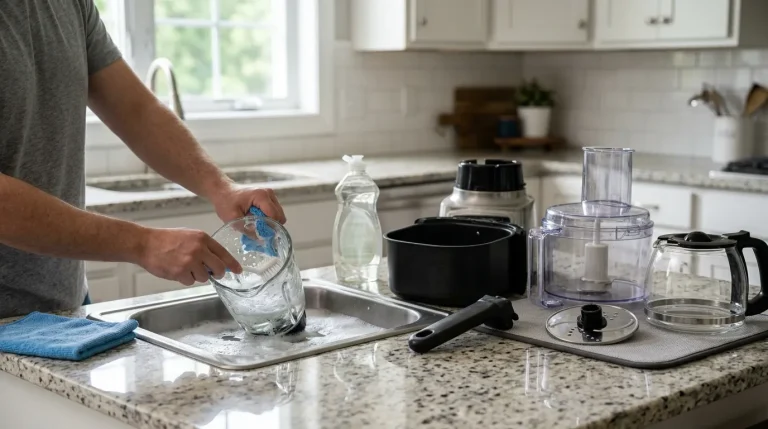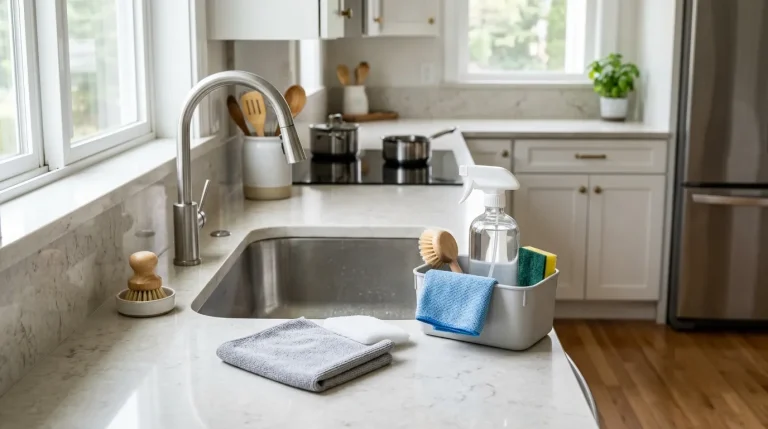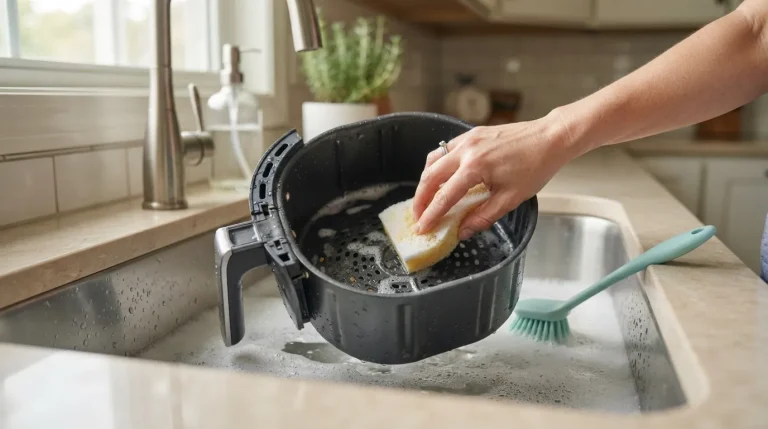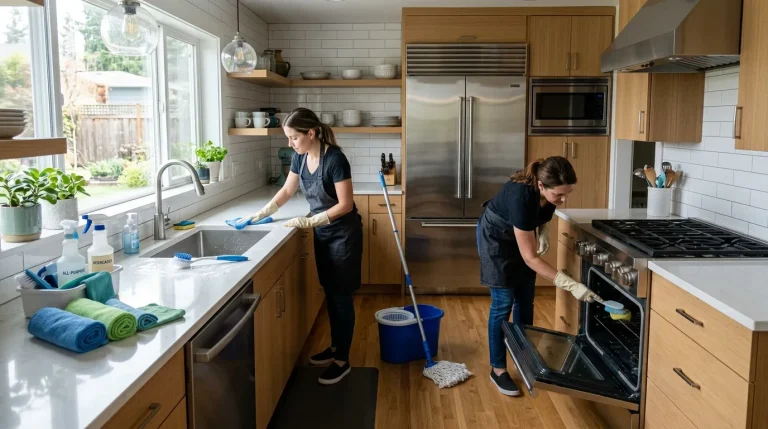
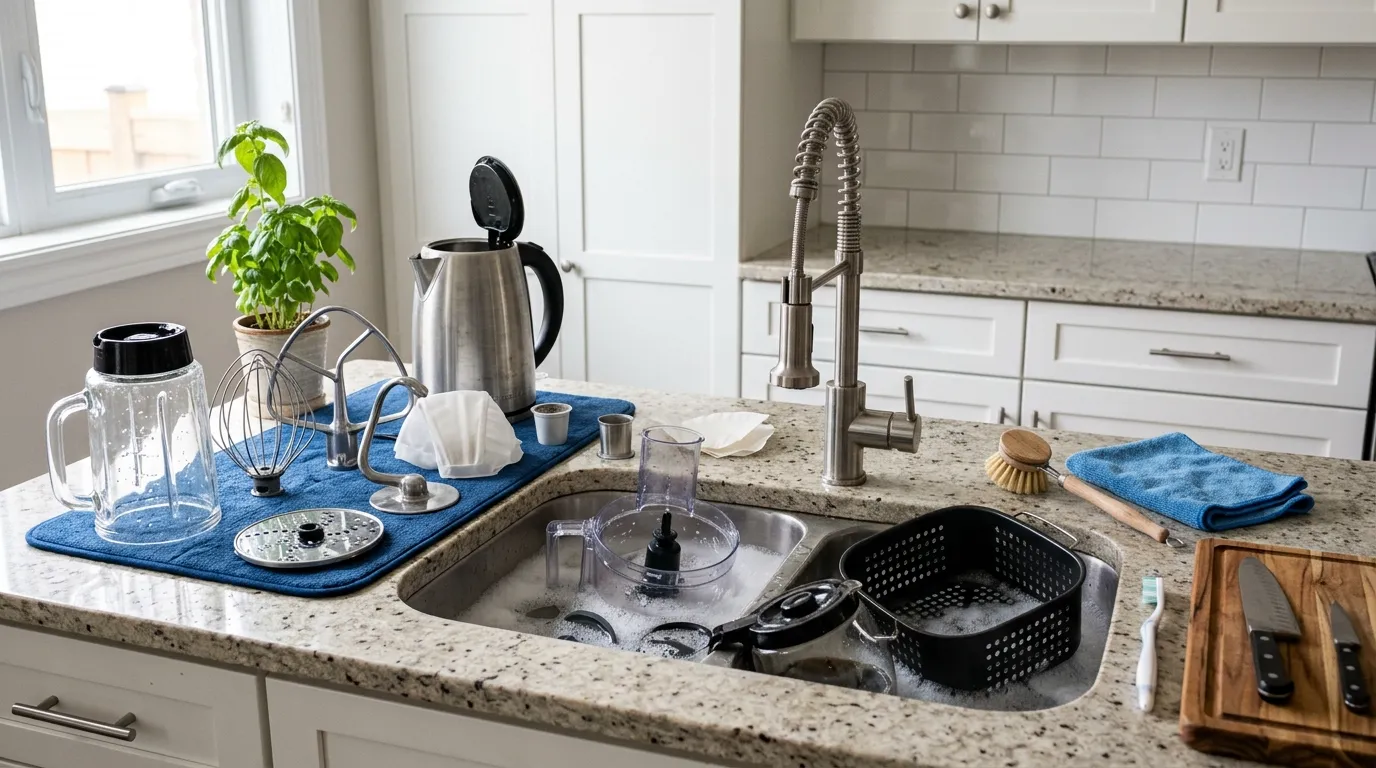
Unplug, take parts apart, wash with warm soapy water, wipe bases, dry well.
If you want to know how to clean kitchen gadgets the right way, you’re in the perfect place. I’ve cleaned gear in busy test kitchens and at home for years. This guide blends pro tips, safety rules, and real fixes. I’ll show you simple steps that protect your tools, save time, and make food taste better.
Safety, Supplies, and Rules That Protect Your Gadgets
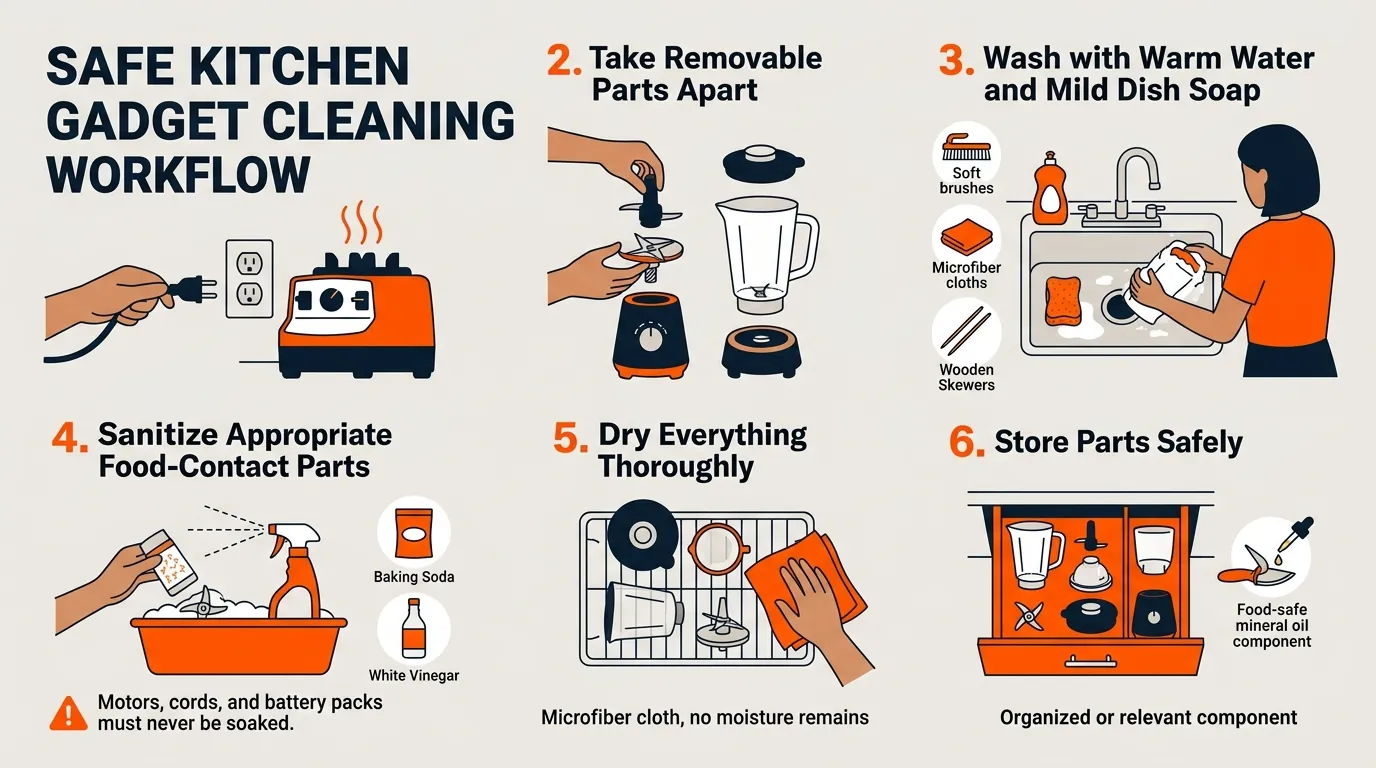
Before we dive into how to clean kitchen gadgets, start with safety. Always unplug, cool hot parts, and read the manual. Most mess comes off with warm water, mild dish soap, and a soft sponge.
Keep a small kit ready:
- Microfiber cloths and soft brushes for tight spots
- Old toothbrush and wooden skewers for seams
- Baking soda and white vinegar for grease and scale
- Food-safe mineral oil for wood
- 70% isopropyl alcohol or a mild bleach mix for sanitizing
Key rules I teach new cooks:
- Never soak motors, cords, or battery packs.
- Wash, then sanitize, then dry. Moisture left behind causes rust and odors.
- If a part says top-rack dishwasher safe, still check for warping risk.
Step-by-Step: Small Appliances You Use Daily
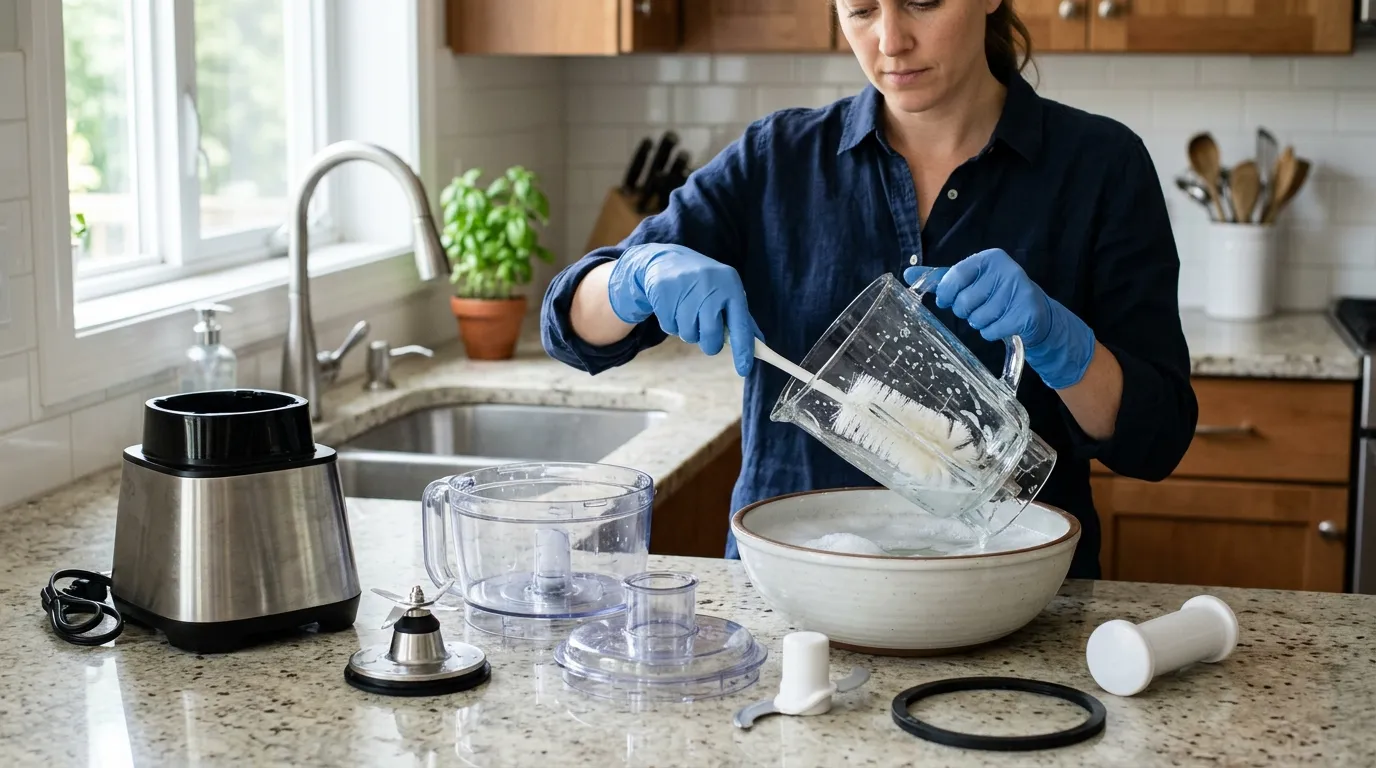
Here is how to clean kitchen gadgets you grab every day. These steps keep parts safe and kill germs. I add care notes I learned the hard way.
Blender or Food Processor
- Unplug. Remove blade and gasket first.
- Rinse jar right away so food does not dry.
- Wash jar, lid, blade, and gasket with soapy water. Use a bottle brush.
- For tough oil, add warm water and a drop of soap to the jar. Blend 10 seconds. Rinse.
- Dry at once. Lightly oil the gasket if the manual says so.
Pro tip: If it smells after a curry, blend baking soda and water. Rinse well.
Coffee Maker or Single-Serve Brewer
- Throw out pods or grounds. Empty the tray.
- Wash removable parts. Wipe the exterior with a damp cloth.
- Descale monthly. Run a 1:1 vinegar and water brew, then two water-only brews.
- Clean the needle and exit spout with a brush.
I once skipped descaling for three months. The coffee tasted flat. After a vinegar run, the crema came back.
Air Fryer or Toaster Oven
- Unplug and cool. Remove basket, tray, and racks.
- Soak parts in warm soapy water. Scrub with a non-scratch sponge.
- Wipe the interior with a damp cloth. Tilt and brush crumbs out.
- For baked-on grease, use a paste of baking soda and water. Wipe clean.
- Dry parts fully before use.
Never spray oven cleaner inside unless the manual allows it. It can strip finishes.
Stand Mixer
- Unplug. Remove bowl, attachments, and splash guard.
- Wash bowl and tools right away. Sticky batters set fast.
- Wipe the body with a damp cloth. Use a brush for seams and the hub.
- Check the beater height and grease points per the manual.
If you see black streaks in the bowl, adjust beaters to stop rubbing.
Electric Kettle
- Wipe the exterior. Do not submerge the base.
- Descale with a 1:1 vinegar and water boil. Let sit 15 minutes.
- Rinse and boil fresh water twice.
Mineral build-up slows heating and wastes power. A quick descale makes a big difference.
Hand Tools and Utensils That Need Extra Care
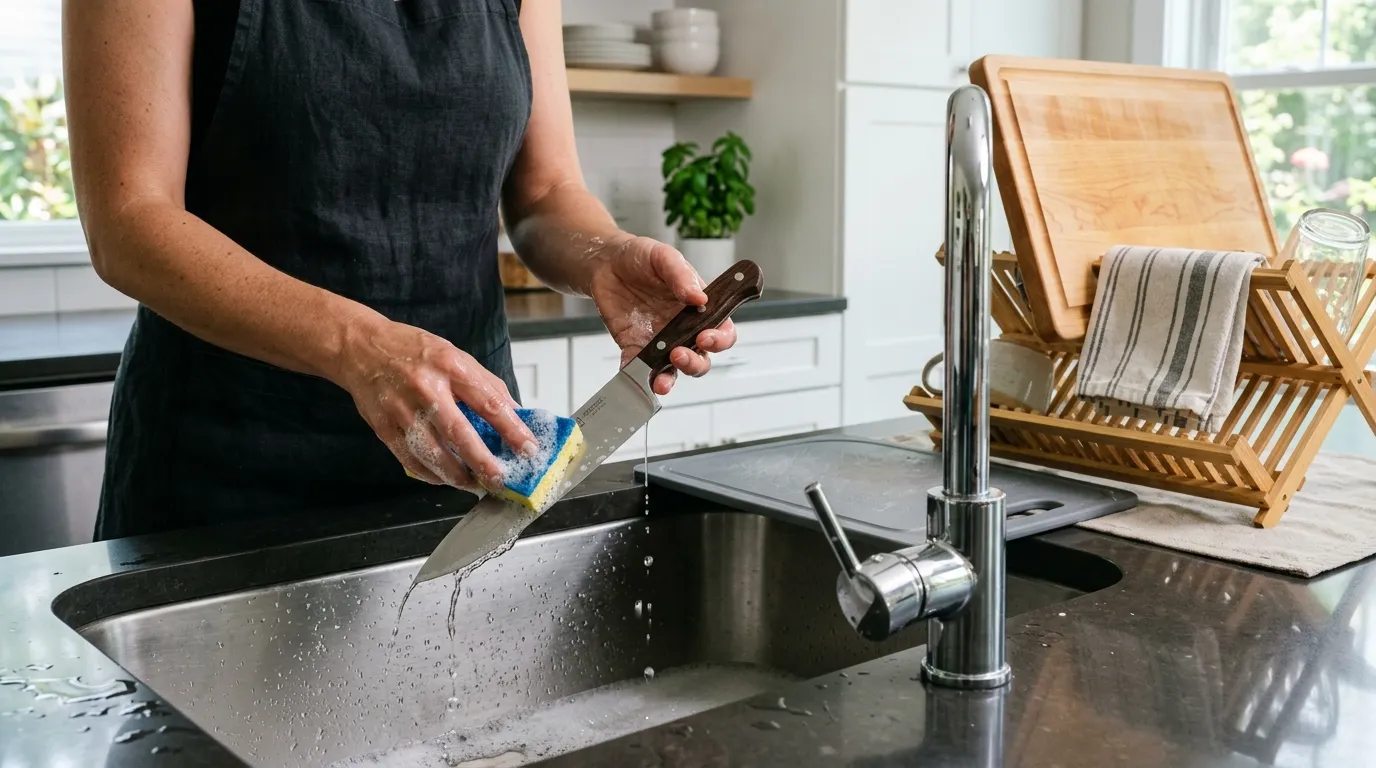
If you are learning how to clean kitchen gadgets that touch raw food, focus on tools. Hand tools spread germs fastest if not cleaned right. Keep it simple and steady.
Knives and Cutting Boards
- Hand wash knives. Dry right away. Never in the dishwasher.
- For plastic boards, wash and then sanitize with diluted bleach. Rinse and air dry.
- For wood boards, wash fast, never soak, and dry on edge. Oil with food-safe mineral oil.
If your board smells like onion, rub it with lemon and salt. Rinse and dry.
Graters, Zesters, and Garlic Presses
- Rinse at once so bits do not harden.
- Scrub from the back side to push food out.
- Use a brush. Dishwashers can dull fine teeth.
I keep a soft nail brush by the sink. It works better than a sponge on tiny holes.
Can Openers
- Scrub the wheel and gears with a toothbrush and soapy water.
- Rinse, dry, and add a drop of mineral oil to the gears.
- For electric units, remove the cutting head per the manual. Wipe the body only.
Silicone Spatulas and Whisks
- Remove heads from handles if they come apart.
- Soak in hot soapy water to lift oil film.
- If sticky, run a baking soda paste over the surface. Rinse clean.
Wooden Spoons and Rolling Pins
- Wash fast, no soaking. Dry at once.
- Sand lightly if rough. Oil with food-safe mineral oil.
If wood turns fuzzy, you soaked it too long. A quick sand saves it.
Deep Cleaning: Descaling, Degreasing, and Sanitizing
This is the part most folks skip when asking how to clean kitchen gadgets. Deep cleaning keeps water lines clear, metal bright, and germs low. Do it on a schedule.
Descale with vinegar:
- Mix equal parts white vinegar and water.
- Run through kettles and coffee makers. Let sit, then flush with water.
Degrease with baking soda:
- Make a thick paste and spread on greasy spots.
- Wait 10 minutes. Wipe with a damp cloth.
Sanitize food-contact parts:
- Use 1 tablespoon of unscented bleach per gallon of water.
- Soak for 1 minute. Rinse with clean water. Air dry.
You can also use 70% alcohol on probes and handles. Let it air dry for best germ kill.
Natural Cleaners vs Store-Bought: What Actually Works
People often ask how to clean kitchen gadgets with green products. Natural cleaners work well for light mess. For heavy grease or scale, you may need a stronger tool.
What to use and why:
- Vinegar loosens mineral scale but may etch some stones and some rubbers.
- Baking soda lifts grease but can scratch soft plastic if you rub hard.
- Dish soap cuts oil without harm. It is safe and cheap.
- Commercial descalers are fast and odor-free. They are good for coffee gear.
Always test a small area first. Avoid mixing chemicals, especially bleach with vinegar or ammonia.
Care Schedules, Storage, and Longevity
A plan makes how to clean kitchen gadgets easy. Little tasks often beat big jobs later. I keep a note on the fridge to track deep cleans.
Simple schedule:
- Daily: Rinse and wash after each use. Wipe motor bases.
- Weekly: Empty crumb trays. Clean gaskets and seals. Check for smells.
- Monthly: Descale kettles and brewers. Oil wood. Inspect cords and plugs.
Storage tips:
- Keep blades dry and covered. Use blade guards.
- Store gaskets and lids separate to air out.
- Add silica gel packs in drawers to fight moisture.
If a part is cracked or sticky, replace it. Small parts are cheaper than a new gadget.
Troubleshooting and Common Mistakes
Here are fixes I use when someone asks how to clean kitchen gadgets after a mishap. Most problems come from water where it should not go, or grease that baked on.
Common mistakes to avoid:
- Soaking motor bases or charging docks.
- Using steel wool on nonstick or anodized parts.
- Skipping the dry step, which leads to rust and mold.
- Grinding rice in a coffee grinder. Use cleaner pellets instead.
Quick wins:
- Turmeric stains on plastic? Sunlight fades them in a few hours.
- Cloudy blender jars? Soak in warm water with a spoon of vinegar, then rinse.
- Fish smell on silicone? Bake at low heat for 20 minutes to off-gas. Check the manual first.
Can I put my blender parts in the dishwasher?
Some parts can go on the top rack, like the jar and lid. Blades and gaskets may last longer with hand washing. Always check the manual.
Will vinegar harm stainless steel?
Vinegar is safe for short contact on most stainless steel. Rinse well and dry. Do not leave it soaking for hours.
How do I sanitize without bleach?
Use 70% alcohol on hard, non-porous surfaces. Let it air dry. You can also use a food-safe sanitizer spray.
Frequently Asked Questions of how to clean kitchen gadgets
How often should I descale coffee makers and kettles?
Once a month in hard water areas is ideal. Every two to three months may work if your water is soft.
What is the safest way to clean a meat grinder?
Disassemble and wash parts by hand with hot soapy water. Dry fully and rub a thin layer of oil on metal to prevent rust.
Are silicone spatulas dishwasher safe?
Most are, but some handles warp. If yours separates, wash by hand and dry the inside to prevent mildew.
How do I clean an instant-read thermometer?
Wipe the probe with alcohol before and after each use. Do not submerge the display end; a damp cloth works there.
Can I use baking soda on nonstick surfaces?
Yes, but use a soft cloth and light pressure. Avoid abrasive pads that can damage the coating.
Is hydrogen peroxide good for sanitizing cutting boards?
Yes, it works well on plastic boards. Pour, let sit a minute, then rinse and air dry.
What should I never put in the dishwasher?
Sharp knives, carbon steel, wood tools, and some gaskets should be hand washed. The dishwasher can dull, crack, or warp them.
Conclusion
Clean gear makes cooking faster, safer, and more fun. Start with unplugging, take parts apart, wash with soap, sanitize, and dry. Set a simple schedule so deep cleans never feel hard.
Pick two gadgets today and try these steps. Your food will taste fresher, and your tools will last longer. Want more tips like this? Subscribe and drop a question in the comments—I read every one.