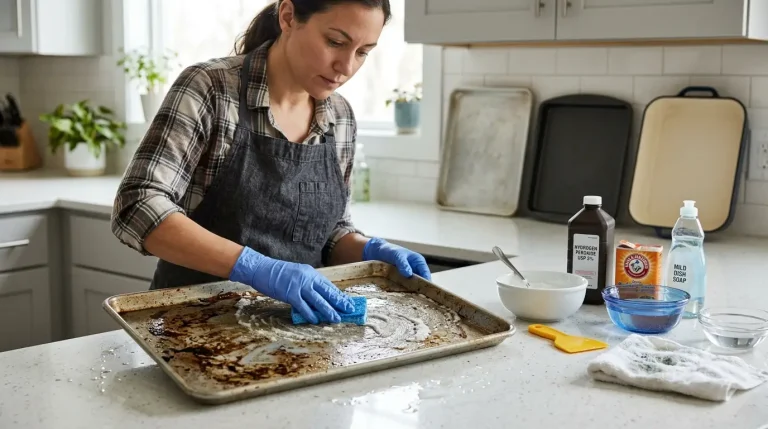
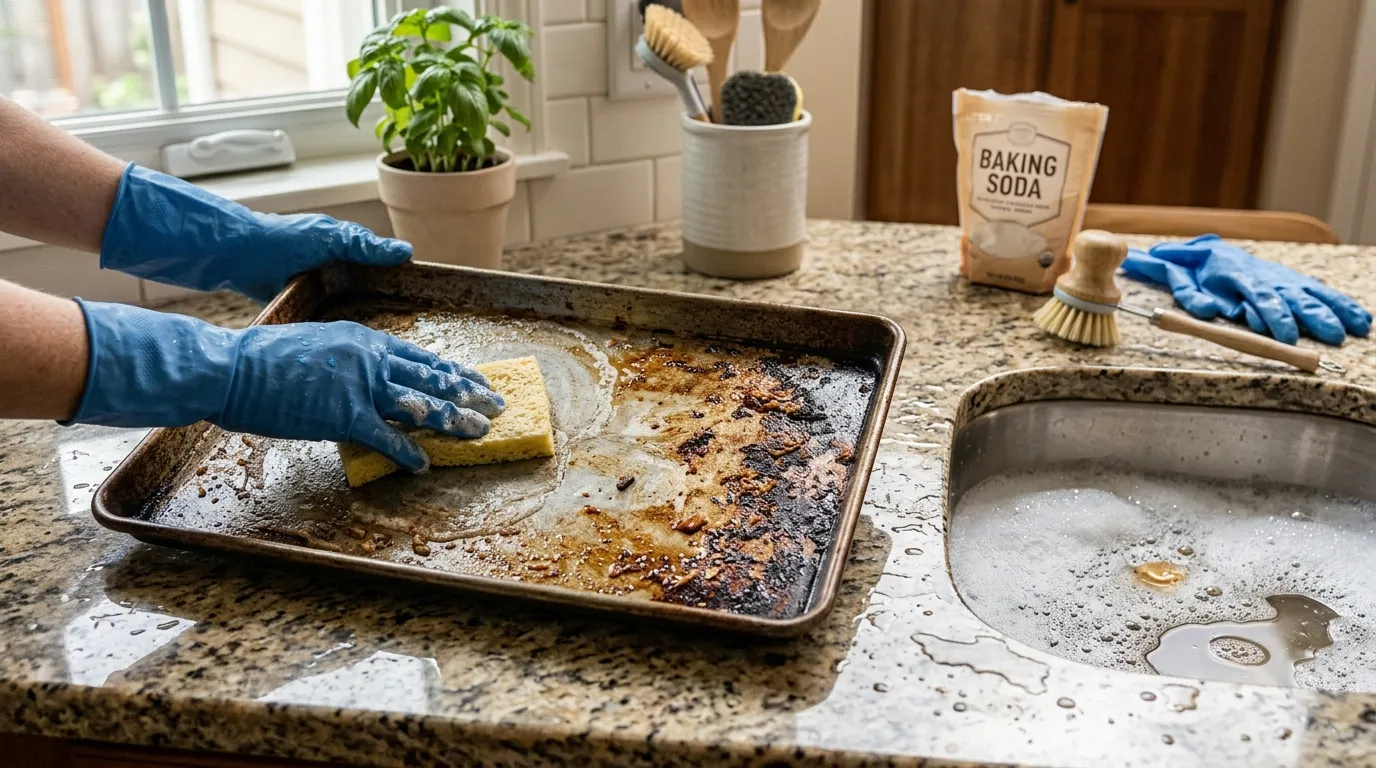
Use hot soapy water, baking soda, and a gentle scrub to clean baking trays.
If you want a simple, proven plan on how to clean baking trays, you’re in the right place. I’ve cleaned thousands of pans in busy kitchens and home tests. This guide shows how to clean baking trays fast, deep, and safely, with tips that protect each material and keep trays looking new
Why baking trays get so dirty
Oils bake into a hard film. Sugar burns and carbon sticks. Food bits hide in corners. This is why how to clean baking trays can feel tough. The grime is not just dirt. It is a mix of polymerized oil, carbon, and minerals.
Over time, that build-up makes trays sticky and dull. It can also smoke and add off flavors. A good clean breaks the bond. The right cleaner and method do the heavy lifting while you protect the surface.
Tools and cleaning ingredients that work
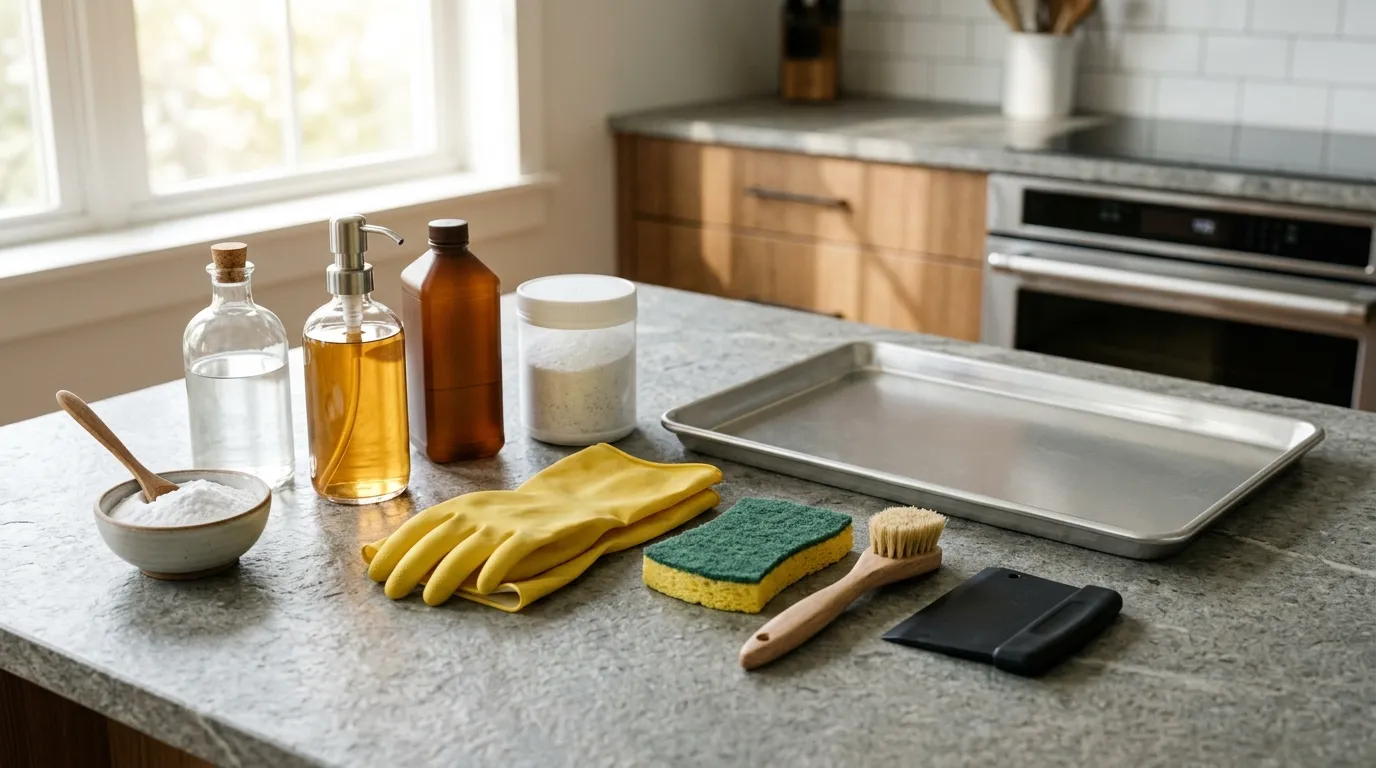
You do not need fancy gear. A few basics do the job well. Here is what I use when I show people how to clean baking trays at home or at work.
- Baking soda for gentle abrasion and to lift grease
- Dish soap to cut oil and suspend dirt
- White vinegar to neutralize baking soda and loosen mineral film
- Hydrogen peroxide for a stronger deep-clean paste with baking soda
- Oxygen bleach powder for a long soak on metal trays and racks
- Bar Keepers Friend or a similar oxalic acid cleaner for rust stains on steel
- Plastic scraper or old gift card to lift stuck bits
- Non-scratch sponge or nylon brush for safe scrubbing
- Fine steel wool only on uncoated stainless or carbon steel
- Gloves to protect your skin, and good airflow for fumes
Tip from experience: match the tool to the surface. That is the heart of how to clean baking trays without damage.
How to clean baking trays by material
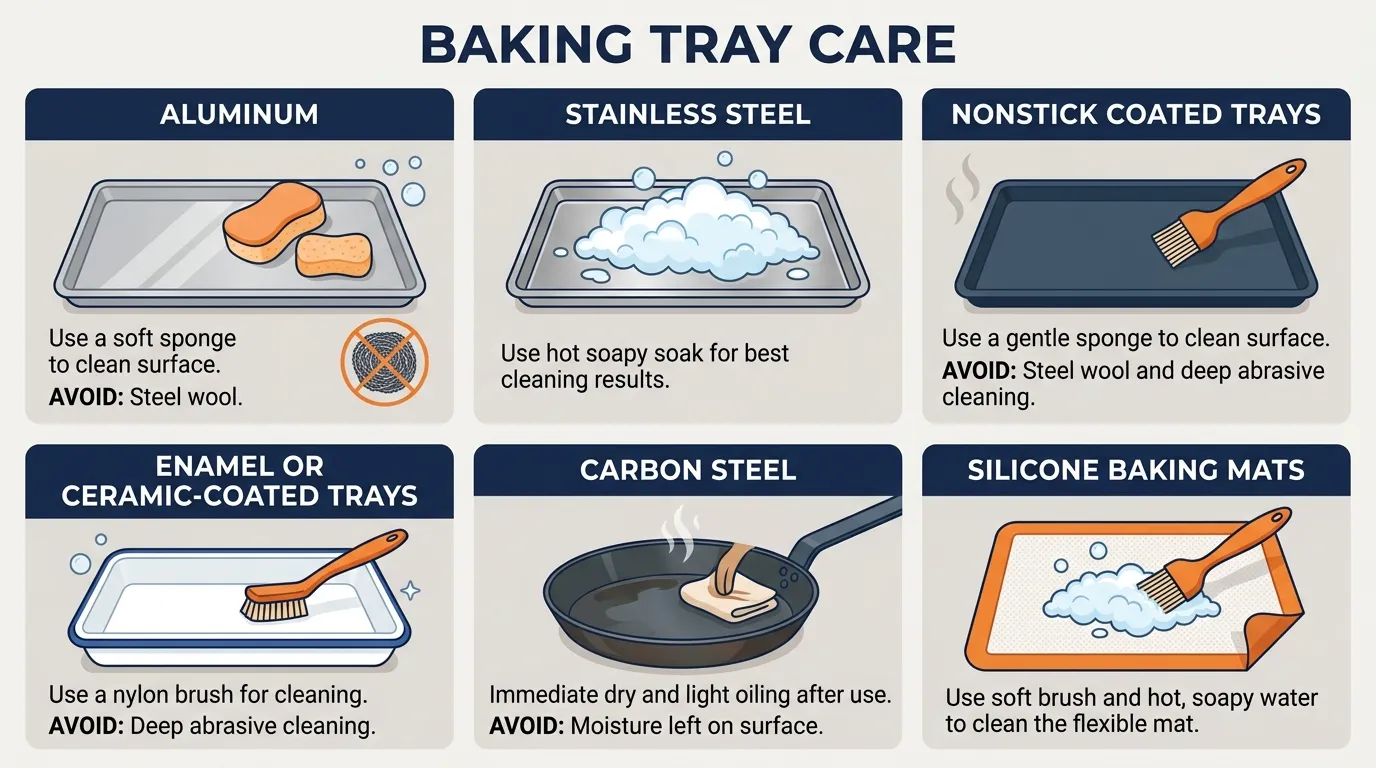
Different metals need different care. This section shows how to clean baking trays made of aluminum, stainless steel, nonstick, enamel, carbon steel, and silicone mats.
Aluminum sheet pans
- Rinse with hot water right after use.
- Sprinkle baking soda. Add a few drops of dish soap.
- Scrub with a soft sponge. Avoid steel wool to prevent dull gray marks.
- For tough spots, paste baking soda with hydrogen peroxide. Spread, wait 10 minutes, then scrub and rinse.
- Avoid long dishwasher cycles. They can darken bare aluminum.
Stainless steel trays
- Soak in hot soapy water for 15 minutes.
- Scrub with a nylon brush or fine steel wool on heavy carbon.
- For rainbow stains, use a mild oxalic acid cleaner. Rinse very well.
- Dry fast to prevent water spots.
Nonstick coated trays
- Let the tray cool. Heat shock can warp or crack the coating.
- Wash in warm soapy water with a soft sponge.
- For stuck film, use a paste of baking soda and water. Rub gently with fingers.
- Never use steel wool or harsh powder. Avoid oven cleaner on nonstick.
Enamel or ceramic-coated trays
- Soak in hot soapy water.
- Use a nylon brush. Avoid chipping the edges.
- For stains, try baking soda paste or a little oxygen bleach soak.
- Rinse and dry well.
Carbon steel trays
- Scrub with hot water and a drop of soap if needed.
- Dry at once. Wipe a thin oil layer to prevent rust.
- For stuck-on bits, boil a little water in the tray on the stove, then scrape with a plastic tool.
Silicone baking mats
- Wash with hot soapy water and a soft brush.
- For greasy film, soak 20 minutes in hot water with a spoon of baking soda.
- Rinse and dry flat.
These steps are my reliable base when I teach how to clean baking trays and extend their life.
Deep-clean methods for burnt-on grease
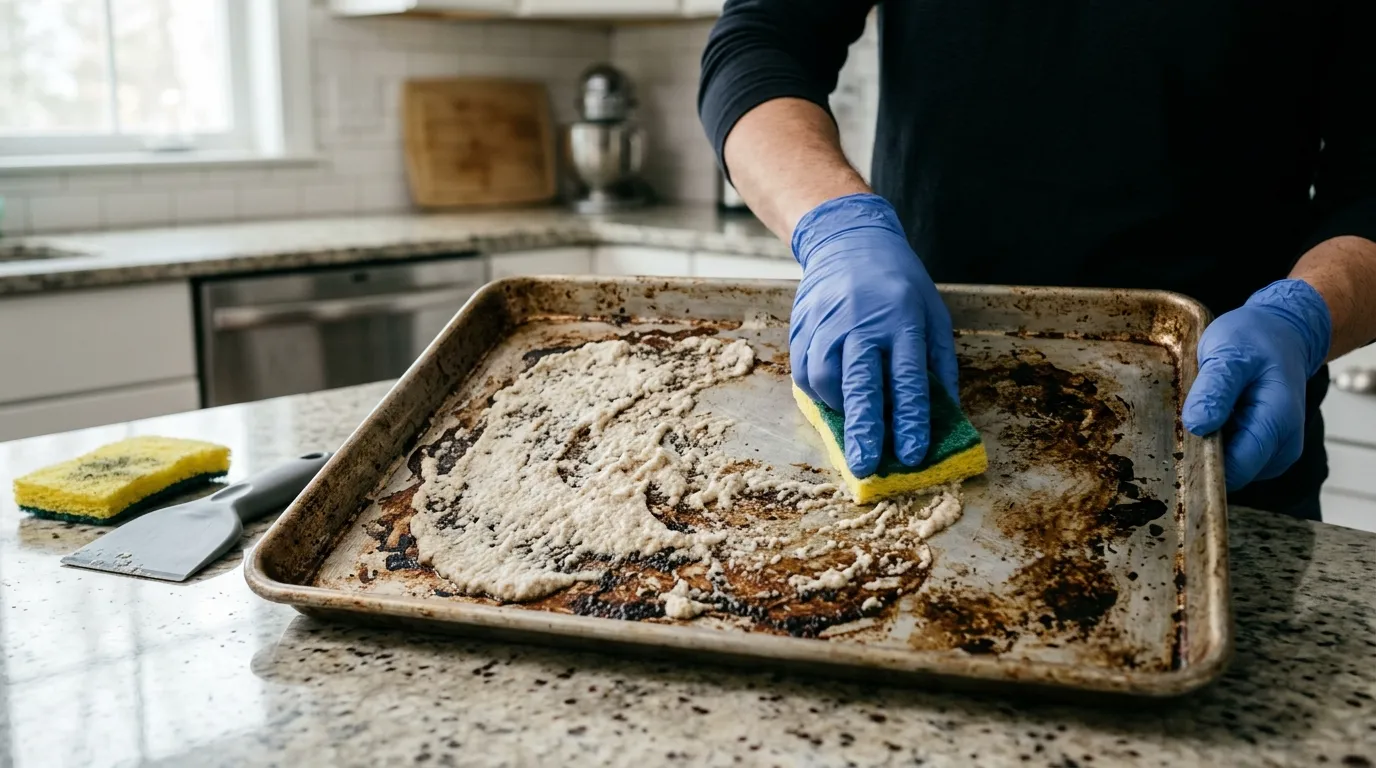
When trays are brown and sticky, use one of these proven deep-cleans. Each is safe when used right.
- Baking soda and peroxide paste. Mix three parts baking soda with one part hydrogen peroxide. Spread on stains. Wait 10 to 20 minutes. Scrub and rinse. This is my go-to for how to clean baking trays that look beyond hope.
- Dishwasher tablet rub. Wet the tray. Rub a pressed dishwasher tablet over stains. The enzymes and alkali lift grease. Rinse well.
- Hot soak with oxygen bleach. Fill sink with hot water. Add oxygen bleach per label. Soak metal trays 30 to 60 minutes. Scrub and rinse.
- Boil-and-scrape. Add a little water to the tray and a spoon of baking soda. Heat gently on the stove until hot but not boiling over. Scrape with a plastic tool.
- Oven cleaner caution. Use only on uncoated steel in a well-vented area. Wear gloves. Rinse and wash with soapy water after.
Do not mix chemicals. Never combine bleach and ammonia. Vent the area and wear gloves.
Daily routine to keep trays clean
A small habit beats a big scrub. This quick routine shows how to clean baking trays day to day so buildup never wins.
- While the tray is warm, wipe off loose bits.
- Rinse with hot water. Add a drop of dish soap.
- Use a non-scratch sponge and a quick scrub.
- Dry right away. Store when fully dry.
Line trays when it makes sense. Use parchment for sticky bakes. Use silicone mats for sugar. Foil is great for roasting messy items.
Stain and odor fixes
Discolor and smells happen. Here is how to clean baking trays and restore them.
- Brown films. Baking soda paste and a second pass with dish soap.
- Rainbow tint on stainless. Mild acid cleaner or vinegar rinse, then wash.
- Rust on steel. Bar Keepers Friend paste. Light rub. Rinse and dry.
- Garlic or fish odor. Wash, then wipe with vinegar. Rinse and air-dry.
If stains remain, set a goal of clean, not perfect. Cosmetic marks do not harm cooking when the surface is smooth and residue-free.
Natural cleaners vs commercial products
Both can work well. Choose based on the job and the material. This balance is key in how to clean baking trays without harm.
- Natural options. Baking soda, vinegar, and oxygen bleach are low-odor and budget friendly. They are great for routine care and many deep cleans.
- Commercial options. Enzyme sprays and oxalic acid powders remove tough protein and rust. Use them with care and rinse very well.
- What matters most. Dwell time, agitation, and hot water do most of the work.
Food safety guidance says to rinse all cleaners off food-contact surfaces. Dry fully to prevent spotting and rust.
Safety and care for food-contact surfaces
Good cleaning should also be safe. Follow these basics when learning how to clean baking trays the right way.
- Wear gloves to protect your skin.
- Vent the area. Fumes can build up in small spaces.
- Do not mix products. Bleach plus ammonia is dangerous.
- Read labels. Follow dwell time and rinse steps.
- Avoid abrasive pads on nonstick or enamel.
When unsure, test a small spot on the back of the tray.
Common mistakes to avoid
Small errors can shorten a tray’s life. Here is how to clean baking trays and skip the pain.
- Scratching nonstick with steel wool or knives.
- Soaking bare aluminum overnight in strong alkali.
- Using oven cleaner on coated trays.
- Letting trays air-dry with water spots that turn to marks.
- Stacking wet trays, which can trap moisture and cause rust.
I learned these the hard way in a busy bakery. A five-minute check saves a $30 pan.
Storage and long-term care
Care does not end at the sink. Smart storage supports how to clean baking trays less often.
- Dry fully before stacking.
- Use thin pan protectors or a paper towel between trays.
- Keep trays in a dry cabinet to prevent rust.
- For carbon steel, wipe a thin coat of oil after drying.
Once a month, give trays a short deep-clean pass. It keeps buildup from winning.
Frequently Asked Questions of how to clean baking trays
What is the fastest way to clean baking trays after roasting?
While the tray is warm, wipe off bits, add hot soapy water, and scrub with a soft sponge. If grease clings, use a quick baking soda paste and rinse well.
How do I know how to clean baking trays without damaging nonstick?
Use warm soapy water, a soft sponge, and a gentle baking soda paste for stains. Avoid steel wool, harsh powders, and oven cleaner on nonstick.
Can I use the dishwasher for aluminum trays?
Dishwashers can darken bare aluminum and leave a chalky look. Hand wash with baking soda and soap to protect the finish.
What works best for burnt sugar on trays?
Use hot water to soften, then a baking soda paste and a plastic scraper. If needed, try a short soak with oxygen bleach and rinse very well.
Is it safe to use oven cleaner on baking trays?
Only use on uncoated steel and with good ventilation and gloves. Wash with soap and water afterward to remove residue.
How to clean baking trays that smell like fish or garlic?
Wash with hot soapy water, then wipe with vinegar and rinse. Air-dry in sunlight if possible to remove lingering odors.
How often should I deep clean baking trays?
Do a deep clean every four to six weeks, or sooner if you see sticky film. A short monthly pass keeps trays easy to maintain.
Conclusion
Clean trays cook better, smell better, and last longer. Start with hot soapy water, add baking soda when needed, and match the method to the material. That is the simple core of how to clean baking trays with confidence.
Pick one tray today and try a quick clean. Set a monthly deep-clean reminder so grease never wins. If you found this helpful, subscribe for more kitchen care tips or share your own tricks in the comments.