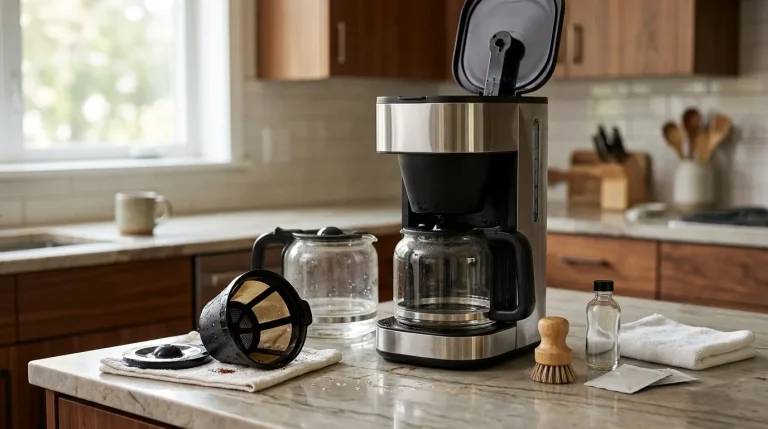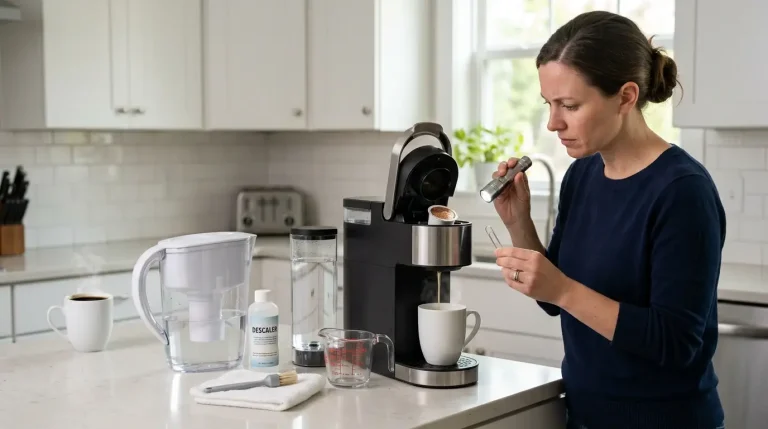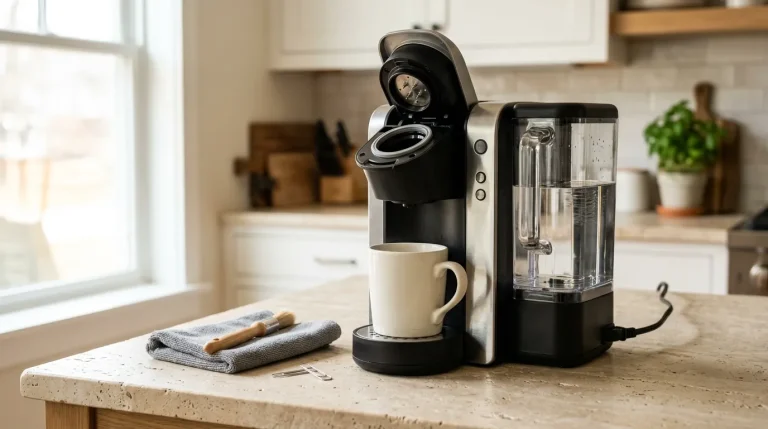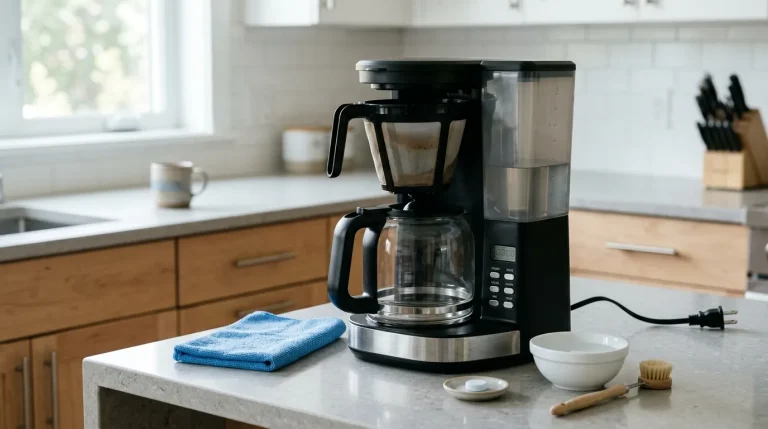

Unplug the machine, descale, clear the inlet, prime the pump, and reseat valves.
If your morning brew halts because the machine will not move water, you are not alone. I have fixed dozens of stubborn brewers at home and on a repair bench. This guide breaks down every likely cause and shows a safe, step-by-step coffee maker not pumping water fix that works for drip, single-serve, and many espresso machines. Expect clear steps, simple tools, and proven tips you can do today.
How a coffee maker moves water (and why it stops)
Most drip and single-serve machines heat water in a small boiler or tube, then push it through a one-way valve and up to the brew head. A small pump or a heat-based “bubble pump” creates flow. If scale, debris, or air blocks that path, water stops.
Key parts to know:
- Reservoir The tank that holds cold water.
- Inlet screen A tiny mesh that catches debris.
- One-way (check) valve Lets water move forward, not backward.
- Heater tube or boiler Heats and helps move water.
- Pump Mechanical in many single-serves; thermal in classic drip makers.
- Brew head Where hot water exits over the grounds.
If any of these clog or stick, try the coffee maker not pumping water fix below before you think about a new machine.
Quick checklist: coffee maker not pumping water fix

Move through these in order. Most issues clear in minutes.
- Unplug and cool Always start safe.
- Check the reservoir Make sure it is full and seated. Rinse it.
- Inspect the inlet screen Pop it out if you can and rinse it clean.
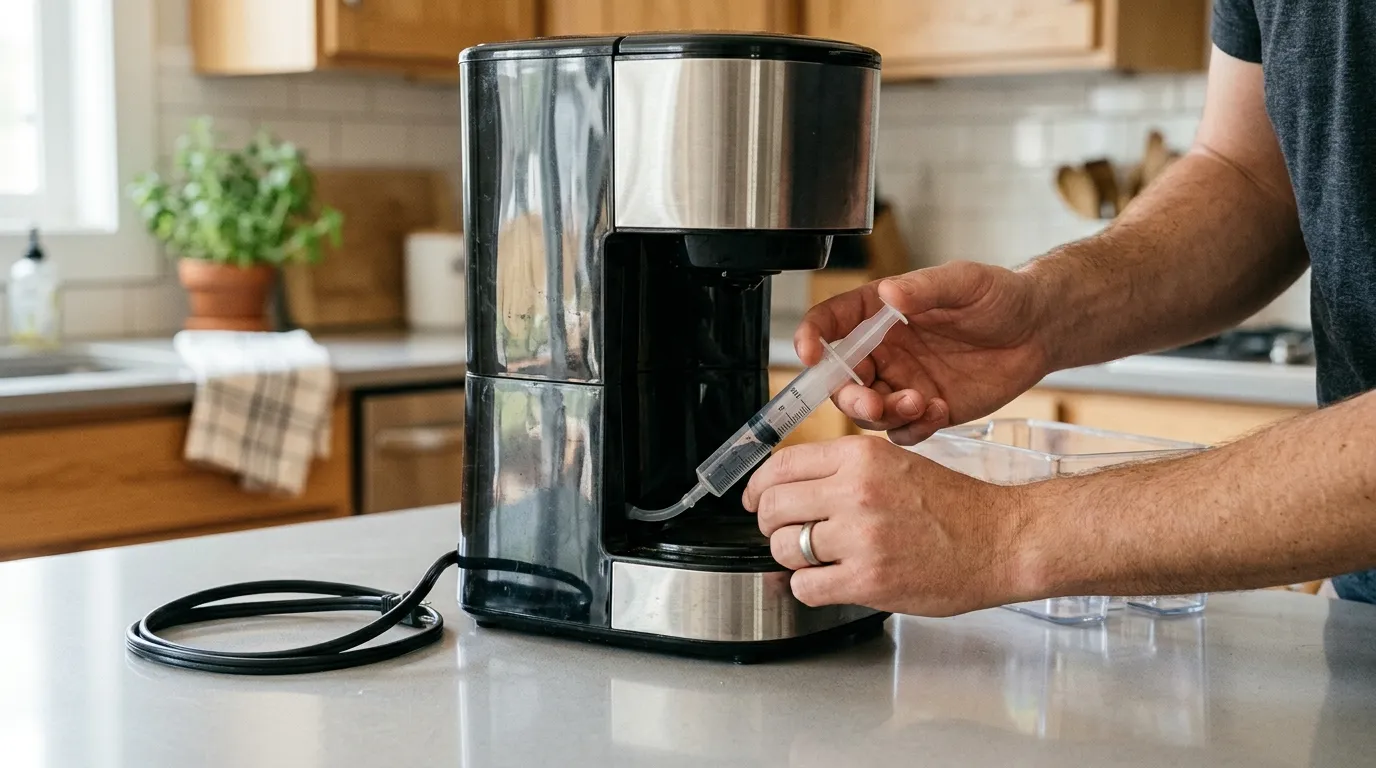
- Prime the system Fill the tank, then run a brew cycle with no coffee. If nothing moves, gently suck or blow through the silicone intake tube (off the machine, if reachable) to clear airlocks.
- Descale Run a descaling cycle with a proper solution or citric acid. This single step solves most cases of a coffee maker not pumping water fix.
- Reseat hoses If you can access the tubing, look for kinks and loose clamps.
- Tap the check valve A light tap often frees a stuck valve ball.
- Try a second prime After descaling, run two clean-water cycles.
If these steps help at all, repeat descaling. Many successes with a coffee maker not pumping water fix come after two slow descale passes.
Step-by-step diagnostics and fixes
Before you open anything, unplug the machine and let it cool.
1) Airlock or dry start
Symptoms: Loud hum, little or no flow, new machine or after sitting dry.
Fix:
- Fill the reservoir to the max line.
- Run a cycle with no filter or coffee.
- If no flow, remove the water tank. Cover the intake port with a clean straw or syringe and gently push water in to prime. Re-seat the tank and try again.
Pro tip: I keep a cheap turkey baster for priming. It has rescued many “dead” units in one minute. This quick trick often delivers a coffee maker not pumping water fix without tools.
2) Mineral scale clog
Symptoms: Slow drip, chugging, partial cups, gurgling, or “Add Water” error despite a full tank.
Fix:
- Mix descaler per label. For citric acid, use 1–2 tablespoons per liter of warm water.
- Fill the tank and start a brew. Halfway through, pause for 20–30 minutes. Finish the cycle.
- Rinse with two full tanks of clean water.
Note: Vinegar can work (1 part vinegar to 1–2 parts water), but it smells and some brands discourage it. Use a coffee machine descaler if unsure.
3) Clogged inlet screen or filter basket
Symptoms: Water never leaves the tank, but the machine heats.
Fix:
- Remove the tank. Lift out the mesh screen if present. Rinse and brush.
- Make sure paper filters or mesh baskets are not doubled, torn, or blocked.
- Try a no-filter water-only run to test flow.
4) Stuck check valve or kinked tube
Symptoms: Pump hums, no water movement; flow returns after tapping the machine.
Fix:
- If you can open the bottom cover, inspect silicone tubes. Straighten kinks.
- Locate the small plastic check valve. Tap it gently. Backflush a little warm water through it if you can remove and reattach it.
- Re-clamp tubes firmly. Air leaks will stop flow.
My bench note: I once revived a 10-year-old drip maker by soaking its valve in hot citric solution for 10 minutes. The ball freed up, and flow returned like new.
5) Pump or thermostat issues
Symptoms: No sound at all, or the heater never gets hot.
Fix:
- If there is no heat or pump noise, the thermal fuse or thermostat may be blown. These are replaceable but need basic electrical skill.
- For single-serve machines with vibratory pumps, a weak pump can be replaced. Check parts availability before you proceed.
If you are not comfortable with a screwdriver and a meter, skip internal repairs and call support. Your safety matters more than a cup of coffee.
The complete descaling guide
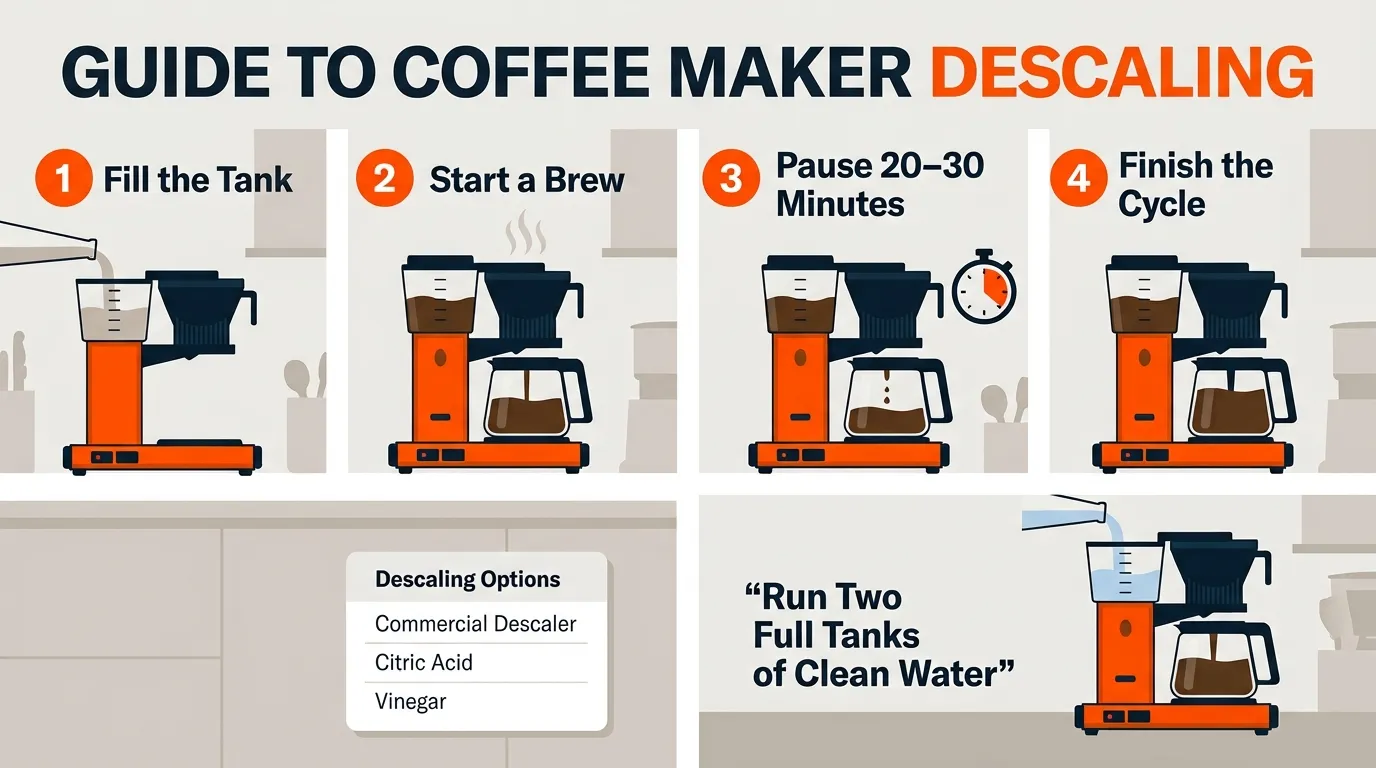
Descaling is the most common coffee maker not pumping water fix. It dissolves mineral buildup that chokes tubes and valves.
Best options:
- Commercial descaler Designed for coffee machines. Reliable and low odor. Follow the label.
- Citric acid Food-grade powder. Mix 1–2 tablespoons per liter. Cheap and effective.
- Vinegar 5% acetic acid. Mix 1:1 to 1:2 with water for heavy scale. Rinse very well.
How to descale right:
- Fill the tank with descaler mix.
- Start a brew. When you see steady flow, pause the machine for 20–30 minutes.
- Finish the cycle. Let it sit again for 10 minutes.
- Run two full tanks of clean water to rinse.
Tip: If flow improves but is not perfect, repeat. Scale often breaks loose in layers.
Preventive care so the problem stays gone
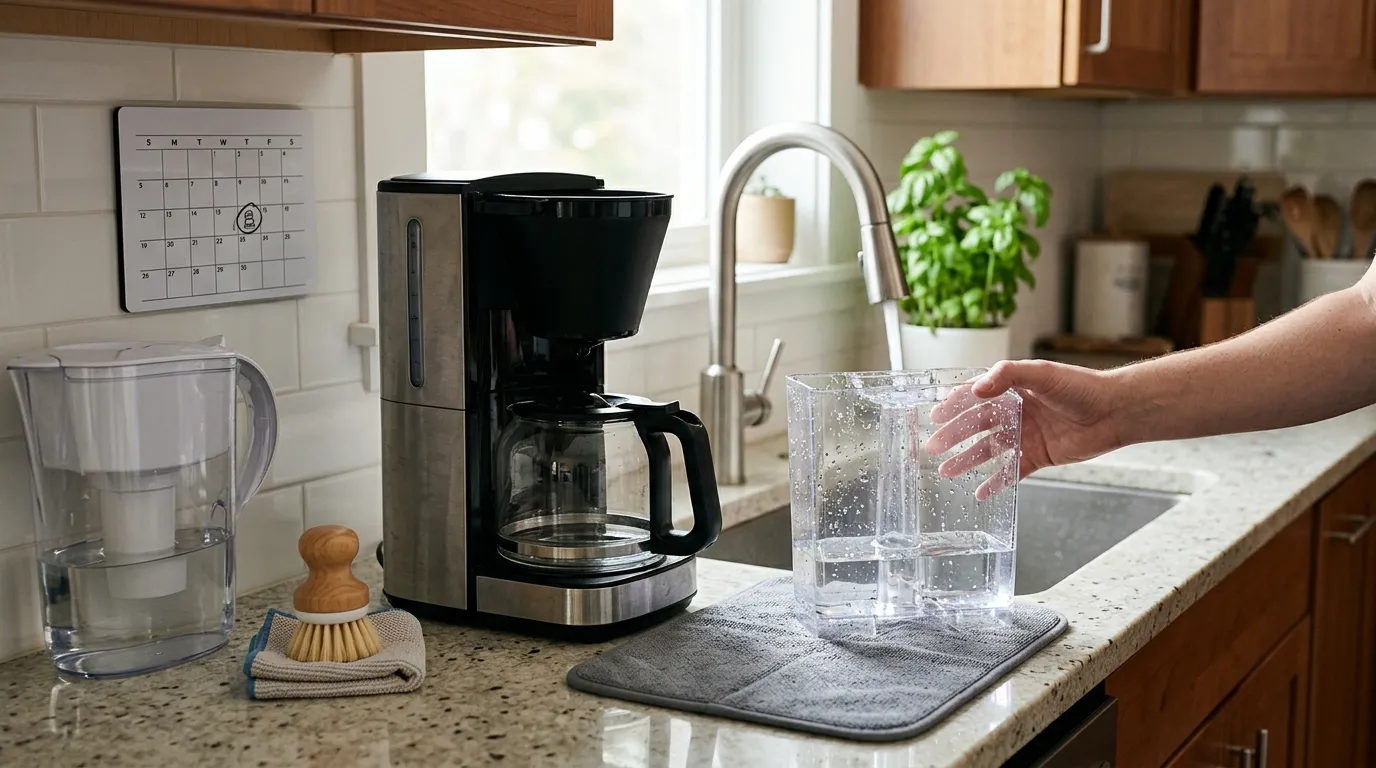
Good habits prevent most clogs and pump stalls.
- Use filtered or soft water It lowers scale growth.
- Empty and air-dry the tank weekly Biofilm and slime can block screens.
- Descale on a schedule Every 1–3 months, faster with hard water.
- Replace filters on time Charcoal reservoir filters lose effect after 2 months.
- Brew head cleaning For single-serve, run a water-only cycle daily.
Set reminders. I use a calendar note every 8 weeks. This small routine is a long-term coffee maker not pumping water fix because it stops the root cause.
Model-specific notes (drip, single-serve, espresso)
Different machines fail in different ways. Adjust your approach.
- Drip coffee makers Many use a heat-based pump. Scale in the aluminum tube is common. Descale slowly and tap the base to free bubbles.
- Single-serve (Keurig-style) These use vibratory pumps. Needles clog with coffee oils. Clean the entrance and exit needles with the tool or a paperclip, then descale.
- Espresso machines Three-way valves and boilers can gum up. Backflush the group with detergent (if the machine supports it) and descale the boiler per the manual.
In every case, the coffee maker not pumping water fix begins with safe power-off checks, priming, and a patient descale.
When to repair or replace
Repair makes sense when the fix is simple: descaling, unclogging, or re-seating a hose. Replace or seek pro service when you see leaks inside the base, a burnt smell, or a dead heater.
Rules of thumb:
- If parts cost over half the price of a new unit, consider replacing.
- If your machine is under warranty, contact support first.
- If you must open the case to reach mains wiring, stop unless you are trained.
A smart choice here saves money, time, and stress. If basic steps did not solve your coffee maker not pumping water fix, a new, efficient model may be the better path.
Frequently Asked Questions of coffee maker not pumping water fix
Why is my coffee maker humming but no water comes out?
Airlocks or a stuck check valve are common causes. Prime the intake with a syringe or baster and run a slow descale cycle.
Can vinegar damage my coffee maker when descaling?
Most machines tolerate diluted vinegar, but some brands advise against it. Use a commercial descaler or citric acid if you are unsure.
How often should I descale to prevent pumping issues?
With hard water, descale every 4–8 weeks. With soft or filtered water, every 2–3 months is usually enough.
What if I cleaned the needles on my single-serve and it still won’t pump?
Descale the internal pump path and check the tank’s inlet screen. Replace the charcoal filter and re-prime the system.
Is a pump replacement worth it on an older machine?
If the machine is a premium model and parts are cheap, yes. For budget units, replacement is often more cost-effective.
Conclusion
A stalled brewer is almost always fixable with patient steps: safe checks, a good prime, and a thorough descale. You now have a complete coffee maker not pumping water fix, plus habits to keep water flowing strong.
Put this guide to work today. If you found it helpful, share it with a friend, subscribe for more home repair tips, or drop a comment with your results.