Keep knives sharp by honing often, sharpening on stones, and gentle daily care.
A sharp knife helps you cook faster, safer, and with joy. I have kept pro kitchen blades razor sharp for years, and I’ll show you How to Maintain Knife Sharpness with simple steps that work at home. Read on to learn what to do each day, each week, and each month, plus real examples, tested tools, and a clear plan you can trust.
Why Sharpness Matters
A sharp edge grips food and slices clean. It does not skid or crush. That means less force, fewer slips, and better flavor because cell walls stay intact. If you want control and speed, learn How to Maintain Knife Sharpness and bake it into your routine.
In my first line cook job, I fought a dull chef’s knife for a week. Once I honed it right and set a fresh apex on a stone, prep time dropped by a third. Safety and joy rose at once. Good edges pay you back every day.
The Science of the Edge
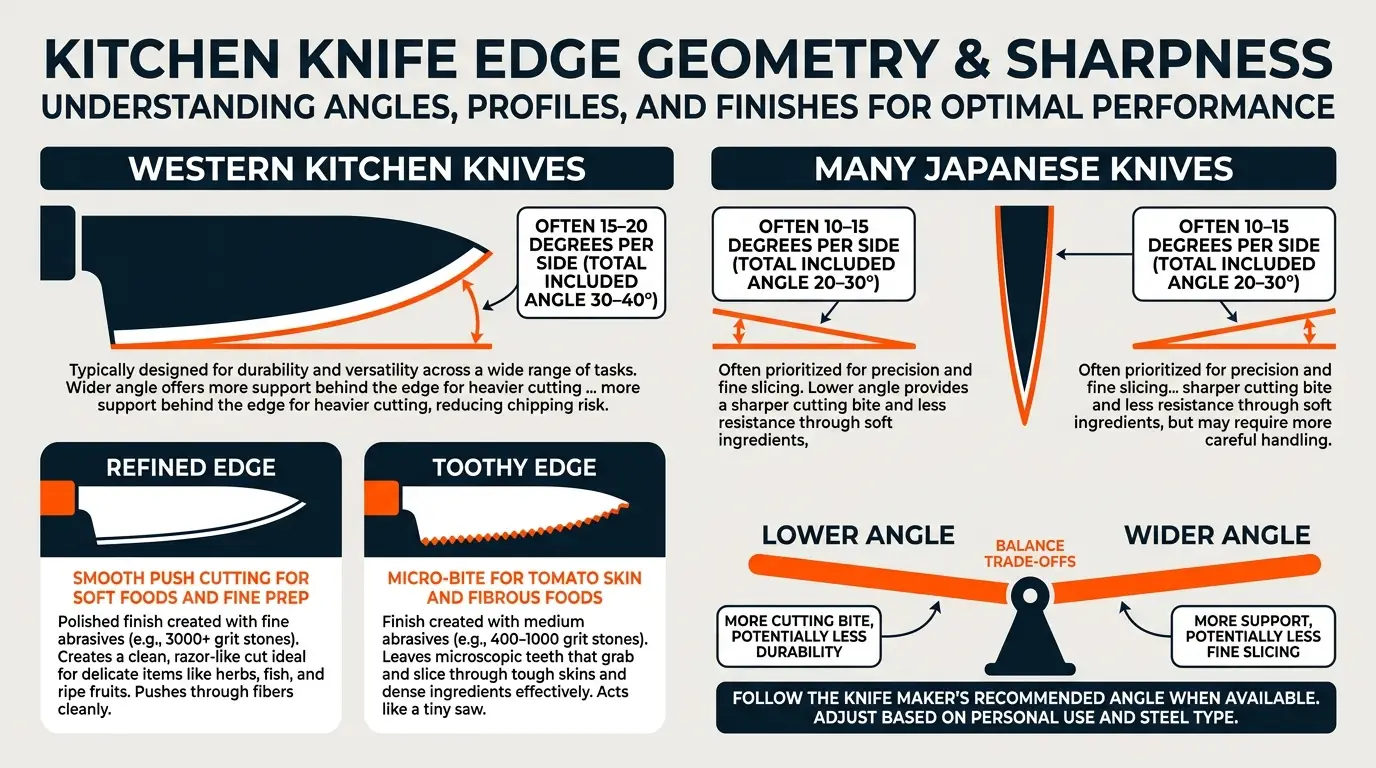
A sharp knife has a tiny wedge at the edge. The angle and polish set how it bites and how long it stays sharp. Western knives often use 15 to 20 degrees per side. Many Japanese knives use 10 to 15 degrees per side for more bite but need gentler care.
Steel hardness, heat treat, and grind all play a role. A fine finish cuts soft foods well. A toothy finish grips tomato skins and rope. Knowing this helps you choose the right tool to Maintain Knife Sharpness for your style.
Daily Habits That Protect Your Edge
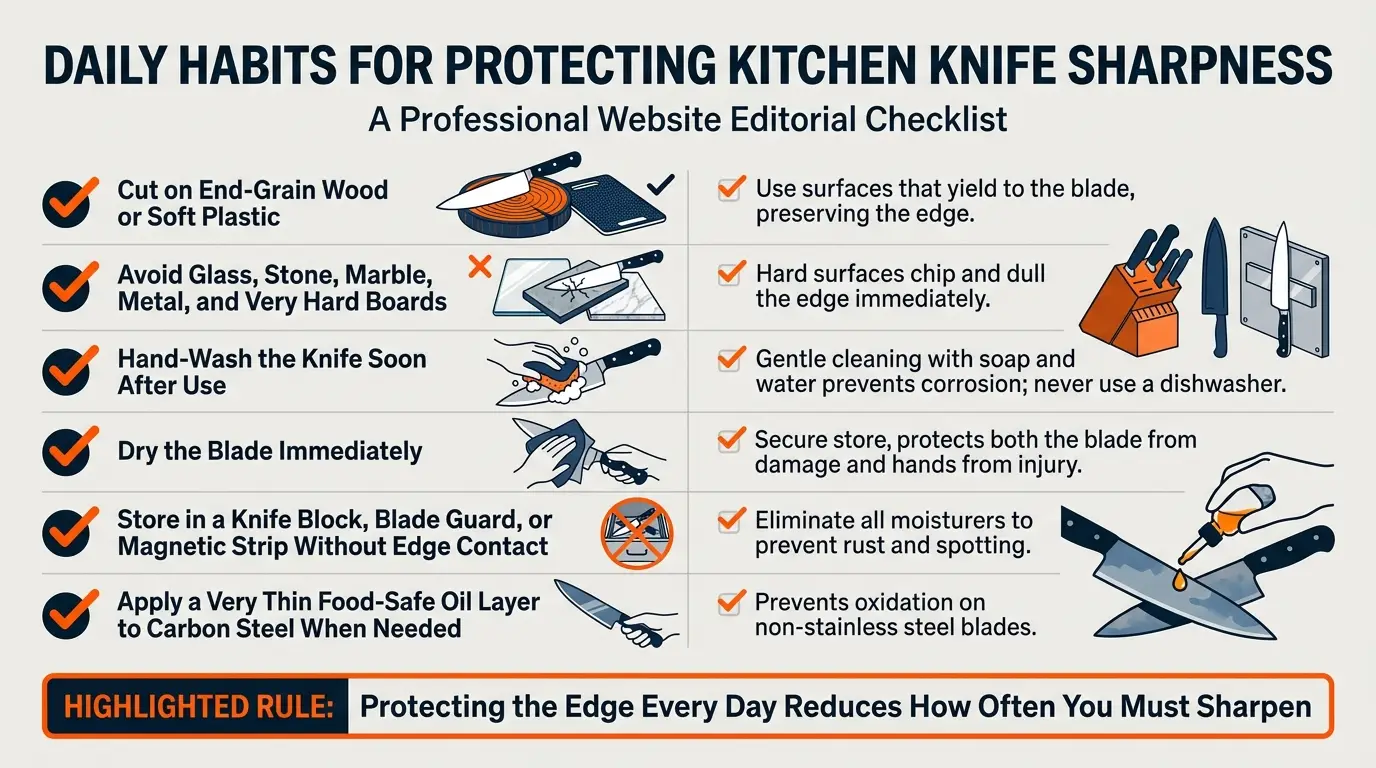
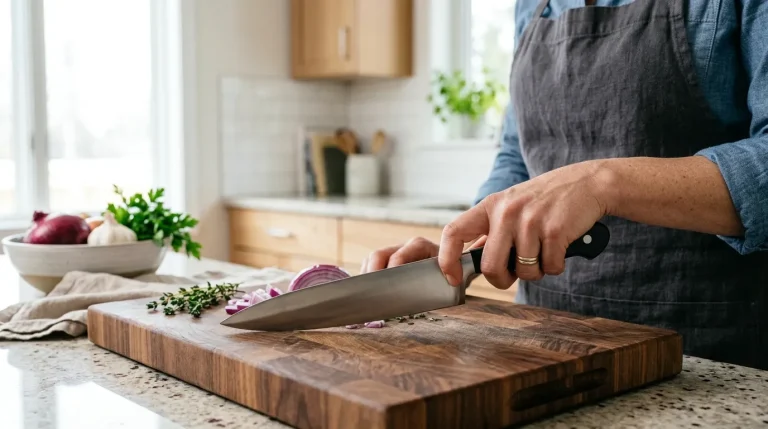
Small habits guard the edge more than any tool. Use end-grain wood or soft plastic boards. Avoid glass, stone, bamboo that is too hard, or steel pans. These kill edges fast.
Wash by hand right after use. Wipe dry at once. Do not put knives in the dishwasher. Store on a magnetic strip or in a block with the edge up and free.
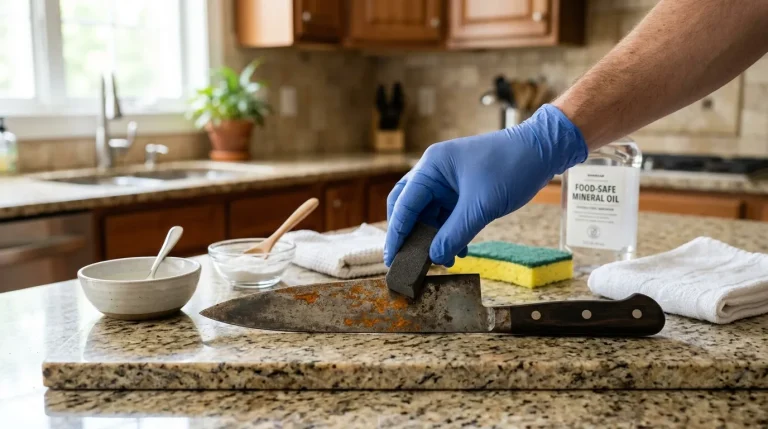
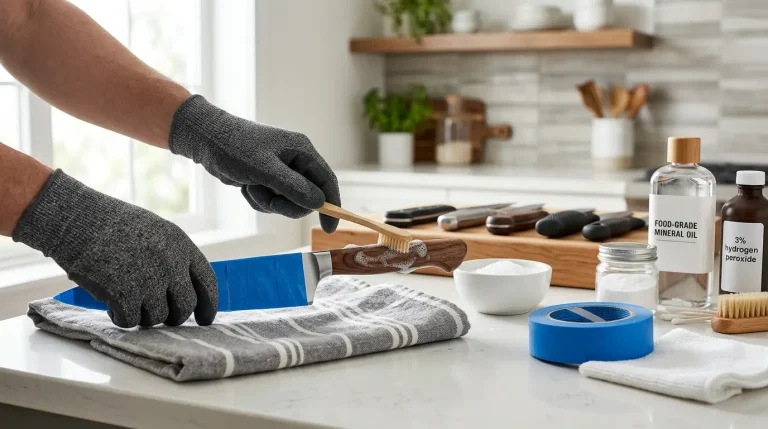
Add a drop of food-safe oil on carbon steel to stop rust. Wipe off before use. These steps alone can double edge life and help with How to Maintain Knife Sharpness.
Honing vs Sharpening
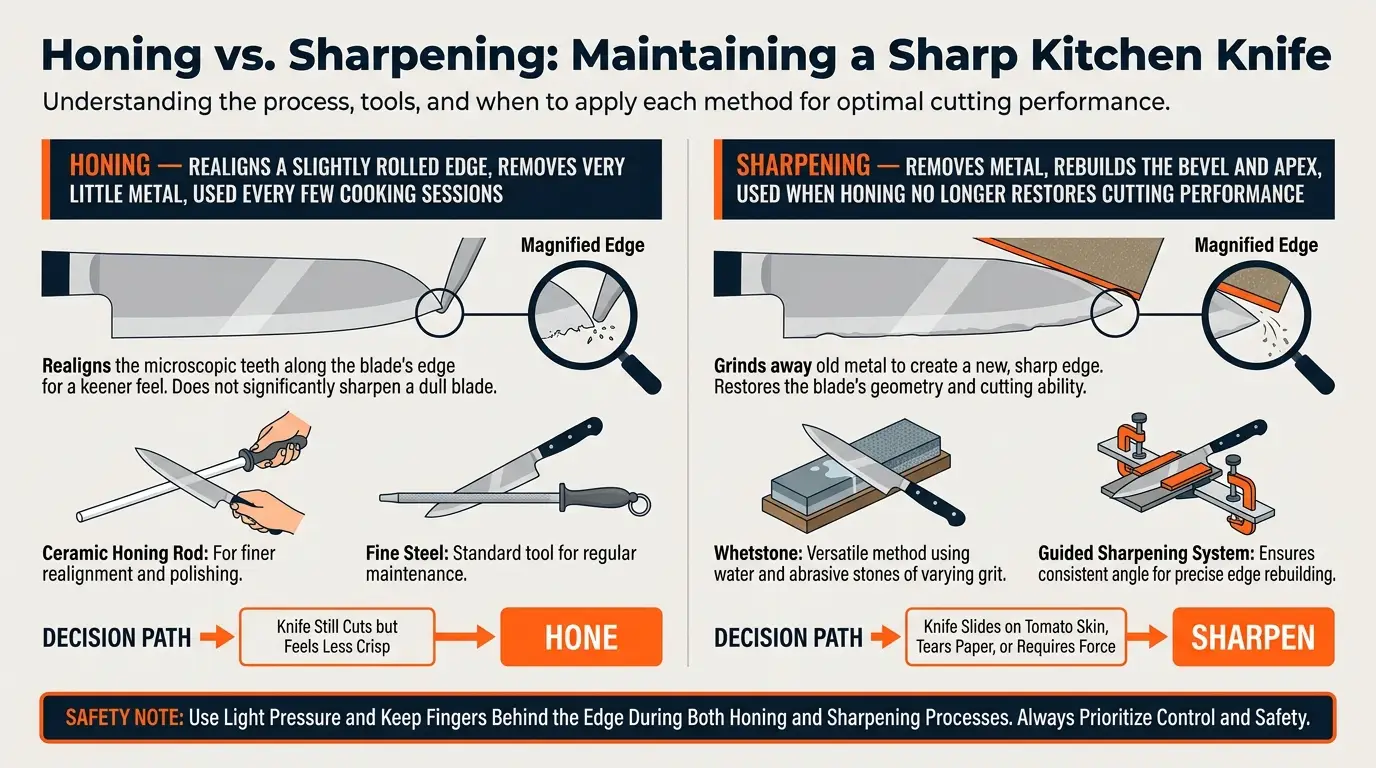
Honing realigns the edge. It does not remove much metal. Use a ceramic rod or a fine steel a few light strokes per side. Do it often.
Sharpening removes metal to form a new apex. Use a whetstone, a guided system, or an electric unit. Think of honing as brushing and sharpening as the dentist visit. Both matter for How to Maintain Knife Sharpness.
How to Hone a Knife
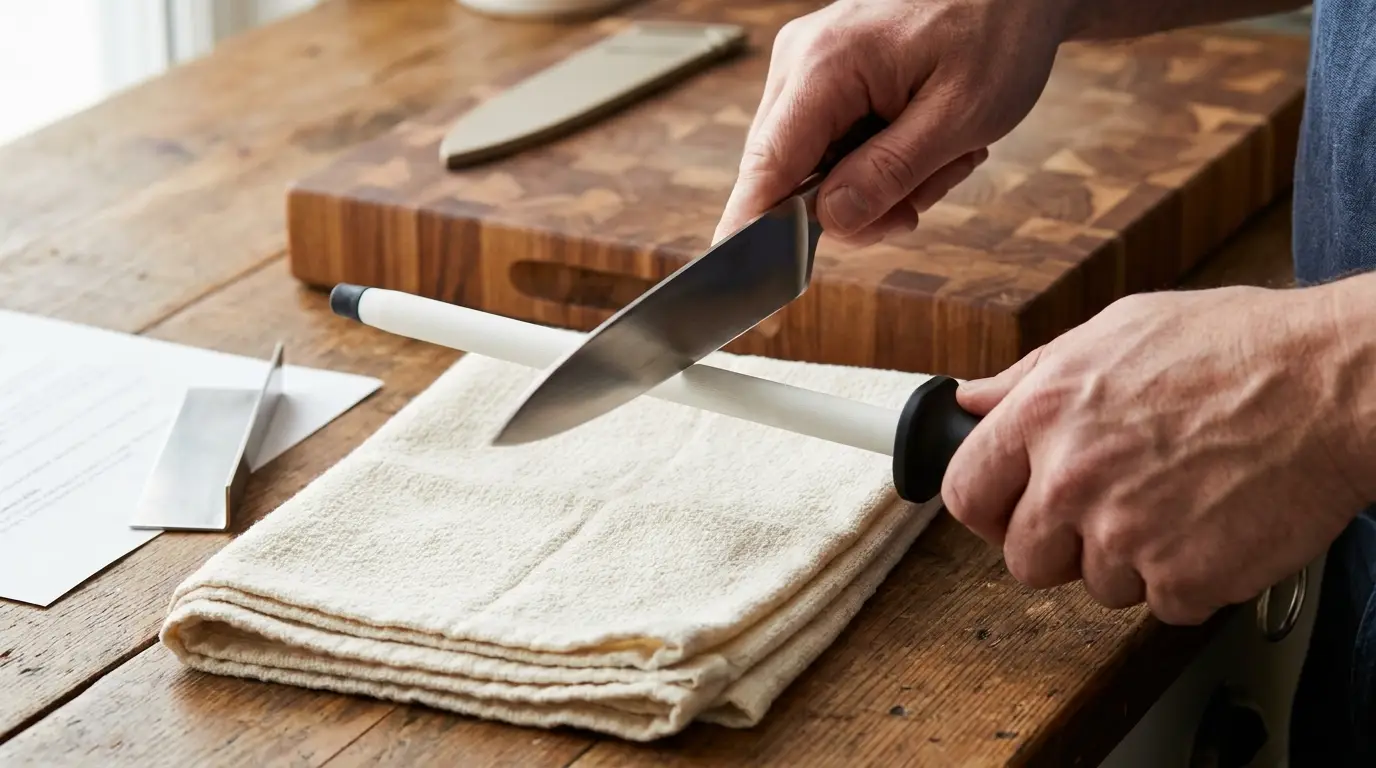
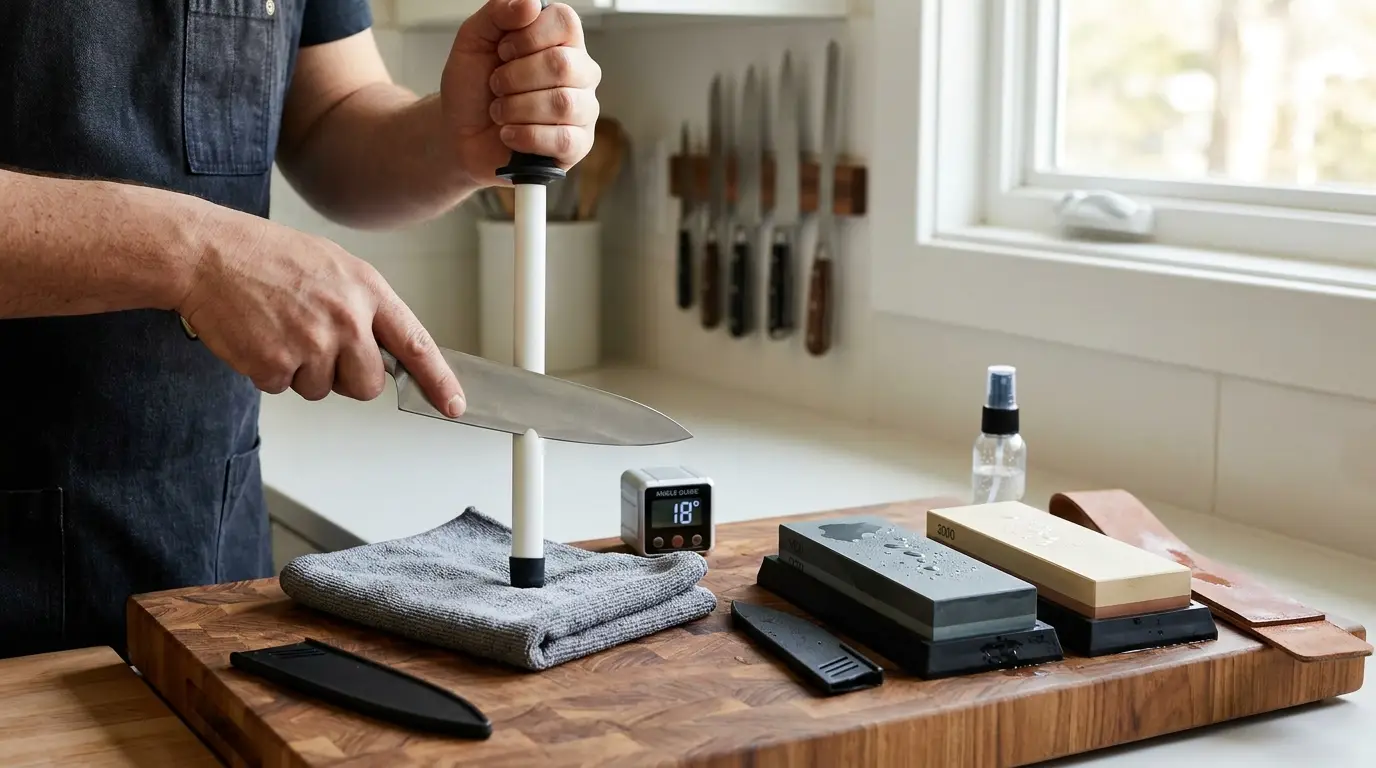
- Hold the rod vertical with the tip on a towel.
- Set a 15 to 20 degree angle. Think two stacked coins wide.
- Draw the heel to tip in one smooth pass. Use light pressure.
- Repeat 5 to 8 times per side. Wipe the blade and test on paper.
If the edge still slides or crushes, it likely needs sharpening, not more honing. Used right, honing can stretch sharpness for weeks.
How to Sharpen with a Whetstone
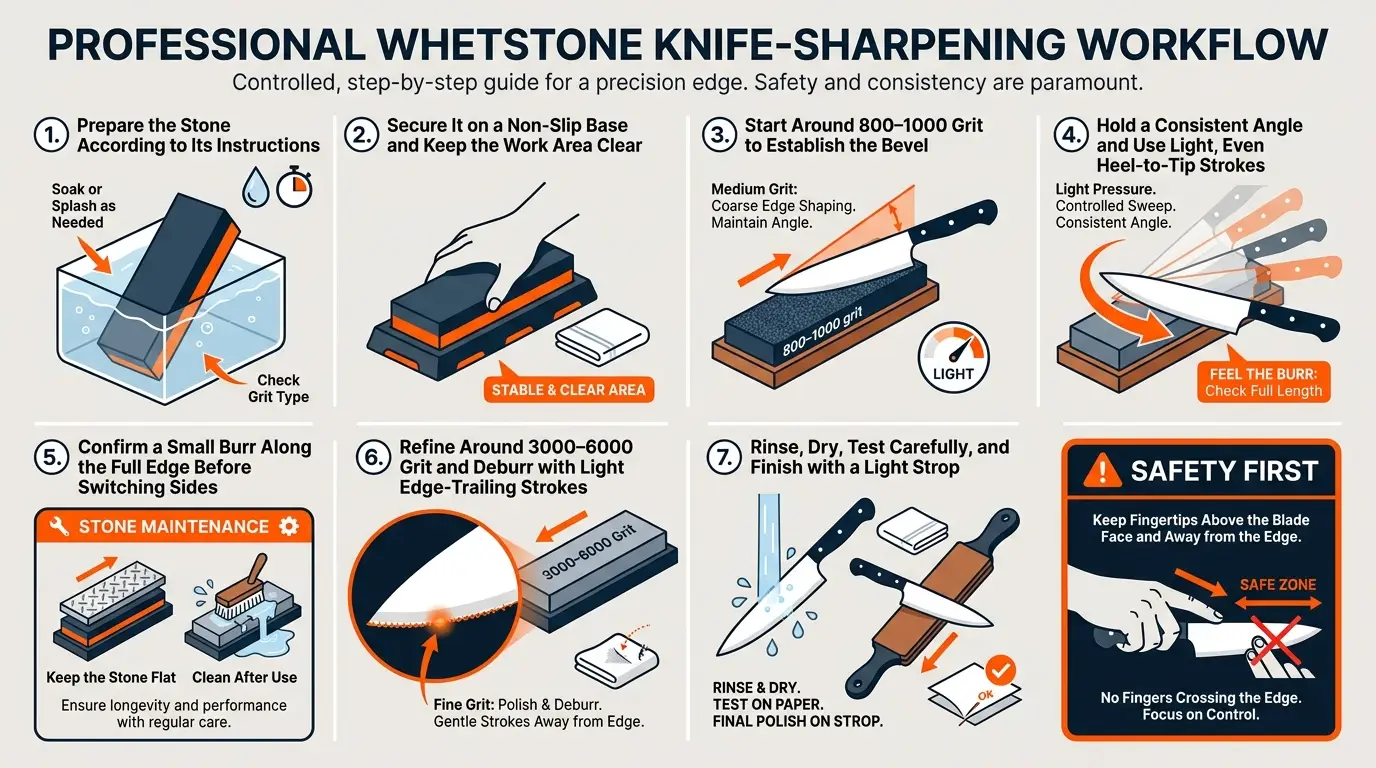
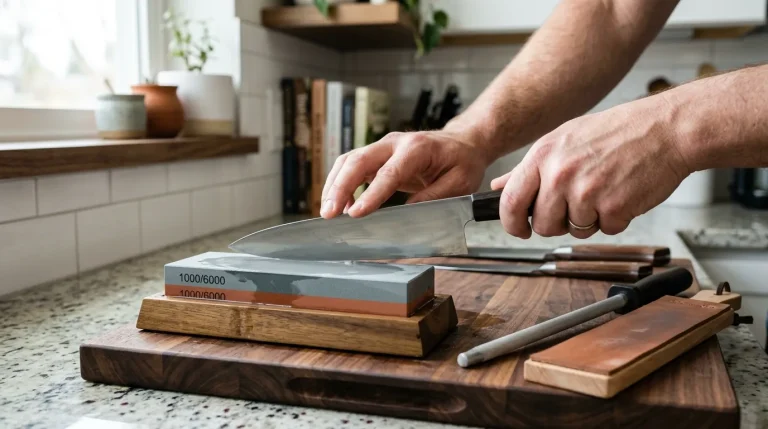
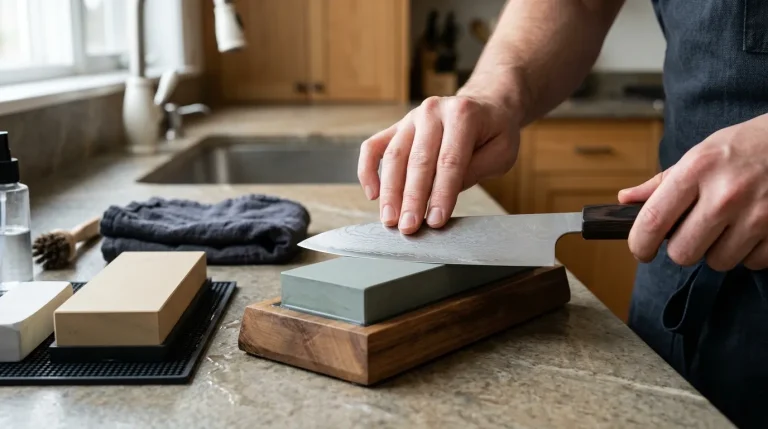
A stone gives the most control and the best edge. Soak splash-and-go stones per maker notes. Keep the stone flat and clean.
- Start with 800 to 1000 grit to set the bevel.
- Hold a steady angle. Use light, even strokes, heel to tip.
- Raise a burr along the full edge. Flip and match the angle.
- Move to 3000 to 6000 grit to refine. Deburr with light trailing strokes.
- Rinse, dry, and strop on leather or newsprint.
For How to Maintain Knife Sharpness, a short monthly stone session beats a long grind twice a year. Short and steady wins.
Quick Tools: Pull-Through and Electric Sharpeners
Pull-through tools are fast and simple. They can be great for cheap knives. But they may chew metal and set a wide angle. Use them gently and not too often.
Electric sharpeners are handy for busy homes. Choose one with multiple stages and angle guides. Keep in mind they remove more steel. For prized blades, I prefer stones. Use these tools as part of How to Maintain Knife Sharpness when time is tight.
Stropping and Finishing Touches
Stropping cleans the very edge and boosts bite. Use a leather strop with compound or even plain cardboard. Five light strokes per side can make a big change.
I strop before dice work on herbs or fish. It adds that last bit of snap. As a habit, it makes How to Maintain Knife Sharpness feel easy and quick.
Maintenance Schedule and Signs You Need Sharpening
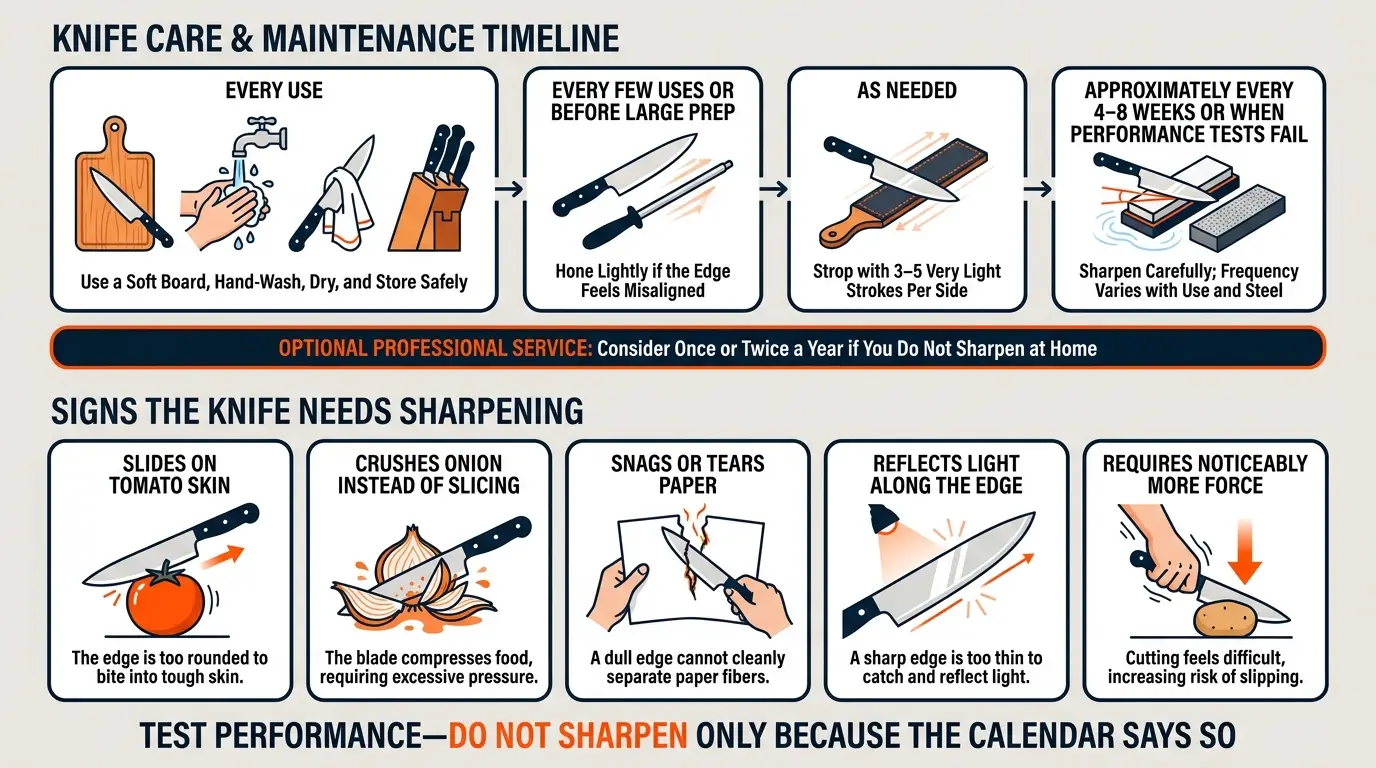
- Hone: every few uses, or before big prep.
- Strop: as needed for a final tune.
- Sharpen on stones: every 4 to 8 weeks at home, or when tests fail.
- Pro service: 1 to 2 times a year if you do not stone-sharpen.
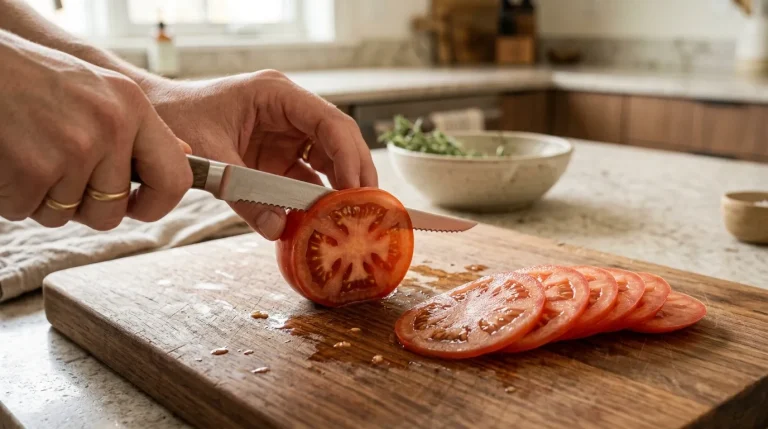
Watch for these signs: slips on tomato skin, crushes onions, snags on paper, shines at the edge under light, or needs more force. These all say it is time.
Common Mistakes to Avoid
- Using glass or marble boards. They blunt in minutes.
- Pressing hard on a rod. Light strokes work best.
- Rocking angles on the stone. Lock the wrist and stay steady.
- Over-sharpening on coarse grit. Move up once the burr forms.
- Storing knives loose in a drawer. Use a guard, block, or strip.
I once dulled a new gyuto in a day by plating on a steel pan. Lesson learned. Treat edges like they are fine chalk lines.
Care Tips for Different Blades and Steels
Stainless resists rust but still stains. Dry it well. Some high-end steels hold a thin edge longer but chip if abused. Use wood boards and gentle cuts.
Carbon steel takes a wicked edge and sharpens fast. But it will rust if wet. Build a gray patina with use, and oil it light. Serrated knives need special tools or a pro. They keep bite longer but ask for rare touch-ups. With each type, the heart of How to Maintain Knife Sharpness is the same: protect, hone, then sharpen with care.
Safety While You Maintain
Work slow. Clear your space. Keep the stone on a non-slip base. Fold a towel under it.
Always move the edge away from fingers when you can. Wipe swarf and water often. A steady setup cuts risk and gives a better edge.
Frequently Asked Questions of How to Maintain Knife Sharpness
How often should I hone my knife?
Hone before a big prep or every few uses. Light, regular honing keeps the edge in line and delays full sharpening.
What angle should I use for most kitchen knives?
Aim for 15 to 20 degrees per side. Thin Japanese blades may use 10 to 15 degrees for more bite.
Do I need a 6000-grit stone?
It helps for a refined push cut. For most home cooks, 1000 plus 3000 grit gives a great balance of bite and polish.
Can I put my knives in the dishwasher?
No. Heat, steam, and banging dull and pit the edge. Hand wash, dry at once, and store with care.
What cutting board is best for edge life?
End-grain wood is ideal. Soft plastic is fine too. Avoid glass, stone, or metal surfaces.
How do I know if my knife is sharp?
Slice paper, shave thin tomato skin, or cut an onion without crush. If it slips or tears, it needs work.
Is a pull-through sharpener bad for my knives?
It is not always bad, but it can remove too much steel and set a thick angle. Use it gently and sparingly if you choose it.
How to Maintain Knife Sharpness on a budget?
Use a ceramic rod, a 1000-grit stone, and a wood board. These low-cost tools cover 90% of needs.
Should I strop every time I cook?
Not needed. Strop when you want a clean finish for fine cuts. A few light strokes are enough.
What is a burr and why does it matter?
A burr is a tiny fold of steel at the edge after grinding. Feeling it along the full length shows you reached the apex.
Conclusion
Sharp knives make cooking safer, faster, and more fun. Protect the edge with kind boards, careful cleaning, and smart storage. Hone often, sharpen on stones with a steady angle, and finish with a light strop. Small habits add up fast.
Try one change today. Put away the glass board and pick up a ceramic rod. Then schedule a 20-minute stone session this month. Want more tips like this? Subscribe, share this guide, or drop your questions in the comments.