Use mild soap, warm water, and material-safe methods to clean handles.
If you want a clean, safe, and long-lasting grip, you’re in the right place. I’ve restored hundreds of kitchen and outdoor knives, and this guide on How to Clean Knife Handle walks you through simple steps that work. You’ll learn what to use, what to avoid, and how to keep every handle type feeling solid and looking great.
Know your knife handle material
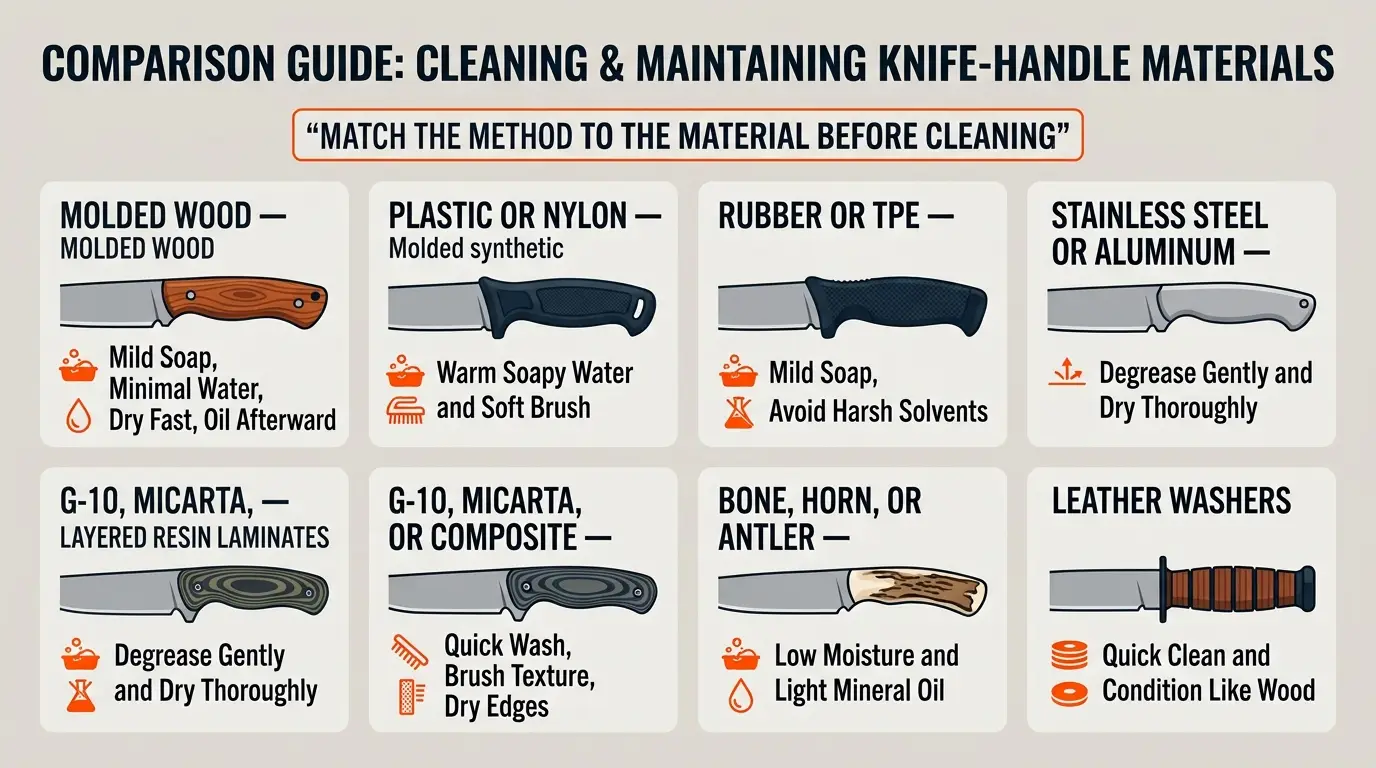
Before you begin, match your method to the material. That is the key to How to Clean Knife Handle without damage. Each type reacts in a different way to water, cleaners, and heat.
Common handle materials and what they need:
- Wood: Needs gentle soap, light water, and oil after. Never soak.
- Plastic or nylon: Tough and easy. Warm soapy water and a soft brush work great.
- Rubber or thermoplastic elastomer: Use mild soap and avoid harsh solvents.
- Stainless steel or aluminum: Easy to degrease. Dry well to stop water spots.
- Composites like G-10 or Micarta: Durable but can absorb water at edges. Clean quick. Dry fast.
- Bone or horn: Porous and fragile. Use low moisture and light oil.
- Leather washers: Treat like wood. Quick clean and condition.
Safety and setup
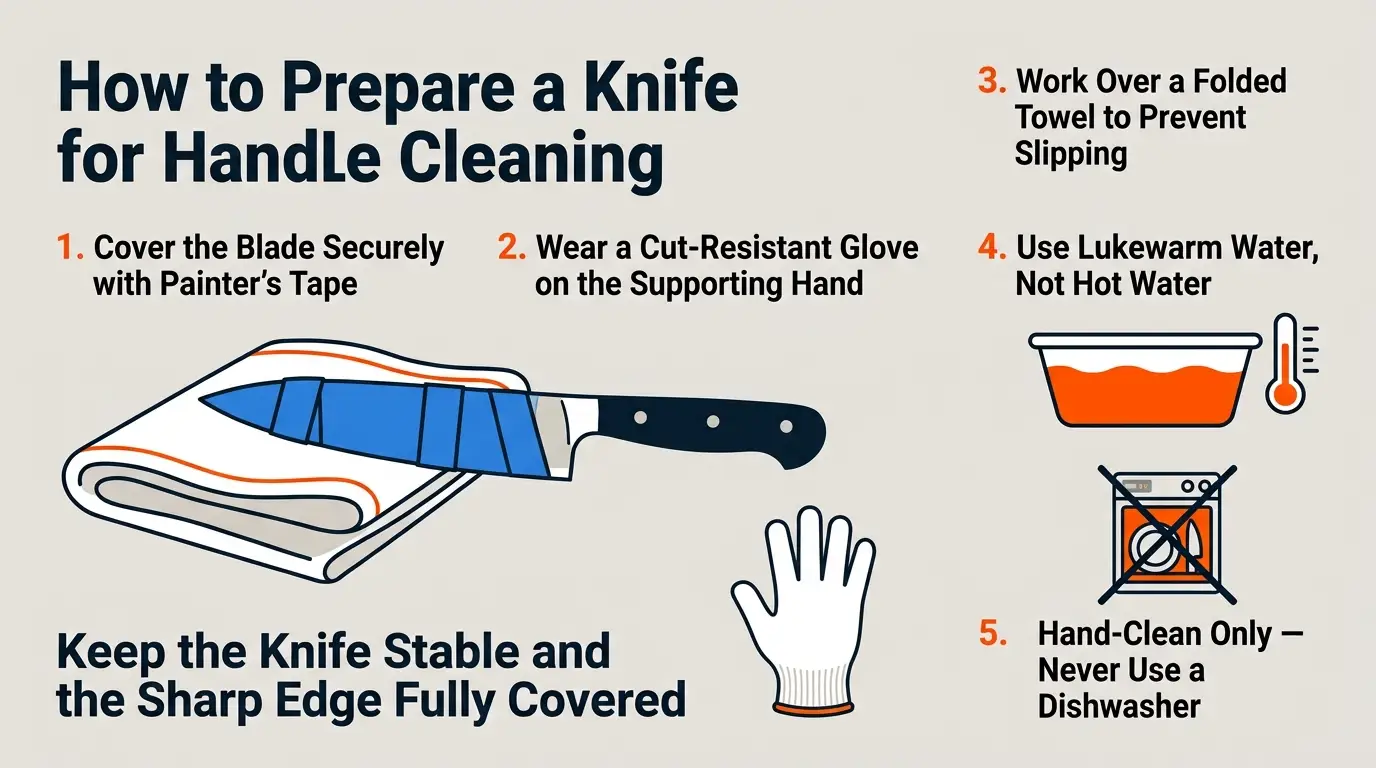
Safe cleaning comes first, even for a quick sink scrub, and that still applies when you think about How to Clean Knife Handle at home. A small slip can ruin a day.
Do this before you start:
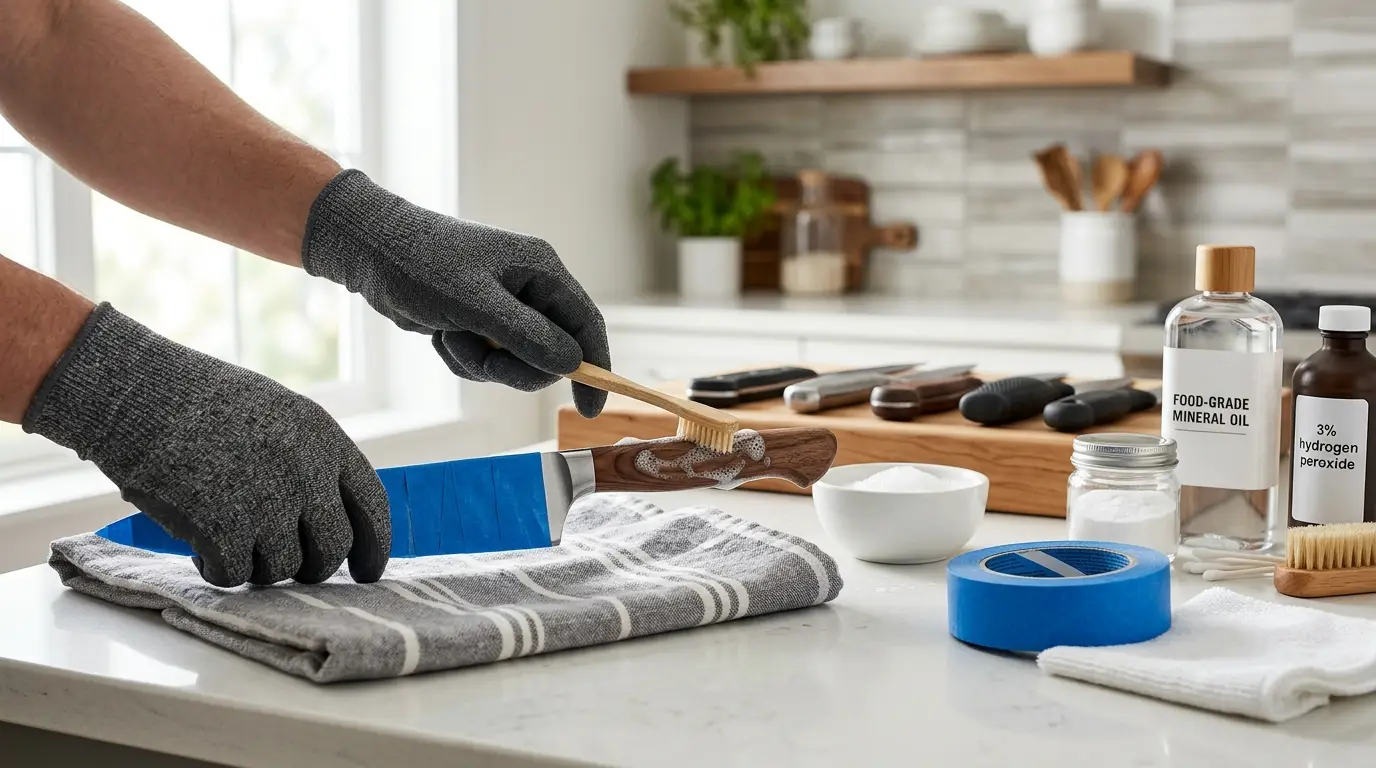
- Cover the blade with painter’s tape for grip and safety.
- Wear a cut glove on your non-dominant hand if you have one.
- Work over a towel to stop slips and splashes.
- Use lukewarm water. Hot water can swell wood and loosen glue.
- Avoid dishwashers. Heat and steam can crack, warp, or loosen handles.
Step-by-step: How to Clean Knife Handle by material
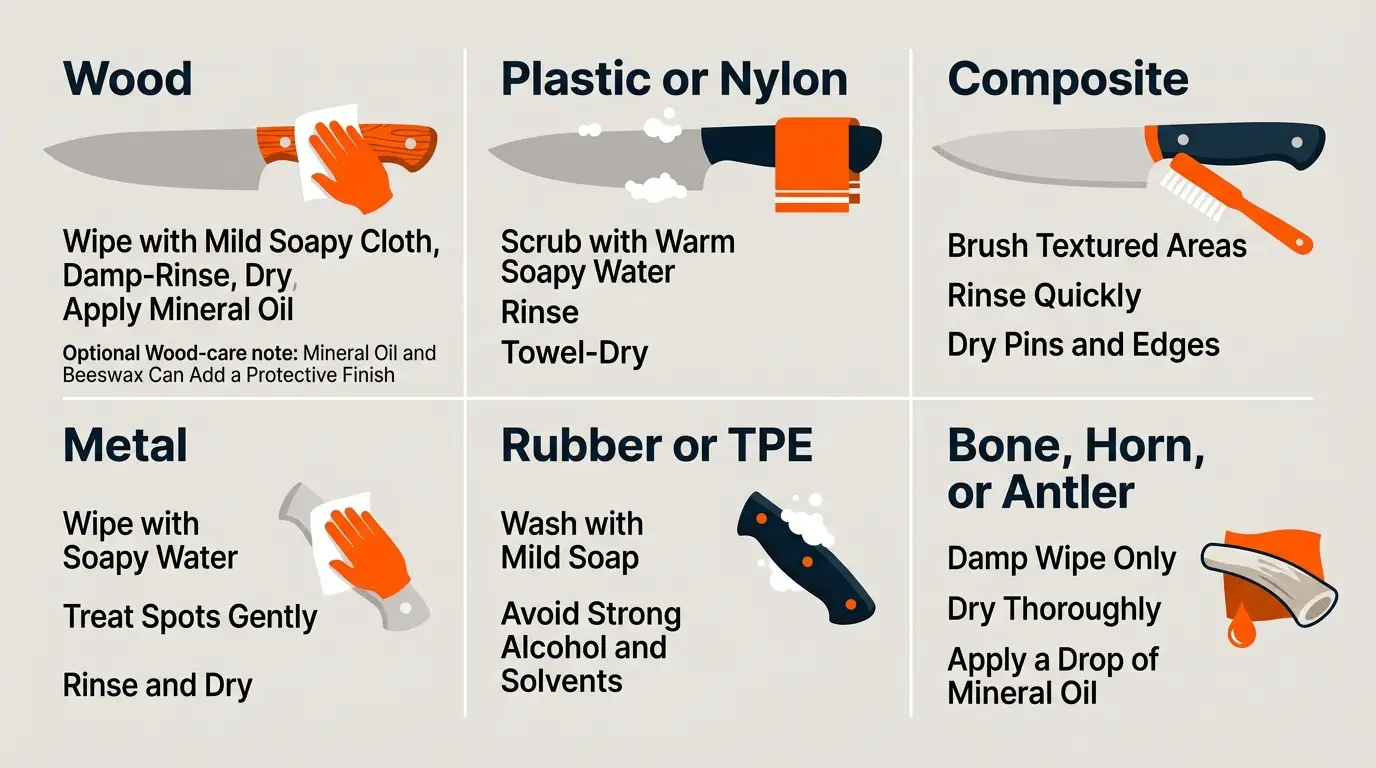
Here is a clear plan for How to Clean Knife Handle with the right method for each material. Keep strokes light, rinse fast, and dry right away.
Wood handles
– Mix a few drops of mild dish soap in warm water.
- Dip a soft cloth or toothbrush. Wipe the handle. Do not soak.
- Rinse by wiping with a damp cloth.
- Dry at once with a towel. Let air-dry 15 minutes.
- Condition with food-grade mineral oil. Wipe off extra.
Pro tip from my bench: a 1:1 mix of mineral oil and melted beeswax leaves a smooth, water-resistant finish. I use this on cutting boards too.
Plastic or nylon handles
- Scrub with warm soapy water and a soft brush.
- For grease, use a drop of degreasing dish soap.
- Rinse well and towel-dry.
- If needed, sanitize with a mild bleach solution. Rinse again.
Composite handles (G-10, Micarta, carbon fiber)
- Clean like plastic with warm soapy water.
- Use a soft brush to lift grime in the texture.
- Rinse fast and dry well, paying attention to pins and edges.
- Avoid soaking. Some liners can wick water.
Metal handles (stainless steel, aluminum, titanium)
- Wipe with warm soapy water or a 70% alcohol wipe.
- For spots, use a baking soda paste and a soft cloth.
- Rinse, dry, and add a light film of oil near screws to stop corrosion.
Rubber or TPE handles
- Wash with mild soap and water.
- Avoid harsh solvents or pure alcohol. They can make rubber tacky.
- Rinse and towel-dry. Dust with a tiny bit of talc if the grip feels sticky.
Bone, horn, or antler
- Wipe with a damp cloth and a touch of soap.
- Rinse by wiping only. No soaking.
- Dry well. Condition with a drop of mineral oil.
Sanitizing and deodorizing without damage
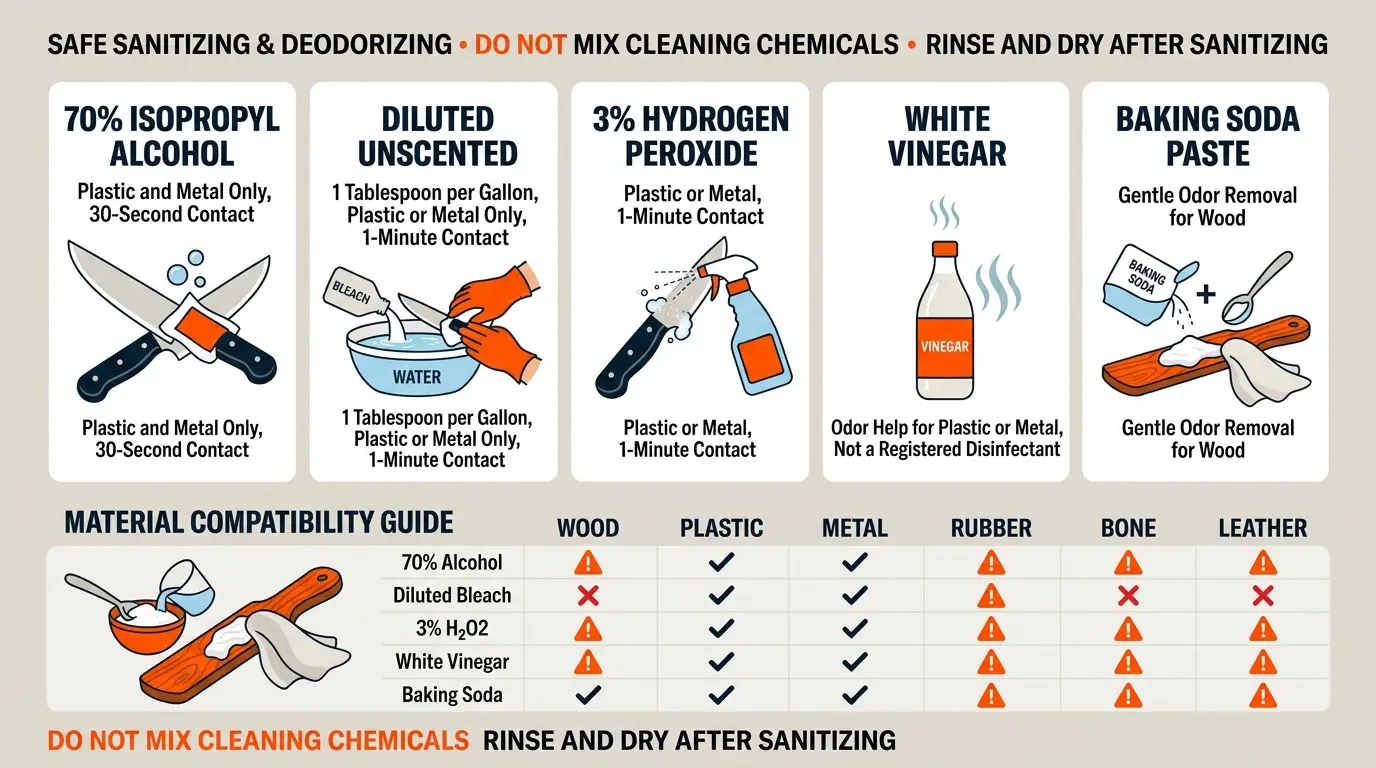
Sometimes the handle is clean but not fresh. Here is how to sanitize after you finish your main steps of How to Clean Knife Handle.
Safe options by material:
- 70% isopropyl alcohol: Good for plastic and metal. Wipe and let sit 30 seconds. Avoid on rubber and dry wood.
- Diluted bleach for food-contact sanitizing: 1 tablespoon unscented bleach per gallon of water. Wipe plastic or metal. Let sit 1 minute. Rinse and dry. Do not use on wood, bone, or leather.
- 3% hydrogen peroxide: Wipe and let sit 1 minute on plastic or metal. Rinse and dry.
- White vinegar: Good for smells but not a registered disinfectant. Use on plastic or metal only. Rinse after.
For odors in wood, I use a baking soda paste (baking soda and little water). Rub, wait 5 minutes, then wipe with a damp cloth and dry. It removes onion and fish smells fast.
Deep grime, stains, and hardware care
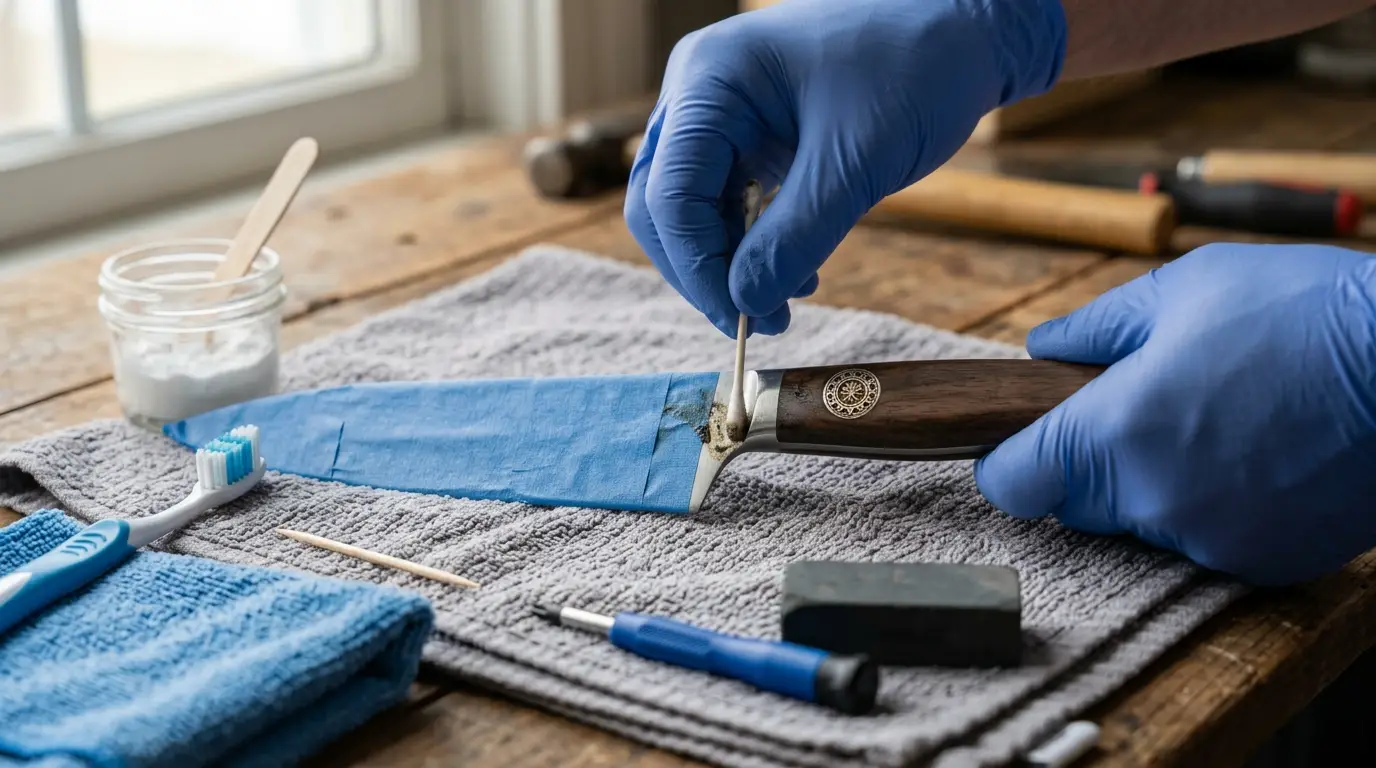
Stubborn grime hides around pins, rivets, and bolsters. This is where many people ask How to Clean Knife Handle the right way without scratching.
Use careful tools:
- Cotton swabs and a soft toothbrush for seams and pins.
- Toothpicks or wooden skewers for tight gaps. Never pry with metal.
- Baking soda paste on metal spots. Rinse and dry fast.
- For light rust on exposed tangs or screws, use a rust eraser or a tiny dab of metal polish. Keep it off wood and rubber. Wipe clean and dry.
Check screws on full-tang knives. If they back out, snug them with the right Torx driver. A dot of blue thread locker helps, but keep it off handle material.
Drying, conditioning, and reassembly
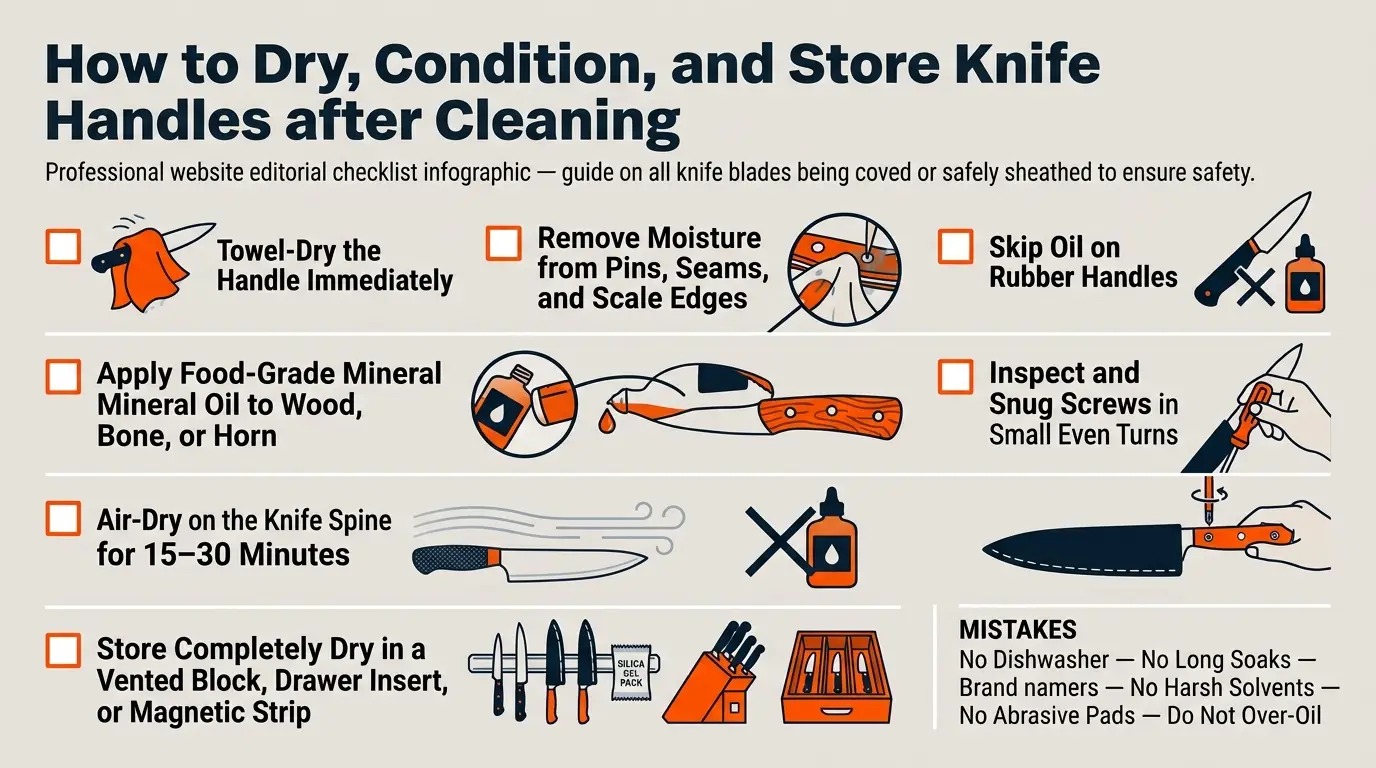
Water left under scales or near pins can cause rust or warping. This close matters more than most folks think when they learn How to Clean Knife Handle well.
Dry right, then protect:
- Towel-dry first. Blow out seams with gentle air if you can.
- Let the knife air-dry on its spine for 15–30 minutes.
- Oil wood, bone, and horn with food-grade mineral oil. Wipe off extra.
- For rubber, skip oil. For metal, a light anti-corrosion film near screws is fine.
If you removed scales for a deep clean, reassemble in sequence, snug screws in small turns, then do a final check for gaps.
Routine care and smart storage
Good habits make cleaning fast and easy. This is the long-game answer to How to Clean Knife Handle without stress.
Build a simple routine:
- After each use, wipe the handle with a damp cloth. Dry at once.
- Weekly for home cooks: a quick soap-and-water clean.
- For pros: sanitize plastic or metal handles at the end of each shift.
- Store dry. Use a magnetic strip or a vented block. Avoid wet sheaths.
- Drop a small silica gel pack in your drawer if you live in a humid place.
Mistakes to avoid
These slip-ups cause most handle damage. They also ruin your plan for How to Clean Knife Handle well.
Common pitfalls:
- Dishwashers. Heat and steam break down glue and swell wood.
- Long soaks. Porous handles swell, crack, or discolor.
- Harsh chemicals on wood, bone, or rubber. Bleach and acetone are risky.
- Abrasive pads on glossy or coated handles. They scratch and haze.
- Skipping the dry step. Trapped moisture leads to rust and stains.
- Over-oiling wood. It can feel gummy. A little goes a long way.
Tools and products checklist
A small kit makes the job fast and safe. It is my go-to setup for How to Clean Knife Handle in the shop and at home.
What to keep on hand:
- Mild dish soap and warm water
- Soft toothbrush, cotton swabs, microfiber cloths
- Painter’s tape and a cut glove
- Food-grade mineral oil and optional beeswax
- 70% isopropyl alcohol, 3% hydrogen peroxide
- Unscented bleach for sanitizing plastic or metal only
- Baking soda for gentle scouring and odor control
- Torx drivers if your knife has screws
Frequently Asked Questions of How to Clean Knife Handle
Can I put my knife in the dishwasher to clean the handle?
No. High heat and steam can crack wood, loosen glue, and stain metal. Hand clean with mild soap and water instead.
How often should I clean and oil a wooden handle?
Wipe after each use and wash weekly. Oil monthly, or when the wood looks dry or feels rough.
What is the safest sanitizer for plastic or metal handles?
Use 70% isopropyl alcohol or a mild bleach mix of 1 tablespoon per gallon of water. Let it sit for about a minute, then rinse and dry.
How do I remove strong odors from the handle?
Use a baking soda paste, wait five minutes, then wipe and dry. For plastic and metal, a vinegar wipe can help too.
Is vinegar safe for wood handles?
It can dry wood and dull the finish. Use mild soap and water, then condition with mineral oil instead.
How to Clean Knife Handle if it has textured G-10 or Micarta?
Scrub the texture with a soft brush and soapy water. Rinse fast and dry well to avoid water wicking into edges.
What should I do if screws keep coming loose in my handle?
Tighten with the right driver and add a tiny dot of blue thread locker. Wipe away any squeeze-out and avoid getting it on the handle.
Conclusion
A clean handle feels better, lasts longer, and keeps your kitchen safer. Match your method to the material, clean with mild soap, sanitize when needed, and dry and condition the handle with care. With this plan for How to Clean Knife Handle, you can refresh any grip in minutes and keep it that way for years.
Try one handle today. Set a quick weekly routine. If you found this helpful, share it with a cooking friend, subscribe for more knife care tips, or leave a comment with your handle material and questions.